539 results for "donald judd"

to
76
391
135
326
263
213
137
72
47
34
30
24
24
6
1
1
1
1
135
38
36
25
22
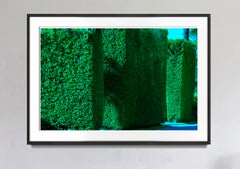
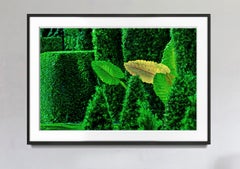
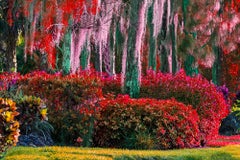
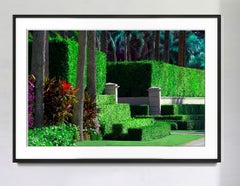
Hedge Fun - Alton Road, Miami Beach - Street Art from the Wealthy

Hedge Fun - Alton Road, Miami Beach - Street Art from the Wealthy

By Robert Funk

Located in Miami, FL

Robert Funk’s photographs of elaborate landscaping redefine what Street Art is. The natural phenomena of trees and shrubs is augmented by the added illumination effects of violet and...

Category

2010s Post-Impressionist Landscape Photography

Materials

Archival Ink, Archival Paper, Inkjet, Archival Pigment

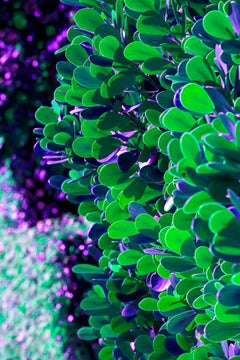
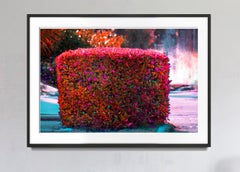
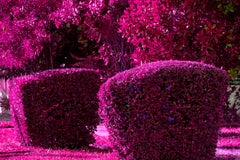
Hedge Fun - Flamingo Park Miami Beach - Violet Purple

Hedge Fun - Flamingo Park Miami Beach - Violet Purple

By Robert Funk

Located in Miami, FL

Robert Funk’s photographs of elaborate landscaping redefine what Street Art is. The natural phenomena of trees and shrubs is augmented by the added illumination effects of violet and purple. Nature provide the basics and then man manipulates them. The result is "Hedge Fun - Flamingo Park...

Category

2010s Abstract Expressionist Abstract Photography

Materials

Archival Paper, Inkjet, Archival Pigment

Hedge Fun - Sunset Island2 - Miami Beach - Street Art by the Rich

Hedge Fun - Sunset Island2 - Miami Beach - Street Art by the Rich

By Robert Funk

Located in Miami, FL

Robert Funk’s photographs of elaborate landscaping redefine what Street Art is. Website and monitors render color differently. Green sometimes becomes more saturated. I think the mo...

Category

2010s Abstract Geometric Landscape Photography

Materials

Inkjet

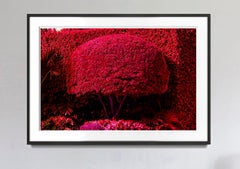
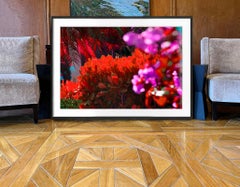
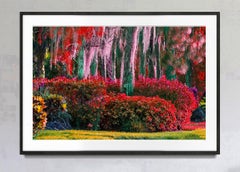
Hedge Fun - Hibiscus Island - Miami Beach - Street Art from the Wealthy. Red

Hedge Fun - Hibiscus Island - Miami Beach - Street Art from the Wealthy. Red

By Robert Funk

Located in Miami, FL

Robert Funk’s photographs of elaborate landscaping redefine what Street Art is. On ultra-exclusive Hibiscus Island, Street Art made the Rich abounds. It's an unspoken requirement t...

Category

2010s American Modern Color Photography

Materials

Inkjet, Archival Ink, Archival Paper, Archival Pigment

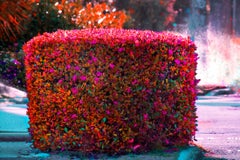
Street Art from the Rich -Hedge Fun - Sunset Island - Miami Beach

Street Art from the Rich -Hedge Fun - Sunset Island - Miami Beach

By Robert Funk

Located in Miami, FL

Robert Funk’s photographs of elaborate landscaping redefine what Street Art is. Hedge Fun is a series that celebrates the landscaping commissioned by well-heeled homeowners, high-e...

Category

2010s Abstract Geometric Landscape Photography

Materials

Inkjet

Street Art by the Rich - Naples Hedges Abstraction

Street Art by the Rich - Naples Hedges Abstraction

By Robert Funk

Located in Miami, FL

The street view of Naples, Florida, is defined by its meticulous greenery. Robert Funk’s photographs of elaborate landscaping redefine what Street Art is. Landscaping art aesthetica...

Category

2010s Post-Impressionist Abstract Photography

Materials

Archival Ink, Archival Paper, Archival Pigment

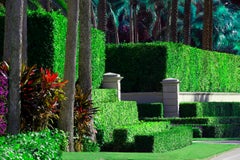
The Green Leaves of Palm Beach - Street Art by the Rich

The Green Leaves of Palm Beach - Street Art by the Rich

By Robert Funk

Located in Miami, FL

The street view of Palm Beach is defined by its meticulous greenery. Robert Funk’s photographs of elaborate landscaping redefines what Street Art is. Landscaping art aesthetically i...

Category

2010s Post-Impressionist Abstract Photography

Materials

Archival Ink, Archival Paper, Archival Pigment

Hedge Fun - Naples, Florida -  Happy Colors Landscaping, Abstract Photography

Hedge Fun - Naples, Florida - Happy Colors Landscaping, Abstract Photography

By Robert Funk

Located in Miami, FL

Landscaping in Naples, Florida gives the residents and visitors a visual treat. The community has transformed a typical banal Florida city into an outdoor art exhibition of by Land...

Category

2010s Impressionist Landscape Photography

Materials

Archival Ink, Archival Paper, Archival Pigment

Street Art from the Rich - Palm Beach in Magenta and Orange with Lizard

Street Art from the Rich - Palm Beach in Magenta and Orange with Lizard

By Robert Funk

Located in Miami, FL

Robert Funk’s photographs of elaborate landscaping redefine what Street Art is. This image is somewhat reminiscent of Monet's Haystacks in shape and use of backlighting. Use the 1st image for more accurate color. Palm Beach is Hedge Heaven with some of the most beautifully manicured streets in the United States. Hedge Fun - Palm Beach - Captures what Slim Arrons...

Category

2010s Abstract Geometric Landscape Photography

Materials

Archival Ink, Inkjet, Archival Pigment

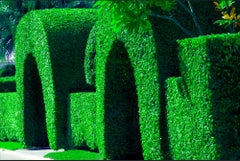
Street Art from from the Wealthy  -  Two and a Half Arches in Palm Beach

Street Art from from the Wealthy - Two and a Half Arches in Palm Beach

By Robert Funk

Located in Miami, FL

Street Art is today's dominant contemporary art movement. Yet it has overlooked the obvious. It’s the luscious landscaping from the rich. Street art made from plants has been beauti...

Category

2010s Contemporary Landscape Photography

Materials

Archival Ink, Archival Paper, Archival Pigment

Hedge Fun - Billionaires Row - Palm Beach - How the Rich do Street Art

Hedge Fun - Billionaires Row - Palm Beach - How the Rich do Street Art

By Robert Funk

Located in Miami, FL

Robert Funk’s photographs of elaborate landscaping redefine what Street Art is. Street Art abounds in on every corner. Palm Beach is Hedge Heaven with some of the most beautifully ...

Category

2010s Post-Impressionist Landscape Photography

Materials

Archival Ink, Archival Paper, Inkjet, Archival Pigment

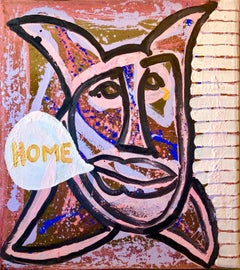
Conceptual Pop Art Color Mixed Media Painting "Home" Brooke Alexander Gallery

Conceptual Pop Art Color Mixed Media Painting "Home" Brooke Alexander Gallery

By Robin Winters

Located in Surfside, FL

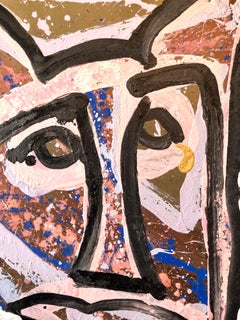
Robin Winters (b. 1950) hand signed; 1986. Acrylic, rhoplex and powdered pigment on screenprint Dimensions: 36”h, 32”w Title: "Home" Provenance: Brooke Alexander Gallery, New York, New York. Gallery label verso. Robin Winters is known for his conceptual works in a wide variety of two- and three-dimensional media and performance/durational art. The reliquary and other recurring themes that appear in his works can be seen in the collection of sculptures and paintings offered in this sale (lots 170, 171, 173, 393, 396). Gallery label to reverse: Brooke Alexander Gallery, New York, New York. Provenance: Brooke Alexander Gallery, New York, New York. Robin Winters (born 1950 in Benicia, California) is an American conceptual, multi-disciplinary, artist and teacher based in New York. Winters is known for creating solo exhibitions containing an interactive durational performance component to his installations, sometimes lasting up to two months. Winters first emerged in the burgeoning Soho NYC art scene of the 1970s. An early practitioner of the Relational Aesthetics (social interaction as an art medium) Winters also created in works through sculpture, installation, performance, painting, drawing and prints. His art maintains a whimsical spirit, and he often returns to ongoing themes involving faces, boats, cars, bottles, hats and jesters or fools. Winters has incorporated such devices as blind dates, double dates, dinners, fortune telling, and free consultation in his performances. Throughout his career he has engaged in a wide variety of media, such as performance art, film, video, writing prose and poetry, photography, installation art, printmaking, drawing, painting, ceramic sculpture, bronze sculpture, and glassblowing. Winters was born in Benicia, California in 1950 to lawyer parents. As a child his hobby was collecting glass bottles found on the beach and under old buildings, which would later influence him as an artist. In 1968, Winters had his first durational performance, entitled Norman Thomas Travelling Museum. The artist drove a Volkswagen bus decorated in collage, many of the images relating to current events and politics. Inside was what the artist described as a “reliquary” containing many objects, including a bottle collection. Winters took the van to shopping centers and even as far as Mexico. That same year, Winters opted not to register for the military draft. Although he was deemed fit to serve, Winters refused. In 1975 the resulting legal proceedings finally came to a close after it was proven that the artist had been harassed by the local draft board. In his teens and early twenties, Winters became acquainted with several local artists who helped shape his aesthetic, most notably Manuel Neri and Robert Arneson. By the early 1970s, Winters was studying at the San Francisco Art Institute (SFAI) and had relocated to San Francisco. At this time Winters became friends with the Bay Area conceptual artists Terry Fox and Howard Fried, and participated in several of Fried's performance works. In 1972 Winters was accepted into the Whitney Independent Study Program in New York City. After coming to New York City, Winters helped support himself by working for various artists, among them the performance artist Joan Jonas and sculptor Donald Judd. In 1974, Winters performed The Secret Life of Bob-E or Bob-E Behind the Veil eight hours a day, five days a week for a month in his studio apartment. Behind a one-way mirror the audience could watch Winters play the character of Bob-E, whose goal was to make a monument for everyone in the world in the form of blue and yellow rubber top hats. By the end of the month the artist had constructed 262 hats. The following year, Winters was invited to take part in the Whitney Museum's 1975 Biennial Exhibition. Entitled W.B. Bearman Bags a Job or Diary of a Dreamer. These meetings led to the formation of the Group Collaborative Projects, or Colab, of which Winters is a founding member. Also in 1976, Winters formed the partnership “X&Y” with fellow artist Coleen Fitzgibbon that would last two years. Together they performed a series of shows in the Netherlands, most notably a show entitled Take the Money and Run. Performed at De Appel in Amsterdam, the show involved the artists robbing their audience. The following day the audience was given an apology, as well as the opportunity to retrieve any valuables and participate in a lottery to win the artists’ services. They also made a Super 8 film in NY called Rich-Poor, in which they asked people on the streets their thoughts on the rich and poor. In 1980 Winters participated in The Real Estate Show and in Absurdities at ABC No Rio. That same year he and artists Peter Fend, Coleen Fitzgibbon, Peter Nadin, Jenny Holzer, and Richard Prince also formed The Offices of Fend, Fitzgibbon, Holzer, Nadin, Prince & Winters. This short-lived collective was based out of an office on lower Broadway and offered “Practical Esthetic Services Adaptable to Client Situation”, as stated on their business card. Their goal was to offer their art as “socially helpful work for hire”. In June of that year Winters participated in The Times Square Show, Colab's most well-known exhibition. The month-long show took place in a four floor building on West 41st Street and was densely packed with art. To cap off a busy year, Winters also became one of the first artists to join the Mary Boone Gallery, showing a successful solo exhibition in 1981. His work was shown in the New York/New Wave show in 1981 at MoMA PS1 along with Jean-Michel Basquiat, Roberta Bayley, William S. Burroughs, David Byrne, Sarah Charlesworth, Larry Clark, Crash (John Matos), Ronnie Cutrone, Brian Eno, Peter Fend, Nan Goldin, Keith Haring, Ray Johnson, Joseph Kosuth, Marcus Leatherdale, Christopher Makos, Robert Mapplethorpe, Elaine Mayes, Frank Moore, Kenny Scharf and others. In 1982, Winters had his first solo exhibition in Los Angeles at the Richard Kuhlenschmidt Gallery. At the Mo David Gallery in 1984, Winters created an installation piece that consisted of a floor of plaster tiles. Underneath each tile, hidden from view, was a drawing. He designed the stage sets for the musician Nico, and assisted French artist Orlan, American artist Stuart Sherman, and American poet Gregory Corso. Two years later Winters was invited to take part in Chambres d’Amis (In Ghent there is Always a Free Room for Albrecht Durer) in Ghent, Belgium. In it, 51 artists created installations in 50 different sites, mostly private homes. Winters chose the home of a local art historian. The artist made 90 drawings based on images found in the large collection of art books in the home's library. He made two copies of each drawing and placed the originals in the books themselves. One set of copies was exhibited in the sponsoring museum, Museum van Hedendaagse, as "The Ghent Drawings". The drawings were also on display at Winters’ solo exhibition at Luhring Augustine & Hodes Gallery in New York City in 1987. In 1986, Winters had a solo exhibition at Maurice Keitelman Gallery in Brussels, Belgium, and the following year a solo exhibition at the Centre Régional d'Art Contemporain Midi-Pyrénées in Toulouse, France. Also in 1986, Winters' Playroom was held at the Institute for Contemporary Art in Boston, Massachusetts. The exhibition was part of Think Tank, a retrospective of Winters' work which traveled to the Stedelijk Museum in the Netherlands, the Centre Regional d’Art Contemporain in France, and the Contemporary Arts Center in Ohio. Winters spent a month in 1989 working with students at the San Francisco Art Institute. Never having worked with ceramics, he spent the month making numerous ceramic pieces, which were then shown in the aptly named One Month in San Francisco. Other components of the piece included Winters’ childhood bottle collection and a video showing each piece in the show filmed briefly next to a ruler.[ Also that year, Robin served as a visiting artist at the Pilchuck Glass School, where he met artist John Drury, who was then working as the school's artist liaison. In the summer of 1990, Winters interviewed fellow artist Kiki Smith for her eponymous book, which was published later that year. That same year (1990), Winters was invited by the Val Saint Lambert glass factory in Belgium to create glassworks in their facility. Winters, artists John Drury and Tracy Glover traveled to Liege from the US, and the three in combination with two of the factories master glassblowers, realized Mr. Winters' work over six weeks time. A portion of the works, a group of glass heads and hats that the artist had produced at the factory, were exhibited in 1990 at the Centre d’Art Contemporain Geneve in Geneva, Switzerland. Later in the year they were included in his solo exhibition at Brooke Alexander Gallery in New York City. They were also shown at Facts and Rumours, an exhibition at the Witte de With Center for Contemporary Art in Rotterdam, the Netherlands in 1991. Winters had a solo exhibition at Van Esch Galerie in Eindhoven, the Netherlands called I am not Indifferent in 1991. The show consisted of paintings, glass heads, and bronze sculpture. Two years later he had another solo exhibition at the Renaissance Society at the University of Chicago, entitled Human Nature. Several hundred heads, made of glass and ceramic, lined the walls and were arranged in rings on the floor. Also on display were various paintings and bronzes. In 1994 Winters had a show at the Michael Klein Gallery in New York City entitled Notes from the Finishing Room, a solo exhibition of paintings. The artist also collaborated with fellow Benicia natives and glass artists Leroy Champagne and Michael Nourot...

Category

1980s Pop Art Figurative Paintings

Materials

Mixed Media, Acrylic, Pigment, Screen
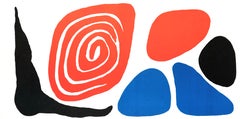
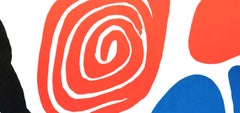
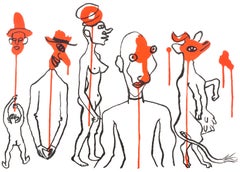
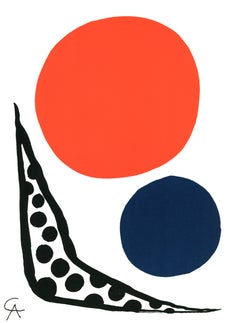
Alexander Calder, Untitled, from Calder autobiographie, 1972

Alexander Calder, Untitled, from Calder autobiographie, 1972

By Alexander Calder

Located in Southampton, NY

This exquisite lithograph by Alexander Calder (1898–1976), titled Sans titre (Untitled), originates from the 1972 album Calder autobiographie. Published by Maeght Editeur, Paris, and...

Category

1970s Surrealist Abstract Prints

Materials

Lithograph

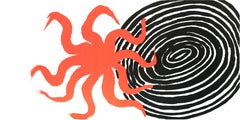
Alexander Calder, Untitled, from Calder autobiographie, 1972

Alexander Calder, Untitled, from Calder autobiographie, 1972

By Alexander Calder

Located in Southampton, NY

This exquisite lithograph by Alexander Calder (1898–1976), titled Sans titre (Untitled), originates from the 1972 album Calder autobiographie. Published by Maeght Editeur, Paris, and...

Category

1970s Surrealist Abstract Prints

Materials

Lithograph

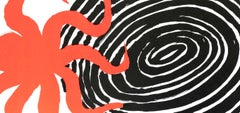
Alexander Calder, Untitled, from Calder autobiographie, 1972

Alexander Calder, Untitled, from Calder autobiographie, 1972

By Alexander Calder

Located in Southampton, NY

This exquisite lithograph by Alexander Calder (1898–1976), titled Sans titre (Untitled), originates from the 1972 album Calder autobiographie. Published by Maeght Editeur, Paris, and...

Category

1970s Surrealist Abstract Prints

Materials

Lithograph

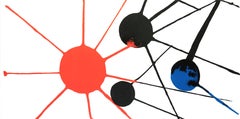
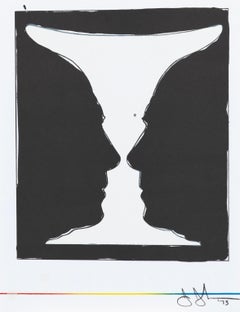
Jasper Johns, Cup 2 Picasso, from XXe Siecle, 1973

Jasper Johns, Cup 2 Picasso, from XXe Siecle, 1973

By Jasper Johns

Located in Southampton, NY

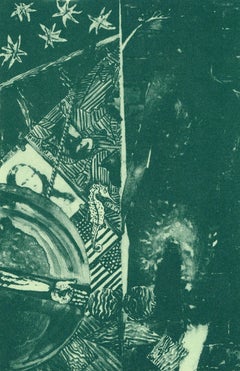
This exquisite lithograph by Jasper Johns (born 1930), titled Cup 2 Picasso, from the album XXe Siecle, Annee No. 40, Juin 1973, originates from the 1973 edition published by Societe...

Category

1970s Abstract Expressionist Abstract Prints

Materials

Lithograph

Alexander Calder, Untitled, from L'Atelier Mourlot, 1965

Alexander Calder, Untitled, from L'Atelier Mourlot, 1965

By Alexander Calder

Located in Southampton, NY

This exquisite lithograph by Alexander Calder (1898–1976), titled Sans titre (Untitled), from the album Les Lithographies de L'Atelier Mourlot, Paris (The Lithographs of the Mourlot ...

Category

1960s Surrealist Abstract Prints

Materials

Lithograph

Jasper Johns, Untitled, from Screenprints, 1977

Jasper Johns, Untitled, from Screenprints, 1977

By Jasper Johns

Located in Southampton, NY

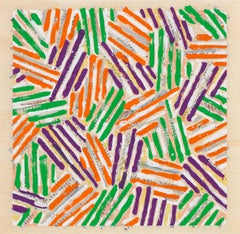
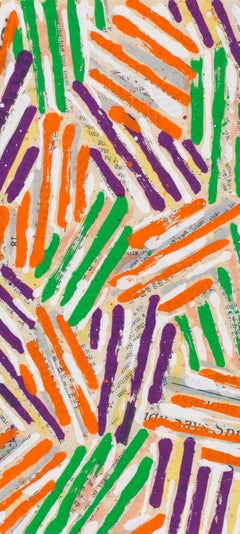
This exquisite silkscreen by Jasper Johns (born 1930), titled Untitled, from the album Jasper Johns, Screenprints, 1977, originates from the 1977 edition published by Brooke Alexande...

Category

1970s Abstract Expressionist Abstract Prints

Materials

Screen
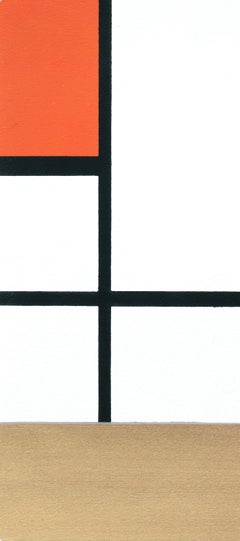
Piet Mondrian, Sans titre, from XXe Siecle, 1957 (after)

Piet Mondrian, Sans titre, from XXe Siecle, 1957 (after)

By Piet Mondrian

Located in Southampton, NY

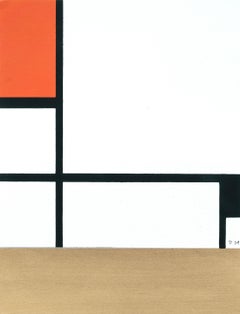
This exquisite lithograph and pochoir after Piet Mondrian (1872–1944), titled Sans titre (Untitled), from the album XXe Siecle, Nouvelle serie N°9 (double), Juin 1957, originates fro...

Category

1950s Abstract Geometric Abstract Prints

Materials

Lithograph

Alexander Calder, Untitled, from Derriere le miroir, 1966

Alexander Calder, Untitled, from Derriere le miroir, 1966

By Alexander Calder

Located in Southampton, NY

This exquisite lithograph by Alexander Calder (1898–1976), titled Sans titre (Untitled), from the album Lithographies et eaux-fortes originales, livres illustres originaux, affiches,...

Category

1960s Modern Abstract Prints

Materials

Lithograph

Alexander Calder, Untitled, from XXe Siecle, 1952

Alexander Calder, Untitled, from XXe Siecle, 1952

By Alexander Calder

Located in Southampton, NY

This exquisite lithograph by Alexander Calder (1898–1976), titled Sans titre (Untitled), from the album XXe Siecle, Nouvelle serie No. 3 (double), Juin 1952, originates from the 1952...

Category

1950s Surrealist Abstract Prints

Materials

Lithograph

Alexander Calder, Two Pyramids and Spirals, from Derriere le miroir, 1954

Alexander Calder, Two Pyramids and Spirals, from Derriere le miroir, 1954

By Alexander Calder

Located in Southampton, NY

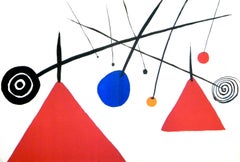
This exquisite lithograph by Alexander Calder (1898–1976), titled Deux pyramides et spirales (Two Pyramids and Spirals), from the folio Derriere le miroir, No. 69–70, originates from...

Category

1950s Modern Abstract Prints

Materials

Lithograph

Alexander Calder, Orange Sun, from Derriere le miroir, 1954

Alexander Calder, Orange Sun, from Derriere le miroir, 1954

By Alexander Calder

Located in Southampton, NY

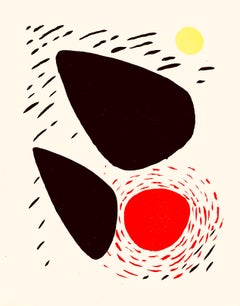
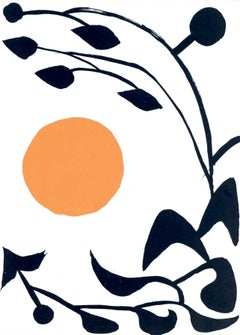
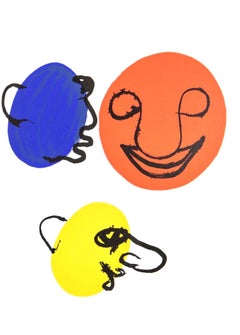
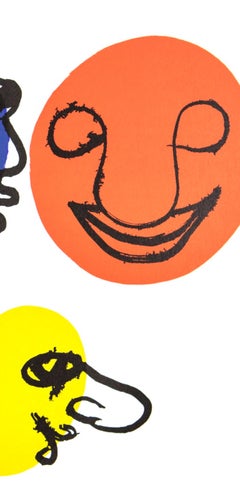
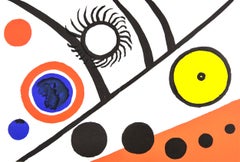
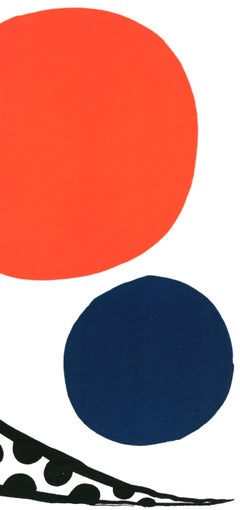
This exquisite lithograph by Alexander Calder (1898–1976), titled Soleil orange (Orange Sun), from the folio Derriere le miroir, No. 69–70, originates from the 1954 edition published by Maeght Editeur, Paris, and printed by Mourlot Freres, Paris, 1954. This work captures Calder’s mastery of motion, balance, and vibrant color through the spontaneous energy of his abstract forms, embodying the rhythmic harmony and visual poetry that defined his art. Executed as a lithograph on velin paper, this work measures 15 x 11 inches. Unsigned and unnumbered as issued. The edition exemplifies the superb craftsmanship of Mourlot Freres, Paris. Artwork Details: Artist: Alexander Calder (1898–1976) Title: Soleil orange (Orange Sun), from the folio Derriere le miroir, No. 69–70 Medium: Lithograph on velin paper Dimensions: 15 x 11 inches (38.1 x 27.9 cm) Inscription: Unsigned and unnumbered as issued Date: 1954 Publisher: Maeght Editeur, Paris Printer: Mourlot Freres, Paris Condition: Well preserved, consistent with age and medium Provenance: From the folio Derriere le miroir, No. 69–70, published by Maeght Editeur, Paris; printed by Mourlot Freres, Paris, 1954 About the Publication: Derriere le miroir (Behind the Mirror) was one of the most important art publications of the 20th century, created and published by Maeght Editeur in Paris from 1946 to 1982. Founded by the visionary art dealer and publisher Aime Maeght, the series served as both an exhibition catalogue and a work of art in its own right, uniting original lithographs by leading modern and contemporary artists with critical essays, poetry, and design of the highest quality. Printed by master lithographers such as Mourlot Freres and Arte, Derriere le miroir became synonymous with the artistic vanguard of postwar Europe. Each issue was devoted to a single artist or theme and published to accompany exhibitions at the Galerie Maeght in Paris, featuring works by Pablo Picasso, Henri Matisse, Georges Braque, Joan Miro, Marc Chagall, Alexander Calder, Fernand Leger, and Alberto Giacometti, among others. The publication reflected Maeght’s belief that art should be both accessible and elevated—an ideal realized through its luxurious production values, meticulous printing, and collaboration with the greatest creative minds of its time. About the Artist: Alexander Calder (1898–1976) was an American sculptor, painter, and printmaker whose pioneering innovations in kinetic art revolutionized 20th-century sculpture and transformed modern visual language. Born in Lawnton, Pennsylvania, into a family of artists, Calder initially trained as a mechanical engineer at the Stevens Institute of Technology before turning to art at the Art Students League in New York—a combination of technical precision and creative imagination that defined his career. Moving to Paris in 1926, he immersed himself in the avant-garde and formed friendships with Pablo Picasso, Alberto Giacometti, Joan Miro, Wassily Kandinsky, Salvador Dali, Marcel Duchamp, and Man Ray, whose ideas profoundly shaped his artistic philosophy. From Picasso, he absorbed structural invention; from Miro, lyrical abstraction; from Kandinsky, spiritual geometry; and from Duchamp and Man Ray, the courage to merge intellect and play. In Paris, Calder created his famous Cirque Calder, a miniature mechanical circus that introduced motion and performance as central components of sculpture, and by the early 1930s, he invented the mobile—a term coined by Duchamp—to describe his delicately balanced, moving sculptures that responded to air currents. Later, Jean Arp would name his stationary counterparts stabiles. These two inventions—sculptures that could either float and spin gracefully or stand monumentally still—transformed art into a dynamic dialogue between movement, balance, and space. Calder’s signature forms, painted in vivid reds, blacks, blues, and yellows, embodied both joy and precision, creating an art that was at once abstract, organic, and deeply human. Like Kandinsky and Miro, he viewed art as a form of rhythm and emotion; like Duchamp, he embraced innovation and humor; and like Giacometti and Dali, he was fascinated by perception, structure, and the unseen forces of motion. His monumental public sculptures—such as La Grande Vitesse (1969) in Grand Rapids and Flamingo (1973) in Chicago—redefined public art as a symbol of civic optimism and modern progress. A key bridge between European modernism and American abstraction, Calder’s influence extended to artists including Jean Tinguely, George Rickey, Donald Judd, Ellsworth Kelly, Richard Serra, and Olafur Eliasson, whose works in kinetic and spatial art continue to echo his vision. His gouaches, prints, and jewelry carried the same balance and movement as his sculptures, revealing a unified language of rhythm across media. Represented in every major modern museum—including MoMA, the Guggenheim, the Tate, and the Centre Pompidou—Calder remains celebrated for merging engineering, color, and poetry into an art of pure equilibrium. Standing alongside Pablo Picasso, Alexander Calder, Alberto Giacometti, Salvador Dali, Joan Miro, Wassily Kandinsky, Marcel Duchamp, and Man Ray, he remains one of the cornerstones of modern art—a visionary whose works breathe with motion, grace, and joy. His highest auction record was achieved by Poisson Volant (Flying Fish) (1957), which sold for $25.9 million at Christie’s, New York, on May 15, 2014, reaffirming Alexander Calder’s enduring legacy as one of the most inventive, dynamic, and collectible artists in the history of modern art. Alexander Calder Soleil...

Category

1950s Modern Abstract Prints

Materials

Lithograph

Jasper Johns, Target, from Technics and Creativity, Gemini G.E.L., 1971 (after)

Jasper Johns, Target, from Technics and Creativity, Gemini G.E.L., 1971 (after)

By Jasper Johns

Located in Southampton, NY

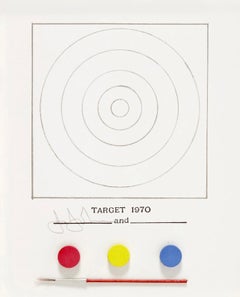
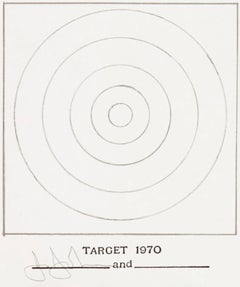
This exquisite offset lithograph with collage additions after Jasper Johns (born 1930), titled Target, from the album Technics and Creativity, Gemini G.E.L., 1971, originates from th...

Category

1970s Abstract Expressionist Abstract Prints

Materials

Found Objects, Lithograph

Ad Reinhardt, Untitled, from Ten Works by Ten Painters, 1964

Ad Reinhardt, Untitled, from Ten Works by Ten Painters, 1964

By Ad Reinhardt

Located in Southampton, NY

This exquisite silkscreen by Ad Reinhardt (1913–1967), titled Untitled, originates from the landmark 1964 folio X + X (Ten Works by Ten Painters). Published by the Wadsworth Atheneum...

Category

1960s Abstract Expressionist Landscape Prints

Materials

Screen
George Earl Ortman, Untitled, from Ten Works by Ten Painters, 1964

George Earl Ortman, Untitled, from Ten Works by Ten Painters, 1964

By George Earl Ortman

Located in Southampton, NY

This exquisite silkscreen by George Earl Ortman (1926–2015), titled Untitled, originates from the landmark 1964 folio X + X (Ten Works by Ten Painters). Published by the Wadsworth At...
Category

1960s Pop Art Landscape Prints

Materials

Screen
Alexander Calder, Untitled, from Derriere le miroir, 1966

Alexander Calder, Untitled, from Derriere le miroir, 1966

By Alexander Calder

Located in Southampton, NY

This exquisite lithograph by Alexander Calder (1898–1976), titled Sans titre (Untitled), from the folio Derriere le miroir, No. 156, originates from the 1966 edition published by Mae...

Category

1960s Modern Abstract Prints

Materials

Lithograph

Alexander Calder, Untitled, from Derriere le miroir, 1966

Alexander Calder, Untitled, from Derriere le miroir, 1966

By Alexander Calder

Located in Southampton, NY

This exquisite lithograph by Alexander Calder (1898–1976), titled Sans titre (Untitled), from the folio Derriere le miroir, No. 156, originates from the 1966 edition published by Mae...

Category

1960s Modern Abstract Prints

Materials

Lithograph

Alexander Calder, Untitled, from Derriere le miroir, 1966

Alexander Calder, Untitled, from Derriere le miroir, 1966

By Alexander Calder

Located in Southampton, NY

This exquisite lithograph by Alexander Calder (1898–1976), titled Sans titre (Untitled), from the folio Derriere le miroir, No. 156, originates from the 1966 edition published by Mae...

Category

1960s Modern Abstract Prints

Materials

Lithograph

Max Bill, Variation 13, from XXe siecle, 1938

Max Bill, Variation 13, from XXe siecle, 1938

By Max Bill

Located in Southampton, NY

This exquisite lithograph by Max Bill (1908–1994), titled Variation 13, from the album XXe siecle, Chroniques du jour, 13 rue Valette (5e), Directeur G. di San Lazzaro, Sommaire du n...

Category

1930s Constructivist Abstract Prints

Materials

Lithograph

Alexander Calder, Untitled, from XXe Siecle, 1971

Alexander Calder, Untitled, from XXe Siecle, 1971

By Alexander Calder

Located in Southampton, NY

This exquisite lithograph by Alexander Calder (1898–1976), titled Sans titre (Untitled), from the album XXe Siecle, Nouvelle serie, XXXIIIe Annee, No. 37, Decembre 1971, originates f...

Category

1970s Surrealist Abstract Prints

Materials

Lithograph

Alexander Calder, Untitled, from Derriere le miroir, 1966

Alexander Calder, Untitled, from Derriere le miroir, 1966

By Alexander Calder

Located in Southampton, NY

This exquisite lithograph by Alexander Calder (1898–1976), titled Sans titre (Untitled), from the folio Derriere le miroir, No. 156, originates from the 1966 edition published by Mae...

Category

1960s Modern Abstract Prints

Materials

Lithograph

Alexander Calder, Untitled, from Derriere le miroir, 1966

Alexander Calder, Untitled, from Derriere le miroir, 1966

By Alexander Calder

Located in Southampton, NY

This exquisite lithograph by Alexander Calder (1898–1976), titled Sans titre (Untitled), from the folio Derriere le miroir, No. 156, originates from the 1966 edition published by Mae...

Category

1960s Modern Abstract Prints

Materials

Lithograph

Alexander Calder, Untitled, from Derriere le miroir, 1966

Alexander Calder, Untitled, from Derriere le miroir, 1966

By Alexander Calder

Located in Southampton, NY

This exquisite lithograph by Alexander Calder (1898–1976), titled Sans titre (Untitled), from the folio Derriere le miroir, No. 156, originates from the 1966 edition published by Mae...

Category

1960s Modern Abstract Prints

Materials

Lithograph

Alexander Calder, Untitled, from Derriere le miroir, 1966

Alexander Calder, Untitled, from Derriere le miroir, 1966

By Alexander Calder

Located in Southampton, NY

This exquisite lithograph by Alexander Calder (1898–1976), titled Sans titre (Untitled), from the folio Derriere le miroir, No. 156, originates from the 1966 edition published by Mae...

Category

1960s Modern Abstract Prints

Materials

Lithograph

Alexander Calder, Untitled, from Derriere le miroir, 1966

Alexander Calder, Untitled, from Derriere le miroir, 1966

By Alexander Calder

Located in Southampton, NY

This exquisite lithograph by Alexander Calder (1898–1976), titled Sans titre (Untitled), from the folio Derriere le miroir, No. 156, originates from the 1966 edition published by Mae...

Category

1960s Modern Abstract Prints

Materials

Lithograph

Alexander Calder, Untitled, from Derriere le miroir, 1966

Alexander Calder, Untitled, from Derriere le miroir, 1966

By Alexander Calder

Located in Southampton, NY

This exquisite lithograph by Alexander Calder (1898–1976), titled Sans titre (Untitled), from the folio Derriere le miroir, No. 156, originates from the 1966 edition published by Mae...

Category

1960s Modern Abstract Prints

Materials

Lithograph

Alexander Calder, Untitled and The Three Faces, from Derriere le miroir, 1976

Alexander Calder, Untitled and The Three Faces, from Derriere le miroir, 1976

By Alexander Calder

Located in Southampton, NY

This exquisite lithograph by Alexander Calder (1898–1976), titled Sans titre et Les Trois Visages (Untitled and The Three Faces), from the folio Derriere le miroir, No. 221, originat...

Category

1970s Modern Abstract Prints

Materials

Lithograph

Alexander Calder, Untitled, from Derriere le miroir, 1976

Alexander Calder, Untitled, from Derriere le miroir, 1976

By Alexander Calder

Located in Southampton, NY

This exquisite lithograph by Alexander Calder (1898–1976), titled Sans titre (Untitled), from the folio Derriere le miroir, No. 221, originates from the 1976 edition published by Mae...

Category

1970s Modern Still-life Prints

Materials

Lithograph

Alexander Calder, Two Faces, from Derriere le miroir, 1976

Alexander Calder, Two Faces, from Derriere le miroir, 1976

By Alexander Calder

Located in Southampton, NY

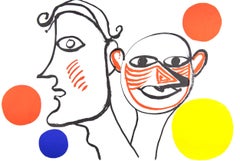
This exquisite lithograph by Alexander Calder (1898–1976), titled Deux Visages (Two Faces), from the folio Derriere le miroir, No. 221, originates from the 1976 edition published by ...

Category

1970s Modern Abstract Prints

Materials

Lithograph

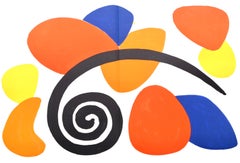
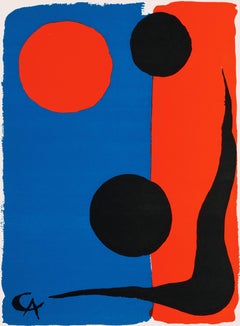
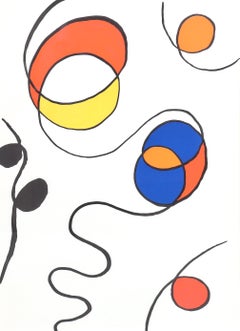
Alexander Calder, Composition with Spirals, from Derriere le miroir, 1968

Alexander Calder, Composition with Spirals, from Derriere le miroir, 1968

By Alexander Calder

Located in Southampton, NY

This exquisite lithograph by Alexander Calder (1898–1976), titled Composition aux Spirales (Composition with Spirals), from the folio Derriere le miroir, No. 173, originates from the 1968 edition published by Maeght Editeur, Paris, and printed by Mourlot Freres, Paris, 1968. Composition aux Spirales exemplifies Calder’s mastery of rhythm and form, translating his sculptural language of balance and motion into vivid, dynamic compositions on paper that capture his signature sense of energy and harmony. Executed as a lithograph on velin paper, this work measures 15 x 22 inches, with centerfold, as issued. Unsigned and unnumbered as issued. The edition exemplifies the superb craftsmanship of Mourlot Freres, Paris. Artwork Details: Artist: Alexander Calder (1898–1976) Title: Composition aux Spirales (Composition with Spirals), from the folio Derriere le miroir, No. 173 Medium: Lithograph on velin paper Dimensions: 15 x 22 inches (38.1 x 55.88 cm), with centerfold, as issued Inscription: Unsigned and unnumbered as issued Date: 1968 Publisher: Maeght Editeur, Paris Printer: Mourlot Freres, Paris Condition: Well preserved, consistent with age and medium Provenance: From the folio Derriere le miroir, No. 173, published by Maeght Editeur, Paris; printed by Mourlot Freres, Paris, 1968 Notes: Excerpted from the folio (translated from French), The illustrations in this issue are original lithographs by Alexander Calder drawn in the workshops of the Arte printing shop. This issue of "Behind the Mirror" has a luxury edition drawn on velin de Lana and limited to CL examples numbered and signed by the artist on the colophon. The text of G. Carandente was translated from Italian by Alain Veinstein. About the Publication: Derriere le miroir (Behind the Mirror) was one of the most important art publications of the 20th century, created and published by Maeght Editeur in Paris from 1946 to 1982. Founded by the visionary art dealer and publisher Aime Maeght, the series served as both an exhibition catalogue and a work of art in its own right, uniting original lithographs by leading modern and contemporary artists with critical essays, poetry, and design of the highest quality. Printed by master lithographers such as Mourlot Freres and Arte, Derriere le miroir became synonymous with the artistic vanguard of postwar Europe. Each issue was devoted to a single artist or theme and published to accompany exhibitions at the Galerie Maeght in Paris, featuring works by Pablo Picasso, Henri Matisse, Georges Braque, Joan Miro, Marc Chagall, Alexander Calder, Fernand Leger, and Alberto Giacometti, among others. The publication reflected Maeght’s belief that art should be both accessible and elevated—an ideal realized through its luxurious production values, meticulous printing, and collaboration with the greatest creative minds of its time. About the Artist: Alexander Calder (1898–1976) was an American sculptor, painter, and printmaker whose pioneering innovations in kinetic art revolutionized 20th-century sculpture and transformed modern visual language. Born in Lawnton, Pennsylvania, into a family of artists, Calder initially trained as a mechanical engineer at the Stevens Institute of Technology before turning to art at the Art Students League in New York—a combination of technical precision and creative imagination that defined his career. Moving to Paris in 1926, he immersed himself in the avant-garde and formed friendships with Pablo Picasso, Alberto Giacometti, Joan Miro, Wassily Kandinsky, Salvador Dali, Marcel Duchamp, and Man Ray, whose ideas profoundly shaped his artistic philosophy. From Picasso, he absorbed structural invention; from Miro, lyrical abstraction; from Kandinsky, spiritual geometry; and from Duchamp and Man Ray, the courage to merge intellect and play. In Paris, Calder created his famous Cirque Calder, a miniature mechanical circus that introduced motion and performance as central components of sculpture, and by the early 1930s, he invented the mobile—a term coined by Duchamp—to describe his delicately balanced, moving sculptures that responded to air currents. Later, Jean Arp would name his stationary counterparts stabiles. These two inventions—sculptures that could either float and spin gracefully or stand monumentally still—transformed art into a dynamic dialogue between movement, balance, and space. Calder’s signature forms, painted in vivid reds, blacks, blues, and yellows, embodied both joy and precision, creating an art that was at once abstract, organic, and deeply human. Like Kandinsky and Miro, he viewed art as a form of rhythm and emotion; like Duchamp, he embraced innovation and humor; and like Giacometti and Dali, he was fascinated by perception, structure, and the unseen forces of motion. His monumental public sculptures—such as La Grande Vitesse (1969) in Grand Rapids and Flamingo (1973) in Chicago—redefined public art as a symbol of civic optimism and modern progress. A key bridge between European modernism and American abstraction, Calder’s influence extended to artists including Jean Tinguely, George Rickey, Donald Judd, Ellsworth Kelly, Richard Serra, and Olafur Eliasson, whose works in kinetic and spatial art continue to echo his vision. His gouaches, prints, and jewelry carried the same balance and movement as his sculptures, revealing a unified language of rhythm across media. Represented in every major modern museum—including MoMA, the Guggenheim, the Tate, and the Centre Pompidou—Calder remains celebrated for merging engineering, color, and poetry into an art of pure equilibrium. Standing alongside Pablo Picasso, Alexander Calder, Alberto Giacometti, Salvador Dali, Joan Miro, Wassily Kandinsky, Marcel Duchamp, and Man Ray, he remains one of the cornerstones of modern art—a visionary whose works breathe with motion, grace, and joy. His highest auction record was achieved by Poisson Volant (Flying Fish) (1957), which sold for $25.9 million at Christie’s, New York, on May 15, 2014, reaffirming Alexander Calder’s enduring legacy as one of the most inventive, dynamic, and collectible artists in the history of modern art. Alexander Calder Composition...
Category

1960s Surrealist Abstract Prints

Materials

Lithograph

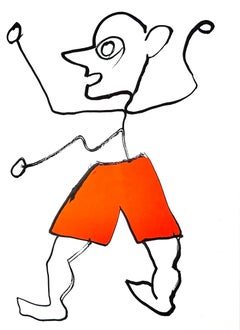
Alexander Calder, Man with Raised Arms, from Derriere le miroir, 1976

Alexander Calder, Man with Raised Arms, from Derriere le miroir, 1976

By Alexander Calder

Located in Southampton, NY

This exquisite lithograph by Alexander Calder (1898–1976), titled L'Homme aux Bras Leves (Man with Raised Arms), from the folio Derriere le miroir, No. 221, originates from the 1976 ...

Category

1970s Modern Abstract Prints

Materials

Lithograph

Alexander Calder, The Three Faces, from Derriere le miroir, 1976

Alexander Calder, The Three Faces, from Derriere le miroir, 1976

By Alexander Calder

Located in Southampton, NY

This exquisite lithograph by Alexander Calder (1898–1976), titled Les Trois Visages (The Three Faces), from the folio Derriere le miroir, No. 221, originates from the 1976 edition pu...

Category

1970s Modern Still-life Prints

Materials

Lithograph

Alexander Calder, Black Form, from Derriere le miroir, 1968

Alexander Calder, Black Form, from Derriere le miroir, 1968

By Alexander Calder

Located in Southampton, NY

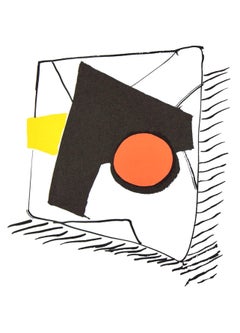
This exquisite lithograph by Alexander Calder (1898–1976), titled Forme Noire (Black Form), from the folio Derriere le miroir, No. 173, originates from the 1968 edition published by ...

Category

1960s Surrealist Abstract Prints

Materials

Lithograph

Alexander Calder, The Arches, from Derriere le miroir, 1968

Alexander Calder, The Arches, from Derriere le miroir, 1968

By Alexander Calder

Located in Southampton, NY

This exquisite lithograph by Alexander Calder (1898–1976), titled Les Arcs (The Arches), from the folio Derriere le miroir, No. 173, originates from the 1968 edition published by Mae...

Category

1960s Surrealist Abstract Prints

Materials

Lithograph

Alexander Calder, Composition with Triangles, from Derriere le miroir, 1968

Alexander Calder, Composition with Triangles, from Derriere le miroir, 1968

By Alexander Calder

Located in Southampton, NY

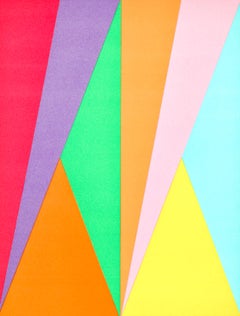
This exquisite lithograph by Alexander Calder (1898–1976), titled Composition aux Triangles (Composition with Triangles), from the folio Derriere le miroir, No. 173, originates from the 1968 edition published by Maeght Editeur, Paris, and printed by Mourlot Freres, Paris, 1968. Composition aux Triangles exemplifies Calder’s mastery of rhythm and form, translating his sculptural language of balance and motion into vivid, dynamic compositions on paper that capture his signature sense of energy and harmony. Executed as a lithograph on velin paper, this work measures 15 x 11 inches. Unsigned and unnumbered as issued. The edition exemplifies the superb craftsmanship of Mourlot Freres, Paris. Artwork Details: Artist: Alexander Calder (1898–1976) Title: Composition aux Triangles (Composition with Triangles), from the folio Derriere le miroir, No. 173 Medium: Lithograph on velin paper Dimensions: 15 x 11 inches (38.1 x 27.94 cm) Inscription: Unsigned and unnumbered as issued Date: 1968 Publisher: Maeght Editeur, Paris Printer: Mourlot Freres, Paris Condition: Well preserved, consistent with age and medium Provenance: From the folio Derriere le miroir, No. 173, published by Maeght Editeur, Paris; printed by Mourlot Freres, Paris, 1968 Notes: Excerpted from the folio (translated from French), The illustrations in this issue are original lithographs by Alexander Calder drawn in the workshops of the Arte printing shop. This issue of "Behind the Mirror" has a luxury edition drawn on velin de Lana and limited to CL examples numbered and signed by the artist on the colophon. The text of G. Carandente was translated from Italian by Alain Veinstein. About the Publication: Derriere le miroir (Behind the Mirror) was one of the most important art publications of the 20th century, created and published by Maeght Editeur in Paris from 1946 to 1982. Founded by the visionary art dealer and publisher Aime Maeght, the series served as both an exhibition catalogue and a work of art in its own right, uniting original lithographs by leading modern and contemporary artists with critical essays, poetry, and design of the highest quality. Printed by master lithographers such as Mourlot Freres and Arte, Derriere le miroir became synonymous with the artistic vanguard of postwar Europe. Each issue was devoted to a single artist or theme and published to accompany exhibitions at the Galerie Maeght in Paris, featuring works by Pablo Picasso, Henri Matisse, Georges Braque, Joan Miro, Marc Chagall, Alexander Calder, Fernand Leger, and Alberto Giacometti, among others. The publication reflected Maeght’s belief that art should be both accessible and elevated—an ideal realized through its luxurious production values, meticulous printing, and collaboration with the greatest creative minds of its time. About the Artist: Alexander Calder (1898–1976) was an American sculptor, painter, and printmaker whose pioneering innovations in kinetic art revolutionized 20th-century sculpture and transformed modern visual language. Born in Lawnton, Pennsylvania, into a family of artists, Calder initially trained as a mechanical engineer at the Stevens Institute of Technology before turning to art at the Art Students League in New York—a combination of technical precision and creative imagination that defined his career. Moving to Paris in 1926, he immersed himself in the avant-garde and formed friendships with Pablo Picasso, Alberto Giacometti, Joan Miro, Wassily Kandinsky, Salvador Dali, Marcel Duchamp, and Man Ray, whose ideas profoundly shaped his artistic philosophy. From Picasso, he absorbed structural invention; from Miro, lyrical abstraction; from Kandinsky, spiritual geometry; and from Duchamp and Man Ray, the courage to merge intellect and play. In Paris, Calder created his famous Cirque Calder, a miniature mechanical circus that introduced motion and performance as central components of sculpture, and by the early 1930s, he invented the mobile—a term coined by Duchamp—to describe his delicately balanced, moving sculptures that responded to air currents. Later, Jean Arp would name his stationary counterparts stabiles. These two inventions—sculptures that could either float and spin gracefully or stand monumentally still—transformed art into a dynamic dialogue between movement, balance, and space. Calder’s signature forms, painted in vivid reds, blacks, blues, and yellows, embodied both joy and precision, creating an art that was at once abstract, organic, and deeply human. Like Kandinsky and Miro, he viewed art as a form of rhythm and emotion; like Duchamp, he embraced innovation and humor; and like Giacometti and Dali, he was fascinated by perception, structure, and the unseen forces of motion. His monumental public sculptures—such as La Grande Vitesse (1969) in Grand Rapids and Flamingo (1973) in Chicago—redefined public art as a symbol of civic optimism and modern progress. A key bridge between European modernism and American abstraction, Calder’s influence extended to artists including Jean Tinguely, George Rickey, Donald Judd, Ellsworth Kelly, Richard Serra, and Olafur Eliasson, whose works in kinetic and spatial art continue to echo his vision. His gouaches, prints, and jewelry carried the same balance and movement as his sculptures, revealing a unified language of rhythm across media. Represented in every major modern museum—including MoMA, the Guggenheim, the Tate, and the Centre Pompidou—Calder remains celebrated for merging engineering, color, and poetry into an art of pure equilibrium. Standing alongside Pablo Picasso, Alexander Calder, Alberto Giacometti, Salvador Dali, Joan Miro, Wassily Kandinsky, Marcel Duchamp, and Man Ray, he remains one of the cornerstones of modern art—a visionary whose works breathe with motion, grace, and joy. His highest auction record was achieved by Poisson Volant (Flying Fish) (1957), which sold for $25.9 million at Christie’s, New York, on May 15, 2014, reaffirming Alexander Calder’s enduring legacy as one of the most inventive, dynamic, and collectible artists in the history of modern art. Alexander Calder Composition...

Category

1960s Surrealist Abstract Prints

Materials

Lithograph

Alexander Calder, Untitled, from Derriere le miroir, 1968

Alexander Calder, Untitled, from Derriere le miroir, 1968

By Alexander Calder

Located in Southampton, NY

This exquisite lithograph by Alexander Calder (1898–1976), titled Sans titre (Untitled), from the folio Derriere le miroir, No. 173, originates from the 1968 edition published by Mae...

Category

1960s Surrealist Abstract Prints

Materials

Lithograph

Alexander Calder, Yellow Face, from Derriere le miroir, 1976

Alexander Calder, Yellow Face, from Derriere le miroir, 1976

By Alexander Calder

Located in Southampton, NY

This exquisite lithograph by Alexander Calder (1898–1976), titled Visage Jaune (Yellow Face), from the folio Derriere le miroir, No. 221, originates from the 1976 edition published b...

Category

1970s Modern Abstract Prints

Materials

Lithograph

Alexander Calder, Composition with Circles, from Derriere le miroir, 1976

Alexander Calder, Composition with Circles, from Derriere le miroir, 1976

By Alexander Calder

Located in Southampton, NY

This exquisite lithograph by Alexander Calder (1898–1976), titled Composition aux Cercles (Composition with Circles), from the folio Derriere le miroir, No. 221, originates from the 1976 edition published by Maeght Editeur, Paris, and printed by Mourlot Freres, Paris, 1976. Composition aux Cercles reflects Calder’s mastery of rhythm, motion, and form—translating the dynamic energy of his sculptural works into bold, abstract compositions on paper, rich with color and movement. Executed as a lithograph on velin paper, this work measures 15 x 22 inches, with centerfold as issued. Unsigned and unnumbered as issued. The edition exemplifies the superb craftsmanship of Mourlot Freres, Paris. Artwork Details: Artist: Alexander Calder (1898–1976) Title: Composition aux Cercles (Composition with Circles), from the folio Derriere le miroir, No. 221 Medium: Lithograph on velin paper Dimensions: 15 x 22 inches (38.1 x 55.88 cm), with centerfold as issued Inscription: Unsigned and unnumbered as issued Date: 1976 Publisher: Maeght Editeur, Paris Printer: Mourlot Freres, Paris Condition: Well preserved, consistent with age and medium Provenance: From the folio Derriere le miroir, No. 221, published by Maeght Editeur, Paris; printed by Mourlot Freres, Paris, 1976 Notes: Excerpted from the folio (translated from French), The illustrations on the cover and pages 3, 4-5, 6, 9, 12-13 and 16 of this issue of "Behind the Mirror" are original lithographs by Calder printed at l'imprimerie Arte, Adrien Maeght. It was printed a luxury edition on velin d'Arches in CL numbered examples. About the Publication: Derriere le miroir (Behind the Mirror) was one of the most important art publications of the 20th century, created and published by Maeght Editeur in Paris from 1946 to 1982. Founded by the visionary art dealer and publisher Aime Maeght, the series served as both an exhibition catalogue and a work of art in its own right, uniting original lithographs by leading modern and contemporary artists with critical essays, poetry, and design of the highest quality. Printed by master lithographers such as Mourlot Freres and Arte, Derriere le miroir became synonymous with the artistic vanguard of postwar Europe. Each issue was devoted to a single artist or theme and published to accompany exhibitions at the Galerie Maeght in Paris, featuring works by Pablo Picasso, Henri Matisse, Georges Braque, Joan Miro, Marc Chagall, Alexander Calder, Fernand Leger, and Alberto Giacometti, among others. The publication reflected Maeght’s belief that art should be both accessible and elevated—an ideal realized through its luxurious production values, meticulous printing, and collaboration with the greatest creative minds of its time. About the Artist: Alexander Calder (1898–1976) was an American sculptor, painter, and printmaker whose pioneering innovations in kinetic art revolutionized 20th-century sculpture and transformed modern visual language. Born in Lawnton, Pennsylvania, into a family of artists, Calder initially trained as a mechanical engineer at the Stevens Institute of Technology before turning to art at the Art Students League in New York—a combination of technical precision and creative imagination that defined his career. Moving to Paris in 1926, he immersed himself in the avant-garde and formed friendships with Pablo Picasso, Alberto Giacometti, Joan Miro, Wassily Kandinsky, Salvador Dali, Marcel Duchamp, and Man Ray, whose ideas profoundly shaped his artistic philosophy. From Picasso, he absorbed structural invention; from Miro, lyrical abstraction; from Kandinsky, spiritual geometry; and from Duchamp and Man Ray, the courage to merge intellect and play. In Paris, Calder created his famous Cirque Calder, a miniature mechanical circus that introduced motion and performance as central components of sculpture, and by the early 1930s, he invented the mobile—a term coined by Duchamp—to describe his delicately balanced, moving sculptures that responded to air currents. Later, Jean Arp would name his stationary counterparts stabiles. These two inventions—sculptures that could either float and spin gracefully or stand monumentally still—transformed art into a dynamic dialogue between movement, balance, and space. Calder’s signature forms, painted in vivid reds, blacks, blues, and yellows, embodied both joy and precision, creating an art that was at once abstract, organic, and deeply human. Like Kandinsky and Miro, he viewed art as a form of rhythm and emotion; like Duchamp, he embraced innovation and humor; and like Giacometti and Dali, he was fascinated by perception, structure, and the unseen forces of motion. His monumental public sculptures—such as La Grande Vitesse (1969) in Grand Rapids and Flamingo (1973) in Chicago—redefined public art as a symbol of civic optimism and modern progress. A key bridge between European modernism and American abstraction, Calder’s influence extended to artists including Jean Tinguely, George Rickey, Donald Judd, Ellsworth Kelly, Richard Serra, and Olafur Eliasson, whose works in kinetic and spatial art continue to echo his vision. His gouaches, prints, and jewelry carried the same balance and movement as his sculptures, revealing a unified language of rhythm across media. Represented in every major modern museum—including MoMA, the Guggenheim, the Tate, and the Centre Pompidou—Calder remains celebrated for merging engineering, color, and poetry into an art of pure equilibrium. Standing alongside Pablo Picasso, Alexander Calder, Alberto Giacometti, Salvador Dali, Joan Miro, Wassily Kandinsky, Marcel Duchamp, and Man Ray, he remains one of the cornerstones of modern art—a visionary whose works breathe with motion, grace, and joy. His highest auction record was achieved by Poisson Volant (Flying Fish) (1957), which sold for $25.9 million at Christie’s, New York, on May 15, 2014, reaffirming Alexander Calder’s enduring legacy as one of the most inventive, dynamic, and collectible artists in the history of modern art. Alexander Calder Composition...

Category

1970s Modern Abstract Prints

Materials

Lithograph

Alexander Calder, Red and Yellow Composition, from Derriere le miroir, 1968

Alexander Calder, Red and Yellow Composition, from Derriere le miroir, 1968

By Alexander Calder

Located in Southampton, NY

This exquisite lithograph by Alexander Calder (1898–1976), titled Composition Rouge et Jaune (Red and Yellow Composition), from the folio Derriere le miroir, No. 173, originates from...

Category

1960s Surrealist Abstract Prints

Materials

Lithograph

Frank Stella, Rabat, from Ten Works by Ten Painters, 1964

Frank Stella, Rabat, from Ten Works by Ten Painters, 1964

By Frank Stella

Located in Southampton, NY

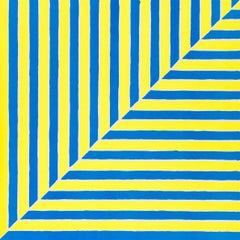
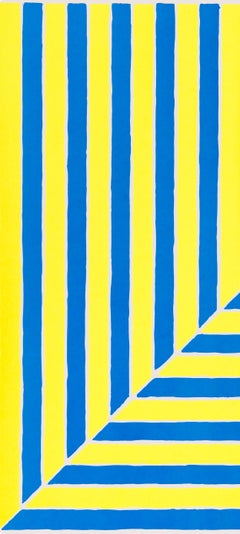
This exquisite silkscreen by Frank Stella (1936–2024), titled Rabat, originates from the landmark 1964 folio X + X (Ten Works by Ten Painters). Published by the Wadsworth Atheneum Mu...

Category

1960s Minimalist Landscape Prints

Materials

Screen
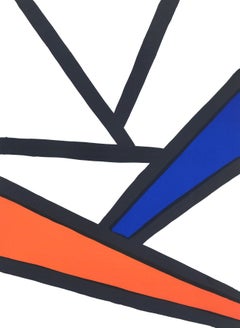
Max Bill, Prism, from San Lazzaro et ses Amis, 1975

Max Bill, Prism, from San Lazzaro et ses Amis, 1975

By Max Bill

Located in Southampton, NY

This exquisite lithograph by Max Bill (1908–1994), titled Prisma (Prism), from the album San Lazzaro et ses Amis, Hommage au fondateur de la revue XXe siecle (San Lazzaro and His Fri...

Category

1970s Constructivist Abstract Prints

Materials

Lithograph

Alexander Calder, Black Form and Red and Yellow Composition, 1968

Alexander Calder, Black Form and Red and Yellow Composition, 1968

By Alexander Calder

Located in Southampton, NY

This exquisite lithograph by Alexander Calder (1898–1976), titled Forme Noire et Composition Rouge et Jaune (Black Form and Red and Yellow Composition), from the folio Derriere le mi...

Category

1960s Surrealist Abstract Prints

Materials

Lithograph

Alexander Calder, To San Lazzaro, from San Lazzaro et ses Amis, 1975

Alexander Calder, To San Lazzaro, from San Lazzaro et ses Amis, 1975

By Alexander Calder

Located in Southampton, NY

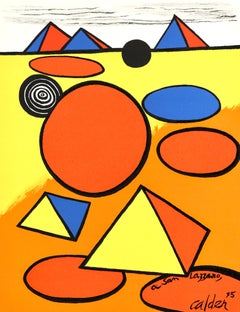
This exquisite lithograph by Alexander Calder (1898–1976), titled A San Lazzaro (To San Lazzaro), from the album San Lazzaro et ses Amis, Hommage au fondateur de la revue XXe siecle ...

Category

1970s Surrealist Abstract Prints

Materials

Lithograph

Alexander Calder, Untitled, from Prints from the Mourlot Press, 1964

Alexander Calder, Untitled, from Prints from the Mourlot Press, 1964

By Alexander Calder

Located in Southampton, NY

This exquisite lithograph by Alexander Calder (1898–1976), titled Sans titre (Untitled), from the album Prints from the Mourlot Press, exhibition sponsored by the French Embassy, cir...

Category

1960s Surrealist Abstract Prints

Materials

Lithograph

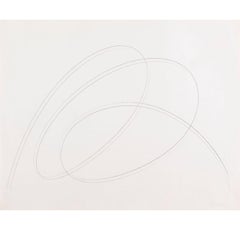
137, Pencil Drawing by Richard Lin, 1960

137, Pencil Drawing by Richard Lin, 1960

By Richard Lin

Located in Kingsclere, GB

137, Pencil Drawing by Richard Lin 1933-2011, 1960 Additional information: Medium: Pencil 30 1/4 x 35 1/8 in 77 x 89 cm signed, dated and titled Executed in pencil against stark wh...

Category

20th Century Abstract Drawings and Watercolors

Materials

Pencil

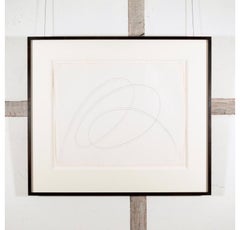
144, Pencil Drawing by Richard Lin, 1960

144, Pencil Drawing by Richard Lin, 1960

By Richard Lin

Located in Kingsclere, GB

144, Pencil Drawing by Richard Lin 1933-2011, 1960 Additional information: Medium: Pencil 29 7/8 x 33 7/8 in 76 x 86 cm signed, dated and titled Emanating minimalist purity and cha...

Category

20th Century Abstract Drawings and Watercolors

Materials

Pencil