23 results for "framed cover from the ladies home journal"

to
5
19
4
15
18
3
2
8
4
7
1
3
Overall Height
to
Overall Width
to
4
3
2
1
1
18
11
7
7
4
4
4
4
2
2
1
1
1
1
1
1
1
1
1
1
22
1
3
2
4
3
2
3
1
4
3
3
2
1
15
12
8
5
5
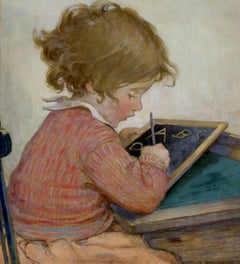
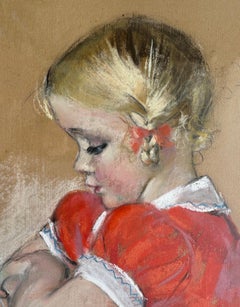
The Young Scholar, Original cover for Good Housekeeping magazine, October 1922

The Young Scholar, Original cover for Good Housekeeping magazine, October 1922

By Jessie Willcox Smith

Located in Fort Washington, PA

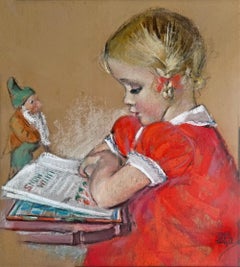
Original cover for Good Housekeeping, published October 1922. The Young Scholar, reproduced on the cover of the October 1922 issue of Good Housekeeping, demonstrates Jessie Willcox ...

Category

1920s Figurative Paintings

Materials

Paper, Mixed Media, Board

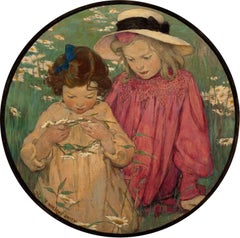
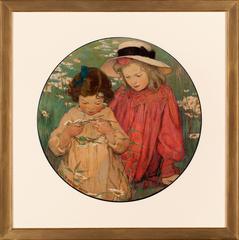
The Daisy Wreath, cover for Harper's Bazar

The Daisy Wreath, cover for Harper's Bazar

By Jessie Willcox Smith

Located in Fort Washington, PA

Medium: Mixed Media on Board Sight Size 18.50" x 18.00", Framed 21.50" x 21.00" Signature: Signed Lower Left Original cover for Harper's Bazar, published June 1910 One of America's greatest illustrators, Jessie Willcox Smith attended the Pennsylvania Academy of the Fine Arts, and studied under Thomas Eakins in Philadelphia, graduating in 1888. A year later, she found work in the production department of the Ladies' Home Journal, for five years. After that, she continued her art education with classes under Howard Pyle, first at Drexel and then at the Brandywine School. Smith then established her reputation, illustrating stories and articles for Century, Collier's Weekly, Leslie's Weekly, Harper's, McClure's,Scribner's, and the Ladies' Home Journal. Smith was closely associated with the artists Elizabeth Shippen Green and Violet Oakley, who also studied with Pyle, and the group became known as "the Red Rose Girls...

Category

Early 1900s Figurative Paintings

Materials

Mixed Media, Board

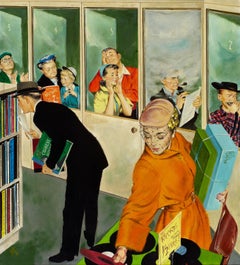
Saturday Evening Post Cover, April 19, 1952

Saturday Evening Post Cover, April 19, 1952

By Thorton Utz

Located in Fort Washington, PA

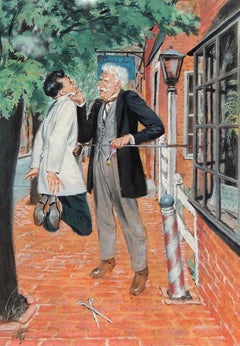
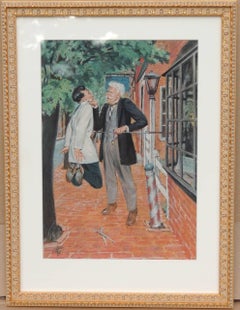
Medium: Oil on Board Signature: Signed Lower Left Sight Size 18.50" x 16.75", Framed 24.00" x 22.25" Saturday Evening Post Cover, April 19, 1952 Thornton Utz liked to work out the poses of his figures with rapid, free sketches that clearly expressed the mood or mental attitude of his characters. Once this had been established, he then posed an photographed his models, as nearly as possible, in the predetermined positions. The photos furnished the details of folds and lighting which lent added factuality to his original poses. He used this approach effectively for his humorous Saturday Evening Post covers as well as for the more serious fiction illustrations for Cosmopolitan, McCall’s, The Ladies’ Home Journal, Redbook, and Good Housekeeping. Utz participated in the Society of Illustrators Air Force Art Program and received a citation from General Curtis LeMay for documenting the airlift of Hungarian refugees. Utz also received the Governor Bryant of Florida Award for his freedom posters. He was born in Memphis, Tennessee, and studied under Burton Callicott in Memphis. He also attended the American Academy of Art in Chicago and late taught at the Chicago Art Institute. Utz eventually concentrated on paintings and commissioned portraiture, which included President Carter...

Category

1950s Other Art Style Paintings

Materials

Oil, Board

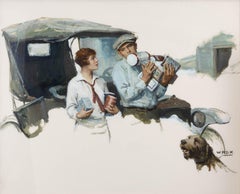
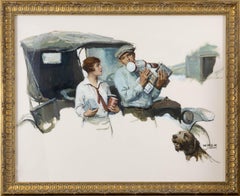
Returning from the General Store

Returning from the General Store

By William Henry Dethlef Koerner

Located in Missouri, MO

Returning from the General Store William Henry Dethlef Koerner (German, American, 1878-1938) Oil on Panel Signed Lower Right 24 x 30 inches 27 x 33 inches with frame William Henry D...

Category

Early 20th Century American Modern Figurative Paintings

Materials

Oil, Panel

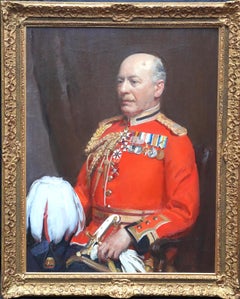
Portrait of a British Army General in Uniform - British exh. art oil painting

Portrait of a British Army General in Uniform - British exh. art oil painting

By Walter Ernest Webster

Located in Hagley, England

This superb British Impressionist Edwardian military portrait oil painting is by noted artist Walter Ernest Webster. Painted circa 1910 it is a seated generous half length portrait, ...

Category

Early 1900s Impressionist Portrait Paintings

Materials

Oil

“Let Nothing You Dismay, " Collier's Magazine Cover, January 1931

“Let Nothing You Dismay, " Collier's Magazine Cover, January 1931

By E.M. Jackson

Located in Fort Washington, PA

Collier's Magazine Cover, January 1931 Medium: Oil on Canvas Signature: Signed Lower Right As a child, Jackson shoed early interest in drawing, and took Saturday morning lessons from the only are teacher in town, but went on to graduate as an architect from Georgia Tech...

Category

1930s Other Art Style Paintings

Materials

Canvas, Oil

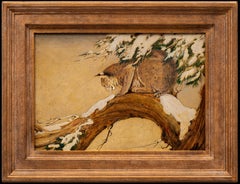
Painting of a Lynx in a Tree Charles Livingston Bull (American, 1874-1932)

Painting of a Lynx in a Tree Charles Livingston Bull (American, 1874-1932)

By Charles Livingston Bull

Located in SANTA FE, NM

Painting of a Lynx in a Tree Charles Livingston Bull (American, 1874-1932) Oil on canvas Signed on reverse 13 1/2 x 19 1/2 ( 20 3/4 x26 3/4 frame) inches Charles Livingston Bull (1...

Category

1910s Art Nouveau Animal Paintings

Materials

Canvas, Oil

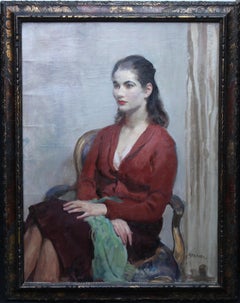
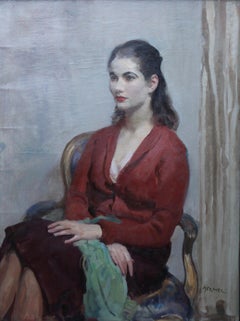
Portrait of Young Lady in Red - British 20's Impressionist oil painting interior

Portrait of Young Lady in Red - British 20's Impressionist oil painting interior

By Walter Ernest Webster

Located in Hagley, England

Painted circa 1920 by the noted British Impressionist portrait painter Walter Ernest Webster, this lovely oil painting depicts a beautiful young woman in an impressionist palette. Si...

Category

1920s Impressionist Portrait Paintings

Materials

Oil

Portrait of a Young Lady  - British art 20's Impressionist oil painting portrait

Portrait of a Young Lady - British art 20's Impressionist oil painting portrait

By Walter Ernest Webster

Located in Hagley, England

This lovely portrait was painted circa 1920 by the noted British Impressionist portrait painter Walter Ernest Webster. This painting depicts a beautiful young woman in an Impressioni...

Category

1920s Impressionist Portrait Paintings

Materials

Oil

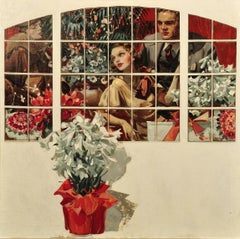
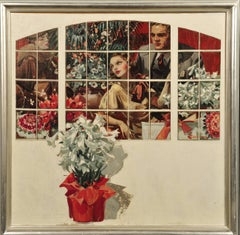
"Say it with flowers" - Easter illustration for Cosmopolitan magazine April 1938

"Say it with flowers" - Easter illustration for Cosmopolitan magazine April 1938

By E.M. Jackson

Located in Fort Washington, PA

Medium: Oil on Canvas Signature: Signed Lower Right Story illustration for "Say it with Flowers" by Margaret E. Sangster, published in Hearst's International - Cosmopolitan, April 1...

Category

1930s Other Art Style Paintings

Materials

Canvas, Oil

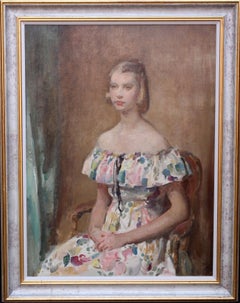
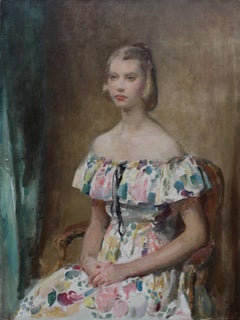
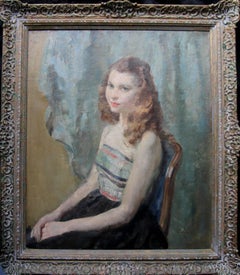
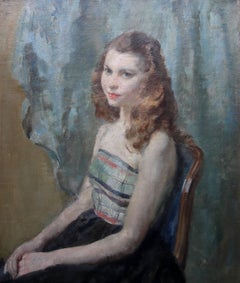
Portrait of Seated Young Woman  - British 30's art Impressionist oil painting

Portrait of Seated Young Woman - British 30's art Impressionist oil painting

By Walter Ernest Webster

Located in Hagley, England

This lovely portrait was painted by the noted British Impressionist portrait painter Walter Ernest Webster. It depicts a young woman and was painted circa 1930 in an impressionist pa...

Category

1930s Impressionist Portrait Paintings

Materials

Oil

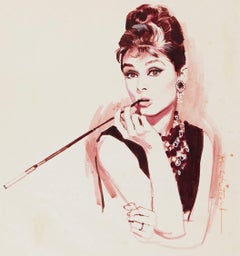
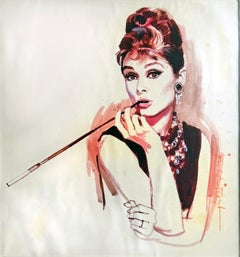
Audrey Hepburn from Breakfast at Tiffany original portrait on paper, Signed.

Audrey Hepburn from Breakfast at Tiffany original portrait on paper, Signed.

By Jon Whitcomb

Located in Miami, FL

Legendary glamour illustrator Jon Whitcomb captures Audrey Hepburn for the iconic movie Breakfast at Tiffany's. The work features a sultry portrait set against a seamless background....

Category

1960s Post-Impressionist Nude Drawings and Watercolors

Materials

Pencil, Gouache, Watercolor, Paper

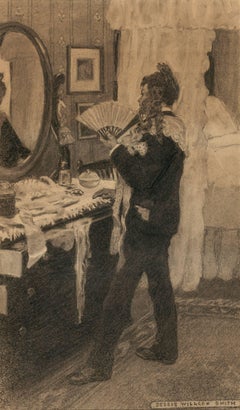
Boy Playing Dress-Up, Story Illustration

Boy Playing Dress-Up, Story Illustration

By Jessie Willcox Smith

Located in Fort Washington, PA

"He surveyed himself with satisfaction." Illustration for An Old-Fashioned Girl by Louisa May Alcott, published in 1902 by Little, Brown, & Company Smith, Jessie Willcox: Born in Philadelphia, Pennsylvania in 1863 to an affluent family, Jessie Willcox Smith attended private schools in that city, as well as in Cincinnati, Ohio. At age 20, she went to work as a kindergarten teacher but soon learned that she could not handle the stress of dealing with small children. On a suggestion from one of her cousins, Smith took art classes, first at the School of Design for Women, then at the Pennsylvania Academy of Fine Arts. Later, Smith went on to study at Drexel University. It was at that school she became good friends with two other artists, Elizabeth Shippen Green and Violet Oakley. The trio dubbed themselves "The Red Rose Girls...

Category

20th Century Other Art Style Paintings

Materials

Board, Charcoal

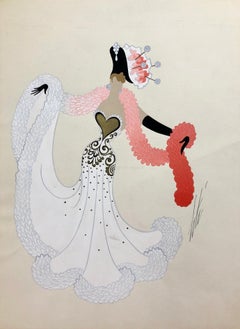
Franzosischer Walter quand l'amour meurt

Franzosischer Walter quand l'amour meurt

By Erté

Located in Chatsworth, CA

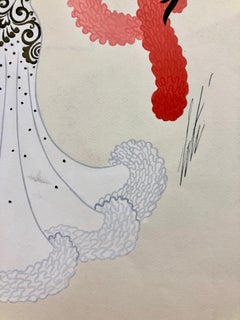
This piece is a unique, original gouache on paper by Erte, also known as Romain de Tirtoff. Erte was a vastly diverse artist who excelled in an array of fields including fashion, jew...

Category

1950s Art Deco More Art

Materials

Gouache

Carla Rae Johnson, PTSD Week 68, 2018, Graphite on bristol board, Political

Carla Rae Johnson, PTSD Week 68, 2018, Graphite on bristol board, Political

By Carla Rae Johnson

Located in Darien, CT

P.T.S.D. (Post Trump Series of Drawings) by Carla Rae Johnson The 87 satirical drawings displayed here are from a series that were produced one per week since November 9, 2016 (one d...

Category

2010s Pop Art Drawings and Watercolor Paintings

Materials

Paper, Graphite

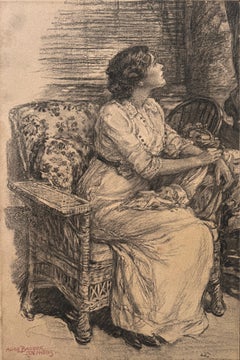
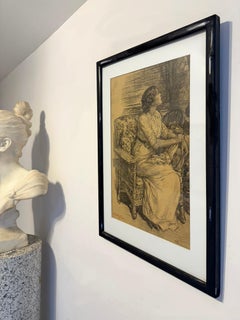
Attractive Young Woman Sitting in Chair and Looking Upwards in Domestic Setting

Attractive Young Woman Sitting in Chair and Looking Upwards in Domestic Setting

By Alice Barber Stephens

Located in Miami, FL

Female Illustrator of the Golden Age Alice Barber Stephens renders in an academic style and women sitting in a chair and responding to something outside of the frame. Signed lower left. Most likely done for a major newsstand magazine like Harper's, Century or Scribner's Monthly. Work is framed under glass in a simple black wood frame. Perhaps period. Matt is new. Frame size: 20.5 x 14.5 From: Wikipedia Alice Barber Stephens (July 1, 1858 – July 13, 1932) was an American painter and engraver, best remembered for her illustrations. Her work regularly appeared in magazines such as Scribner's Monthly, Harper's Weekly, and The Ladies Home Journal. Early life and education Alice Barber was born near Salem, New Jersey. She was the eighth of nine children born to Samuel Clayton Barber and Mary Owen, who were Quakers. She attended local schools until she and her family moved to Philadelphia, Pennsylvania. At age 15 she became a student at the Philadelphia School of Design for Women (now Moore College of Art & Design), where she studied wood engraving. The Women's Life Class (1879), Pennsylvania Academy of the Fine Arts, Philadelphia, Pennsylvania. She was admitted to the Pennsylvania Academy of the Fine Arts in 1876 (the first year women were admitted), studying under Thomas Eakins. Among her fellow students at the Academy were Susan MacDowell, Frank Stephens, David Wilson Jordan, Lavinia Ebbinghausen, Thomas Anshutz, and Charles H. Stephens (whom she would marry). During this time, at the academy, she began to work with a variety of media, including black-and-white oils, ink washes, charcoal, full-color oils, and watercolors. In 1879, Eakins chose Stephens to illustrate an Academy classroom scene for Scribner's Monthly. The resulting work, Women's Life Class, was Stephens' first illustration credit. New Woman As educational opportunities were made more available in the nineteenth century, women artists became part of professional enterprises, including founding their own art associations. Artwork made by women was considered to be inferior by the art world, and to help overcome that stereotype women became "increasingly vocal and confident" in promoting women's work, and thus became part of the emerging image of the educated, modern and freer "New Woman". Artists then, "played crucial roles in representing the New Woman, both by drawing images of the icon and exemplifying this emerging type through their own lives." Alice Barber Stephens, The Women Business, oil, 1897, Brandywine River Museum, Chadds Ford, Pennsylvania One example of overcoming women stereotypes was Stephens' Woman in Business from 1897, which showed how women could focus not only in the home, but also in the economic world.[8] As women began to work, their career choices broadened and illustration became a commendable occupation. People's ideas about education and art started to merge, and the outcome of a certain sensitivity to the arts began to be seen as uplifting and educational. By using illustration as a means to further their practices, women were able to fit the traditional gender role while still being active in their pursuits for the "New Woman". According to Rena Robey of Art Times, "The early feminists began to leave the home to participate in clubs as moral and cultural guardians, focused on cleaning up cities and helping African Americans, impoverished women, working children, immigrants, and other previously ignored groups." Stephens took advantage of the explosion of illustration opportunities, including the opportunity to work from home. Women's education Edwin Forrest House, formerly the home of the Philadelphia School of Design for Women. Throughout the period before the civil war, textile and other decorative work became acceptable occupations for those who aspired to be in the middle class. The Philadelphia School of Design for Women, founded in 1848 by Sarah Worthington Peter was first among a group of women's design schools established in the 1850s and 1860s; others appeared in Boston, New York, Pittsburgh, and Cincinnati. It began as a charitable effort to train needy and deserving young women in textile and wallpaper design, wood engraving, and other salable artistic skills, providing a means for training women who needed wage work. The Pennsylvania Academy of the Fine Arts (PAFA) was established in 1805 by painter and scientist Charles Willson Peale, sculptor William Rush...

Category

Early 1900s Academic Drawings and Watercolor Paintings

Materials

Charcoal, Board

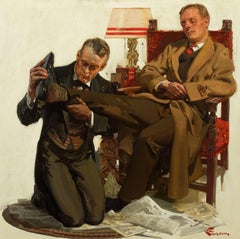
A Tired Gentleman
A Tired Gentleman

A Tired Gentleman

By E.M. Jackson

Located in Fort Washington, PA

Medium: Oil on Canvas Signature: Signed Lower Right As a child, Jackson shoed early interest in drawing, and took Saturday morning lessons from the only are teacher in town, but went on to graduate as an architect from Georgia Tech...

Category

20th Century Other Art Style Paintings

Materials

Canvas, Oil

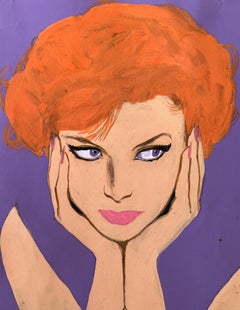
Glamorous Redhead Iconic Mid-Century Illustration

Glamorous Redhead Iconic Mid-Century Illustration

By Al Parker

Located in Miami, FL

Glamorous Redhead is a poster-like iconic image that sums up an era in American visual history - The 1950s. Al Parker is a giant in the history of American Illustration. He possess...

Category

1950s Modern Portrait Paintings

Materials

Gouache

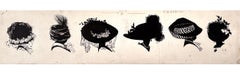
Abstract Silhouette Hat Portraits  - Female Illustrator of Golden Age

Abstract Silhouette Hat Portraits - Female Illustrator of Golden Age

By Jessie Gillespie

Located in Miami, FL

115 years after they were created, one can view these silhouettes differently than the artist’s intent. After all, the genesis of this work was an editorial illustration for Life Magazine to showcase elaborate women’s hats. They were done for a commercial assignment with a deadline, and picky editors were overseeing the final work. Today, they have a dual meaning. These charming silhouettes are abstractions as much as they are representations. Moreover, each one is a compact little gem stuffed with observational detail. Golden Age female illustrator Jesse Gillespie's mastery of technical skill, is apparent in minute details and composition. Young women, old women, pendants, necklaces, feathers, and laced vails all contribute to the works understated complexity. The identity of the subjects are revealed by small areas of exposed neck and chin. As the viewers eyes goes from left to right - all six silhouettes read as fashion hieroglyphs in a sentence with a visual rhythm and cadence. . Initialed JG lower right., Matted but not framed. Published: Life Magazine, March 17th, 1910. Provenance: Honey and Wax Bookstore ________________________________ From Wikipedia, the free encyclopedia Jessie Gillespie Willing (March 28, 1888 – August 1, 1972) was an American illustrator during the Golden Age of illustration. She was considered the foremost silhouette illustrator of her time, although she did traditional illustration as well. Willing illustrated for books and magazines including Life, The Ladies' Home Journal, Woman's Home Companion, Mother and Child, McClure's Magazine, Childhood Education, the Sunday Magazine, Association Men (the magazine of the YMCA), Farm and Fireside, Every Week, Children: The Magazine for Parents (which became Parents Magazine), and the American Magazine. She is perhaps most well known for her work for the Girl Scouts. Early life Willing was born in Brooklyn on March 28, 1888 to John Thomson Willing (August 4, 1860 – July 8, 1947)[1][2] and Charlotte Elizabeth Van Der Veer Willing (December 1, 1859 – March 4, 1930).[3] Thomson Willing was a noted illustrator and art editor. He was also well known for finding new artistic talent. Jessie Willing was the eldest of three children. Her brother Van Der Veer (November 30, 1889 – January 14, 1919), who died of pneumonia at the age of 29, was an advertising agent.[4] Her sister Elizabeth Hunnewell Willing (July 26, 1908 – August 15, 1991) was one of the first women to graduate from the Philadelphia Divinity School.[5][6] Elizabeth married the Rev. Orrin Judd, rector of St. Mary's Episcopal Church, on September 22, 1931, and was active in church work.[citation needed] The Willing family moved to the Germantown neighborhood of Philadelphia in 1901 or 1902. Jessie Willing attended the Stevens School, from which she graduated in 1905. She then went on to attend the Philadelphia Academy of Fine Arts from 1906 to 1907.[7][8] Career Willing used her middle name Gillespie as her professional surname. She also often signed her illustrations J.G.[9] The story goes that the art editor of Life magazine was in Thomson Willing's office when he was the art editor of the Associated Sunday Magazine syndicate. Thomson Willing had some of Jessie's artwork on his desk, which the Life editor saw and admired. He asked for the artist's information so that he could give her freelance work. Thomson Willing did not want to be accused of nepotism so he persuaded Jessie to use Jessie Gillespie as her professional name, which she did.[10][11] In addition to her extensive illustration work, Willing was also the editor of Heirlooms and Masterpieces from 1922 to 1931 and the art editor of Jewelers' Circular-Keystone from 1933 to 1939.[12] She specialized in jewelry publicity and advertising. In 1966 she won the Gold medal of the Printing Week Graphic Arts Exhibit in Philadelphia for her Christmas catalog for J.E. Caldwell Co., Philadelphia. Willing was a member of the Plastic Club of Philadelphia,[13] the American Institute of Graphic Arts (AIGA) and the National Arts Club of New York.[14] She was an honorary life member of the National Arts Club[15] and served on its Board of Governors from 1941-1970. In 1963, she received the Gold Medal of the National Arts Club in recognition of 32 years of selfless devotion.[15] Additionally, she was the national director of the American Institute of Graphic Arts (AIGA) from 1943 to 1946.[15] Previous to this she served as the Program Chairman of the AIGA and in that position she put together a travelling exhibit on the "history of narrative art from the first recorded picture story to the comic book of the twentieth century."[16][17] Illustrations in books With Tongue and Pen--Frederick Bair, et al. (MacMillan, 1940) Masoud the Bedouin--Alfred Post Carhart (Missionary Education Movement, 1915) The Path of the Gopatis--Zilpha Carruthers (National Dairy Council, 1926) The Schoolmaster and His Son: A Narrative of the Thirty Years War--Karl Heinrich Caspari (Lutheran Publication Society, 1917) On a Rainy Day--Dorothy Canfield Fisher and Sarah Scott Fisher (A.S. Barnes and Co., 1938) Book of Games for Home, School and Playground--William B. Forbush and Harry R Allen...

Category

1910s Victorian Portrait Drawings and Watercolors

Materials

Ink, Illustration Board, Pen

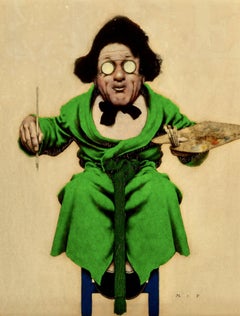
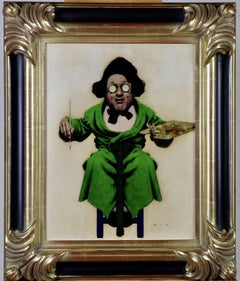
A Dark Futurist
A Dark Futurist

A Dark Futurist

By Maxfield Parrish

Located in Fort Washington, PA

Medium: Oil on Paper Laid on Panel Signature: Signed Lower Right Initialed lower right: M.P. Signed on the reverse: Maxfield Parish Initialed and numbered by the artist's son on the reverse: M.P. Jr. / No. 68. When Maxfield Parrish painted the comical A Dark Futurist in 1923 for Life magazine, he had already established himself as America's leading book and magazine illustrator. His early artwork for children's classics like L. Frank Baum's Mother Goose in Prose (1897), Kenneth Grahame's Dream Days (1900), and Eugene Field's Poems of Childhood (1904) popularized his signature atmospheric settings, cobalt blue-and-gold palette, and dreamy figures inhabiting magical worlds. Likewise, his covers for Century, Collier's, Harper's Bazaar, Ladies' Home Journal, Life, and Scribner's Magazine were highly desirous and instantly recognizable, often more stylized than his book imagery; no other journal illustrator could match Parrish's winning combination of precise draftsmanship, strong graphic design, and amusing characters. According to David Apatoff, Art Critic, The Saturday Evening Post, "Parrish abandoned his customary heavy details and rainbow colors to present a bolder, more high-contrast design silhouetted against a stark white background - a treatment more suitable for a modern magazine cover vying for attention on a crowded newsstand. A Dark Futurist is silhouetted against a white field with no background or details to prop it up. The composition is carefully centered with only differences in the hands and the artist's necktie to break the symmetry. These are crucial to the success of the design. Just as important as Parrish's clean, high-contrast style in these pictures is the refreshing humor and sophistication in content, which is usually absent from Parrish's fairytale paintings. A Dark Futurist shows us a different kind of modernism. Parrish steps out of his timeless fairy tales to tweak one of the most incendiary artistic movements of his day. Futurism, with its militant manifesto and its outspoken artists, was all the rage in Europe. Parrish pokes them, showing a "dark" and anxious futurist with pursed lips and thick glasses, poised to paint but not exactly sure of, or optimistic about, what the 'future' will hold. This suggests that Parrish was alert to, and had opinions about, current events of the day - something one might never guess from his usual subject matter." In his early Collier's illustrations, Parrish also developed memorable themes that he would return to in his 1920s magazine work. One of his most popular characters was the "seer," or man with keen visual powers, most often depicted as an artist, but also appearing as a tourist, scientist, and philosopher. Parrish's seer was recognizable by particular physical attributes: round glasses, indicating his visual and analytical acuity, and an overcoat and/or hat signifying his role as observer of the outside world. A Man of Letters, sold last year at Heritage Auctions, was one of the first Life covers Parrish rolled out for Gibson, and he repeated the character of the artist-seer, emphasizing the comic spin, for two later editions: A Dark Futurist (Life, March 1, 1923) captures a Parrish-like artist in foggy round glasses and a long green coat...

Category

1920s Figurative Paintings

Materials

Paper, Oil, Panel

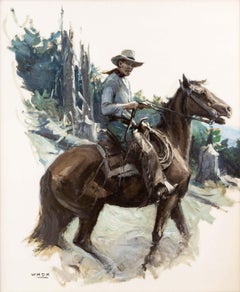
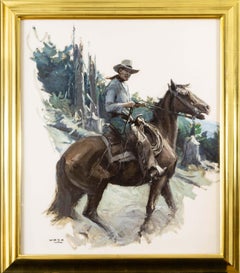
Heading Up Trail
Heading Up Trail

Heading Up Trail

By William Henry Dethlef Koerner

Located in Missouri, MO

Heading Up Trail William Henry Dethlef Koerner (German, American, 1878-1938) Oil on Canvas Board Signed Lower Left 26 x 30 inches 35.25 x 30.75 inches with frame William Henry Dethl...

Category

Early 20th Century Other Art Style Figurative Paintings

Materials

Canvas, Oil, Board

Related Items
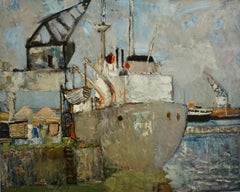
Mid-20th Century Oil on Board Abstract Impressionist Maritime Scene, René Genis

Mid-20th Century Oil on Board Abstract Impressionist Maritime Scene, René Genis

By René Genis

Located in Berlin, MD

Step into the bustling energy of a portside moment with René Genis’ “Les Grues” (The Cranes)”, a captivating oil-on-mat-board painting that transforms the in...

Category

Late 20th Century Abstract Impressionist Landscape Paintings

Materials

Oil, Illustration Board

Cypriano (A Basque Boy)

Cypriano (A Basque Boy)

By Gerald Leslie Brockhurst

Located in Middletown, NY

Etching on cream wove paper. 6 5/16 x 3 3/4 inches (159 x 94 mm), full margin. Signed in pencil lower center margin, from the edition of 111. A well inked impression with a minor cre...

Category

Mid-20th Century American Modern Portrait Prints

Materials

Handmade Paper, Etching

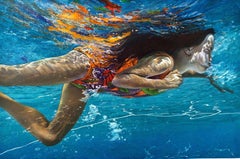
Muse (a young novice in colorful swim suit struggles thru a pool of blue)

Muse (a young novice in colorful swim suit struggles thru a pool of blue)

By Art Werger

Located in New Orleans, LA

Muse is #43 of 45. It depicts a young woman in a colorful swimsuit doing her best to swim through the blue waters of the pool. Her mouth is pursed and the bubbles flow out. I sold an impression of this image to an olympic swimming...

Category

Early 2000s American Modern Figurative Prints

Materials

Etching

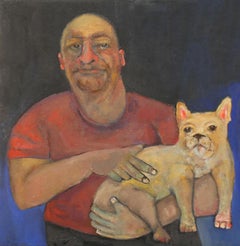
mr. c and gladys, bright colorful man and dog

mr. c and gladys, bright colorful man and dog

By Stephen Basso

Located in Brooklyn, NY

*ABOUT Stephen Basso Stephen Basso's highly original pastels and oil paintings are romantic, yet thought provoking fantasies. His whimsical works are alive with boundless imagina...

Category

2010s American Modern Animal Paintings

Materials

Canvas, Oil

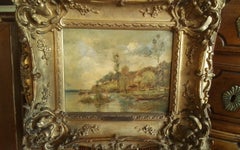
19th Century French Landscape with Boat on Lake, Oil on Canvas

19th Century French Landscape with Boat on Lake, Oil on Canvas

By Paul Desire Trouillebert

Located in PARIS, FR

Conditions : Excellent overall Conditions, minor chips on the left side to original period frame. Oil on canvas signed Trouillebert on the lower right. Certificate by Michel Rodrigue...

Category

Late 19th Century Impressionist Landscape Paintings

Materials

Oil

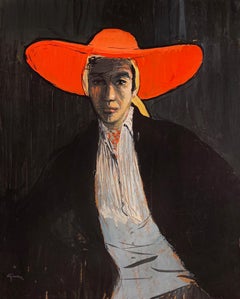
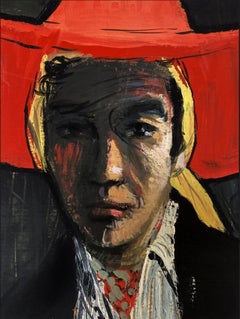
Figure in a Red Hat, Contemporary Mixed Media, 1960s, Signed

Figure in a Red Hat, Contemporary Mixed Media, 1960s, Signed

By René Gruau

Located in Miami, FL

Elegant and graphic study of a figure of undetermined gender. It's executed with quick and confident brush strokes in the artist's signature color scheme of black and red. It's a fla...

Category

1960s Contemporary Portrait Paintings

Materials

Pastel, Mixed Media, Gouache, Board

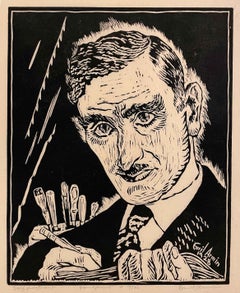
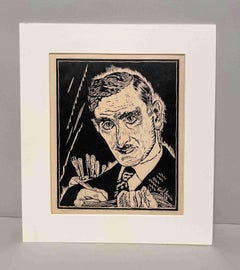
A 1928 Modernist Woodcut, Self-Portrait of Notable Chicago Modernist Emil Armin

A 1928 Modernist Woodcut, Self-Portrait of Notable Chicago Modernist Emil Armin

By Emil Armin

Located in Chicago, IL

A 1928 woodcut on paper of a self-portrait of notable Chicago Modernist artist, Emil Armin. Artwork size: 10 1/2" x 8". Archivally matted to: 12 1/2" x 14 1/2. Signed, titled and numbered in pencil. Edition 7/30. Emil Armin was born in Radautz, Austria in 1883. By the age of 10, Armin was orphaned and was raised by his older siblings. He supported himself by working in restaurants and drew in his spare time. In 1905, at the age of 21, Armin immigrated to Chicago. He began studying at the Art Institute of Chicago in 1907, but financial difficulties forced him to start and stop a number of times, finally graduating in 1920. He studied with George Bellows and Randall Davey. Armin was an integral part of Chicago’s 57th Street Art Colony and exhibited in both the more avant-garde Chicago No-Jury Society Shows, as well as the more formal and conventional Chicago Society of Artists Exhibitions, the Chicago Renaissance Society and Art Institute of Chicago (1922-1949) exhibitions. He taught at Hull House...

Category

1920s American Modern Portrait Prints

Materials

Paper, Woodcut

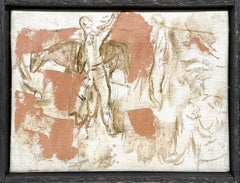
A 1950s, Modern Western Painting, Cowboys Wrangling Cattle by Francis Chapin

A 1950s, Modern Western Painting, Cowboys Wrangling Cattle by Francis Chapin

By Francis Chapin

Located in Chicago, IL

A lively 1950s Mid-Century Modern Western landscape painting with cowboys wrangling cattle by famed Chicago artist, Francis Chapin. Most likely a working study for a larger painting...

Category

Mid-20th Century American Modern Animal Paintings

Materials

Canvas, Oil

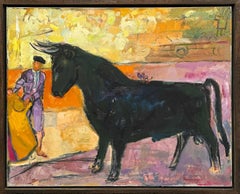
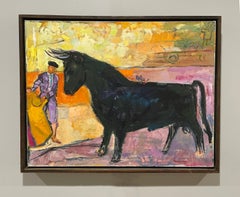
A Vibrant, 1950s Mid-Century Modern Painting of a Bull Fight by Francis Chapin

A Vibrant, 1950s Mid-Century Modern Painting of a Bull Fight by Francis Chapin

By Francis Chapin

Located in Chicago, IL

A vibrant, colorful, 1950s Mid-Century Modern painting of a bull fight by notable Chicago artist, Francis Chapin. Oil on canvas, presented in a period, dark walnut brown stained flo...

Category

1950s American Modern Figurative Paintings

Materials

Canvas, Oil

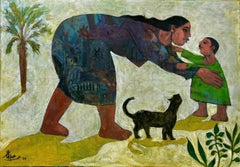
"Mother & Child" Figurative Oil Painting 28" x 39" inch by Omar Abdel Zaher

"Mother & Child" Figurative Oil Painting 28" x 39" inch by Omar Abdel Zaher

By Omar Abdel Zaher

Located in Culver City, CA

"Mother & Child" Figurative Oil Painting 28" x 39" inch by Omar Abdel Zaher Abdel Zaher is a graduate of the Academy of Fine Arts in Helwan and has been painting for three decades ...

Category

21st Century and Contemporary Impressionist Figurative Paintings

Materials

Canvas, Oil

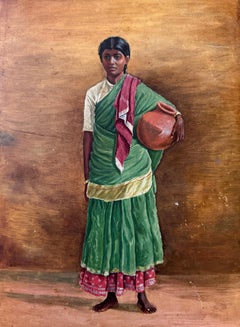
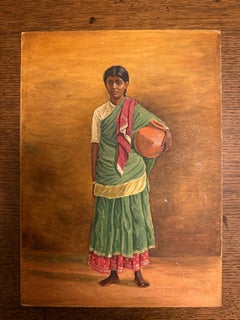
India Madras Painting on board Portrait of Serving Girl with Pot c 1910

India Madras Painting on board Portrait of Serving Girl with Pot c 1910

Located in Norfolk, GB

Madras School C 1910 Acrylic on board 11.5" x 8" Address on verso This painting dating to the early 20th century, c 1910, shows a young woman, possibly from Madras (see info on reverse), The colours follow the conventions of a genre of art called Company School painting...

Category

1910s Realist Figurative Paintings

Materials

Mixed Media, Board

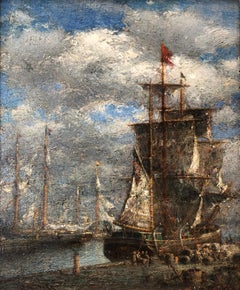
Home Safe
Home Safe

James Gale TylerHome Safe

$2,400

H 12 in W 10 in

Home Safe

By James Gale Tyler

Located in Greenville, DE

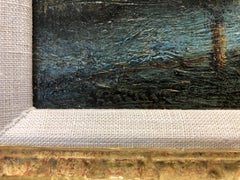
Very well executed seascape. Alternate title "In Point" inscribed on the rear. 17 x 15in in frame, including linen liner. ...

Category

Late 19th Century Impressionist Landscape Paintings

Materials

Oil, Board

Previously Available Items
"Hideaway #2" American Impressionistic Oil on Board Painting of Home & Garden

"Hideaway #2" American Impressionistic Oil on Board Painting of Home & Garden

Located in New York, NY

Mark English was an illustrator and was mostly known for his portraits of famous personalities for the National Park Service as well as designing thirteen stamps for the US Postal Service. He attended the Art Center College in Los Angeles in 1960. His work has appeared in magazines such as Good Housekeeping, The Ladies' Home Journal, McCall's, Redbook, The Saturday Evening Post, Sports Illustrated, and Time. This painting is a very rich celebration of texture and depth. It can be noted that the artist was fond of using the pallet knife, and in this painting, we can see great executions of this especially used with in the abundance of trees depicted. The brilliant contrasts are highlighted to great depth, as we can almost feel that this painting has a sculptural effect. This piece is truly inviting with beautiful details, as the "Hideaway" of a home is portrayed whimsically and gracefully with a small garden. The painting is signed lower right and comes displayed in a rustic gold tone wood frame with hanging wire on verso ready to be displayed. Art measures 36 x 24 inches Framed measures 48.5 x 36.5 inches Mark English was born on September 19, 1933, in Hubbard, Texas. He attended the Hubbard High School and graduated in 1951, after which he enrolled into the University of Texas. He was then drafted into the military during the Korean War. In 1954, English married his first wife, Peggy Ann Littlejohn. In 1960, Mark graduated with honors from The Art Center College of Design in Pasadena, California, with a BFA in Advertising Design. After gaining work experience in advertising agencies for the automobile industry, English and his family moved to Connecticut in 1964. He began an illustrious career, working with publications such as TIME Magazine and Sports Illustrated among others in the corporate, pharmaceutical, music and postage industry. In 1977, Hallmark Cards offered Mark an Artist-in-Residency to teach classes to its creative staff in Kansas City. It was there that he met his second wife, Wendy Buskey, and they married in 1983. In 1995, English retired from illustrations and began to paint for galleries in earnest. The same year, English and his son John co-founded the Illustration Academy, an art and design workshop catering to students and professionals. From 1999 onwards, English's work and paintings were exhibited in galleries across the United States and in London. His last exhibition was in 2019, in the Sager Braudis Gallery, in Columbia. Before his death, English was living in Liberty, Missouri with his wife. English's unique illustration style appeared in publications as TIME, Sports Illustrated, Redbook, Atlantic Monthly, Rolling Stone, McCalls, and many other corporate and pharmaceutical publications. He designed 14 stamps for the U.S. Postal Service, movie posters and album covers for John Denver, Julian Lennon, and The Who. In his paintings, English showcases his style in a variety of subjects, from figures, animals and florals to landscape and architecture. His works have been exhibited worldwide in galleries such as the Eleanor Ettinger Gallery in New York, Albemarle Gallery in London, Maxwell Gallery in San Francisco, and have been the subject to publication in four books, available on his website. He won hundreds of awards for his work and has been the most awarded illustrator in the history of the Society of Illustrators in New York City, including the 1967 Hamilton King...

Category

Mid-20th Century American Impressionist Landscape Paintings

Materials

Oil, Panel

"The Battle of Pilgrim Hill" Story Illustration, Saturday Evening Post, 1946

"The Battle of Pilgrim Hill" Story Illustration, Saturday Evening Post, 1946

By Thorton Utz

Located in Fort Washington, PA

Signature: Signed Lower left "Sam Stopped people on the street - where's Steve Sierherin's store?" "The Battle of Pilgrim Hill," Magazine Story by James Charles Lynch for the Saturday Evening Post, November 16, 1946, illustrated by Thornton Utz. Thornton Utz liked to work out the poses of his figures with rapid, free sketches that clearly expressed the mood or mental attitude of his characters. Once this had been established, he then posed an photographed his models, as nearly as possible, in the predetermined positions. The photos furnished the details of folds and lighting which lent added factuality to his original poses. He used this approach effectively for his humorous Saturday Evening Post covers as well as for the more serious fiction illustrations for Cosmopolitan, McCall’s, The Ladies’ Home Journal, Redbook, and Good Housekeeping. Utz participated in the Society of Illustrators Air Force Art Program and received a citation from General Curtis LeMay for documenting the airlift of Hungarian refugees. Utz also received the Governor Bryant of Florida Award for his freedom posters...

Category

1940s Paintings

Materials

Paint

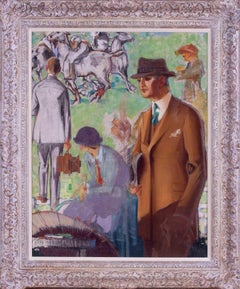
'A day at the polo', 1930s oil painting by American artist John E Sheridan

'A day at the polo', 1930s oil painting by American artist John E Sheridan

Located in Petworth, West Sussex

A very stylish, original oil painting depicting a snapshot of 1930's American life of figures at the polo by American artist John Emmet Sheridan. Sheridan (June 14, 1877 – July 3, 1...

Category

20th Century Modern Figurative Paintings

Materials

Canvas, Oil

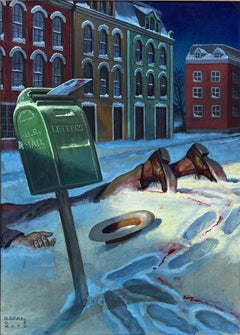
Noir Pulp Magazine, Dead Man in the Snow, Mid Century, Latin Art Hispanic Artist

Noir Pulp Magazine, Dead Man in the Snow, Mid Century, Latin Art Hispanic Artist

By Rafael DeSoto

Located in Miami, FL

A crime drama needs a cover image. What to do? Hire Rafael Desoto to make a powerful visual statement. This Noir Illustration was done on assignment for Dime Detective cover, when "There's a Will There's a Slay", Alternate Version Signed lower left - Elegantly matted with archival board but not framed - Rafael Maria de Soto y Hernandez was born February 18, 1904, in Aguadilla, Puerto Rico. His parents were Milagros and Domingo DeSoto, a noble Spanish banking family descended from the famous conquistador, Hernando de Soto - In 1932 he began to sell freelance cover paintings to pulp magazines...

Category

1940s American Modern Figurative Paintings

Materials

Gouache, Board

Romance Illustration

Romance Illustration

By E.M. Jackson

Located in Fort Washington, PA

Medium: Oil on Canvas Signature: Signed Lower Right Romance Illustration As a child, Jackson shoed early interest in drawing, and took Saturday m...

Category

1940s Other Art Style Paintings

Materials

Canvas, Oil

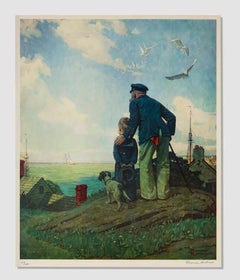
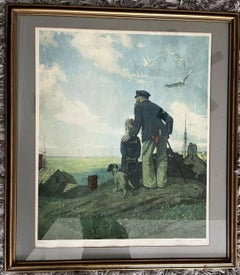
Norman Rockwell 'Outward Bound' Collotype on Paper 1972, signed & numbered

Norman Rockwell 'Outward Bound' Collotype on Paper 1972, signed & numbered

By Norman Rockwell

Located in Pembroke Pines, FL

"Outward Bound (Looking Out to Sea)" (Collotype) by Norman Rockwell Media: Collotype on Paper Image Dimensions: 35" x 29" Year Produced: 1972 Edition Size: 200 Numbered (1-200) Editi...

Category

1970s Photorealist Prints and Multiples

Materials

Lithograph

Lady Diana Illustration

Lady Diana Illustration

By Thorton Utz

Located in Fort Washington, PA

Medium: Oil on Board Signature: Signed Lower Left Portrait of Lady Diana. Thornton Utz liked to work out the poses of his figures with rapid, free sketches that clearly expressed the mood or mental attitude of his characters. Once this had been established, he then posed an photographed his models, as nearly as possible, in the predetermined positions. The photos furnished the details of folds and lighting which lent added factuality to his original poses. He used this approach effectively for his humorous Saturday Evening Post covers as well as for the more serious fiction illustrations for Cosmopolitan, McCall’s, The Ladies’ Home Journal, Redbook, and Good Housekeeping. Utz participated in the Society of Illustrators Air Force Art Program and received a citation from General Curtis LeMay for documenting the airlift of Hungarian refugees. Utz also received the Governor Bryant of Florida Award for his freedom posters. He was born in Memphis, Tennessee, and studied under Burton Callicott in Memphis. He also attended the American Academy of Art in Chicago and late taught at the Chicago Art Institute. Utz eventually concentrated on paintings and commissioned portraiture, which included President Carter...

Category

20th Century Other Art Style Portrait Paintings

Materials

Oil, Board

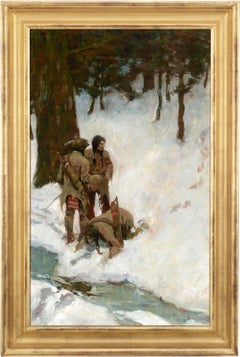
Untitled (Three Indians at a Stream in Snowy Woods) by N.C. Wyeth

Untitled (Three Indians at a Stream in Snowy Woods) by N.C. Wyeth

By Newell Convers Wyeth

Located in New Orleans, LA

Newell Convers Wyeth is one of the most successful illustrators of all time, setting a standard for artists the world over in style, technique and imagination. He is the patriarch of several generations of important artists including his children Andrew, Henriette and Carolyn, his grandchild Jamie and his son-in-law Peter Hurd. His uncanny ability to create living characters from fictional stories has ingrained his work in the landscape of the American psyche. Untitled (Three Indians at a Stream in Snowy Woods...

Category

Early 20th Century Modern Landscape Paintings

Materials

Canvas, Oil

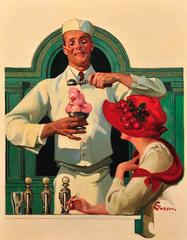
Ice Cream Sundae, Soda Jerk's Gal

Ice Cream Sundae, Soda Jerk's Gal

By E.M. Jackson

Located in Fort Washington, PA

Illustration by Elbert McGran Jackson of a young man scooping ice cream for a young woman. Elbert McGran Jackson graduated from Georgia Tech Universit...

Category

1920s Paintings

Materials

Canvas, Oil

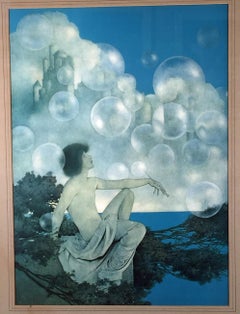
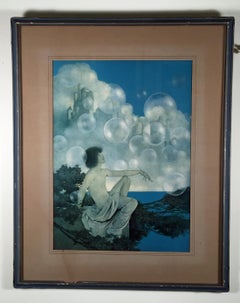
AIR CASTLES
AIR CASTLES

Maxfield ParrishAIR CASTLES, 1903

Sold

H 16 in W 12 in D 1 in

AIR CASTLES

By Maxfield Parrish

Located in Portland, ME

Parrish, Maxfield. AIR CASTLES. Vintage print, circa 1903, after the original painting done for the cover of the Ladies Home Journal. 16 x 12 inches, in the...

Category

Early 1900s Figurative Prints

Materials

Color

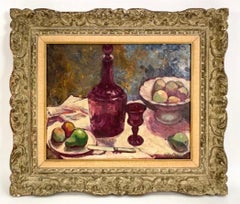
Oil Painting Hungarian American illustrator Willy Pogany Illustration Art, Fruit

Oil Painting Hungarian American illustrator Willy Pogany Illustration Art, Fruit

By Willy Pogany

Located in Surfside, FL

Still life of fruit (with purple glass or crystal) Hand signed lower right Dimensions: (Frame) H 24" x W 27.5", (Canvas) H 17.25" x W 21.5" William Andrew Pogany (born Vilmos András Pogány; August 24, 1882 – July 30, 1955) was a prolific Hungarian American illustrator of children's and other books. His contemporaries include C. Coles Phillips, Joseph Clement Coll, Edmund Dulac, Harvey Dunn, Stevan Dohanos, Walter Hunt Everett, Harry Rountree, Norman Rockwell, and N.C. Wyeth. He is best known for his pen and ink illustration drawings of myths and fables. A large portion of Pogany's work is described as Art Nouveau. Pogany's artistic style is heavily fairy-tale orientated and often feature motifs of mythical animals such as nymphs and pixies. He paid great attention to botanical details. He used dreamy and warm pastel scenes with watercolor, oil painting, and especially pen and ink cartoon work. Willy Pogany was born in Szeged, Austria-Hungary. He studied at Budapest Technical University and in Munich and Paris. He spent his early childhood with his brothers and sisters in a large farmhouse full of chickens, ducks, geese, dogs, pigs, and horses. When he was six, his parents took him to Budapest where he would later be sent to school. He especially liked to row and to play soccer. In his spare time, he drew pictures and painted. He enjoyed painting and drawing so much he decided to be an artist. He attended Budapest Technical School for less than a year, during this time he took art classes for six weeks. He sold his first painting to a wealthy patron for $24. He spent his early twenties attending art school and would later travel to Munich, Paris, and London before coming to the United States in 1914. When Pogany went to Paris to study and paint, he was unable to secure much attention or income, was often poor and went hungry. Willi Pogany spent two years in Paris. When he finally saved up some money from his work, he left Paris to go to London. In 1906, Arthur Rackham's Rip Van Winkle gained massive popularity, sparking a demand for artists in London. At this point Pogany was hired to provide the design For The Welsh Fairy Book by T. Fisher Unwin, including over 100 plates, illustrations, vignettes, chapter heads and tails, and initials. He also did 48 illustrations for Milly and Olly, 70 for The Adventures of a Dodo and 39 for Faust. After ten years in London, Pogany emigrated to America. Besides book illustration, pictures, mural paintings, portraits, etchings, and sculptures, Pogany became interested in theatre and designed stage settings and costumes for different shows and the Metropolitan Opera House. He eventually moved to Hollywood to serve as an art director for several film studios during the 1930s and 1940s. In London, he crafted his quartet of masterpieces: The Rime of the Ancient Mariner (1910), Tannhauser (1911), Parsifal (1912) and Lohengrin (1913).[7] Each of these was designed completely by Pogany, from the covers and endpapers to the text written in pen and ink, pencil, wash, color and tipped-on plates. Pogany worked as an art director on several Hollywood films, including Fashions of 1934 and Dames. He began his involvement in motion picture set design in 1924 and worked in film until the end of the 1930s. He was commissioned by John Ringling, Ettenger, Reiner and William Randolph Hearst's Wyntoon Estate, painted for the Barrymore family, Douglas Fairbanks Jr., Carole Lombard, Enrico Caruso, Miriam Hopkins, and many others. Pogany was awarded gold medals in Budapest and Leipzig Expo as well as the London Masonic Medal, and became a Fellow of the London Royal Society of Art. The New York Society of Architects gave him a silver medal for his mural in the August Heckscher's Children's Theatre showing Cinderella, Hansel and Gretel, and Jack in the Beanstalk. He won a gold medal in 1915 at the Panama Pacific Expo for his work The ValCares and was also awarded the Hungarian Silver Blue Medal. In 1914, Pogany's illustrations appeared on the cover of Metropolitan Magazine, Ladies Home Journal, Harper's Weekly, Hearst's Town and Country, Theatre Magazine and American Weekly.[6] In 1917 to 1921, he worked for the Metropolitan Opera designing sketches, scenery and costumes. In 1918 he illustrated a children's retelling of Homer, The Adventures of Odysseus and the Tale of Troy written by Padraic Colum. Pogany's public art appears on walls of the John and Mable Ringling Museum of Art (formerly Ringling Mansion) in Sarasota, Florida, in New York City at the El Museo del Barrio theater (1230 Fifth Avenue), P.S. 43 Jonas Bronck in Mott Haven, and the Bernard B. Jacobs Theatre (45th Street) and in The Strand Theatre...

Category

1930s Post-Impressionist Still-life Paintings
Materials
Canvas, Oil

Recommended For You