Located in New Orleans, LA
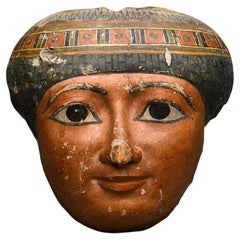
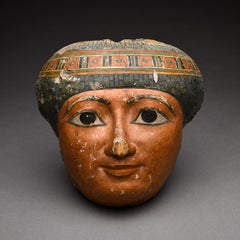
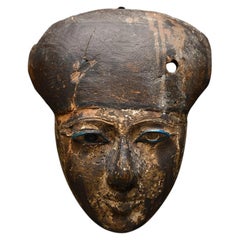
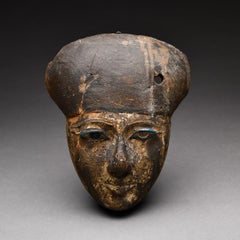
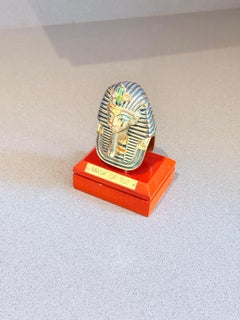
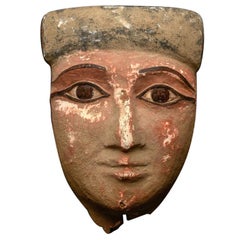
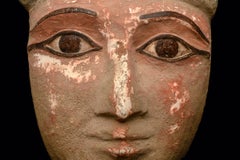
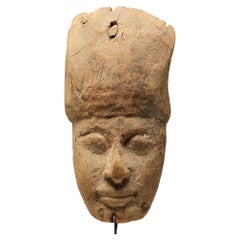
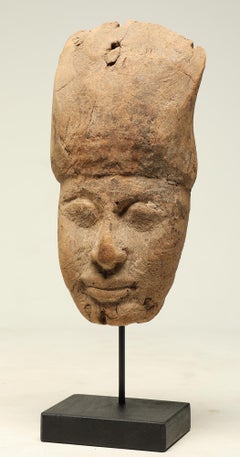
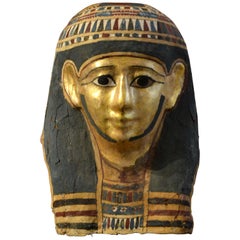
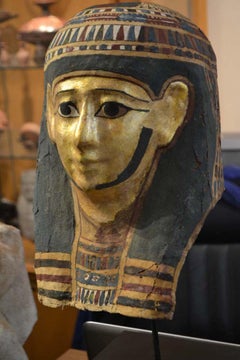
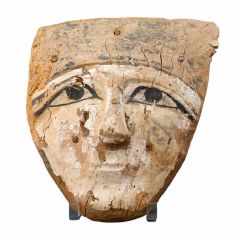
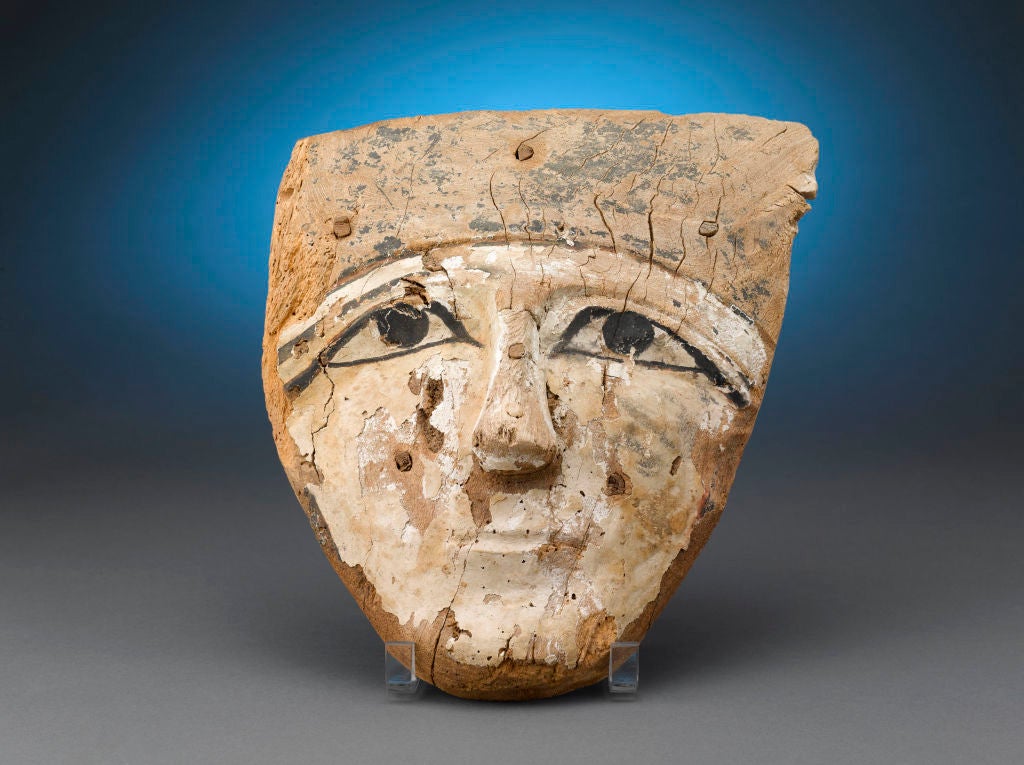
This amazing wooden sarcophagus mask is a stunning relic from Ancient Egypt. Originally part of a sarcophagus that was meant to forever protect the mummy of the deceased, this enigmatic face hails from the 26th Dynasty of the Late Kingdom. It is carved from a single piece of cedar and bears the original light ocher and black paint, representing the kah, or the image or immortal spirit double of the deceased. Once the mummy was in the sarcophagus, a life-sized image of the deceased was placed over his face. Wooden pegs were used to keep the wooden pieces in place, and the mask was then gessoed and painted with life-like features of hair, eyes, lips and facial color. Such masks were in use well into the Greek Ptolemeic period around 300 B.C.
Masks were a very important aspect of ancient Egyptian burials. In the Egyptians' complicated view of life after death, they provided the dead with a face in the afterlife and enabled the person's spirit, or ba, to recognize the body. Specific features of a mask, including the eyes, eyebrows, forehead and other features, were directly identified with individual divinities. This allowed the deceased to arrive safely in the hereafter, and gain acceptance among the other divine immortals in the council of Osiris, the great god of the dead. Initially made for only the royalty, such masks were later frequently crafted for the nobility. They were also part of the elaborate precautions taken by the ancient Egyptians to preserve the body after death. The protection of the head was of primary concern during this process. Thus, a face covering...
Category
Antique 18th Century and Earlier Egyptian Religious Items