77 results for "josé clemente orozco"

Search for "josé clemente orozco" in all categories
to
5
72
3
27
2
44
26
1
27
7
14
12
17
Overall Height
to
Overall Width
to
27
16
11
2
2
1
1
1
1
35
20
14
14
8
7
5
4
4
3
3
2
2
2
2
1
1
1
1
1
1
2
63
11
1
1
7
8
2
10
6
7
3
1
14
6
5
3
3
29
23
14
12
7
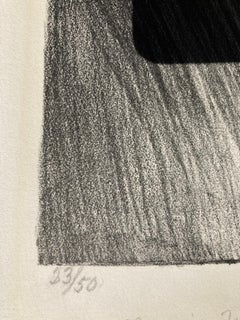
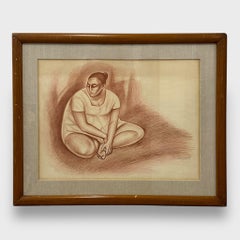
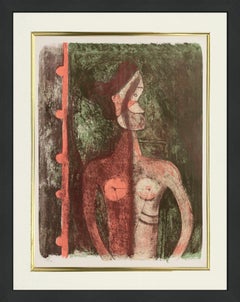
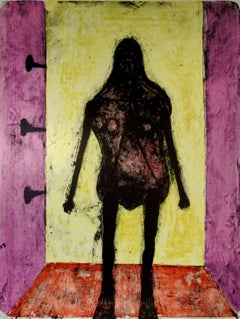
SCARCE EARLY OROZCO - CABEZA DE MUJER -

SCARCE EARLY OROZCO - CABEZA DE MUJER -

By Jose Clemente Orozco

Located in Santa Monica, CA

JOSE CLEMENTE OROZCO (1883 – 1949) CABEZA DE MUJER, ( Woman's Head: Mexican Woman) 1929 (Orozco 9) Lithograph, signed and numbered 23/50. in pencil. Pri...

Category

1920s Realist Figurative Prints

Materials

Lithograph

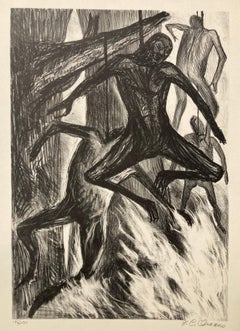
HANGED BLACK MEN - Published for the NAACP anti-lynching campaign

HANGED BLACK MEN - Published for the NAACP anti-lynching campaign

By Jose Clemente Orozco

Located in Santa Monica, CA

JOSE CLEMENTE OROZCO (Mexican 1883 – 1949) NEGROS COLADOS (Hanged Black Men) 1933-34 (Orozco 20) Lithograph, signed in pencil. 12 ¾ x 9 inches. Full margins with deckle edges, shee...

Category

1930s Modern Figurative Prints

Materials

Lithograph

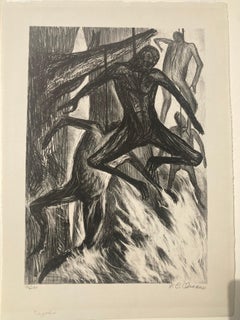
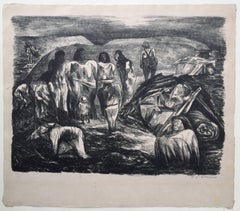
PROLETARIANS
PROLETARIANS

PROLETARIANS

By Jose Clemente Orozco

Located in Santa Monica, CA

JOSE CLEMENTE OROZCO (1893 - 1949) PROLETARIANS (aka Basurero, Scavengers ) 1935 (Orozco 27) lithograph, One of 88 signed and numbered of a total edition of 133, (+ 42 unnumbered a...

Category

1930s Other Art Style Figurative Prints

Materials

Lithograph

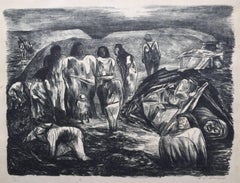
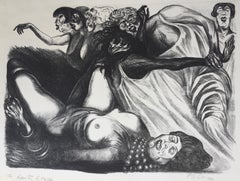
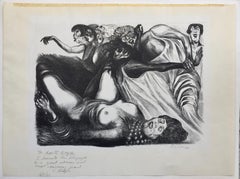
Women
Women

Women

By Jose Clemente Orozco

Located in Santa Monica, CA

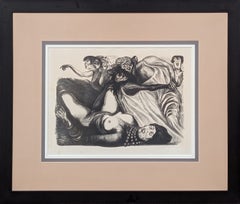
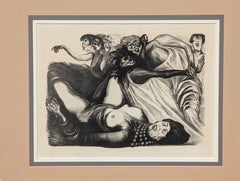
JOSE CLEMENTE OROZCO (1893 – 1949) WOMEN, 1934 ( Orozco 25) Lithograph, One of 127 signed & unnumbered impressions, (total printed 255) Printer Jesus Arteaga. Image 12 1/2 x 17 inches, sheet 17 x 23 inches. Large sheet. top sheet edge with deckle edge and with some remnants of old old tape. Some slight mat burn verso., just a hint on the recto. This impression is also dedicated to Rosita Boyce by Clemente Orozco - (the Artist's Son) in 1961 From "Jose Clemente Orozco - Graphic Work" by Clemente Orozco, University of Texas Press, 2004. "The image is a detail of the Mural "Contemporary World" in the Palace of Fine Arts, Mexico City. The mural depicts "the real prostitution of power is implied by prostitutes fighting for survival. in a game of exuberance and decadence. The theme of women, especially prostitutes, has a special significance in Orozco's work, from his early watercolors to this fresco.." This print is related to Orozco's MACHINES also on 1stdibs offered by this dealer. Mexican Prints...

Category

1930s Modern Figurative Prints

Materials

Lithograph

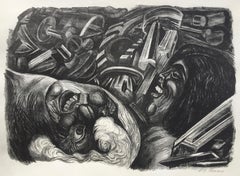
MACHINES
MACHINES

MACHINES

By Jose Clemente Orozco

Located in Santa Monica, CA

JOSE CLEMENTE OROZCO (Mexican, 1883-1949) MACHINES, (aka Dos cabezas y Maquinas, Dos Cabezas, Maquinas) 1935 (Orozco 26) Lithograph. Image 12 x 17 inches. Full margins, sheet 16 x 2...

Category

1930s Modern Figurative Prints

Materials

Lithograph

"Mujeres (Dead Woman)" Modern Mexican Social Realist Black and White Lithograph

"Mujeres (Dead Woman)" Modern Mexican Social Realist Black and White Lithograph

By Jose Clemente Orozco

Located in Houston, TX

Modern black and white social realist lithograph by famous Mexican muralist Jose Clemente Orozco. Orozco returned to Mexico in 1934, following a seven-year spell in the United States...

Category

1930s Modern Figurative Prints

Materials

Paper, Lithograph

Los Caballos en la Conquista

Los Caballos en la Conquista

By Walead Beshty

Located in Palm Desert, CA

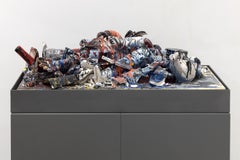
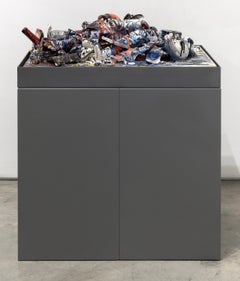
"Los Caballos en la Conquista (Horses in the Conquest)" is a Contemporary abstract Ceramica Suro slip cast remnants, glaze, and firing plate sculpture by Walead Beshty in 2013. The a...

Category

21st Century and Contemporary Contemporary Abstract Sculptures

Materials

Ceramic, Glaze

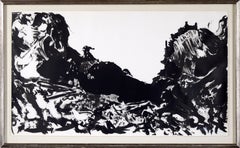
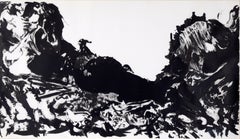
"Machu Pichu" Black and Grey Lithograph, Signed, #10/200, 1940s

"Machu Pichu" Black and Grey Lithograph, Signed, #10/200, 1940s

By David Alfaro Siqueiros

Located in Soquel, CA

"Machu Pichu" - Black and Grey Lithograph #10/200 Bold black and grey lithograph by David Alfaro Sequeiros (Mexican, 1896-1974). This piece is a high contrast, abstracted landscape....

Category

1940s Contemporary Figurative Prints

Materials

Paper, Lithograph

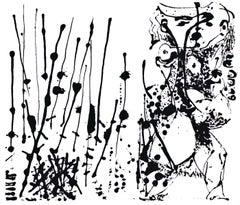
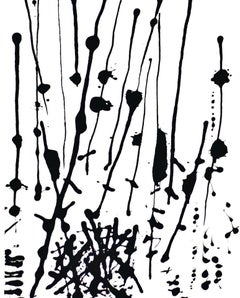
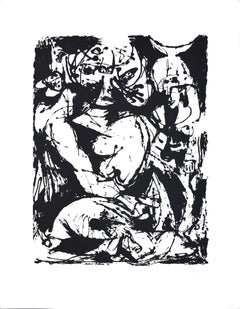
Untitled - Expression no. 1 - Screen Print After Jackson Pollock - 1964

Untitled - Expression no. 1 - Screen Print After Jackson Pollock - 1964

By Jackson Pollock

Located in Roma, IT

JACKSON POLLOCK (American, 1912-1956) Untitled, CR1091 (After Painting Number 7, CR324), 1951, printed 1964 Screenprint, on Strathmore wove paper, numbered in pencil lower left, and with the Estate of Jackson Pollock 1964 blindstamp lower left From the second posthumous printing of 50 authorized by his widow, Lee Krasner in 1964 (there was also a lifetime edition of 25) Published by Bernard Steffen...

Category

1960s Abstract Expressionist Abstract Prints

Materials

Screen

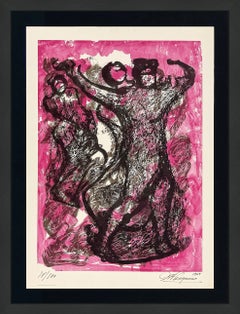
UNTITLED

UNTITLED

By Raul Anguiano

Located in Dallas, TX

Raul Anguiano. Untitled. Mexico. Signed and dated 1974, Technique: Lithography. Size: 26 x 32 inches. Anguiano is a renowned Mexican painter who was born in Guadalajara on February 26th, 1915, and died in Mexico City on January 13th, 2006. In his works you can see subjects related to rural and indigenous Mexico, festivals, traditions, religion and landscapes. In 1922 he collaborated with Diego Rivera and joined the group of Mexican muralists...

Category

1770s Prints and Multiples

Materials

Lithograph

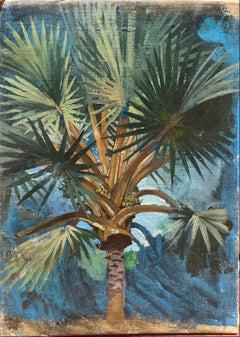
Oil Landscape of Palm Tree, Abstract Expressionist, Mid-19th Century

Oil Landscape of Palm Tree, Abstract Expressionist, Mid-19th Century

By Eugene Savage

Located in Fredericksburg, VA

This painting was bought from the artist's estate in Woodberry, CT and is signed verso. Eugene Savage studied at the Chicago Art Institute, the American Academy in Rome, and received his Masters of Art at Yale University. He taught at Yale for almost 30 years in Art and Architecture. Eugene Savage had many latin influences such as Diego Rivera and José Clemente Orozco. In the 1940s he spent his time painting Hawaiian murals of people and of more abstract Hawaiian...

Category

Mid-19th Century Abstract Expressionist Abstract Paintings

Materials

Canvas, Oil

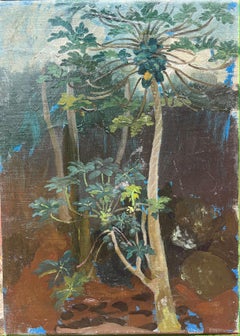
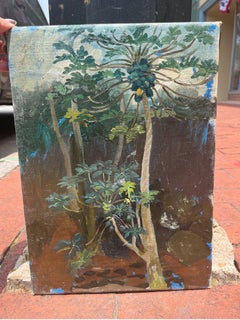
Expressionist Oil Painting of Hawaiian Forest Interior, 19th Century

Expressionist Oil Painting of Hawaiian Forest Interior, 19th Century

By Eugene Savage

Located in Fredericksburg, VA

This painting was bought from the artist's estate in Woodberry, CT and is signed verso. Eugene Savage studied at the Chicago Art Institute, the American Academy in Rome, and received his Masters of Art at Yale University. He taught at Yale for almost 30 years in Art and Architecture. Eugene Savage had many latin influences such as Diego Rivera and José Clemente Orozco. In the 1940s he spent his time painting Hawaiian murals of people and of more abstract Hawaiian...

Category

Mid-19th Century Expressionist Abstract Paintings

Materials

Canvas, Oil

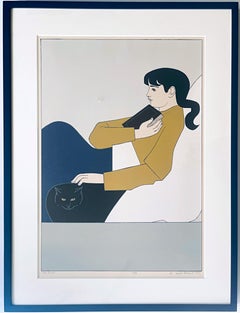
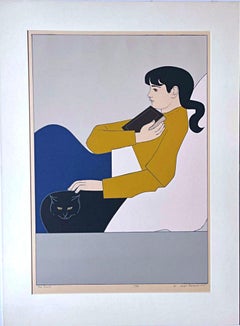
Will Barnet - The Book, Silkscreen, S/N from USA Bicentennial Print portfolio

Will Barnet - The Book, Silkscreen, S/N from USA Bicentennial Print portfolio

By Will Barnet

Located in New York, NY

Will Barnet The Book, from the 1776 USA 1976: Bicentennial Prints portfolio Silkscreen in colors on Arches paper Pencil signed, titled and numbered 65/75 on the front Printed by Fine...

Category

1970s Contemporary Figurative Prints

Materials

Screen

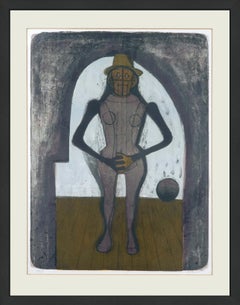
Torso De Jeune Fille, Hand Signed Lithograph, Pereda 112, 1969, Framed

Torso De Jeune Fille, Hand Signed Lithograph, Pereda 112, 1969, Framed

By Rufino Tamayo

Located in Aventura, FL

Lithograph in colors on Rives BFK paper from the Mujeres portfolio. Hand signed lower left margin by Rufino Tamayo. Hand numbered VI/XXV lower right margin (an artist proof of 25 a...

Category

1960s Contemporary Portrait Prints

Materials

Paper, Lithograph

American Ghosts Linocut Print, Contemporary Edition of 15

American Ghosts Linocut Print, Contemporary Edition of 15

By Jesse Shaw

Located in Philadelphia, PA

linocut, edition of 15 The artwork measures 36"h x 24"w and ships unframed. Bio // Jesse Shaw (b.1980) is a printmaker from Tennessee primarily working in relief prints carved from...

Category

21st Century and Contemporary Contemporary Figurative Prints

Materials

Linocut

American Landscape Linocut Print, Contemporary Edition of 15

American Landscape Linocut Print, Contemporary Edition of 15

By Jesse Shaw

Located in Philadelphia, PA

linocut, edition of 15 This artwork measures 36"h x 24"w and ships unframed. Bio // Jesse Shaw (b.1980) is a printmaker from Tennessee primarily working in relief prints carved fro...

Category

21st Century and Contemporary Contemporary More Prints

Materials

Linocut

American Animals II Linocut Print, Contemporary Edition of 15

American Animals II Linocut Print, Contemporary Edition of 15

By Jesse Shaw

Located in Philadelphia, PA

linocut, edition of 15 The artwork measures 36in x 24in and ships unframed. Please message us directly if you are interested in custom framing for your print. Bio // Jesse Shaw (b....

Category

21st Century and Contemporary Contemporary Animal Prints

Materials

Linocut

American Consumerism I, Linocut Print, Contemporary, Ed. 15

American Consumerism I, Linocut Print, Contemporary, Ed. 15

By Jesse Shaw

Located in Philadelphia, PA

linocut, edition of 15 The artwork is shipped unframed and measures 36in x 24in. Please message us directly if you are interested in custom framing for your print. Bio // Jesse Sha...

Category

21st Century and Contemporary Contemporary Abstract Prints

Materials

Linocut

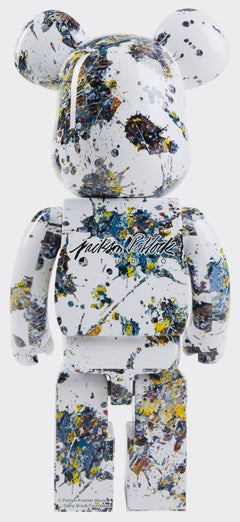
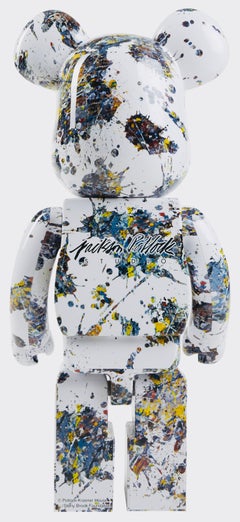
Jackson Pollock Bearbrick 400%  (Jackson Pollock BE@RBRICK)

Jackson Pollock Bearbrick 400% (Jackson Pollock BE@RBRICK)

Located in NEW YORK, NY

Jackson Pollock 400% & 100% Bearbrick Vinyl Figure (set of 2): A rare highly collectible Bearbrick Jackson Pollock statue piece, splattered from head to toe in Pollock’s signature a...

Category

21st Century and Contemporary Abstract Figurative Sculptures

Materials

Resin, Vinyl

American Halo IV Linocut Print, Contemporary Edition of 15

American Halo IV Linocut Print, Contemporary Edition of 15

By Jesse Shaw

Located in Philadelphia, PA

linocut, edition of 15 This artwork measures 36"h x 24"w and ships unframed. Bio // Jesse Shaw (b.1980) is a printmaker from Tennessee primarily working in relief prints carved from linoleum blocks. His work is based in the narrative, satirical, political, and social commentary tradition of the graphic print. Jesse is currently working on a series of fifty prints depicting the epic story of America. Prints from his “American Epic” series of linocut prints...

Category

21st Century and Contemporary Contemporary More Prints

Materials

Linocut, Archival Paper

Untitled, CR1095 (after painting Number 22, CR344), 1951, printed 1964

Untitled, CR1095 (after painting Number 22, CR344), 1951, printed 1964

By Jackson Pollock

Located in Roma, IT

JACKSON POLLOCK (American, 1912-1956) Untitled, CR1095 (after painting Number 22, CR344), 1951, printed 1964 Screenprint, on Strathmore wove paper, numbered 49/50 in pencil lower left, and with the Estate of Jackson Pollock 1964 blindstamp lower left From the posthumous printing of 50 authorized by his widow, Lee Krasner, in 1964 (there was also a lifetime edition of 25) Published by Bernard Steffen...

Category

1960s Abstract Expressionist Abstract Prints

Materials

Screen

El Amante, Rare Hand Signed Lithograph, Edition of 100, Framed, 1969

El Amante, Rare Hand Signed Lithograph, Edition of 100, Framed, 1969

By David Alfaro Siqueiros

Located in Aventura, FL

Lithograph in colors on paper. Hand signed lower right by David Alfaro Siqueiros. Hand numbered 18/100 lower left. Sheet size: 26 x 20 inches. Frame size: 31 x 25 inches. Artwor...

Category

1960s Contemporary Figurative Prints

Materials

Paper, Lithograph

Untitled - Expression no. 2 - Screen Print After Jackson Pollock - 1964

Untitled - Expression no. 2 - Screen Print After Jackson Pollock - 1964

By Jackson Pollock

Located in Roma, IT

JACKSON POLLOCK (American, 1912-1956) Untitled, CR1093 (after painting Number 9, CR340), 1951–printed 1964 Screenprint, on Strathmore wove paper, numbered in pencil lower left, and with the Estate of Jackson Pollock 1964 blindstamp lower left(?) From the second posthumous printing of 50 authorized by his widow, Lee Krasner in 1964 (there was also a lifetime edition of 25) Published by Bernard Steffen...

Category

1960s Abstract Expressionist Abstract Prints

Materials

Screen

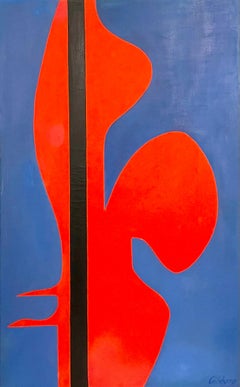
Large Abstract Expressionist Oil Painting Margarita Gibbons Met Opera Ballet

Large Abstract Expressionist Oil Painting Margarita Gibbons Met Opera Ballet

Located in Surfside, FL

A bold, graphic painting on canvas by listed New York artist Margarita Gibbons (1906-1976). Hand signed lower right Oil painting on canvas. Abstract geometrical composition in blue, red, and black colors. Titled 'Dual Principle'. Gibbons studied at the Art Students League of New York and Pratt Institute of Art. Exhibitions included National Association of Women Artists and Society of Independent Artists. Margarita Gibbons (1906-1976) was a painter from New York City. Gibbons originally performed as a ballerina for the Metropolitan Opera House Corps de Ballet, as a dancer, before pursuing a career as a fine artist. (She was there with Martha Graham). Margarita studied with Bolm and Fokine and performed in the 1924 music box revue for Irving Berlin. Her close friends were dancers Ruth Page and Helen Tamiris Becker. She studied at the Art Students League, Pratt institute and later in Paris and Amsterdam. Her work has been shown in a number of galleries and museums including the Argent gallery, the Brooklyn Museum, and the Whitney Museum of American Art. Gibbons first husband was Ecuadorian painter Camilo Egas (friends with Jose Clemente Orozco, Willem De Kooning, Pablo Picasso and Oswaldo Guayasamin) whom she brought to the United States. They lived in Greenwich Village, New York City. In the 1940s and 1950s, his work moved away from Indigenismo and social realism toward Surrealism, neo-Cubism, and eventually Abstract expressionism. Her second husband was American illustrator and painter Arthur Getz...

Category

Mid-20th Century Abstract Expressionist Abstract Paintings

Materials

Canvas, Oil

Capitulo XIX, Signed Abstract Lithograph by Rufino Tamayo

Capitulo XIX, Signed Abstract Lithograph by Rufino Tamayo

By Rufino Tamayo

Located in Long Island City, NY

Rufino Tamayo was born in Oaxaca, Mexico. He studied at the Academia de Bellas Artes in Mexico City and worked there until 1936 when he moved to New York, where he taught at the Dalt...

Category

1950s Abstract Abstract Prints

Materials

Lithograph

Freight Dock
Freight Dock

Freight Dock

By John Rockwell

Located in San Francisco, CA

This artwork titled "Freight Dock" is an original oil on canvas by noted American artist John Rockwell, 1902-1960 It is signed at the lower right corner by the artist, and also signe...

Category

1950s Impressionist Figurative Paintings

Materials

Oil

Hombre Con Coraje, Rare Signed Mixografia on Handmade Paper, Pereda 116, 1982

Hombre Con Coraje, Rare Signed Mixografia on Handmade Paper, Pereda 116, 1982

By Rufino Tamayo

Located in Aventura, FL

Mixografia in colors on handmade paper. Hand signed lower left by Rufino Tamayo. Hand numbered 34/100 lower right. Sheet size: 36 x 28 inches. Frame size: 43 x 35 inches. Printe...

Category

1980s Contemporary Portrait Prints

Materials

Mixed Media, Handmade Paper

Venus Noir
Venus Noir

Venus Noir

By Rufino Tamayo

Located in San Francisco, CA

This artwork titled "venus Noir" from the suite "The Mujeres File" 1969 is an original colors lithograph on BFK Rives paper by renown Mexican artist Rufino Tamayo, 1899-1991. It is h...

Category

Mid-20th Century Modern Figurative Prints

Materials

Lithograph

The Man in the Top Hat, American, Art Deco

The Man in the Top Hat, American, Art Deco

By Eugene Savage

Located in Wiscasset, ME

Eugene Savage was born in Covington, Indiana. He began his art education at the Art Institute of Chicago, where he won a Prix de Rome scholarship to study at the American Academy in ...

Category

1930s American Modern Figurative Paintings

Materials

Oil, Board

"Tierra Roja" from the "Mexican suite"

"Tierra Roja" from the "Mexican suite"

By David Alfaro Siqueiros

Located in San Francisco, CA

This artwork titled "Tierra Roja" from "The Mexican Suite" is an original colors lithograph on Arches paper by renown Mexican artist David Alfaro Siqueiros...

Category

Mid-20th Century Modern Landscape Prints

Materials

Lithograph

Striptease
Striptease

Striptease

By Irving Norman

Located in Palm Desert, CA

A drawing by Irving Norman. "Striptease" is a macabre cultural commentary drawing, pencil and color pencil on paper executed in a dark palette of blacks, grays, and reds by social su...

Category

Mid-20th Century American Modern Figurative Drawings and Watercolors

Materials

Pencil, Color Pencil

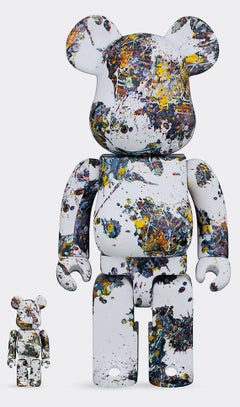
Jackson Pollock Bearbrick 400% figure (Jackson Pollock BE@RBRICK)

Jackson Pollock Bearbrick 400% figure (Jackson Pollock BE@RBRICK)

By Jackson Pollock

Located in NEW YORK, NY

Jackson Pollock 400% & 100% Bearbrick Vinyl Figure (set of 2): A rare highly collectible Bearbrick Jackson Pollock statue piece, splattered from head to toe in Pollock’s signature a...

Category

21st Century and Contemporary Contemporary Figurative Sculptures

Materials

Resin, Vinyl

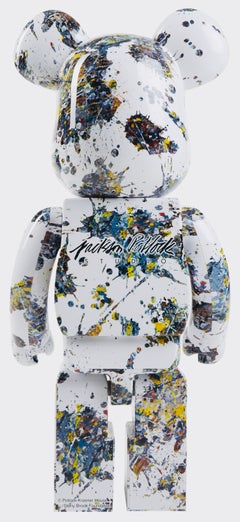
Jackson Pollock Bearbrick 400% Companion (Jackson Pollock BE@RBRICK)

Jackson Pollock Bearbrick 400% Companion (Jackson Pollock BE@RBRICK)

Located in NEW YORK, NY

Jackson Pollock 400% & 100% Bearbrick Vinyl Figure (set of 2): A rare highly collectible Bearbrick Jackson Pollock statue piece, splattered from head to toe in Pollock’s signature art; includes a recreation of the artist’s signature located on the verso along with a trademarked stamp from the Estate of Pollock-Krasner. New and housed in its original collector’s box. Medium: Vinyl Figurine. Year: 2020. Dimensions of larger figurine: 11 x 5 inches. Condition: New in its original packaging. Published by Medicom from a sold out limited series of unknown. Further Background BE@RBRICKs are a form of collectible toy that resemble a cross between LEGO and well, a bear. These block-style figurines boast teddy bear-style heads that have become an integral pillar of the collectible toy scene. In fact, it wouldn’t be so far-fetched to say that it almost single-handedly carved out the fad of toy collecting in modern times, treading the very fine line between toy and art. Since its inception, BE@RBRICKs have become one of the most recognizable characters in the world, and some of the most sought after. Jackson Pollock was one of the most famous Post-War American artists. A pioneer of Abstract Expressionism, Pollock’s drip paintings ushered in a new era of non-representational art. “It doesn't make much difference how the paint is put on as long as something has been said,” he once remarked. “Technique is just a means of arriving at a statement.” Born Paul Jackson Pollock on January 28, 1912 in Cody, WY, he studied painting at the Manual Arts High School in Los Angeles during the late 1920s, where he befriended Philip Guston. In the fall of 1930, Pollock moved to New York where he studied under the Regionalist painter Thomas Hart Benton at the Art Students League. Joining the WPA in 1937, Pollock painted murals around the country in a style reminiscent both of Benton and the Mexican muralist José Clemente Orozco. After the WPA program ended, Pollock took on a number of odd jobs and began producing Surrealist works related to those of Joan Miró. An early champion of his work, Peggy Guggenheim hosted Pollock’s first solo show at her gallery Art of This Century in 1943. The paintings that emerged from his Long Island studio during the late 1940s came to exemplify his entire career. Works such as Blue Poles (1952), generated enormous media attention, and turned Pollock into a celebrity beyond the scope of the art world. At the age of 44, his celebrated career was cut short when the artist died in a car accident involving his mistress Ruth Kligman, on August 11, 1956 in East Hampton, NY. He was survived by his wife the painter Lee Krasner. In 2006, Pollock’s No. 5 (1948) was sold by David Geffen...

Category

21st Century and Contemporary Pop Art Figurative Sculptures

Materials

Resin, Vinyl

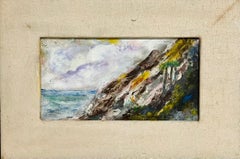
Modernist Impasto Painting Mountain with Ocean Landscape J. James Akston

Modernist Impasto Painting Mountain with Ocean Landscape J. James Akston

Located in Surfside, FL

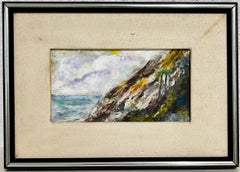
J. James Akston Mountain Landscape by ocean Acrylic on Board Frame: 11.5 x 16. Image: 5 X 9.5 Joseph James Akston was a Polish American sculptor, painter, known for surrealist abstract painting and Aubusson (for Les Ateliers Pinton Frères, tapisserie, Aubusson) tapestry artist. Born in Warsaw, Poland in 1898 he died in Palm Beach Florida in 1983. During the 1960s and '70s the entrepreneur-artist James Joseph Akston adopted a unique Surreal Expressionist style in order to present his private primordial universe and lampoon its denizens, a ribald cast of animal creatures with human foibles. A successful industrialist, he began his career with General Motors foreign operations and then started his own business. Intermittently he studied painting, first with Jerry Farnsworth in North Truro (Mass.) and then with Jose Clemente Orozco in Mexico. In the early 1960s Akston became publisher-editor of a group of art publications which included The Magazine Arts. Initially an abstract expressionist, Akston had one-man exhibitions at the New York Convention Center and the Corcoran Museum in Washington. Since 2015 the record price for this artist at auction is $12,575 USD for Spheres Aux Triangles Aubusson Tapestry, sold at Bonhams New York in 2019. He was a Graduate of Georgetown University. He sat on the board of the Norton Museum. Exhibitions 1976 Hokin Gallery 1966 Gallery 63 NYC 1960 Gallery 63 Rome , Italy Select Public Collections National Museum, Wshington DC Boca Museum of Art Whitney Museum of Art, NYC Museum of Modern Art, NYC Museum of African Art Washington DC (Now part of Smithsonian Museum) Bibliography: 1962 Art...

Category

Mid-20th Century American Modern Landscape Paintings

Materials

Oil

1970's Mod Surrealist Day Glo Fluorescent Acrylic Painting J. James Akston

1970's Mod Surrealist Day Glo Fluorescent Acrylic Painting J. James Akston

Located in Surfside, FL

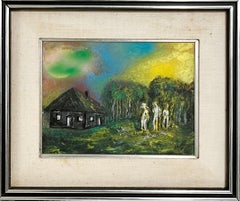
J. James Akston Surrealism, Village scene (Mexico) Acrylic on Board Frame: 15 X 18 Image: 9 X 12 Joseph James Akston was a Polish American sculptor, painter, known for surrealist abstract painting and Aubusson (for Les Ateliers Pinton Frères, tapisserie, Aubusson) tapestry artist. Born in Warsaw, Poland in 1898 he died in Palm Beach Florida in 1983. During the 1960s and '70s the entrepreneur-artist James Joseph Akston adopted a unique Surreal Expressionist style in order to present his private primordial universe and lampoon its denizens, a ribald cast of animal creatures with human foibles. A successful industrialist, he began his career with General Motors foreign operations and then started his own business. Intermittently he studied painting, first with Jerry Farnsworth in North Truro (Mass.) and then with Jose Clemente Orozco in Mexico. In the early 1960s Akston became publisher-editor of a group of art publications which included The Magazine Arts. Initially an abstract expressionist, Akston had one-man exhibitions at the New York Convention Center and the Corcoran Museum in Washington. Since 2015 the record price for this artist at auction is $12,575 USD for Spheres Aux Triangles Aubusson Tapestry, sold at Bonhams New York in 2019. He was a Graduate of Georgetown University. He sat on the board of the Norton Museum. Exhibitions 1976 Hokin Gallery 1966 Gallery 63 NYC 1960 Gallery 63 Rome , Italy Select Public Collections National Museum, Wshington DC Boca Museum of Art Whitney Museum of Art, NYC Museum of Modern Art, NYC Museum of African Art Washington DC (Now part of Smithsonian Museum) Bibliography: 1962 Art...

Category

1970s Surrealist Abstract Paintings

Materials

Acrylic

Nino Con Pajaros (Variant)

Nino Con Pajaros (Variant)

By Rufino Tamayo

Located in San Francisco, CA

This artwork titled "Nino Con Pajaros" Variant, 1976, is a color etching on Guarro paper by renown Mexican artist Rufino Tamayo, 1899-1991. It is hand signed and numbered 40/75 in black crayon by the artist. Published by Ediciones Poligrafa, Barcelona, Spain. The artwork (sheet) size is 29.5 x 22 inches, framed size is 41.25 x 33.75 inches. Referenced and pictured in the artist's catalogue raisonne by Pereda, plate #199 page 169. Custom framed in a wooden black frame, with light beige fabric matting. It is in excellent condition. About the artist: A native of Oaxaca in Southern Mexico, Rufino Tamayo's father was a shoemaker, and his mother a seamstress. Some accounts state that he was descended from Zapotec Indians, but he was actually 'mestizo' - of mixed indigenous/European ancestry. (Santa Barbara Museum of Art). He began painting at age 11. Orphaned at the age of 12, Tamayo moved to Mexico City, where he was raised by his maternal aunt who owned a wholesale fruit business. In 1917, he entered the San Carlos Academy of Fine Arts, but left soon after to pursue independent study. Four years later, Tamayo was appointed the head designer of the department of ethnographic drawings at the National Museum of Archaeology in Mexico City. There he was surrounded by pre-Colombian objects, an aesthetic inspiration that would play a pivotal role in his life. In his own work, Tamayo integrated the forms and tones of pre-Columbian ceramics...

Category

Mid-20th Century Modern Figurative Prints

Materials

Etching

Cuban Master Florencio Gelabert Sculpture Large Wood Carving Bust Man Portrait

Cuban Master Florencio Gelabert Sculpture Large Wood Carving Bust Man Portrait

Located in Surfside, FL

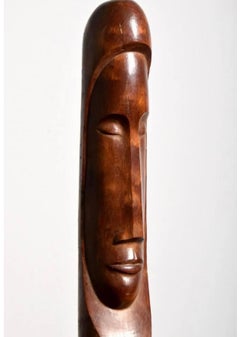
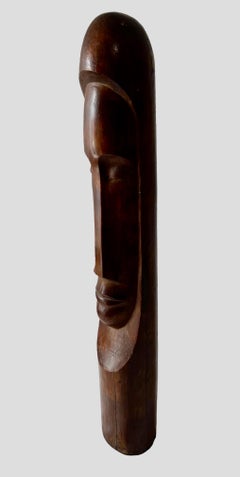
Florencio Gelabert Y Perez (Cuban, 1904-1995) Hand carved, signed; 1979 Materials: Cuban wood (mahogany?) Dimensions 23 X 4 X 4 inches Label affixed to underside: National Registry of Cultural Assets of the Republic of Cuba Ministry of Culture. Provenance: Art Master Collection, Miami, Florida. Florencio Gelabert, with a style reminiscent of Art Deco and Art Nouveau in a Latin American Expressionist stylization. Carved wood sculpture. Depicts a modernist stylized form of a man in a streamline moderne style. José Florencio Gelabert Pérez (Caibarien, 1904 - Havana, 1995) Cuban musician, sculptor, draftsman and teacher. He graduated from the San Alejandro National Academy of Fine Arts in 1934. He received numerous awards, mentions and recognitions in Fine Arts Halls and Circles. His works are in the permanent collection of the National Museum of Fine Arts. Florencio Gelabert is a renowned sculptor, who made more than twenty solo exhibitions beginning in 1929, several in the National Museum of Fine Arts, and participated in more than thirty collectives in Cuba, Spain and Brazil, the latter in the Sao Paulo Biennial. he traveled from Caibarién to Santa Clara in 1928 to audition to enter the famous San Alejandro Fine Arts School in Havana. He obtained one of the five vacancies. Already in the Cuban capital, he combined fine arts and music. When he graduated, he became a professor in San Alejandro and the academy’s principal in 1960. With a calling common to wood sculptors –which began with his primary school carving carpentry classes and the active life of his home town’s shipyards, his chisels and gouges feverishly turned mahogany, “ácana” and ebony into female heads with black African features dating back to 1930. In 1938 he used his savings to explore Europe: France (Paris, Marseilles), Italy (Naples, Rome, Florence, and Venice), Belgium (Malina). His encounter with the works by Aristide Maillol, Auguste Rodin, Ossip Zadkine, Constantin Brancusi and even with Wifredo Lam, who was also born in another Cuban coastal area, Sagua la Grande, and his encounter with the nude marble David sculpture...

Category

1970s Art Deco Figurative Sculptures

Materials

Wood

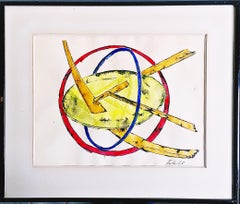
Mexican Modernist Kite Painting, Stencil, Woodcut Print Hand Signed

Mexican Modernist Kite Painting, Stencil, Woodcut Print Hand Signed

By Francisco Toledo

Located in Surfside, FL

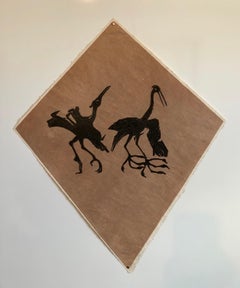
Francisco Benjamín López Toledo (born July 17, 1940, Juchitán, Oaxaca) is a Mexican painter, sculptor, and graphic artist. He studied at the Escuela de Bellas Artes de Oaxaca and the...

Category

21st Century and Contemporary Modern Mixed Media

Materials

Paint, Woodcut, Stencil

Bust Of A Woman Roberto Cortazar

Bust Of A Woman Roberto Cortazar

By Roberto Cortazar

Located in Lake Worth Beach, FL

Bust of a Woman, bronze sculptue. Bronze with dark brown patina signed on the back R. Cortazar 1/9. Originally from Tapachula, Chiapas Mexico, he was b...

Category

1990s Modern Figurative Sculptures

Materials

Bronze

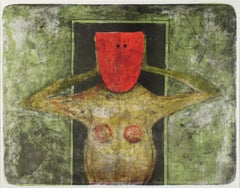
Mascara Roja
Mascara Roja

Mascara Roja

By Rufino Tamayo

Located in San Francisco, CA

This artwork titled "Mascara Roja" 1969 is an original colors lithograph on B.F.K. Rives paper by renown Mexican artist Rufino Tamayo, 1899-1991. It is hand signed and inscribed H.C. (Hors Commerce) in pencil by the artist. The image size is 21 x 27.25 inches, framed size is 37.25 x 42 inches. Published by Touchtone Publisher, New York, printed by Ateliers Desjobert, Paris. Referenced and pictured in the artist's catalogue raisonne by Pereda, plate #124. Custom framed in a wooden gold leaf frame, with gold and red spacer and fabric matting. It is in excellent condition. About the artist: A native of Oaxaca in Southern Mexico, Rufino Tamayo's father was a shoemaker, and his mother a seamstress. Some accounts state that he was descended from Zapotec Indians, but he was actually 'mestizo' - of mixed indigenous/European ancestry. (Santa Barbara Museum of Art). He began painting at age 11. Orphaned at the age of 12, Tamayo moved to Mexico City, where he was raised by his maternal aunt who owned a wholesale fruit business. In 1917, he entered the San Carlos Academy of Fine Arts, but left soon after to pursue independent study. Four years later, Tamayo was appointed the head designer of the department of ethnographic drawings at the National Museum of Archaeology in Mexico City. There he was surrounded by pre-Colombian objects, an aesthetic inspiration that would play a pivotal role in his life. In his own work, Tamayo integrated the forms and tones of pre-Columbian ceramics into his early still lives and portraits of Mexican men and women. In the early 1920s he also taught art classes in Mexico City's public schools. Despite his involvement in Mexican history, he did not subscribe to the idea of art as nationalistic propaganda. Modern Mexican art at that time was dominated by 'The Three Great Ones' : Diego Rivera, Jose Clemente Orozco, and David Alfaro Siqueros, but Tamayo began to be noted as someone 'new' and different' for his blending of the aesthetics of post Revolutionary Mexico with the vanguard artists of Europe and the United States. After the Mexican Revolution, he focused on creating his own identity in his work, expressing what he thought was the traditional Mexico, and refusing to follow the political trends of his contemporary artists. This caused some to see him as a 'traitor' to the political cause, and he felt it difficult to freely express himself in his art. As a result, he decided to leave Mexico in 1926 and move to New York, along with his friend, the composer Carlos Chavez. The first exhibition of Tamayo's work in the United States was held at the Weyhe Gallery, New York, in that same year. The show was successful, and Tamayo was praised for his 'authentic' status as a Mexican of 'indigenous heritage', and for his internationally appealing Modernist aesthetic. (Santa Barbara Museum of Art). Throughout the late thirties and early forties New York's Valentine Gallery gave him shows. For nine years, beginning in 1938, he taught at the Dalton School in New York. In 1929, some health problems led him to return to Mexico for treatment. While there he took a series of teaching jobs. During this period he became romantically involved with the artist Maria Izquierdo...

Category

Mid-20th Century Modern Figurative Prints

Materials

Lithograph

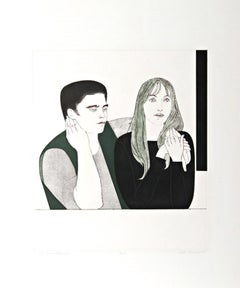
Will Barnet - The Young Couple (Cole 141) Etching and Aquatint signed/N realism

Will Barnet - The Young Couple (Cole 141) Etching and Aquatint signed/N realism

By Will Barnet

Located in New York, NY

The Young Couple (Cole 141), 1971 Color etching and aquatint. Signed. Titled. Numbered Pencil signed, titled and numbered 209/225 on the front Catalogue Raisonne: Cole, 141 Unframed ...

Category

1970s Pop Art Figurative Prints

Materials

Etching, Aquatint

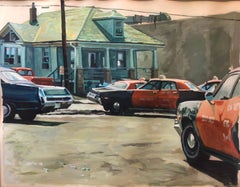
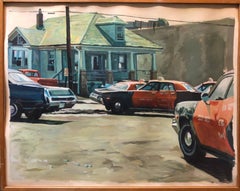
1980s Vintage American Street Scene Painting, Landscape with Taxi Cabs

1980s Vintage American Street Scene Painting, Landscape with Taxi Cabs

By Val Lewton

Located in Surfside, FL

Val Edwin Lewton (May 23, 1937 – April 24, 2015) was a painter and museum exhibition designer. As an artist, he created Realist acrylic paintings and watercolors of urban and suburba...

Category

1980s Photorealist Landscape Paintings

Materials

Acrylic, Archival Paper

Surrealist Painting, Birds of Prey with Fish J. James Akston

Surrealist Painting, Birds of Prey with Fish J. James Akston

Located in Surfside, FL

J. James Akston Surrealism, Bird with Fish, marine scene Acrylic on Board Frame: 9.75 X 8 Image: 4.5 X 3.25 Joseph James Akston was a Polish American sculptor, painter, known for surrealist abstract painting and Aubusson (for Les Ateliers Pinton Frères, tapisserie, Aubusson) tapestry artist. Born in Warsaw, Poland in 1898 he died in Palm Beach Florida in 1983. During the 1960s and '70s the entrepreneur-artist James Joseph Akston adopted a unique Surreal Expressionist style in order to present his private primordial universe and lampoon its denizens, a ribald cast of animal creatures with human foibles. A successful industrialist, he began his career with General Motors foreign operations and then started his own business. Intermittently he studied painting, first with Jerry Farnsworth in North Truro (Mass.) and then with Jose Clemente Orozco in Mexico. In the early 1960s Akston became publisher-editor of a group of art publications which included The Magazine Arts. Initially an abstract expressionist, Akston had one-man exhibitions at the New York Convention Center and the Corcoran Museum in Washington. Since 2015 the record price for this artist at auction is $12,575 USD for Spheres Aux Triangles Aubusson Tapestry, sold at Bonhams New York in 2019. He was a Graduate of Georgetown University. He sat on the board of the Norton Museum. Exhibitions 1976 Hokin Gallery 1966 Gallery 63 NYC 1960 Gallery 63 Rome , Italy Select Public Collections National Museum, Wshington DC Boca Museum of Art Whitney Museum of Art, NYC Museum of Modern Art, NYC Museum of African Art Washington DC (Now part of Smithsonian Museum) Bibliography: 1962 Art...

Category

Mid-20th Century Surrealist Abstract Paintings

Materials

Acrylic

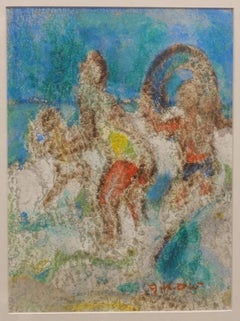
Modernist Beach Scene Painting, Playing Ball in Surf, WPA Jewish Woman Artist

Modernist Beach Scene Painting, Playing Ball in Surf, WPA Jewish Woman Artist

By Ruth Gikow

Located in Surfside, FL

Modernist beach scene; signed lower right; image size is 11.5 x 8.5 inches, framed it measures Ruth Gikow (January 6, 1915 Ukraine - 1982 New York City) was an Important American Jewish woman visual artist known primarily for her work as a genre painter. Her paintings often depict human figures interacting with an urban environment. Ruth Gikow was born in 1915 in the Ukraine. Her father, Boris, was a photographer and her mother was named Lena. In 1920 she emigrated to New York City due to civil war and pogroms against the Jewish community. The pilgrimage took around two years. Once in New York City, the Gikow family found themselves in poverty, rather than the middle-class comfort they enjoyed in Ukraine. Ruth Gikow's skill was prominent even in youth, as she excelled in drawing in elementary school and entered Washington Irving High School at age thirteen in which she furthered her art prowess. Later, she studied at the Cooper Union Art School, where she studied under school director Austin Purvis, Jr. and regional artist John Steuart Curry. In her second year of Art School, she was awarded a scholarship which she used to work with fellow painter Raphael Soyer. She joined the New York City WPA Federal Art Project in 1935, where she was allowed to dedicate herself to her artwork full-time. In 1939, inspired by the muralists Diego Rivera and José Clemente Orozco, she applied and later won a commission to paint murals for Bronx Hospital, Rockefeller Center and the New York World's Fair. After the events of Pearl Harbor and once the Federal Arts Project was abandoned, Gikow's murals were sought after by New York department stores wishing to commission wall paintings. Gikow became disillusioned with mural painting due to the commercial aspect of these commissions. With other associates, she founded the American Serigraph Society (along with Anthony Velonis, Lena Gurr, Robert Gwathmey, Leonard Pytlak, Harry Shoulberg, Russell Twiggs...

Category

1960s American Modern Figurative Paintings

Materials

Paint, Paper

Femme Au Collant Rose, Hand Signed Lithograph, Pereda 116, Framed, 1969

Femme Au Collant Rose, Hand Signed Lithograph, Pereda 116, Framed, 1969

By Rufino Tamayo

Located in Aventura, FL

Femme Au Collant Rose (Mujer Con Mallas Rosas) from the Mujeres portfolio. Lithograph in colors on Rives BFK paper. Hand signed lower left margin by Rufino Tamayo. Hand numbered 3...

Category

1960s Contemporary Portrait Prints

Materials

Paper, Lithograph

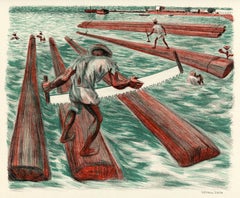
Lumber Workers (Cuidad del Carmen, State of Campeche)

Lumber Workers (Cuidad del Carmen, State of Campeche)

By Alfredo Zalce

Located in Fairlawn, OH

Lumber Workers (Cuidad del Carmen, State of Campeche) Color lithograph on wove paper, c. 1945 Signed lower right in pencil From: Mexican Art - A Portfolio of Mexican People and Places Edition: 250 Published by Associated American Artist and Taller Grafica de Popular (TGP) This print is one of two supplemental color lithographs from a portfolio of ten black-and-white lithographs showing images of Mexican people engaged in daily activities, primarily labor and crafting, by ten different mid-century Mexican political printmakers and members of the Taller de Gráfica Popular print collective, printed on cream wove paper, each signed in pencil at lower right. This image depicts the lumber industry in Campeche, one of the 31 states, located in Southeast Mexico, it is bordered by the states of Tabasco to the south west, Yucatán to the north east, and Quintana Roo to the east, and to the southeast by the Orange Walk district of Belize. Campeche was part of the province of Yucatán but split off in the mid-19th century, mostly due to political friction with city of Mérida. Today, much of the state’s economic comeback is due to the finding of petroleum offshore in the 1970s, which has made the coastal cities of Campeche and Ciudad del Carmen important economic centers. The state has important Mayan and colonial sites but they are not as well known or visited as others in the Yucatán. (Courtesy Annex Galleries) Condition: Excellent Slight toning around the sheet edges Image size: 11 3/8 x 14 1/8 inches Sheet size: 15 x 17 3/4 inches Reference: AAA Index 928 Alfredo Zalce Torres (12 January 1908 – 19 January 2003) was a Mexican artist and contemporary of Diego Rivera, David Siqueiros and other better-known muralists. He worked principally as a painter, sculptor, and engraver, also taught, and was involved in the foundation of a number of institutions of culture and education. He is perhaps best known for his mural painting, typically imbued with ”fervent social criticism”. He is acclaimed as the first artist to borrow the traditional material of coloured cement as the medium for a ”modern work of art”. Publicity-shy, he is said to have turned down Mexico's Premio Nacional de Ciencias y Artes before finally accepting it in 2001. Before his death, Sotheby's described him as ”the most important living Mexican artist up to date”. Early life A number of episodes from his childhood have been used to cast light on his future artistic career. Born in Pátzcuaro, Michoacán in 1908, as an infant he lived in Tacubaya during the Mexican Revolution; his school was near where the rival forces of Victoriano Huerta and Emiliano Zapata met in battle. One day he saw a dead body; he says that instead of fear his attitude was that of contemplation. According to a friend and prominent collector of his works, the young Alfredo began to draw aged six or seven, but chose to do so upon the linoleum floor of his home; nevertheless both his parents praised him. While at primary school, he regularly drew on the blackboard to accompany his teachers and illustrate their lessons, as encouragement to his fellow pupils. Between 1924 and 1927 he studied at the Escuela Nacional de Artes Plásticas in Mexico City, where formative influences included Mateo Saldaña, Germán Gedovius and Diego Rivera.[3] He was soon on friendly terms with Diego Rivera as well as Rufino Tamayo, David Siqueiros, José Clemente Orozco and Frida Kahlo. As the oldest of three children, he took responsibility for the family after the death of his father; while a student, he studied in the mornings and worked in the afternoons so as to be able to provide financial support. He undertook further studies at the Escuela de Talla Directa and the Taller de Litografía of Emilio Amero. Career Much of Zalce's career was spent in teaching and cultural activities. He first went to Zacatecas to teach art but, since the Cristero War had ended only shortly before, the school was not permitted to operate owing to lingering political tensions. He taught drawing at various primary schools for the Secretariat of Education from 1932 to 1935. In 1944, he became a teacher at the La Esmeralda and Escuela Nacional de Artes Plásticas. He moved to Morelia in 1950 and became the director of the Escuela de Pintura y Escultura. He also worked as a professor at the Universidad Autónoma de Nuevo León and the Escuela Popular de Bellas Artes.[3] Besides teaching, he illustrated books with academic and social themes. He was a founder or cofounder of the Escuela de Pintura of Tabasco, the Taller de Gráfica Popular, the Escuela de Pintura of Taxco in Guerrero, the Taller de Artes Plásticas in Uruapan and the Escuela de Pintura y Artesanías in Morelia. He was also a founder of the Liga de Escritores y Artistas Revolucionarios in 1933; one of its first missions was to oppose the favourable attitude at the time of many in Mexico towards Adolf Hitler. In 1930, he created a mural for the primary school in Ayotla, State of Mexico. In 1932, he worked in ”fresco” at the Escuela para Mujeres in Mexico City. He painted murals in the former Talleres Gráficos de la Nación in 1936; again in collaboration with Leopoldo Méndez at the Escuela Normal de Puebla in 1938; and at the Palacio de Gobierno and the Cámera de Diputados in Michoacán with Ángel Bracho...

Category

1940s American Modern Figurative Prints

Materials

Lithograph

Jose by Luis Jimenez

Jose by Luis Jimenez

By Luis Jiménez

Located in Phoenix, AZ

Jose 1986 Color lithograph 23/30 23 × 34 in 58.4 × 86.4 cm. SHIPPING CHARGES INCLUDE SHIPPING, PACKAGING & INSURANCE Luis Jimenez 1940 - 2006 Luis Jiménez was born in El Paso, Te...

Category

1980s Contemporary Animal Prints

Materials

Lithograph

La Negra (The Black Woman)

La Negra (The Black Woman)

By Rufino Tamayo

Located in San Francisco, CA

This artwork titled "La Negra (The Black Woman)" from the suite "The Mujeres File" 1969 is an original colors lithograph on B.F.K. Rives paper by renown Mexican artist Rufino Tamayo, 1899-1991. It is hand signed and numbered 150/150 in pencil by the artist. The image size is 26.85 x 21.25 inches, sheet size is 29.5 x 22.15 inches, framed size is 42 x 35 inches. Published by Touchtone Publisher, New York, printed by Ateliers Desjobert, Paris. Referenced and pictured in the artist's catalogue raisonne by Pereda, plate #109 page 107. Custom framed in a wooden silver frame, with silver spacer and fabric matting. It is in excellent condition. About the artist: A native of Oaxaca in Southern Mexico, Rufino Tamayo's father was a shoemaker, and his mother a seamstress. Some accounts state that he was descended from Zapotec Indians, but he was actually 'mestizo' - of mixed indigenous/European ancestry. (Santa Barbara Museum of Art). He began painting at age 11. Orphaned at the age of 12, Tamayo moved to Mexico City, where he was raised by his maternal aunt who owned a wholesale fruit business. In 1917, he entered the San Carlos Academy of Fine Arts, but left soon after to pursue independent study. Four years later, Tamayo was appointed the head designer of the department of ethnographic drawings at the National Museum of Archaeology in Mexico City. There he was surrounded by pre-Colombian objects, an aesthetic inspiration that would play a pivotal role in his life. In his own work, Tamayo integrated the forms and tones of pre-Columbian ceramics into his early still lives and portraits of Mexican men and women. In the early 1920s he also taught art classes in Mexico City's public schools. Despite his involvement in Mexican history, he did not subscribe to the idea of art as nationalistic propaganda. Modern Mexican art at that time was dominated by 'The Three Great Ones' : Diego Rivera, Jose Clemente Orozco, and David Alfaro Siqueros, but Tamayo began to be noted as someone 'new' and different' for his blending of the aesthetics of post Revolutionary Mexico with the vanguard artists of Europe and the United States. After the Mexican Revolution, he focused on creating his own identity in his work, expressing what he thought was the traditional Mexico, and refusing to follow the political trends of his contemporary artists. This caused some to see him as a 'traitor' to the political cause, and he felt it difficult to freely express himself in his art. As a result, he decided to leave Mexico in 1926 and move to New York, along with his friend, the composer Carlos Chavez. The first exhibition of Tamayo's work in the United States was held at the Weyhe Gallery, New York, in that same year. The show was successful, and Tamayo was praised for his 'authentic' status as a Mexican of 'indigenous heritage', and for his internationally appealing Modernist aesthetic. (Santa Barbara Museum of Art). Throughout the late thirties and early forties New York's Valentine Gallery gave him shows. For nine years, beginning in 1938, he taught at the Dalton School in New York. In 1929, some health problems led him to return to Mexico for treatment. While there he took a series of teaching jobs. During this period he became romantically involved with the artist Maria Izquierdo...

Category

Mid-20th Century Modern Figurative Prints

Materials

Lithograph

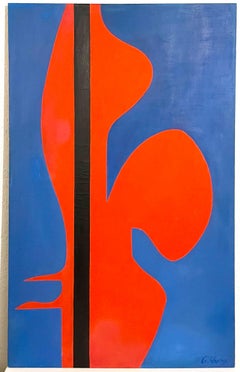
Large Bold Abstract Expressionist Painting Margarita Gibbons Met Opera Ballet

Large Bold Abstract Expressionist Painting Margarita Gibbons Met Opera Ballet

Located in Surfside, FL

A bold, graphic painting on canvas by listed New York artist Margarita Gibbons (1906-1976). Hand signed lower right and signed again on verso M. Gibbons. Address of 222 W. 23rd Street (Hotel Chelsea) also noted on verso as well as the title of the work, Gibbons studied at the Art Students League of New York and Pratt Institute of Art. Exhibitions included National Association of Women Artists and Society of Independent Artists. Margarita Gibbons (1906-1976) was a painter from New York City. Gibbons originally performed as a ballerina for the Metropolitan Opera House Corps de Ballet, as a dancer, before pursuing a career as a fine artist. (She was there with Martha Graham). Margarita studied with Bolm and Fokine and performed in the 1924 music box revue for Irving Berlin. Her close friends were dancers Ruth Page and Helen Tamiris Becker. She studied at the Art Students League, Pratt institute and later in Paris and Amsterdam. Her work has been shown in a number of galleries and museums including the Argent gallery, the Brooklyn Museum, and the Whitney Museum of American Art. Gibbons first husband was Ecuadorian painter Camilo Egas (friends with Jose Clemente Orozco, Willem De Kooning, Pablo Picasso and Oswaldo Guayasamin) whom she brought to the United States. They lived in Greenwich Village, New York City. In the 1940s and 1950s, his work moved away from Indigenismo and social realism toward Surrealism, neo-Cubism, and eventually Abstract expressionism. Her second husband was American illustrator and painter Arthur Getz...

Category

Mid-20th Century Abstract Expressionist Abstract Paintings

Materials

Canvas, Oil

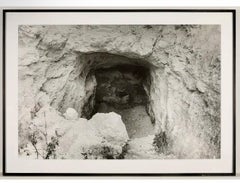
Los Carpinteros Cuban Art Photograph Tuneles Populares Silver Gelatin Photo

Los Carpinteros Cuban Art Photograph Tuneles Populares Silver Gelatin Photo

By Los Carpinteros

Located in Surfside, FL

Los Carpinteros (Cuban, 1992-present). Silver gelatin print photograph, large format. From the series "Tuneles Populares" (The People's Tunnels) 1999 Edition 1/5 Provenance: Bliss Fi...

Category

1990s Conceptual Landscape Photography

Materials

Silver Gelatin

Untitled, Family in an Interior, Mexican 20th Century, Oil and sand on board

Untitled, Family in an Interior, Mexican 20th Century, Oil and sand on board

By Jesus Mariano Leuus

Located in New York, NY

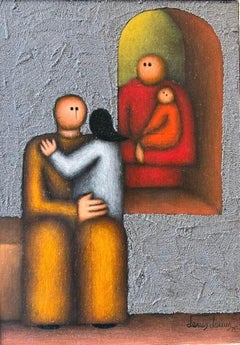
Leuus’s interest in art began at a young age, and he later moved to Guadalajara, where he attended the Escuela de Artes Plásticas. This formal training in the traditions of Mexican a...

Category

1970s Contemporary Figurative Paintings

Materials

Mixed Media, Oil, Board

New Year’s Eve and Adam

New Year’s Eve and Adam

By John Sloan

Located in Myrtle Beach, SC

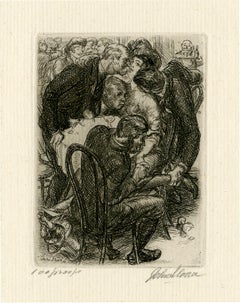
John Sloan, 'New Year's Eve and Adam', etching, 1918, edition 100, (only 85 printed), Morse 190. Signed, titled and annotated '100 proofs' in pencil. Signed and dated in the plate, l...

Category

1910s Ashcan School Figurative Prints

Materials

Etching

Landscape

Landscape

By Stanley Cosgrove

Located in Westmount, QC

Stanley Cosgrove, 1911-2002, Canadian Oil on canvas 14 x 18 in Signed and dated '89 lower right framed Stanley Cosgrove Biography (1911 - 2002) Canadian Group of Painters, RCA Bor...

Category

1980s Portrait Paintings

Materials

Oil

Large Mexican Figurative Expressionist Lithograph Women Juan Sebastian Barbera

Large Mexican Figurative Expressionist Lithograph Women Juan Sebastian Barbera

Located in Surfside, FL

Juan Sebastian Barbera (Spanish, Born 1964 ) Litho on Guarro Paper Titled : La Comision (from the Los Conjuros Suite) Circa, 1994. Hand signed in pencil lower right with edition size number 62 / 75. Frame: 38" X 46" Image: 22" X 30" Juan Sebastián Barberá Durón Plastic artist Cd. de México 1964 Son of the great musical artist Luisa Duron, Mexican harpsichordist, daughter of pianists Jesús Durón Ruiz and Julia Crespo considered a pioneer of the movement and musical flourishing of the Renaissance and Baroque periods and the initiator of the harpsichord school in Mexico .he grew up in an almost Renaissance environment, among artists and under the main protection of the baroque music of Bach and Hotteterre, Couperin and Scarlatti , among others. Since a very young age, he had a great talent for drawing, painting and sculpture and at the age of ten he won the National School contest of art. From there on, he studied painting and engraving with significant teachers, and was dedicated in a very clear way to the plastic arts from the age of 17 years, after a mystical trip to India. He continued his studies at the academy of San Carlos...

Category

20th Century Abstract Expressionist Figurative Prints

Materials

Lithograph

Herbert Ferber Abstract Expressionist sculptural study signed framed Provenance

Herbert Ferber Abstract Expressionist sculptural study signed framed Provenance

By Herbert Ferber

Located in New York, NY

Herbert Ferber Untitled, 1968 Unique Ink and color wash on paper Hand signed and dated by the artist on the front Framed with original Knoedler Gallery label (under the respected dir...

Category

1960s Abstract Expressionist Abstract Drawings and Watercolors

Materials

Ink, Watercolor

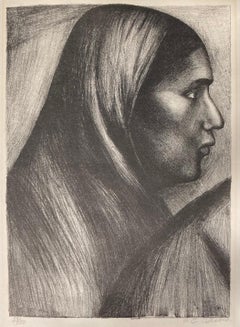
Pink Lady
Pink Lady

Pink Lady

Located in San Francisco, CA

THis artwork "Pink Lady" 1989, is an acrylograph on hand made paper by noted Mexican artist Byron Galves, 1941-2009. It is hand signed, dated and numbered 64/150 in white pencil by the artist.The artwork size is 28.5 x 15.5 inches, paper sheet size is 32 x 23.85 inches, framed size is 44 x 36 inches. Beautifully custom framed in a wooden silver frame, with dark purple backing and bevel. It is in excellent condition, the frame have some small minor restorations, barely visible. About the artist: Byron Gálvez (October 28, 1941 – October 27, 2009) was a Mexican artist who was primarily known for his painting but also created sculpture, including monumental works. He was born in rural Hidalgo state, to a father who played jazz music and read literature, a rarity in 1930s rural Mexico. However, it exposed Gálvez to culture, even though this led to an interest in visual art rather than musing or writing. He went to Mexico City to study art at both the undergraduate and graduate level, but never completed his degrees, opting instead to begin career after his coursework. Before his first individual exhibition, his work was criticized by Justino Fernández, but all of the paintings were sold in advance to foreign buyers including American actor Vincent Price, who called Gálvez a “Mexican Picasso.” Gálvez then managed to replace the forty five paintings for the exhibition in a week. Since then he had individual and collective exhibitions in Mexico, the United States and other parts of the world. He concentrated on painting, which he is better known for, in the 1970s and 1980s, but moved on to sculpture, including monumental works later in his career. Recognitions for Gálvez's work include membership in the Salón de la Plástica Mexicana, a retrospective at the Palacio de Bellas Artes and two books published about his life. Gálvez was born in Mixquiahuala, Hidalgo and described his childhood as happy, and would not have changed it. His father, Roberto Gálvez, was a farmer and merchant, who was a music and literature enthusiast, a rarity is 1930s rural Mexico. His father played the violin in the town's jazz band, which had almost all classical instruments, making it similar to bands in New Orleans. They even composed new pieces. The artist was named after Lord Byron, and his brothers, Eliot, Aníbal and Dante, after his father's reading preferences This meant that Gálvez grew up in an environment that encouraged the enjoyment of the arts. However, instead of music or literature, Gálvez stated that his earliest memories related to his attraction to art and that he always wanted to be a painter. The difficulties of farm life convinced him that he needed an education and would have to move to Mexico City in order to go to school. At age sixteen he left home for the capital to study painting at the Escuela Nacional de Artes Plásticas, not knowing what the study would entail. It was far more rigorous than he expected, with thirteen-hour school days leaving only weekends to earn money to live on.[3] He did his undergraduate studies from 1958 to 1962, then continued with the graduate courses from 1962 to 1964, specializing in painting. He did much of his studies under teachers such as Luis Nishizawa, Fernando Castro Pacheco, Francisco Moreno Capdevila, Santos Balmori, Antonio Rodríguez Luna and Antonio Ramírez. The last teacher taught him to love his studies above all else and he submitted himself to the academic rigor. This led him to become attracted to the Cubism of Picasso, and felt that the artist has opened roads which could be taken and widened. Although he specialized in painting, his interest in sculpture was also evident at this time as he was a founding member of a metal sculpture workshop at the institution along with Armando Ortega and Baltazar Martinez.[2][5] Although he completed his coursework, he did not finish the other requirements needed for the degree, instead opting to start his career. Gálvez married once to art dealer Eva Beloglovsky.The couple first met in 1973, but did not meet again until two years later, when Beloglovsky bought one of his paintings and sold two more through her art gallery. At first it was a working relationship, and then evolved into a romantic one. During their marriage, they worked on a number of projects together such as multi-media presentations and charity benefits. The couple remained together until Galvez's death. Although he began and developed much of his career in Mexico City, in his later life, the artist moved back to his rural hometown. Gálvez constructed a house and studio on the edge of a ravine in which flows the Moctezuma River. The structure has glass walls positioned for maximum light and a privileged view of a local landmark, a hill called El Elefante. Gálvez's work included painting, sculpture, etching, lithography, and drawing.[4] For Galvez, art was spiritual and disconnected with physical logic, when only aesthetics mattered. Female figures are common, and often are sensual. He work has been influenced by the Cubism of Picasso and Georges Braque, by African and Oceanic folk art and by pre-Columbian sculpture. He preferred large scale works often bigger than seven by seven feet. He painted while listening to classical, jazz and occasionally, rock music. Galvez's work experienced periods in which different artistic currents dominated including expressionism, abstract art and mixtures of the two. In his work, he tried to achieve a balance between figurative and abstract expression. The first stage of his painting was figurative expressionism, then abstract expressionism, under strong influence of Carlos Mérida, Rufino Tamaho, Santos Balmori, Kandinsky, Wifredo Lam and Picasso, along with some from classical painters such as Rembrandt and Caravaggio. Then for some time, he practiced abstract art, but then felt the need to draw human bodies again, especially female ones because he felt it allowed him better expression. Around 1980, he moved on to geometric figurativism, marked by the “Woman” exhibit at the Museum of Modern Art. This has also been describes as “pure chromatic constructivism. He considered himself primarily a sculptor and painted in that fashion. The work of Byron Galves is held in numerous corporate and private collections Galvez died at age 67 at Inglés Observatorio Hospital from a heart attack. His ashes were deposited a year after his death to the side of one of the sculptures at his home in Mixquiahuala. During his career, he exhibited individually and collectively in over sixty venues in Mexico, various cities in the United States, Europe and Latin America. In 1964, he had his first individual exhibition at the ENAP Gallery, after showing in collective exhibitions at the Palacio de Bellas Artes and private galleries along with more prominent painters such as José Chávez Morado, Alfredo Zalce, José Clemente Orozco, Diego Rivera, Carlos Orozco Romero and David Alfaro Siqueiros. Before the opening of this exhibit, his work was severely criticized by art historian Justino Fernández. Despite this, the paintings for the exhibit were bought in advance, most by American actor Vincent Price, who called Gálvez a “Mexican Picasso.” The paintings were taken out of the country one week before the exhibit, but Gálvez was not concerned about not having paintings for the show, rather he was satisfied about his work being recognized and supported.He managed to create forty five more paintings in the remaining time in order to have the exhibit. After this individual exhibit, Gálvez had over 55 more over he career, along with participated in other 75 collective exhibits. Important exhibits include the Solar 68 collective exhibition at the Palacio de Bellas Artes (1968), the Sterenberg Galleries, Chicago (1972), Eye Corporation in various US cities (1973), Polyforum Cultural Siqueiros (1978), Museo de Arte Moderno in Mexico City (1982), Harcourts Contemporary Gallery in San Francisco (1983, 1990), Art-Forum Gallery in Mexico City (1984), Bishop Gallery in Phoenix (1989), Merryl Chase Gallery in Washington, DC (1991, 1992), Suhan Galleries in San Diego (1992), Misrachi Gallery (1994) and San Francisco Theater in Pachuca (1995) .[4][2] After his death, the Secretaría de Relaciones Exteriores sponsored an exhibition of his work in Tainan, Taiwan in 2011. His works can be found in major collections in both Mexico and the United States. The strongest demand has been for his figurative work especially that produced later in his life. Gálvez also created murals and sculptures, both small and monumental. His first mural was sculpted done in 1968 in Los Angeles. However, most of his monumental work was produced later in his career as he concentrated on painting in the 1970s and 1980s. These include a mural at the National Conservatory of Music in Mexico City (1970), a thirty-foot high sculpture in Unidad Morelos in Mexico City (1971), a hand hammered copper triptych for a private residence in Mexico City (1984), a sculpted door for a private residence (1985), a sculpture for a private home in New York (1986), Reclined Torso at the Hotel Nikko Mexico (1998), Torso I a five-foot high sculpture for the city of Pachuca (1999), Torso II a nineteen foot high sculpture at the Altiva Building, Mexico City (1999), Millenium, a bronze sculpture/fountain at the highway entrance to Pachuca (2000), a sculpture garden for Mixquiahuala, Hidalgo (2005) and the master plan and central mosaic for the David Ben Gurion Cultural Park in Pachuca (2007). The park project, the last before his death, included not only the creation of the central mosaic, the largest pedestrian mural in the world at 345,000f, but also the design of the 65-acre park itself. His other activities included the teaching of drawing at his alma mater, the creation of a program for the radio ministry of Mexico in 1973, participation in a documentary about lithography in Mexico in 1980 and the creation of several special programs for the office Radio...

Category

Late 20th Century Modern Nude Prints
Materials
Other Medium