Questions & Answers
Our trusted network of 1stDibs sellers answer common questions
How do I identify a Loetz vase?
1 Answer
To identify a Loetz vase, turn the piece over and examine its pontil — the ring-shaped tip formed during the blowing process. Most Loetz vases will display the maker's signature in a circular marking around the pontil. Some pieces may also feature a number that you can cross-reference with information published on trusted online resources to discover the production year and style name of your vase. To get assistance with the identification process, use the services of a certified appraiser or experienced antique dealer. On 1stDibs, explore a selection of Loetz vases.
1stDibs ExpertNovember 4, 2024
Related Questions
- How do I identify my Loetz vase?1 Answer
- How do you identify Loetz glass?1 Answer
- Are Loetz vases signed?1 Answer
- How do I identify a Ming vase?1 Answer
- How do you identify an antique vase?2 Answers
Shop for Loetz Glass Vases on 1stDibs
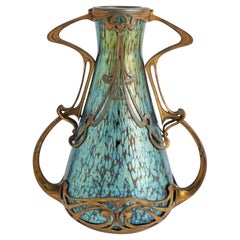
Loetz Cobalt Papillon Iridescent Bronze Mounted Vase
By Loetz Glass
Located in Dallas, TX
Bronze Mounted Iridescent Loetz Vase.
Circa 1900, Art Nouveau
An elegant Art Nouveau vase by Johann Loetz (1848–1933), featuring luminous iridescent glass in rich blue with green and...
Category
Antique Early 1900s Czech Art Nouveau Vases
Materials
Metal
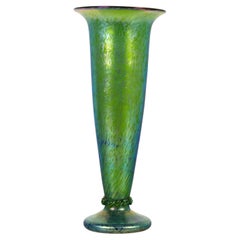
Loetz Blue Green Iridescent Art Glass Trumpet Vase
By Loetz Glass
Located in Tarry Town, NY
A spectacular large Loetz Austria studio art glass vase, showcasing the exceptional craftsmanship and luminous iridescent effects for which Loetz glass is renowned. This impressive v...
Category
Vintage 1910s Czech Bohemian Vases
Materials
Art Glass
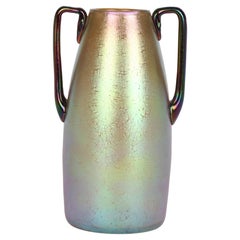
Loetz Silberiris Candia Iridescent Twin Handled Glass Vase
By Loetz Glass
Located in Bishop's Stortford, Hertfordshire
Stylish Bohemian Silberiris Candia iridescent glass vase with brown handles by Johann Loetz Witwe and dating from around 1900. The simply shaped vase ref PN 85/5151 in the Loetz cata...
Category
Antique Early 1900s Austrian Art Nouveau Vases
Materials
Blown Glass
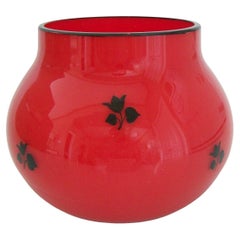
Dagobert Peche, Loetz, Cased Glass Vase with Enamel Decoration, C.R, C.1915
By Loetz Glass, Dagobert Peche
Located in Chatham, ON
Dagobert Peche (1887-1923) - LOETZ - Antique Jugendstil clear cased red glass vase - rare form with hand painted black enamel floral sprigs alternating in two rows over the body - bl...
Category
Early 20th Century Czech Art Nouveau Vases
Materials
Enamel
$2,730 Sale Price
30% Off
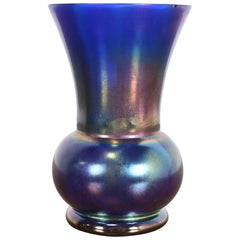
Loetz Art Nouveau Iridescent Art Glass Vase
By Loetz Glass
Located in South Bend, IN
A gorgeous Art Nouveau period iridescent art glass vase
By Loetz
Austria, Early 20th Century
Measures: 5"W x 5"D x 7.25"H.
Good original vintage condition.
Category
Early 20th Century Austrian Art Nouveau Vases
Materials
Art Glass
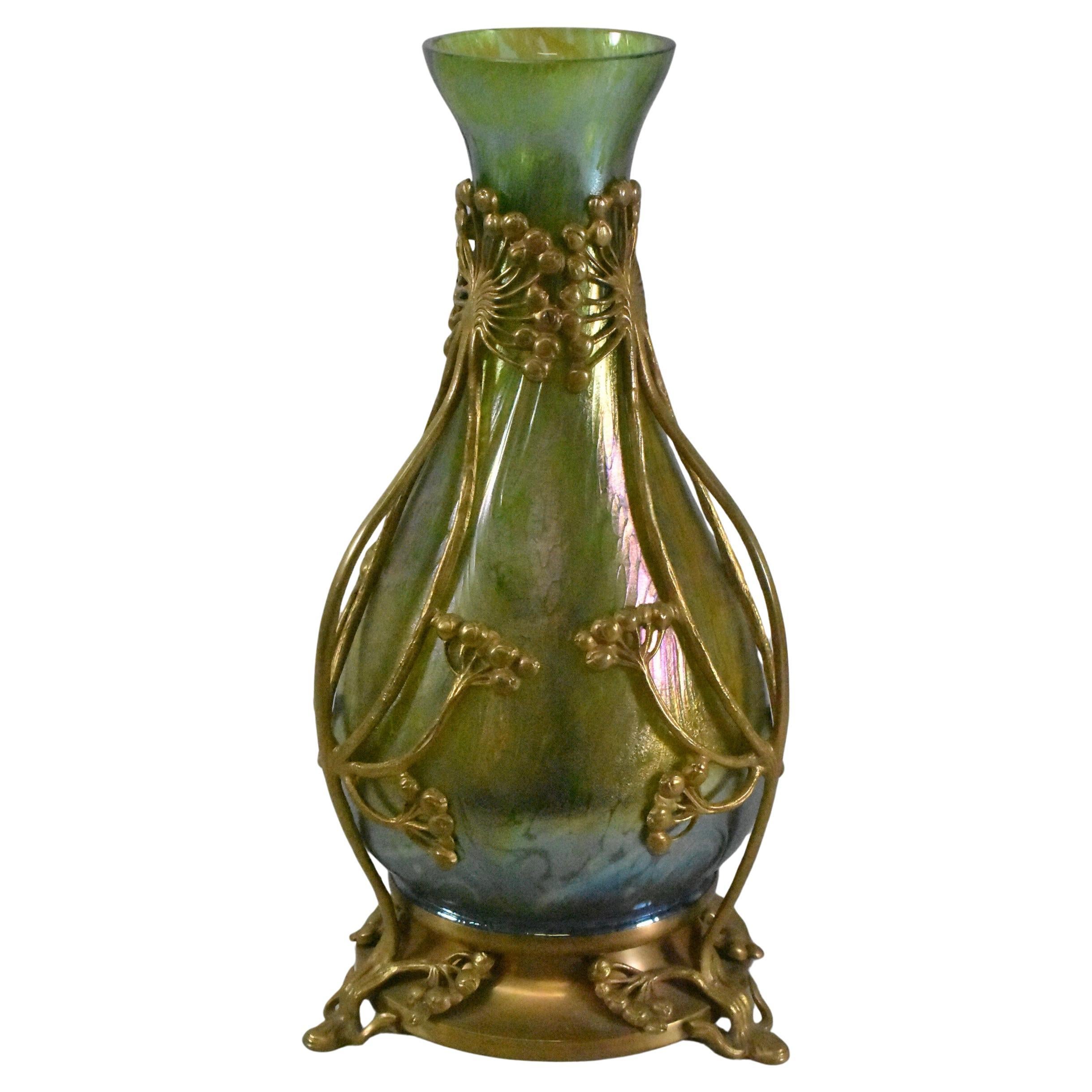
Loetz For Boudon And Klur Ruby Papillon Glass And Gilt Metal Mounted Vase
By Loetz Glass
Located in Dallas, TX
Loetz For Boudon And Klur Gilt Metal Monted Glass Vase. A highly sought after vase culminating the zenith of Loetz and the Art Nouveau design.
Czech Republic
Circa 1900
Rubin Ruby Papillon Decor
Metal mount with indistinct impressed marks for Boudon and Klur
Height: 10.5 Inches x 8 Inches wide x 5 Inches deep
Condition: Very good with wear commensurate of age and use with some loss to gilt,
The Loetz glassworks existed in Klostermuhle, Austria, for just over a hundred years, starting from 1840. But its heyday was during the life-time of Max Ritter Von Spaun, grandson of the original Johann Loetz who had founded the company. Von Spaun took over the company in 1879 and ran it until 1908, a year before his death. He was assisted by Eduard Prochaska, his technical specialist, and together they invented, designed and produced a whole series of wonderful new types of glass, taking out several patents and winning awards at all the major world exhibitions during the 1890's and the first years of the new century.
The Loetz company were amongst the leaders in Art Nouveau design and expecially in irridescent art glass. "Papillon" glass, like the vase on the left, is sometimes known today as "oil spot" glass. Another favourite Loetz colouring was irridized glass with pulled trails called "Phenomenon" glass. There were irridized vases with ribbons of metallic colours winding over the surface, and many spectacular designs with applied trails of beautiful colours, or simply pulled out of the body of the glass to form handles or decoration.
About 1900 the company started collaborating with outside designers, and some great artists designed pieces for Lotz, notably Joseph Hofmann, Koloman Moser, Maria Kirchner, and Hofstatter.
In 1908 Loetz was taken over by Max Von Spaun's son, also called Max, and although it struggled financially (going through bankruptcy in 1911 and again in 1931) there were several great designers whose work was produced by Loetz during those years and through the art deco period. These included Adolf Beckert...
Category
Antique Early 1900s Czech Art Nouveau Vases
Materials
Metal