Questions & Answers
Our trusted network of 1stDibs sellers answer common questions
How much is a Rembrandt worth?
1 Answer
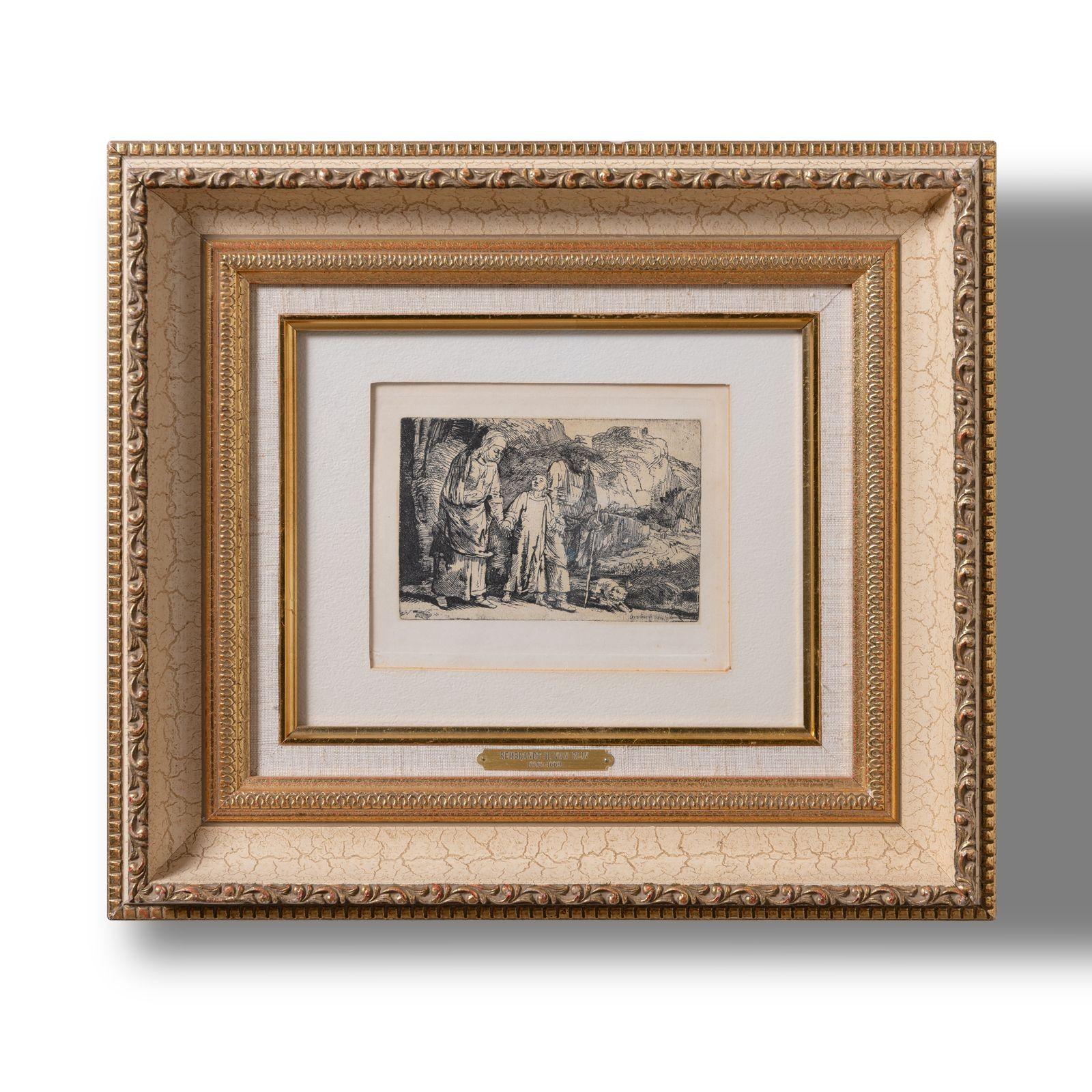
How much a Rembrandt is worth will vary based on its history, condition and other factors. In 2000, the Dutch painter's Portrait of a Man with Arms Akimbo sold for more than $25 million, setting a new auction record for the artist. Rembrandt's portraits of his contemporaries, self-portraits and illustrations of scenes from the Bible are regarded as his greatest creative triumphs. He is well-known for his use of dramatic lighting in his works. To find out how much a particular Rembrandt may be worth, seek the opinion of a certified appraiser or experienced art dealer. Explore a selection of Rembrandt van Rijn art on 1stDibs.
1stDibs ExpertAugust 20, 2024
Related Questions
- How much is Guernica worth?1 Answer
- How much is a Minotti worth?1 Answer
- How much is a Cartier worth?1 Answer
- How much is my Audubon worth?1 Answer
- How much is a Stik worth?1 Answer
Shop for Rembrandt van Rijn Art on 1stDibs
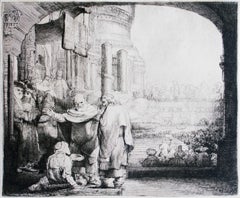
Peter and John Healing the Cripple at the Gate... - Etching by Rembrandt - 1659
By Rembrandt van Rijn
Located in Roma, IT
Etching, excellent proof of II state on IV, before the retouching of the ground and the vault on the right, margin line.
Ref. Bartsch, Hollstein 94; Hind 301; New Hollstein 312; Sto...
Category
1650s Old Masters Figurative Prints
Materials
Etching
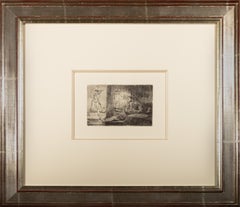
The Golf Player Etching, Dutch School, Signed, Circa 1650-1659, Framed
By Rembrandt van Rijn
Located in Milwaukee, WI
Framed 18.5 x 20.5 in
Etching on Ingres D'arches off-white laid paper, signed and dated Third and final state Posthumous Impression, 1998
Category
1650s Dutch School Figurative Prints
Materials
Etching
The Archangel Raphael Leaving Tobias' Family - Etching by Rembrandt - 1641
By Rembrandt van Rijn
Located in Roma, IT
The Archangel Raphael Leaving Tobias' Family is an etching by Rembrandt executed in 1641. This etching is a proof of the 3rd state (of 4) before of the diagonals on the ground at the...
Category
1640s Old Masters Figurative Prints
Materials
Etching

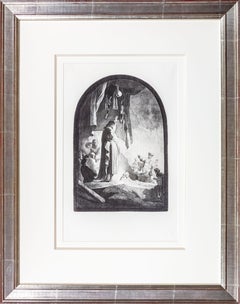
The Raising of Lazarus Etching, Dutch School, Circa 1632, Framed
By Rembrandt van Rijn
Located in Milwaukee, WI
Etching on Ingres D'arches off-white laid paper, with burin, signed Tenth and final state Posthumous Impression, 1998
14.25 x 10 in (36.2 x 25.4 cm)
Framed 25.13 x 32 in
The Raising...
Category
1630s Dutch School Figurative Prints
Materials
Etching
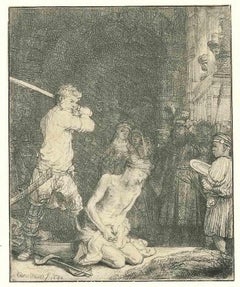
The Beheading of St. John the Baptist - Etching by Rembrandt - 1640
By Rembrandt van Rijn
Located in Roma, IT
Beautiful proof of I state on III before the white space under the sword is covered.
Without Margins.
Very good condition.
Ref. Bartsch 92; Biörklund 40-B; Hollstein (White and Bo...
Category
1640s Old Masters Figurative Prints
Materials
Etching
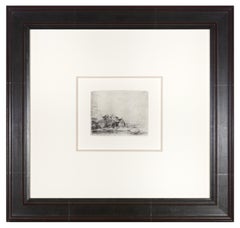
17th century etching Rembrandt landscape house trees field sky cow
By Rembrandt van Rijn
Located in Milwaukee, WI
This piece is from a collection of originally designed etchings with drypoints by Rembrandt. It is printed on Ingres D'arches off-white laid paper. The prints are the sixth and final state Posthumous Impression. Printing plates were made in 1650, this collection was printed in 1998.
Rembrandt van Rijn was one of the masters of the landscape genre in his prints and drawings. In his etching, "Landscape with a Cow...
Category
17th Century Renaissance Landscape Prints
Materials
Etching