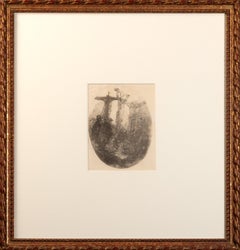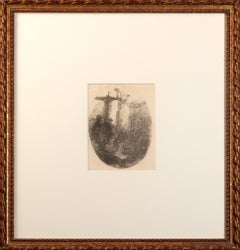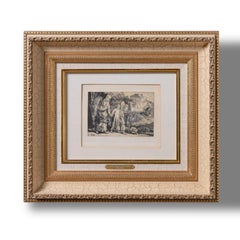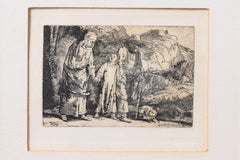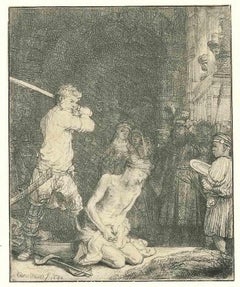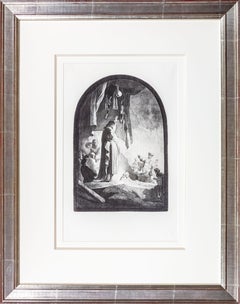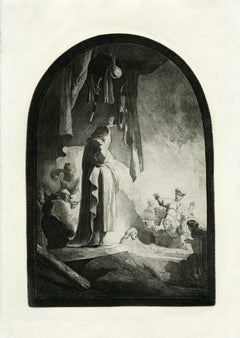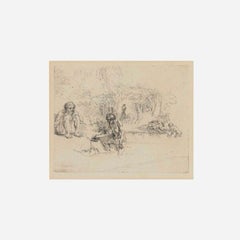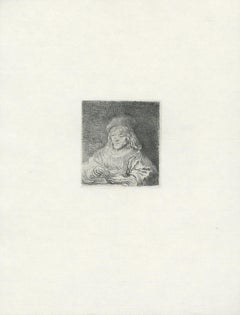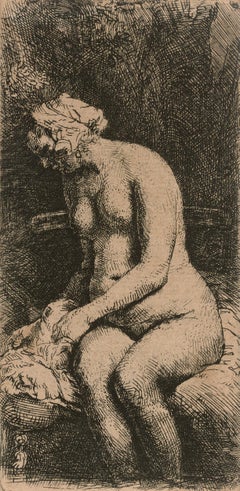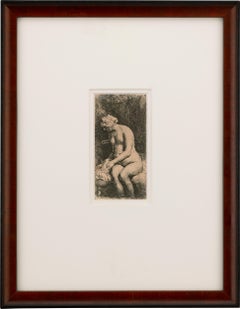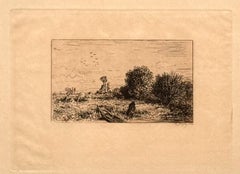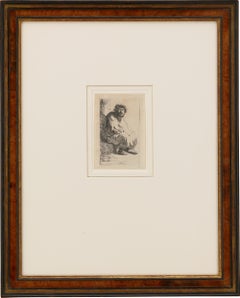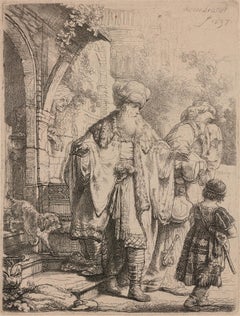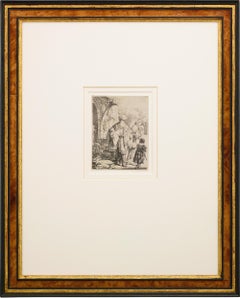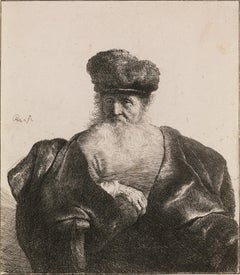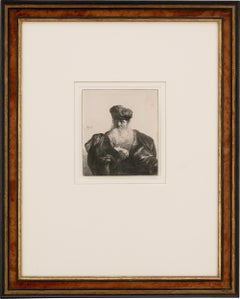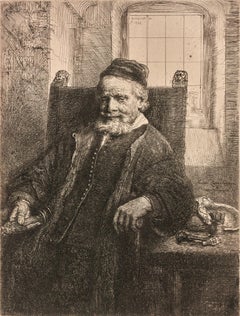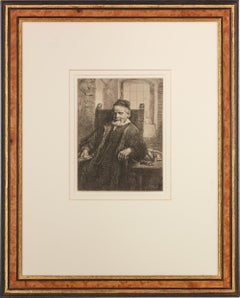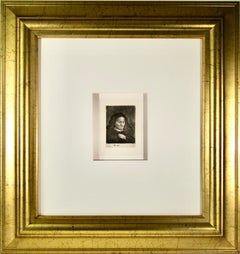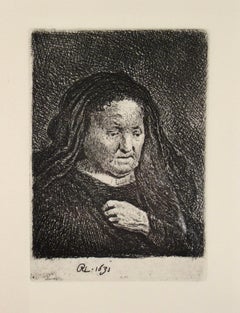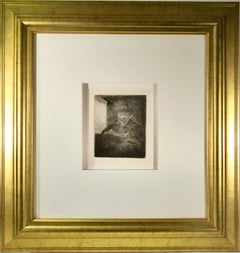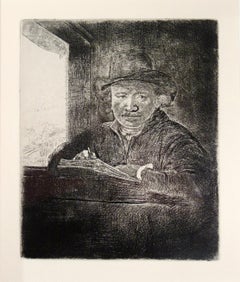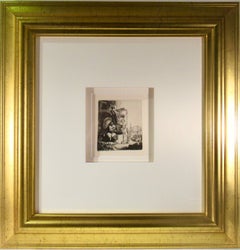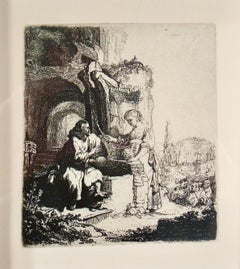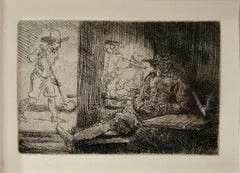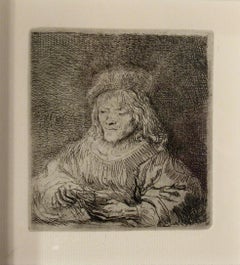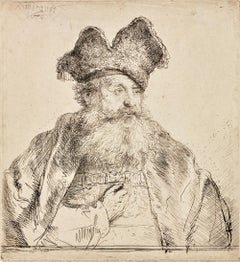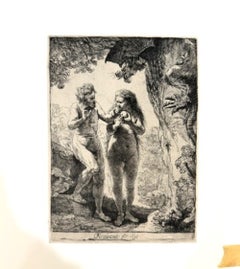
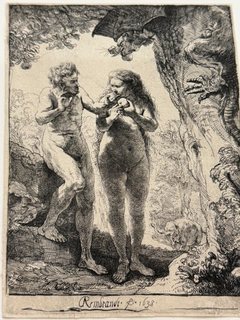
Rembrant Van Rijn "Adam and Eve"
By Rembrandt van Rijn
Located in Los Angeles, CA
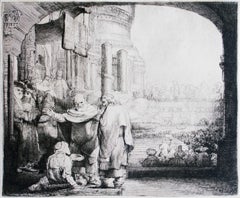
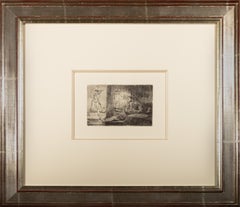
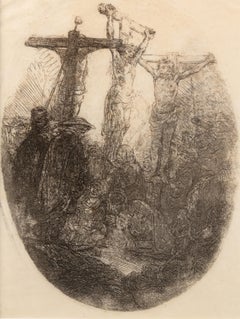
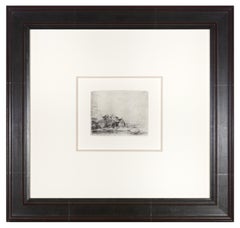
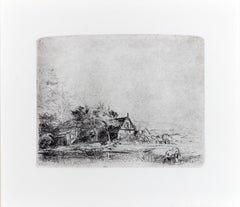
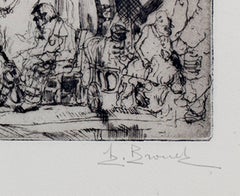
Rembrant Van Rijn "Adam and Eve" 1638 Original etching and drypoint, printed in black ink on laid paper. A strong dark impression of Bartsch’s second and final state and Usticke’s only state. Signed and dated below image 6.5 x 4.75 inc 16.5 x 11.5 cm Bartsch 28 ii/ii, Hollstein 28, Hind 159, Bjorklund-Barnard 38-D, Usticke 28 Provenance From the collection of the Print Department of the Szefmuveszeti Museum (Musee des Beaux Arts), Budapest, with their collection stamp( Lugt 2000) From the collection of Wilhelm Theodor Moll (Lugt 1819a): Collector's stamp as belonging to Wilhelm Theodor Moll (Lugt 1819a). Wilhelm Theodor Moll was a German collector, dealer, and connoisseur of old master prints. His collection included works by artists such as Rembrandt van Rijn, Dürer, and other major printmakers. His collector's mark is frequently encountered on impressions from distinguished nineteenth-century collections and is catalogued in the well-known collector's marks reference by Frits Lugt.Significance of the Stamp If this is indeed the Lugt 1819a mark, it can add an important layer of provenance to the etching: Demonstrates that the print passed through a recognized nineteenth-century collection. May help establish ownership history prior to modern sales records. Can support authenticity and collecting interest, particularly for Old Master prints. Collectors of Rembrandt prints often place considerable value on documented provenance through notable collections. Prov. Pasquale Iannetti Gallery, San Francisco, circa 1982 Private collection, Utah, USA Acquired by the present owner, General Investment Group LLC, June 2026. Publication Daniel Daulby, A Descriptive Catalogue of the Works of Rembrandt (Liverpool, 1796), p. 15, no. 29.M. le chev. de Claussin, Catalogue raisonné de toutes les estampes qui forment l’œuvre de Rembrandt (Paris, 1824), p. 22, no. 34.Thomas Wilson, A Descriptive Catalogue of the Prints of Rembrandt (London, 1836), p. 46, no. 35.Charles Blanc, L’œuvre de Rembrandt (Paris, 1880), pp. 55-57, no. 1.Woldemar von Seidlitz, Die Radierungen Rembrandts (Leipzig, 1922), pp. 40-41 (ill.).Arthur M. Hind, A Catalogue of Rembrandt’s Etchings, 2 vols. (London, 1923), I:83, II:pl. 159.Ludwig Münz, Rembrandt’s Etchings , 2 vols. (London, 1952), I:pl. 197, II:87, no. 177.George Biörklund, Rembrandt’s Etchings: True and False (Stockholm, 1955), p. 70, no 38D (ill.).Karel G. Boon, Rembrandt: The Complete Etchings, trans. by Elizabeth Willems-Treeman (New York, 1963), pl. 140.G. W. Nowell-Usticke, Rembrandt’s Etchings: States and Values (Narberth, Pa. 1967), n.p., no. B28 (ill.).Christopher White, Rembrandt as an Etcher: A Study of the Artist at Work, 2 vols. (London, 1969), II: 248, pl. 35.Christopher White and Karel G. Boon, Rembrandt’s Etchings: An Illustrated Critical Catalogue, 2 vols. (Amsterdam, 1977), I: 13, no. 28, II:17 (ill.).James N. Wood and Sally Ruth May...
1630s Academic Rembrandt van Rijn Art
Drypoint, Etching