Questions & Answers
Our trusted network of 1stDibs sellers answer common questions
What is art that looks 3D called?
1 Answer
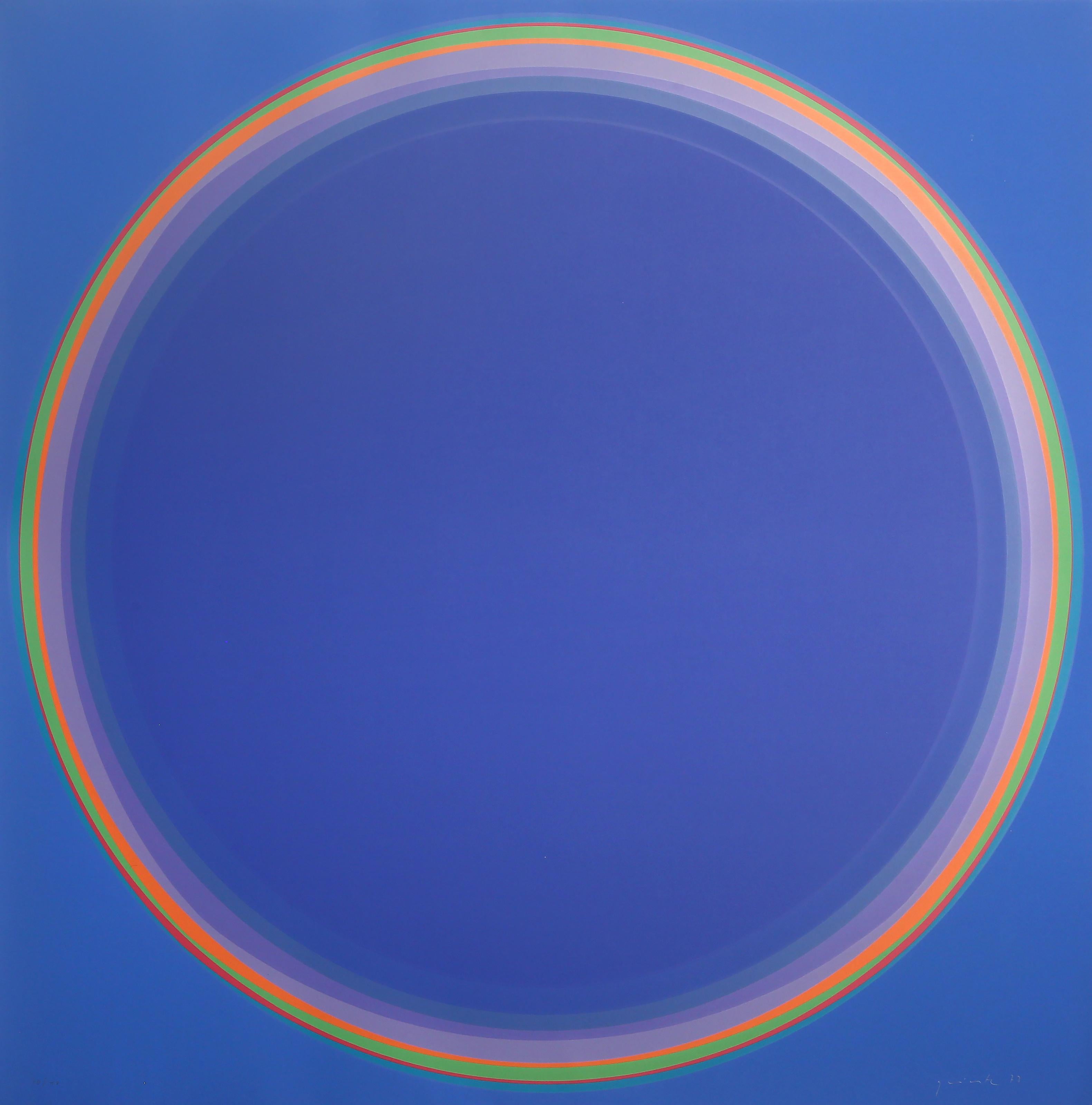
Art that looks 3D is called Op art. The Op art movement emerged in the 1960s, mirroring the counterculture of the time in its embrace of visual trickery, graphic shapes and bright colors. Spreading across Europe and the Americas, the style — short for “optical art” — influenced advertising, fashion and interior design before fading in the early ’70s. Op art remained significant, however, for artists and scientists interested in the nature of perception. And today, it’s seeing a resurgence of interest from collectors and interior designers. Some notable artists who created Op art include Victor Vasarely, Josef Albers, Bridget Riley and Jesús Rafael Soto. Find a diverse assortment of Op art on 1stDibs.
1stDibs ExpertNovember 13, 2024
Related Questions
- What do you call art that looks real?1 Answer
- What is it called when furniture is made to look old?1 Answer
- What is the art that looks real?1 Answer
- What is a 3 seat couch called?1 Answer
- What is African art called?1 Answer
Shop for Op Art on 1stDibs
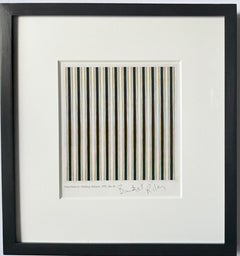
Bridget Riley - broadside of "Final Study for Halcyon" 1972 (Hand Signed) Framed
Located in New York, NY
Bridget Riley - magazine page (broadside) of "Final Study for Halcyon", 1972 (Hand signed by Bridget Riley), ca. 1988
Magazine page on paper (Hand Signed by Bridget Riley)
Provenance...
Category
1970s Op Art Abstract Prints
Materials
Magazine Paper
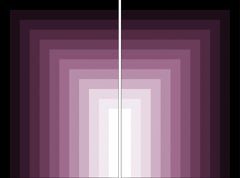
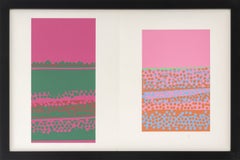
Geometric Modernism, Violet Gateway, Minimalist Abstraction, Space Age Diptych
Located in Barcelona, ES
This limited edition giclée print by Cyd Fontaine explores the language of geometric modernism through a precise arrangement of concentric color fields. Gradual tonal transitions mov...
Category
2010s Op Art Abstract Prints
Materials
Photographic Paper, C Print, Giclée
"The Interaction of Color Plate XVIII-13", Screenprint in Colors, 1973
By Josef Albers
Located in Astoria, NY
Josef Albers (German/American, 1888-1976), "The Interaction of Color Plate XVIII-13", Screenprint in Colors on Paper, 1973, published by Josef Keller Verlag Starnberg, black frame.
...
Category
1970s Op Art Abstract Prints
Materials
Screen
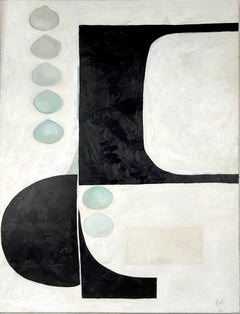
Geometric Abstract Original Oil on Canvas 1980s
Located in Soquel, CA
Geometric Abstract Original Oil on Canvas 1980s
This unknown artist expertly explores the tension between bold physical presence and quiet, open space. Dominated by deep, matte black...
Category
1990s Op Art Abstract Paintings
Materials
Canvas, Oil
$1,290 Sale Price
40% Off
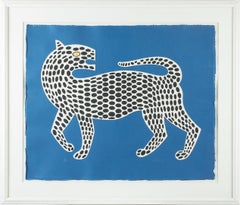
Leopard (Blue) Screenprint, Op Art, Signed, Edition 91 of 100, Framed
Located in London, GB
Victor Vasarely
Leopard (Blue), 1988
screenprint in colours on Frank Gallo Cast paper
80 x 98 cm - sheet
106 x 124 cm - framed
Edition 91 of 100
hand-signed and numbered by the arti...
Category
1980s Op Art Animal Prints
Materials
Screen
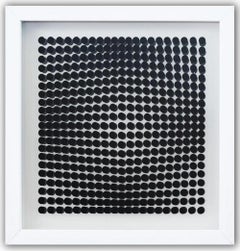
VICTOR VASARELY - OEUVRES PROFONDES CINETIQUES VIII - 1973
Located in Pembroke Pines, FL
Artist: Victor Vasarely
Title: Profound Works VIII
Year: 1973
Not signed or numbered, as published
Dimensions: 12 in. by 12 in. Framed
Edition: From the Rare Limited Edition
Publisher: Editions du Griffon Neuchatel
Suite: Profound Works
Medium: 3D, Serigraph on Acitate Over Serigraph on Paper
Condition: Excellent
Victor Vasarely (French/Hungarian, 1906–1997) is known as the father of the Op Art movement. As a painter, he created intricate abstractions that suggested depth and dimensionality using a variety of optical illusions, with surfaces seeming to bulge out of the canvas. His works present color, form, and pattern as a single interconnected element—a concept that was critical to the foundation of the Op Art movement and the focus of his mature works.
Vasarely initially studied medicine at the Budapest University in his early 20s, only to abandon his medical studies to attend to the Muhely Academy, the center of the Bauhaus movement in Budapest. While there, he was profoundly influenced by the work of color theorist and artist Josef Albers, as well as the Constructivist methods promoted by artists such as Wassily Kandinsky. While Vasarely’s earlier work was concerned more with color theory, during the 1950s and 1960s his work became more focused on the optical potential of the two-dimensional surface. He began to use complex and colorful patterns to actively engage the viewer’s eye, and to convey a sense of kinetic energy across the two-dimensional surface.
Vasarely’s work was heavily influenced by his time spent at Breton Beach of Belle Isle...
Category
1990s Op Art Interior Prints
Materials
Screen