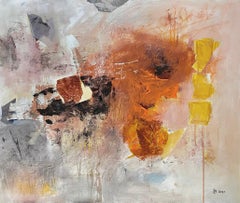
German Contemporary Art by Margot Ledergerber - 7710
Located in Paris, IDF
Mixed Media on Masonite
Category
2010s Contemporary Art by Medium: Masonite
Materials
Masonite, Mixed Media
German Contemporary Art by Margot Ledergerber - 7710
Located in Paris, IDF
Mixed Media on Masonite
Masonite, Mixed Media
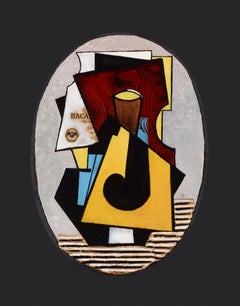
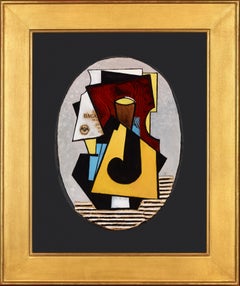
Composition, 1940–42
By Suzy Frelinghuysen
Located in Bryn Mawr, PA
Composition, 1940–42 Oil on paper collage on masonite, 16 x 11 3/4 inches (40.6 x 29.8 cm) Framed dimensions: 26 x 21 3/4 inches Signed right center: SF Provenance Frelinghuysen Morris Foundation; Valerie Carberry Gallery, Chicago, Illinois Private collection until 2022 Suzy Frelinghuysen was born into a wealthy and prominent New Jersey family, and growing up, she was tutored in both art and music. While she showed an early talent for art, it was not her primary interest; as a child, she nurtured an nambition to become a professional singer. In 1935, she married George Morris, who came from an equally wealthy and distinguished New York family and had already established himself as an art collector, artist, and critic. Morris encouraged Frelinghuysen to paint and introduced her to a circle of affluent abstract artists, including the artist and collector Albert Gallatin. Gallatin owned a small but influential gallery, known as the Gallery of Living Art...
Masonite, Paper, Oil
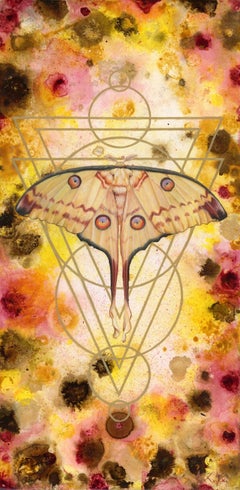
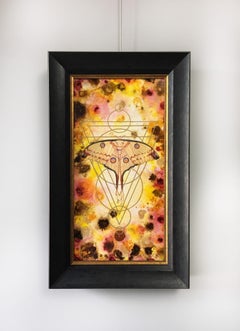
Tierra
Located in Denver, CO
Tierra, 2020
Masonite, Oil, Acrylic, Panel
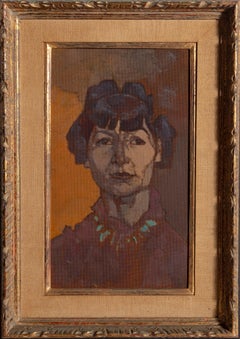
Marian Begg, Expressionist Oil on Masonite Portrait Painting by Joseph Solman
Located in Long Island City, NY
In the mid-1960s Joseph Solman (American, 1909 - 2008) was commissioned to create portraits of the Begg family. This is a portrait of Marian Begg, the mother in the mid-century nuclear family...
Oil, Masonite
$10,000
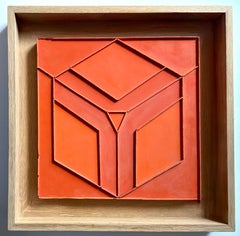
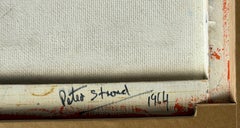
Peter Stroud - Orange Circumvert II, Emulsion on masonite, Signed twice, Framed
By Peter Stroud
Located in New York, NY
Compound emulsion on masonite signed twice, titled and dated on the verso Unique Provenance: Estate of Rosa and Aaron Esman Double framed in a museum quality wood frame Measuremets: ...
Masonite, Emulsion
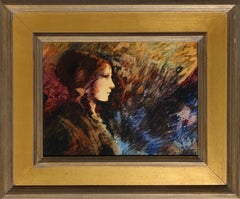
Profile of a Young Girl, Modern Oil on Masonite Painting by Donald Roy Purdy
Located in Long Island City, NY
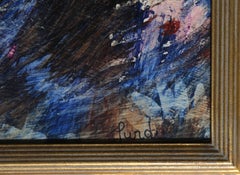
Artist: Donald Roy Purdy, American (1924 - ) Title: Profile of a Young Girl Year: circa 1960 Medium: Oil on Masonite, signed l.r. Size: 12 x 16 in. (30.48 x 40.64 cm) Frame Size: 19....
Masonite, Oil
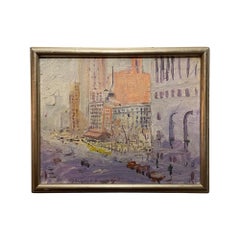
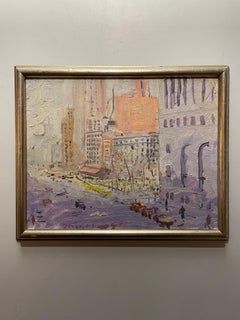
Impressionist Plein Aire painting New York City Street Scene Verdi Sqaure
By Peter Mayer
Located in New York, NY
American plein air impressionist Peter Mayer was born 1887-1993. Exhibited painting of Broadway and West 72nd street in New York, Verdi Square. T...
Masonite, Oil
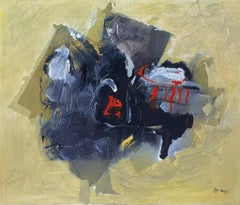
German Contemporary Art by Margot Ledergerber - 7705
Located in Paris, IDF
Acrylic on Masonite
Masonite, Acrylic
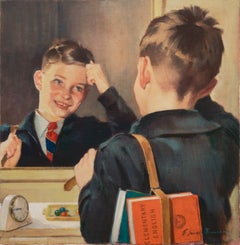
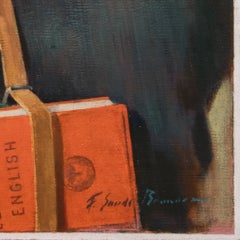
'Getting Ready', Elementary School, PAFA, Saturday Evening Post, Illustrator
Located in Santa Cruz, CA
Signed lower right 'F. Sands Brunner' for Frederick Sands Brunner (American, 1886 - 1954) and painted circa 1935. Canvas dimensions: 17 x 16.5 inches Born in Boyertown, Pennsylvani...
Canvas, Masonite, Oil
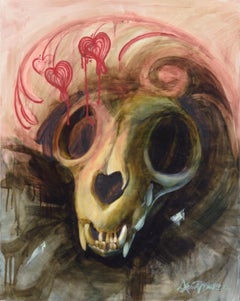
$308Sale Price|20% Off
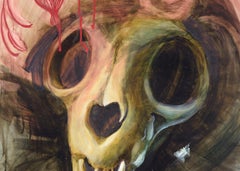
Skull with Heart Halo, Acrylic Painting on Masonite, 20in x 16in
Located in Soquel, CA
Dramatically rendered skull by an unknown artist (20th Century). The skull is lit from multiple directions, creating intense shadows and highlights of different shades. Around the top of the skill is a halo with dripping hearts...
Acrylic, Masonite
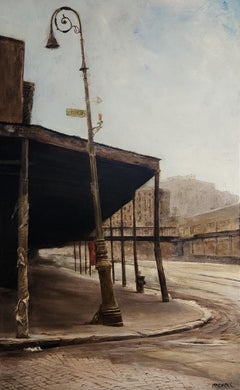
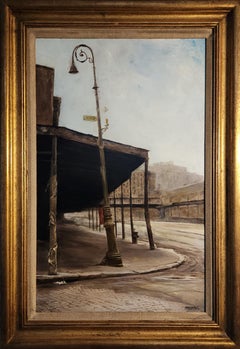
"10th Avenue, Meatpacking District" Harry McCormick, New York City Urban Scene
Located in New York, NY
Harry McCormick 10th Avenue, Meatpacking District, New York Signed lower right Oil on masonite 23 7/8 x 15 inches Renowned for his exquisite depiction of light and shadow, Harry Mc...
Masonite, Oil
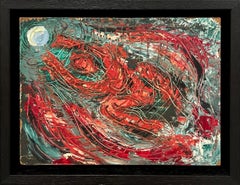
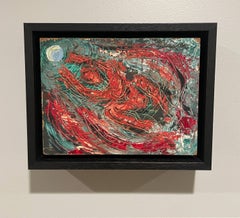
$850
An Abstract, 1950s Mid-Century Modern Sporting Themed Oil, Water Polo - Swimmers
Located in Chicago, IL
A Vibrant, Surrealist 1950s Mid-Century Modern Abstract Sporting-Themed Oil Painting of Swimming Water Polo Players by Notable Chicago Artist, Harold Haydon (Am. 1909-1994). Oil on ...
Oil, Masonite
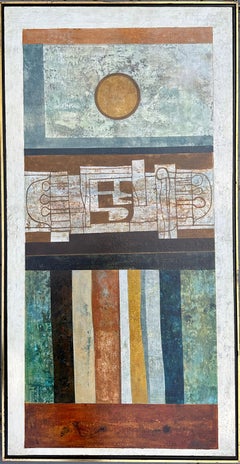
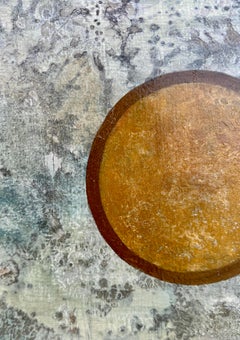
Series 67 No.4 abstract oil painting by Jack Wolsky
Located in Hudson, NY
Series 67, No. 4 (1955) Oil on masonite 48" x 24 ½" 49" x 25 ¼" x 1 ¾" framed About this artist: Jack Wolsky was born in 1930 in Rochester, New York. He taught in the Department o...
Masonite, Oil
$1,260Sale Price|30% Off
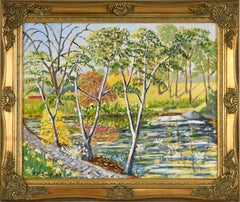
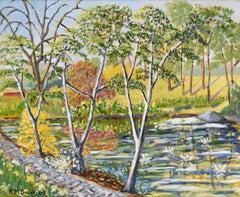
"Wally's Pond" Rural Landscape, Framed, Oil on Masonite, 2000s
Located in Soquel, CA
"Wally's Pond" Rural Landscape in Oil on Masonite Idyllic rural landscape by Richard M. Bacon (American, 20th Century). A small pond is reflecting the nearby surroundings - birch tr...
Oil, Masonite
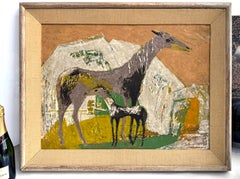
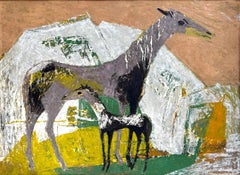
Horse and Colt in Abstract Landscape - Equestrian
Located in Miami, FL
An American Female Artist in her late signature style depicts a Horse and a Colt in an abstract landscape. Ethel Magafan scapes the defining lines with a knife to add to the creative...
Masonite, Oil
$4,500Sale Price|25% Off
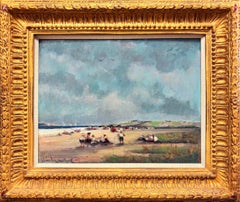
Heavy Skies at the Beach
Located in New York, NY
Signed and datedPurdy 03 lower left 14 x 22 inches Framed : 22 x 26 Beach scenes by Purdy were his most coveted works from the 1980's onward. There is an incredible amount of color...
Masonite, Oil
$1,950
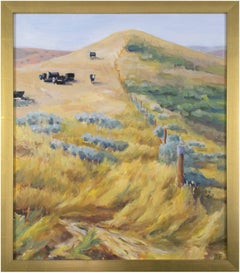
Contemporary landscape oil painting cows pastoral mountain field grassland sky
Located in Milwaukee, WI
"Sheridan Herd" is an original oil painting on masonite by Heather Foster. The artist initialed the work in the lower right. This painting depicts a herd of cows in a yellow hilly me...
Masonite, Oil
$700Sale Price|20% Off
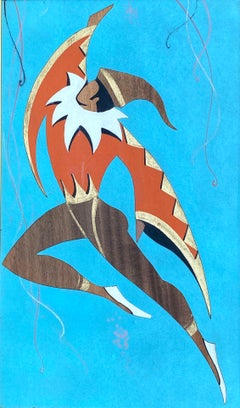
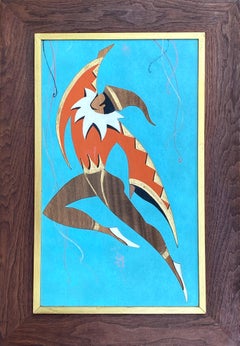
“Mardi Gras Figure L”
By Ran Su Studio
Located in Southampton, NY
Dramatic mixed media composition of fabric, inlaid wood veneers, paint and gold leaf laid down on masonite. Circa 1950. Condition is very good. Ran Su Studio l...
Gold Leaf
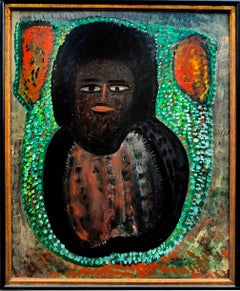
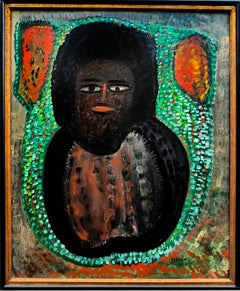
Haitian Vodou Portrait of Lwa, Loa, Oil on Masonite board. Christie's Auction
Located in Miami, FL
Portrait of lwa. Lwa, also called loa, are spirits in the African diasporic religion of Haitian Vodou. In Haitian Vodou, lwa (also spelled loa) are the primary spirits that serve as ...
Masonite, Oil
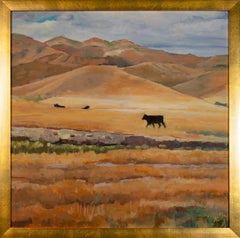
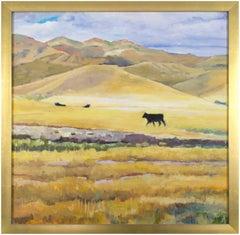
$2,500
Contemporary landscape oil painting cow silhouette mountain field grassland sky
Located in Milwaukee, WI
"Ucross Square III" is an original oil painting on masonite board signed by the artist in the lower right. It depicts three black cows against a yellow rolling field landscape. Foste...
Masonite, Oil
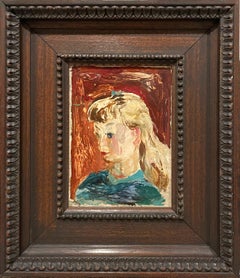
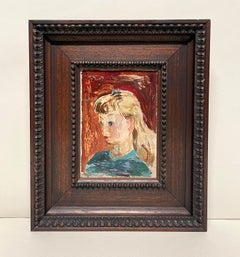
A Cheerful 1950s Modern Portrait of a Young Woman by Francis Chapin
Located in Chicago, IL
A Cheerful, 1950s Modern Portrait of a Young Woman with Blonde Hair by Notable Chicago Artist, Francis Chapin (Am. 1899-1965). Artwork size: 7 1/2 x 5 1/4 inches, oil on Masonite (...
Masonite, Oil
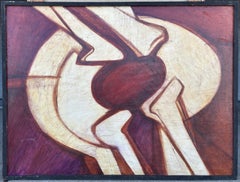
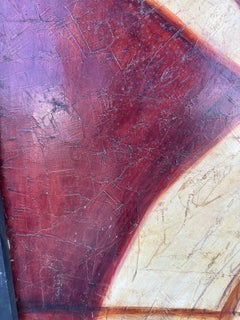
Abstract
Located in Wilton Manors, FL
Robert Steven Koffler (1938-2022). Untitled, 1963 Oil on masonite panel, 36 x 48 inches. Total measurement with wood frame: 38 x 50 inches. Signed and dated by artist, lower ri...
Oil, Masonite
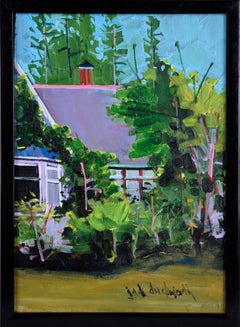
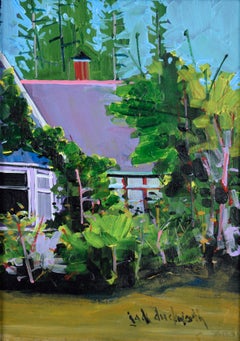
"Milner Garden" Contemporary Plein Aire Landscape in Acrylic on Masonite
Located in Soquel, CA
"Milner Garden" Contemporary Plein Aire Landscape in Acrylic on Masonite Vibrant landscape by Jack Duckworth (Canadian, 20th Century). A building with a purple roof is nestled in am...
Masonite, Acrylic
$1,480Sale Price|20% Off
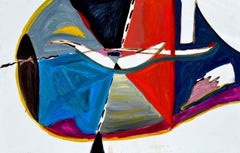
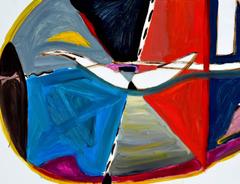
Horizontal Abstract #4
Located in Soquel, CA
Bold abstract expressionist painting by Les (Leslie Luverne) Anderson (American, 1928-2009). Oil on masonite. Titled "For the Spouse no Longer in my House" on verso. From the estate ...
Masonite, Oil
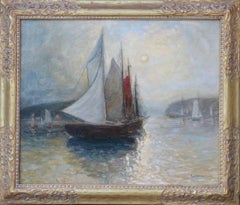
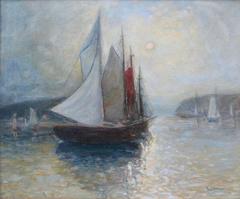
Sailing Boats in Harbor (Possibly Mohnegan Island, Maine)
Located in Rancho Santa Fe, CA
Mounted in a period, hand carved, gold leaf frame. Signed lower right "Paul King"
Masonite, Oil
$18,000
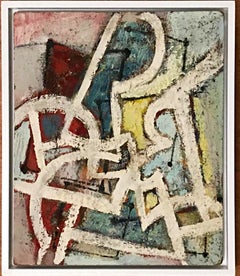
Ben Wilson - Byzantium, original signed Abstract Expressionist painting Framed
By Ben Wilson
Located in New York, NY
Ben Wilson Byzantium, 1975 Oil on Masonite painting Hand signed reverse, Titled, "Byzantium", dated 1975 by the artist and also with estate stamp - in addition to Ben Wilson's hand s...
Masonite, Oil
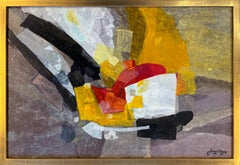
Fiesta abstract with Yellow
Located in New York, NY
A beautiful abstraction from the 1970's by an American artist working in California but with ties to Hawaii. He melds collage with paint and creates a surface which is exquisite, la...
Masonite, Dye, Acrylic, Rice Paper
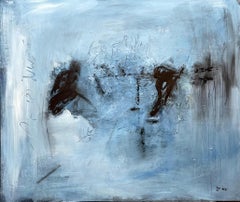
German Contemporary Art by Margot Ledergerber - 7713
Located in Paris, IDF
Acrylic on Masonite
Masonite, Acrylic
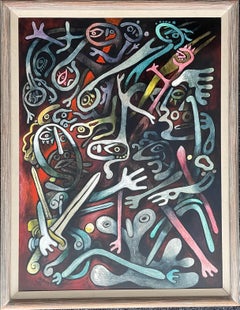
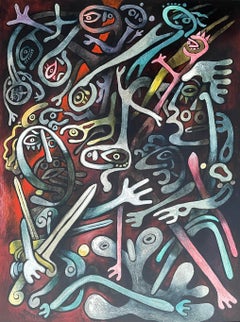
The Magician oil and tempera painting by Julio de Diego
Located in Hudson, NY
Julio De Diego’s Atomic Series paintings made an extraordinary statement regarding the shock and fear that accompanied the dawn of the nuclear age. In the artist’s own words, “Scientists were working secretly to develop formidable powers taken from the mysterious depths of the earth - with the power to make the earth useless! Then, the EXPLOSION! . . . we entered the Atomic Age, and from there the neo-Atomic war begins. Explosions fell everywhere and man kept on fighting, discovering he could fight without flesh.” To execute these works, De Diego developed a technique of using tempera underpainting before applying layer upon layer of pigmented oil glazes. The result is paintings with surfaces which were described as “bonelike” in quality. The forms seem to float freely, creating a three-dimensional visual effect. In the 1954 book The Modern Renaissance in American Art, author Ralph Pearson summarizes the series as “a fantastic interpretation of a weighty theme. Perhaps it is well to let fantasy and irony appear to lighten the devastating impact. By inverse action, they may in fact increase its weight.” Exhibited 1964 Marion Koogler McNay Art Institute, San Antonio, Texas This work retains its original frame which measures 54" x 42" x 2" About this artist: Julio De Diego crafted a formidable persona within the artistic developments and political struggles of his time. The artist characterized his own work as “lyrical,” explaining, “through the years, the surrealists, the social-conscious painters and the others tried to adopt me, but I went my own way, good, bad or indifferent.” [1] His independence manifested early in life when de Diego left his parent’s home in Madrid, Spain, in adolescence following his father’s attempts to curtail his artistic aspirations. At the age of fifteen he held his first exhibition, set up within a gambling casino. He managed to acquire an apprenticeship in a studio producing scenery for Madrid’s operas, but moved from behind the curtains to the stage, trying his hand at acting and performing as an extra in the Ballet Russes’ Petrouchka with Nijinsky. He spent several years in the Spanish army, including a six-month stretch in the Rif War of 1920 in Northern Africa. His artistic career pushed ahead as he set off for Paris and became familiar with modernism’s forays into abstraction, surrealism, and cubism. The artist arrived in the U.S. in 1924 and settled in Chicago two years later. He established himself with a commission for the decoration of two chapels in St. Gregory’s Church. He also worked in fashion illustration, designed magazine covers and developed a popular laundry bag for the Hotel Sherman. De Diego began exhibiting through the Art Institute of Chicago in 1929, and participated in the annual Chicago Artists Exhibitions, Annual American Exhibitions, and International Water Color Exhibitions. He held a solo exhibition at the Art Institute of Chicago in the summer of 1935. Though the artist’s career was advancing, his family life had deteriorated. In 1932 his first marriage dissolved, and the couple’s young daughter Kiriki was sent to live with friend Paul Hoffman. De Diego continued to develop his artistic vocabulary with a growing interest in Mexican art. He traveled throughout the country acquainting himself with the works of muralists such as Carlos Merida, and also began a collection of small native artifacts...
Masonite, Oil, Tempera
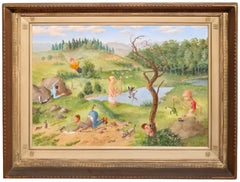
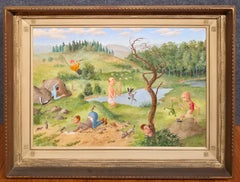
The Mysteries of Life, Surrealist, Outsider Art Oil Painting
Located in Grand Rapids, MI
Jaro Hess (Czech/American, 1889-1979) Signed: Jaro Hess '66 (Lower, Right) " The Mysteries of Life ", 1966 (titled by provenance) Oil on Canvas laid on Masonite 18" x 26" Housed...
Canvas, Masonite, Oil
$1,012Sale Price|25% Off
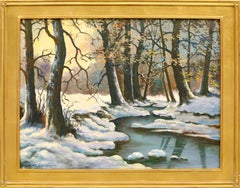
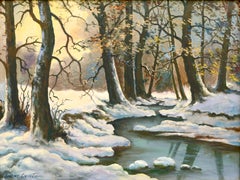
Mid Century Winter Stream Oil Paint Landscape
Located in Soquel, CA
Peaceful winter landscape of a calm stream winding through a snowy forest by Lorenz Griffith (American, 1889-1968). Signed "Lorenz Griffith" lower left. Titled "A Winter Stream - Virginia" and dated 1960 on verso. Presented in a giltwood frame. Image size: 23.25"H x 29"W. Lorenz E. Griffith was born in Indiana; he was active/lived in North Carolina, Florida, Indiana and many places across the United States. Lorenz Griffith is known for luminist landscapes and portraits. He was painted in the style of the Florida Highwaymen...
Masonite, Oil

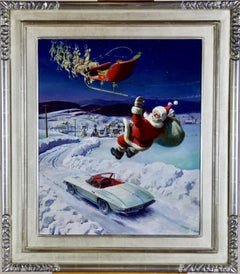
Santa's 1963 Corvette Convertible, Hertz advertisement
Located in Fort Washington, PA
Medium: Oil on Masonite Signature: Signed Center Left Santa's 1963 Corvette Convertible, Hertz Advertisement.
Masonite, Oil
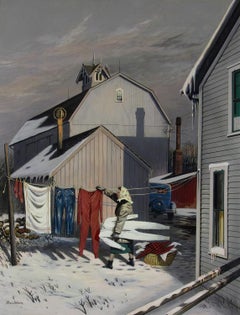
$140,000
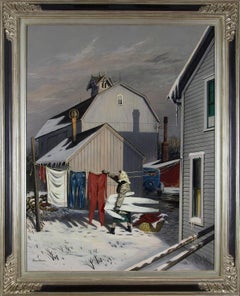
Frozen Laundry, Original Cover Illustration for The Saturday Evening Post
Located in Fort Washington, PA
The present work was illustrated on the cover of the March 8, 1952 edition of the Saturday Evening Post. The Post writes, "When Stevan Dohanos was a little boy he was sometimes gran...
Oil, Masonite

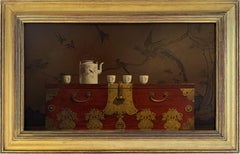
"Asian Still-Life" realist oil painting by Ken Davies
Located in Greenwich, CT
signed lower right American, 1925-2017 Born in New Bedford, Massachusetts, Kenneth Davies became a noted still-life painter and long-time art teacher, living in Madison, Connecticu...
Masonite, Oil
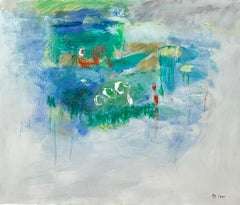
German Contemporary Art by Margot Ledergerber - 7708
Located in Paris, IDF
Acrylic on Masonite
Masonite, Acrylic
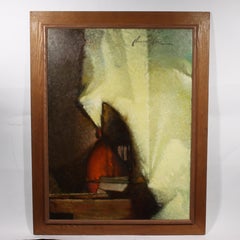
$2,240Sale Price|20% Off
Abstract Seated Figure
By Norbert Lenz
Located in Indianapolis, IN
Lenz was born in Norwalk, OH on March 2, 1900. A twentieth century American painter, illustrator and commercial artist, Lenz received his artistic education at the Huntington Polyte...
Masonite, Oil
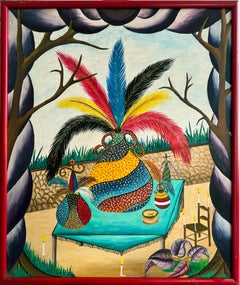
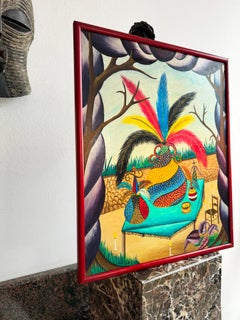
Voodoo Altar: Feast for the Loa, Conceptual Oil on Masonite, 1960s
By Adam Leontus
Located in Miami, FL
Voodoo Altar: Feast for the Loa This work represents a convergence of religion, craft, and design, as well as the need for individual artistic expression. It is a visual feast as muc...
Masonite, Oil
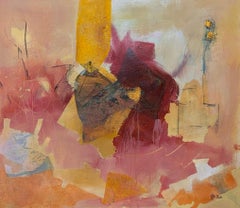
German Contemporary Art by Margot Ledergerber - 7679
Located in Paris, IDF
Mixed Media on Masonite
Masonite, Mixed Media
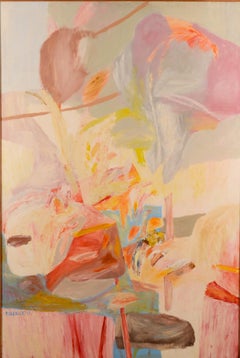
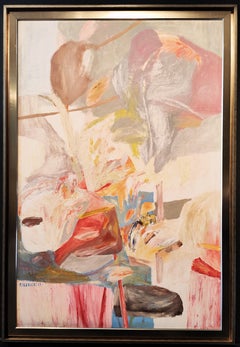
Impressionism painting 4 Oil on panel by Pierre Vlerick (1923 - 1999)
Located in Gent, VOV
This painting is a perfect example of lyrical abstraction and a choice painting out of the best period of Vlerick's career. Pierre Vlerick’s work shows...
Masonite, Oil
$1,710Sale Price|40% Off
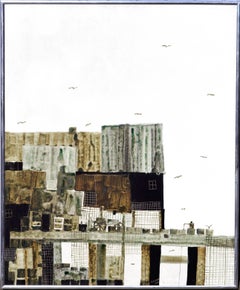
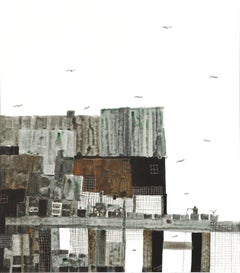
Mid-Century Modern Painting of Tiburon Wharf, Signed, 1970, Acrylic
By Albert Anderson Clymer
Located in Soquel, CA
Wonderful mid-century modern tonal painting of Tiburon Wharf and Fisherman by Albert Anderson Clymer (American, b. 1942), 1970. Signed and dated "A. Clymer 1970" lower edge. Displaye...
Masonite, Acrylic, Stretcher Bars
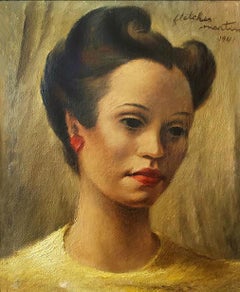
Portrait of a Black Woman, Maxine - Mid-Century WPA
Located in Miami, FL
A charming portrait of a Black woman with stylized hairstyle of the period - Midtown Galleries label on verso, Unframed Signed and date...
Oil, Masonite
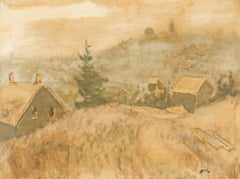
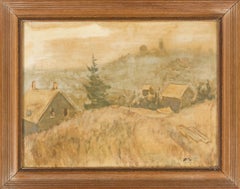
Landscape with Cabins
By Robert Bliss
Located in New York, NY
Oil on masonite. Sign and dated in oil in lower right corner.
Masonite, Oil
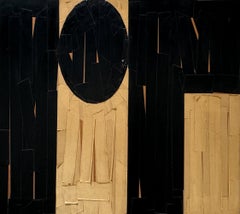
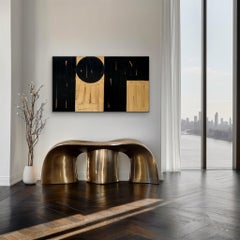
$8,500
1970 Abstract large Mixed Media “FORMA” by Robertino Fatica - Black & Brown
Located in Rancho Santa Fe, CA
Robertino Fatica was born in 1948 in Cleveland, Ohio. In 1970 he completed a three-year program at the Cooper School of Art in Cleveland. Following that, Fatica served in the U.S. Ar...
Tape, Mixed Media, Masonite
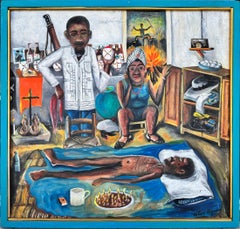
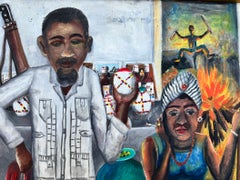
Voodoo Healing Ceremony, Oil on Masonite, Signed, 24 x 25.5 Inches
Located in Miami, FL
The present work depicts a voodoo healing ceremony unfolding. By mixing nature-based religion originating in West Africa with Christian beliefs, the ceremony serves as a surrogate fo...
Masonite, Oil
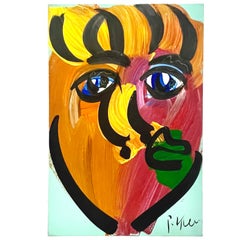
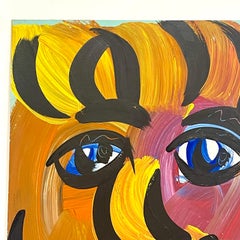
Colorful Portrait Painting on Board by Peter Keil
By Peter Keil
Located in Hudson, NY
This modern abstract painting by Peter Keil is on a smooth masonite board with a painted Tiffany Blue background, black abstract portrait with many ...
Masonite, Acrylic, Board
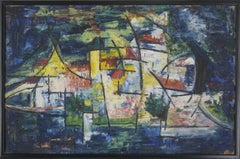
Mid Century Modern Abstracted Cubism Oil Painting -- San Francisco Sailboats
Located in Soquel, CA
Mid Century Modern Abstracted Cubism Oil Painting -- San Francisco Sailboats This painting shows an abstracted cubist painting of sailboats agains...
Masonite, Oil
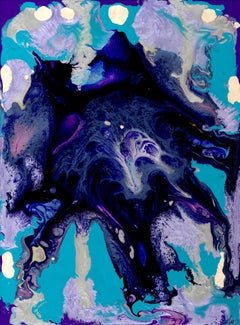
Heavens, Original Abstract Painting, 2018
Located in Boston, MA
Artist Commentary: This is my depiction of Genesis, separating heaven from earth. Keywords: blues, heaven, celestial, abstract, spiritual, heaven, waves, sky Artist Biography: Cre...
Resin, Masonite, Board
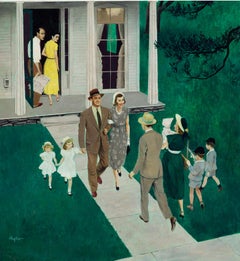
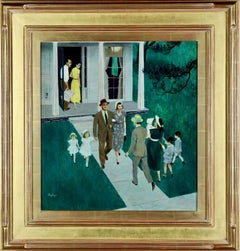
Sunday Afternoon Callers, Saturday Evening Post Cover, June 17, 1950
Located in Fort Washington, PA
Medium: Oil on Masonite Signature: Signed 'Hughes-' Lower Left This work was published as the cover of the June 17, 1950 edition of The Saturday Evening Post. Literature: J. Cohn, ...
Masonite, Oil

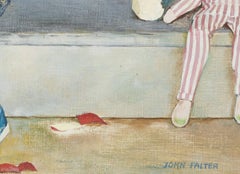
Girl Peeling Apple, Johnson & Johnson Advertisement, 1959
Located in Fort Washington, PA
Medium: Oil on Masonite Signature: Signed 'John Falter' Lower Right Sight Size 7.00" x 9.375;" Framed 9.50" x 12.00" Johnson & Johnson reproduced the present work as an advertisemen...
Masonite, Oil
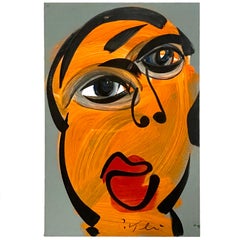
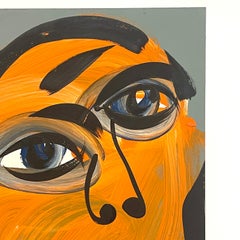
Colorful Portrait Painting on Board by Peter Keil
By Peter Keil
Located in Hudson, NY
This modern abstract painting by Peter Keil is on a smooth masonite board with a painted grey background, black abstract portrait with many colors. Here you certainly see the Picasso...
Masonite, Acrylic, Board

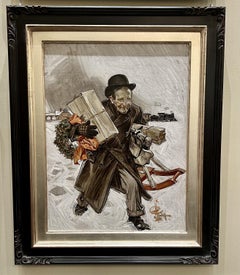
Father Rushing Home with an Armload of Gifts, Saturday Evening Post Cover
By Joseph Christian Leyendecker
Located in Fort Washington, PA
Father Rushing Home with an Armload of Gifts, The Saturday Evening Post Cover, December 4, 1909. A charming original cover for The Saturday Evening Post, published December 4, 1909,...
Canvas, Oil, Masonite
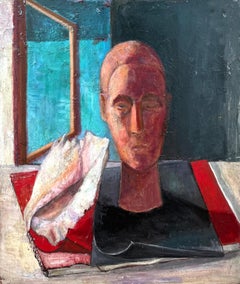
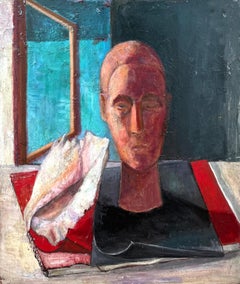
“Figure with Conch Shell”
Located in Southampton, NY
Original oil on masonite attributed to the hand of the Russian/American artist, Nahum Tschacbasov. Circa 1938. Unsigned. Estate stamped verso twice. Original artist inventory labe...
Oil, Masonite
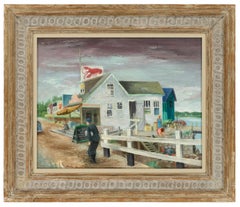
Oil on Masonite Painting Titled "Lobster Shack", by Aaron Bohrod, 1938
By Aaron Bohrod
Located in New York, NY
Aaron Bohrod, 1907-1992 Lobster Shack, 1938 Oil on masonite 16 x 20 inches Signed and dated ower left: Aaron Bohrod 1938 Bohrod-3 Provenance: Private estate, Rhode Island, 2004 Am...
Masonite, Oil
$18,500
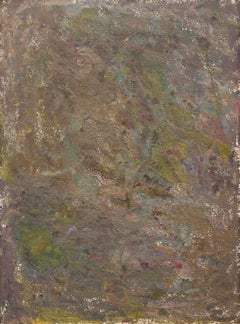
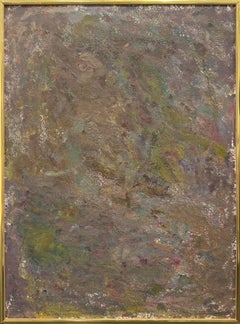
"Untitled" Milton Resnick, Abstract Expressionist, Green, Purple, Intense Color
By Milton Resnick
Located in New York, NY
Milton Resnick Untitled, 1975 Signed and dated lower left Acrylic on paper laid on Masonite 30 x 22 inches Provenance Vincent Melzac Collection, Washington, D.C. Private Collection,...
Masonite, Paper, Acrylic
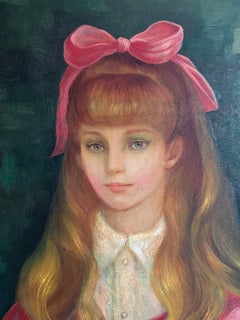
$750Sale Price|50% Off
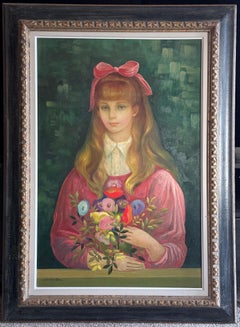
Portrait of Woman with Bouquet
By Isolda Hermes da Fonseca
Located in Wilton Manors, FL
Isolda Hermes de Fonseca Brazilian, 1924–2004 Portrait of a Young Woman with Bouquet, ca. 1970. Oil on masonite panel, 24 x 36 inches. Framed Dimension: 34 x 46 inches. Signed lo...
Masonite, Oil
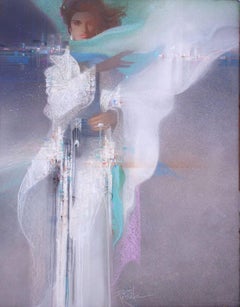
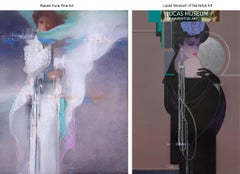
Art Deco Style Portrait of beautiful woman Painting - Apocalypse Now Artist
By Bob Peak
Located in Miami, FL
This beautiful work by the great American Illustrator Bob Peak has a sister work in the collection of the Lucas Museum of Narrative Art in Los Angles. We feel that our work has a little more detail, complexity and dimension to it as the beautiful female figure seems to be floating in an endless sky of dreamy colors. Portrait of beautiful woman, Large powerfully sensual deco-esque work by America's Master of the Movie Poster. Bob Peak. Bob Peak, in my opinion, was the Norman Rockwell of post-war American Illustration, this is one of the works that paved the way for a new way of seeing. It's more fine art than commercial art. For Apocalypse Now, in 1979, Francis Ford Coppola could have hired any artist in the world to create the movie poster and image for his film. He hired Bob Peak. Some of the movie posters Peak has worked on. West Side Story, Rollerball, Star Trek, Superman, Excalibur, Apocalypse Now, The Spy Who Loved Me. My Fair Lady, Camelot and Enter the Dragon. Additionally, Peak illustrated 45 covers of Time Magazine and many covers for Sports Illustrated, TV Guide. Signed lower center Private Collection Georges Delerue...
Mixed Media, Acrylic, Masonite, Fiberboard
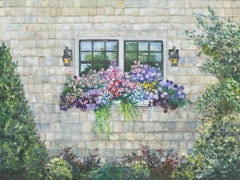
Cape Cod Window
Located in Boston, MA
Artist Commentary: This painting of a Cape Cod house is made of 468 little paper squares that I pasted on the canvas. The window, flowers, and bushes were then added with oil paint. My friends and family say that gluing together hundreds of little squares together is slightly obsessional, but I think it actually demonstrates great patience! I love to lose myself into creating and pasting these repeating patterns. Then, I disrupt them with a disconnected and more loose painting on top. But as a whole, both parts are in fact united and harmonious, as they belong to the same Cape Cod house. This is how I feel about myself: one person with two very different cultures. From the outside, they can look quite disconnected, but they actually are not. In fact, I find that I unite both cultures by painting them. What about you? Do you feel like you are made of disconnecting parts? And what do you do to unite them? Words that describe this piece: window, flower, Cape Cod, Massachusetts, flower boxes, shrubs, greens, garden Artist Biography: Life is basically a huge collection of moments. Sometimes you have no idea how everything will end up tying together - Marion Buricatu...
Oil, Masonite, Mixed Media
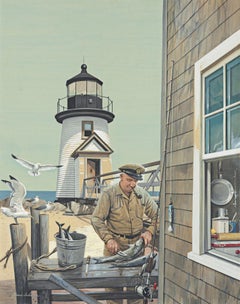
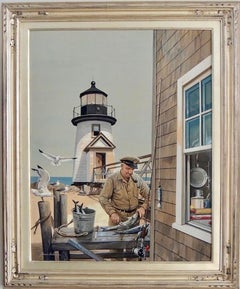
Lighthouse Keeper, Brant Point
Located in Fort Washington, PA
Signature: Signed Lower Left ‘Stevan Dohanos’ Medium: Mixed Media on Paperboard Laid Down on Masonite The present work was published as the cover illustration of the June 26th, 1954...
Masonite, Paper, Mixed Media, Board
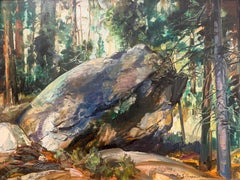
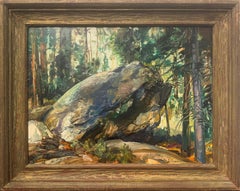
"Jenny Lake, Wyoming" Charles Shepard Chapman, Woods, Forest, American, Nature
Located in New York, NY
Charles Shepard Chapman Jenny Lake, Wyoming, 1955 Signed lower right; signed, titled and dated on the reverse Oil on Masonite 18 x 24 inches Chapman was born in Morristown, New Yor...
Masonite, Oil
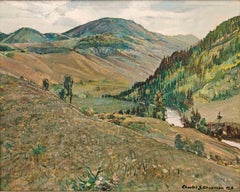
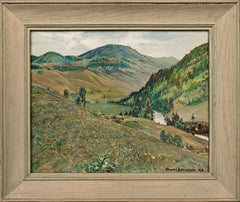
"Hoback River, Wyoming" Charles Shepard Chapman, American West, Green Hills
Located in New York, NY
Charles Shepard Chapman Hoback River, Wyoming Signed lower right, titled on the reverse Oil on masonite 15 1/4 x 19 inches Chapman was born in Morristown, New York. He studied at t...
Masonite, Oil