Art by Medium: Woodcut

to
489
3,625
525
335
172
258
Overall Width
to
Overall Height
to
58
768
3,501
594
28
100
442
320
166
216
396
156
161
119
32
2,458
564
244
216
201
110
59
44
44
28
9
4
1
1
3,455
1,320
117
2,354
1,224
906
847
623
471
454
394
383
363
354
274
243
222
212
187
175
150
137
108
4,922
181,916
96,774
79,182
77,932
170
152
55
55
53
413
2,277
1,950
1,882
Medium: Woodcut
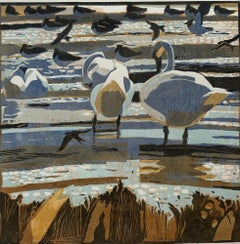
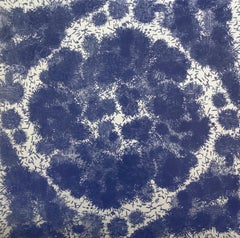
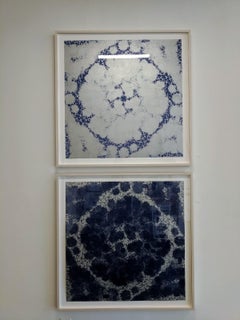
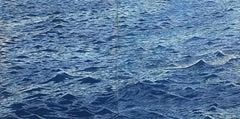
Ripple

Ripple

By Kristen Martincic

Located in Columbia, MO

Kristen Martincic earned her BFA from Bowling Green State University and her MFA from the University of Nebraska-Lincoln. The artist, who currently lives and works in Columbia, Misso...

Category

21st Century and Contemporary Contemporary Art by Medium: Woodcut

Materials

Mulberry Paper, Woodcut

The fruitless tree / - The End of the Grotesque Era -

The fruitless tree / - The End of the Grotesque Era -

Located in Berlin, DE

Rudolf Nehmer (1912 Bobersberg - 1983 Dresden), The fruitless tree, 1948. Woodcut on yellowish wove paper, 15 cm x 14.6 cm (image), 45 cm x 30 cm (sheet size), signed “Rud.[olf] Nehm...

Category

1940s Realist Art by Medium: Woodcut

Materials

Woodcut

Black Hat -- Woodcut, Print, Portrait by Alex Katz

Black Hat -- Woodcut, Print, Portrait by Alex Katz

By Alex Katz

Located in London, GB

Black Hat, 2012 Alex Katz Woodcut, on Somerset satin white Signed and numbered from the edition of 25 Printed by Collaborative Art Editions, Tampa Published by Lococo Fine Art Publi...

Category

2010s Contemporary Art by Medium: Woodcut

Materials

Woodcut

Father Stefan Fridolin, "Schatzbehalter" (Treasury of the True Riches

Father Stefan Fridolin, "Schatzbehalter" (Treasury of the True Riches

Located in Fairlawn, OH

Father Stefan Fridolin, "Schatzbehalter" (Treasury of the True Riches of Salvation): The 30th Figure - Astrological Diagram with Scene of the Nativity Woodcut, 1491 Unsigned, as issued Published by Anton Koberger Diagram has Zodiac signs on outer ring, planets in the lower registers, and Nativity in the center. Condition: Very good for a 15h century woodcut, with the usual slight age stains Sheet size: 11 1/2 x 8 1/4 inches Wogelmut was the teacher of Albrecht Durer and employed young Durer in many project of the last decade of the 15th century. Michel Wolgemut Biography Wolgemut trained with his father Valentin Wolgemut (who died in 1469 or 1470) and is thought to have been an assistant to Hans Pleydenwurff in Nuremberg. He worked with Gabriel Malesskircher in Munich early in 1471, leaving the city after unsuccessfully suing Malesskircher's daughter for breach of contract, claiming she had broken off their engagement. He then returned to his late father's workshop in Nuremberg, which his mother had maintained since Valentin's death. In 1472 he married Pleydenwurff's widow and took over his workshop;[3] her son Wilhelm Pleydenwurff worked as an assistant, and from 1491 a partner, to Wolgemut. Some consider Wilhelm a finer artist than Wolgemut, however he died in January 1494, when he was probably still in his thirties. Wilhelm's oeuvre remains unclear, though works in various media have been attributed to him. Woodcuts Michael Wolgemut, Danse Macabre, 1493 Two large and copiously illustrated books have woodcuts supplied by Wolgemut and his stepson Wilhelm Pleydenwurff; both were printed and published by Germany's largest publisher, the Nuremberger Anton Koberger, who was also Dürer's godfather. The first is the Schatzbehalter der wahren Reichthumer des Heils (1491); the other is the Historia mundi, by Schedel (1493), usually known as the Nuremberg Chronicle...

Category

15th Century and Earlier Old Masters Art by Medium: Woodcut

Materials

Woodcut

Untitled

Untitled

Located in Roma, IT

Hand signed and numbered on the lower margin. Edition of 100 prints. In excellent condition. Image Dimensions : 30 x 40 cm

Category

1970s Modern Art by Medium: Woodcut

Materials

Woodcut

Harvest #2
Harvest #2

Harvest #2

By Walter Williams

Located in New York, NY

Color woodcut. Signed by the artist in pencil, lower right. Titled "Harvest 2" in pencil, lower center. Numbered "2nd 5/12 Special Edition" in pencil, lower left. Framed dimensi...

Category

1960s Modern Art by Medium: Woodcut

Materials

Woodcut, Color

Joyce T. Nagel Woodcut "Vegetable Forms No. 1" Signed Dated Ltd Ed

Joyce T. Nagel Woodcut "Vegetable Forms No. 1" Signed Dated Ltd Ed

Located in Detroit, MI

"Vegetable Forms No. 1" is a bright fresh woodcut print of a mirrored halved cabbage. Nature's intricate design is fully appreciated and apparent in the captured tight crinkled and folded leaves. #7/7 Signed and Dated Joyce Tilley Nagel...

Category

1970s American Modern Art by Medium: Woodcut

Materials

Woodcut

Freesia

Freesia

By Alex Katz

Located in New York, NY

Created as an original seven-color woodcut on Somerset White paper in 2023, Alex Katz's Freesia measures 47 1/2 x 35 1/2 in. (120.7 x 90.2 cm), unframed. The artwork is hand-signed a...

Category

21st Century and Contemporary Art by Medium: Woodcut

Materials

Woodcut

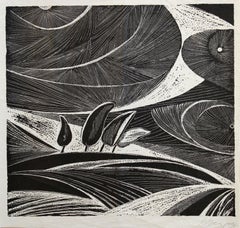
'Hill' — American Modernism, California

'Hill' — American Modernism, California

By Paul Landacre

Located in Myrtle Beach, SC

Paul Landacre, 'Hill', wood engraving, 1936, edition 60 (only 54 printed); only 2 impressions printed in a second edition of 150. Signed, titled, and numbered '49/60' in pencil. Wien...

Category

1930s American Modern Art by Medium: Woodcut

Materials

Woodcut

Midnight Flower 1969 Signed Limited Edition Large Woodcut

Midnight Flower 1969 Signed Limited Edition Large Woodcut

Located in Rochester Hills, MI

Peter Green Midnight Flower Paper Size = 26½" x 38½" inches Signed in pencil, titled, dated and marked 1/30 Born in 1933, Peter Green studied at Brighton College of Art and the In...

Category

1960s Modern Art by Medium: Woodcut

Materials

Woodcut

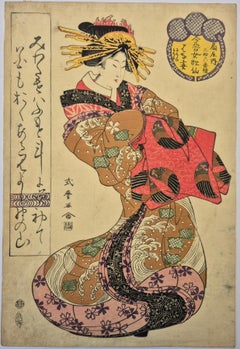
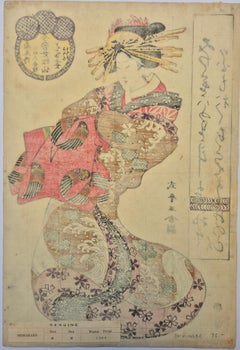
歌麿筆Utamaro Hitsu as Sealed-From Six Houses of Yoshiwara-Publisher Omiya Gonkuro

歌麿筆Utamaro Hitsu as Sealed-From Six Houses of Yoshiwara-Publisher Omiya Gonkuro

Located in London, GB

-In light of new tariffs, we’ve applied a 20% discount off the market price of this piece to support our collectors in facing potential added costs. At the gallery, we work closely w...

Category

1990s Edo Art by Medium: Woodcut

Materials

Ink, Washi Paper, Woodcut

My Work

My Work

By Joan Snyder

Located in New York, NY

Joan Snyder has been called an autobiographical, even confessional artist, who draws from her experiences and surroundings to create her paintings. While her subjects vary widely, Sn...

Category

1990s Expressionist Art by Medium: Woodcut

Materials

Etching, Woodcut

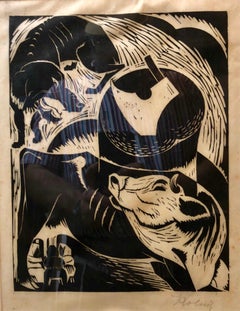
Man with Cow, Folk Art Woodcut Print by Andre Derain

Man with Cow, Folk Art Woodcut Print by Andre Derain

By André Derain

Located in Long Island City, NY

Andre Derain, French (1880 - 1954) - Man with Cow, Medium: Woodblock on laid paper, Image Size: 2.75 x 3.75 inches, Size: 3.75 x 5 in. (9.53 x 12.7 cm), Description: From the collect...

Category

Mid-20th Century Folk Art Art by Medium: Woodcut

Materials

Woodcut

Purgatory Canto 24 from the Divine Comedy

Purgatory Canto 24 from the Divine Comedy

By Salvador Dalí­

Located in Columbia, MO

Salvador Dalí (1904–1989) was one of the most recognizable figures of 20th-century art, known for his eccentric persona and for pushing Surrealism into the cultural mainstream. A pai...

Category

20th Century Surrealist Art by Medium: Woodcut

Materials

Woodcut

THE THAW
THE THAW

THE THAW

By William Seltzer Rice

Located in Santa Monica, CA

WILLIAM SELTZER RICE (1873 - 1963) THE THAW c 1915-20 Color woodcut, signed and titled in pencil. Image 8 7/8 x 12 inches, sheet 10 3/4 x 14 3/8 inches. On textured fibrous paper. V...

Category

1910s American Modern Art by Medium: Woodcut

Materials

Color, Woodcut

Shift Change, Social Realist Woodblock Print by Mike Goscinsky

Shift Change, Social Realist Woodblock Print by Mike Goscinsky

Located in Long Island City, NY

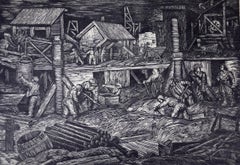
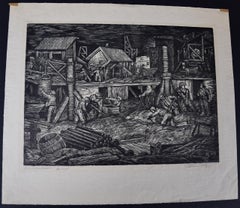
Shift Change Mike Goscinsky, American (1933–2021) Woodblock on thin wove paper, signed, titled and numbered in pencil Edition of 15/75 Image Size: 14 x 19 inches Size: 22 x 26.5 in. ...

Category

1990s American Modern Art by Medium: Woodcut

Materials

Woodcut

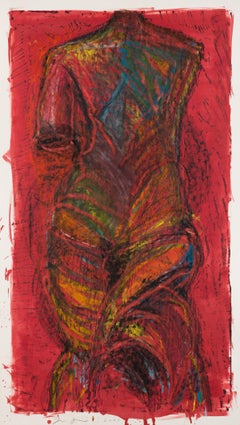
Untitled, Jim Dine
Untitled, Jim Dine

Untitled, Jim Dine

By Jim Dine

Located in New York, NY

A familiar and iconic motif by the artist, this color woodcut was created by Jim Dine in 1996, is hand-signed in pencil and numbered. Measuring 26 1/8 x 19 ½ inches (66.4 x 49.5 cm...

Category

20th Century Contemporary Art by Medium: Woodcut

Materials

Woodcut

Brutalist Graveside Scene Patriotic Dead Soldier, Gas Mask & Skeletons

Brutalist Graveside Scene Patriotic Dead Soldier, Gas Mask & Skeletons

By Nicholas Sperakis

Located in Exton, PA

Brutalist colored woodcut circa 1976 by Nicholas Sperakis. The image depicts skeletal figures around the grave of a soldier. Note the American flag features which drape the entombed ...

Category

1970s Expressionist Art by Medium: Woodcut

Materials

Woodcut

Motif, Gold Abstract African American Artist Viola Leak Woodcut Silkscreen Print

Motif, Gold Abstract African American Artist Viola Leak Woodcut Silkscreen Print

By Viola Burley Leak

Located in Surfside, FL

Motif (Abstract) in orange, blue and gold abstract. From the small edition of 10. from 1982. I am not sure if this is a woodcut or woodblock print or a silkscreen screenprint or some combination. Viola Burley Leak, American (1944 - ) Viola Leak was born in Nashville, Tennessee, she received a B.A. in Art from Fisk University, a B.F.A. in Fashion Design from Pratt Institute, Brooklyn, an M.A. from Hunter College, NY and an M.F.A. in Media from Howard University, Washington, DC. Leak was an art consultant for both the New York State Board of Education and the Metropolitan Museum of Art's Print Department, in addition to working for the Experimental Gallery of Art at the Smithsonian Institute. Her mixed media work often references religious motifs and those of her African-American experience and heritage. She is a multimedia artist, her works include printmaking, textile designing, soft sculpture, appliqué tapestries, doll making, and multi-media. Viola has studied with many renowned artists such as Aaron Douglas, Romare Bearden, Robert Blackburn, and Charles White. Her works can be found in the collections of World Federation of United Nations, New York State Office Building, Manufacturers of Hanover Trust Company, Atlanta Life Insurance Company and many more organizations. Viola's exhibition experience is extensive - more than 100 showings over a decade, national and international. Her quilts exude a miraculous and magical presence. They have traveled in two international shows and three national quilt projects in the past three years. A proud moment for her was being featured in the December 20, 2000 of the Smithsonian magazine; the article praised her mural "Afro Dance Scan" as one of the outstanding artworks in the "When the Spirit Moves: African American Dance...

Category

1980s Contemporary Art by Medium: Woodcut

Materials

Screen, Woodcut

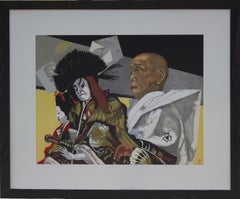
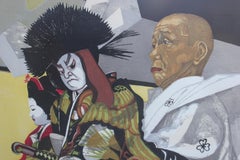
Bando Mitsugoro as a Servant with a Sword

Bando Mitsugoro as a Servant with a Sword

By Natori Shunsen

Located in Fairlawn, OH

Bando Mitsugoro as a Servant with a Sword Color woodcut, 1952 From The Series Shunsen Nigao-E Shu (Shunsen Portraits), Six Woodblock Prints Publisher: Watanabe Excellent condition Im...

Category

1950s Other Art Style Art by Medium: Woodcut

Materials

Woodcut

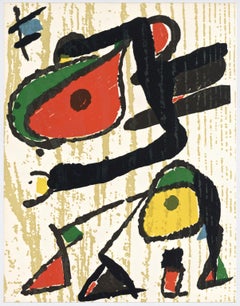
A Toute Epreuve (D 199), Modern Abstract Woodcut by Joan Miro

A Toute Epreuve (D 199), Modern Abstract Woodcut by Joan Miro

By Joan Miró

Located in Long Island City, NY

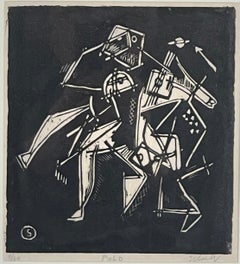
Joan Miro, Spanish (1893 - 1983) - A Toute Epreuve (D 199), Year: 1958, Medium: Woodcut on Japanese Nacred paper, Edition: 130, Size: 12.75 x 9.75 in. (32.39 x 24.77 cm), Printer: J...

Category

1950s Modern Art by Medium: Woodcut

Materials

Woodcut

Still Life, Abstract Expressionist Framed Woodcut by Judy Rifka

Still Life, Abstract Expressionist Framed Woodcut by Judy Rifka

By Judy Rifka

Located in Long Island City, NY

Artist: Judy Rifka, American (1945 - ) Title: Still Life Year: 1986 Medium: Woodcut, signed and numbered in pencil Edition: 13/46 Image: 29 x 21 inches Size: 37 x 28 in. (93.9...

Category

1980s Contemporary Art by Medium: Woodcut

Materials

Woodcut

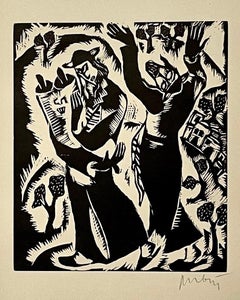
Rare 1923 Cubist Reuven Rubin Woodcut Woodblock Kabbalah Print Israeli Judaica

Rare 1923 Cubist Reuven Rubin Woodcut Woodblock Kabbalah Print Israeli Judaica

By Reuven Rubin

Located in Surfside, FL

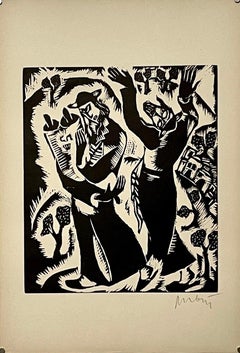
This is from the original first edition 1923 printing. there was a much later edition done after these originals. These are individually hand signed in pencil by artist as issued. This listing is for the one print. the other documentation is included here for provenance and is not included in this listing. The various images inspired by the Jewish Mysticism and rabbis and mystics of jerusalem and Kabbalah is holy, dramatic and optimistic Rubin succeeded to evoke the spirit of life in Israel in those early days. They are done in a modern art style influenced by German Expressionism, particularly, Ernst Barlach, Ernst Ludwig Kirchner, and Franz Marc, as introduced to Israel by Jakob Steinhardt, Hermann Struck and Joseph Budko. Reuven Rubin 1893 -1974 was a Romanian-born Israeli painter and Israel's first ambassador to Romania. Rubin Zelicovich (later Reuven Rubin) was born in Galati to a poor Romanian Jewish Hasidic family. He was the eighth of 13 children. In 1912, he left for Ottoman-ruled Palestine to study art at Bezalel Academy of Art and Design in Jerusalem. Finding himself at odds with the artistic views of the Academy's teachers, he left for Paris, France, in 1913 to pursue his studies at the École Nationale Supérieure des Beaux-Arts. He was of the well known Jewish artists in Paris along with Marc Chagall and Chaim Soutine, At the outbreak of World War I, he was returned to Romania, where he spent the war years. In 1921, he traveled to the United States with his friend and fellow artist, Arthur Kolnik. In New York City, the two met artist Alfred Stieglitz, who was instrumental in organizing their first American show at the Anderson Gallery. Following the exhibition, in 1922, they both returned to Europe. In 1923, Rubin emigrated to Mandate Palestine. Rubin met his wife, Esther, in 1928, aboard a passenger ship to Palestine on his return from a show in New York. She was a Bronx girl who had won a trip to Palestine in a Young Judaea competition. He died in 1974. Part of the early generation of artists in Israel, Joseph Zaritsky, Arieh Lubin, Reuven Rubin, Sionah Tagger, Pinchas Litvinovsky, Mordecai Ardon, Yitzhak Katz, and Baruch Agadati; These painters depicted the country’s landscapes in the 1920s rebelled against the Bezalel school of Boris Schatz. They sought current styles in Europe that would help portray their own country’s landscape, in keeping with the spirit of the time. Rubin’s Cezannesque landscapes from the 1920s were defined by both a modern and a naive style, portraying the landscape and inhabitants of Israel in a sensitive fashion. His landscape paintings in particular paid special detail to a spiritual, translucent light. His early work bore the influences of Futurism, Vorticism, Cubism and Surrealism. In Palestine, he became one of the founders of the new Eretz-Yisrael style. Recurring themes in his work were the bible, the prophet, the biblical landscape, folklore and folk art, people, including Yemenite, Hasidic Jews and Arabs. Many of his paintings are sun-bathed depictions of Jerusalem and the Galilee. Rubin might have been influenced by the work of Henri Rousseau whose naice style combined with Eastern nuances, as well as with the neo-Byzantine art to which Rubin had been exposed in his native Romania. In accordance with his integrative style, he signed his works with his first name in Hebrew and his surname in Roman letters. In 1924, he was the first artist to hold a solo exhibition at the Tower of David, in Jerusalem (later exhibited in Tel Aviv at Gymnasia Herzliya). That year he was elected chairman of the Association of Painters and Sculptors of Palestine. From the 1930s onwards, Rubin designed backdrops for Habima Theater, the Ohel Theater and other theaters. His biography, published in 1969, is titled My Life - My Art. He died in Tel Aviv in October 1974, after having bequeathed his home on 14 Bialik Street and a core collection of his paintings to the city of Tel Aviv. The Rubin Museum opened in 1983. The director and curator of the museum is his daughter-in-law, Carmela Rubin. Rubin's paintings are now increasingly sought after. At a Sotheby's auction in New York in 2007, his work accounted for six of the ten top lots. Along with Yaacov Agam and Menashe Kadishman he is among Israel's best known artists internationally. Education 1912 Bezalel Academy of Arts and Design, Jerusalem 1913-14 École des Beaux Arts, Paris and Académie Colarossi, Paris Select Group Exhibitions Eged - Palestine Painters Group Eged - Palestine Painters Group, Allenby Street, Tel Aviv 1929 Artists: Chana Orloff, Abraham Melnikoff, Rubin, Reuven Nahum Gutman, Sionah Tagger,Arieh Allweil, Jewish Artists Association, Levant Fair, Tel Aviv, 1929 Artists: Ludwig Blum,Eliyahu Sigad, Shmuel Ovadyahu, Itzhak Frenel Frenkel,Ozer Shabat, Menahem Shemi...

Category

1920s Abstract Art by Medium: Woodcut

Materials

Woodcut

David Shrigley - Pig Loves You - Edition of 30

David Shrigley - Pig Loves You - Edition of 30

By David Shrigley

Located in London, GB

David Shrigley Pig Loves You, 2025 Woodcut 53 x 40 cm Edition of 30 hand-signed and numbered by the artist published by Shäfer Editions and comes with COA from the publishers David ...

Category

2010s Contemporary Art by Medium: Woodcut

Materials

Woodcut

CALLE EX CONVENTO, TASCO.

CALLE EX CONVENTO, TASCO.

Located in Portland, ME

Pappe, Carl. CALLE EX CONVENTO, TASCO. Woodcut, c.1940s-60s. Edition unstated. This print is one of a series of 16 images, all of scenes in Taxco, distinguished by the strength of the carving and the richness of the blacks. 12 x 14 1/4 inches (image), 13 1/2 x 15 3/4 (sheet). Titled and signed in pencil. In excellent condition. Carl Pappe...

Category

1940s Art by Medium: Woodcut

Materials

Woodcut

The Maroon Robe
The Maroon Robe

The Maroon Robe

By Jim Dine

Located in Missouri, MO

Maroon Carborundum Robe (C. 47), 1991 Published by Pace Editions, New York Jim Dine (American, b. 1935) Woodcut Print Hand Signed, Dated, and Numbered Lower Left Edition 1/12 Lower L...

Category

1990s Pop Art Art by Medium: Woodcut

Materials

Color, Woodcut

Rare 1923 Cubist Reuven Rubin Woodcut Woodblock Fisherman Print Israeli Judaica

Rare 1923 Cubist Reuven Rubin Woodcut Woodblock Fisherman Print Israeli Judaica

By Reuven Rubin

Located in Surfside, FL

This is from the original first edition 1923 printing. there was a much later edition done after these originals. These are individually hand signed in pencil by artist as issued. This listing is for the one print. the other documentation is included here for provenance and is not included in this listing. The various images inspired by the Jewish Mysticism and rabbis and mystics of jerusalem and Kabbalah is holy, dramatic and optimistic Rubin succeeded to evoke the spirit of life in Israel in those early days. They are done in a modern art style influenced by German Expressionism, particularly, Ernst Barlach, Ernst Ludwig Kirchner, and Franz Marc, as introduced to Israel by Jakob Steinhardt, Hermann Struck and Joseph Budko. Reuven Rubin 1893 -1974 was a Romanian-born Israeli painter and Israel's first ambassador to Romania. Rubin Zelicovich (later Reuven Rubin) was born in Galati to a poor Romanian Jewish Hasidic family. He was the eighth of 13 children. In 1912, he left for Ottoman-ruled Palestine to study art at Bezalel Academy of Art and Design in Jerusalem. Finding himself at odds with the artistic views of the Academy's teachers, he left for Paris, France, in 1913 to pursue his studies at the École Nationale Supérieure des Beaux-Arts. He was of the well known Jewish artists in Paris along with Marc Chagall and Chaim Soutine, At the outbreak of World War I, he was returned to Romania, where he spent the war years. In 1921, he traveled to the United States with his friend and fellow artist, Arthur Kolnik. In New York City, the two met artist Alfred Stieglitz, who was instrumental in organizing their first American show at the Anderson Gallery. Following the exhibition, in 1922, they both returned to Europe. In 1923, Rubin emigrated to Mandate Palestine. Rubin met his wife, Esther, in 1928, aboard a passenger ship to Palestine on his return from a show in New York. She was a Bronx girl who had won a trip to Palestine in a Young Judaea competition. He died in 1974. Part of the early generation of artists in Israel, Joseph Zaritsky, Arieh Lubin, Reuven Rubin, Sionah Tagger, Pinchas Litvinovsky, Mordecai Ardon, Yitzhak Katz, and Baruch Agadati; These painters depicted the country’s landscapes in the 1920s rebelled against the Bezalel school of Boris Schatz. They sought current styles in Europe that would help portray their own country’s landscape, in keeping with the spirit of the time. Rubin’s Cezannesque landscapes from the 1920s were defined by both a modern and a naive style, portraying the landscape and inhabitants of Israel in a sensitive fashion. His landscape paintings in particular paid special detail to a spiritual, translucent light. His early work bore the influences of Futurism, Vorticism, Cubism and Surrealism. In Palestine, he became one of the founders of the new Eretz-Yisrael style. Recurring themes in his work were the bible, the prophet, the biblical landscape, folklore and folk art, people, including Yemenite, Hasidic Jews and Arabs. Many of his paintings are sun-bathed depictions of Jerusalem and the Galilee. Rubin might have been influenced by the work of Henri Rousseau whose naice style combined with Eastern nuances, as well as with the neo-Byzantine art to which Rubin had been exposed in his native Romania. In accordance with his integrative style, he signed his works with his first name in Hebrew and his surname in Roman letters. In 1924, he was the first artist to hold a solo exhibition at the Tower of David, in Jerusalem (later exhibited in Tel Aviv at Gymnasia Herzliya). That year he was elected chairman of the Association of Painters and Sculptors of Palestine. From the 1930s onwards, Rubin designed backdrops for Habima Theater, the Ohel Theater and other theaters. His biography, published in 1969, is titled My Life - My Art. He died in Tel Aviv in October 1974, after having bequeathed his home on 14 Bialik Street and a core collection of his paintings to the city of Tel Aviv. The Rubin Museum opened in 1983. The director and curator of the museum is his daughter-in-law, Carmela Rubin. Rubin's paintings are now increasingly sought after. At a Sotheby's auction in New York in 2007, his work accounted for six of the ten top lots. Along with Yaacov Agam and Menashe Kadishman he is among Israel's best known artists internationally. Education 1912 Bezalel Academy of Arts and Design, Jerusalem 1913-14 École des Beaux Arts, Paris and Académie Colarossi, Paris Select Group Exhibitions Eged - Palestine Painters Group Eged - Palestine Painters Group, Allenby Street, Tel Aviv 1929 Artists: Chana Orloff, Abraham Melnikoff, Rubin, Reuven Nahum Gutman, Sionah Tagger,Arieh Allweil, Jewish Artists Association, Levant Fair, Tel Aviv, 1929 Artists: Ludwig Blum,Eliyahu Sigad, Shmuel Ovadyahu, Itzhak Frenel Frenkel,Ozer Shabat, Menahem Shemi, First Exhibition of ''Hever Omanim'' First Exhibition of ''Hever Omanim'' Steimatzky Gallery, Jerusalem 1936 Artists: Gutman, Nachum Holzman, Shimshon Mokady, Moshe Sima, Miron Rubin, Reuven Steinhardt, Jakob Ben Zvi, Zeev Ziffer, Moshe Allweil, Arieh Group Exhibition Group Exhibition Katz Art Gallery, Tel Aviv 1939 Artists: Avni, Aharon Holzman, Shimshon Gliksberg, Haim Gutman, Nachum Ovadyahu, Shmuel Shorr, Zvi Schwartz, Chaya Streichman, Yehezkel Tagger, Sionah Rubin, Reuven A Collection of Works by Artists of the Land of Israel A Collection of Works by Artists of the Land of Israel The Bezalel National Museum, Jerusalem 1940 Artists: Shemi, Menahem Rubin, Reuven Avni, Aharon Mokady, Moshe Jonas, Ludwig Steinhardt, Jakob Ticho, Anna Krakauer, Leopold Gutman, Nachum Budko, Joseph Ardon, Mordecai Sima, Miron Castel, Moshe Pann, Abel Struck, Hermann Gur Arie, Meir Ben Zvi, Zeev Litvinovsky, Pinchas Artists in Israel for the Defense, Tel Aviv Museum of Art, Helena Rubinstein Pavilion, Tel Aviv 1967 Artists: Avraham Binder, Motke Blum, (Mordechai) Samuel Bak, Yosl Bergner, Nahum Gilboa, Jean David, Marcel Janco, Lea Nikel, Jacob Pins, Esther Peretz...

Category

1920s Abstract Art by Medium: Woodcut

Materials

Woodcut

Dancing in the Dark

Dancing in the Dark

By Joan Snyder

Located in New York, NY

Joan Snyder has been called an autobiographical, even confessional artist, who draws from her experiences and surroundings to create her paintings. While her subjects vary widely, Sn...

Category

1980s Expressionist Art by Medium: Woodcut

Materials

Woodcut

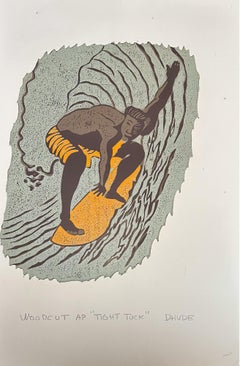
Three Turns - Surfing Art By Marc Zimmerman

Three Turns - Surfing Art By Marc Zimmerman

By Marc Zimmerman

Located in Carmel, CA

Three Turns - Surfing Art - Figurative - Woodcut Print By Marc Zimmerman Limited Edition 01/04 This masterwork is exhibited in the Zimmerman Gallery, Carmel CA. Immerse yourself i...

Category

2010s Contemporary Art by Medium: Woodcut

Materials

Woodcut

"Paricutin (Volcano in Michoacan, Mexico)" Woodcut & Monotype signed by Summers

"Paricutin (Volcano in Michoacan, Mexico)" Woodcut & Monotype signed by Summers

By Carol Summers

Located in Milwaukee, WI

"Paricutin (Volcano in Michoacan, Mexico)" is a woodcut and monotype signed by Carol Summers. In the image, an abstracted volcano erupts in a joyous burst of purples and oranges. The playfulness of the image is enhanced by Summers' signature printmaking technique, which allows the ink from the woodblock to seep through the paper, blurring the edges of each form. Art: 8 x 11 in Frame: 17 x 19 in Carol Summers (1925-2016) has worked as an artist throughout the second half of the 20th century and into the first years of the next, outliving most of his mid-century modernist peers. Initially trained as a painter, Summers was drawn to color woodcuts around 1950 and it became his specialty thereafter. Over the years he has developed a process and style that is both innovative and readily recognizable. His art is known for it’s large scale, saturated fields of bold color, semi-abstract treatment of landscapes from around the world and a luminescent quality achieved through a printmaking process he invented. In a career that has extended over half a century, Summers has hand-pulled approximately 245 woodcuts in editions that have typically run from 25 to 100 in number. His talent was both inherited and learned. Born in 1925 in Kingston, a small town in upstate New York, Summers was raised in nearby Woodstock with his older sister, Mary. His parents were both artists who had met in art school in St. Louis. During the Great Depression, when Carol was growing up, his father supported the family as a medical illustrator until he could return to painting. His mother was a watercolorist and also quite knowledgeable about the different kinds of papers used for various kinds of painting. Many years later, Summers would paint or print on thinly textured paper originally collected by his mother. From 1948 to 1951, Carol Summers trained in the classical fine and studio arts at Bard College and at the Art Students League of New York. He studied painting with Steven Hirsh and printmaking with Louis Schanker. He admired the shapes and colors favored by early modernists Paul Klee (Sw: 1879-1940) and Matt Phillips (Am: b.1927- ). After graduating, Summers quit working as a part-time carpenter and cabinetmaker (which had supported his schooling and living expenses) to focus fulltime on art. That same year, an early abstract, Bridge No. 1 was selected for a Purchase Prize in a competition sponsored by the Brooklyn Museum. In 1952, his work (Cathedral, Construction and Icarus) was shown the first time at the Museum of Modern Art in New York City in an exhibition of American woodcuts. In 1954, Summers received a grant from the Italian government to study for a year in Italy. Woodcuts completed soon after his arrival there were almost all editions of only 8 to 25 prints, small in size, architectural in content and black and white in color. The most well-known are Siennese Landscape and Little Landscape, which depicted the area near where he resided. Summers extended this trip three more years, a decision which would have significant impact on choices of subject matter and color in the coming decade. After returning from Europe, Summers’ images continued to feature historical landmarks and events from Italy as well as from France, Spain and Greece. However, as evidenced in Aetna’s Dream, Worldwind and Arch of Triumph, a new look prevailed. These woodcuts were larger in size and in color. Some incorporated metal leaf in the creation of a collage and Summers even experimented with silkscreening. Editions were now between 20 and 50 prints in number. Most importantly, Summers employed his rubbing technique for the first time in the creation of Fantastic Garden in late 1957. Dark Vision of Xerxes, a benchmark for Summers, was the first woodcut where Summers experimented using mineral spirits as part of his printmaking process. A Fulbright Grant as well as Fellowships from the Louis Comfort Tiffany Foundation and the Guggenheim Foundation followed soon thereafter, as did faculty positions at colleges and universities primarily in New York and Pennsylvania. During this period he married a dancer named Elaine Smithers with whom he had one son, Kyle. Around this same time, along with fellow artist Leonard Baskin, Summers pioneered what is now referred to as the “monumental” woodcut. This term was coined in the early 1960s to denote woodcuts that were dramatically bigger than those previously created in earlier years, ones that were limited in size mostly by the size of small hand-presses. While Baskin chose figurative subject matter, serious in nature and rendered with thick, striated lines, Summers rendered much less somber images preferring to emphasize shape and color; his subject matter approached abstraction but was always firmly rooted in the landscape. In addition to working in this new, larger scale, Summers simultaneously refined a printmaking process which would eventually be called the “Carol Summers Method” or the “ Carol Summers Technique”. Summers produces his woodcuts by hand, usually from one or more blocks of quarter-inch pine, using oil-based printing inks and porous mulberry papers. His woodcuts reveal a sensitivity to wood especially its absorptive qualities and the subtleties of the grain. In several of his woodcuts throughout his career he has used the undulating, grainy patterns of a large wood plank to portray a flowing river or tumbling waterfall. The best examples of this are Dream, done in 1965 and the later Flash Flood Escalante, in 2003. In the majority of his woodcuts, Summers makes the blocks slightly larger than the paper so the image and color will bleed off the edge. Before printing, he centers a dry sheet of paper over the top of the cut wood block or blocks, securing it with giant clips. Then he rolls the ink directly on the front of the sheet of paper and pressing down onto the dry wood block or reassembled group of blocks. Summers is technically very proficient; the inks are thoroughly saturated onto the surface of the paper but they do not run into each other. The precision of the color inking in Constantine’s Dream in 1969 and Rainbow Glacier in 1970 has been referred to in various studio handbooks. Summers refers to his own printing technique as “rubbing”. In traditional woodcut printing, including the Japanese method, the ink is applied directly onto the block. However, by following his own method, Summers has avoided the mirror-reversed image of a conventional print and it has given him the control over the precise amount of ink that he wants on the paper. After the ink is applied to the front of the paper, Summers sprays it with mineral spirits, which act as a thinning agent. The absorptive fibers of the paper draw the thinned ink away from the surface softening the shapes and diffusing and muting the colors. This produces a unique glow that is a hallmark of the Summers printmaking technique. Unlike the works of other color field artists or modernists of the time, this new technique made Summers’ extreme simplification and flat color areas anything but hard-edged or coldly impersonal. By the 1960s, Summers had developed a personal way of coloring and printing and was not afraid of hard work, doing the cutting, inking and pulling himself. In 1964, at the age of 38, Summers’ work was exhibited for a second time at the Museum of Modern Art. This time his work was featured in a one-man show and then as one of MoMA’s two-year traveling exhibitions which toured throughout the United States. In subsequent years, Summers’ works would be exhibited and acquired for the permanent collections of multiple museums throughout the United States, Europe and Asia. Summers’ familiarity with landscapes throughout the world is firsthand. As a navigator-bombardier in the Marines in World War II, he toured the South Pacific and Asia. Following college, travel in Europe and subsequent teaching positions, in 1972, after 47 years on the East Coast, Carol Summers moved permanently to Bonny Doon in the Santa Cruz Mountains in Northern California. There met his second wife, Joan Ward Toth, a textile artist who died in 1998; and it was here his second son, Ethan was born. During the years that followed this relocation, Summers’ choice of subject matter became more diverse although it retained the positive, mostly life-affirming quality that had existed from the beginning. Images now included moons, comets, both sunny and starry skies, hearts and flowers, all of which, in one way or another, remained tied to the landscape. In the 1980s, from his home and studio in the Santa Cruz mountains, Summers continued to work as an artist supplementing his income by conducting classes and workshops at universities in California and Oregon as well as throughout the Mid and Southwest. He also traveled extensively during this period hiking and camping, often for weeks at a time, throughout the western United States and Canada. Throughout the decade it was not unusual for Summers to backpack alone or with a fellow artist into mountains or back country for six weeks or more at a time. Not surprisingly, the artwork created during this period rarely departed from images of the land, sea and sky. Summers rendered these landscapes in a more representational style than before, however he always kept them somewhat abstract by mixing geometric shapes with organic shapes, irregular in outline. Some of his most critically acknowledged work was created during this period including First Rain, 1985 and The Rolling Sea, 1989. Summers received an honorary doctorate from his alma mater, Bard College in 1979 and was selected by the United States Information Agency to spend a year conducting painting and printmaking workshops at universities throughout India. Since that original sabbatical, he has returned every year, spending four to eight weeks traveling throughout that country. In the 1990s, interspersed with these journeys to India have been additional treks to the back roads and high country areas of Mexico, Central America, Nepal, China and Japan. Travel to these exotic and faraway places had a profound influence on Summers’ art. Subject matter became more worldly and non-western as with From Humla to Dolpo, 1991 or A Former Life of Budha, 1996, for example. Architectural images, such as The Pillars of Hercules, 1990 or The Raja’s Aviary, 1992 became more common. Still life images made a reappearance with Jungle Bouquet in 1997. This was also a period when Summers began using odd-sized paper to further the impact of an image. The 1996 Night, a view of the earth and horizon as it might be seen by an astronaut, is over six feet long and only slightly more than a foot-and-a-half high. From 1999, Revuelta A Vida (Spanish for “Return to Life”) is pie-shaped and covers nearly 18 cubic feet. It was also at this juncture that Summers began to experiment with a somewhat different palette although he retained his love of saturated colors. The 2003 Far Side of Time is a superb example of the new direction taken by this colorist. At the turn of the millennium in 1999, “Carol Summers Woodcuts...

Category

Early 2000s Contemporary Art by Medium: Woodcut

Materials

Monotype, Woodcut

CAGED BIRD

CAGED BIRD

By Walter Henry Williams

Located in Portland, ME

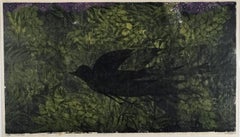
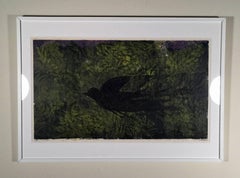
Williams, Walter Henry (American 1920-1998). CAGED BIRD. Color woodcut, 1966. Edition of 210, signed, dated, titled and numbered 43/210 in pencil. 18 x 24 i...

Category

1960s Art by Medium: Woodcut

Materials

Woodcut

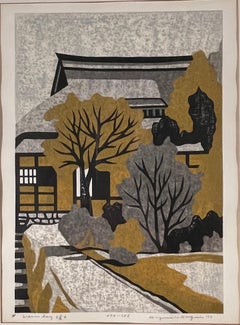
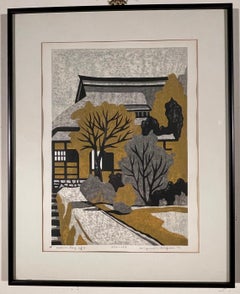
WARM DAY
WARM DAY

WARM DAY

Located in Portland, ME

Nagai, Kiyoshi (Japanese, 1911-1984). WARM DAY. Color woodblock, 1971. Edition of 252. Signed, datted, and numbered 156 - 252, all in pencil. 15 1/2 x 11 1/2 inches, framed to 20 1/2...

Category

1970s Art by Medium: Woodcut

Materials

Woodcut

Quai des Grands Augustins, Paris

Quai des Grands Augustins, Paris

By Auguste Lepère

Located in Middletown, NY

Wood engraving on onionskin paper, 14 1/2 x 9 inches (369 x 228 mm), the full sheet. In very good condition with minor cockling around the areas of the mount at the top corners. [Lo...

Category

Late 19th Century Old Masters Art by Medium: Woodcut

Materials

Engraving, Handmade Paper, Woodcut

House in Kyoto
House in Kyoto

House in Kyoto

By Kiyoshi Saitō

Located in Fairlawn, OH

House in Kyoto Color woodcut, 1963 Signed in white brush bottom left of image, along with the artist's red stamp (see photo) Titled, dated and numbered in pencil bottom margin (see p...

Category

1960s Contemporary Art by Medium: Woodcut

Materials

Woodcut

Jewish Rabbi Looking Heavenward German Expressionist Woodcut Israeli "Psalm"

Jewish Rabbi Looking Heavenward German Expressionist Woodcut Israeli "Psalm"

By Jacob Steinhardt

Located in Surfside, FL

Jacob Steinhardt, 1887-1968 Hand signed in pencil, woodblock print woodcut. Frame: 22.5" x 18" Image: 16.75" X 12.5" "Psalm" 12/30 Jakob Steinhardt, Painter and Woodcut Artist. b. 1887, Yaacov Steinhardt was born in the then remote, largely Polish town of Zerkow in the Posen District of Germany. (poland/german) Immigrated 1933. Studies: 1906 School of Art, 1906 Studied in Berlin Arts and Crafts School. Berlin; 1907 painting with Lovis Corinth and engraving and etching with Hermann Struck; advanced studies, 1908-10 Paris, with Henri Matisse and Steinlen; 1911 Italy. Teaching: Bezalel, Jerusalem, 1953-57 Director. 1910 Participated in the “New Sezession”, Berlin. 1912 together with Ludwig Meidner and Janthur he founded the "Pathetiker" group very early in the German expressionist movement. Running afoul of the Nazis, he fled to Tel-Aviv and then Jerusalem in the early 30s, showing in “Der Sturm” Gallery. 1914 Exhibited with ludwig Meidner at first Expressionist Exhibition in Berlin. Worked mainly in woodcuts depicting biblical and other Jewish subjects. 1955-58 International awards for his woodcuts. receives graphic commissions from Fritz Gurlitt. 1922 Marries Minni Gumpert. Active in organizing Secession exhibits. 1925 Trips to Mark Brandenburg and Holy Land. Turns primarily to painting; stops work on etchings and lithographs. 1933 Emigrates to the Palestine. 1934 Moves to Jerusalem and opens an art school; attempts some etchings. 1948 Closes the art school and becomes Chairman of Graphics Department, Bezalel School for Arts and Crafts. 1954-57 Director of Bezalel School for Arts and Crafts. Taken up by J. B. Neumann who became the agent for his etchings. Exhibited Sturm Gallery, Herbst-salon. 1914 Outbreak of World War I; Steinhardt enlists in German army. 1916-18 First on Eastern Front in Poland and Lithuania, then after short training period in Berlin, sent to Macedonia. 1917 Exhibition of Lithuanian drawings at Berlin Secession in Spring. Elected member of the Secession. He often used wood-cutting techniques that were popular amongst German Expressionists. Steinhardt was driven to express ideas clearly and decisively through art. Amongst the themes found in his work the prophets of the Bible, such as Jonah, are noticeable. Steinhardt identified deeply with Jonah due to his attempt to run from God's call to duty. Additionally, the image of beggars was often found in Steinhardt's works and in his artistic presentation of the less fortunate, the artist's love for his fellow man becomes evident. Moreover, the grotesque was a theme noticeable in Steinhardt's earliest pieces. These were fantastical images; it was unclear whether or not they were human or demon. In the 1950's, Steinhardt returned to these images upon learning of the Holocaust of Europe's Jews. At that time he resided in New York and there, in the shadow of the skyscrapers, Steinhardt's reaction to WWII was expressed through his art. A Collection of Works by Artists of the Land of IsraelThe Bezalel National Museum, Jerusalem 1940 Artists: Shemi, Menahem Rubin...

Category

20th Century Expressionist Art by Medium: Woodcut

Materials

Woodcut

Sharing Abundant Space: Abstract Figurative Acrylic Painting, 51x51 cm

Sharing Abundant Space: Abstract Figurative Acrylic Painting, 51x51 cm

By Karnish Art

Located in Pretoria, Gauteng

Title: Sharing Abundant Space Sharing Abundant Space - Painting Figurative Maximalism Contemporary Floral Bold Invest In this one-of-a-kind abstract impressionism artwork by Karnis...

Category

2010s Abstract Impressionist Art by Medium: Woodcut

Materials

Gesso, Canvas, Wood, Acrylic, Woodcut, Stretcher Bars

BEDROOM
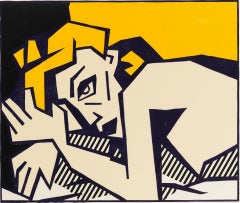
BEDROOM

BEDROOM

By Roy Lichtenstein

Located in Aventura, FL

From Interior Series. Woodcut and screen print in colors on Museum Board. Hand signed, dated and numbered by Roy Lichtenstein. Published by Gemini G.E.L., Los Angeles.. Corlett 247...

Category

1990s Pop Art Art by Medium: Woodcut

Materials

Board, Lithograph, Screen, Woodcut

Cave

Cave

By Louisa Chase

Located in New York, NY

Louisa Chase was born in Panama City, Panama. Seven years later, her family moved to Lancaster, Pennsylvania. She studied painting and sculpture at Syracuse University and at the Yal...

Category

Late 20th Century Contemporary Art by Medium: Woodcut

Materials

Woodcut

Hopi by Lon Megargee, Original Signed Block Print ca. 1920s

Hopi by Lon Megargee, Original Signed Block Print ca. 1920s

Located in Phoenix, AZ

Title: Hopi ca. 1920s Artist: Lon Megargee Medium: Block Print Size: 11 x 11 inches (Sight Measurement) SHIPPING CHARGES INCLUDE SHIPPING, PACKAGING & INSURANCE Creator of Stetson's hat logo "Last Drop from his Hat" Image of Lon Megargee not included in purchase. Lon Megargee 1883 - 1960 At age 13, Lon Megargee came to Phoenix in 1896 following the death of his father in Philadelphia. For several years he resided with relatives while working at an uncle’s dairy farm and at odd jobs. He returned to Philadelphia in 1898 – 1899 in order to attend drawing classes at the Pennsylvania Academy of the Fine Arts. Back in Phoenix in 1899, he decided at the age of 16 to try to make his living as a cowboy. Lon moved to the cow country of Wickenburg, Arizona where he was hired by Tex Singleton’s Bull Ranch. He later joined the Three Bar R. . . and after a few years, was offered a job by Billy Cook of the T.T. Ranch near New River. By 1906, Megargee had learned his trade well enough to be made foreman of Cook’s outfit. Never shy about taking risks, Lon soon left Cook to try his own hand at ranching. He partnered with a cowpuncher buddy, Tom Cavness, to start the El Rancho Cinco Uno at New River. Unfortunately, the young partners could not foresee a three-year drought that would parch Arizona, costing them their stock and then their hard-earned ranch. Breaking with his romantic vision of cowboy life, Megargee finally turned to art full time. He again enrolled at the Pennsylvania Academy of Art and then the Los Angeles School of Art and Design during 1909 – 1910. The now well-trained student took his first trip to paint “en plein air” (outdoors) to the land of Hopi and Navajo peoples in northern Arizona. After entering paintings from this trip in the annual Territorial Fair at Phoenix, in 1911, he surprisingly sold his first oil painting to a major enterprise – the Santa Fe Railroad . . . Lon received $50 for “Navajos Watching the Santa Fe Train.” He soon sold the SFRR ten paintings over the next two years. For forty years the railroad was his most important client, purchasing its last painting from him in 1953. In a major stroke of good fortune during his early plein-air period, Megargee had the opportunity to paint with premier artist, William R. Leigh (1866 – 1955). Leigh furnished needed tutoring and counseling, and his bright, impressionistic palette served to enhance the junior artist’s sense of color and paint application. In a remarkable display of unabashed confidence and personable salesmanship, Lon Megargee, at age 30, forever linked his name with Arizona art history. Despite the possibility of competition from better known and more senior artists, he persuaded Governor George Hunt and the Legislature in 1913 to approve 15 large, historic and iconic murals for the State Capitol Building in Phoenix. After completing the murals in 1914, he was paid the then princely sum of roughly $4000. His Arizona statehood commission would launch Lon to considerable prominence at a very early point in his art career. Following a few years of art schooling in Los Angeles, and several stints as an art director with movie studios, including Paramount, Megargee turned in part to cover illustrations for popular Western story magazines in the 1920s. In the 1920s, as well, Lon began making black and white prints of Western types and of genre scenes from woodblocks. These prints he generally signed and sold singly. In 1933, he published a limited edition, signed and hard-cover book (about 250 copies and today rare)containing a group of 28 woodblock images. Titled “The Cowboy Builds a Loop,” the prints are noteworthy for strong design, excellent draftsmanship, humanistic and narrative content, and quality. Subjects include Southwest Indians and cowboys, Hispanic men and women, cattle, horses, burros, pioneers, trappers, sheepherders, horse traders, squaw men and ranch polo players. Megargee had a very advanced design sense for simplicity and boldness which he demonstrated in how he used line and form. His strengths included outstanding gestural (action) art and strong figurative work. He was superb in design, originality and drawing, as a study of his prints in the Hays collection reveals. In 1944, he published a second group of Western prints under the same title as the first. Reduced to 16 images from the original 28 subjects, and slightly smaller, Lon produced these prints in brown ink on a heavy, cream-colored stock. He designed a sturdy cardboard folio to hold each set. For the remainder of his life, Lon had success selling these portfolios to museum stores, art fairs and shows, and to the few galleries then selling Western art. Drawing on real working and life experiences, Lon Megargee had a comprehensive knowledge, understanding and sensitivity for Southwestern subject matter. Noted American modernist, Lew Davis...

Category

1920s American Impressionist Art by Medium: Woodcut

Materials

Woodcut

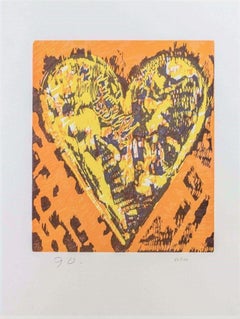
Woodcut Heart

Woodcut Heart

By Jim Dine

Located in New York, NY

This original color woodcut was created by the artist in 1993. Hand-monogrammed by the artist in pencil and numbered, from the edition of 500.

Category

20th Century Contemporary Art by Medium: Woodcut

Materials

Woodcut

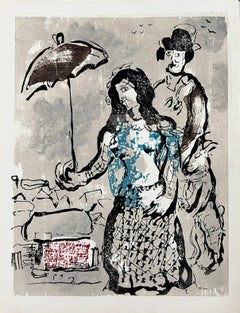
Marc Chagall -- POEMES: Dans ma Memoire

Marc Chagall -- POEMES: Dans ma Memoire

By Marc Chagall

Located in BRUCE, ACT

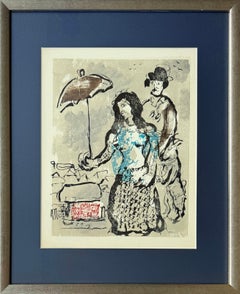
Marc Chagall Dans ma Memoire, 1968 LES POEMES #8 Colored woodcut on Rives paper Unsigned Edition: 96 / 226 Image size: c 24 * 32 cm Published by Cramer Editeur, Geneva LITERATUR...

Category

1960s Art by Medium: Woodcut

Materials

Woodcut

Leviathin II # VIII

Leviathin II # VIII

By William T. Wiley

Located in Lyons, CO

Hand colored woodcut, Edition 10. William Wiley uses current political and social issues to comment on life in our time. His stunning draftsmanship, and freeform love of language ar...

Category

1990s Contemporary Art by Medium: Woodcut

Materials

Woodcut

Keiji Shinohara, Accelerondo, Ukiyo-e woodcut print landscape, 2005

Keiji Shinohara, Accelerondo, Ukiyo-e woodcut print landscape, 2005

By Keiji Shinohara

Located in New York, NY

Keiji Shinohara was born and raised in Osaka, Japan. After 10 years as an apprentice to the renowned Keiichiro Uesugi in Kyoto, he became a Master Printmaker and moved to the United ...

Category

21st Century and Contemporary Abstract Art by Medium: Woodcut

Materials

Paper, Woodcut

Woodcut art for sale on 1stDibs.

Find a wide variety of authentic Woodcut art available on 1stDibs. While artists have worked in this medium across a range of time periods, art made with this material during the 21st Century is especially popular. If you’re looking to add art created with this material to introduce a provocative pop of color and texture to an otherwise neutral space in your home, the works available on 1stDibs include elements of orange, yellow, purple, blue and other colors. There are many well-known artists whose body of work includes ceramic sculptures. Popular artists on 1stDibs associated with pieces like this include Mino Maccari, Utagawa Kunisada (Toyokuni III), Eric Gill, and Utagawa Hiroshige. Frequently made by artists working in the Modern, Contemporary, all of these pieces for sale are unique and many will draw the attention of guests in your home. Not every interior allows for large Woodcut art, so small editions measuring 0.04 inches across are also available