Art by Medium: Woodcut

to
643
3,623
521
327
175
258
Overall Width
to
Overall Height
to
57
777
3,479
597
29
102
435
318
166
216
391
156
163
118
32
2,451
568
238
215
205
112
58
44
41
28
9
4
1
1
3,448
1,315
119
2,346
1,212
904
848
621
469
456
396
381
364
354
272
242
218
211
185
176
147
137
106
4,911
181,311
96,451
78,570
77,662
170
152
55
53
47
407
2,266
1,937
1,874
Medium: Woodcut
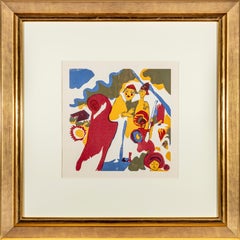
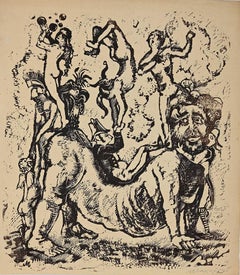
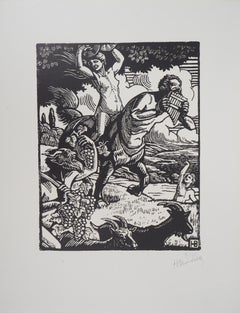
The Dance - Original woodcut - Signed

The Dance - Original woodcut - Signed

By Raoul Dufy

Located in Paris, IDF

Raoul DUFY The Dance, c .1910 Original woodcut Signed with stamp of the artist's studio Numbered on /220 Titled in the board 50.5 x 65.4 cm (c. 19.6 x 25.5 inch) Excellent condition

Category

1910s Modern Art by Medium: Woodcut

Materials

Woodcut

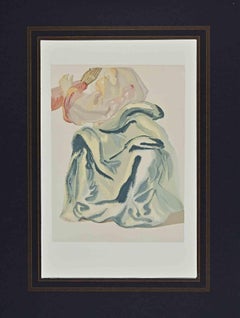
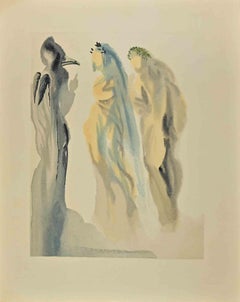
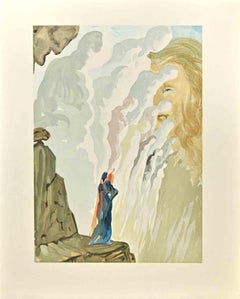
Heaven of Jupiter - Woodcut  - 1963

Heaven of Jupiter - Woodcut - 1963

By Salvador Dalí­

Located in Roma, IT

Heaven of Jupiter is a woodcut print realized in 1963 for a series illustrating the Medieval poem of the "Divine Comedy" by Dante Alighieri. Not signed, as issued. Plate n.20 (as...

Category

1960s Surrealist Art by Medium: Woodcut

Materials

Woodcut

Frame with Separation

Frame with Separation

By Robert Mangold

Located in New York, NY

Associated with the Minimalist art movement of the 1960s, Mangold developed a reductive vocabulary based on geometric forms, monochromatic color, and an emphasis on the flatness of t...

Category

21st Century and Contemporary Minimalist Art by Medium: Woodcut

Materials

Woodcut

KATSURA KYOTO I

KATSURA KYOTO I

By Kiyoshi Saitō

Located in Portland, ME

Saito, Kiyoshi. KATSURA KYOTO I. Color Woodblock, 1962. Edition of 200. Titled, dated and numbered 84/200 in pencil. Signed in the block (prints from thi...

Category

1960s Art by Medium: Woodcut

Materials

Adhesive, Woodcut

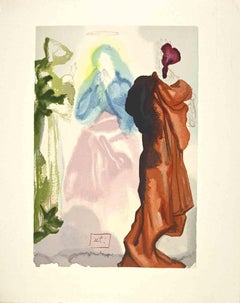
The Greatest Beauty of Beatrice - Woodcut  - 1963

The Greatest Beauty of Beatrice - Woodcut - 1963

By Salvador Dalí­

Located in Roma, IT

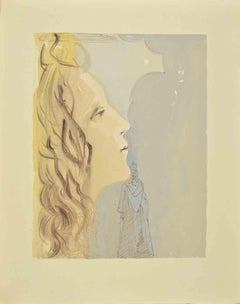
The Greatest Beauty of Beatrice - The Divine Comedy is a woodcut print realized in 1963 for a series illustrating the Medieval poem of the "Divine Comedy" by Dante Alighieri. Not s...

Category

1960s Surrealist Art by Medium: Woodcut

Materials

Woodcut

A Woman Clothed in the Sun, by William Wolff

A Woman Clothed in the Sun, by William Wolff

By William Wolff

Located in Palm Springs, CA

Signed proof copy from edition of unknown size. Most of Wolff's prints were done in very small numbers, and each was often unique. Born in 1922 in San Francisco, William F. Wolff ...

Category

1980s Contemporary Art by Medium: Woodcut

Materials

Woodcut

Tropical Leaf
Tropical Leaf

Tropical Leaf

By Louise Nevelson

Located in Toronto, Ontario

As always, Caviar20 is thrilled to present the esteemed work of Louise Nevelson - one of the most revered and unique artists of the 20th century. Although Nevelson is best known f...

Category

1970s Abstract Art by Medium: Woodcut

Materials

Woodcut

The Story of Tamiya Bataro

The Story of Tamiya Bataro

By Taiso Yoshitoshi

Located in Fairlawn, OH

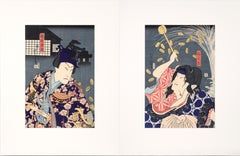
The Story of Tamiya Bataro Color woodcut diptych, March 22, 1886 Signed and sealed by the artist (see photo) Yoshitoshi signature, Taiso seal Series: New selection of eastern brocad...

Category

1880s Art by Medium: Woodcut

Materials

Woodcut

Rare 1923 Cubist Reuven Rubin Woodcut Woodblock Kabbalah Print Israeli Judaica

Rare 1923 Cubist Reuven Rubin Woodcut Woodblock Kabbalah Print Israeli Judaica

By Reuven Rubin

Located in Surfside, FL

This is from the original first edition 1923 printing. there was a much later edition done after these originals. These are individually hand signed in pencil by artist as issued. This listing is for the one print. the other documentation is included here for provenance and is not included in this listing. The various images inspired by the Jewish Mysticism and rabbis and mystics of jerusalem and Kabbalah is holy, dramatic and optimistic Rubin succeeded to evoke the spirit of life in Israel in those early days. They are done in a modern art style influenced by German Expressionism, particularly, Ernst Barlach, Ernst Ludwig Kirchner, and Franz Marc, as introduced to Israel by Jakob Steinhardt, Hermann Struck and Joseph Budko. Reuven Rubin 1893 -1974 was a Romanian-born Israeli painter and Israel's first ambassador to Romania. Rubin Zelicovich (later Reuven Rubin) was born in Galati to a poor Romanian Jewish Hasidic family. He was the eighth of 13 children. In 1912, he left for Ottoman-ruled Palestine to study art at Bezalel Academy of Art and Design in Jerusalem. Finding himself at odds with the artistic views of the Academy's teachers, he left for Paris, France, in 1913 to pursue his studies at the École Nationale Supérieure des Beaux-Arts. He was of the well known Jewish artists in Paris along with Marc Chagall and Chaim Soutine, At the outbreak of World War I, he was returned to Romania, where he spent the war years. In 1921, he traveled to the United States with his friend and fellow artist, Arthur Kolnik. In New York City, the two met artist Alfred Stieglitz, who was instrumental in organizing their first American show at the Anderson Gallery. Following the exhibition, in 1922, they both returned to Europe. In 1923, Rubin emigrated to Mandate Palestine. Rubin met his wife, Esther, in 1928, aboard a passenger ship to Palestine on his return from a show in New York. She was a Bronx girl who had won a trip to Palestine in a Young Judaea competition. He died in 1974. Part of the early generation of artists in Israel, Joseph Zaritsky, Arieh Lubin, Reuven Rubin, Sionah Tagger, Pinchas Litvinovsky, Mordecai Ardon, Yitzhak Katz, and Baruch Agadati; These painters depicted the country’s landscapes in the 1920s rebelled against the Bezalel school of Boris Schatz. They sought current styles in Europe that would help portray their own country’s landscape, in keeping with the spirit of the time. Rubin’s Cezannesque landscapes from the 1920s were defined by both a modern and a naive style, portraying the landscape and inhabitants of Israel in a sensitive fashion. His landscape paintings in particular paid special detail to a spiritual, translucent light. His early work bore the influences of Futurism, Vorticism, Cubism and Surrealism. In Palestine, he became one of the founders of the new Eretz-Yisrael style. Recurring themes in his work were the bible, the prophet, the biblical landscape, folklore and folk art, people, including Yemenite, Hasidic Jews and Arabs. Many of his paintings are sun-bathed depictions of Jerusalem and the Galilee. Rubin might have been influenced by the work of Henri Rousseau whose naice style combined with Eastern nuances, as well as with the neo-Byzantine art to which Rubin had been exposed in his native Romania. In accordance with his integrative style, he signed his works with his first name in Hebrew and his surname in Roman letters. In 1924, he was the first artist to hold a solo exhibition at the Tower of David, in Jerusalem (later exhibited in Tel Aviv at Gymnasia Herzliya). That year he was elected chairman of the Association of Painters and Sculptors of Palestine. From the 1930s onwards, Rubin designed backdrops for Habima Theater, the Ohel Theater and other theaters. His biography, published in 1969, is titled My Life - My Art. He died in Tel Aviv in October 1974, after having bequeathed his home on 14 Bialik Street and a core collection of his paintings to the city of Tel Aviv. The Rubin Museum opened in 1983. The director and curator of the museum is his daughter-in-law, Carmela Rubin. Rubin's paintings are now increasingly sought after. At a Sotheby's auction in New York in 2007, his work accounted for six of the ten top lots. Along with Yaacov Agam and Menashe Kadishman he is among Israel's best known artists internationally. Education 1912 Bezalel Academy of Arts and Design, Jerusalem 1913-14 École des Beaux Arts, Paris and Académie Colarossi, Paris Select Group Exhibitions Eged - Palestine Painters Group Eged - Palestine Painters Group, Allenby Street, Tel Aviv 1929 Artists: Chana Orloff, Abraham Melnikoff, Rubin, Reuven Nahum Gutman, Sionah Tagger,Arieh Allweil, Jewish Artists Association, Levant Fair, Tel Aviv, 1929 Artists: Ludwig Blum,Eliyahu Sigad, Shmuel Ovadyahu, Itzhak Frenel Frenkel,Ozer Shabat, Menahem Shemi...

Category

1920s Abstract Art by Medium: Woodcut

Materials

Woodcut

Ugolino - Woodcut print - 1963

Ugolino - Woodcut print - 1963

By Salvador Dalí­

Located in Roma, IT

Ugolino is a woodcut print realized in 1963 for a series illustrating the Medieval poem of the "Divine Comedy" by Dante Alighieri. Good conditions. Limited edition of 2900, realiz...

Category

1960s Surrealist Art by Medium: Woodcut

Materials

Woodcut

Louis SCHANKER “Jai Alai”

Louis SCHANKER “Jai Alai”

By Louis Schanker

Located in San Francisco, CA

Louis Schanker : 1903-1981. Well, listed American abstract artist. He was well exhibited and is in the permanent collections of many important museums. This fabulous piece is a color...

Category

1930s Abstract Art by Medium: Woodcut

Materials

Woodcut

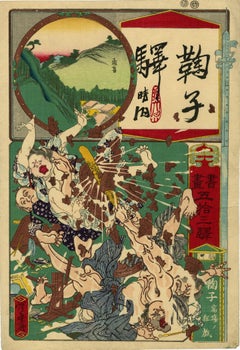
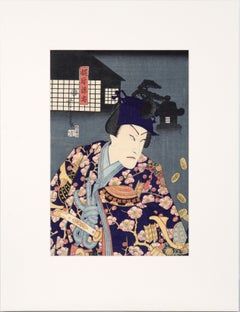
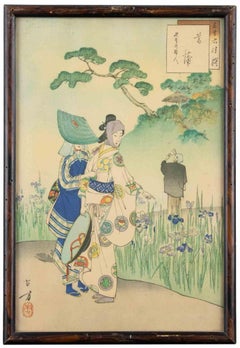
Utagawa Kunisada (1786-1865) - Mid 19th Century Japanese Woodblock, Niwa Suzumi

Utagawa Kunisada (1786-1865) - Mid 19th Century Japanese Woodblock, Niwa Suzumi

By Utagawa Kunisada III

Located in Corsham, GB

The central print from a triptych by the prolific ukiyo-e artist Utagawa Kunisada titled *Niwa Suzumi* (Cooling Off in the Garden). Signed within the print to the lower right. On Jap...

Category

Mid-19th Century Art by Medium: Woodcut

Materials

Woodcut

BEDROOM
BEDROOM

BEDROOM

By Roy Lichtenstein

Located in Aventura, FL

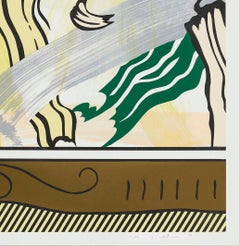
From Interior Series. Woodcut and screen print in colors on Museum Board. Hand signed, dated and numbered by Roy Lichtenstein. Published by Gemini G.E.L., Los Angeles.. Corlett 247...

Category

1990s Pop Art Art by Medium: Woodcut

Materials

Board, Lithograph, Screen, Woodcut

Black Devil - Woodcut  - 1963

Black Devil - Woodcut - 1963

By Salvador Dalí­

Located in Roma, IT

Black Devil is a woodcut print realized in 1963 for a series illustrating the Medieval poem of the "Divine Comedy" by Dante Alighieri. Not signed, as issued. Plate n.17 (as repor...

Category

1960s Surrealist Art by Medium: Woodcut

Materials

Woodcut

Impression B
Impression B

Impression B

By Toshi Yoshida 1

Located in Fairlawn, OH

Impression B Color woodcut, 1959 Signed and dated lower right (see photo) Titled lower left (see photo) A trial proof, prior to the edition of 100, signed and numbered Condition: Excellent Image size: 14 1/2 x 9 3/4 inches Provenance: Estate of the artist by decent to his heirs "Printmaker and painter Toshi Yoshida was born on July 25, 1911, into the respected Yoshida family of artists of Tokyo, Japan. Father Hiroshi was a celebrated landscape painter and printmaker, and mother Fujio established herself as the first female Yoshida artist as well as an Abstract artist later in her career. Younger brother Hodaka was an Abstract printmaker whose style, completely separate from his family's historic traditional bent, later influenced Toshi. Hodaka's wife Chizuko would become a pioneering female Japanese artist whose own exploration of Surrealism and Abstraction challenged the status quo. Toshi, however, as the eldest sibling, was expected to follow in his father's footsteps, and from an early age he was trained by Hiroshi in his studio. Unable to attend formal schooling due to the polio-induced paralyzation of his leg, Toshi would instead help with his family's printmaking studio and go on sketching trips with Hiroshi. As he got older, these trips would include India and Southeast Asia, working from morning to night taking night trains to get from one destination to another. Among Toshi's favorite subjects were the animals he discovered along the way. However, these trips ended as Japan entered military dictatorship in the mid 1930s, and artists whose work showed signs of Western influence were barred from exhibiting. At this time, Toshi left Japan for China and Korea, where he would remain for the duration of the war. He stuck to patriotic themes to remain in business, and after the end of World War II, as Japan struggled to recover from wartime economic depression, he earned his living creating traditional Japanese woodcut landscapes...

Category

1950s Abstract Art by Medium: Woodcut

Materials

Woodcut

Gauguin, Delightful Land (Nave nave fenua), Gauguin (after)

Gauguin, Delightful Land (Nave nave fenua), Gauguin (after)

By Paul Gauguin

Located in Southampton, NY

Woodcut on vélin Utopian paper. Unsigned and unnumbered, as issued. Good Condition. Notes: From the folio, Gauguin, A portfolio of 12 color woodblocks, Paul Gauguin, French, 1848-1903 from the collection of the Museum Of Fine Arts, Boston, 1946. Rendered by Albert Carman (1899-1949); published the Museum Of Fine Arts, Boston and The Studio Publications, Inc., New York and London; printed by Holme Press Inc., New York, in an edition of MMMD. Excerpted from the folio, Paul Gauguin and Emil Bernard at Pont-Aven, Brittany, in 1888, each made a bas-relief, wooden panel to decorate a piece of furniture for a friend. In order to keep a record of their designs, a few inked impressions were made on paper. The illustration at left is a reproduction of a print which is possibly one of the above mentioned. It is further possible that this experiment later gave Gauguin the idea of making woodcuts. Just as his work in painting expressed a revolt against the overemphasis on factual representation of the nineteenth century in favor of decorative pattern and color, so also his woodcuts leaned strongly to the same side of the balance. Ten of the cuts reproduced (all excepting Soyez Amoureuses and Changement de Residence), which constitute the whole of his best known series, were made at Pont-Aven beginning in the fall of 1894, after Gauguin's return from his first trip to Tahiti and after he broke his ankle. They were at first roughly cut with a common carpenter's gouge, and the flat surfaces sandpapered and engraved with a sharp in-strument, perhaps an engraver's burin. A few trial proofs were printed in black ink only. Then the hollows were deepened with a woodcutter's gouge and highlights were added. An edition of thirty to fifty impressions of each subject, with the addition of color blocks (one, two or three), was made by Louis Roy...

Category

1940s Post-Impressionist Art by Medium: Woodcut

Materials

Woodcut

Rare 1923 Cubist Reuven Rubin Woodcut Woodblock Fisherman Print Israeli Judaica

Rare 1923 Cubist Reuven Rubin Woodcut Woodblock Fisherman Print Israeli Judaica

By Reuven Rubin

Located in Surfside, FL

This is from the original first edition 1923 printing. there was a much later edition done after these originals. These are individually hand signed in pencil by artist as issued. This listing is for the one print. the other documentation is included here for provenance and is not included in this listing. The various images inspired by the Jewish Mysticism and rabbis and mystics of jerusalem and Kabbalah is holy, dramatic and optimistic Rubin succeeded to evoke the spirit of life in Israel in those early days. They are done in a modern art style influenced by German Expressionism, particularly, Ernst Barlach, Ernst Ludwig Kirchner, and Franz Marc, as introduced to Israel by Jakob Steinhardt, Hermann Struck and Joseph Budko. Reuven Rubin 1893 -1974 was a Romanian-born Israeli painter and Israel's first ambassador to Romania. Rubin Zelicovich (later Reuven Rubin) was born in Galati to a poor Romanian Jewish Hasidic family. He was the eighth of 13 children. In 1912, he left for Ottoman-ruled Palestine to study art at Bezalel Academy of Art and Design in Jerusalem. Finding himself at odds with the artistic views of the Academy's teachers, he left for Paris, France, in 1913 to pursue his studies at the École Nationale Supérieure des Beaux-Arts. He was of the well known Jewish artists in Paris along with Marc Chagall and Chaim Soutine, At the outbreak of World War I, he was returned to Romania, where he spent the war years. In 1921, he traveled to the United States with his friend and fellow artist, Arthur Kolnik. In New York City, the two met artist Alfred Stieglitz, who was instrumental in organizing their first American show at the Anderson Gallery. Following the exhibition, in 1922, they both returned to Europe. In 1923, Rubin emigrated to Mandate Palestine. Rubin met his wife, Esther, in 1928, aboard a passenger ship to Palestine on his return from a show in New York. She was a Bronx girl who had won a trip to Palestine in a Young Judaea competition. He died in 1974. Part of the early generation of artists in Israel, Joseph Zaritsky, Arieh Lubin, Reuven Rubin, Sionah Tagger, Pinchas Litvinovsky, Mordecai Ardon, Yitzhak Katz, and Baruch Agadati; These painters depicted the country’s landscapes in the 1920s rebelled against the Bezalel school of Boris Schatz. They sought current styles in Europe that would help portray their own country’s landscape, in keeping with the spirit of the time. Rubin’s Cezannesque landscapes from the 1920s were defined by both a modern and a naive style, portraying the landscape and inhabitants of Israel in a sensitive fashion. His landscape paintings in particular paid special detail to a spiritual, translucent light. His early work bore the influences of Futurism, Vorticism, Cubism and Surrealism. In Palestine, he became one of the founders of the new Eretz-Yisrael style. Recurring themes in his work were the bible, the prophet, the biblical landscape, folklore and folk art, people, including Yemenite, Hasidic Jews and Arabs. Many of his paintings are sun-bathed depictions of Jerusalem and the Galilee. Rubin might have been influenced by the work of Henri Rousseau whose naice style combined with Eastern nuances, as well as with the neo-Byzantine art to which Rubin had been exposed in his native Romania. In accordance with his integrative style, he signed his works with his first name in Hebrew and his surname in Roman letters. In 1924, he was the first artist to hold a solo exhibition at the Tower of David, in Jerusalem (later exhibited in Tel Aviv at Gymnasia Herzliya). That year he was elected chairman of the Association of Painters and Sculptors of Palestine. From the 1930s onwards, Rubin designed backdrops for Habima Theater, the Ohel Theater and other theaters. His biography, published in 1969, is titled My Life - My Art. He died in Tel Aviv in October 1974, after having bequeathed his home on 14 Bialik Street and a core collection of his paintings to the city of Tel Aviv. The Rubin Museum opened in 1983. The director and curator of the museum is his daughter-in-law, Carmela Rubin. Rubin's paintings are now increasingly sought after. At a Sotheby's auction in New York in 2007, his work accounted for six of the ten top lots. Along with Yaacov Agam and Menashe Kadishman he is among Israel's best known artists internationally. Education 1912 Bezalel Academy of Arts and Design, Jerusalem 1913-14 École des Beaux Arts, Paris and Académie Colarossi, Paris Select Group Exhibitions Eged - Palestine Painters Group Eged - Palestine Painters Group, Allenby Street, Tel Aviv 1929 Artists: Chana Orloff, Abraham Melnikoff, Rubin, Reuven Nahum Gutman, Sionah Tagger,Arieh Allweil, Jewish Artists Association, Levant Fair, Tel Aviv, 1929 Artists: Ludwig Blum,Eliyahu Sigad, Shmuel Ovadyahu, Itzhak Frenel Frenkel,Ozer Shabat, Menahem Shemi, First Exhibition of ''Hever Omanim'' First Exhibition of ''Hever Omanim'' Steimatzky Gallery, Jerusalem 1936 Artists: Gutman, Nachum Holzman, Shimshon Mokady, Moshe Sima, Miron Rubin, Reuven Steinhardt, Jakob Ben Zvi, Zeev Ziffer, Moshe Allweil, Arieh Group Exhibition Group Exhibition Katz Art Gallery, Tel Aviv 1939 Artists: Avni, Aharon Holzman, Shimshon Gliksberg, Haim Gutman, Nachum Ovadyahu, Shmuel Shorr, Zvi Schwartz, Chaya Streichman, Yehezkel Tagger, Sionah Rubin, Reuven A Collection of Works by Artists of the Land of Israel A Collection of Works by Artists of the Land of Israel The Bezalel National Museum, Jerusalem 1940 Artists: Shemi, Menahem Rubin, Reuven Avni, Aharon Mokady, Moshe Jonas, Ludwig Steinhardt, Jakob Ticho, Anna Krakauer, Leopold Gutman, Nachum Budko, Joseph Ardon, Mordecai Sima, Miron Castel, Moshe Pann, Abel Struck, Hermann Gur Arie, Meir Ben Zvi, Zeev Litvinovsky, Pinchas Artists in Israel for the Defense, Tel Aviv Museum of Art, Helena Rubinstein Pavilion, Tel Aviv 1967 Artists: Avraham Binder, Motke Blum, (Mordechai) Samuel Bak, Yosl Bergner, Nahum Gilboa, Jean David, Marcel Janco, Lea Nikel, Jacob Pins, Esther Peretz...

Category

1920s Abstract Art by Medium: Woodcut

Materials

Woodcut

Gauguin, The God (Te atua), Gauguin (after)

Gauguin, The God (Te atua), Gauguin (after)

By Paul Gauguin

Located in Southampton, NY

Woodcut on vélin Utopian paper. Unsigned and unnumbered, as issued. Good Condition. Notes: From the folio, Gauguin, A portfolio of 12 color woodblocks, Paul Gauguin, French, 1848-19...

Category

1940s Post-Impressionist Art by Medium: Woodcut

Materials

Woodcut

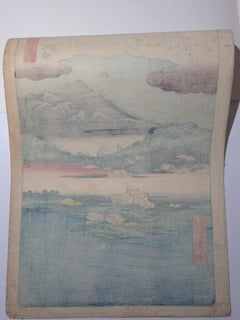
Japanese Woodcut Print - Original Woodcut Print by Utagawa Hiroshige - 19th Cent

Japanese Woodcut Print - Original Woodcut Print by Utagawa Hiroshige - 19th Cent

By Utagawa Hiroshige

Located in Roma, IT

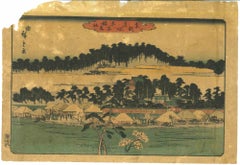
This is a superb polychrome woodblock print (nishiki-e, ink and color on paper), likely realized by Utagawa Hiroshige (Japanese, 1797-1858) at the middle of 19th century. This plate ...

Category

19th Century Modern Art by Medium: Woodcut

Materials

Woodcut

Avars - Woodcut - 1963

Avars - Woodcut - 1963

By Salvador Dalí­

Located in Roma, IT

Avars -  "The Divine Comedy" - Song 20 -  Purgatory is a woodcut print realized in 1963 for a series illustrating the Medieval poem of the "Divine Comedy" by Dante Alighieri. Plate n...

Category

1960s Surrealist Art by Medium: Woodcut

Materials

Woodcut

Charles Arnoldi 'Macchu Picchu 4' Limited Edition, Abstract Signed Print

Charles Arnoldi 'Macchu Picchu 4' Limited Edition, Abstract Signed Print

By Charles Arnoldi

Located in San Rafael, CA

Charles Arthur Arnoldi (b. 1946) Macchu Picchu 4, 2019 Woodcut in colors on wove paper Edition: 25/30 Signed, editioned, and dated in pencil along lower edge Printed by Peter Kosowicz, Thumbprint Editions, London Published by Harvey Bayer...

Category

21st Century and Contemporary Abstract Geometric Art by Medium: Woodcut

Materials

Woodcut

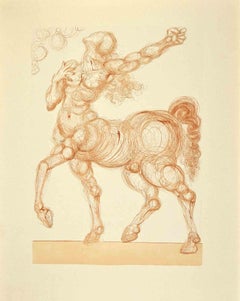
The Centaur - Woodcut - 1963

The Centaur - Woodcut - 1963

By Salvador Dalí­

Located in Roma, IT

The Centaur - Hell, Plate-26 is a woodcut print realized in 1963 for a series illustrating the Medieval poem of the "Divine Comedy" by Dante Alighieri. Not signed, as issued. Goo...

Category

1960s Surrealist Art by Medium: Woodcut

Materials

Woodcut

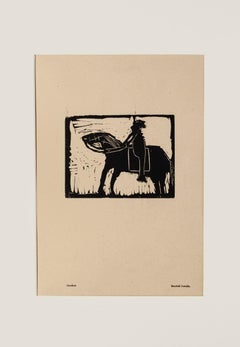
The General - Woodcut Print by Mino Maccari - 1920's

The General - Woodcut Print by Mino Maccari - 1920's

By Mino Maccari

Located in Roma, IT

The General is an original modern artwork realized in the first decades of the XX Century by the Italian artist Mino Maccari (Siena, 1898 - Rome, 1989). Original red woodcut print o...

Category

1920s Modern Art by Medium: Woodcut

Materials

Woodcut

Purgatory Song 4 - Woodcut  - 1963

Purgatory Song 4 - Woodcut - 1963

By Salvador Dalí­

Located in Roma, IT

Purgatory Song 4 is a woodcut print realized in 1963 for a series illustrating the Medieval poem of the "Divine Comedy" by Dante Alighieri. Not signed, as issued. Plate n.4 (as r...

Category

1960s Surrealist Art by Medium: Woodcut

Materials

Woodcut

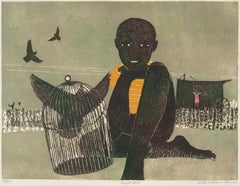
Motif, Gold Abstract African American Artist Viola Leak Woodcut Silkscreen Print

Motif, Gold Abstract African American Artist Viola Leak Woodcut Silkscreen Print

By Viola Burley Leak

Located in Surfside, FL

Motif (Abstract) in orange, blue and gold abstract. From the small edition of 10. from 1982. I am not sure if this is a woodcut or woodblock print or a silkscreen screenprint or some combination. Viola Burley Leak, American (1944 - ) Viola Leak was born in Nashville, Tennessee, she received a B.A. in Art from Fisk University, a B.F.A. in Fashion Design from Pratt Institute, Brooklyn, an M.A. from Hunter College, NY and an M.F.A. in Media from Howard University, Washington, DC. Leak was an art consultant for both the New York State Board of Education and the Metropolitan Museum of Art's Print Department, in addition to working for the Experimental Gallery of Art at the Smithsonian Institute. Her mixed media work often references religious motifs and those of her African-American experience and heritage. She is a multimedia artist, her works include printmaking, textile designing, soft sculpture, appliqué tapestries, doll making, and multi-media. Viola has studied with many renowned artists such as Aaron Douglas, Romare Bearden, Robert Blackburn, and Charles White. Her works can be found in the collections of World Federation of United Nations, New York State Office Building, Manufacturers of Hanover Trust Company, Atlanta Life Insurance Company and many more organizations. Viola's exhibition experience is extensive - more than 100 showings over a decade, national and international. Her quilts exude a miraculous and magical presence. They have traveled in two international shows and three national quilt projects in the past three years. A proud moment for her was being featured in the December 20, 2000 of the Smithsonian magazine; the article praised her mural "Afro Dance Scan" as one of the outstanding artworks in the "When the Spirit Moves: African American Dance...

Category

1980s Contemporary Art by Medium: Woodcut

Materials

Screen, Woodcut

The Hare, Impressionist Woodblock Print by Raoul Dufy

The Hare, Impressionist Woodblock Print by Raoul Dufy

By Raoul Dufy

Located in Long Island City, NY

Raoul Dufy, French (1877 - 1953) - The Hare, Year: circa 1920, Medium: Woodblock on thin wove paper, Image Size: 8 x 7.75 inches, Size: 11.5 x 9 in. (29.21 x 22.86 cm), Description...

Category

1920s Impressionist Art by Medium: Woodcut

Materials

Woodcut

Return from the market, Woodcut on Paper, Figurative by Haren Das "In Stock"

Return from the market, Woodcut on Paper, Figurative by Haren Das "In Stock"

By Haren Das

Located in Kolkata, West Bengal

Haren Das - Untitled (Return from the Market) Woodcut on Paper 6.8 x 10 inches ( Unframed & Delivered ) Born in Dinajpur in present day Bangladesh on 1 February 1921, Das took a dip...

Category

1990s Modern Art by Medium: Woodcut

Materials

Paper, Woodcut
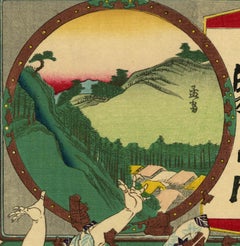
Cultured Woman - Tokyo, woodcut portrait by cultural satirist Art hazelwood

Cultured Woman - Tokyo, woodcut portrait by cultural satirist Art hazelwood

By Art Hazelwood

Located in Palm Springs, CA

This screenprint, Cultured Woman – Tokyo, is a sharp, knowing example of Art Hazelwood’s satirical voice—stylish, unsettling, and quietly biting. The elongated female figure dominates the composition, her body exaggerated into a narrow vertical column that reads as both fashionable and faintly grotesque. Her pose is elegant yet strained, chin lifted, gaze distant, projecting confidence that borders on caricature. Hazelwood’s line work is incisive and deliberate. The woman’s clothing—fur-trimmed coat, patterned dress, high boots—signals cosmopolitan sophistication, while the acid clarity of her facial features undermines any straightforward glamour. Makeup becomes mask-like; refinement tips into artifice. The palette is cool and controlled, reinforcing a sense of emotional remove beneath the polished surface. At her feet, the small dog functions as a critical counterpoint. It echoes her presence while subtly mocking it, grounding the image in Hazelwood’s characteristic irony. The pairing suggests themes of status, performance, and cultural self-consciousness, with Tokyo serving less as a literal place than as a symbol of globalized style and curated identity. Like much of Hazelwood’s work, the print resists easy judgment. It is neither cruel nor celebratory, but observant—a portrait of modern sophistication rendered with wit, skepticism, and a razor-edged sense of humor. Signed and numbered color woodcut from the edition of 15. Modern woman in Tokyo; signed and titled edition of 15. Art Hazelwood calls himself artist, instigator and impresario to define the three intertwining areas of his practice. He uses printmaking within a range of political allegory and satire making work from political posters to fine press edition artist books. He has curated and organized a range of exhibitions at venues from museums to immigrant centers. He has worked for over 20 years with homeless rights groups; creating prints, and street posters, and has authored one book and contributed to another on art and homelessness. He has been a regular visiting guest artist at San Quentin State Prison and teaches currently at the San Francisco Art Institute. He organized the San Francisco Poster...

Category

2010s Contemporary Art by Medium: Woodcut

Materials

Woodcut

Persimmons
Persimmons

Persimmons

Located in San Francisco, CA

This artwork titled "Persimmons" 1980, is a colors woodcut on wove paper by noted Korean artist Bong Kyu Ahn, b.1938. It is hand signed, dated, titled, and numbered 10/90 in pencil b...

Category

Late 20th Century Realist Art by Medium: Woodcut

Materials

Woodcut

"Pura Vida" original color woodcut print signed by Carol Summers

"Pura Vida" original color woodcut print signed by Carol Summers

By Carol Summers

Located in Milwaukee, WI

"Pura Vida" is an original color woodcut signed by Carol Summers. A multi-colored piece shows a waterfall with red flames behind it in the middle of the piece. On the left stands a tree with yellow leaves on a hill. To the right is a rainbow. This is an excellent example of Summer's printmaking, not just because of the technique and imagery, but because it numbered 1 of the edition of 125. In addition, it contains a personal inscription to the Milwaukee gallerist David Barnett, who has championed the work of Summers and produced catalogs of his work. Indeed, this print appears as no. 189 in the David Barnett Gallery's 1988 catalogue raisonné of Summer's woodcuts. Feel free to inquire if you would like to purchase a copy of the catalogue raisonné along with your Carol Summers print. Art: 24.25 x 24.75 in Frame: 36 x 35 in signed lower right titled and inscribed to David [Barnett] lower right edition (1/125) lower right Carol Summers (1925-2016) has worked as an artist throughout the second half of the 20th century and into the first years of the next, outliving most of his mid-century modernist peers. Initially trained as a painter, Summers was drawn to color woodcuts around 1950 and it became his specialty thereafter. Over the years he has developed a process and style that is both innovative and readily recognizable. His art is known for it’s large scale, saturated fields of bold color, semi-abstract treatment of landscapes from around the world and a luminescent quality achieved through a printmaking process he invented. In a career that has extended over half a century, Summers has hand-pulled approximately 245 woodcuts in editions that have typically run from 25 to 100 in number. His talent was both inherited and learned. Born in 1925 in Kingston, a small town in upstate New York, Summers was raised in nearby Woodstock with his older sister, Mary. His parents were both artists who had met in art school in St. Louis. During the Great Depression, when Carol was growing up, his father supported the family as a medical illustrator until he could return to painting. His mother was a watercolorist and also quite knowledgeable about the different kinds of papers used for various kinds of painting. Many years later, Summers would paint or print on thinly textured paper originally collected by his mother. From 1948 to 1951, Carol Summers trained in the classical fine and studio arts at Bard College and at the Art Students League of New York. He studied painting with Steven Hirsh and printmaking with Louis Schanker. He admired the shapes and colors favored by early modernists Paul Klee (Sw: 1879-1940) and Matt Phillips (Am: b.1927- ). After graduating, Summers quit working as a part-time carpenter and cabinetmaker (which had supported his schooling and living expenses) to focus fulltime on art. That same year, an early abstract, Bridge No. 1 was selected for a Purchase Prize in a competition sponsored by the Brooklyn Museum. In 1952, his work (Cathedral, Construction and Icarus) was shown the first time at the Museum of Modern Art in New York City in an exhibition of American woodcuts. In 1954, Summers received a grant from the Italian government to study for a year in Italy. Woodcuts completed soon after his arrival there were almost all editions of only 8 to 25 prints, small in size, architectural in content and black and white in color. The most well-known are Siennese Landscape and Little Landscape, which depicted the area near where he resided. Summers extended this trip three more years, a decision which would have significant impact on choices of subject matter and color in the coming decade. After returning from Europe, Summers’ images continued to feature historical landmarks and events from Italy as well as from France, Spain and Greece. However, as evidenced in Aetna’s Dream, Worldwind and Arch of Triumph, a new look prevailed. These woodcuts were larger in size and in color. Some incorporated metal leaf in the creation of a collage and Summers even experimented with silkscreening. Editions were now between 20 and 50 prints in number. Most importantly, Summers employed his rubbing technique for the first time in the creation of Fantastic Garden in late 1957. Dark Vision of Xerxes, a benchmark for Summers, was the first woodcut where Summers experimented using mineral spirits as part of his printmaking process. A Fulbright Grant as well as Fellowships from the Louis Comfort Tiffany Foundation and the Guggenheim Foundation followed soon thereafter, as did faculty positions at colleges and universities primarily in New York and Pennsylvania. During this period he married a dancer named Elaine Smithers with whom he had one son, Kyle. Around this same time, along with fellow artist Leonard Baskin, Summers pioneered what is now referred to as the “monumental” woodcut. This term was coined in the early 1960s to denote woodcuts that were dramatically bigger than those previously created in earlier years, ones that were limited in size mostly by the size of small hand-presses. While Baskin chose figurative subject matter, serious in nature and rendered with thick, striated lines, Summers rendered much less somber images preferring to emphasize shape and color; his subject matter approached abstraction but was always firmly rooted in the landscape. In addition to working in this new, larger scale, Summers simultaneously refined a printmaking process which would eventually be called the “Carol Summers Method” or the “ Carol Summers Technique”. Summers produces his woodcuts by hand, usually from one or more blocks of quarter-inch pine, using oil-based printing inks and porous mulberry papers. His woodcuts reveal a sensitivity to wood especially its absorptive qualities and the subtleties of the grain. In several of his woodcuts throughout his career he has used the undulating, grainy patterns of a large wood plank to portray a flowing river or tumbling waterfall. The best examples of this are Dream, done in 1965 and the later Flash Flood Escalante, in 2003. In the majority of his woodcuts, Summers makes the blocks slightly larger than the paper so the image and color will bleed off the edge. Before printing, he centers a dry sheet of paper over the top of the cut wood block or blocks, securing it with giant clips. Then he rolls the ink directly on the front of the sheet of paper and pressing down onto the dry wood block or reassembled group of blocks. Summers is technically very proficient; the inks are thoroughly saturated onto the surface of the paper but they do not run into each other. The precision of the color inking in Constantine’s Dream in 1969 and Rainbow Glacier in 1970 has been referred to in various studio handbooks. Summers refers to his own printing technique as “rubbing”. In traditional woodcut printing, including the Japanese method, the ink is applied directly onto the block. However, by following his own method, Summers has avoided the mirror-reversed image of a conventional print and it has given him the control over the precise amount of ink that he wants on the paper. After the ink is applied to the front of the paper, Summers sprays it with mineral spirits, which act as a thinning agent. The absorptive fibers of the paper draw the thinned ink away from the surface softening the shapes and diffusing and muting the colors. This produces a unique glow that is a hallmark of the Summers printmaking technique. Unlike the works of other color field artists or modernists of the time, this new technique made Summers’ extreme simplification and flat color areas anything but hard-edged or coldly impersonal. By the 1960s, Summers had developed a personal way of coloring and printing and was not afraid of hard work, doing the cutting, inking and pulling himself. In 1964, at the age of 38, Summers’ work was exhibited for a second time at the Museum of Modern Art. This time his work was featured in a one-man show and then as one of MOMA’s two-year traveling exhibitions which toured throughout the United States. In subsequent years, Summers’ works would be exhibited and acquired for the permanent collections of multiple museums throughout the United States, Europe and Asia. Summers’ familiarity with landscapes throughout the world is firsthand. As a navigator-bombardier in the Marines in World War II, he toured the South Pacific and Asia. Following college, travel in Europe and subsequent teaching positions, in 1972, after 47 years on the East Coast, Carol Summers moved permanently to Bonny Doon in the Santa Cruz Mountains in Northern California. There met his second wife, Joan Ward Toth, a textile artist who died in 1998; and it was here his second son, Ethan was born. During the years that followed this relocation, Summers’ choice of subject matter became more diverse although it retained the positive, mostly life-affirming quality that had existed from the beginning. Images now included moons, comets, both sunny and starry skies, hearts and flowers, all of which, in one way or another, remained tied to the landscape. In the 1980s, from his home and studio in the Santa Cruz mountains, Summers continued to work as an artist supplementing his income by conducting classes and workshops at universities in California and Oregon as well as throughout the Mid and Southwest. He also traveled extensively during this period hiking and camping, often for weeks at a time, throughout the western United States and Canada. Throughout the decade it was not unusual for Summers to backpack alone or with a fellow artist into mountains or back country for six weeks or more at a time. Not surprisingly, the artwork created during this period rarely departed from images of the land, sea and sky. Summers rendered these landscapes in a more representational style than before, however he always kept them somewhat abstract by mixing geometric shapes with organic shapes, irregular in outline. Some of his most critically acknowledged work was created during this period including First Rain, 1985 and The Rolling Sea, 1989. Summers received an honorary doctorate from his alma mater, Bard College in 1979 and was selected by the United States Information Agency to spend a year conducting painting and printmaking workshops at universities throughout India. Since that original sabbatical, he has returned every year, spending four to eight weeks traveling throughout that country. In the 1990s, interspersed with these journeys to India have been additional treks to the back roads and high country areas of Mexico, Central America, Nepal, China and Japan. Travel to these exotic and faraway places had a profound influence on Summers’ art. Subject matter became more worldly and nonwestern as with From Humla to Dolpo, 1991 or A Former Life of Budha, 1996, for example. Architectural images, such as The Pillars of Hercules, 1990 or The Raja’s Aviary, 1992 became more common. Still life images made a reappearance with Jungle Bouquet in 1997. This was also a period when Summers began using odd-sized paper to further the impact of an image. The 1996 Night, a view of the earth and horizon as it might be seen by an astronaut, is over six feet long and only slightly more than a foot-and-a-half high. From 1999, Revuelta A Vida (Spanish for “Return to Life”) is pie-shaped and covers nearly 18 cubic feet. It was also at this juncture that Summers began to experiment with a somewhat different palette although he retained his love of saturated colors. The 2003 Far Side of Time is a superb example of the new direction taken by this colorist. At the turn of the millennium in 1999, “Carol Summers Woodcuts...

Category

1980s Contemporary Art by Medium: Woodcut

Materials

Woodcut

Sueño de un Boy Scout by Ray Smith surreal nude print in green and yellow

Sueño de un Boy Scout by Ray Smith surreal nude print in green and yellow

By Ray Smith

Located in New York, NY

Ray Smith elucidates the "Dream of a Boy Scout" in this surreal green, red, and yellow wood cut print. A woman with two faces sits nude within a diamond-shaped gold field of color, reaching up with her hand and out with her leg to touch the corners of the diamond, which each nestle a light fixture. Sueño de un Boy Scout, 1988-9 Woodcut in black, red and green, on oiled Japon, signed and dated in black ink, numbered 1/30 (there were also 3 artist's proofs) 25 x 39 in. Per the Broad: "Ray Smith’s paintings incorporate surrealistic and animistic tendencies informed by his Latin heritage as well as deep study of the history of modern art. Smith was born near the Texas/Mexico border...

Category

1980s Pop Art Art by Medium: Woodcut

Materials

Woodcut

Canna Lily
Canna Lily

Canna Lily

By Nishimura Hodo

Located in Fairlawn, OH

Canna Lily Color woodcut, 1939 Unsigned (as usual) Publisher: Takemura Hideo (active Yokohama 1926-1939) Format: oban Condition: Excellent Image/Sheet size: 15 5/8 x 11 inches Provenance: Robert O. Muller There is little biographical data available about the Japanese printmaker Hodo Nishimura...

Category

1930s Modern Art by Medium: Woodcut

Materials

Woodcut

Late 19th Century Japanese Woodblock - Martial Stance

Late 19th Century Japanese Woodblock - Martial Stance

Located in Corsham, GB

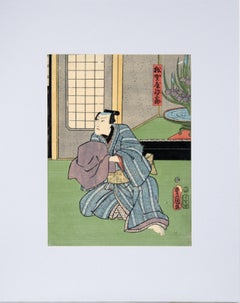
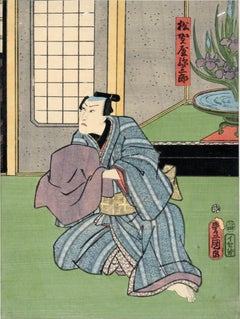
Japanese woodblock print by Toyokuni, depicting a man crouching low to the ground with two samurai swords. Signed and inscribed with characters. On paper.

Category

Late 19th Century Art by Medium: Woodcut

Materials

Woodcut

The Hunt - Original woodcut - Signed

The Hunt - Original woodcut - Signed

By Raoul Dufy

Located in Paris, IDF

Raoul DUFY The Hunt, c. 1910 Original woodcut Signed with the stamp of the artist's studio Numbered on /220 Titled in the board 50.5 x 65.4 cm (c. 19.6 x 25.5 inch) Excellent condi...

Category

1910s Modern Art by Medium: Woodcut

Materials

Woodcut

Cerberus - Woodcut - 1963

Cerberus - Woodcut - 1963

By Salvador Dalí­

Located in Roma, IT

Cerberus - Hell, Plate-6 is a woodcut print realized in 1963 for a series illustrating the Medieval poem of the "Divine Comedy" by Dante Alighieri. Not signed, as issued. Good co...

Category

1960s Surrealist Art by Medium: Woodcut

Materials

Woodcut

The Second Tournament with the Tapestry of Samson and the Lion

The Second Tournament with the Tapestry of Samson and the Lion

By Lucas Cranach the Elder

Located in Chicago, IL

Watermark: Bull's Head with Serpent and Cross (Briquet 1575, dated 1492 by Briquet) Provenance: Martin Folkes (Lugt 1034) Reverend G. L. Blake (Lugt 1172) Reference: Bartsc...

Category

18th Century and Earlier Northern Renaissance Art by Medium: Woodcut

Materials

Woodcut

Green Column/Figure
Green Column/Figure

Green Column/Figure

By Robert Mangold

Located in New York, NY

Associated with the Minimalist art movement of the 1960s, Mangold developed a reductive vocabulary based on geometric forms, monochromatic color, and an emphasis on the flatness of t...

Category

21st Century and Contemporary Art by Medium: Woodcut

Materials

Etching, Woodcut
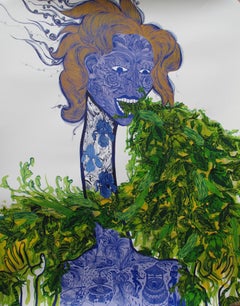
Father Stefan Fridolin, "Schatzbehalter" (Treasury of the True Riches

Father Stefan Fridolin, "Schatzbehalter" (Treasury of the True Riches

Located in Fairlawn, OH

Father Stefan Fridolin, "Schatzbehalter" (Treasury of the True Riches of Salvation): The 30th Figure - Astrological Diagram with Scene of the Nativity Woodcut, 1491 Unsigned, as issued Published by Anton Koberger Diagram has Zodiac signs on outer ring, planets in the lower registers, and Nativity in the center. Condition: Very good for a 15h century woodcut, with the usual slight age stains Sheet size: 11 1/2 x 8 1/4 inches Wogelmut was the teacher of Albrecht Durer and employed young Durer in many project of the last decade of the 15th century. Michel Wolgemut Biography Wolgemut trained with his father Valentin Wolgemut (who died in 1469 or 1470) and is thought to have been an assistant to Hans Pleydenwurff in Nuremberg. He worked with Gabriel Malesskircher in Munich early in 1471, leaving the city after unsuccessfully suing Malesskircher's daughter for breach of contract, claiming she had broken off their engagement. He then returned to his late father's workshop in Nuremberg, which his mother had maintained since Valentin's death. In 1472 he married Pleydenwurff's widow and took over his workshop;[3] her son Wilhelm Pleydenwurff worked as an assistant, and from 1491 a partner, to Wolgemut. Some consider Wilhelm a finer artist than Wolgemut, however he died in January 1494, when he was probably still in his thirties. Wilhelm's oeuvre remains unclear, though works in various media have been attributed to him. Woodcuts Michael Wolgemut, Danse Macabre, 1493 Two large and copiously illustrated books have woodcuts supplied by Wolgemut and his stepson Wilhelm Pleydenwurff; both were printed and published by Germany's largest publisher, the Nuremberger Anton Koberger, who was also Dürer's godfather. The first is the Schatzbehalter der wahren Reichthumer des Heils (1491); the other is the Historia mundi, by Schedel (1493), usually known as the Nuremberg Chronicle...

Category

15th Century and Earlier Old Masters Art by Medium: Woodcut
Materials

Woodcut
Woodcut art for sale on 1stDibs.
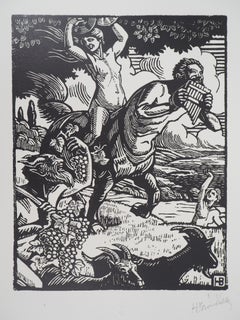
Find a wide variety of authentic Woodcut art available on 1stDibs. While artists have worked in this medium across a range of time periods, art made with this material during the 21st Century is especially popular. If you’re looking to add art created with this material to introduce a provocative pop of color and texture to an otherwise neutral space in your home, the works available on 1stDibs include elements of orange, yellow, purple, blue and other colors. There are many well-known artists whose body of work includes ceramic sculptures. Popular artists on 1stDibs associated with pieces like this include Mino Maccari, Utagawa Kunisada (Toyokuni III), Eric Gill, and Utagawa Hiroshige. Frequently made by artists working in the Modern, Contemporary, all of these pieces for sale are unique and many will draw the attention of guests in your home. Not every interior allows for large Woodcut art, so small editions measuring 0.04 inches across are also available