Art by Medium: Woodcut

4,501 Results
to
275
3,406
508
325
160
252
Overall Width
to
Overall Height
to
70
759
3,250
579
32
108
269
313
155
180
382
154
154
105
36
2,384
558
231
216
98
59
41
41
30
26
9
4
1
1
2,184
1,154
821
703
589
457
383
381
381
367
360
253
223
220
210
175
171
151
142
107
2,913
1,623

Use search to find more

151
60
54
53
45

Use search to find more

Medium: Woodcut
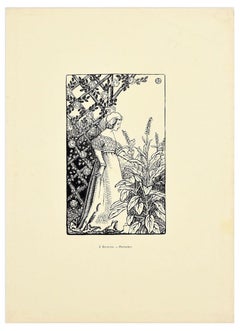
Printemps - Original Woodcut Print by J. Beltrand - 1899

Printemps - Original Woodcut Print by J. Beltrand - 1899

By Jacques Beltrand

Located in Roma, IT

Image dimensions: 15.8 x 9.8 cm. Printemps is an original artwork realized by Jacques Beltrand in 1899. Original woodcut on paper. Inscripted on the lower margin: J. Beltrand - Printemps. Good conditions except for a very small rip on the right upper side. Beautiful and fresh print representing a female figure simbolizing the spring. The young woman is smelling fresh flowers in a garden. The work is a very good example of Art Dèco illustration of that period in which the Art Nouveau was bursting. This beautiful work has been realized by Jacques Beltrand (Paris, 1874 - 1977) a Fresh painter, engraver, xylographer. He collaborated with his father Tony Beltrand from 1890. He soon became a master of the xylograph and book illustrator. He exhibited at the Society of Painters and Engravers of Paris and became a member of the Conseil Supérieur des Beaux-Arts and of the Comité des Tuileries where he exhibited until 1944. Most of his works are preserved in the French Prints Cabinet.

Category

1890s Art Nouveau Art by Medium: Woodcut

Materials

Woodcut

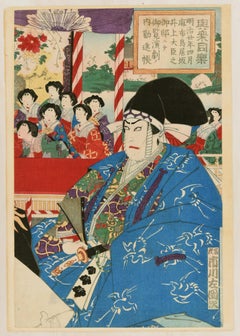
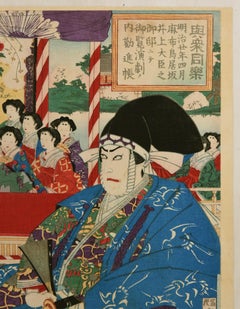
Kabuki Scene from "Kanjincho" -  Woodcut by 1887 ca.

Kabuki Scene from "Kanjincho" - Woodcut by 1887 ca.

By Kunichika Toyohara

Located in Roma, IT

A scene from the important representation of Tenno Kabuki's Play "Kanjincho", held during the Meiji Era in the House of Minister Kaoru Inoue at the presence of the Emperor Akinori Aki and of the Princess Akira Terada. Attributed to the Ukiyo-e Master Kinichika Toyohara (Oshima Yasohachi), specialised in the representations of Kabuki Scenes on Woodcut blocks...

Category

1820s Art by Medium: Woodcut

Materials

Woodcut

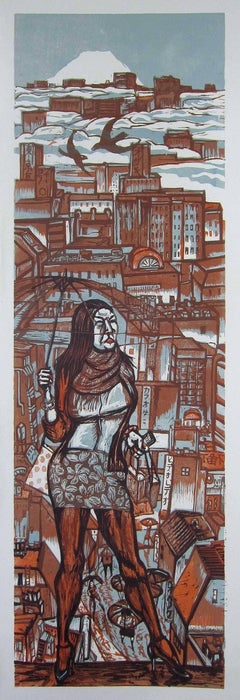
Fuji From Shinjuku, Signed Color Woodcut Print, Edition of 22

Fuji From Shinjuku, Signed Color Woodcut Print, Edition of 22

By Art Hazelwood

Located in Palm Springs, CA

Signed and numbered color woodcut from the edition of 22. Modern woman with umbrella in the Shinjuku ward of Tokyo; Mount Fuji can be seen in the distance above the rooftops Art Hazelwood calls himself artist, instigator and impresario to define the three intertwining areas of his practice. He uses printmaking within a range of political allegory and satire making work from political posters to fine press edition artist books. He has curated and organized a range of exhibitions at venues from museums to immigrant centers. He has worked for over 20 years with homeless rights groups; creating prints, and street posters, and has authored one book and contributed to another on art and homelessness. He has been a regular visiting guest artist at San Quentin State Prison and teaches currently at the San Francisco Art Institute. He organized the San Francisco Poster...

Category

2010s Contemporary Art by Medium: Woodcut

Materials

Woodcut

Kinuta - Original Woodcut Print by Tsukioka Kôgyo - 1922

Kinuta - Original Woodcut Print by Tsukioka Kôgyo - 1922

By Tsukioka Kôgyo

Located in Roma, IT

Kinuta is a wonderful color xylograph on paper, made by the Japanese master Tsukiota Kogyo (1869-1927). The artist's signature is in the red seal printed in the lower right corner "Tsukioka". From the series "One Hundred No Dramas" (Nogaku Hyakuban), published by Matsuki Heikichi (Daikokuya) and published in 1922. Kinuta is the wife of the prince of Ashiya, portrayed while she is ironing the laundry, beating a sort of fan so that the sound brings her wish to her husband in the distant capital. In excellent conditions, except for a little stain on the higher left margin, and some light decolorations, this original print preserves his freshness of line and colors. The texture of the princess's kimono has a precious golden hatch, and the artwork keeps still today the rare beauty and the incredible delicatessen inspired his creation, and in perfect syntony with the Japanese mood. Tsukioka Kōgyo, Sometimes called Sakamaki Kōgyo, (1869 - 1927) was a Japanese artist of the Meiji period, a student and adopted son of Tsukioka Yoshitoshi, and also studied with Ogata Gekkō...

Category

1920s Art by Medium: Woodcut

Materials

Woodcut

Untitled - Woodcut Print by Simon Martin - 1945

Untitled - Woodcut Print by Simon Martin - 1945

Located in Roma, IT

Untitled is a beautiful black and white xylograph on ivory-colored paper, realized in 1945 by the French artist Simon Martin. Signed, dated and numbered in pencil on the lower margi...

Category

1940s Modern Art by Medium: Woodcut

Materials

Woodcut

Schwarzer Stier
Schwarzer Stier

Schwarzer Stier

By Gerhard Marcks

Located in New York, NY

1922 Initialed, titled, and dated in pencil, lower margin Woodcut on cream wove paper with original colophon (Edition of 125) 10 x 15 inches (25.4 x 38.1 cm), sheet This work is ...

Category

1920s Contemporary Art by Medium: Woodcut

Materials

Woodcut

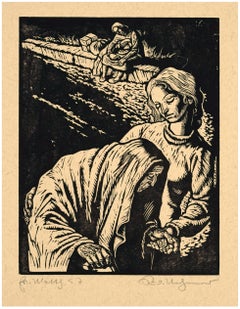
Blessed are the merciful / - The support of care -

Blessed are the merciful / - The support of care -

By Rudolf Nehmer

Located in Berlin, DE

Nehmer, Rudolf (1912-1983), Blessed are the merciful, 1948 Rudolf Nehmer (1912 Bobersberg - 1983 Dresden), Blessed are the merciful, 1948. Woodcut on yellowish wove paper, 18.8 cm x ...

Category

1940s Realist Art by Medium: Woodcut

Materials

Woodcut

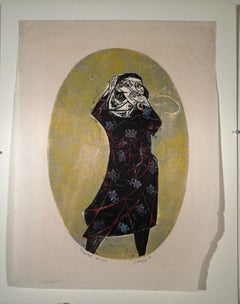
SNAPSHOT

SNAPSHOT

By Antonio Frasconi

Located in Portland, ME

Frasconi, Antonio. SNAPSHOT. Cleveland 165. Woodcut in colors, 1950. Edition of 10. Titled, inscribed "Ed 4/10" and signed and dated in pencil. 22 1/4 x 14 15/16 inches in an oval fo...

Category

1950s Art by Medium: Woodcut

Materials

Woodcut

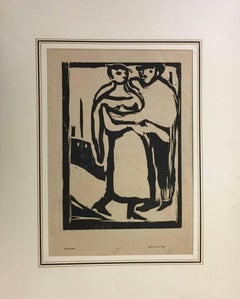
Tiber Woodcut Print, Modern Style, Circa 1910, Unframed, 30x21 cm

Tiber Woodcut Print, Modern Style, Circa 1910, Unframed, 30x21 cm

By Arturo Martini

Located in Roma, IT

Very rare xylograph of the artist, who was considered one of the 20th Century Masters in xylography. Title and signature printed on the lower margin. Very good condition. Passepartout included (cm 55 x 45). The artwork was made in Paris, where he used the name of his mother "Martini de la Valle...

Category

1910s Modern Art by Medium: Woodcut

Materials

Woodcut

Piazza d'Armi, Rome - Original Woodcut Print - 1913

Piazza d'Armi, Rome - Original Woodcut Print - 1913

By Arturo Martini

Located in Roma, IT

Piazza d'Armi is a very rare xylograph realized by Arturo Martini, one of the 20th-century masters in this technique. Title and signature printed on the lower margin. Passepartout included : 45 x 55 cm Image Dimensions : 22.5 x 29 cm Arturo Martini (1889-1947) was an Italian sculptor. He studied ceramics in Faenza and sculpture in Treviso. His copious artistic production is characterized by immediate plasticity, halcyon inventiveness, and thorough mastery of all technical processes: stone, bronze, terracotta...

Category

1910s Modern Art by Medium: Woodcut

Materials

Woodcut

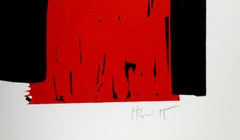
Untitled Abstract Woodcut by Charlie Hewitt

Untitled Abstract Woodcut by Charlie Hewitt

By Charlie Hewitt

Located in Long Island City, NY

Artist: Charlie Hewitt, American (1946 - ) Title: Untitled - M Year: circa 1995 Medium: Woodblock, Signed and Numbered in Pencil Edition: 100 Image Size: 16 x 19.5 inches Size: 20 x ...

Category

1990s Abstract Art by Medium: Woodcut

Materials

Woodcut

The tilt of the day / - Suffering and Love -

The tilt of the day / - Suffering and Love -

By Rudolf Nehmer

Located in Berlin, DE

Rudolf Nehmer (1912 Bobersberg - 1983 Dresden), The tilt of the day, 1948. Woodcut on yellowish wove paper, 14.3 cm x 15 cm (image), 43 cm x 30 cm (sheet size), signed “Rud.[olf] Neh...

Category

1940s Realist Art by Medium: Woodcut

Materials

Woodcut

The Reconciliation / - Togetherness -

The Reconciliation / - Togetherness -

By Rudolf Nehmer

Located in Berlin, DE

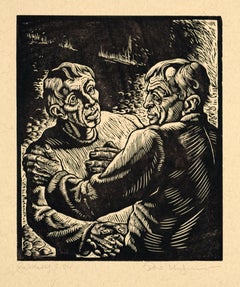
Rudolf Nehmer (1912 Bobersberg - 1983 Dresden), The Reconciliation, 1948. Woodcut on yellowish wove paper, 20 cm x 15 cm (image), 45 cm x 30 cm (sheet size), signed “Rud.[olf] Nehmer...

Category

1940s Realist Art by Medium: Woodcut

Materials

Woodcut

Man with Cow, Folk Art Woodcut Print by Andre Derain

Man with Cow, Folk Art Woodcut Print by Andre Derain

By André Derain

Located in Long Island City, NY

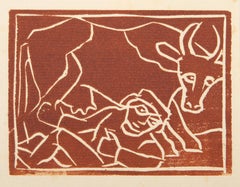
Andre Derain, French (1880 - 1954) - Man with Cow, Medium: Woodblock on laid paper, Image Size: 2.75 x 3.75 inches, Size: 3.75 x 5 in. (9.53 x 12.7 cm), Description: From the collect...

Category

Mid-20th Century Folk Art Art by Medium: Woodcut

Materials

Woodcut

MORNING SUNLIGHT

MORNING SUNLIGHT

Located in Portland, ME

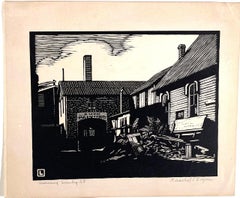
Logan, Herschel C. (American, 1901-1987) MORNING SUNLIGHT. woodcut, not dated. Initialed in the block and titled and signed in pencil. 5 1/2 x 7 5/8 inches, (image) 7 1/4 x 8 3/4 inc...

Category

Mid-20th Century Art by Medium: Woodcut

Materials

Woodcut

Donald Traver 'The Philip Feldman Gallery' 2000- Signed Vintage

Donald Traver 'The Philip Feldman Gallery' 2000- Signed Vintage

Located in Brooklyn, NY

This is an original exhibition poster for Donald Traver issued in conjunction with his 2000 show at the Philip Feldman Gallery, a respected venue in contemporary and fine art circles...

Category

Early 2000s Contemporary Art by Medium: Woodcut

Materials

Woodcut

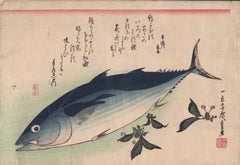
Utagawa Hiroshige (1797–1858) - Bonito and Saxifrage

Utagawa Hiroshige (1797–1858) - Bonito and Saxifrage

By Utagawa Hiroshige

Located in BRUCE, ACT

Utagawa Hiroshige (1797–1858) Bonito and Saxifrage (魚尽くし 鰹), from a series known as Large Fish Size: Oban, 38 * 26.3 cm Edo period A pinhole on the left, otherwise excellent i...

Category

Mid-19th Century Art by Medium: Woodcut

Materials

Woodcut

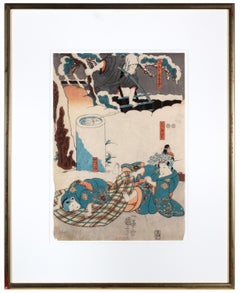
Tokijiro, Midori, and Katsumi Color Woodcut Print, Framed, 1851

Tokijiro, Midori, and Katsumi Color Woodcut Print, Framed, 1851

By Kuniyoshi

Located in Milwaukee, WI

"Tokijiro, Midori, and Katsumi" is an original Japanese color woodcut by the artist Kuniyoshi. It was created in 1851 and depicts a scene from the play "Akegarasu Hana no Nureginu" (...

Category

1850s Art by Medium: Woodcut

Materials

Woodcut

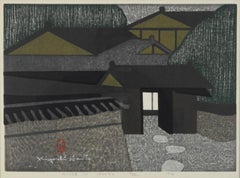
House in Kyoto
House in Kyoto

House in Kyoto

By Kiyoshi Saitō

Located in Fairlawn, OH

House in Kyoto Color woodcut, 1963 Signed in white brush bottom left of image, along with the artist's red stamp (see photo) Titled, dated and numbered in pencil bottom margin (see p...

Category

1960s Contemporary Art by Medium: Woodcut

Materials

Woodcut

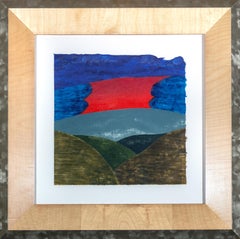
Red Cloud
Red Cloud

Red Cloud

By Charles Garabedian

Located in Long Island City, NY

A woodcut print by Charles Garabedian from 1994. A contemporary folk art piece with symbolism reminiscent of Asian culture. Framed in light wood frame, hand signed on lower right. Can be hung horizontally or vertically. Artist: Charles Garabedian, American (1923 - ) Title: Red Cloud...

Category

1990s Contemporary Art by Medium: Woodcut

Materials

Woodcut

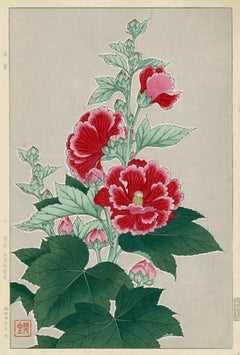
Hollyhocks
Hollyhocks

Hollyhocks

Located in Fairlawn, OH

Hollyhocks Color woodcut, 1953 Signed with the artist's stamp lower left Printer: Niimi Carver: Nagashima An early printing Condition: Excellent Image size: 15 1/2 x 10 3/8 inches "...

Category

1950s Modern Art by Medium: Woodcut

Materials

Woodcut

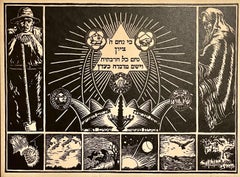
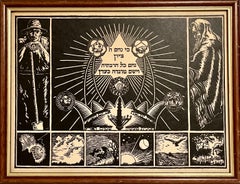
Rare 1922 German Jewish Judaica Zion Woodcut Woodblock Print Hermann Fechenbach

Rare 1922 German Jewish Judaica Zion Woodcut Woodblock Print Hermann Fechenbach

By Hermann Israel Fechenbach

Located in Surfside, FL

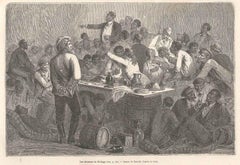
Title: Zion Subject: Various biblical images depicting Creation and prayer 1922 Medium: woodcut Frame: 14" x 18" Image: 12.5" x 16.75" Provenance: owned and signed verso by Peter Keil. Central panel shows the Jewish star over a crown, with inscription in Hebrew: "When God comforts Zion, He will comfort all its ruins and make its deserts look like Eden," and "You have sanctified the seventh day, the goal of creation of Heaven and Earth." This is flanked by a Palestinian farmer pioneer on the left and a Jew praying on the right. The lower tier shows six vignettes of the days of creation from Genesis. Hermann Fechenbach was born in 1897 in Württemberg, Germany. He grew up in Bad Mergentheim where his parents had an inn, which served as a meeting place for the local Jewish community. He left school early and through family connections with clothing retailers received training in window dressing. His skill with brush writing was quickly recognised by a big firm in Dortmund where he was responsible for the displays in 10 large windows. He received his conscription papers in 1916 and recalls “being as patriotic as any other fool”. In August 1917 he was involved in a grenade attack in which he was the sole survivor. With serious injuries to both legs he struggled to safety and was eventually transported to a front line “slaughterhouse” where the first of a series of amputations was performed which led to the loss of his left leg. As a result of his injuries his father dropped his opposition to him becoming an artist. His formal art education started in 1918 with training at a Stuttgart handcraft school for invalids. He attended the Academies in Stuttgart and Munich to learn painting and restoration for 3 years. He was influenced at this time by Max Liebermann. He has been compared to Kathe Kollwitz and was a contemporary of Jakob Steinhardt and hermann Struck. In 1923 he went to Florence for a year. While in Florence he started to produce a series of miniature wood engravings to illustrate the stories of Genesis. This was followed by periods in Pisa, Venice, Vienna and Amsterdam. In 1924 he returned to Stuttgart to paint in the contemporary style “Die Neue Sachlichkeit”. (The New Objectivity was a movement in German art that arose during the 1920s Weimar republic as a reaction against expressionism. The term was coined by Gustav Friedrich Hartlaub, the director of the Kunsthalle in Mannheim, who used it as the title of an art exhibition staged in 1925 to showcase artists who were working in a post-expressionist spirit. These artists—who included Max Beckmann, Otto Dix, George Grosz, Christian Schad, Rudolf Schlichter and Jeanne Mammen) Every spring and autumn he exhibited at the “Kunstgebit” which served as the showcase for all serious artists of the period. His professional status “Kunstmaler und Grafiker” was recognised by Berlin in 1926. Practically all his work from this period was sold following exhibition. In 1926 he collaborated with an architect friend to build a bungalow in Hohenheim, a non-Jewish area and a suburb of Stuttgart. Hermann alternately lived in his country bungalow and his town studio, producing portraits for sale or barter and wood engravings for his own pleasure. In 1930 he married a non-Jewish professional photographer – Greta Batze. They had a studio in Stuttgart, which was used to teach art to a group of 12 students. In 1933 the Nazi influence removed his name from the official state register together with the right to exhibit. By spending most of his time in his bungalow out of the Jewish quarter the Fechenbachs escaped being registered by the Nazis for some years. They were ostracised and abused by their non-Jewish neighbours. Hermann made weekly visits to friends in town to teach them the practical skills they would need assuming they were to escape from Germany. His energies were directed towards protection and survival. Ultimately the Nazi persecution forced the Fechenbachs to flee their homeland. They moved to Palestine for 3 months in 1938, but found the political and physical environment unsustainable. Greta arrived in England penniless in January 1939 to work as a domestic servant and to find a guarantor for her husband. Hermann arrived in May 1939. They moved to Blackheath a few months later. Hermann resumed his painting and engraving as a means of earning a living. He raised enough money to get his parents out of Germany to join his brothers in Argentina but was unable to save his twin sister Rosa who died in a Nazi concentration camp. In 1940 Hermann was interned in Bury as a suspect alien. He protested about his treatment by starting a hunger strike. Because of his persistence he was moved to a prison in Liverpool. From Liverpool he was moved to the Hutchinson Camp in the Isle of Man with fellow artist Kurt Schwitters. Arrangements were made for Greta to be accommodated near by. While interned he commenced work on “Refugee Impressions”, a series of linocut prints (no wood was available). In 1941 when released from internment the Fechenbachs came under the sponsorship of Dr. Bela Horovitz, the Austrian art publisher who in turn made an introduction to Professor Tancred Borenius. They were offered lodgings with a family in Oxford. Hermann had his first public exhibition for many years in a small gallery in Oxford in 1942. A second exhibition of oils, pencil drawings, coloured linocut and woodblock prints held later in the year was opened by the mayor of Oxford and critically acclaimed. In 1944 the first London exhibition took place at the Anglo-Palestinian club in Piccadilly. There were two exhibitions at the Ben Uri Art gallery during this period. In 1948 a second exhibition at the Anglo Palestinian club was inaugurated by a member of the Rothschild family and several members of Parliament. This was a great success. In 1944 the Fechenbachs moved to a top floor studio flat in Colet Gardens. Open exhibitions were held each Spring at the Embankment from 1946 to 1951. Movietone News produced a short feature on the artist, which was shown in cinemas in England and Germany. In 1969 he published the Genesis story in a hard back volume containing 137 prints. He started to research the fate of the entire Jewish community of Bad Mergentheim during the period of the second world war, liaising with historian Dr. Paul Sauer and Professor Max Miller, historian and theologian. In 1972 Kohlhammer published his partly autobiographical book “The last Jews of Mergentheim”. He exhibited at the Anglo-Palestinian Club & the Ben Uri Gallery in the 1940s. His works only came to prominence during the last year of his life when he exhibited at Blond Fine Art. Peter Keil part of the Junge Wilde. In 1978, the Junge Wilde painting style arose in the German-speaking world in opposition to established avant garde, minimal art and conceptual art. It was linked to the similar Transavanguardia movement in Italy, USA (neo-expressionism) and France (Figuration Libre). They were also known as the Neue Wilde. Artists included; Austria: Siegfried Anzinger, Erwin Bohatsch, Herbert Brandl, Gunter Damisch, Hubert Scheibl, Hubert Schmalix...

Category

1980s Impressionist Art by Medium: Woodcut
Materials

Woodcut

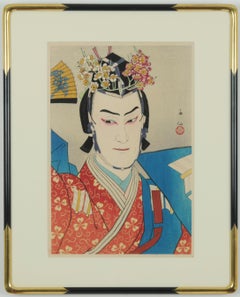
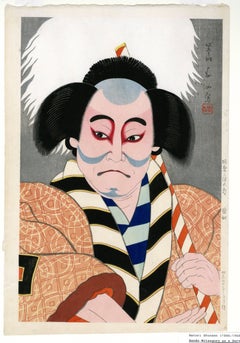
Bando Mitsugoro as a Servant with a Sword

Bando Mitsugoro as a Servant with a Sword

By Natori Shunsen

Located in Fairlawn, OH

Bando Mitsugoro as a Servant with a Sword Color woodcut, 1952 From The Series Shunsen Nigao-E Shu (Shunsen Portraits), Six Woodblock Prints Publisher: Watanabe Excellent condition Im...

Category

1950s Other Art Style Art by Medium: Woodcut

Materials

Woodcut

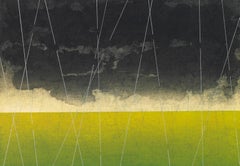
Keiji Shinohara, Accelerondo, Ukiyo-e woodcut print landscape, 2005

Keiji Shinohara, Accelerondo, Ukiyo-e woodcut print landscape, 2005

By Keiji Shinohara

Located in New York, NY

Keiji Shinohara was born and raised in Osaka, Japan. After 10 years as an apprentice to the renowned Keiichiro Uesugi in Kyoto, he became a Master Printmaker and moved to the United ...

Category

21st Century and Contemporary Abstract Art by Medium: Woodcut

Materials

Paper, Woodcut

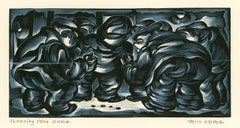
Floating Crap Game
Floating Crap Game

Floating Crap Game

By John DePol

Located in Myrtle Beach, SC

John DePol, 'Floating Crap Game, chiaroscuro wood engraving, 1958, edition 145. Signed, titled, numbered 'Ed. 145' and dated '3/1958'. Signed in the block, lower right. A fine, rich ...

Category

Mid-20th Century American Modern Art by Medium: Woodcut

Materials

Woodcut

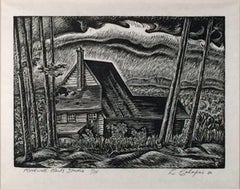
ROCKWELL KENT'S STUDIO

ROCKWELL KENT'S STUDIO

By Letterio Calapai

Located in Portland, ME

Calapai, Letterio. ROCKWELL KENT'S STUDIO. Wood engraving, 1980. Titled, numbered 7/75 and signed in pencil. 6 x 8 7/16 inches, 153 x 216 mm. In very good condition. Framed.

Category

1980s American Realist Art by Medium: Woodcut

Materials

Engraving, Woodcut

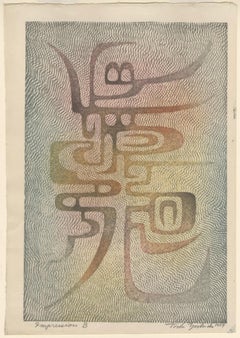
Impression B
Impression B

Impression B

By Toshi Yoshida 1

Located in Fairlawn, OH

Impression B Color woodcut, 1959 Signed and dated lower right (see photo) Titled lower left (see photo) A trial proof, prior to the edition of 100, signed and numbered Condition: Excellent Image size: 14 1/2 x 9 3/4 inches Provenance: Estate of the artist by decent to his heirs "Printmaker and painter Toshi Yoshida was born on July 25, 1911, into the respected Yoshida family of artists of Tokyo, Japan. Father Hiroshi was a celebrated landscape painter and printmaker, and mother Fujio established herself as the first female Yoshida artist as well as an Abstract artist later in her career. Younger brother Hodaka was an Abstract printmaker whose style, completely separate from his family's historic traditional bent, later influenced Toshi. Hodaka's wife Chizuko would become a pioneering female Japanese artist whose own exploration of Surrealism and Abstraction challenged the status quo. Toshi, however, as the eldest sibling, was expected to follow in his father's footsteps, and from an early age he was trained by Hiroshi in his studio. Unable to attend formal schooling due to the polio-induced paralyzation of his leg, Toshi would instead help with his family's printmaking studio and go on sketching trips with Hiroshi. As he got older, these trips would include India and Southeast Asia, working from morning to night taking night trains to get from one destination to another. Among Toshi's favorite subjects were the animals he discovered along the way. However, these trips ended as Japan entered military dictatorship in the mid 1930s, and artists whose work showed signs of Western influence were barred from exhibiting. At this time, Toshi left Japan for China and Korea, where he would remain for the duration of the war. He stuck to patriotic themes to remain in business, and after the end of World War II, as Japan struggled to recover from wartime economic depression, he earned his living creating traditional Japanese woodcut landscapes...

Category

1950s Abstract Art by Medium: Woodcut

Materials

Woodcut

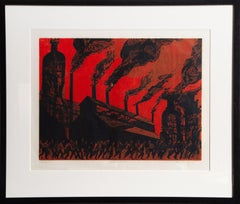
Shift Change, Social Realist Woodblock Print by Mike Goscinsky

Shift Change, Social Realist Woodblock Print by Mike Goscinsky

Located in Long Island City, NY

Shift Change Mike Goscinsky, American (1933–2021) Woodblock on thin wove paper, signed, titled and numbered in pencil Edition of 15/75 Image Size: 14 x 19 inches Size: 22 x 26.5 in. ...

Category

1990s American Modern Art by Medium: Woodcut

Materials

Woodcut

Guy Levis-Mano, Modern Woodcut by Valentine Hugo

Guy Levis-Mano, Modern Woodcut by Valentine Hugo

By Valentine Hugo

Located in Long Island City, NY

Valentine Hugo, French (1887 -1968) - Guy Levis-Mano, Year: 1975, Medium: Woodcut on laid paper, signed in the plate, Edition: 255, Image Size: 5 x 3 inches, Size: 10 x 7.5 in. ...

Category

1970s Modern Art by Medium: Woodcut

Materials

Woodcut

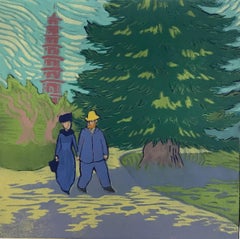
Once upon a time in London, Afternoon, Woodcut, Vincent Van Gogh, Park, Pagoda

Once upon a time in London, Afternoon, Woodcut, Vincent Van Gogh, Park, Pagoda

By Mychael Barratt

Located in Deddington, GB

A limited edition woodcut on paper print by Mychael Barratt of Vincent Van Gogh with a lady on a walk in london, passing a grand tree and Great Pagoda. The print is compromised of blue, green, purple, pink and yellow tones Additional information: Mychael Barratt  Once upon a time in London, Afternoon [2023] Woodcut on paper Signed and titled in pencil Numbered from the edition of 100  Please note that insitu images are purely an indication of how a piece may look Please note sheet sizes may differ. Image size: Height: 28cm Width: 28cm Complete size of sheet: Height: 39.5cm Width: 38.3cm Depth: 0.1cm ARTIST BIO: Mychael Barratt was born in Toronto, Canada, however, considers himself to be a Londoner since arriving for what was supposed to be a two-week stay thirty years ago. He is a narrative artist whose work is steeped in imagery relating to art history, literature, theatre and everything else that overfills his bookshelves. He was an artist in residence for Shakespeare’s Globe Theatre...

Category

2010s Contemporary Art by Medium: Woodcut

Materials

Paper, Woodcut

Nude and Swan
Nude and Swan

Nude and Swan

Located in New York, NY

Woodcut on paper, 1921. Signed by the artist, numbered 13/24, dated, titled "Lead'r" and dedicated "To Rose - Nat - be careful" in pencil, lower margin. The dedicatees named by E...

Category

1920s American Modern Art by Medium: Woodcut

Materials

Woodcut

L'Amour La Danse, Impressionist Woodcut by Raoul Dufy

L'Amour La Danse, Impressionist Woodcut by Raoul Dufy

By Raoul Dufy

Located in Long Island City, NY

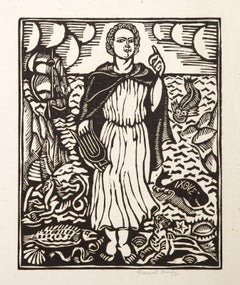
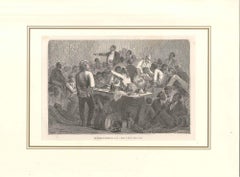
Raoul Dufy, French (1877 - 1953) - L'Amour La Danse, Year: 1915, Medium: Woodcut on laid paper, signed in pencil, Image Size: 10 x 8 inches, Size: 14.25 x 13.5 in. (36.2 x 34.29 cm...

Category

1910s Impressionist Art by Medium: Woodcut
Materials

Woodcut

Salute to 1965, Modern Lithograph with Woodblock and Intaglio

Salute to 1965, Modern Lithograph with Woodblock and Intaglio

Located in Long Island City, NY

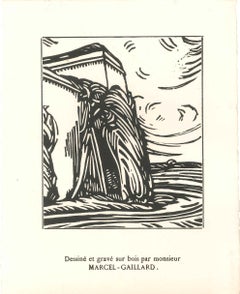
June Mary Ann Hildebrand - Salute to 1965, Year: 1965, Medium: Lithograph, Woodblock and Intaglio on Japon, signed, titled and numbered in pencil, Edition: 5/8, Image Size: 22 x ...

Category

1960s Modern Art by Medium: Woodcut
Materials

Lithograph, Woodcut

1967 Woodcut Signed Limited Edition

1967 Woodcut Signed Limited Edition

Located in Rochester Hills, MI

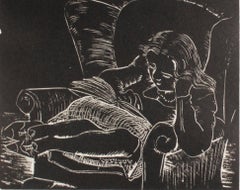
Michael Rothenstein RIP - 1967 Print - woodcut   25'' x 30''inches Edition: signed in pencil and marked sixteen / thirty five Michael Rothenstein (1908-1993) Painter of figurative a...

Category

1960s Modern Art by Medium: Woodcut
Materials

Woodcut

Buncho -- Yamashita Kyonosuke in a Back-mask Dance(Reprint)

Buncho -- Yamashita Kyonosuke in a Back-mask Dance(Reprint)

Located in BRUCE, ACT

Buncho (active 1765 - 1792) Yamashita Kyonosuke in a Back-mask Dance(Reprint) Reproduction C.1960 Sheet size 31 x 14 cm Intriguing kabuki portrait of the actor Yamashita Kyonosuke p...

Category

1960s Art by Medium: Woodcut
Materials

Woodcut
Woodcut art for sale on 1stDibs.
Find a wide variety of authentic Woodcut art available on 1stDibs. While artists have worked in this medium across a range of time periods, art made with this material during the 21st Century is especially popular. If you’re looking to add art created with this material to introduce a provocative pop of color and texture to an otherwise neutral space in your home, the works available on 1stDibs include elements of orange, yellow, purple, blue and other colors. There are many well-known artists whose body of work includes ceramic sculptures. Popular artists on 1stDibs associated with pieces like this include Mino Maccari, Utagawa Kunisada (Toyokuni III), Eric Gill, and Utagawa Hiroshige. Frequently made by artists working in the Modern, Contemporary, all of these pieces for sale are unique and many will draw the attention of guests in your home. Not every interior allows for large Woodcut art, so small editions measuring 0.04 inches across are also available