By Hans Burkhardt
Located in Los Angeles, CA
Hans Burkhardt (1904-1994)
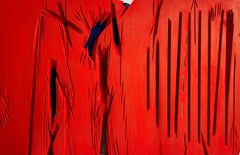
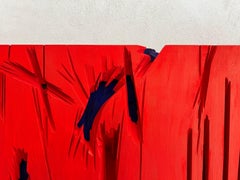
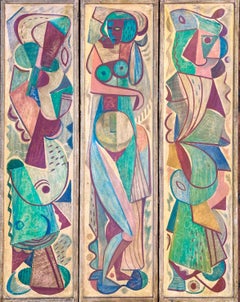
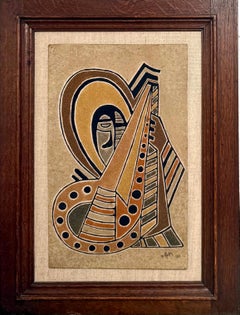
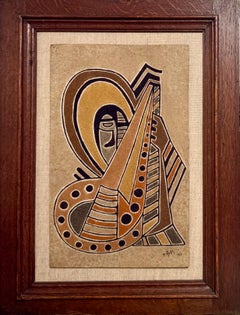
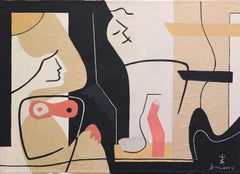
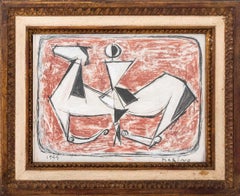
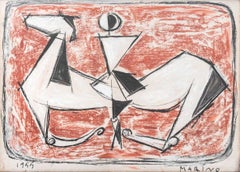
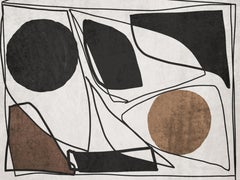
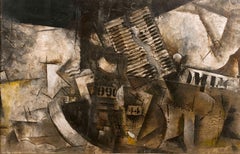
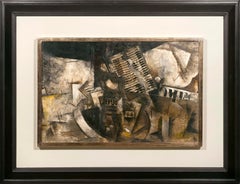
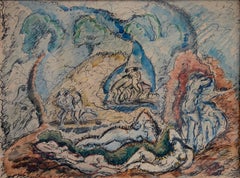
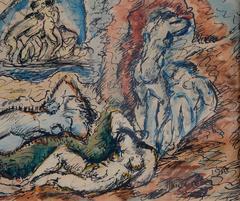
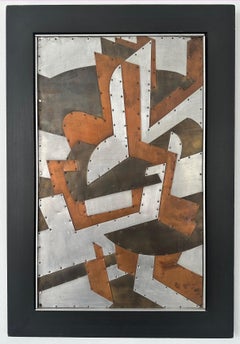
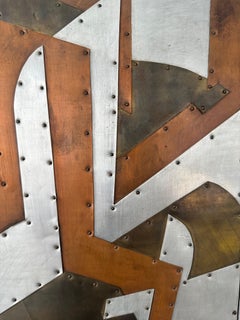
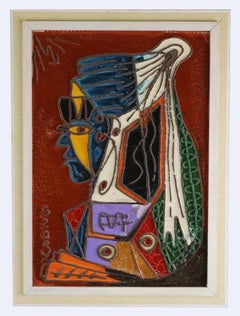
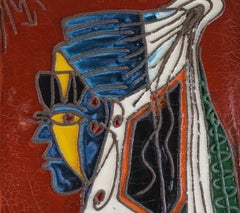
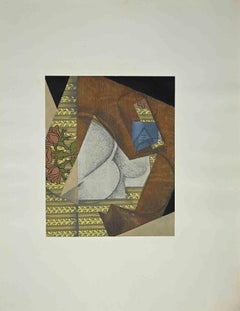
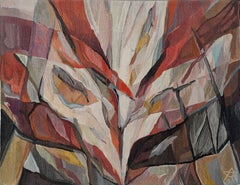
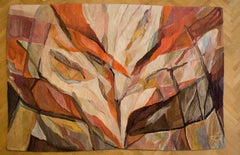
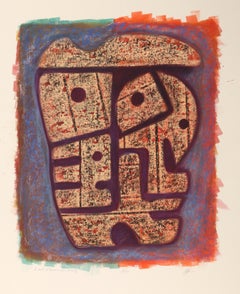
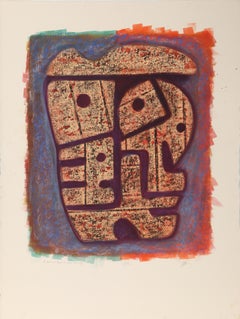
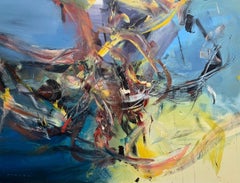
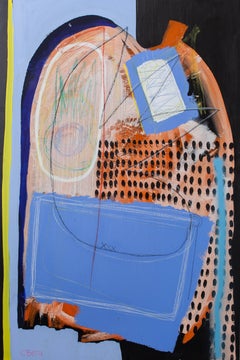
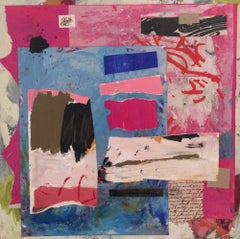
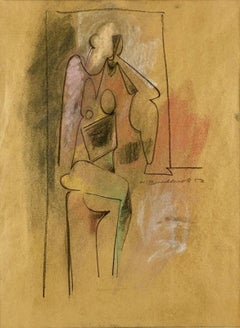
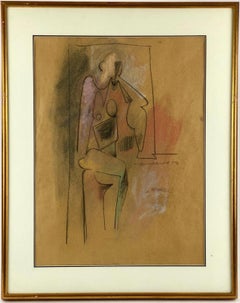
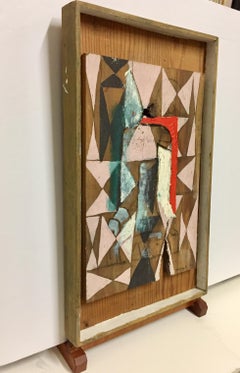
An extremely prolific artist, Hans Burkhardt remained relatively silent in the Los Angeles art world, choosing to let his artworks express his feelings and thoughts. A forerunner of abstracted, expressionist painting, particularly amid the more conservative Los Angeles figurative painters in the late 1930s, Burkhardt nonetheless based his experimentation on a solid artistic foundation. The order and balance in Burkhardt's compositions derive from his training as a draughtsman and his belief in the importance of underpinning painting with strong drawing skills. Following the advice of his mentor, Arshile Gorky, who had often directed the young artist, "painting is not more than drawing with paint," Burkhardt always created sketches in pencil, pastel, or ink before beginning a canvas in oil. As a result, his compositions exhibit a strong sense of structure and design, even in their abstraction.
Burkhardt drew motifs from nature, internalizing them and creating a highly personal, abstract realization of the scene or event. In a 1974 interview for the Archives of American Art, the artist explained that for him paintings evolve out of emotions and ideas—a process not unlike the Surrealist's conception of the genesis of creative thought. Burkhardt recognized associations to things and people in nature. In his canvases, objects became symbols (for example, two nails transformed into lovers under a moonlit sky.) The symbolic and expressive content of these motifs derives from the artist's deeply felt humanism and compassion.
Born in 1904, in Basel, Switzerland, Burkhardt grew up in an orphanage. In 1924 he wrote to his father, who had immigrated to the U.S., and that same year he immigrated to America, finding work in the furniture factory where his father was employed. During the evenings Burkhardt studied art at Cooper Union. After a year at Cooper Union, in 1928, Burkhardt left to attend the new Grand Central School of Art, where he met Arshile Gorky. At this time, Gorky only had four pupils, one of whom was Willem de Kooning. Burkhardt and his mentor Gorky formed a fast friendship and the two later shared a studio for almost a decade. To support himself and his family during the lean Depression years, Burkhardt continued to work as a furniture finisher. After a nasty battle with his ex-wife, Burkhardt relocated to Southern California in 1937. There he worked for a defense plant during World War II and for MGM studios.
During this time, Burkhardt's thoughts focused heavily on the ongoing war and he created numerous anti-war paintings and works dealing with the horror of the concentration camps, which might have reminded Burkhardt of his time spent as youth in the city ward. Throughout his career, the artist's commitment to decrying the evils of war continued, with paintings devoted to the Korean War, Vietnam, and even 1991's Desert Storm. Frequently missiles and bombs, bloodied bodies, and ravaged landscapes referenced the "collateral damage" that results from war. Burkhardt's numerous anti-war paintings are among his most critically celebrated works. However, following the war, the artist's outlook changed, and a new optimism engendered paintings that visualized the "dream of one world."
These years also brought Burkhardt considerable acclaim. Despite the lack of a cohesive artistic community (the artist lamented the close knit art...
Category
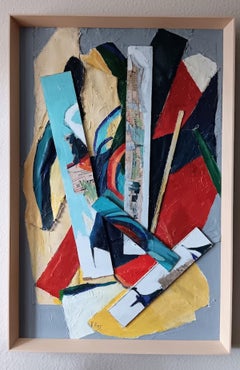
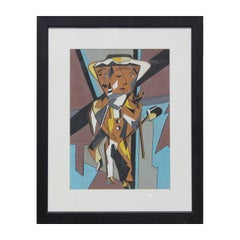
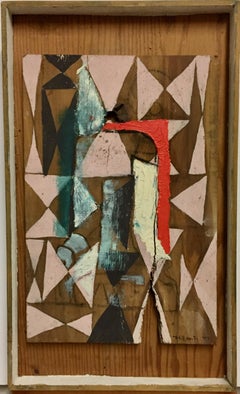
1950s Cubist Mixed Media