Chalk Paintings

to
98
108
48
29
30
38
Overall Width
to
Overall Height
to
7
68
76
102
2
7
4
1
2
4
3
6
6
5
49
41
29
7
6
5
3
3
1
125
111
16
130
107
82
61
44
34
21
20
18
16
14
12
11
8
5
5
4
4
4
3
805
156,037
94,916
72,101
68,274
9
6
4
4
4
65
22
148
72
Medium: Chalk
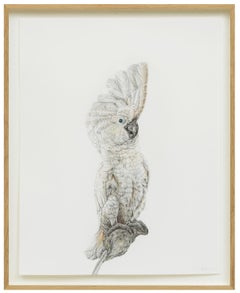
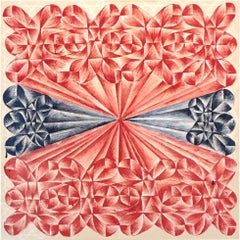
Schrödingers Bird 15

Schrödingers Bird 15

Located in Berlin, DE

Scratching, pastel chalk. Signed and dated 'S. Schüffler 2021' lower right. From the series 'An Experiment on a Bird'. On white Mi-Teintes paper, Canson.

Category

21st Century and Contemporary Contemporary Chalk Paintings

Materials

Chalk, Pastel

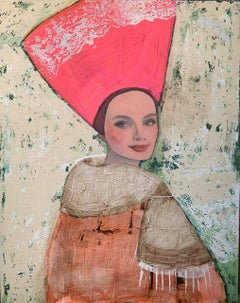
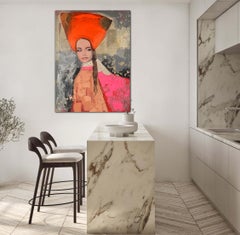
Woman in Pink - Bright Colour Portrait, Women, Texture, Face

Woman in Pink - Bright Colour Portrait, Women, Texture, Face

Located in London, GB

Nicolle was born in Zimbabwe (Rhodesia as it was then) and grew up in Africa and then travelled the world for some years before settling in the Uk. “My love of colour stems from my ...

Category

2010s Contemporary Chalk Paintings

Materials

Canvas, Chalk, Acrylic

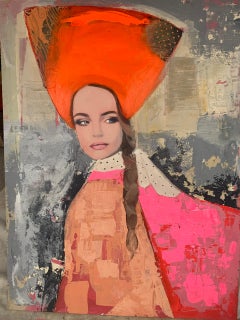
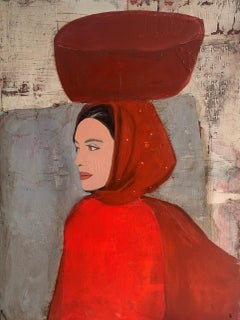
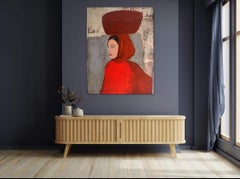
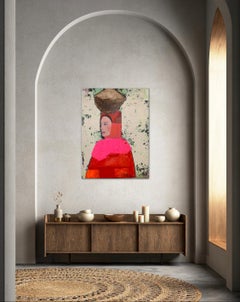
The Pot Carrier - Bright Colour Portrait, Women, Texture, Face

The Pot Carrier - Bright Colour Portrait, Women, Texture, Face

Located in London, GB

Nicolle was born in Zimbabwe (Rhodesia as it was then) and grew up in Africa and then travelled the world for some years before settling in the Uk. “My love of colour stems from my ...

Category

2010s Contemporary Chalk Paintings

Materials

Canvas, Chalk, Acrylic

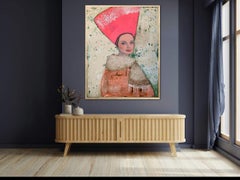
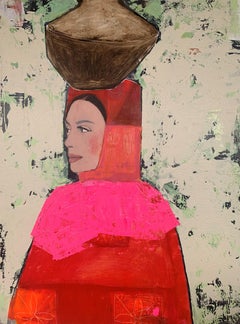
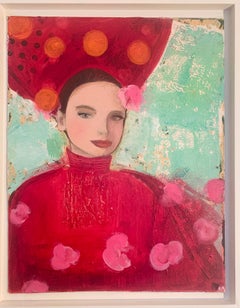
Lady in Red with Flowers

Lady in Red with Flowers

Located in London, GB

Framed Size: 70 x 88 cm Unframed Size: 60 x 77 cm Nicolle was born in Zimbabwe (Rhodesia as it was then) and grew up in Africa and then travelled the world for some years before set...

Category

2010s Contemporary Chalk Paintings

Materials

Canvas, Chalk, Acrylic

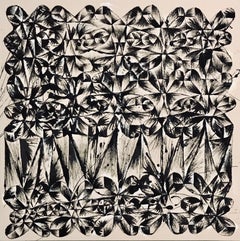
Oblivion Of Flowers

Oblivion Of Flowers

By Kunihiko Maehara

Located in Fairfield, CT

When a simple vertical line finds itself in the midst of accidental organic chaos, a sense of directionality and stability is introduced. The line itself can act as a tool used to di...

Category

21st Century and Contemporary Abstract Chalk Paintings

Materials

Enamel

Petrichor - Smell of the Rain

Petrichor - Smell of the Rain

By Kunihiko Maehara

Located in Fairfield, CT

When a simple vertical line finds itself in the midst of accidental organic chaos, a sense of directionality and stability is introduced. The line itself can act as a tool used to di...

Category

21st Century and Contemporary Abstract Chalk Paintings

Materials

Enamel

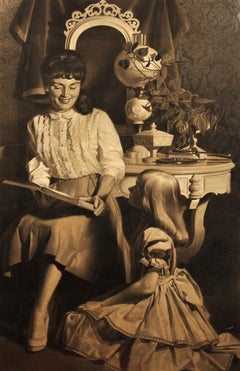
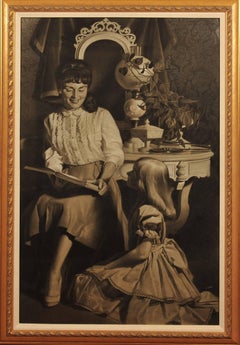
The Mother's Story
The Mother's Story

The Mother's Story

By Carol Jones

Located in Fort Washington, PA

Image of a mother reading to her child.

Category

20th Century Other Art Style Chalk Paintings

Materials

Chalk, Charcoal, Paper

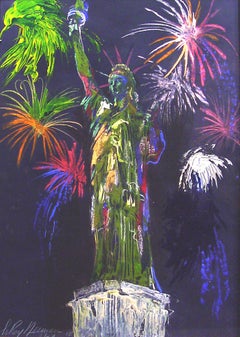
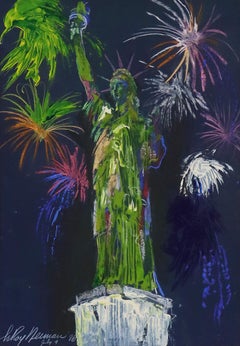
Statue of Liberty
Statue of Liberty

Statue of Liberty

By LeRoy Neiman

Located in Missouri, MO

LeRoy Neiman (American, 1921-2012) Statue of Liberty, July 4, 1986 Signed and Dated Lower Left Acrylic Paint and Chalk 24 x 16 inches 37.5 x 29.25 inches with frame Mr. Neiman's ki...

Category

1980s American Modern Chalk Paintings

Materials

Chalk, Acrylic

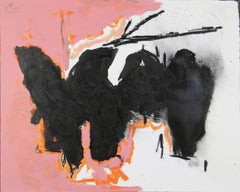
Elegy to the Spanish Republic No. 163

Elegy to the Spanish Republic No. 163

By Robert Motherwell

Located in London, GB

Robert Motherwell Elegy to the Spanish Republic No. 163 1979-82 Acrylic and Conte crayon on board 59.1 x 74.3 cms (23 1/4 x 29 1/4 ins) RM14159 P1061 Elegy to the Spanish Republic No. 163 is a fine example of Robert Motherwell’s most acclaimed body of work, the Elegies to the Spanish Republic. As important as Barnett Newman’s zips and Jackson Pollock’s drips for their revolutionary contribution to art history, the Elegies are Motherwell’s most extensive series; he executed over 140 paintings using this motif, beginning in 1948 until his death in 1991. Nearly every major museum collection, including the Metropolitan Museum of Art, New York, Museum of Modern Art, New York, Solomon R. Guggenheim Museum of Art, New York, and San Francisco Museum of Modern Art, have in their permanent collection an Elegy to the Spanish Republic. Intended to be read as a lamentation or funeral song after the Spanish Civil War (1936-39), Motherwell’s Elegies to the Spanish Republic are a lyrical and poetic memorial to the immense human loss and suffering endured during these harrowing years. Motherwell was a young student of twenty-one when the horrors of the Spanish Civil War commenced in 1936, and he would later reflect that it was the most “moving political event” of his youth. In 1939, the Spanish Civil War concluded with the fall of Spain’s democratically elected socialist government, which was deposed by a fascist coalition led by dictator Francisco Franco, whose dictatorship would persist until 1975. In 1948 nearly a decade after the end of the Spanish Civil War, Motherwell created his first Elegy with a small drawing to accompany a poem by Harold Rosenberg. Over the next four decades, Motherwell would pursue this same structural and thematic motif relentlessly; taken as a whole, the Elegies confirm the resounding impact that this war had on the young artist, and indeed stand as a powerful monument to the overwhelming loss during and in the aftermath of the Spanish Civil War. Motherwell stated: “I meant the word 'elegy' in the title. I was twenty-one in 1936, when the Spanish Civil War began…The Spanish Civil War was even more to my generation than Vietnam was to be thirty years later to its generation, and should not be forgotten, even though la guerre est finie.” (David Craven in Joan M...

Category

1980s Abstract Expressionist Chalk Paintings

Materials

Conté, Acrylic, Board

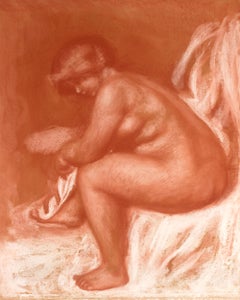
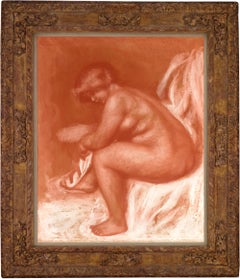
Après le bain (After the bath)

Après le bain (After the bath)

By Pierre Auguste Renoir

Located in New Orleans, LA

For Pierre-Auguste Renoir, Impressionism's pre-eminent figure painter, depicting the nude was an exercise in bringing the canvas to life. He once said, “I look at a nude, I see myriads of minuscule shades. I have to find those which will make the flesh on my canvas come to life and resonate.” This compelling portrait by Renoir entitled Après le bain presents the nude figure of a woman in a serene, private moment, absorbed in the task of drying herself after a bath. The artist’s mastery of light and shading is incredible, achieving a sense of vitality in this otherwise ordinary scene. Renoir is celebrated for his figural work, especially his Rubenesque female nudes, however, it was not until the artist was in his forties that he depicted the nude with any frequency. In 1881, Renoir traveled to Italy, where he studied the works of the Renaissance masters and the ancient art of Pompeii and Rome. Upon his return to France, the nude became his favored subject, and he used the motif to combine the spontaneity of Impressionism with the solid modeling of classical painting. Renoir’s medium here, sanguine, a reddish-brown chalk, was used extensively in the Renaissance by Leonardo (who employed it in his sketches for the Last Supper), Michelangelo and Raphael. Its warm hue lends itself well to depicting flesh, and the chalk drawing allows for a greater focus on line, form and texture in a departure from the aspects of color and light that so often preoccupied the Impressionists. Après le bain conveys the impression of arrested motion with perfect naturalness, deftly capturing the moment before the elegant lines of the sitter's form change position. The sitter is almost certainly Gabrielle Renard, the nanny to Renoir’s children and a frequent model for the artist. Gabrielle was the cousin of Renoir’s wife, Aline, and came to Montmartre to work for the family at the age of 16. She developed a strong bond with the family and became a favorite subject for Renoir, appearing in several of his most important works, including his 1911 Gabrielle with a Rose (Musée d'Orsay). When Renoir began to suffer from severe rheumatoid arthritis that would eventually leave him unable to walk and scarcely able to grasp a paintbrush, it was Gabrielle that would assist the artist by positioning the paintbrush between his crippled fingers. Born in Limoges, France in 1841, Renoir began his career as an apprentice to a painter of porcelain wares. He later moved to Paris at the age of 21, enrolling at the prestigious École des Beaux-Arts. It was here, while studying under Charles Gleyre, that Renoir attained a tremendous appreciation for the academic style of painting, a quality that would last throughout his career. This was also when he met Claude Monet and several other classmates, with whom he would later form the Impressionists. Working closely with Monet, Renoir began experimenting with the portrayal of light and its effect on his canvases. The youngest member of the Impressionist movement, an astute Renoir recognized how a subject was constantly changing due to the dynamic effects of light on color. Relying heavily upon his academic training that focused on composition, lines and descriptive details, Renoir distinguished himself among his contemporaries. His intuitive use of color and expansive brushstroke, along with acute attention to his subject, have placed him among the finest painters in history. This work is accompanied by a certificate of authenticity and will be included in the forthcoming catalogue raisonné of the work of Pierre-Auguste Renoir from the Wildenstein Plattner Institute. Circa 1898 Canvas: 43 1/2" high x 35 1/2" wide Frame: 57 3/4" high x 49 1/4" wide Provenance: Galerie Durand-Ruel, Paris (acquired from the artist on January 25, 1899) J. Pereire Collection, France (1966) Sam Salz, New York (before 1981) Claus Virch, Paris French Compagny, Inc., New York Larry Silverstein, New York (circa January 1987) Le Clos de Sierne Gallery, Geneva Galerie Heyram, Paris (October 1987) Francis Gross M.S. Rau, New Orleans Literature: B. Schneider, Renoir, Berlin, 1957, p. 95 (illustrated in color, p. 83) M. Gauthier, Renoir, Paris, 1958, p. 83 (illustrated in color; erroneously dated '1916' and titled 'Woman in her toilet') F. Fosca, Renoir, L'homme et son obra, Paris, 1961, p. 280 (illustrated, p. 95; erroneously dated 'about 1890' and titled 'After the Bath...

Category

19th Century Impressionist Chalk Paintings

Materials

Paper, Chalk, Canvas
Chalk paintings for sale on 1stDibs.

Find a wide variety of authentic Chalk paintings available on 1stDibs. While artists have worked in this medium across a range of time periods, art made with this material during the 21st Century is especially popular. There are many well-known artists whose body of work includes ceramic sculptures. Popular artists on 1stDibs associated with pieces like this include Kory Twaddle, Howard Tangye, Sanatan Dinda, and Valeria Vilar. Frequently made by artists working in the Contemporary, all of these pieces for sale are unique and many will draw the attention of guests in your home. Not every interior allows for large Chalk paintings, so small editions measuring 16.54 inches across are also available Prices for paintings made by famous or emerging artists can differ depending on medium, time period and other attributes. On 1stDibs, the price for these items starts at $5,137 and tops out at $23,018, while the average work can sell for $7,005.