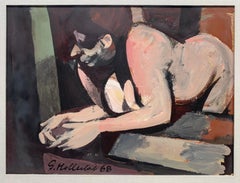
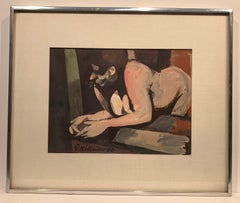
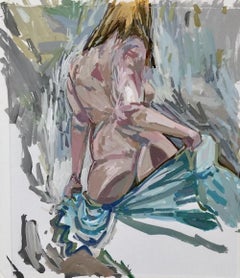
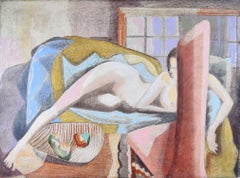
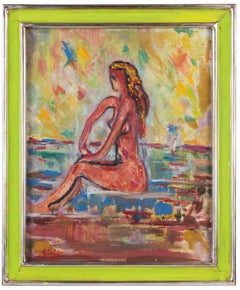
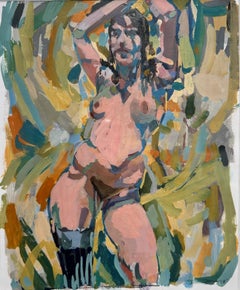
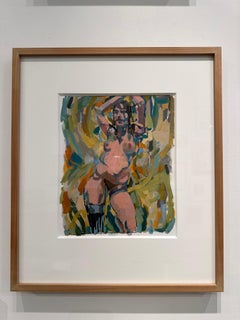
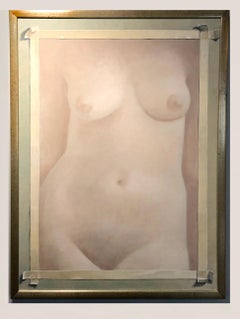
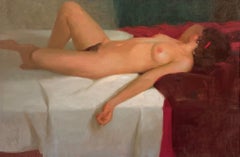
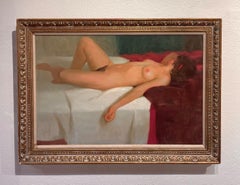
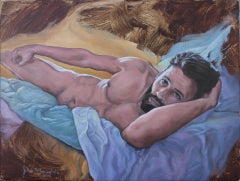
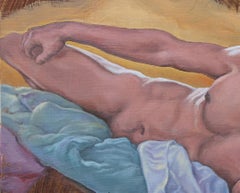
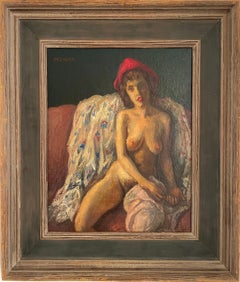
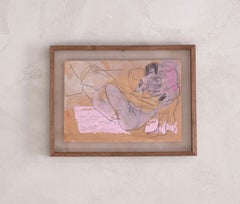
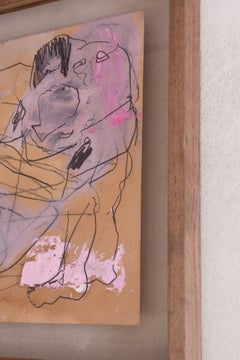
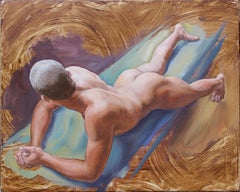
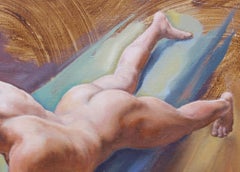
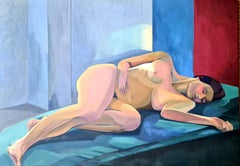
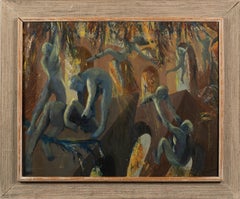
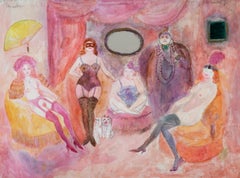
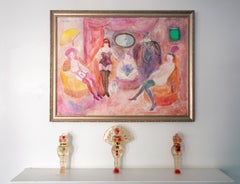
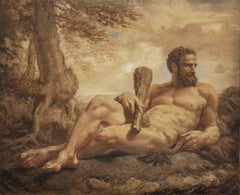
The painting comes with the richly carved gilded wood frame (watercolors tempera on paper, 17.7 x 24.4 inch; with frame 28.7 x 33 inch).
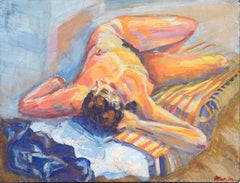
Reclined in a relaxed position aimed to emphasize the muscular tension, the figure stands out from a warm ochre and brownish nuances landscape, blending with the colour of the environment. The attributes (a club and the Nemean lion’s skin, of which the man touches the tail) and the physical size let him being identified in the demi-god Hercules from Thebes, depicted in a moment of rest during the Twelve Labours. The only details distracting from the apparent tranquillity is the head-alert and with a gloomy look-and the club-well sustained and ready to be used.
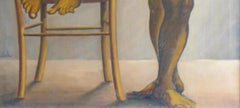
The body of the hero takes inspiration from the canons of the tradition of the Farnese Hercules, based on a strong rendering of the physical anatomy, in which also the feet-wide feet, well curved, with big toes and evident metatarsus-are giving the idea of strength and stability. The pose itself has ancient echoes recalling the relief of the Athens Archaeological Museum passing through the customs of the river allegories and by the Michelangelesque's intensity in the Medici Chapels.
A direct confrontation is with the small marble of the 18th century Hercules resting, bequest of the Viscount Robert Fitzwilliam and now held in the homonym museum in Cambridge1, of wich the painting must be a study from live. The dissimilarity between our work and the sculpture is in the background, painter’s idea, that outdistance the Neoclassicism of the figure and look at the Romanticism lesson, filtered by John Constable and, most of all, by the “painter of light...
Category
1850s Romantic Tempera Nude Paintings
MaterialsPaper, Tempera, Watercolor