Mid-18th Century Paintings

to
48
14
19
32
30
50
Overall Width
to
Overall Height
to
2,078
6,431
43,446
116,918
750
728
1,328
1,679
1,667
2,347
3,121
3,591
3,336
3,399
1,014
48
1
74
68
1
118
69
43
36
28
27
15
15
7
6
4
4
4
3
3
3
3
2
2
2
137
128
78
78
6
3
2
2
1
1
118
18
129
16
Period: Mid-18th Century
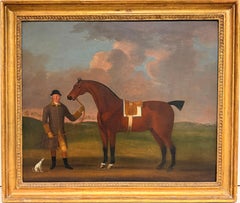
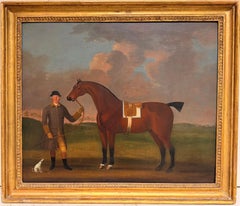
Fine 1760's English Sporting Art Oil Painting Huntsman Horse & Dog Landscape

Fine 1760's English Sporting Art Oil Painting Huntsman Horse & Dog Landscape

By Francis Sartorius

Located in Cirencester, Gloucestershire

Portrait of a Groom, Horse & Dog in an English Landscape by Francis Sartorius (English, 1734-1804) signed and dated 1762 oil painting on canvas, antique gilt frame canvas: 25 x 3...

Category

English School Mid-18th Century Paintings

Materials

Oil

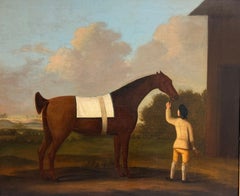
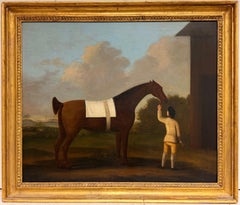
Fine 1760's English Sporting Art Oil Painting Bay Horse & Groom in Landscape

Fine 1760's English Sporting Art Oil Painting Bay Horse & Groom in Landscape

By Francis Sartorius

Located in Cirencester, Gloucestershire

Portrait of a Bay Hunter Horse with Groom, in an English Landscape by Francis Sartorius (English, 1734-1804) signed and dated 1762 oil painting on canvas, correct period antique gilt...

Category

English School Mid-18th Century Paintings

Materials

Oil

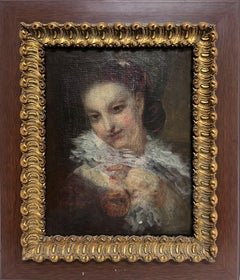
18th Century French Rococo Period Portrait of Women Oil Painting on Canvas

18th Century French Rococo Period Portrait of Women Oil Painting on Canvas

Located in Cirencester, Gloucestershire

Portrait of a Lady French artist, Rococo period 18th century oil on canvas, framed framed: 15 x 12.5 inches canvas: 10.5 x 8.5 inches provenance: private collection, France condition...

Category

Rococo Mid-18th Century Paintings

Materials

Oil

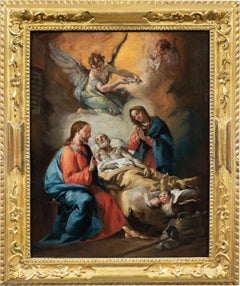
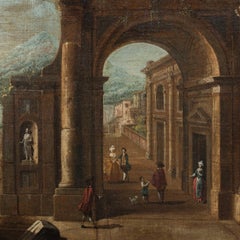
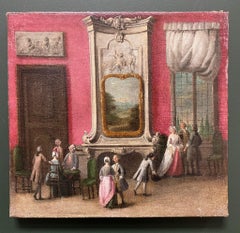
Fine 18th Century Italian Oil Painting Elegant Figures Rococo Interior Setting

Fine 18th Century Italian Oil Painting Elegant Figures Rococo Interior Setting

Located in Cirencester, Gloucestershire

Elegant Figures in Interior *see notes below Italian School, mid 18th century most likely of Venetian origin oil on canvas, unframed canvas: 10.75 x 11.75 inches provenance: private ...

Category

Rococo Mid-18th Century Paintings

Materials

Oil, Canvas

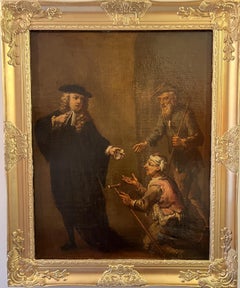
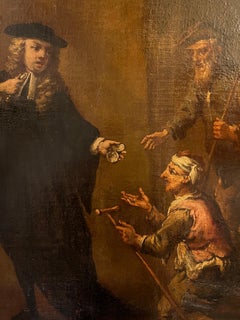
17-18 century, Original Antique Oil Painting in canvas, Genre Scene, Gold Frame

17-18 century, Original Antique Oil Painting in canvas, Genre Scene, Gold Frame

Located in Palm Coast, FL

Up for sale is a compelling and atmospheric original antique oil painting on canvas, depicting a poignant genre scene. A gentleman dressed in formal black robes—likely a figure of au...

Category

Impressionist Mid-18th Century Paintings

Materials

Oil

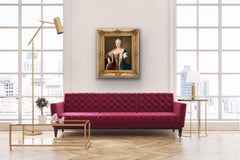
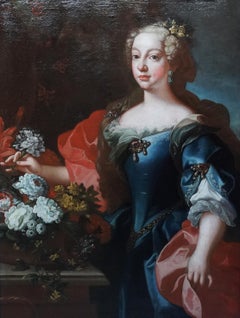
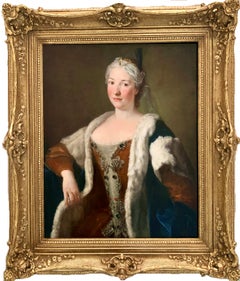
18th century French Old Master Portrait of a woman in oriental costume

18th century French Old Master Portrait of a woman in oriental costume

Located in Aartselaar, BE

French 18th century old master portrait of a majestic lady dressed "à la Turque" The sitter at the viewer with a kind and enigmatic smile and twinkling eyes. She looks elegant and kind, yet also has an intelligent and determined aura, reflecting the character of someone who is in charge of her own life and destiny. De Silvestre paid great attention to her spectacular outfit, which is striking in its portrayal of the sumptuous fabrics and their decorative richness. She is wearing a luxurious royal blue robe à la...

Category

Old Masters Mid-18th Century Paintings

Materials

Canvas, Oil

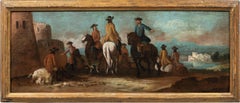
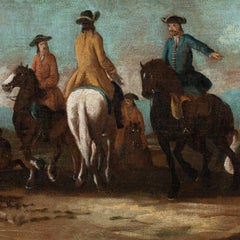
Giuseppe Zais (Venetian master) - 18th century landscape painting - Khnigts

Giuseppe Zais (Venetian master) - 18th century landscape painting - Khnigts

By Giuseppe Zais (Canale d'Agordo, Belluno 1709 - Treviso 1781)

Located in Varmo, IT

Giuseppe Zais (Forno di Canale 1709 - Treviso 1784) - Landscape with Resting Horsemen. 37.5 x 97.5 cm unframed, 45.5 x 104.5 cm with frame. Oil on canvas, in a carved and gilded wo...

Category

Rococo Mid-18th Century Paintings

Materials

Canvas, Oil

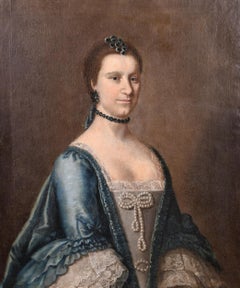
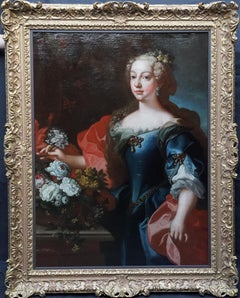
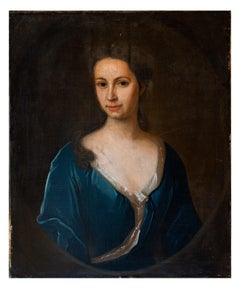
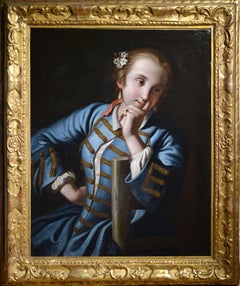
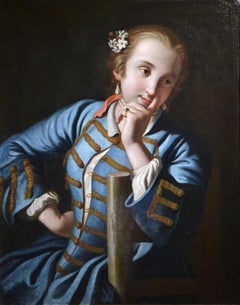
Large 18th Century English Oil Painting Portrait of Aristocratic Lady in Blue

Large 18th Century English Oil Painting Portrait of Aristocratic Lady in Blue

Located in Cirencester, Gloucestershire

Portrait of a Noble Lady English artist, mid 18th century circle of Thomas Gainsborough (English 1727-1788) oil on canvas, unframed canvas: 30 x 25 inches provenance: private collect...

Category

Old Masters Mid-18th Century Paintings

Materials

Oil, Canvas

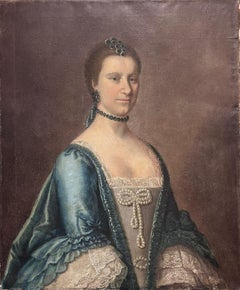
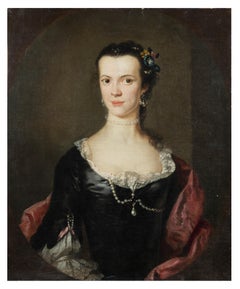
Fine 18th Century British Portrait of an Aristocratic Lady, Large oil painting

Fine 18th Century British Portrait of an Aristocratic Lady, Large oil painting

Located in Cirencester, Gloucestershire

Circle of Thomas Hudson (1701-1779) British. 18th Century Bust Portrait of a Lady, Oil on Canvas, Inscribed on a label verso, canvas: 30" x 25" (76.2 x 63.5cm). frame: 30 x 25 in...

Category

Old Masters Mid-18th Century Paintings

Materials

Canvas, Oil

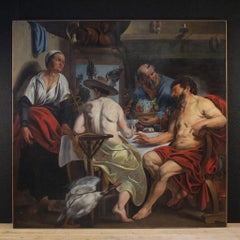
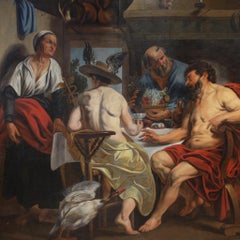
18th Century Oil on Canvas Antique Flemish Mythological Painting, 1760s

18th Century Oil on Canvas Antique Flemish Mythological Painting, 1760s

Located in Vicoforte, IT

Great Flemish painting from the mid-18th century. Oil on canvas artwork depicting a famous episode from Ovid's Metamorphoses. Jupiter and Mercury, disguised as wayfarers, are rejecte...

Category

Mid-18th Century Paintings

Materials

Canvas, Oil

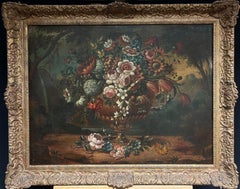
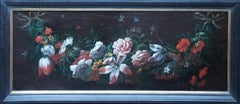
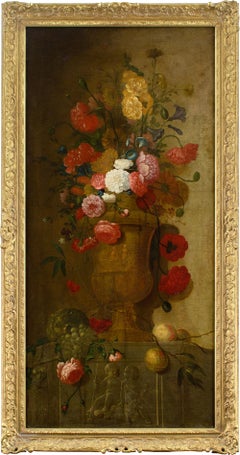
18th-Century Baroque Oil Still Life Flowers Floral Arrangement in an Ornate Urn

18th-Century Baroque Oil Still Life Flowers Floral Arrangement in an Ornate Urn

Located in Cirencester, Gloucestershire

Elaborate Floral Arrangement French artist, 18th Century oil on canvas, framed Framed: 27 x 34 inches Canvas: 22 x 29 inches Provenance: private collection, England Condition: very...

Category

Baroque Mid-18th Century Paintings

Materials

Oil, Canvas

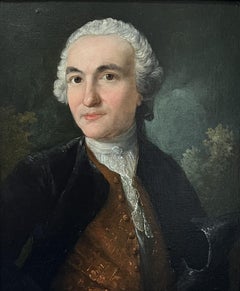
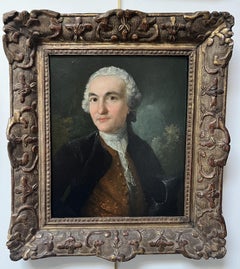
French School 18th century, Portrait of a gentleman, oil

French School 18th century, Portrait of a gentleman, oil

Located in Paris, FR

French School 18th Century Portrait of a gentleman holding his hat Oil on paper transferred on wood panel 34 x 27 cm Not signed which is normal for this type of artwork In a beautifu...

Category

Old Masters Mid-18th Century Paintings

Materials

Oil

Portrait of Maria Vittoria Queen of Portugal - Italian Old Master oil painting

Portrait of Maria Vittoria Queen of Portugal - Italian Old Master oil painting

Located in Hagley, England

This lovely Italian Old Master portrait oil painting is by Domenico Maria Sani. Painted circa 1732 the sitter is of Maria Anna Vittoria (1718 - 1788), daughter of Philip V and Elisabetta Farnese, who in 1729 married Joseph prince of Brazil and king of Portugal...

Category

Old Masters Mid-18th Century Paintings

Materials

Oil

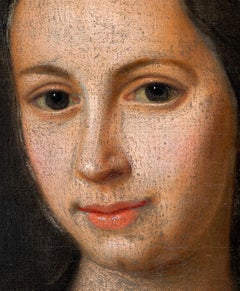
Portrait of a Lady, Oil on Canvas, Mid-18th Century, Unsigned

Portrait of a Lady, Oil on Canvas, Mid-18th Century, Unsigned

Located in GB

This is a restrained and elegant eighteenth-century British or Irish portrait, most likely dating from the mid-1700s, and it fits squarely within the polite, understated portrait tra...

Category

Mid-18th Century Paintings

Materials

Canvas, Oil

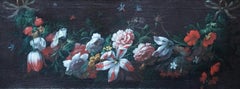
Still Life Garland of Flowers - Flemish 18thC art Old Master floral oil painting

Still Life Garland of Flowers - Flemish 18thC art Old Master floral oil painting

By Pieter Casteels III

Located in Hagley, England

This superb 18th century Old Master floral still life oil painting is attributed to Flemish artist Pieter Casteels III. Painted circa 1730 it is a garland or swag of flowers, somethi...

Category

Old Masters Mid-18th Century Paintings

Materials

Oil

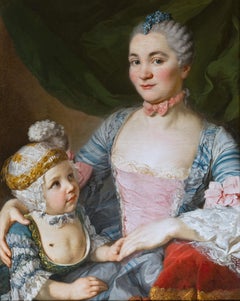
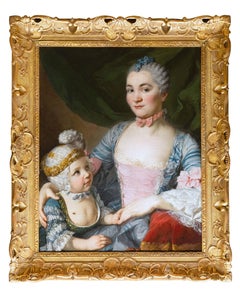
Portrait of a lady with her son, studio of F.H. Drouais, Paris, French, 18th c.

Portrait of a lady with her son, studio of F.H. Drouais, Paris, French, 18th c.

By François Hubert Drouais

Located in PARIS, FR

Portrait of a lady with her son, Workshop of François Hubert Drouais (Paris 1727-1775) (no visible signature) French School, mid-18th century, circa 1760 Oil on canvas: h. 71.5 cm, w...

Category

Old Masters Mid-18th Century Paintings

Materials

Canvas, Oil

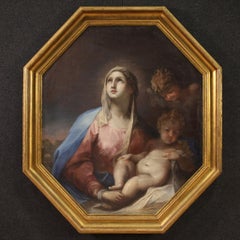
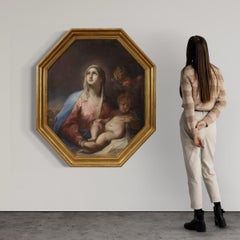
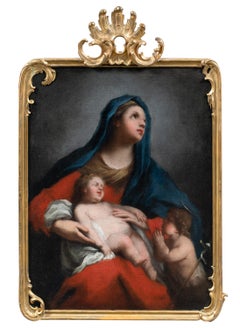
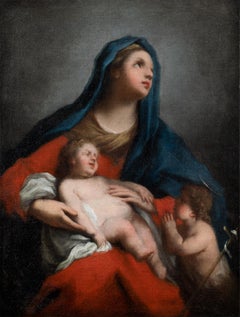
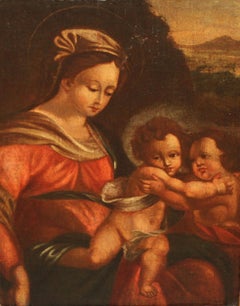
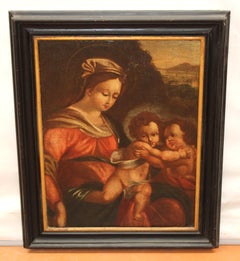
18th Century Oil on Canvas Italian Religious Painting Madonna with Child, 1750

18th Century Oil on Canvas Italian Religious Painting Madonna with Child, 1750

Located in Vicoforte, IT

A refined 18th-century Italian painting. This artwork oil on canvas depicts a splendid Madonna and Child with a cherub, crafted with exquisite skill. The composition dates stylistica...

Category

Mid-18th Century Paintings

Materials

Canvas, Oil

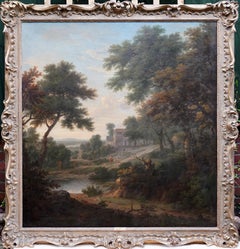
Manor House with Cottages - British 18thC Old Master art oil painting VG prov.

Manor House with Cottages - British 18thC Old Master art oil painting VG prov.

By George Lambert

Located in Hagley, England

This stunning British Old Master landscape oil painting, with excellent provenance, is by George Lambert. Lambert was a pioneer of British landscape in art for its own sake. Painted in 1744, the painting is entitled View of a Manor House and Cottages in Elizabeth Einberg's 63rd volume of the Walpole Society 2001 and is described as follows: In the foreground a road emerges from a wood to cross a ford and then leads up the hill to the right, towards a manor house seemingly built into the remains of a medieval or Tudor edifice. The main track, crowded with sheep and rustic figures, passes the massive square gateposts lower down the hill on the left. Further to the left is a thatched cottage with smoke coming out the chimney. In the distance is a wide coastal view. The main buildings, which are in the dead centre of the composition, represent almost certainly an as yet unidentified English view. The colouring and detail in the trees and foliage are superb. This is an excellent Old Master oil painting by one of the all time great British landscape artists with extensive provenance. Signed and dated 1744 lower left on rock in black. Provenance. Elizabeth Einberg, “Catalogue Raisonnè of the works of George Lambert” The Annual Volume of the Walpole Society, 2001 Vol. 63, page 149 no P1744, fig.71. Antonacci Efrati Antichità Rome Gallery. Burden sale, Parke Bernet, New York, 20-21, April 1938 (376 repr.) Robert E. Peters, Sotheby Parke Bernet, New York, March 1975 (41 repr.) Lit. Schnackenburg 1995, pp 83-84, cat. no.14 fig 13. Condition. Oil on canvas, 54 inches by 52 inches and in good condition. Frame. Housed in an ornate gilt frame, 64 inches by 62 inches and in good condition. George Lambert (1700-1765) was an English landscape artist and theatre scene painter. With Richard Wilson he is recognised as a pioneer of British landscape in art, for its own sake. Lambert was born in Kent and studied art under Warner Hassells and John Wootton, soon attracting attention by the quality of his landscape painting. He painted many large and fine landscapes in the style of Gaspar Poussin and Salvator Rosa. Many of his landscapes were finely engraved by François Vivares, James Mason (1710–1785), and others, including a set of views of Plymouth and Mount Edgcumbe (painted conjointly with Samuel Scott), a view of Saltwood Castle in Kent, another of Dover, and a landscape presented to the Foundling Hospital in London. Lambert also obtained a great reputation as a scene-painter, working at first for the Lincoln's Inn Fields Theatre, in London, under John Rich. When Rich moved to Covent Garden Theatre, Lambert secured the assistance of Amigoni, and together they produced scenery of far higher quality than any previously executed. Lambert was a man of jovial temperament and shrewd wit, and frequently spent his evenings at work in his painting-loft at Covent Garden Theatre, to which men of note in the fashionable or theatrical world resorted to share his supper of a beef-steak, freshly cooked on the spot. Out of these meetings arose the well-known "Beefsteak Club" which long maintained a high social reputation. Most of Lambert's scene-paintings unfortunately perished when Covent Garden Theatre was destroyed by fire in 1808. Lambert was a friend of William Hogarth and a member of the jovial society that met at 'Old Slaughter's' Tavern in St Martin's Lane. In 1755 he was one of the committee of artists who proposed a royal academy of arts in London. He was a member of the Society of Artists of Great Britain, exhibited with them in 1761 and the three following years, and during the same period contributed to the Academy exhibitions. In 1765 he and other members seceded and formed the Incorporated Society of Artists of Great Britain, of which he was elected the first president. In conjunction with Samuel Scott, Lambert painted a series of Indian views for the old East India House in Leadenhall Street. He also etched two prints after Salvator Rosa. Lambert was associated in 1735 with George Vertue, Hogarth, and John Pine (engraver, 1660–1756) in obtaining a bill from parliament securing artists a copyright on their works. Lambert's portraits were painted by Thomas Hudson, John Vanderbank (engraved in mezzotint by John Faber the younger in 1727, and in line by H. Robinson and others), and Hogarth. Lambert's most famous painting is "A view of Box Hill, Surrey" (1733) which depicts a well-known beauty spot south of London. Hogarth considered Lambert a rival to the famous French landscape painter Claude Lorrain (1600–1682) with respect to his use of soft light to unify the scene in this painting. Though he never visited Italy he was inspired by the classical tradition of landscape painting. Lambert died on 30 November 1765 at his home on the Piazza in Covent Garden. His pupils included John Inigo Richards...

Category

Old Masters Mid-18th Century Paintings

Materials

Oil

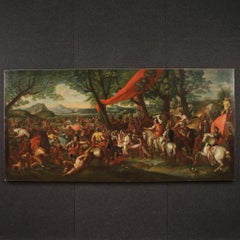
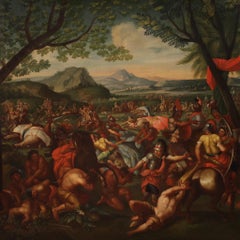
18th Century Oil on Canvas French Battle Painting Alexander the Great and Porus

18th Century Oil on Canvas French Battle Painting Alexander the Great and Porus

Located in Vicoforte, IT

Monumental 18th-century French battle. Oil painting on canvas depicting the Battle of Hydaspes, in which Alexander the Great defeated the Indian king Porus. A painting of considerabl...

Category

Mid-18th Century Paintings

Materials

Canvas, Oil

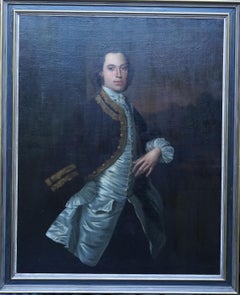
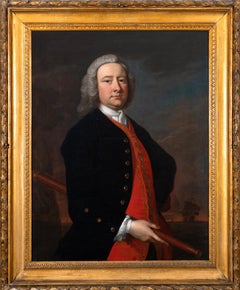
Portrait of a senior naval officer, c. 1740s

Portrait of a senior naval officer, c. 1740s

By Thomas Hudson

Located in Henley-on-Thames, England

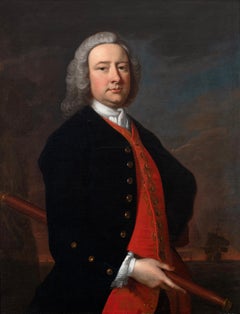
Thomas Hudson (Devon 1701 - London 1779) Portrait of a senior naval officer, c. late 1740s Probably a captain or admiral; half-length, holding a telescope, with a warship beyond Oil on canvas 91.3 x 71.1 cm.; (within frame) 114.3 x 93.8 cm. (Unsigned) Provenance: Christie’s, London, 22 November 1985, lot 105 (as Thomas Hudson); Private collection, United Kingdom; Haynes Fine Art, Broadway, Worcestershire; Where acquired, private collection, United States, 16 August 1988; Neal Auction, New Orleans, 14 September 2025, lot 302 (as Attributed to Thomas Hudson); Where acquired by Haveron Fine Art. Literature: Bridgeman Art Library, The Bridgeman Art Library (London: The Library, 1995), p. 89 Christie’s, London, Important English Pictures (London: Christie’s, 22 November 1985) Archival: Witt Library, Courtauld Institute of Art (no. 061487); Heinz Archive and Library, National Portrait Gallery, 1725-50, Thomas Hudson: Men Authentic (1) (Box) This attractive and quintessential half-length is exemplary of Hudson’s leading portrait practice, produced in the years immediately preceding his decade-long dominance over the London market, beginning in 1749. The work is stylistically typical of Hudson's prime 1750s output, displaying a deliberate refinement of his technique: namely the emphasis of directional brushstrokes, which sensitively follow the contours of the facial features. However, since the sitter wears civilian dress and not a naval uniform (introduced officially in April 1748), a late 1740s date of creation is most likely. Displaying the merits of Hudson's evolving handling, a distinctive feathery quality is combined here with a striking chiaroscuro effect, which Hudson borrowed directly from Rembrandt. Amalgamating the rich colouring of the Rococo with a mannered Baroque posing, Hudson renders the senior naval officer with a characteristic presence. Resting one hand assuredly at his hip, the finely worked telescope illustrates the officer’s seniority; the warship sailing on the horizon beyond provides further indication of his commanding rank. The telescope is held by a hand modelled with sculptural poise, and the typically Van Dyck manner (seen elsewhere, e.g. Princess Amelia Sophia Eleonore of Great Britain, YCBA B2001.2.246) further illustrates Hudson's studied grounding. The sitter wears civilian clothes, and not the naval uniform first introduced in 1748 (which officers afterwards invariably chose to be shown in). His red waistcoat is of a type popular amongst British officers before 1748, perhaps inspired by French naval uniforms. The officer has previously been suggested as Edward Henry Sartorius, of the prominent naval Sartorius family; however, this identification is improbable on biographical and documentary grounds. Hudson was regularly commissioned by leading naval officers, and produced highly satisfactory portraits praised for their great likeness and genteel swagger. He charged 24 guineas for a standard 50 x 40 inch half-length in the 1750s period, and the present work (somewhat smaller in size) would have cost not much less. Comparable works include those of Admirals of the Fleet George Anson, 1st Baron Anson, and Sir John Norris; Admiral Sir George Pocock; Admiral Sir Peter Warren; Vice-Admiral The Honourable John Byng; and Rear-Admiral Richard Tyrrell. The present portrait is particularly similar in composition to Hudson’s Portrait of a Flag Officer of The White Squadron, which similarly employs the narrative device of a telescope held at a dynamic angle across the composition, with a warship to the left side of the officer’s retracted arm. Thomas Hudson (Devon 1701 - London 1799) Thomas Hudson rose to become the leading British portraitist of the mid-18th century, albeit in close competition with his Scottish counterpart Allan Ramsay. Born in Devon, Hudson studied alongside George Knapton under Jonathan Richardson the Elder (marrying his daughter in 1725, expressly against Richardson’s wishes), and inherited a dignified formality jointly derived from Van Loo. His work is first recorded in 1728, and between 1730-40 he practised in Bath and the West Country, where in addition to portrait commissions, he was employed to retouch and reline old pictures. He returned permanently to London thereafter, and devised a series of stock poses to which he would return with variation throughout his career. Beginning in 1745 with the death of Richardson and the departure of Van Loo, Hudson became the city’s most successful portraitist, and embarked on ambitious defining works such as his Portrait of Theodore Jacobsen ‒ not drastically unlike the continental heights of Pompeo Batoni in conception. Profiting from his success, he relocated from Lincoln’s Inn Fields to a house in Great Queen Street previously inhabited by Van Loo, and one door down from Kneller’s old rooms. An exceptionally productive period began in 1749 which lasted until the late 1750s. Among this output were highly praised portraits of the Prince and Princess of Wales, commissions for most of the preeminent aristocrats, and superlative group portraits including Benn’s Club of Aldermen, and those of the Thistlethwayte, Marlborough and Radcliffe families. Hudson relocated to King Street, Covent Garden, operating a prolific studio operation which resulted in some four hundred paintings ‒ of which at least eighty were engraved. A prodigious assembly of young pupils included Sir Joshua Reynolds (1740-3), Joseph Wright of Derby (1751-3, 1756), Richard Cosway, John Hamilton Mortimer, and the drapery painters Joseph and Alexander van Aken (also employed by Ramsay). As one later reviewer expressed: ‘Hudson, his art may well display to sight / Who gave Mankind a Reynolds and a Wright’ (Miles, ‘Introduction’). The ambitious young Reynolds made many drawings from classical statuary under Hudson’s instruction, and wrote home that, ‘While doing this I am the happiest creature Alive (sic.)’ (Sweetser, p.12). However, he was later dismissed from his pupilage some two years prematurely for refusing to carry a painting to Van Aken’s studio in the rain. It was at this point that Reynolds returned to Plymouth (Devonport), and produced some thirty portraits of the local gentry (including one example presently owned by Haveron Fine Art). Hudson was one of a number of artists who congregated in Old Slaughter’s Coffee House, alongside Hogarth, Ramsay, Hayman, and Rysbrack. Together they supported Thomas Coram’s Foundling Hospital, of which they each belonged to the 600 governors (in whom Hudson met many of his future clients), and promoted the building as London’s first public space of artistic exhibition. He visited the Netherlands and France for five weeks in 1748 accompanied by St Martin’s Lane colleagues, and was arrested with Hogarth for making drawings of the Bastille fortifications. He afterwards stayed in Rome and Naples in 1752 with Roubiliac, meeting Reynolds twice on the return journey. He returned to England and bought a house at Cross Deep, Twickenham (upstream from Pope’s villa), and made an effective museum of the space. He lived there with his second wife, a wealthy widow named Mrs Fynes. Having been involved with early attempts to establish a royal academy of the arts, Hudson exhibited at the Society of Arts in 1761 and 1766, although he had effectively retired from painting by the latter date. His last painting was in 1767, and he died at Twickenham in January 1779 aged seventy-eight. Hudson was also exceptional for the extensive collection of artworks which he amassed during his lifetime. The collection was thoroughly impressive in extent, and included outstanding Old Masters: Breughel, Canaletto, van Dyck, Hals, Holbein, Kneller, Lely, Michelangelo, Parmigianino, Poussin, Raphael, Rembrandt, Rubens, Tintoretto, Titian, Vasari, and Velázquez. His earliest recorded purchase was in 1741, and he spent heavily at the sale of his father-in-law, even buying works jointly with Van Aken. Likewise, at the posthumous 1750 sale of Van Aken, Hudson spent £215 on the second day (nearly half that day’s sale total). As a pupil, Reynolds had been sent to bid for Hudson in Lord Oxford’s sale of 1742, and proudly recalled having been greeted with a handshake by Hudson’s friend Pope at another picture sale. Hudson also collected extensively from within his own generation, acquiring works by contemporaries including Gainsborough, Reynolds, Richardson, Rysbrack, Vanderbank, and his predecessor Van Loo. Following his death, the works were dispersed in two sales at Messrs. Langford, with the finer works sold at Christie’s in 1785 after the death of his second wife. However, his connoisseurship was not without flaw ‒ having outbid Benjamin Wilson for a Rembrandt drawing, Wilson etched and printed a new ‘Rembrandt’ plate...

Category

Old Masters Mid-18th Century Paintings
Materials

Oil

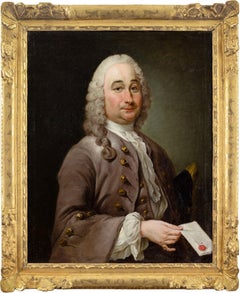
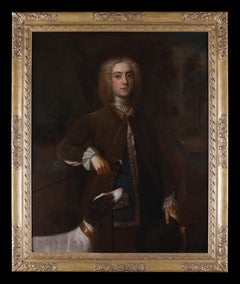
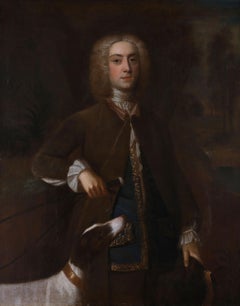
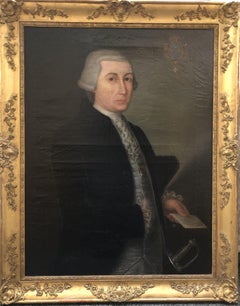
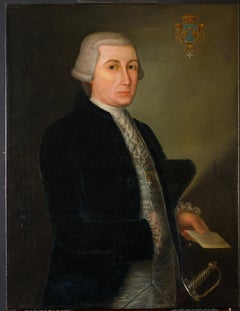
Mid-18th-Century French School, Portrait Of A Gentleman With A Letter

Mid-18th-Century French School, Portrait Of A Gentleman With A Letter

Located in Cheltenham, GB

This mid-18th-century French oil painting depicts a composed gentleman shown half-length against a softly graduated background, dressed in a finely cut brown coat fastened with gilt ...

Category

Rococo Mid-18th Century Paintings

Materials

Canvas, Oil

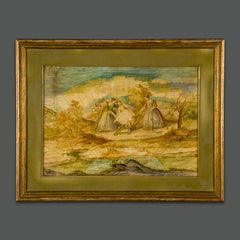
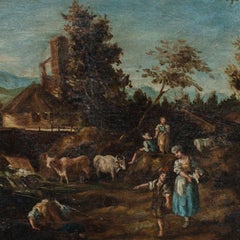
Pastoral scene
Pastoral scene

Pastoral scene

Located in Genève, GE

Work on canvas

Category

Flemish School Mid-18th Century Paintings

Materials

Oil

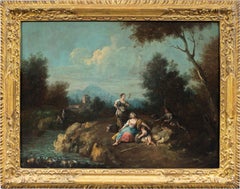
Giuseppe Zais (Venetian master) - 18th century landscape painting - Sheperds

Giuseppe Zais (Venetian master) - 18th century landscape painting - Sheperds

By Giuseppe Zais (Canale d'Agordo, Belluno 1709 - Treviso 1781)

Located in Varmo, IT

Giuseppe Zais (Forno di Canale 1709 - Treviso 1784) - Landscapes with Washerwomen. 41 x 56 cm unframed, 49.5 x 64.5 cm with frame. Oil on canvas, in a carved and gilded wooden fram...

Category

Rococo Mid-18th Century Paintings

Materials

Canvas, Oil

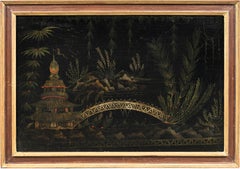
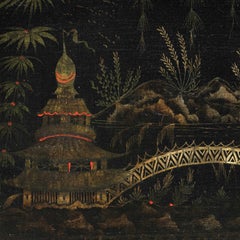
Antique Chinese painter - 18th century figure painting - Landscape Pagoda

Antique Chinese painter - 18th century figure painting - Landscape Pagoda

Located in Varmo, IT

Chinese painter (18th century) - Oriental scene with pagoda and bridge. 46.5 x 73 cm unframed, 55.5 x 79.5 cm with frame. Oil on canvas, in a wooden frame (not signed). Condition ...

Category

Rococo Mid-18th Century Paintings

Materials

Oil, Canvas

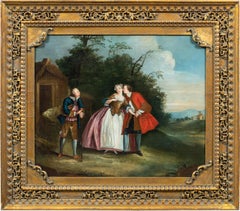
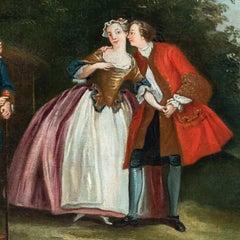
Rococò French painter - 18th century figure painting - Gallant scene Lancret

Rococò French painter - 18th century figure painting - Gallant scene Lancret

Located in Varmo, IT

French Rococo painter (18th century) - Gallant scene in a landscape. 63.5 x 76 cm without frame, 91 x 102.5 cm with frame. Antique oil painting on canvas, in a carved and gilded wo...

Category

Rococo Mid-18th Century Paintings

Materials

Oil, Canvas

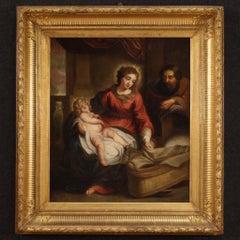
18th Century Oil on Canvas Flemish Framed Religious Painting Holy Family, 1750

18th Century Oil on Canvas Flemish Framed Religious Painting Holy Family, 1750

Located in Vicoforte, IT

Antique Flemish painting from the 18th century. Framework oil on canvas depicting religious subject Holy family of good pictorial quality. Nice sized and pleasantly decorated framewo...

Category

Mid-18th Century Paintings

Materials

Canvas, Oil

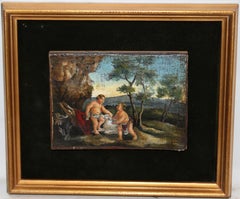
Escuela flamenca (XVIII) - Dulzura bucólica (a la manera de Peter Paul Rubens)

Escuela flamenca (XVIII) - Dulzura bucólica (a la manera de Peter Paul Rubens)

Located in Sant Celoni, ES

La obra no va firmada Se presenta enmarcada la obra con un marco bastante actual (de hecho la obra va pegada en el plafon del marco) Medidas obra: 14 x 20 cm. Medidas marco: 28 x ...

Category

Old Masters Mid-18th Century Paintings
Materials

Oil

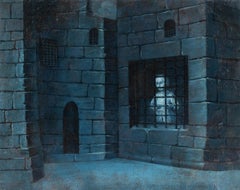
Rococò French painter - 18th century figure painting - Joseph in prison

Rococò French painter - 18th century figure painting - Joseph in prison

Located in Varmo, IT

French painter (18th century) - Joseph in prison. 84 x 105 cm. Antique oil painting on canvas, without frame (not signed). Condition report: Lined canvas. Good state of conservati...

Category

Rococo Mid-18th Century Paintings

Materials

Canvas, Oil

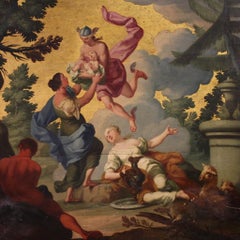
18th Century Oil on Panel Italian Mythological Painting, 1760

18th Century Oil on Panel Italian Mythological Painting, 1760

Located in Vicoforte, IT

A rare 18th-century Italian painting. Oil on panel artwork depicting a captivating mythological subject, Mercury delivers the infant Bacchus to the Nymphs of Mount Nysa. According to...

Category

Mid-18th Century Paintings

Materials

Wood, Oil

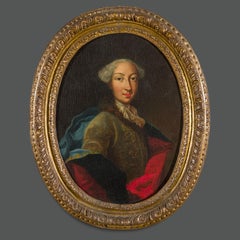
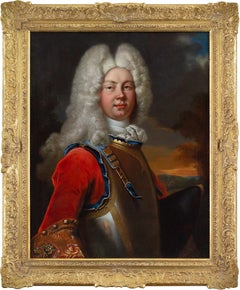
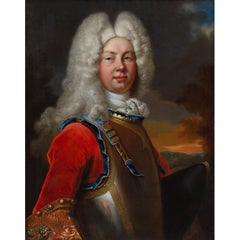
Portrait of Frédéric III De Saxe-Gotha-Altenbour, 18th-century Oil Painting

Portrait of Frédéric III De Saxe-Gotha-Altenbour, 18th-century Oil Painting

By Nicolas de Largillière

Located in Cheltenham, GB

This early 18th-century oil painting by an artist working in the circle of Nicolas De Largillière (1656-1746) depicts Frédéric III, Duke of Saxe-Gotha-Altenbourg (1699-1772), shown h...

Category

Rococo Mid-18th Century Paintings

Materials

Canvas, Oil

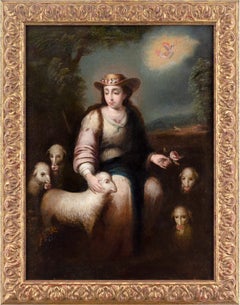
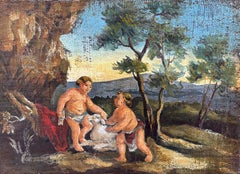
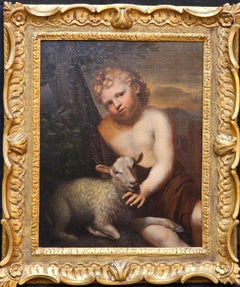
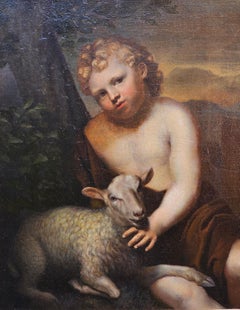
The Infant St John the Baptist with Lamb - Italian Old Master art oil painting

The Infant St John the Baptist with Lamb - Italian Old Master art oil painting

Located in Hagley, England

This beautiful 18th century Italian Old Master oil painting is something rather special. Painted circa 1750 the subject matter is Saint John the Baptist as a very young child. He is ...

Category

Old Masters Mid-18th Century Paintings
Materials

Oil

Óleo sobre tela - La virgen con el niño y san Juanito

Óleo sobre tela - La virgen con el niño y san Juanito

Located in Sant Celoni, ES

Sin firmar, de autor anónimo Se presenta enmarcada la obra con un marco posterior a la pintura Comentar que la tela está reentelada Medidas obra: 65 x 49 cm. Medidas marco: 82 ...

Category

Old Masters Mid-18th Century Paintings
Materials

Oil

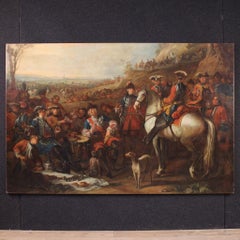
18th Century Oil on Canvas French Painting Halt of the Mounted Grenadiers

18th Century Oil on Canvas French Painting Halt of the Mounted Grenadiers

By Charles Parrocel

Located in Vicoforte, IT

A magnificent 18th-century French painting. This oil on canvas artwork depicts the halt of the mounted grenadiers of the King's Guard by Charles Parrocel (1688-1752), one of the most representative works of 18th-century French military painting...

Category

Mid-18th Century Paintings

Materials

Canvas, Oil

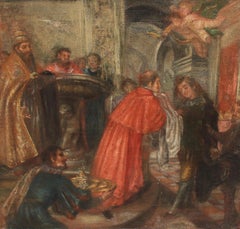
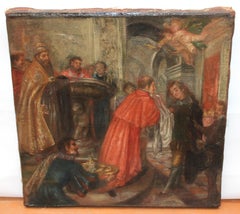
Escuela española (XVIII) El bautismo de San Jeronimo según Juan de Valdes Leal

Escuela española (XVIII) El bautismo de San Jeronimo según Juan de Valdes Leal

Located in Sant Celoni, ES

La obra no va firmada Se presenta sin enmarcar la pintura El estado de la obra se puede ver, es aceptable ya que en su momento se acondicionó debidamente Medidas de la obra: 38 x ...

Category

Old Masters Mid-18th Century Paintings
Materials

Oil

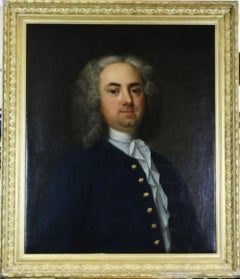
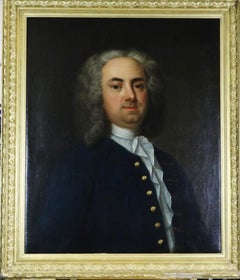
18th century antique portrait Edmund Hoyle Circle of James Latham, Edmund Hoyle

18th century antique portrait Edmund Hoyle Circle of James Latham, Edmund Hoyle

Located in York, GB

18th century Bust portrait of a gentleman in a blue coat with gold buttons (Said to be Edmund Hoyle, inventor of Whist) oil on canvas circle of James Latham. Housed in a gilt frame the size overall is 71 x 84 cm (28 x 33 inches approx) whilst the painting is 56 x 69 cm ( 22 x 27 inches approx) unsigned The overall condition is very good having had some restoration. The painting has been relined, cleaned and re varnished. There has been some strengthening/overpainting. There is a Rectangular patch repair along lower edge, centre, reverse approximately 5 x 7cm with associated retouching to front,all essentially done sympathetically. some fine stable craquelure throughout. Some minor self coloured losses to frame. None of the above detracting from a very attractive portrait. Edmond Hoyle Edmond Hoyle English card game authority, "the Father of whist" Born 1672 England Died 29 August 1769 (aged 96–97) London, England Edmond Hoyle (1672 – 29 August 1769)[1] was a writer best known for his works on the rules and play of card games. The phrase "according to Hoyle" came into the language as a reflection of his generally perceived authority on the subject James Latham James Latham was born in Thurles, County Tipperary, Ireland and possibly related to the family of Lathams of Meldrum and Ballysheehan. After some practice of his art, Latham studied for an academic year in Antwerp (1724–25) where he became a Master of the Guild of St Luke. He returned to Dublin by 1725, and may have visited England in the 1740s, as the influence of Joseph Highmore, as well as Charles Jervas and William Hogarth, is evident in his work of this period. Anthony Pasquin memorably dubbed Latham "Ireland's Van Dyck". Latham died in Dublin on 26 January 1747. Several of James Latham's portraits are in the National Gallery of Ireland collection in Dublin; one is of the famous MP Charles Tottenham (1694–1758) of New Ross, Co. Wexford, "Tottenham in his Boots" (Cat. No.411) and a second is a portrait of Bishop...

Category

Old Masters Mid-18th Century Paintings
Materials

Oil

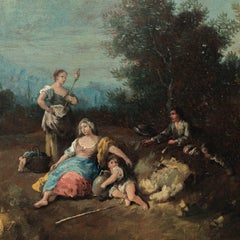
Giuseppe Zais (Venetian master) - 18th century landscape painting - Figures

Giuseppe Zais (Venetian master) - 18th century landscape painting - Figures

By Giuseppe Zais (Canale d'Agordo, Belluno 1709 - Treviso 1781)

Located in Varmo, IT

Giuseppe Zais (Forno di Canale 1709 - Treviso 1784) - Landscape with shepherds and spinner. 48 x 63.5 cm without frame, 59 x 74.5 cm with frame. Oil on canvas, in a carved and gild...

Category

Rococo Mid-18th Century Paintings
Materials

Canvas, Oil

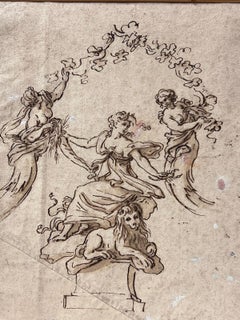
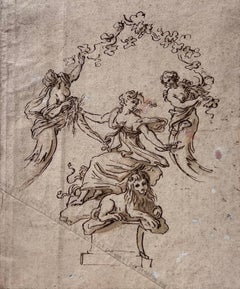
1700's Venetian Old Master Ink Drawing St. Marks Lion Angelic Figures Flowers

1700's Venetian Old Master Ink Drawing St. Marks Lion Angelic Figures Flowers

Located in Cirencester, Gloucestershire

The Lion of St. Mark Venetian Old Master, mid 18th century circle of Giovanni Battista Tiepolo (Venetian, 1696-1770) ink and watercolour drawing on paper mounted on a card frame, unf...

Category

Rococo Mid-18th Century Paintings
Materials

Watercolor, Ink

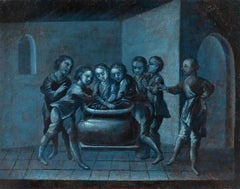
French painter - 18th century figure painting - Joseph thrown by his brothers

French painter - 18th century figure painting - Joseph thrown by his brothers

Located in Varmo, IT

French painter (18th century) - Joseph thrown into the cistern by his brothers. 84 x 105 cm. Old oil painting on canvas, without frame (not signed). Condition report: Lined canvas...

Category

Rococo Mid-18th Century Paintings
Materials

Canvas, Oil

Portrait of a Venetian Nobleman

Portrait of a Venetian Nobleman

Located in Douglas, Isle of Man

Attributed to, Alessandro Longhi 1733-1813, Longhi was a prominent Venetian portrait painter, printmaker, and biographer. The son of the famous genre painter Pietro Longhi, he is known for his detailed oil portraits of the Venetian aristocracy and his valuable book on contemporary Venetian painters. Longhi early life and training : Born: Alessandro Longhi was born on June 12, 1733, in Venice. He received his initial training from his father, Pietro Longhi. He later studied under Giuseppe Nogari, a respected portraitist in Venice during the 18th century, and was elected to the Venetian Academy in 1759. Longhi specialized in portraiture, primarily depicting the nobles and officials of the Republic of Venice. His paintings are a valuable record of the social and political structure of 18th-century Venice. Rococo aesthetic: Working in the Rococo style, he was adept at capturing the elegance and social status of his subjects. He paid meticulous attention to the elaborate robes, wigs, and emblems of office that signified his subjects' power. While his official state portraits could be stiff and formal, his portraits of less noble patrons demonstrated a greater sense of realism and psychological insight. Longhi was also an accomplished printmaker, particularly in etching. His etching technique showed an awareness of Rembrandt's work, and he used this skill to reproduce his and his father's paintings. In 1762, he published Compendio delle vite de' pittori veneziani istorici più rinomati del presente secolo, a biographical dictionary of contemporary Venetian painters that is still an important resource for art historians. Longhi illustrated the book with etched portraits of the artists. The portrait of Carlo Goldoni: One of his most celebrated paintings is his portrait of the Venetian playwright and librettist Carlo Goldoni. For his election to the Venetian Academy, he painted this allegory, which features a personified figure of Painting. His known portraits include Portrait of a Lady (Uffizi Gallery, Florence), Portrait of a Musician, and various portraits of Venetian nobles and officials. I have included further albeit identical biographies of Alessandro Longhi. Alessandro Longhi (born June 12, 1733, Venice—died 1813, Venice) was a painter, etcher, and biographer of Venetian artists, and was the most important Venetian portrait painter of his day. The son of the painter Pietro Longhi, he was given his first training by his father, who quite soon put him to study under the portrait painter Giuseppe Nogari. In 1759 he was elected a member of the Venetian academy, for which he painted one of his rare allegorical pictures, “Painting and Merit.” In 1762 Longhi issued his book Compendio delle Vite de’ Pittori Veneziani Istorici piu rinomati del presente secolo con sui ritratti dal naturale delineati ed indisi, one of the most important source books for the history of Venetian 18th-century painting. Both portraits and text were printed from plates he etched. Longhi’s facilely rendered portraits are largely generalized likenesses lacking any acuity of character observation. He mainly portrayed the leading Venetian luminaries and dignitaries of his day in a style that drew upon his father’s Rococo manner and 16th-century traditions of Venetian Renaissance portraiture. The personal details available for the painter Alessandro Longhi are limited, but his biography is intertwined with that of his family and the city of Venice. He was the son of a successful painter, which set his artistic path, and is known for creating sensitive and realistic portraits that captured the social atmosphere of 18th-century Venice. Alessandro was born in Venice in 1733 to the celebrated genre painter Pietro Longhi. He received his early training from his father before studying under another prominent portraitist, Giuseppe Nogari. A contrast to his father: While his father was known for painting scenes of everyday Venetian life, Alessandro focused almost exclusively on portraiture. His skill enabled him to capture the intimate psychology and character of his subjects, a quality especially evident in his portraits of less noble patrons. Election to the academy: In 1759, Alessandro was elected to the Accademia dei Pittori, the Venetian Academy of Painting. His election solidified his reputation as a master of the Rococo style. Beyond painting, Longhi was an accomplished printmaker, primarily producing etchings that reproduced his own works and those of his father. In 1762, he published the Compendio delle vite de' pittori veneziani, a collection of biographies of contemporary Venetian painters, which is an important historical resource. He became a prominent portraitist for Venice's upper class, including nobles and state officials. His official state portraits featured grand, full-length depictions of his subjects in their elaborate robes and emblems of office. Emphasis on realism: In contrast to the stylized nature of official portraits, Alessandro was praised for the "reality" he captured in works featuring common people. For example, his 1760 portrait of an innkeeper was celebrated for its realistic subject matter and "nuova maniera" (new manner). The art historian Olimpia Theodoli noted that Longhi's etching technique showed he had a firsthand knowledge of Rembrandt's work. Among his more famous works are a sensitive portrait of playwright Carlo Goldoni and the painting Portrait of a Wine Butler. He also produced religious and allegorical works, including paintings of the "Apostles" for the church of San Pantalon in Venice. This painting has been carefully conserved and the frame also, the frame looks to be original to the picture but we have no way of confirming this but we believe it to be so. 18th Century Italian portraits...

Category

Mid-18th Century Paintings
Materials

Canvas, Oil

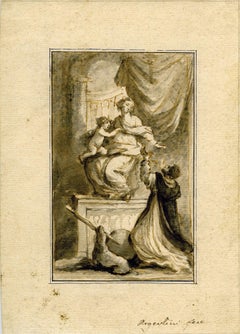
Neoclassical composition of a sculptor kneeling before his statue of the Madonna

Neoclassical composition of a sculptor kneeling before his statue of the Madonna

Located in Middletown, NY

An allegory of loyalty, with the subject's dog pictured seated, holding his master's chisel in his mouth; fidelity personified. Italian School, 18th century Ink wash in gray and bl...

Category

Italian School Mid-18th Century Paintings
Materials
Laid Paper, Ink, Watercolor

Read More