Suprematist Paintings

to
2
12
5
1
1
2
Overall Width
to
Overall Height
to
5
16
1
42,527
38,193
23,155
8,551
4,765
3,534
3,244
2,663
1,231
1,190
931
913
403
269
13
7
1
1
1
1
1
1
12
8
7
6
5
5
5
2
2
1
4
17
4
Style: Suprematist
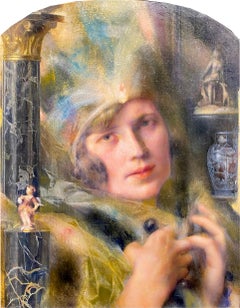
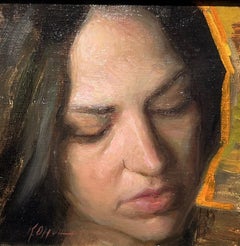
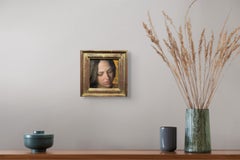
'Portrait of a Lady' by Max Lewis (Hamburg 1863 – 1930 Vienna)

'Portrait of a Lady' by Max Lewis (Hamburg 1863 – 1930 Vienna)

Located in Knokke, BE

Max Lewis Hamburg 1863 – 1930 Vienna German painter 'Portrait of a Lady' Signature: 
signed revers ‘M. Lewis’, certified by Louise Lewis, sister Medium: oil on panel Dimensions: im...

Category

Early 20th Century Suprematist Paintings

Materials

Oil, Panel

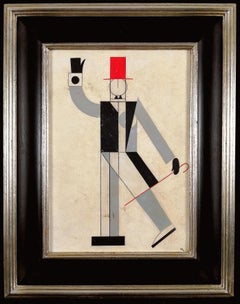
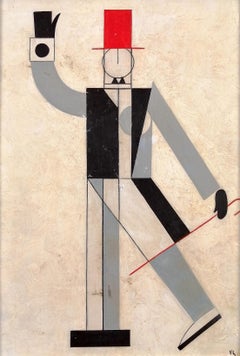
Suprematist Figure - Early 20th Century Russian East European Portrait Painting

Suprematist Figure - Early 20th Century Russian East European Portrait Painting

Located in Sevenoaks, GB

A beautiful and very interesting early 20th century Eastern European suprematist style oil on board depicting a figure wearing a red hat holding a cane. The work is signed with init...

Category

Early 20th Century Suprematist Paintings

Materials

Oil, Board

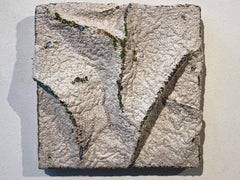
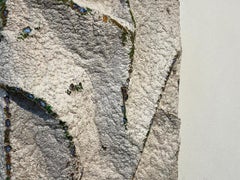
Beach dunes with hundreds of layers of colors, white with folds unique texture

Beach dunes with hundreds of layers of colors, white with folds unique texture

By Ruth Vidal

Located in Carballo, ES

This year, 2024, the artist Ruth Vidal (1998, Isla de Arousa) launches her latest research into painting and games. These works are based on the references that the artist draws from...

Category

21st Century and Contemporary Suprematist Paintings

Materials

Canvas, Cotton, Polymer

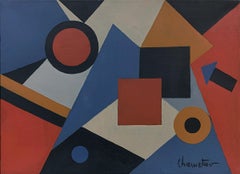
Abstraction Suprematiste

Abstraction Suprematiste

Located in New York, NY

Signed in black, l.r. Oil on canvas 9.4 x 13 inches (23.9 x 33 cm) 17 x 21.5 inches (43.2 x 54.6 cm), framed This photograph is offered by ClampArt, located in New York City.

Category

20th Century Suprematist Paintings

Materials

Oil

Related Items
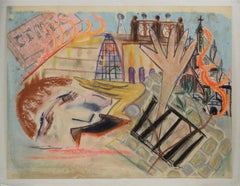
Holy Fire, Abstract Expressionist Figurative Pastel

Holy Fire, Abstract Expressionist Figurative Pastel

$300Sale Price|20% Off

H 22 in W 28 in D 1 in

Holy Fire, Abstract Expressionist Figurative Pastel

Located in Soquel, CA

A unique abstract expressionist pastel drawing by an unknown artist. Depicting a mans face as the focal point with what appears to be chu...

Category

Mid-20th Century Suprematist Paintings

Materials

Paper, Pastel, Cardboard

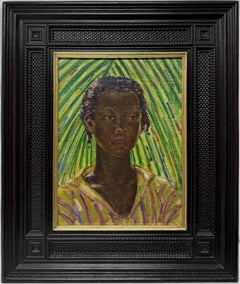
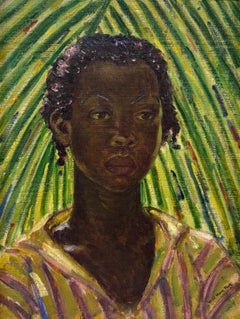
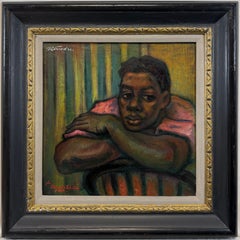
“Jamaican Girl by the Palm Tree, c. 1930” American Impressionist Portrait Lyme

“Jamaican Girl by the Palm Tree, c. 1930” American Impressionist Portrait Lyme

By Will Howe Foote

Located in Yardley, PA

“Jamaican Girl by the Palm Tree, c. 1930” by Will Howe Foote (American, 1874-1965) A fantastic portrait of a young Jamaican woman set against a vibrant palm frond, painted by the re...

Category

1930s Suprematist Paintings

Materials

Oil, Board

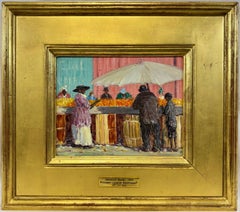
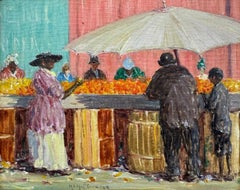
“An Orange Sale - Savannah, 1914” Georgia Impressionist African American Oil

“An Orange Sale - Savannah, 1914” Georgia Impressionist African American Oil

By Harry Leslie Hoffman

Located in Yardley, PA

A wonderfully vivid view of a Savannah fruit market by Harry Leslie Hoffman, dating to his 1914 trip to the city. Hoffman paints the figures with remarkable confidence and sets them...

Category

1910s Suprematist Paintings

Materials

Oil, Board

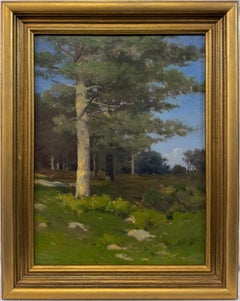
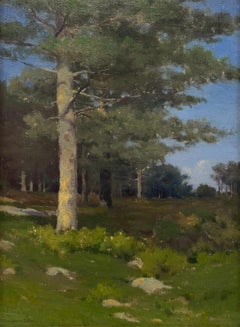
“Eastern White Pines, c. 1910”, New England Landscape, Signed Oil Painting

“Eastern White Pines, c. 1910”, New England Landscape, Signed Oil Painting

By Charles Warren Eaton

Located in Yardley, PA

“Eastern White Pines, c. 1910” by Charles Warren Eaton (American, 1857-1937). A wonderful example of Eaton’s renowned compositions of Eastern white pine trees in his mature style. A...

Category

Early 20th Century Suprematist Paintings

Materials

Canvas, Oil, Board

Landscape with Artist.  Mid-Century Chicago Modernist Oil Painting.

Landscape with Artist. Mid-Century Chicago Modernist Oil Painting.

By William Schwartz

Located in Marco Island, FL

Chicago Modernist, William Schwartz, painted this dynamic landscape of an artist painting en plein air. He studied at the Art Institute of Chicago shortly after emigrating to the Un...

Category

Mid-20th Century Suprematist Paintings

Materials

Canvas, Oil, Board

"The Champ, 1942" Joe Louis "Brown Bomber" Boxer Portrait Ex-Museum Oil Signed

"The Champ, 1942" Joe Louis "Brown Bomber" Boxer Portrait Ex-Museum Oil Signed

Located in Yardley, PA

“The Champ, 1942” by Theodore Fried (1902-1980) This important portrait by Hungarian-American artist Theodore Fried depicts the legendary boxer Joe Louis aka “The Brown Bomber” and ...

Category

1940s Suprematist Paintings

Materials

Canvas, Oil, Board

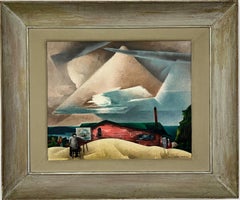
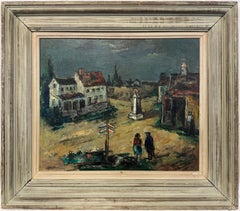
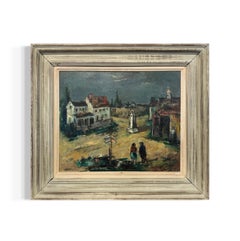
“Crossroads, c. 1940” WPA Polish-American Expressionist Modernist Oil Signed

“Crossroads, c. 1940” WPA Polish-American Expressionist Modernist Oil Signed

By Sol Wilson

Located in Yardley, PA

“Crossroads, c. 1940” by Sol Wilson (Polish-American, 1896-1974). This expressive painting by Wilson depicts a moody village crossroads rendered with his signature textured brushwor...

Category

1940s Suprematist Paintings

Materials

Oil, Board

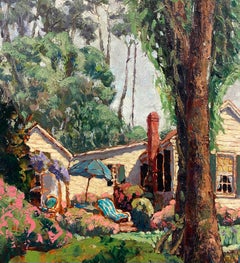
“Untitled (Low Country Home)” American Impressionist Spanish Moss South Carolina

“Untitled (Low Country Home)” American Impressionist Spanish Moss South Carolina

Located in Yardley, PA

An exceptional work by George Waller Parker (1888-1957) of a home in the South Carolina Lowcountry. Perhaps the best example of Parker’s work to be offered in recent decades, this w...

Category

Early 20th Century Suprematist Paintings

Materials

Oil, Board

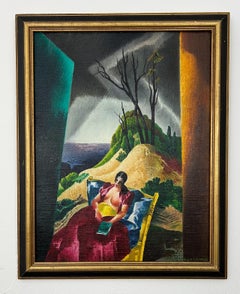
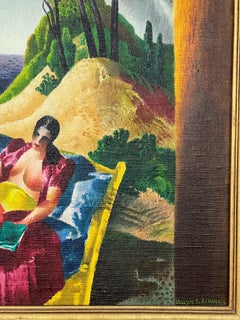
On the Beach.  Woman Reading.  Mid-Century Chicago Modernist Oil Painting.

On the Beach. Woman Reading. Mid-Century Chicago Modernist Oil Painting.

By William Schwartz

Located in Marco Island, FL

Chicago Modernist, William Schwartz, painted this intimate painting of a woman reading titled On the Beach. He studied at the Art Institute of Chicago shortly after emigrating to th...

Category

Mid-20th Century Suprematist Paintings

Materials

Canvas, Oil, Board

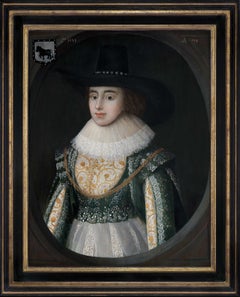
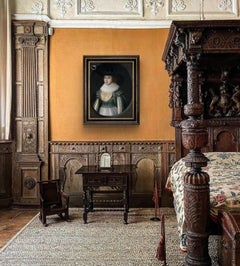
Rare Jacobean Portrait on Panel Lady Elizabeth Wheeler née Cole 1623 Historical

Rare Jacobean Portrait on Panel Lady Elizabeth Wheeler née Cole 1623 Historical

By Cornelius Johnson

Located in London, GB

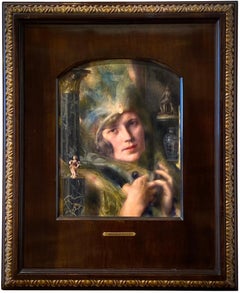
A Rare Jacobean Portrait of Lady Elizabeth Wheeler (née Cole), 1623 Attributed to Cornelius Johnson (1593–1661) This remarkably rare early oil on panel, presented by Titan Fine Art, has emerged as far more than an anonymous “Portrait of a Lady.” Preserved in outstanding condition—its surface retaining exceptional clarity in the lace and textiles—it has only recently been reunited with the identity of its sitter: Elizabeth Cole (1607–1670), later Lady Elizabeth Wheeler, a Westminster gentlewoman whose later life brought her into intimate royal service as laundress for His Majesty’s person. That combination—high quality, uncommon survival, a newly identified sitter, and a life that intersects directly with the last acts of Charles I—places this portrait in a category of genuine rarity. It is not simply a beautiful Jacobean likeness; it is a rediscovered historical document - legible and compelling. The sitter is presented half-length against a dark ground, enclosed within a painted sculpted oval surround that functions like an architectural frame. This device, fashionable in the 1620s, concentrates the viewer’s attention and heightens the sense of social presentation: the sitter appears both physically and symbolically “set apart,” as if viewed through a refined aperture. The portrait’s immediate power, however, lies in the costume—an ensemble of striking modernity for c. 1623 and rendered with a precision that survives with remarkable crispness. She wears a deep green gown—a fitted overgown with open sleeves—over a finely embroidered linen jacket (a stiffened bodice/waistcoat garment). The sleeves form pronounced “wings” at the shoulder, a structurally assertive fashion detail of the early 1620s that enlarges the silhouette and signals sophistication. Beneath the green overlayer, the white linen jacket is richly ornamented in gilt embroidery. The goldwork is arranged as scrolling foliate forms—looping, curling tendrils punctuated by seed-like stippling—organised into balanced compartments across the bodice and sleeves. The motifs read as stylised botanical forms with rounded fruit-like terminals and leaf elements: not literal naturalism, but controlled abundance. The technique is described with extraordinary intelligence, mimicking couched metallic thread through patterned, “stitched” marks, while tiny dots and short dashes create a lively tactile shimmer. This embroidered jacket sits above a newly fashionable high-waisted, sheer apron or overskirt. The translucent fabric falls in soft vertical folds and is articulated with narrow lace-edged bands, giving the skirt a crisp rhythm of alternating sheer and patterned strips. At the neck, a fine ruff frames the face: a disciplined structure of pleated linen finished with delicate lace. Draped diagonally across the torso are long gold chains, painted to suggest weight and metallic gleam; they function both as ornament and as a further signifier of status. The cumulative effect is controlled luxury: she is not overloaded with jewels, but clothed in textiles whose cost and craftsmanship speak unmistakably. The recent sitter’s identification rests on heraldic and genealogical analysis: the arms shown on the painting correspond to those recorded for several families in armorial sources, but when the lines of descent are tested against survival and chronology, the viable bearer by 1623 resolves to Cole, and—crucially—to the London branch. That resolution matters because it anchors the portrait to a very specific social world: London/Westminster civic gentry and Crown administration, the milieu in which portraiture served as both self-fashioning and social instrument. The recent identification of the sitter (the London Cole branch of the family) is not merely genealogical; it has direct implications for authorship. A London-based mercantile or civic-gentry family would have ready access to leading immigrant artists, familiarity with heraldic display conventions, and the means to commission oil on panel, still standard among Netherlandish-trained painters. In that context, the portrait’s age inscription and date become especially revealing. The painting states the sitter to be nineteen years of age. Yet Elizabeth Cole’s birth in 1607 suggests she would be younger if the portrait is dated as early as 1623. The key insight is that the “incorrect” age is best understood not as a mistake but as a deliberate social adjustment, a performative statement rather than a documentary one. The most persuasive explanation is strategic. Portraits of high-status unmarried women were frequently made in connection with marriage negotiations. In the early 1620s, Elizabeth’s future husband, William Wheeler, was resident abroad at Middelburg in Zeeland in the Dutch Republic. If a portrait was intended to support or facilitate a match with an educated, ambitious man—“a man of learning and letters,” —then presenting a seventeen-year-old as nineteen would subtly reposition her as more mature and more nearly a peer in age, Wheeler being around twenty-two. The portrait thus becomes an instrument of alliance, not merely a likeness: an image designed to persuade, reassure, and elevate. This reading aligns perfectly with the period’s wider conditions. The early 1620s in England were charged with anxiety and expectation: James I’s later reign was marked by court faction, diplomatic tension, and the pressures of European conflict. The so-called “art market” was inseparable from these dynamics. Portraiture flourished because it served multiple functions: it fixed lineage, advertised alliance, signalled readiness for marriage, and projected the stability of elite households in an uncertain world. For Westminster families whose power came through office, portraiture was also a declaration of belonging—proof that administrative elites possessed the cultural polish traditionally associated with older aristocratic rank. Elizabeth’s later life vindicates the portrait’s impression of steadiness. Although no record survives of her marriage ceremony to William Wheeler, wills suggest she had married him by the mid-1630s, and there are strong grounds—consistent with the portrait’s implications—for a union already in place by the early 1630s, possibly earlier. Wheeler himself rose rapidly. By 1639 he held a manor at Westbury Leigh in Wiltshire and sought letters of denization due to overseas birth, enabling him to stand as Member of Parliament for Westbury. He leased the principal manor of Westbury the following year, coinciding with his election. In government service he became Remembrancer of the Exchequer and held office across regime change, a testament to administrative skill and political pragmatism. It is Elizabeth, however, who makes this portrait exceptional. She became laundress for His Majesty’s person, responsible for the washing and oversight of the King’s personal linen—an office that, despite its domestic description, required unusual trust, discretion, and access. Her role becomes visible in 1643 when she was granted a warrant signed by the Speaker of the House of Commons to follow the King to Oxford with her servant after the outbreak of the Civil War. She continued to serve during the King’s captivity after 1646, and at Carisbrooke Castle in 1647 she and her maid were implicated in smuggling secret correspondence to and from Charles I, in service of escape plans. After the King’s failed attempt to escape in March 1648, she was removed—yet the King’s trust persisted: he was permitted to send her remaining jewels in an ivory casket...

Category

17th Century Suprematist Paintings
Materials

Oil, Panel

Previously Available Items
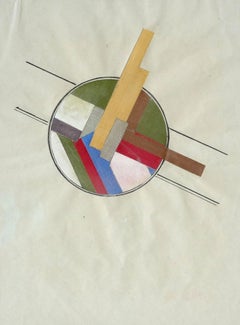
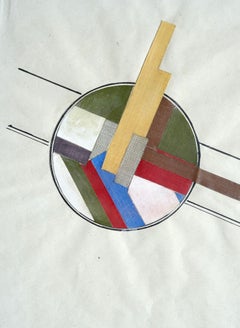
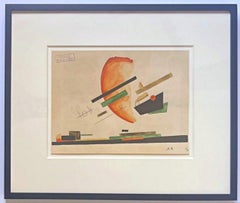
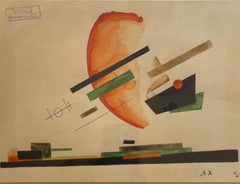
Original Suprematist painting, signed and titled, protege of Kazimir Malevich

Original Suprematist painting, signed and titled, protege of Kazimir Malevich

Located in New York, NY

"They will understand us in 100 years" Lazar Khidekel, ca. 1920 Suprematist, Avant-Garde Russian artist and student of Malevich Lazar Khidekel Художник: Хидекель Лазарь Маркович Or...

Category

1920s Suprematist Paintings
Materials

Watercolor

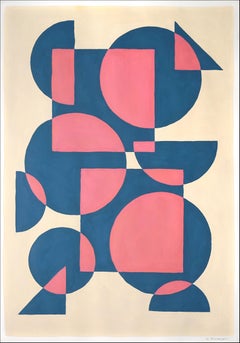
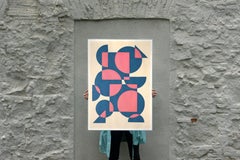
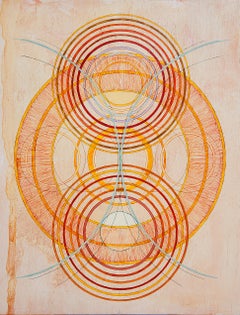
Futurist Geometric Homage, Blue and Pink, Positive vs Negative Circles & Squares

Futurist Geometric Homage, Blue and Pink, Positive vs Negative Circles & Squares

By Ryan Rivadeneyra

Located in Barcelona, ES

"Futurist Geometric Homage" is a hand-painted acrylic painting on high-quality 300g paper by artist Ryan Rivadeneyra. This series focuses on geometric patterns and combinations of s...

Category

2010s Suprematist Paintings
Materials

Oil Pastel, Ink, Sumi Ink, Oil, Acrylic, Watercolor, Archival Paper

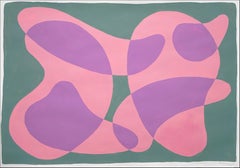
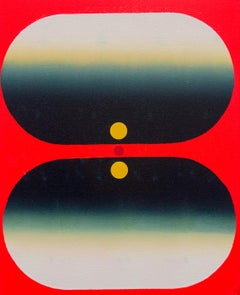
Bodies in Bed, Abstract Nude Patterns in Pink and Green, Avant-Garde Shapes

Bodies in Bed, Abstract Nude Patterns in Pink and Green, Avant-Garde Shapes

By Ryan Rivadeneyra

Located in Barcelona, ES

"Bodies in Bed" is a hand-painted acrylic painting on high-quality 300g paper by artist Ryan Rivadeneyra. These painting, influenced by modernist artists of the 50's, 60's, and 70's...

Category

2010s Suprematist Paintings
Materials

Oil Pastel, Ink, Sumi Ink, Oil, Acrylic, Watercolor, Archival Paper

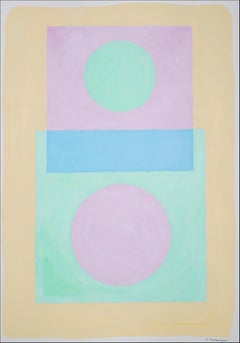
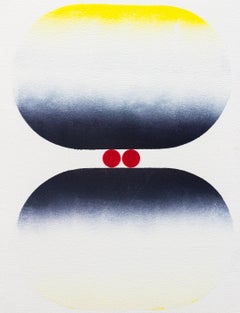
Pastel Divisions, Suprematist Style in Soft Tones, Yellow and Pink Geometry 2022

Pastel Divisions, Suprematist Style in Soft Tones, Yellow and Pink Geometry 2022

By Ryan Rivadeneyra

Located in Barcelona, ES

"Pastel Divisions" is a hand-painted acrylic painting on high-quality 300g paper by artist Ryan Rivadeneyra. This series focuses on geometric patterns and combinations of shapes to ...

Category

2010s Suprematist Paintings
Materials

Oil Pastel, Ink, Sumi Ink, Oil, Acrylic, Watercolor, Archival Paper

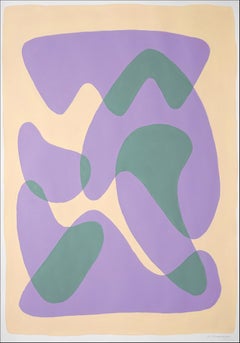
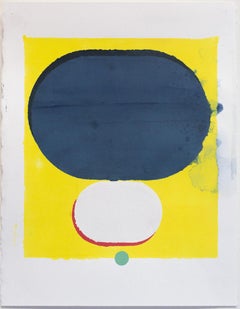
Modern Native Shapes in Mauve and Green, Tan Background, Mid-Century Style, 2022

Modern Native Shapes in Mauve and Green, Tan Background, Mid-Century Style, 2022

By Ryan Rivadeneyra

Located in Barcelona, ES

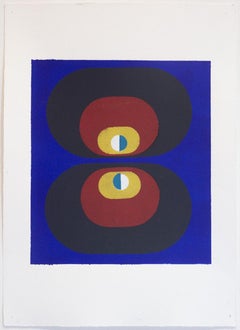
"Modern native Shapes II" is a hand-painted acrylic painting on high-quality 300g paper by artist Ryan Rivadeneyra. These painting, influenced by modernist artists of the 50's, 60's...

Category

2010s Suprematist Paintings
Materials

Oil Pastel, Ink, Sumi Ink, Oil, Acrylic, Watercolor, Archival Paper

Composition, circa 1920

Composition, circa 1920

By Nikolai Suetin

Located in New York, NY

Was a Russian Suprematist artist. He worked as a graphic artist, a designer, and a ceramics painter. Provenance: Family Barak, Tel Aviv ,purchased in Paris in the 60's

Category

1920s Suprematist Paintings
Materials

Gouache

Supermatist Composition, circa 1920

Supermatist Composition, circa 1920

By Nina Kogan

Located in New York, NY

Signed with the initials on the reverse.. with an old etiquette verso. Mme Marie . Caillierez, Fine Art, Paris

Category

1920s Suprematist Paintings
Materials

Gouache

Suprematist paintings for sale on 1stDibs.

Find a wide variety of authentic Suprematist paintings available for sale on 1stDibs. Not every interior allows for large Suprematist paintings, so small editions measuring 10.25 inches across are also available. Prices for paintings made by famous or emerging artists can differ depending on medium, time period and other attributes. On 1stDibs, the price for these items starts at $610 and tops out at $14,500, while the average work sells for $1,640.