15th Century and Earlier Art

to
41
87
29
21
12
17
Overall Width
to
Overall Height
to
7,755
21,928
164,761
231,939
2,037
2,304
4,979
6,541
5,880
15,072
20,765
26,017
18,760
14,129
5,535
15
4
4
3
3
2
1
1
40
38
1
91
44
43
43
41
25
23
16
14
11
7
6
6
6
5
5
5
4
4
4
41
35
32
25
25
5
3
2
2
1
14
5
96
67
Period: 15th Century and Earlier
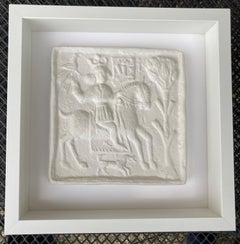
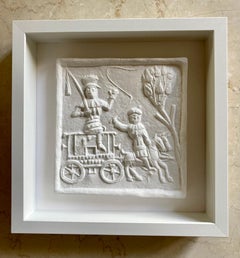
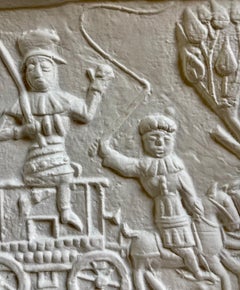
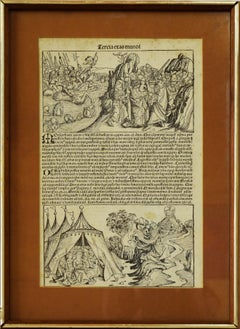
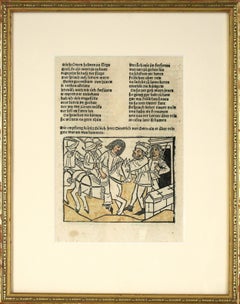
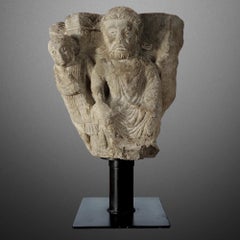
One on a chariot  Medieval Tile Gypsum Cast

One on a chariot Medieval Tile Gypsum Cast

Located in Slovak Republic, SK

Gypsum cast - medieval tile, from Central Europe. Adjusted in a frame, ready to hang or install.

Category

Gothic 15th Century and Earlier Art

Materials

Gesso

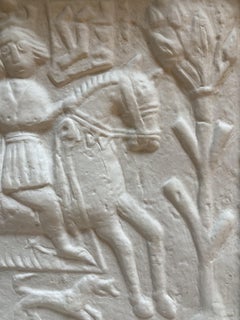
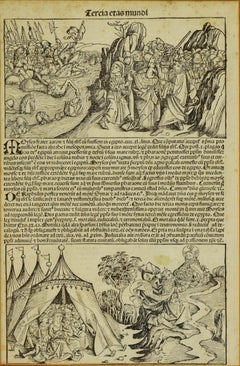
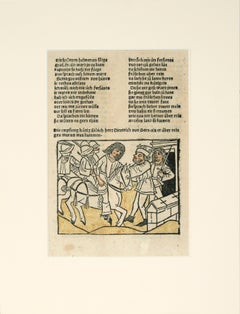
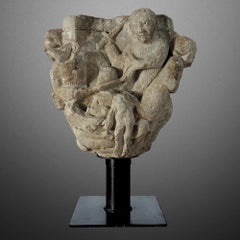
Men on a Horse Medieval Tile Gypsum Cast

Men on a Horse Medieval Tile Gypsum Cast

Located in Slovak Republic, SK

Gypsum cast-medieval tile, inspired from Central Europe. Adjusted in a frame, ready to hang or install.

Category

Gothic 15th Century and Earlier Art

Materials

Gesso

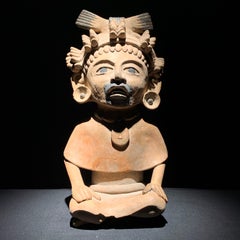
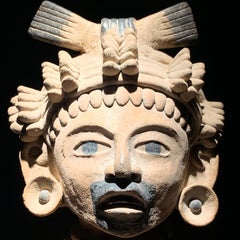
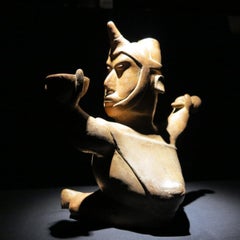
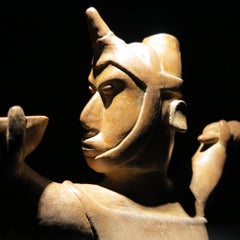
Veracruz Mexico Pre-Columbian ceramic Warrior figure sculpture

Veracruz Mexico Pre-Columbian ceramic Warrior figure sculpture

Located in Wilton Manors, FL

Figure of a Chanting Warrior Ceramic with bitumen highlights 300-600 CE (Classic Period) Mexico, Veracruz, possibly Nopiloa Veracruz Culture Pre-Columbian, Mexico, Vera Cruz culture...

Category

15th Century and Earlier Art

Materials

Ceramic

Circa 1500 Italian Renaissance Oil Painting on Copper St. Francis of Assisi

Circa 1500 Italian Renaissance Oil Painting on Copper St. Francis of Assisi

Located in Cirencester, Gloucestershire

St. Francis of Assisi Italian School, circa 1500 oil paint on copper, unframed copper: 6.75 x 10 inches provenance: private collection, Loire Valley, France condition: for a work tha...

Category

Renaissance 15th Century and Earlier Art

Materials

Copper

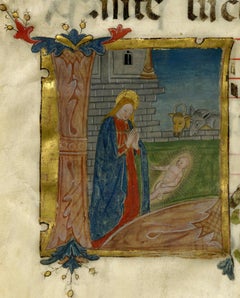
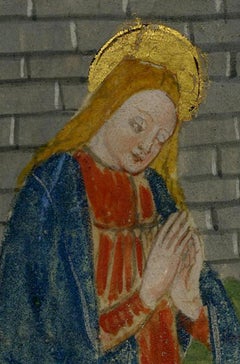
The Nativity of Christ

The Nativity of Christ

Located in Fairlawn, OH

Anonymous 15th Century Italian, Probably Milan area The Nativity of Christ Pigments, ink and gold leaf on vellum Unsigned as is always the case with illuminated manuscripts The Virgi...

Category

Old Masters 15th Century and Earlier Art

Materials

Pigment

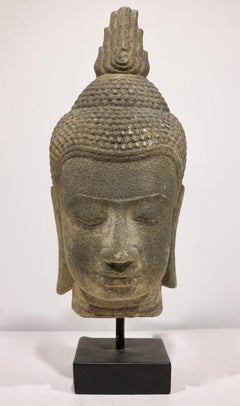
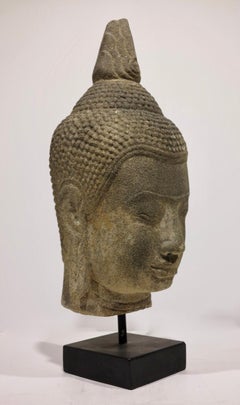
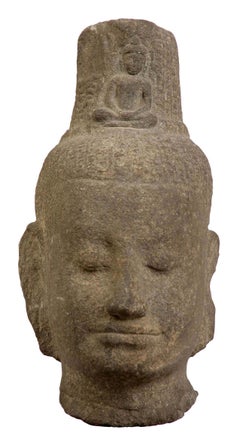
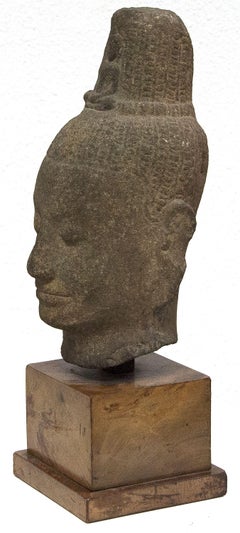
Sandstone head of Buddha, Khmer, Angkor period, post-Bayon

Sandstone head of Buddha, Khmer, Angkor period, post-Bayon

Located in Wilton Manors, FL

Beautiful Khmer head of Buddha. Angkor period, style of the post-Bayon. 14th century. Carved sandstone. Height 12 5/8 inches, width 5 5/8 inches, profile 5 ...

Category

15th Century and Earlier Art

Materials

Sandstone

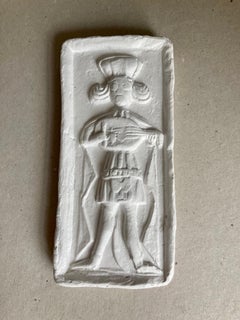
A Lute Player Medieval Tile Gypsum Cast

A Lute Player Medieval Tile Gypsum Cast

Located in Slovak Republic, SK

Gypsum cast-medieval tile, inspired from Central Europe. Could be also adjusted in a frame, ready to hang or install ( price will be different).

Category

Gothic 15th Century and Earlier Art

Materials

Gesso

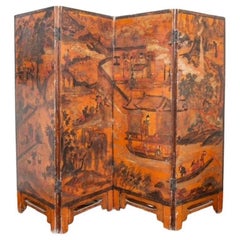
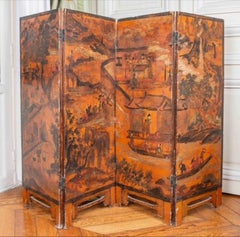
Antique Chinese Four Leaf Panel Hand-Painted Lacquer Screen

Antique Chinese Four Leaf Panel Hand-Painted Lacquer Screen

Located in Cirencester, Gloucestershire

Antique Chinese Four-Panel Lacquer Screen with Scenic Landscape Description: This exquisite antique Chinese four-panel lacquer screen is a remarkable example of traditional craftsma...

Category

15th Century and Earlier Art

Materials

Wood

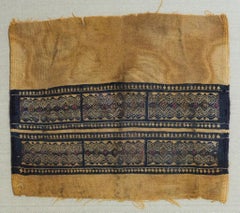
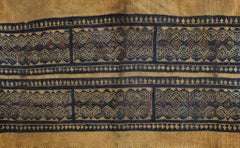
3rd to 5th Century Coptic Egyptian Textile fragment beige dark blue Brocade

3rd to 5th Century Coptic Egyptian Textile fragment beige dark blue Brocade

Located in Austin, TX

Textile size 8.5 x 10 in. Frame size 13.5 x 15 in. This piece is an ancient Coptic Egyptian textile fragment, dating from the 3rd to 5th century CE. It is composed of a coarse, plai...

Category

15th Century and Earlier Art

Materials

Textile, Linen, Dye

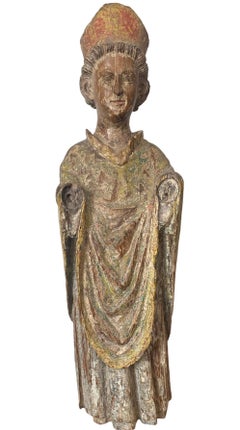
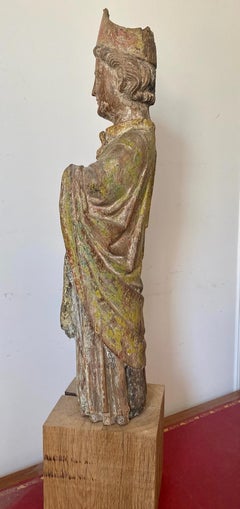
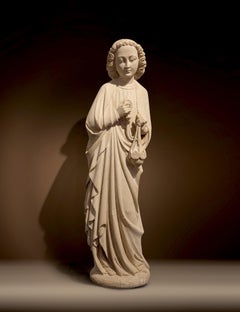
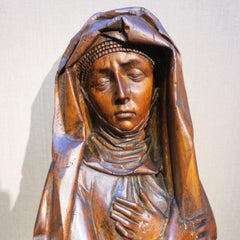
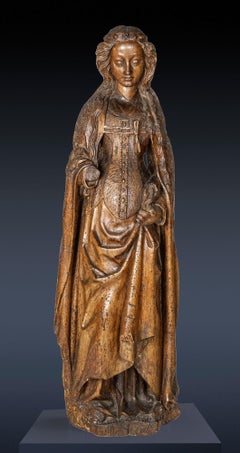
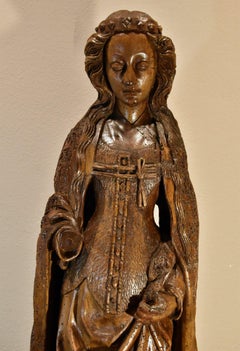
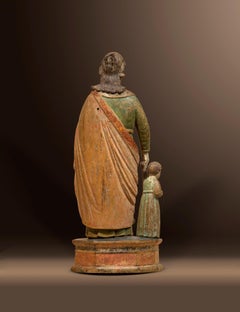
Late 15th-century Old Master Burgundian Netherlands carved walnut figure

Late 15th-century Old Master Burgundian Netherlands carved walnut figure

Located in Wilton Manors, FL

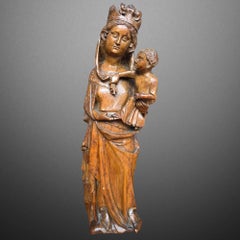
Beautiful late 15th-century Burgundian Netherlandish portrait of a woman. Carved walnut. Original polychrome has been removed with traces at base and lower portions of figure. Minor ...

Category

Old Masters 15th Century and Earlier Art

Materials

Walnut

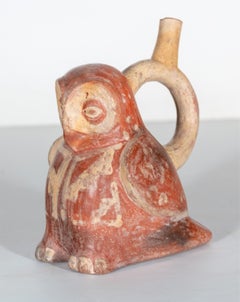
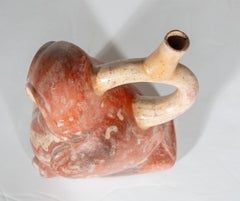
"Moche Owl Pot, " Animalic Ceramic Vessel created in Pre-Columbian Peru

"Moche Owl Pot, " Animalic Ceramic Vessel created in Pre-Columbian Peru

Located in Milwaukee, WI

This piece is a pot made by an unknown artist in Pre-Columbian Peru. It takes the shape of an owl and has a circular handle with the opening on its back. This pot is a light beige an...

Category

15th Century and Earlier Art

Materials

Ceramic

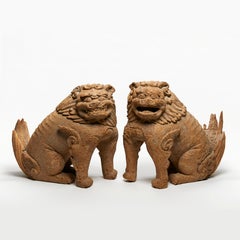
Koma-inu “lion dogs” symbolic guardians at temples or shrines, Japan (#004904)

Koma-inu “lion dogs” symbolic guardians at temples or shrines, Japan (#004904)

Located in Frankfurt am Main, DE

Koma-inu “lion dogs”, symbolic guardians at temples or shrines. Cypress burl wood (hinoki) According to ancient Chinese philosophy, the animal with its mouth open embodies the mascu...

Category

Other Art Style 15th Century and Earlier Art

Materials

Wood

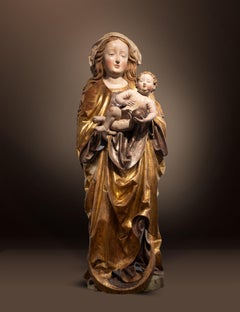
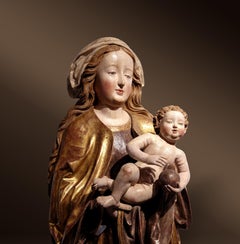
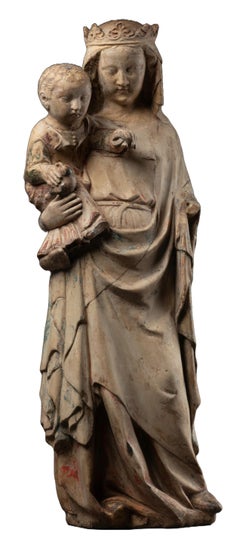
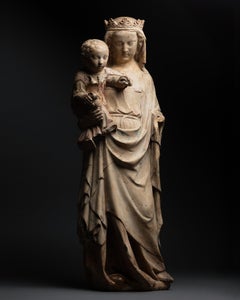
Museum Madonna
Museum Madonna

Museum Madonna

Located in Wien, Wien

Museum Madonna Nikolaus Weckmann Ulm 1481 - 1526 Ulm Carved limewood Polychrome painted & gilded Height 132 cm Niklaus Weckmann was an important sculptor who was active in the l...

Category

15th Century and Earlier Art

Materials

Wood

20th Century French Modernist Cubist Painting, Mona Lisa Study

20th Century French Modernist Cubist Painting, Mona Lisa Study

Located in Cirencester, Gloucestershire

Sepia ink and mixed media portrait, the artist's take on the Mona Lisa by Bernard Labbe (French Mid-20th Century) original sepia ink, pencil, gouache, watercolor on paper image size:...

Category

15th Century and Earlier Art

Materials

Acrylic

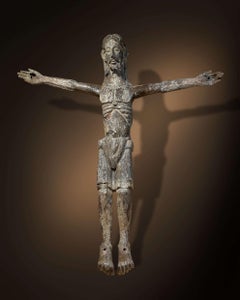
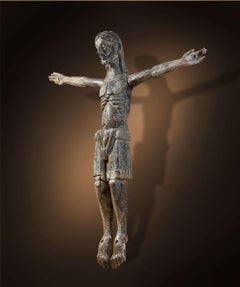
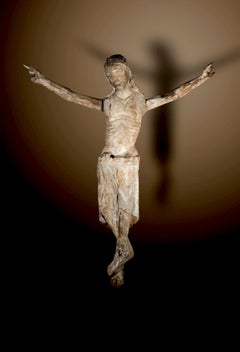
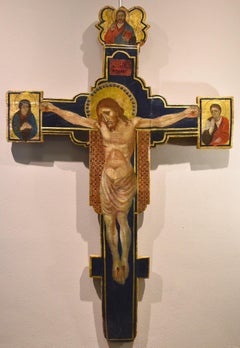
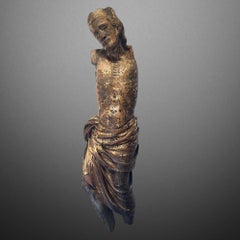
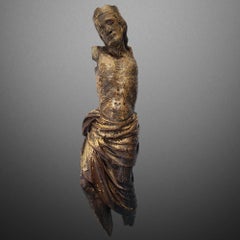
Corpus Christi 1150/70

Corpus Christi 1150/70

Located in Wien, Wien

Corpus Christi around 1150/70 Southern France or Catalonia carved oak wood

 height 109 cm, width 96 cm Remains of polychromy

Category

Gothic 15th Century and Earlier Art

Materials

Wood

French Modernist Cubist Painting Fishing Boats on the Coast

French Modernist Cubist Painting Fishing Boats on the Coast

Located in Cirencester, Gloucestershire

Fishing boats by the Coast by Maurice Mazeilie (French, 1924-2021) watercolor painting on artist paper, unframed signed lower right stamped verso Appealing painting in slightly overa...

Category

15th Century and Earlier Art

Materials

Acrylic

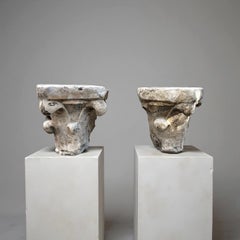
Coppia di Capitelli Medievali in Marmo di Zandobbio XII secolo

Coppia di Capitelli Medievali in Marmo di Zandobbio XII secolo

Located in Pistoia, IT

Coppia di capitelli medievali decorati a motivi fogliacei, Lombardia, XII secolo. La forma slanciata da cui si dipartono le foglie lanceolate, sormontata da una spessa mensola, è ti...

Category

Medieval 15th Century and Earlier Art

Materials

Stone

Romanesque Madonna - 1175/80

Romanesque Madonna - 1175/80

Located in Wien, Wien

ROMAN MADONNA “Sedes Sapientiae” Auvergne Around 1175/80 Pine wood Polychrome remains Height 40 cm This depiction of the Madonna is a masterfully carved, extremely early figure made...

Category

Gothic 15th Century and Earlier Art

Materials

Wood

French Modernist Cubist Painting Steps into the Town

French Modernist Cubist Painting Steps into the Town

Located in Cirencester, Gloucestershire

Steps Into The Town, steep stone steps lead figures down amongst town buildings. by Maurice Mazeilie (French, 1924-2021) watercolor painting on artist paper, unframed unsigned to the...

Category

15th Century and Earlier Art

Materials

Acrylic

CRESCENT MOON MADONNA

CRESCENT MOON MADONNA

Located in Wien, Wien

Master in the circle of Michael Pacher (Mühlen ca. 1435 - 1498 Salzburg) Salzburg Around 1480 Carved limewood Old polychrome version Height 118 cm This Madonna is an outstanding ex...

Category

Gothic 15th Century and Earlier Art

Materials

Wood

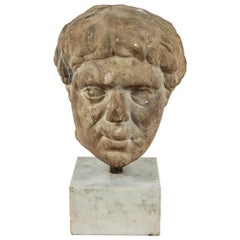
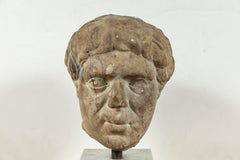
Roman Empire Marble Bust

Roman Empire Marble Bust

Located in Los Angeles, CA

Rare, Late Roman Empire (3rd to 5th centuries, C.E.), solid marble bust of a young man. Beautiful patina. Mounted on a later, Carrara marble base.

Category

15th Century and Earlier Art

Materials

Marble

20th Century French Modernist Cubist Painting, French Town

20th Century French Modernist Cubist Painting, French Town

Located in Cirencester, Gloucestershire

Watercolor and ink French town buildings over a River by Bernard Labbe (French mid 20th century) original watercolor and ink on card image size: 7.5 x 6 inches card overall: 9.4 x 8....

Category

15th Century and Earlier Art

Materials

Acrylic

Roundel depicting St. Catherine

Roundel depicting St. Catherine

Located in Fairlawn, OH

Unknown French Art and Workshop, Middle 15th century Roundel depicting St. Catherine (?) Gouache, ink gold wash and gold burnishing on vellum Book of Hours folio attributed to the C...

Category

Old Masters 15th Century and Earlier Art

Materials

Gouache, Pigment

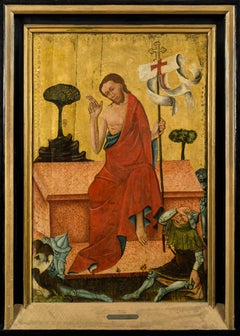
The Resurrection of Christ

The Resurrection of Christ

Located in New York, NY

Provenance: with “Mr. Scheer,” Vienna, by July 1918; where acquired by: Jindřich Waldes, Prague, 1918–1941; thence by descent to: Private Collection, New York Literature: Rudolf Kuchynka, “České obrazy tabulové ve Waldesově obrazárně,” Památky archeologické, vol. 31 (1919), pp. 62-64, fig. 5. Jaroslav Pešina, “K datování deskových obrazů ve Waldesově obrazárně,” Ročenka Kruhu pro Pěstování Dějin Umění: za rok (1934), pp. 131-137. Jaroslav Pešina, Pozdně gotické deskové malířství v Čechách, Prague, 1940, pp. 150-151, 220. Patrik Šimon, Jindřich Waldes: sběratel umění, Prague, 2001, pp. 166, 168, footnote 190. Ivo Hlobil, “Tři gotické obrazy ze sbírky Jindřicha Waldese,” Umění, vol. 52, no. 4 (2004), p. 369. Executed sometime in the 1380s or 1390s by a close associate of the Master of the Třeboň Altarpiece, this impressive panel is a rare work created at the royal court in Prague and a significant re-discovery for the corpus of early Bohemian painting. It has emerged from an American collection, descendants of the celebrated Czech industrialist and collector Jindřich Waldes, who died in Havana fleeing Nazi-occupied Europe. The distinctive visual tradition of the Bohemian school first began to take shape in the middle of the fourteenth century after Charles IV—King of Bohemia and later Holy Roman Emperor—established Prague as a major artistic center. The influx of foreign artists and the importation of significant works of art from across Europe had a profound influence on the development of a local pictorial style. Early Italian paintings, especially those by Sienese painters and Tommaso da Modena (who worked at Charles IV’s court), had a considerable impact on the first generation of Bohemian painters. Although this influence is still felt in the brilliant gold ground and the delicate tooling of the present work, the author of this painting appears to be responding more to the paintings of his predecessors in Prague than to foreign influences. This Resurrection of Christ employs a compositional format that was popular throughout the late medieval period but was particularly pervasive in Bohemian painting. Christ is shown sitting atop a pink marble sarcophagus, stepping down onto the ground with one bare foot. He blesses the viewer with his right hand, while in his left he holds a triumphal cross with a fluttering banner, symbolizing his victory over death. Several Roman soldiers doze at the base of the tomb, except for one grotesque figure, who, beginning to wake, shields his eyes from the light and looks on with a face of bewilderment as Christ emerges from his tomb. Christ is wrapped in a striking red robe with a blue interior lining, the colors of which vary subtly in the changing light. He stands out prominently against the gold backdrop, which is interrupted only by the abstractly rendered landscape and trees on either side of him. The soldiers’ armor is rendered in exacting detail, the cool gray of the metal contrasting with the earth tones of the outer garments. The sleeping soldier set within a jumble of armor with neither face nor hands exposed, is covered with what appears to be a shield emblazoned with two flies on a white field, somewhat resembling a cartouche (Fig. 1). This may be a heraldic device of the altarpiece’s patron or it may signify evil, referencing either the Roman soldiers or death, over both of which Christ triumphs. This painting formed part of the collection assembled by the Czech industrialist and founder of the Waldes Koh-i-noor Company, Jindřich Waldes, in the early twentieth century. As a collector he is best remembered for establishing the Waldes Museum in Prague to house his collection of buttons (totaling nearly 70,000 items), as well as for being the primary patron of the modernist painter František Kupka. Waldes was also an avid collector of older art, and he approached his collecting activity with the goal of creating an encyclopedic collection of Czech art from the medieval period through to the then-present day. At the conclusion of two decades of collecting, his inventory counted 2331 paintings and drawings, 4764 prints, and 162 sculptures. This collection, which constituted the Waldesova Obrazárna (Waldes Picture Gallery), was first displayed in Waldes’ home in Prague at 44 Americká Street and later at his newly built Villa Marie at 12 Koperníkova Street. This Resurrection of Christ retains its frame from the Waldes Picture Gallery, including its original plaque “173 / Česky malíř z konce 14 stol.” (“Czech painter from the end of the 14th century”) and Waldes’ collection label on the reverse. The Resurrection of Christ was one of the most significant late medieval panel...

Category

Old Masters 15th Century and Earlier Art
Materials

Tempera, Panel

Amlash Parallel World - Sculpture, Bronze

Amlash Parallel World - Sculpture, Bronze

By Pantea Mahrou

Located in London, GB

This sculpture explores the coexistence of parallel worlds, connected through subtle points of energy and meaning. Across its surface appear codes, numbers, and symbolic signs rooted...

Category

Contemporary 15th Century and Earlier Art

Materials

Bronze

French Modernist Cubist Painting Vibrant Street Scene

French Modernist Cubist Painting Vibrant Street Scene

Located in Cirencester, Gloucestershire

Vibrant street scene by Maurice Mazeilie (French, 1924-2021) watercolor painting on artist paper, unframed signed lower right stamped verso A robustly coloured and lively scene of a ...

Category

15th Century and Earlier Art

Materials

Acrylic

Ancient Roman Carved Marble Head Sculpture Fragment on Stand

Ancient Roman Carved Marble Head Sculpture Fragment on Stand

Located in New York, NY

A Roman marble portrait head fragment, dating from approximately the 1st to 3rd century AD. This piece features a male subject with classicized facial features and a textured, croppe...

Category

15th Century and Earlier Art

Materials

Marble

Folio from Communion of Saints, Reading from the Book of St. Matthew.

Folio from Communion of Saints, Reading from the Book of St. Matthew.

Located in Fairlawn, OH

Readings from the "Communion of Saints": folio from an Italian Missal Pigment on vellum Mid 17th century Provenance: Otto F. Ege (1888-1951) Phillip Duechnes Bookseller, New York, c. 1948 References And Exhibitions: Otto F. Ege Box Folio 27 Ege describes these folios as: Epistolary (Epistolarium), Italy, Middle 15th century Latin Text: Rotunda or Round Gothic Script, square rhetorical neumes Sister folio are in the following rare book libraries: Case Western Reserve University Cincinnati Public Library Cleveland Institute of Art Cleveland Public Library Denison University Kent State University Kenyon College...

Category

Old Masters 15th Century and Earlier Art

Materials

Ink, Vellum

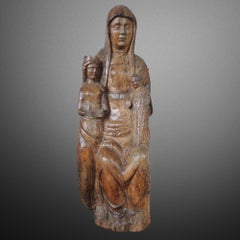
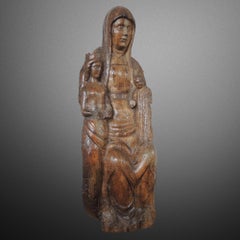
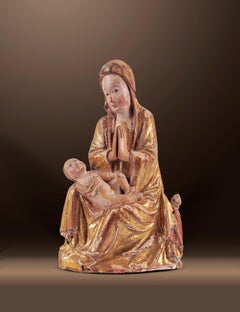
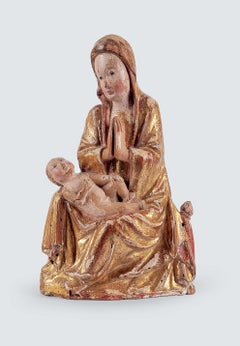
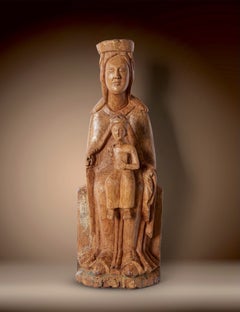
Early Renaissance Wood Sculpture

Early Renaissance Wood Sculpture

Located in Los Angeles, CA

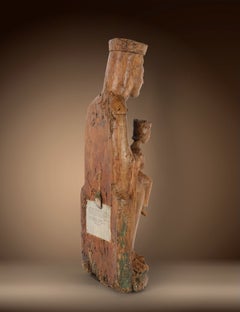
An evocative, 14th century, carved wood statue of a seated Mary with the Christ child in her lap. The piece with a beautiful patina featuring polychrome paint traces. Now mounted on ...

Category

Renaissance 15th Century and Earlier Art

Materials

Wood, Paint

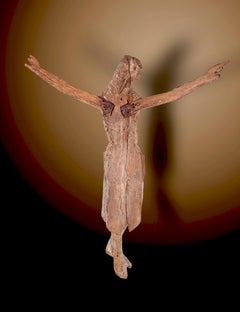
Corpus Christi
Corpus Christi

Corpus Christi

Located in Wien, Wien

MUSEUM CORPUS CHRISTI Spain/Catalonia or Asturias Around 1250 Corpus hardwood, arms softwood Remains of the original polychrome setting Height 109.5...

Category

15th Century and Earlier Art

Materials

Wood

Quartet No. 1
Quartet No. 1

Quartet No. 1

By Eugene Larkin

Located in Kansas City, MO

Eugene Larkin Quartet No. 1 Woodcut in two colors Signed and titled by hand Size: 20 x 29.5 inches COA provided Eugene Larkin (1921-2010) The late Eugene Larkin was an artist who worked in the Twin Cities area for many years and needs little introduction. His works have been shown, collected and appreciated by numerous galleries, museums and collectors throughout the United States. Larkin was influential both as an artist and as a teacher. He taught at the Minneapolis College of Art and Design between 1954 and 1969, where he was head of printmaking and Chairman of the Division of Fine Arts. From 1969-1991 he was a professor in the Design Department at the University of Minnesota. Eugene Larkin, a lithographer, teacher and artist who left behind scores of works, some of them in the permanent collections of the Library of Congress and the Museum of Modern Art. He was considered an early promoter of lithography education, Larkin introduced it into arts programs while teaching at the Minneapolis College of Art and Design and the University of Minnesota. He held a prominent place in the art world through decades of working and teaching in Minneapolis. His work depicted a wide range of subjects, from musicians to nature, including a series of woodcuts based on William Blake's ""Songs of Innocence and Experience." Larkin also wrote a textbook, ""Design: The Search for Unity."" It was his work with lithography, an 18th-century printmaking process, for which he was best known. His last local exhibit was a retrospective at The University of Minnesota Weisman Museum in 2005. ""Sometimes I start the artistic process from a literary source - Adam and Eve, the Egyptian nature gods, or classical Greek themes but sometimes I start from nature. Trees have always been a favorite subject. I see trees as people, as vertical objects...

Category

Modern 15th Century and Earlier Art

Materials

Woodcut

Gandharan Frieze with Scenes from the Life of Buddha

Gandharan Frieze with Scenes from the Life of Buddha

Located in Palm Desert, CA

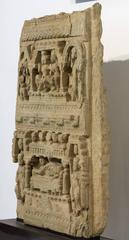
A schist stone carving from 2nd/3rd Century Gandhara depicting scenes from the life of Buddha. Provenance: Spink and Sons LTD, 1985.

Category

Other Art Style 15th Century and Earlier Art

Materials

Stone

Apotropäische Teufelsfigur

Apotropäische Teufelsfigur

Located in Wien, Wien

APOTROPAIC DEVIL FIGURE Romansh South Tyrol or Grisons Around 1120/50 Carved pine wood Original version Height 151 cm This singular figure is a demonic, devil-like figure carved fro...

Category

15th Century and Earlier Art

Materials

Wood

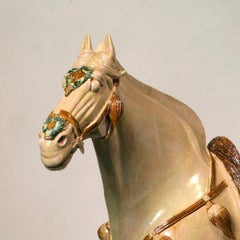
Sancai-Glazed Horse with Cut Fur Blanket

Sancai-Glazed Horse with Cut Fur Blanket

Located in Palm Desert, CA

A Chinese, Tang Dynasty, Sancai-glazed, three colors of brown, green and creamy, sculpture of a horse with a cut fur blanket. This Chinese, Tang Dynasty (618-907 AD), glazed earthenw...

Category

15th Century and Earlier Art

Materials

Earthenware, Glaze

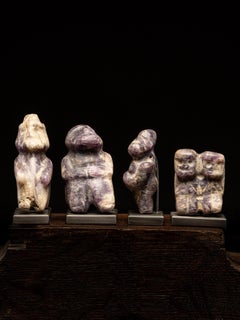
Mother Goddess Figurine, Early Indus Valley Civilization (circa 3500 - 2800 BC)

Mother Goddess Figurine, Early Indus Valley Civilization (circa 3500 - 2800 BC)

Located in Paris, Île-de-France

Mother Goddess Figurine Early Indus Valley Civilization (circa 3500 - 2800 BC) Handmade pottery, 140 mm x 45 mm, 60 g Provenance: Prince Collection, 1990s-2014; Pierre Bergé Colle...

Category

Tribal 15th Century and Earlier Art

Materials

Clay, Terracotta

Father Stefan Fridolin, "Schatzbehalter" (Treasury of the True Riches

Father Stefan Fridolin, "Schatzbehalter" (Treasury of the True Riches

Located in Fairlawn, OH

Father Stefan Fridolin, "Schatzbehalter" (Treasury of the True Riches of Salvation): The 30th Figure - Astrological Diagram with Scene of the Nativity Woodcut, 1491 Unsigned, as issued Published by Anton Koberger Diagram has Zodiac signs on outer ring, planets in the lower registers, and Nativity in the center. Condition: Very good for a 15h century woodcut, with the usual slight age stains Sheet size: 11 1/2 x 8 1/4 inches Wogelmut was the teacher of Albrecht Durer and employed young Durer in many project of the last decade of the 15th century. Michel Wolgemut Biography Wolgemut trained with his father Valentin Wolgemut (who died in 1469 or 1470) and is thought to have been an assistant to Hans Pleydenwurff in Nuremberg. He worked with Gabriel Malesskircher in Munich early in 1471, leaving the city after unsuccessfully suing Malesskircher's daughter for breach of contract, claiming she had broken off their engagement. He then returned to his late father's workshop in Nuremberg, which his mother had maintained since Valentin's death. In 1472 he married Pleydenwurff's widow and took over his workshop;[3] her son Wilhelm Pleydenwurff worked as an assistant, and from 1491 a partner, to Wolgemut. Some consider Wilhelm a finer artist than Wolgemut, however he died in January 1494, when he was probably still in his thirties. Wilhelm's oeuvre remains unclear, though works in various media have been attributed to him. Woodcuts Michael Wolgemut, Danse Macabre, 1493 Two large and copiously illustrated books have woodcuts supplied by Wolgemut and his stepson Wilhelm Pleydenwurff; both were printed and published by Germany's largest publisher, the Nuremberger Anton Koberger, who was also Dürer's godfather. The first is the Schatzbehalter der wahren Reichthumer des Heils (1491); the other is the Historia mundi, by Schedel (1493), usually known as the Nuremberg Chronicle...

Category

Old Masters 15th Century and Earlier Art
Materials

Woodcut

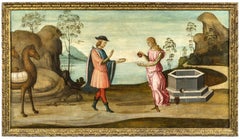
Rebecca at the Well

Rebecca at the Well

Located in New York, NY

Provenance: Dr. James Henry Lancashire, Manchester-by-the-Sea, Massachusetts, by 1925; probably by descent to: Private Collection, Cumberland Foreside, Maine, until 2018 This unpublished panel is a characteristic work of the Master of the Apollo and Daphne Legend, an anonymous Florentine painter in the circle of Bartolommeo di Giovanni, Domenico Ghirlandaio, and Sandro Botticelli. The artistic personality of the Master of the Apollo and Daphne Legend was independently recognized by Everett Fahy and Federico Zeri at roughly the same moment in time. Fahy originally dubbed this artist the Master of the Ryerson Panels but later adopted Zeri’s name for the artist, which derives from his eponymous works from the Samuel H. Kress collection (Figs. 1-2). Fahy posited that the artist was most likely a pupil of Ghirlandaio active from roughly 1480 to 1510, and that he may be identifiable with one of Ghirlandaio’s documented pupils to whom no works have been securely attributed, such as Niccolò Cieco, Jacopo dell’Indaco, or Baldino Baldinetti. The present painting was first attributed to this master by Everett Fahy in 1989, who became aware of its existence only after publishing his definitive studies on the artist. The surviving body of work by the Master of the Apollo and Daphne Legend is largely composed of series of panels treating the same theme. In addition to the works illustrating the legend of Apollo and Daphne, there are also series on the themes of Susanna and the Elders and the story of Saint Joseph, among others. The subject of the present panel is drawn from Genesis 24, the story of Isaac. It is possible that our painting relates to another work by the artist depicting the Sacrifice of Isaac formerly in the collection of E. A. McGuire in Dublin, Ireland (Fig. 3), and that these two panels were originally part of a decorative scheme based on the story of Isaac. Although the Master’s paintings of this type have traditionally been considered painted fronts of wedding chests, known as cassoni, the scale of these paintings and the fact that they are often part of a series indicates that they are more likely spalliera panels—paintings set into furniture or the wainscoting of a room. The biblical episode depicted in this painting centers on the theme of marriage, which suggests that this work was likely commissioned for the domestic interior of a newly married couple. The Master has transcribed into paint even the minute details of this Old Testament story, in which Abraham sends a servant to travel by camel to the land of his father and seek out a wife for his son Isaac. The servant is here shown at the well...

Category

Old Masters 15th Century and Earlier Art
Materials

Oil, Tempera, Wood Panel

SOLA PUIG Mallorca original impressionist acrylic painting

SOLA PUIG Mallorca original impressionist acrylic painting

By Joan Sola Puig

Located in CORAL GABLES - MIAMI, FL

original impressionist acrylic painting. SOLÁ paints in a natural way, which reflects the Old Masters, soaking up the colour, air, smell and the pure scent of his environment. He d...

Category

Impressionist 15th Century and Earlier Art

Materials

Wood, Acrylic

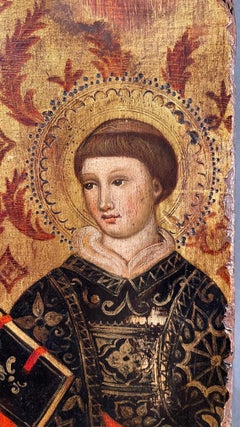
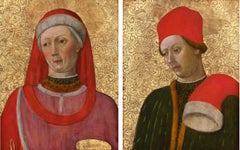
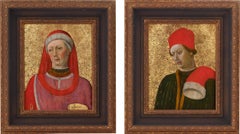
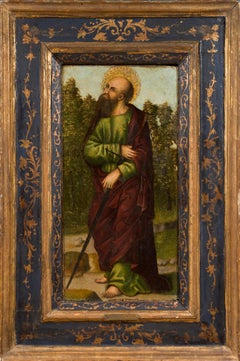
Saint Cosmas And Saint Damian Attributed To Bonifacio Bembo

Saint Cosmas And Saint Damian Attributed To Bonifacio Bembo

By Bonifacio Bembo

Located in New Orleans, LA

Attributed to Bonifacio Bembo c.1444-1477 Italy Saint Cosmas and Saint Damian Tempera on panel These exceptionally rare early Renaissance panels of Saint Cosmas and Saint Damian are an extraordinary new discovery. Based on the research of art historians Marco Tanzi and Andrea de Marchi, it is believed that these represent the missing panels from the famed polyptych formerly displayed on the altar of the Chapel of San Nicola da Tolentino in the Church of Sant’Agostino in Cremona, Italy. To find two matching early Renaissance panels outside of a museum or church, particularly in such remarkable condition, is an extraordinary rarity. The central and left-sided panels of the original five-part polyptych are currently in the collection of the Museo Civico Ala Ponzone in Cremona. These panels have luckily remained intact, and respectively portray the Madonna and Child Enthroned with Angels and Donor, Saint Nicholas of Tolentino (the chapel’s namesake) and Saint George. While the present panels have since been reduced, that they belong to the Cremonese altarpiece is confirmed by a number of stylistic elements. All five panels contain the same rich decorative arabesque pattern on their stamped gold background, while the figures’ knurled haloes are identical in both their fineness of line and use of perspective. The proportions of the figures coincide perfectly; Saints Cosmas and Damian would have originally also been depicted as full-length figures, fitting into the vertical, Gothic style of the altarpiece. According to the Christian religion, Saint Cosmas and Saint Damian were 3rd century physicians born in Arabia. Little is known about their lives except that they were reputedly twin brothers and that they were martyred in Syria during the persecution of Emperor Diocletian. It was believed that the saints were skilled in healing, and when their medicines failed, their faith and prayers could always perform miracles. Thus, the saints are often depicted with their medical equipment while wearing the traditional medieval doctor’s garb of crimson robes and distinctive round red hats. The saints are similarly depicted in the present panels, though considering the manner in which they have been cut, their medical tools are not immediately evident. The saints were highly popular as patrons of wealthy families during the Gothic and Renaissance eras, particularly the Medici, and thus they occur frequently in art from the era. The twins, for instance, are found in the famed San Marco Altarpiece by Fra Angelico in the San Marco Museum (Florence), as well as in a set of Medici panels crafted by Filippo Lippi...

Category

Renaissance 15th Century and Earlier Art

Materials

Tempera, Panel

Faile Couture Signed and Numbered Print

Faile Couture Signed and Numbered Print

By Faile

Located in Draper, UT

'Couture' by Faile, 2022 24 x 26 Inches Archival pigment print on 280gsm Entrada Cotton Rag fine art paper. Limited Edition of 300 Hand-signed by the artist duo bottom right. Artist...

Category

Street Art 15th Century and Earlier Art

Materials

Lithograph, Screen

Set of Two Leaves from "Missale Frisingense" /// German Catholic Incunabula 15th

Set of Two Leaves from "Missale Frisingense" /// German Catholic Incunabula 15th

Located in Saint Augustine, FL

Artist: Erhard Ratdolt (German, 1442-1528) Title: "Preface Page" and "Page CVI - 106" Portfolio: Missale Frisingense Year: 1492 (First edition) Medium: Set of Two Original Incunabula Leaves on watermarked laid paper Limited edition: Unknown Printer: Erhard Ratdolt, Ausburg, Germany Publisher: Sixtus of Tannberg, Freising, Germany Sheet size (each): approx. 11.94" x 8.13" Reference: Hain No. 11303; Weale/Bohatta No. 396; Schreiber No. 4699; Pell No. 7944 Condition: "Preface Page" has the occasional wormhole. Remnants of tape, a tape and a paper clip stain along its edge. Minor foxing and soiling mainly in margins. "Page CVI - 106" has remnants of tape and a small stain along its left edge. Light foxing and soiling about its sheet with some general edge wear. Have been professionally stored away for decades. They are both otherwise strong impressions in good condition with strong colors Very rare Notes: Comes from Ratdolt's one volume "Missale Frisingense", (1492) (First edition), which consists of 576 pages of Gothic texts in Latin with red rubricated initials, music, and woodcut engraved illustrations. Printed in Augsburg by Erhard Ratdolt on March 17, 1492. "Preface Page" has a bull's head and cross watermark in the upper center of its sheet. Some information and old prices inscribed in pencil to their sheets. A missal is a book that contains the prayers, chants, biblical readings, and rubrics for celebrating Mass. The first missals were found in monasteries in the 12th and 13th centuries. The term missale is Latin for "Mass book". Biography: Erhard Ratdolt (1442–1528) was an early German printer from Augsburg. He was active as a printer in Venice from 1476 to 1486, and afterwards in Augsburg. From 1475 to 1478 he was in partnership with two other German printers. The first book the partnership produced was the Calendarium (1476), written and previously published by Regiomontanus, which offered one of the earliest examples of a modern title page. Other noteworthy publications are the "Historia Romana of Appianus" (1477), and the first edition of "Euclid's Elements" (1482), where he solved the problem of printing geometric diagrams, the "Poeticon astronomicon", also from 1482, "Haly Abenragel" (1485), and "Alchabitius" (1503). Ratdolt is also famous for having produced the first known printer's type specimen...

Category

Old Masters 15th Century and Earlier Art
Materials

Laid Paper, Woodcut

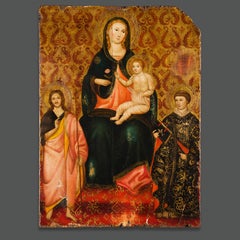
15th Century By Maestro della Pala Sforzesca Ecce Homo Tempera on Panel

15th Century By Maestro della Pala Sforzesca Ecce Homo Tempera on Panel

Located in Milano, Lombardia

15th Century Maestro della Pala Sforzesca Title: Ecce Homo Medium: Tempera on Panel Dimensions: without frame 64.9 x 53.2 – with frame 82 x 70 x 5 cm Beautiful "cassetta" frame in e...

Category

Old Masters 15th Century and Earlier Art
Materials

Tempera, Panel

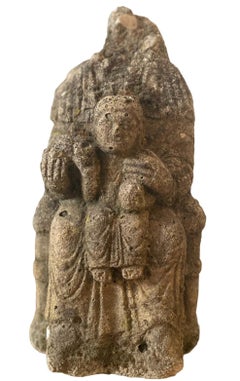
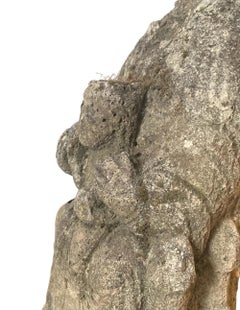
Medieval enthroned Virgin and Child Sedes Sapientiae acephalic granit sculpture

Medieval enthroned Virgin and Child Sedes Sapientiae acephalic granit sculpture

Located in Norwich, GB

They may be damaged and battered, but real historic objects will always give you a sense of awe. Can you sense it, looking at this ancient carved granite which depicts, as it is call...

Category

Medieval 15th Century and Earlier Art
Materials

Granite