Screen Landscape Photography

to
2
2
3
3
Overall Width
to
Overall Height
to
8
1
1
1
1
3
2
2
2
2
2
1
1
1
1
1
1
1
1
1
1
1
1
1
1
11,139
8,787
7,617
7,068
5,070
1
1
7
1
Medium: Screen
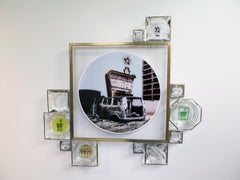
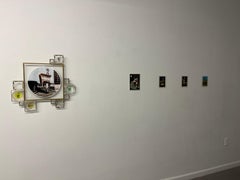
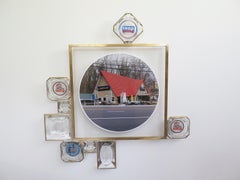
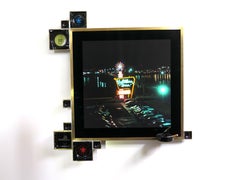
Richard Klein, Holiday Inn Beirut, 2017, Found and altered objects assemblage

Richard Klein, Holiday Inn Beirut, 2017, Found and altered objects assemblage

By Richard Klein

Located in Darien, CT

In the mid 1990s Richard Klein started working with found glass objects, including bottles, drinking glasses, ashtrays, and eyeglasses. Initially, Klein rejected any object with commercial or advertising content, but in 2015 he became fascinated with the promotional content that was screen printed on ashtrays from the 1950s, 1960s and early 1970s. This period was before smoking was looked at as being primarily a negative habit, and iconic American businesses, including Howard Johnson’s, International House of Pancakes (iHop) and Holiday Inn, all produced promotional ashtrays printed with their graphic identity. By the time Klein became interested in these objects, the businesses had either ceased to exist, or had changed their logos, and many of their signature buildings, which where examples of classic, “Pop” roadside architecture, has been torn down or repurposed. The artist wanted to connect the glass objects with the business’s sites that were still recognizable and spoke of their history, so he began researching where original buildings still stood. Klein then embarked on a series of road trips to photograph these sites with the intention of combining the photographs with the promotional glass objects. This led him to as far south as Maryland and as far north as upstate New York from his home in Connecticut. In the case of Holiday Inn, it wasn’t their buildings, but their iconic illuminated sign that appeared on ashtrays, so he sought out a standing example of the sign he could photograph. As it turned out all had been removed years before from the hotels' properties and the only working example was indoors at the Henry Ford Museum in Dearborn, Michigan. He did, however, find out that there was one still standing, surprisingly, in Beruit, Lebanon. He found an image of it on the web and used it to make Holiday Inn (Beruit). In 1973 Holiday Inn changed their tagline from “The Nations Innkeeper” to “The World’s Innkeeper” as they expanded overseas, including the Mideast. For the hotel chain it was bad timing: the disastrous Lebanese civil war began in 1975. In the war, the different Lebanese militias involved in the conflict, including the Nasserites, Christian Phalangists, and the Lebanese National Movement engaged in what came to be called “The Battle of the Hotels” where they each occupied a major high-rise hotel in central Beruit. The Phalangists commanded the Holiday Inn, which they used to fire with both light arms and heavier weapons at the militias in neighboring hotels. Klein used the photo of the heavily damaged Holiday Inn sign as I thought it spoke in a curious, offhanded way about American cultural imperialism in juxtaposition with an ashtray that proclaimed Holiday Inn to be “The World’s Innkeeper.” In the work Holiday Inn (Nocturne) the artist utilized a found, 35mm slide of a Holiday Inn sign at night at an unknown location as the basis of the photograph in the work. Richard Klein is a Connecticut-based artist, independent curator and writer. As an artist, he has exhibited widely, including the Neuberger Museum of Art at SUNY Purchase; Caren Golden Fine Art, New York; the John Michael Kohler Arts Center, Sheboygan, WI; Hales Gallery, London; Gavlak Gallery, Palm Beach, FL; deCordova Sculpture Park and Museum, Lincoln, MA; James Barron Art, Kent, CT; The Portland Institute of Contemporary Art (PICA), Portland, OR; Schoolhouse Gallery, Provincetown, MA; Stephan Stoyanov Gallery, NY; Katonah Museum of Art, Katonah, NY; Brattleboro Museum and Art Center, Brattleboro, VT; Ortega y Gasset Projects, Brooklyn, NY; Exhibit by Alberson Tulsa, OK; Incident Report/Flow Chart Foundation, Hudson, NY; ICEHOUSE Project Space, Sharon, CT; Kenise Barnes Fine Art in Kent, CT and with ODETTA Gallery at the Equity Gallery in New York City.. Reviews of his work have appeared in Two Coats of Paint, Whitehot Magazine, The New York Times, Sculpture Magazine, Art in America, and The New Yorker. In the summer of 2024 he will be the first Artist-In-Residence at Peck Ledge Light...

Category

2010s Assemblage Screen Landscape Photography

Materials

Metal
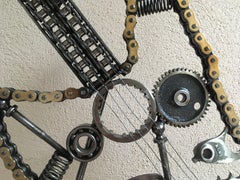
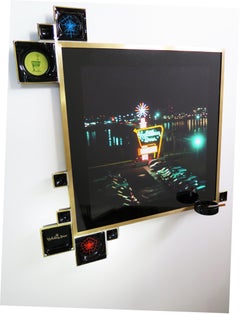
Richard Klein, Holiday Inn Nocturne, 2020, Found and altered objects assemblage

Richard Klein, Holiday Inn Nocturne, 2020, Found and altered objects assemblage

By Richard Klein

Located in Darien, CT

In the mid 1990s Richard Klein started working with found glass objects, including bottles, drinking glasses, ashtrays, and eyeglasses. Initially, Klein rejected any object with commercial or advertising content, but in 2015 he became fascinated with the promotional content that was screen printed on ashtrays from the 1950s, 1960s and early 1970s. This period was before smoking was looked at as being primarily a negative habit, and iconic American businesses, including Howard Johnson’s, International House of Pancakes (iHop) and Holiday Inn, all produced promotional ashtrays printed with their graphic identity. By the time Klein became interested in these objects, the businesses had either ceased to exist, or had changed their logos, and many of their signature buildings, which where examples of classic, “Pop” roadside architecture, has been torn down or repurposed. The artist wanted to connect the glass objects with the business’s sites that were still recognizable and spoke of their history, so he began researching where original buildings still stood. Klein then embarked on a series of road trips to photograph these sites with the intention of combining the photographs with the promotional glass objects. This led him to as far south as Maryland and as far north as upstate New York from his home in Connecticut. In the case of Holiday Inn, it wasn’t their buildings, but their iconic illuminated sign that appeared on ashtrays, so he sought out a standing example of the sign he could photograph. As it turned out all had been removed years before from the hotels' properties and the only working example was indoors at the Henry Ford Museum in Dearborn, Michigan. He did, however, find out that there was one still standing, surprisingly, in Beruit, Lebanon. He found an image of it on the web and used it to make Holiday Inn (Beruit). In 1973 Holiday Inn changed their tagline from “The Nations Innkeeper” to “The World’s Innkeeper” as they expanded overseas, including the Mideast. For the hotel chain it was bad timing: the disastrous Lebanese civil war began in 1975. In the war, the different Lebanese militias involved in the conflict, including the Nasserites, Christian Phalangists, and the Lebanese National Movement engaged in what came to be called “The Battle of the Hotels” where they each occupied a major high-rise hotel in central Beruit. The Phalangists commanded the Holiday Inn, which they used to fire with both light arms and heavier weapons at the militias in neighboring hotels. Klein used the photo of the heavily damaged Holiday Inn sign as I thought it spoke in a curious, offhanded way about American cultural imperialism in juxtaposition with an ashtray that proclaimed Holiday Inn to be “The World’s Innkeeper.” In the work Holiday Inn (Nocturne) the artist utilized a found, 35mm slide of a Holiday Inn sign at night at an unknown location as the basis of the photograph in the work. Richard Klein is a Connecticut-based artist, independent curator and writer. As an artist, he has exhibited widely, including the Neuberger Museum of Art at SUNY Purchase; Caren Golden Fine Art, New York; the John Michael Kohler Arts Center, Sheboygan, WI; Hales Gallery, London; Gavlak Gallery, Palm Beach, FL; deCordova Sculpture Park and Museum, Lincoln, MA; James Barron Art, Kent, CT; The Portland Institute of Contemporary Art (PICA), Portland, OR; Schoolhouse Gallery, Provincetown, MA; Stephan Stoyanov Gallery, NY; Katonah Museum of Art, Katonah, NY; Brattleboro Museum and Art Center, Brattleboro, VT; Ortega y Gasset Projects, Brooklyn, NY; Exhibit by Alberson Tulsa, OK; Incident Report/Flow Chart Foundation, Hudson, NY; ICEHOUSE Project Space, Sharon, CT; Kenise Barnes Fine Art in Kent, CT and with ODETTA Gallery at the Equity Gallery in New York City.. Reviews of his work have appeared in Two Coats of Paint, Whitehot Magazine, The New York Times, Sculpture Magazine, Art in America, and The New Yorker. In the summer of 2024 he will be the first Artist-In-Residence at Peck Ledge Light...

Category

2010s Assemblage Screen Landscape Photography

Materials

Metal
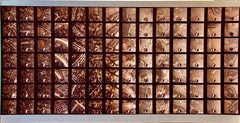
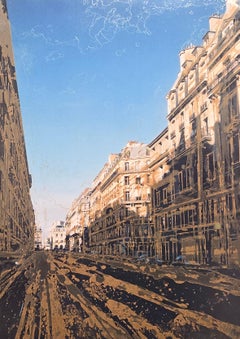
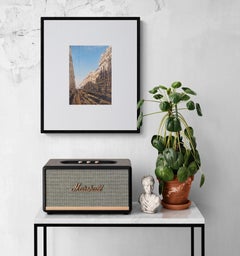
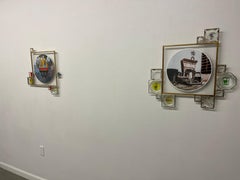
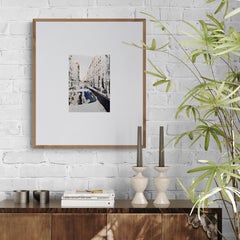
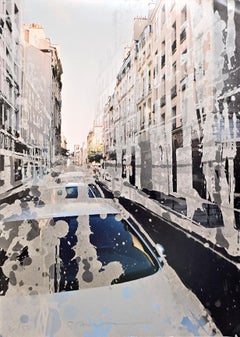
Place de Victoires, Paris, France (Collage, Cityscape, Iconic, ~36% OFF)

Place de Victoires, Paris, France (Collage, Cityscape, Iconic, ~36% OFF)

By Gottfried Salzmann

Located in Kansas City, MO

Gottfried Salzmann Place de Victoires, Paris, France (Collage, Cityscape, Iconic) Screen Print over Photograph Year: Circa 2010 Size: 11.22 × 7.87 inches (28.5 x 20 cm) Edition: 50 S...

Category

2010s Modern Screen Landscape Photography

Materials

Photographic Paper, Screen

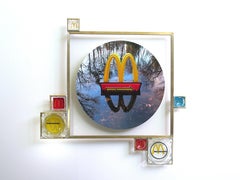
Richard Klein, McDonalds (El Nino), 2024, Found and altered objects assemblage

Richard Klein, McDonalds (El Nino), 2024, Found and altered objects assemblage

By Richard Klein

Located in Darien, CT

In the mid 1990s Richard Klein started working with found glass objects, including bottles, drinking glasses, ashtrays, and eyeglasses. Initially, Klein rejected any object with commercial or advertising content, but in 2015 he became fascinated with the promotional content that was screen printed on ashtrays from the 1950s, 1960s and early 1970s. This period was before smoking was looked at as being primarily a negative habit, and iconic American businesses, including Howard Johnson’s, International House of Pancakes (iHop) and Holiday Inn, all produced promotional ashtrays printed with their graphic identity. By the time Klein became interested in these objects, the businesses had either ceased to exist, or had changed their logos, and many of their signature buildings, which where examples of classic, “Pop” roadside architecture, has been torn down or repurposed. The artist wanted to connect the glass objects with the business’s sites that were still recognizable and spoke of their history, so he began researching where original buildings still stood. Klein then embarked on a series of road trips to photograph these sites with the intention of combining the photographs with the promotional glass objects. This led him to as far south as Maryland and as far north as upstate New York from his home in Connecticut. In the case of Holiday Inn, it wasn’t their buildings, but their iconic illuminated sign that appeared on ashtrays, so he sought out a standing example of the sign he could photograph. As it turned out all had been removed years before from the hotels' properties and the only working example was indoors at the Henry Ford Museum in Dearborn, Michigan. He did, however, find out that there was one still standing, surprisingly, in Beruit, Lebanon. He found an image of it on the web and used it to make Holiday Inn (Beruit). In 1973 Holiday Inn changed their tagline from “The Nations Innkeeper” to “The World’s Innkeeper” as they expanded overseas, including the Mideast. For the hotel chain it was bad timing: the disastrous Lebanese civil war began in 1975. In the war, the different Lebanese militias involved in the conflict, including the Nasserites, Christian Phalangists, and the Lebanese National Movement engaged in what came to be called “The Battle of the Hotels” where they each occupied a major high-rise hotel in central Beruit. The Phalangists commanded the Holiday Inn, which they used to fire with both light arms and heavier weapons at the militias in neighboring hotels. Klein used the photo of the heavily damaged Holiday Inn sign as I thought it spoke in a curious, offhanded way about American cultural imperialism in juxtaposition with an ashtray that proclaimed Holiday Inn to be “The World’s Innkeeper.” In the work Holiday Inn (Nocturne) the artist utilized a found, 35mm slide of a Holiday Inn sign at night at an unknown location as the basis of the photograph in the work. Richard Klein is a Connecticut-based artist, independent curator and writer. As an artist, he has exhibited widely, including the Neuberger Museum of Art at SUNY Purchase; Caren Golden Fine Art, New York; the John Michael Kohler Arts Center, Sheboygan, WI; Hales Gallery, London; Gavlak Gallery, Palm Beach, FL; deCordova Sculpture Park and Museum, Lincoln, MA; James Barron Art, Kent, CT; The Portland Institute of Contemporary Art (PICA), Portland, OR; Schoolhouse Gallery, Provincetown, MA; Stephan Stoyanov Gallery, NY; Katonah Museum of Art, Katonah, NY; Brattleboro Museum and Art Center, Brattleboro, VT; Ortega y Gasset Projects, Brooklyn, NY; Exhibit by Alberson Tulsa, OK; Incident Report/Flow Chart Foundation, Hudson, NY; ICEHOUSE Project Space, Sharon, CT; Kenise Barnes Fine Art in Kent, CT and with ODETTA Gallery at the Equity Gallery in New York City.. Reviews of his work have appeared in Two Coats of Paint, Whitehot Magazine, The New York Times, Sculpture Magazine, Art in America, and The New Yorker. In the summer of 2024 he will be the first Artist-In-Residence at Peck Ledge Light...

Category

2010s Assemblage Screen Landscape Photography

Materials

Metal

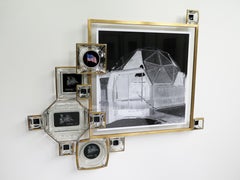
Richard Klein, Expo 67, 2017, Found and altered objects assemblage

Richard Klein, Expo 67, 2017, Found and altered objects assemblage

By Richard Klein

Located in Darien, CT

In the mid 1990s Richard Klein started working with found glass objects, including bottles, drinking glasses, ashtrays, and eyeglasses. Initially, Klein rejected any object with commercial or advertising content, but in 2015 he became fascinated with the promotional content that was screen printed on ashtrays from the 1950s, 1960s and early 1970s. This period was before smoking was looked at as being primarily a negative habit, and iconic American businesses, including Howard Johnson’s, International House of Pancakes (iHop) and Holiday Inn, all produced promotional ashtrays printed with their graphic identity. By the time Klein became interested in these objects, the businesses had either ceased to exist, or had changed their logos, and many of their signature buildings, which where examples of classic, “Pop” roadside architecture, has been torn down or repurposed. The artist wanted to connect the glass objects with the business’s sites that were still recognizable and spoke of their history, so he began researching where original buildings still stood. Klein then embarked on a series of road trips to photograph these sites with the intention of combining the photographs with the promotional glass objects. This led him to as far south as Maryland and as far north as upstate New York from his home in Connecticut. In the case of Holiday Inn, it wasn’t their buildings, but their iconic illuminated sign that appeared on ashtrays, so he sought out a standing example of the sign he could photograph. As it turned out all had been removed years before from the hotels' properties and the only working example was indoors at the Henry Ford Museum in Dearborn, Michigan. He did, however, find out that there was one still standing, surprisingly, in Beruit, Lebanon. He found an image of it on the web and used it to make Holiday Inn (Beruit). In 1973 Holiday Inn changed their tagline from “The Nations Innkeeper” to “The World’s Innkeeper” as they expanded overseas, including the Mideast. For the hotel chain it was bad timing: the disastrous Lebanese civil war began in 1975. In the war, the different Lebanese militias involved in the conflict, including the Nasserites, Christian Phalangists, and the Lebanese National Movement engaged in what came to be called “The Battle of the Hotels” where they each occupied a major high-rise hotel in central Beruit. The Phalangists commanded the Holiday Inn, which they used to fire with both light arms and heavier weapons at the militias in neighboring hotels. Klein used the photo of the heavily damaged Holiday Inn sign as I thought it spoke in a curious, offhanded way about American cultural imperialism in juxtaposition with an ashtray that proclaimed Holiday Inn to be “The World’s Innkeeper.” In the work Holiday Inn (Nocturne) the artist utilized a found, 35mm slide of a Holiday Inn sign at night at an unknown location as the basis of the photograph in the work. Richard Klein is a Connecticut-based artist, independent curator and writer. As an artist, he has exhibited widely, including the Neuberger Museum of Art at SUNY Purchase; Caren Golden Fine Art, New York; the John Michael Kohler Arts Center, Sheboygan, WI; Hales Gallery, London; Gavlak Gallery, Palm Beach, FL; deCordova Sculpture Park and Museum, Lincoln, MA; James Barron Art, Kent, CT; The Portland Institute of Contemporary Art (PICA), Portland, OR; Schoolhouse Gallery, Provincetown, MA; Stephan Stoyanov Gallery, NY; Katonah Museum of Art, Katonah, NY; Brattleboro Museum and Art Center, Brattleboro, VT; Ortega y Gasset Projects, Brooklyn, NY; Exhibit by Alberson Tulsa, OK; Incident Report/Flow Chart Foundation, Hudson, NY; ICEHOUSE Project Space, Sharon, CT; Kenise Barnes Fine Art in Kent, CT and with ODETTA Gallery at the Equity Gallery in New York City.. Reviews of his work have appeared in Two Coats of Paint, Whitehot Magazine, The New York Times, Sculpture Magazine, Art in America, and The New Yorker. In the summer of 2024 he will be the first Artist-In-Residence at Peck Ledge Light...

Category

2010s Assemblage Screen Landscape Photography

Materials

Metal
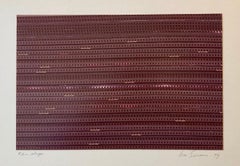
Richard Klein, iHop II, 2018, Found and altered objects assemblage

Richard Klein, iHop II, 2018, Found and altered objects assemblage

By Richard Klein

Located in Darien, CT

In the mid 1990s Richard Klein started working with found glass objects, including bottles, drinking glasses, ashtrays, and eyeglasses. Initially, Klein rejected any object with commercial or advertising content, but in 2015 he became fascinated with the promotional content that was screen printed on ashtrays from the 1950s, 1960s and early 1970s. This period was before smoking was looked at as being primarily a negative habit, and iconic American businesses, including Howard Johnson’s, International House of Pancakes (iHop) and Holiday Inn, all produced promotional ashtrays printed with their graphic identity. By the time Klein became interested in these objects, the businesses had either ceased to exist, or had changed their logos, and many of their signature buildings, which where examples of classic, “Pop” roadside architecture, has been torn down or repurposed. The artist wanted to connect the glass objects with the business’s sites that were still recognizable and spoke of their history, so he began researching where original buildings still stood. Klein then embarked on a series of road trips to photograph these sites with the intention of combining the photographs with the promotional glass objects. This led him to as far south as Maryland and as far north as upstate New York from his home in Connecticut. In the case of Holiday Inn, it wasn’t their buildings, but their iconic illuminated sign that appeared on ashtrays, so he sought out a standing example of the sign he could photograph. As it turned out all had been removed years before from the hotels' properties and the only working example was indoors at the Henry Ford Museum in Dearborn, Michigan. He did, however, find out that there was one still standing, surprisingly, in Beruit, Lebanon. He found an image of it on the web and used it to make Holiday Inn (Beruit). In 1973 Holiday Inn changed their tagline from “The Nations Innkeeper” to “The World’s Innkeeper” as they expanded overseas, including the Mideast. For the hotel chain it was bad timing: the disastrous Lebanese civil war began in 1975. In the war, the different Lebanese militias involved in the conflict, including the Nasserites, Christian Phalangists, and the Lebanese National Movement engaged in what came to be called “The Battle of the Hotels” where they each occupied a major high-rise hotel in central Beruit. The Phalangists commanded the Holiday Inn, which they used to fire with both light arms and heavier weapons at the militias in neighboring hotels. Klein used the photo of the heavily damaged Holiday Inn sign as I thought it spoke in a curious, offhanded way about American cultural imperialism in juxtaposition with an ashtray that proclaimed Holiday Inn to be “The World’s Innkeeper.” In the work Holiday Inn (Nocturne) the artist utilized a found, 35mm slide of a Holiday Inn sign at night at an unknown location as the basis of the photograph in the work. Richard Klein is a Connecticut-based artist, independent curator and writer. As an artist, he has exhibited widely, including the Neuberger Museum of Art at SUNY Purchase; Caren Golden Fine Art, New York; the John Michael Kohler Arts Center, Sheboygan, WI; Hales Gallery, London; Gavlak Gallery, Palm Beach, FL; deCordova Sculpture Park and Museum, Lincoln, MA; James Barron Art, Kent, CT; The Portland Institute of Contemporary Art (PICA), Portland, OR; Schoolhouse Gallery, Provincetown, MA; Stephan Stoyanov Gallery, NY; Katonah Museum of Art, Katonah, NY; Brattleboro Museum and Art Center, Brattleboro, VT; Ortega y Gasset Projects, Brooklyn, NY; Exhibit by Alberson Tulsa, OK; Incident Report/Flow Chart Foundation, Hudson, NY; ICEHOUSE Project Space, Sharon, CT; Kenise Barnes Fine Art in Kent, CT and with ODETTA Gallery at the Equity Gallery in New York City.. Reviews of his work have appeared in Two Coats of Paint, Whitehot Magazine, The New York Times, Sculpture Magazine, Art in America, and The New Yorker. In the summer of 2024 he will be the first Artist-In-Residence at Peck Ledge Light...
Category

2010s Assemblage Screen Landscape Photography

Materials

Metal

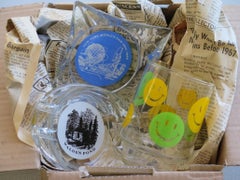
Richard Klein, American Glassware, 2010-2024, Found and altered objects

Richard Klein, American Glassware, 2010-2024, Found and altered objects

By Richard Klein

Located in Darien, CT

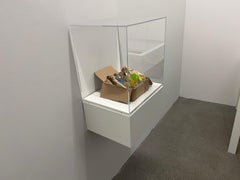
In the mid 1990s Richard Klein started working with found glass objects, including bottles, drinking glasses, ashtrays, and eyeglasses. Initially, Klein rejected any object with commercial or advertising content, but in 2015 he became fascinated with the promotional content that was screen printed on ashtrays from the 1950s, 1960s and early 1970s. This period was before smoking was looked at as being primarily a negative habit, and iconic American businesses, including Howard Johnson’s, International House of Pancakes (iHop) and Holiday Inn, all produced promotional ashtrays printed with their graphic identity. By the time Klein became interested in these objects, the businesses had either ceased to exist, or had changed their logos, and many of their signature buildings, which where examples of classic, “Pop” roadside architecture, has been torn down or repurposed. The artist wanted to connect the glass objects with the business’s sites that were still recognizable and spoke of their history, so he began researching where original buildings still stood. Klein then embarked on a series of road trips to photograph these sites with the intention of combining the photographs with the promotional glass objects. This led him to as far south as Maryland and as far north as upstate New York from his home in Connecticut. American Glassware (2010-present) which is presented in a small, wall-mounted vitrine. American Glassware is composed of three glass objects: a “souvenir” Walden Pond ashtray made by me as a multiple; a real souvenir ashtray from the 1964-65 New York World’s Fair; and an authentic “Happy Face” drinking glass from the same era. They are all nestled in crumpled, vintage newspaper from 1967, and are presented together in a dilapidated cardboard box, as if they have been found in someone’s attic or basement. Once again, in a similar manner to the Glass House Ashtray, versions of his Walden Pond ashtray (Walden Pond Souvenir) have been injected into the collectable stream of tag sales and flea markets, creating a souvenir that never existed. The ashtray is screenprinted with an image of Thoreau’s cabin on Walden Pond as pictured on the title page of his book Walden, or Life in the Woods (1854). (The original illustration was created by Thoreau’s sister, Sophia.) Walden Pond Souvenir was originally produced for the 2010 exhibition Renovating Walden at the Tufts University Art Gallery in Medford, MA. Richard Klein is a Connecticut-based artist, independent curator and writer. As an artist, he has exhibited widely, including the Neuberger Museum of Art at SUNY Purchase; Caren Golden Fine Art, New York; the John Michael Kohler Arts Center, Sheboygan, WI; Hales Gallery, London; Gavlak Gallery, Palm Beach, FL; deCordova Sculpture Park and Museum, Lincoln, MA; James Barron Art, Kent, CT; The Portland Institute of Contemporary Art (PICA), Portland, OR; Schoolhouse Gallery, Provincetown, MA; Stephan Stoyanov Gallery, NY; Katonah Museum of Art, Katonah, NY; Brattleboro Museum and Art Center, Brattleboro, VT; Ortega y Gasset Projects, Brooklyn, NY; Exhibit by Alberson Tulsa, OK; Incident Report/Flow Chart Foundation, Hudson, NY; ICEHOUSE Project Space, Sharon, CT; Kenise Barnes Fine Art in Kent, CT and with ODETTA Gallery at the Equity Gallery in New York City.. Reviews of his work have appeared in Two Coats of Paint, Whitehot Magazine, The New York Times, Sculpture Magazine, Art in America, and The New Yorker. In the summer of 2024 he will be the first Artist-In-Residence at Peck Ledge Light...

Category

2010s Assemblage Screen Landscape Photography

Materials

Metal

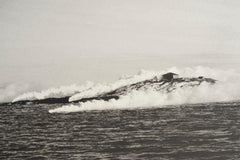
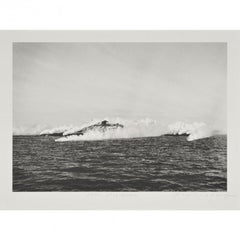
Alexandre Ponomarev, Maya, i'ile perdue, Silkscreen, Print, Art, Limited Edition

Alexandre Ponomarev, Maya, i'ile perdue, Silkscreen, Print, Art, Limited Edition

By Alexander Ponomarev

Located in Zug, CH

Alexandre Ponomarev Maya-L'île Perdue, 2007 Silkscreen Print Edition of 200 56,5 x 75,6 cm (22.2 x 29.7 in), unframed In mint condition Signed, titled, dated and numbered Accompanied...

Category

21st Century and Contemporary Photorealist Screen Landscape Photography

Materials

Screen

Related Items
Cloud Study II - large format photograph of dramatic mood cloudscape horizon sky

Cloud Study II - large format photograph of dramatic mood cloudscape horizon sky

By Frank Schott

Located in San Francisco, CA

large-scale original art photography from a series of dramatic cloud atlas observations and abstract monochromatic skyscapes above the Mediterranean Sea C...

Category

21st Century and Contemporary Contemporary Screen Landscape Photography

Materials

Photographic Paper, Archival Pigment, Archival Paper, Giclée, Black and ...

Marfa ( Texas ) - large format photograph of dramatic clouds over endless fields

Marfa ( Texas ) - large format photograph of dramatic clouds over endless fields

By Frank Schott

Located in San Francisco, CA

Marfa ( Texas ) by Frank Schott country road view in West Texas, from a series of impressions captured in Marfa, Texas, longtime residence of minimalist artist Donald Judd 48 x 72 i...

Category

21st Century and Contemporary Contemporary Screen Landscape Photography

Materials

Archival Ink, Archival Paper, Photographic Paper, Giclée

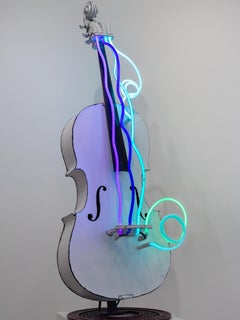
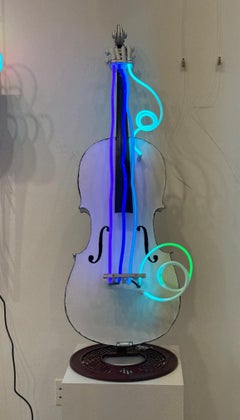
Cantabile
Cantabile

Rod LathimCantabile, 2025

$4,600

H 50 in W 16 in D 10 in

Cantabile

By Rod Lathim

Located in West Hollywood, CA

Rod Lathim’s Cantabile transforms a repurposed cello into a radiant sculpture where light and music converge. Painted in luminous white with edges subtly traced in black, the instrum...

Category

21st Century and Contemporary Assemblage Screen Landscape Photography

Materials

Found Objects, Neon Light

Underwood LUV (Love) - Vintage Typewriter Machine Gun, conceptual wall sculpture

Underwood LUV (Love) - Vintage Typewriter Machine Gun, conceptual wall sculpture

By Éric Nado

Located in Dallas, TX

Bold, witty, and impeccably engineered, Underwood LUV is an extraordinary sculptural transformation of a vintage Underwood typewriter by contemporary artist Eric Nado. Crafted from an authentic black and copper Underwood machine, this striking work reimagines one of history's most iconic writing instruments as a commanding machine gun sculpture...

Category

2010s Contemporary Screen Landscape Photography

Materials

Metal

Caribbean Sandy Shore, Cyanotype on Watercolor Paper, Beach House Art in Blue

Caribbean Sandy Shore, Cyanotype on Watercolor Paper, Beach House Art in Blue

By Kind of Cyan

Located in Barcelona, ES

This is an exclusive handprinted limited edition cyanotype. "Caribbean Sandy Shore" is a cyanotype of a shoreline on a Caribbean beach. It is a beautiful image for tropical decor and...

Category

2010s Realist Screen Landscape Photography

Materials

Photographic Film, Emulsion, Watercolor, Photographic Paper, C Print, Co...

Myron Wood 1967 South Park Colorado Sheep Storm Vintage Gelatin Silver Photo

Myron Wood 1967 South Park Colorado Sheep Storm Vintage Gelatin Silver Photo

By Myron Wood

Located in Denver, CO

A powerful vintage gelatin silver photograph by acclaimed American photographer Myron Wood (1921–1999), titled "Sheep, Storm, South Park, Colorado," created in 1967. One of Wood's mo...

Category

1960s American Modern Screen Landscape Photography

Materials

Photographic Film

Marfa ( Texas )  - large format photograph of dramatic clouds over endless field

Marfa ( Texas ) - large format photograph of dramatic clouds over endless field

By Frank Schott

Located in San Francisco, CA

Landscape view from rural county road outside of town, from a series of impressions captured in Marfa, Texas, longtime residence of minimalist artist Donald Judd Marfa ( Texas ) by ...

Category

21st Century and Contemporary Contemporary Screen Landscape Photography

Materials

Archival Ink, Archival Paper, Photographic Paper, Giclée, Archival Pigment

Arrangement in Poppies

Arrangement in Poppies

By Carlton Scott Sturgill

Located in New Orleans, LA

medium: reclaimed button-down shirts on birch plywood panel Born in 1971 in Cincinnati, Ohio, CARLTON SCOTT STURGILL received his Masters of Arts (Fine Art) from London’s Chelsea Co...

Category

21st Century and Contemporary Contemporary Screen Landscape Photography

Materials

Metal, Wire

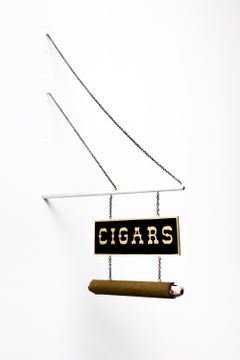
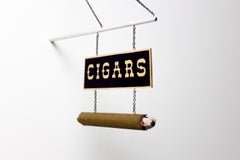
"Cigar" Crafted Wall-Mounted Miniature Storefront Hanging Sign by Drew Leshko

"Cigar" Crafted Wall-Mounted Miniature Storefront Hanging Sign by Drew Leshko

By Drew Leshko

Located in Philadelphia, PA

This piece titled "Cigar" is original artwork made from paper, inkjet print, enamel, wire, chain, aluminum tube, pastel, toy cigar by Drew Leshko. This piece measures 12”h x 1”w x 7....

Category

21st Century and Contemporary Contemporary Screen Landscape Photography

Materials

Metal, Enamel, Wire

Mindscreen 1 - Polaroid

Stefanie SchneiderMindscreen 1 - Polaroid, 1999

$380

H 7.88 in W 7.88 in D 0.04 in

Mindscreen 1 - Polaroid

By Stefanie Schneider

Located in Morongo Valley, CA

Mindscreen 1 - 1999 20x20cm, Edition of 10, Archival C-Print, based on the Polaroid. Certificate and Signature label. Artist Inventory #240 Not mounted. Stefanie Schneider's ...

Category

Early 2000s Contemporary Screen Landscape Photography

Materials

Photographic Film, Archival Paper, C Print, Color, Polaroid

Urn with Roses
Urn with Roses

Carlton Scott SturgillUrn with Roses, 2020

$2,400

H 16 in W 19 in D 10 in

Urn with Roses

By Carlton Scott Sturgill

Located in New Orleans, LA

medium: reclaimed button-down, wire, floral tape, ceramic urn Born in 1971 in Cincinnati, Ohio, CARLTON SCOTT STURGILL received his Masters of Arts (Fine Art) from London’s Chelsea ...

Category

21st Century and Contemporary Contemporary Screen Landscape Photography

Materials

Metal, Wire

Vintage Porsche Alfa Romeo Mid Century Modern Architecture Photograph

Vintage Porsche Alfa Romeo Mid Century Modern Architecture Photograph

By Tom Blachford

Located in Brooklyn, NY

Landscape, Vintage Car, Palm Tree, Classic Porsche, Mid Century Modern, Limited Series. Archival Inkjet Print on Semi Gloss 100% Cotton Paper. Mid Century Design. Tom Blachford. Moonlight Classic Porsche in Palm Springs California. This is a limited edition print in a series of 10. Each pieces comes with a hand-signed certificate of authenticity. The latest and final release in Australian photographer Tom Blachford’s long-running project, Midnight Modern, will be exhibited for the first time at TOTH Gallery in New York. Loosening the shackles of Palm Springs and Mid Century, Blachford’s large scale works explores some of the outer reaches of the Modernist movement in Architecture, and captured using only the light of the full moon. Blachford's series is a surreal ode to the landscapes of California and its cache of pristine Modernist buildings. Shot entirely at night, bathed in moonlight, the homes, vintage cars, and foliage appear as they have been captured in another space and time. Recognizing the locations may be easy, but it is more difficult to identity when the image was actually taken, be this day or night, in the past, present, or future. The images act as portals in time where it seems these moments exist in all places at once. For Blachford these unique residences act as the sets for infinite narratives, both real and imagined, which the viewer is invited to script for themselves. Each image acts as a still frame for a story about to start and end simultaneously. California has a unique geography and climate, and this gives rise to a distinct deep blue sky: a hue of moonlight ideal for this approach to architectural photography. The long exposure allows the camera to capture a world just beyond our perception and distil it into a single moment. Midnight Modern has already included Palm Springs' most iconic properties; the Kaufman Desert House...

Category

2010s American Modern Screen Landscape Photography

Materials

Photographic Paper, Archival Pigment

Previously Available Items
Rue de Rivoli, Paris, France (Collage, Cityscape, Iconic)

Rue de Rivoli, Paris, France (Collage, Cityscape, Iconic)

By Gottfried Salzmann

Located in Kansas City, MO

Gottfried Salzmann Rue de Rivoli, Paris, France (Collage, Cityscape, Iconic) Screen Print over Photograph Year: Circa 2010 Size: 11.22 × 7.87 inches (28.5 x 20 cm) Edition: 50 Signed...

Category

2010s Contemporary Screen Landscape Photography

Materials

Photographic Paper, Screen

Screen landscape photography for sale on 1stDibs.

Find a wide variety of authentic Screen landscape photography available on 1stDibs. While artists have worked in this medium across a range of time periods, art made with this material during the 21st Century is especially popular. There are many well-known artists whose body of work includes ceramic sculptures. Popular artists on 1stDibs associated with pieces like this include Alexander Ponomarev, and Tony Soulie. Frequently made by artists working in the Photorealist, all of these pieces for sale are unique and many will draw the attention of guests in your home. Not every interior allows for large Screen landscape photography, so small editions measuring 0.4 inches across are also available