Located in Valladolid, ES
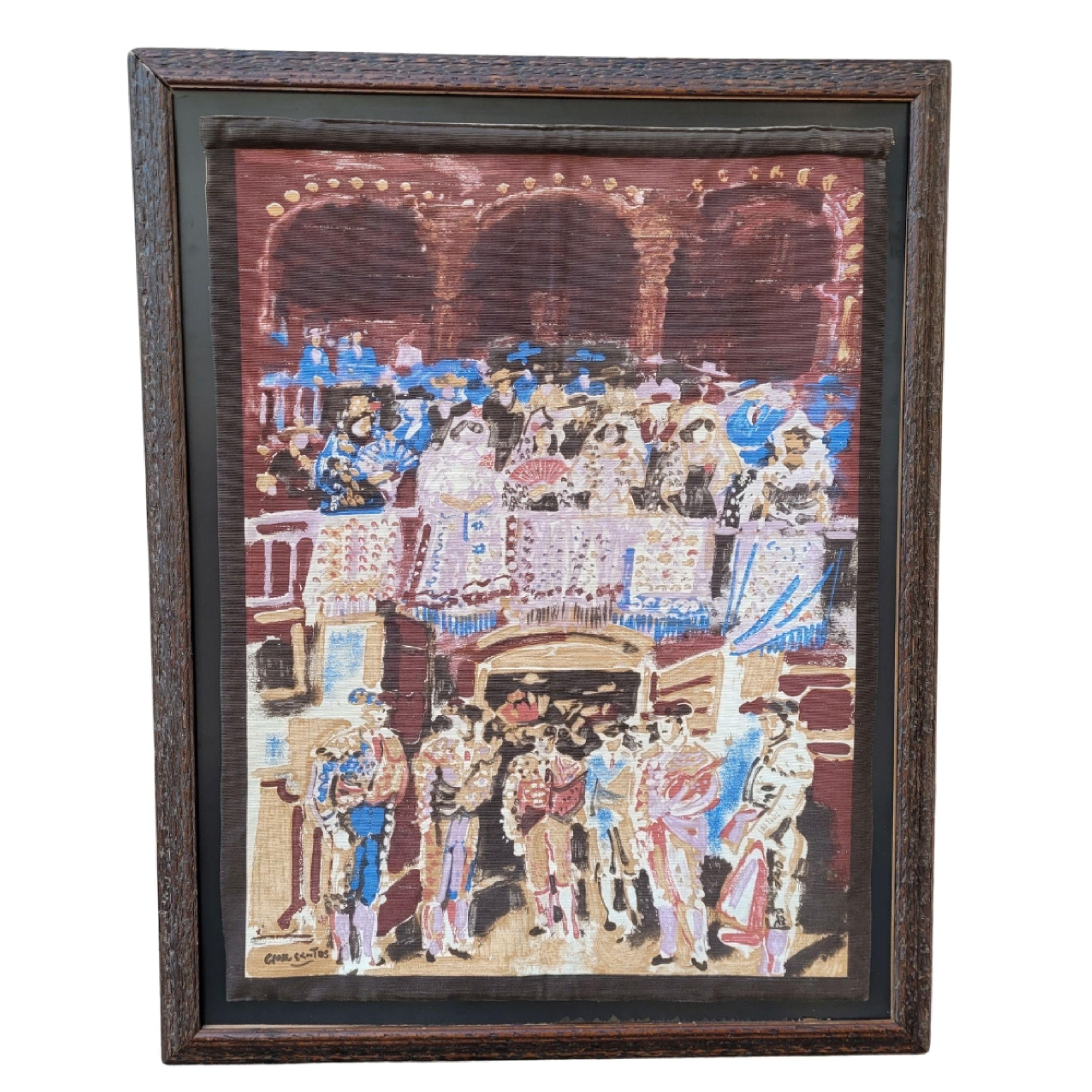
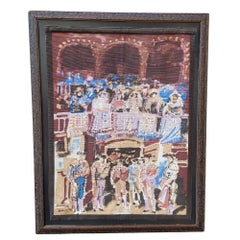
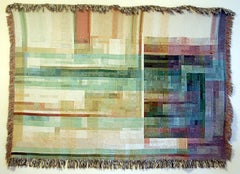
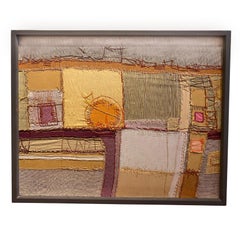
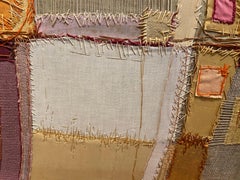
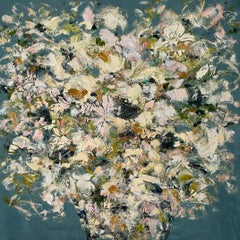
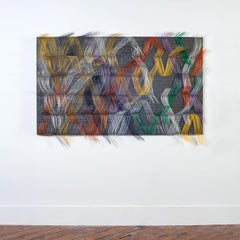
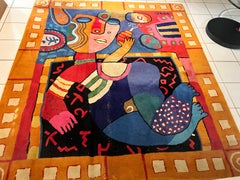
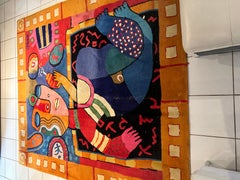
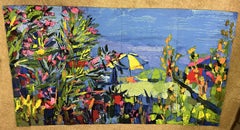
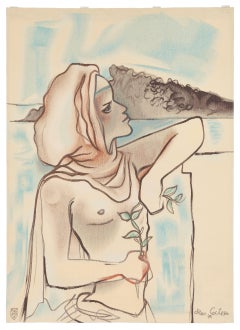
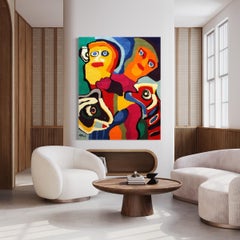
One of a kind and spectacular work by the renowned artist Julián Grau Santos, “a master of color in 20th-century Spain.” This is an interesting print on tapestry entitled “Bullfighting Arena,” depicting a bullfighting scene, very much in keeping with Spanish tradition. In the foreground, several bullfighters appear in their suits of lights, and in the background, in the stands, a group of women with mantillas and fans, as well as spectators wearing hats. Both planes are presented with equal importance and prominence, creating a powerful contrast between action and contemplation. This underscores the cultural dimension of the event.
It portrays bullfighting and the festival as a social spectacle, which is very consistent with the overall style of his work, particularly interested in capturing everyday life and its traditions, always with a personal use of color and light.
Also noteworthy is the fact that the focus is not on individual portraits, but on chromatic harmony and artistic expression itself. He does not seek realistic detail, but rather a festive atmosphere and dynamism. The scene unfolds through quick, fluid movements that reinforce the sense of bustle. Blue, red, and pink tones predominate against an ochre background.
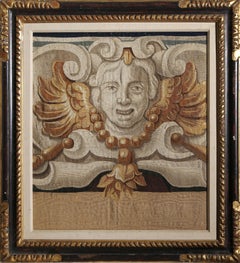
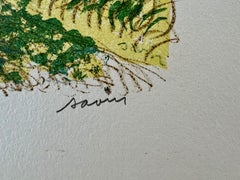
Beautifully framed with a wide wooden frame with an aged finish. A truly interesting work due to its subject matter, its exclusivity, and its authorship. A truly interesting work in every aspect.It,s signed
Julián Grau Santos, heir to a family of artists
Julián Grau Santos is one of the most outstanding painters and illustrators on the national scene. He was born in Canfranc (province of Huesca) in 1937. Heir to a family tradition, he is the son of the painter Emilio Grau Sala, a significant artist of the School of Paris, and of the equally extraordinary painter Ángeles Santos, a prominent member of the Surrealist group of painters of the 1920s and of the Las Sinsombrero (The Hatless Ones).
In 1954, he moved with his family to Barcelona, where he attended the Sant Jordi School of Fine Arts. In his early years, he was greatly influenced not only by Van Gogh, but also by Impressionists and Post-Impressionists such as Sisley, Cézanne, Renoir, Seurat, and Vuillard, whom he discovered during his first visits to Paris, the city where his father lived.
In the 1960s, he was closely associated with Cuenca, where he lived temporarily. At that time, he was experiencing a period of intense artistic activity, and there he produced numerous works characterized by strong expressiveness and a highly textured brushstroke. In 1978, he settled permanently in Madrid, where he currently lives, working not only as a painter but also as an illustrator and draftsman, contributing to several magazines, including ABC Cultural, La Razón, and El Cultural of El Mundo, among others. Since 1980, he has been a member of the Société Nationale des Beaux-Arts.
A painter not affiliated with any particular artistic movement, he has nevertheless contributed to the renewal of the figurative art tradition. He is considered by some to be a master of color in 20th-century Spain.
Throughout his artistic career, he has participated in numerous solo exhibitions in various galleries both nationally and internationally, including Sala Parés, Galería Biosca, Galerie Saint Placide (Paris), Grand Palais (Paris), Justin Lester Gallery (Los Angeles), and Art Expo (New York). In 1993, the Mapfre Vida Cultural Foundation organized a retrospective exhibition of his work.
Since 2004, he has exhibited permanently at the Beatriz Bálgoma Gallery, participating with them in several prestigious national and international art fairs such as Feriarte, the Lisbon...
Category
1940s Art Deco Tapestry Prints and Multiples