Want more images or videos?
Request additional images or videos from the seller
1 of 8

Unknown
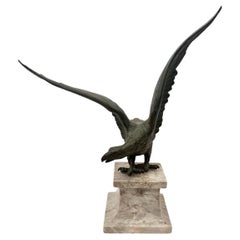
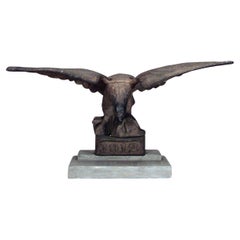
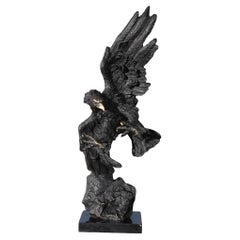
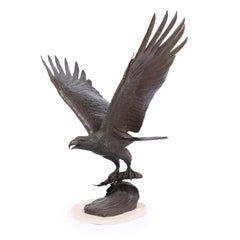
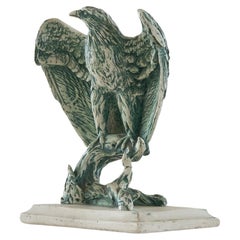
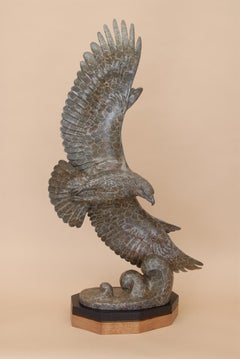
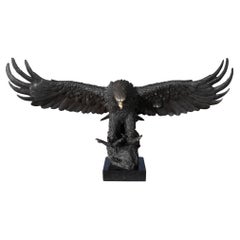
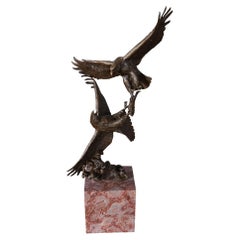
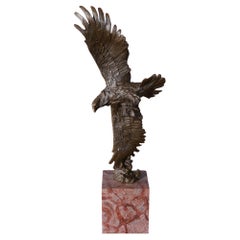
Soaring Eagle / - With eagle eyes -

Price:$383.62
$451.32List Price

You May Also Like

VALTON Charles. The Griffin Marco. Patinated bronze. Marble base. Signed.

VALTON Charles. The Griffin Marco. Patinated bronze. Marble base. Signed.

By Charles Valton

Located in Paris, FR

The Griffin Marco. Patinated bronze. Marble base. Signed and titled. Charles Valton was a French sculptor known for his works created in the animalier style, a 19th-century movement ...

Category

Late 19th Century Realist Figurative Sculptures

Materials

Bronze
Life Size Sculpture of Male Head in Patina Bronze "Diadji"

Life Size Sculpture of Male Head in Patina Bronze "Diadji"

By William J Rushton

Located in New York, NY

Bronze life-size male head with a dark brown patina. Sculpted in Florence Italy and casted in bronze just outside of the city. This is an earlier piece that holds a distinctly differ...

Category

2010s Realist Figurative Sculptures

Materials

Bronze
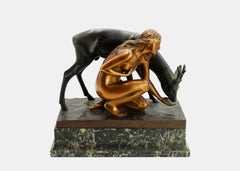
Life Size Sculpture of Male Head in Patina Bronze "Giorgi"

Life Size Sculpture of Male Head in Patina Bronze "Giorgi"

By William J Rushton

Located in New York, NY

Bronze life-size male head with a dark brown patina. Rushton sculpts all of his busts using live models over the course of multiple sittings. While realistic and classical in charac...

Category

2010s Realist Figurative Sculptures

Materials

Bronze
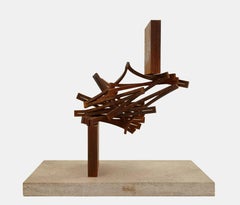
"Ex Nihilo Fragment 6", Frederick Hart, Figurative Bronze Sculpture, 39X23X12 in

"Ex Nihilo Fragment 6", Frederick Hart, Figurative Bronze Sculpture, 39X23X12 in

By Frederick Hart

Located in Dallas, TX

"Ex Nihilo Fragment 6" by Frederick Hart is a figurative bronze with the edition of 55/65. Ex Nihilo Fragment No. 6, detail from the full-scale plaster for the final stone sculpture of Ex Nihilo, was commissioned as part of The Creation Sculptures at Washington National Cathedral...

Category

Early 2000s Realist Figurative Sculptures

Materials

Bronze
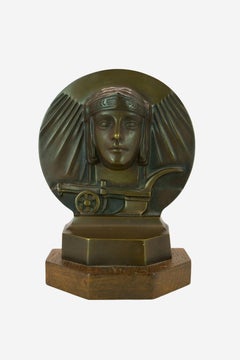
"Traditions", James Muir, Bronze, A&M, 6 Core Values, Figurative Sculpture

"Traditions", James Muir, Bronze, A&M, 6 Core Values, Figurative Sculpture

Located in Dallas, TX

As the six core values are perceived to be inseparable in the formation of character. I see them to also be inseparable in the rendering of a physical artistic depiction. I view them...

Category

2010s Realist Figurative Sculptures

Materials

Bronze
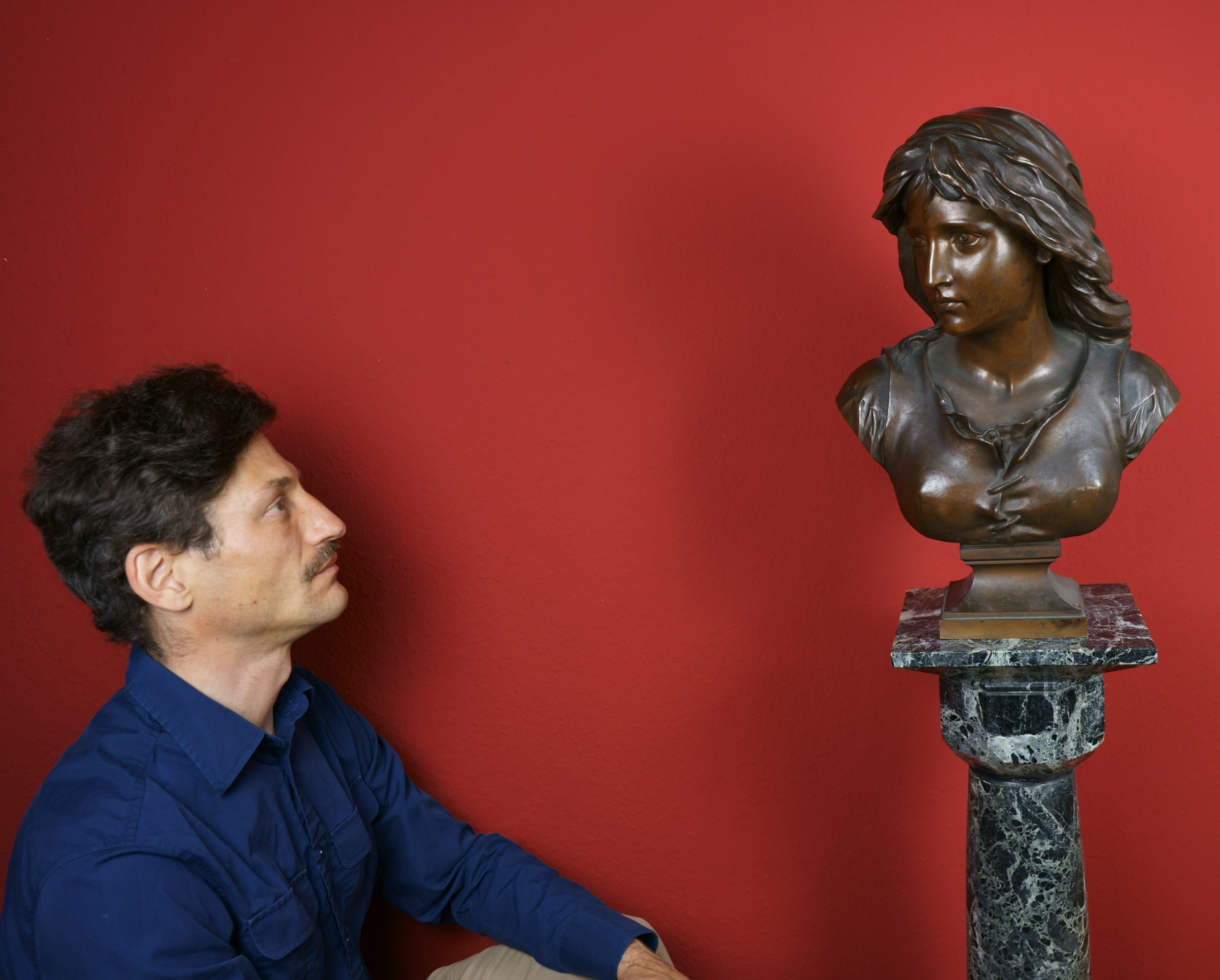
"Dreams of Ecstasy", Martin Eichinger, Figurative, Bronze, Romance, 70x12x17 in.

"Dreams of Ecstasy", Martin Eichinger, Figurative, Bronze, Romance, 70x12x17 in.

By Martin Eichinger

Located in Dallas, TX

Immerse yourself in a world where emotions run high and desires are laid bare with our stunning Dreams of Ecstasy sculpture. Crafted with exquisite detail, this towering masterpiece ...

Category

Early 2000s Realist Figurative Sculptures

Materials

Bronze

"Caduceus", James Muir, Monumental Bronze Fountain Sculpture Allegory, Medical

"Caduceus", James Muir, Monumental Bronze Fountain Sculpture Allegory, Medical

Located in Dallas, TX

"Caduceus", recognized as a universal medical symbol, in this bronze representation by James N. Muir has become an Angel of Healing bringing love and peace to the earth and all of it...

Category

Early 2000s Realist Figurative Sculptures

Materials

Bronze

"The Source", Frederick Hart, Bronze Sculpture & Fountain, Half Life Size, 1995

"The Source", Frederick Hart, Bronze Sculpture & Fountain, Half Life Size, 1995

By Frederick Hart

Located in Dallas, TX

"The Source" by Frederick Hart is a figurative bronze with a glass orb and a working water fountain with edition 94/175. This edition has been Sold out from the creation date of 1995...

Category

1990s Realist Figurative Sculptures

Materials

Bronze

"The Muses Suit" Bronze Collection of Dance, Music, Poetry, and Theater, 42/65

"The Muses Suit" Bronze Collection of Dance, Music, Poetry, and Theater, 42/65

By Frederick Hart

Located in Dallas, TX

Step into the world of artistic elegance with our exclusive offer on the Muses suite by master sculptor Frederick Hart. Each bronze head, representing Dance, Music, Poetry, and Theat...

Category

Early 2000s Realist Figurative Sculptures

Materials

Bronze

More From This Seller

View All
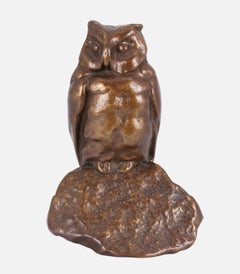
Watching Owl on Rock / - The Library Guardian -

Watching Owl on Rock / - The Library Guardian -

Located in Berlin, DE

Anonymous, Watching Owl on Rock, around 1960. Bronze, solid cast figure, 6.5 inches (height) x 4.7 inches (width) x 3.9 inches (depth), 2.44 kg. - Excellent condition - The Libr...

Category

1960s Realist Figurative Sculptures

Materials

Bronze

Gerhart Hauptmann, c. 1912 / - - Pensive stride -

Gerhart Hauptmann, c. 1912 / - - Pensive stride -

Located in Berlin, DE

Curt Gitschmann (1876 Breslau - 1933 Berlin), Gerhart Hauptmann, around 1912. Brown patinated bronze mounted on marble plinth, 43 cm (total height), 20 cm (width) x 20 cm (depth) cm,...

Category

1910s Realist Figurative Sculptures

Materials

Bronze

The Victorious David / - The melancholy of the radiant hero -

The Victorious David / - The melancholy of the radiant hero -

By Henri Honoré Plé

Located in Berlin, DE

Henri Honoré Plé (1853 Paris - 1922 Paris), The Victorious David, around 1890. Red-brown and brown patinated bronze with terrain plinth mounted on a round base. 62 cm (total height) ...

Category

1890s Realist Figurative Sculptures

Materials

Bronze

The Blacksmith of Solingen / - The Double-edged Sword -

The Blacksmith of Solingen / - The Double-edged Sword -

Located in Berlin, DE

Wilhelm Albermann (1835 Werden an der Ruhr - 1913 Cologne), The Blacksmith of Solingen, after 1895. Bronze-color patinated zinc cast on plinth, 47 cm (height) x 20 cm (width) x 16 cm (depth), weight 5.5 kg. Signed “Albermann.” on the plinth and identified as a cast by “AKT.[TIEN] GES.[ELLSCHAFT] GLADENBECK BERLIN”. Dedication on the front: “Mr. Ing. F. Kuhlmann to the wedding. Management and officials of the Hannoversche Waggonfabrik. Aircraft construction department". - The zinc showing through in spots, the patina somewhat stained, the right upper arm under the sleeve retouched in black. - The Double-edged Sword - The figure is a reduction of Wilhelm Albermann's 1895 fountain figure of the armourer of Solingen, who has always been identified with the historical blacksmith Peter Hahn. In 1839, Karl Simrock wrote the poem “The Blacksmith of Solingen" and thus coined the legendary figure. The first and penultimate verses read: A blacksmith spoke to Solingen With every bayonet, That came to his diligence: "Oh, that Fritz had it!" The war took its course, Many battles were fought, Which often made him fearful and anxious In his soul. The blacksmith had given up his trade to fight for Frederick the Great. Not least because of his strength and will to fight, the battles were won. With his fountain sculpture, Albermann has given the legendary blacksmith a figurative form and at the same time created a landmark for the city of Solingen, which was once famous for the art of sword forging and today still stands for the production of high-quality knives. During the bombing raid in November 1944, the fountain was destroyed along with the entire old town of Solingen. Only the head remained. The broad-shouldered blacksmith stands securely behind his anvil, his leather apron tied around him, and has just finished a sword blade with his own "weapon" - the blacksmith's hammer. His entire body shows the strength with which he wields the hammer, but also the strain of this activity, as evidenced by the wide open shirt, the somewhat 'untidy' apron, and especially the furrowed face. However, the blacksmith does not look at the finished work, but resolutely and at the same time thoughtfully into the distance, in line with the quoted verse from Simrock's poem that the battles "often made him fearful and anxious in his soul". There is certainly something melancholy in his gaze, fed by the knowledge of the necessity of forging swords and taking up arms and their deadly use - experiences Albermann had to make during his own war missions. The flowing full beard gives his gaze into the distance an almost prophetic character. In keeping with the craft of the perfectly formed art of blacksmithing, the detailed casting reproduces the respective materials depicted in perfect form: the leather apron convincingly conveys the impression of leather and lies - also in the back view - like a second formed layer over the body, while the shirt and trousers illustrate their own textile qualities. Due to its masterful execution and profound content, the “Blacksmith of Solingen”, which has survived in its cast reproductions, remains Albermann's most famous work to this day. About the artist The son of a carpenter, Wilhelm Albermann began an apprenticeship as a joiner, but then followed his artistic calling and trained as a sculptor in Elberfeld. In 1855, at the age of twenty, he was drafted into the army in Berlin, where he served until 1857. Albermann attended the Berlin Art Academy on the side and began regular studies after his service. While still a student, he completed commissioned works for his teachers August Fischer and Hugo Hagen. His first independent commissions followed, enabling him to establish a flourishing sculpture studio in Cologne in 1865. His artistic activities were repeatedly interrupted by military service, and he took part in the German-Danish War in 1864, the war against Austria in 1866, and the Franco-Prussian War in 1870/71. After his last war service, Albermann, already a respected artist, founded a commercial drawing school at the request of the city government, where he taught the modeling class and served as director until 1896. In 1890 he also worked for the "Society for the Promotion of Sculpture in the Rhineland and Westphalia". Albermann was one of the most prolific sculptors in Cologne in the second half of the 19th century. He created numerous monuments, fountains, tomb sculptures, architectural ornaments, and domestic statues. At its peak, his workshop employed up to thirty sculptors and stonemasons at a time. GERMAN VERSION Wilhelm Albermann (1835 Werden an der Ruhr - 1913 Köln), Der Schmied von Solingen, nach 1895. Bronzefarben patinierter Zinkguss auf gegossener Plinthe, 47 cm (Höhe) x 20 cm (Breite) x 16 cm (Tiefe), Gewicht 5,5 kg. Auf der Plinthe mit „Albermann.“ signiert und als Guss der „AKT.[TIEN] GES.[ELLSCHAFT] GLADENBECK BERLIN“ ausgewiesen. Schauseitige Widmung: „Herrn Ing. F. Kuhlmann zur Vermählung. Direktion und Beamte der Hannoverschen Waggonfabrik. Abt. Flugzeugbau“. - Punktuelles Durchscheinen des Zinks, Patina etwas fleckig, der rechte Oberarm unter dem Ärmel schwarz retuschiert. - Die Zweischneidigkeit des Schwertes - Die Figur ist eine Reduktion von Wilhelm Albermanns 1895 geschaffener Brunnenfigur des Waffenschmieds von Solingen, der seit jeher mit dem historischen Schmied Peter Hahn identifiziert wurde. 1839 hatte Karl Simrock das Gedicht „Der Schmied von Solingen“ verfasst und damit die legendäre Figur geprägt. Die erste und die vorletzte Strophe lauten: Zu Solingen sprach ein Schmied Bei jedem Bajonette, Das seinem Fleiß geriet: »Ach, daß der Fritz es hätte!« Der Krieg ging seinen Gang, Man schlug noch viele Schlachten, Die oft ihm angst und bang' In seiner Seele machten. Der Schmied hatte sein Handwerk ruhen lassen, um selbst für Friedrich den Großen zu kämpfen. Nicht zuletzt durch seine Kraft und seinen Kampfeswillen verliefen die Schlachten siegreich. Dem legendären Schmied verlieht Albermann mit seiner Brunnenskulptur eine bildliche Gestalt und schuf damit zugleich ein Wahrzeichen der Stadt Solingen, die einst für die Kunst des Schwerterschmiedens berühmt war und bis heute für die Herstellung qualitätvoller Messer einsteht. Beim Bombenangriff im November 1944 wurde mit der gesamten Solinger Altstadt auch der Brunnen zerstört. Einzig der Kopf blieb erhalten. Mit sicherem Stand und umgebundener Lederschürze steht der breitschultrige Schmied hinter seinem Amboss und hat gerade mit seiner eigenen ‚Waffe‘ – dem Schmiedehammer – eine Schwertklinge fertiggestellt. Seinem gesamten Körper ist die Kraft abzulesen, mit der er den Hammer führt, aber auch die Anstrengung dieser Tätigkeit, wovon das weit geöffnete Hemd, die etwas ‚unordentlich‘ arrangierte Schürze und vor allem das zerfurchte Gesicht zeugen. Der Schmied schaut aber nicht auf das vollendete Werk, sondern entschlossen und zugleich sinnierend in die Ferne, entsprechend der zitierten Zeile von Simrocks Gedicht, dass die Schlachten „oft ihm angst und bang‘ in seiner Seele machten“. Der Blick hat durchaus etwas Melancholisches, dass sich aus dem Wissen um die Notwendigkeit, Schwerter zu schmieden und zu den Waffen zu greifen und deren tödlichem Einsatz speist – Erfahrungen, die Albermann bei seinen eigenen Kriegseinsätze machen musste. Der wallende Vollbart verleiht dem in die Ferne schauenden Blick einen beinahe prophetischen Charakter. Dem Handwerk der formvollendenden Schmiedekunst entsprechend, gibt der detaillierte Guss die jeweils dargestellten Materialien in vollendeter Ausformung wieder: Die Lederschürze vermittelt überzeugend den Eindruck des Leders und liegt – auch in der Rückenansicht – wie eine zweite ausgeformte Schicht über dem Körper, während das Hemd und die Hose...

Category

1890s Realist Figurative Sculptures

Materials

Metal