Symbolist Art

1,013 Results
to
140
704
127
161
56
62
Overall Width
to
Overall Height
to
1
110
770
231
33
106
117
99
12
35
60
26
52
16
121,316
65,260
58,088
30,045
14,490
10,289
7,033
6,739
4,307
3,305
2,611
2,238
2,027
591
643
398
249
203
187
123
117
64
58
54
48
46
40
39
34
32
32
23
22
20
746
297

Use search to find more

112
107
38
38
33

Use search to find more

Style: Symbolist
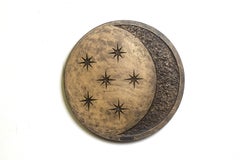
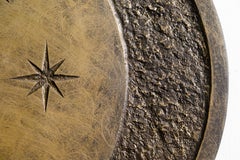
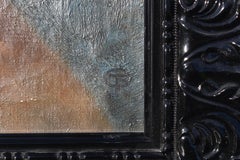
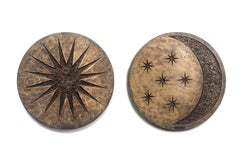
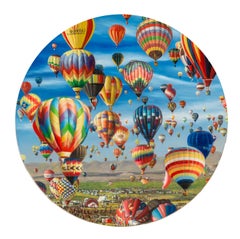
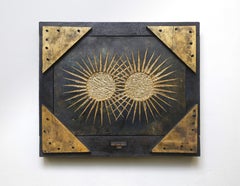
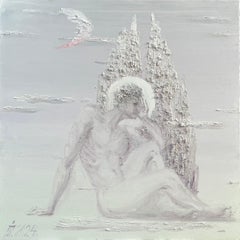
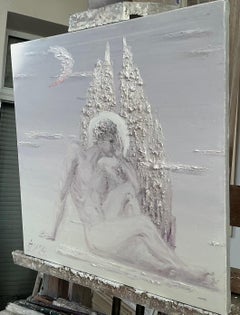
Moon, Symbolist Abstract Mixed Media, Acrylic on Wood, 2020

Moon, Symbolist Abstract Mixed Media, Acrylic on Wood, 2020

By Astian Rey

Located in Edinburgh, GB

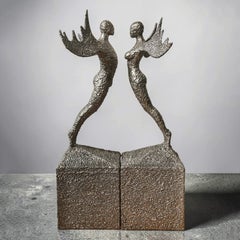
Bas-relief, Diameter - 48cm Particleboard, acrylic, gold enamel, author's technique. 2020. The moon and stars are ancient and very important symbols in many mythologies. The moon i...

Category

2010s Symbolist Art

Materials

Wood, Mixed Media, Acrylic

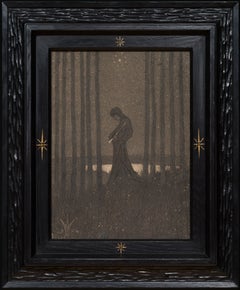
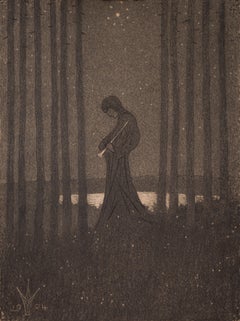
The Flute Player, Original Drawing by Gerhard Henning 1904

The Flute Player, Original Drawing by Gerhard Henning 1904

By Gerhard Henning

Located in Stockholm, SE

Gerhard Henning (1880–1967) Swedish-Danish Flöjtspelaren (The Flute Player), 1904 signed with monogram and dated lower left charcoal and ink on paper unframed 33 × 24 cm (13 × 9.4...

Category

Early 1900s Symbolist Art

Materials

Paper, Charcoal, Ink

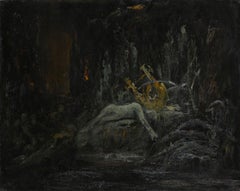
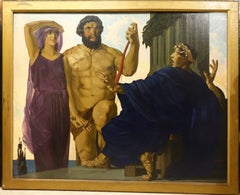
Monogrammed "TG", Late 19th Century Symbolist / Pre-Raphaelite Oil Painting

Monogrammed "TG", Late 19th Century Symbolist / Pre-Raphaelite Oil Painting

Located in Holywell, GB

Monogrammed "TG", Late 19th Century Symbolist / Pre-Raphaelite Oil Painting A captivating late 19th-century oil painting imbued with imaginative symbolism and strong Pre-Raphaelite ...

Category

1890s Symbolist Art

Materials

Oil

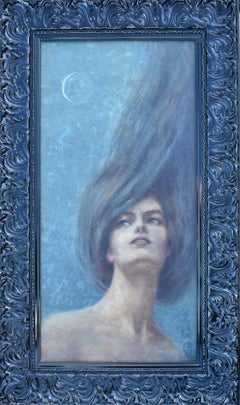
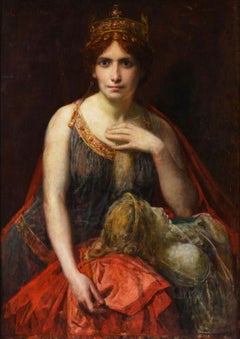
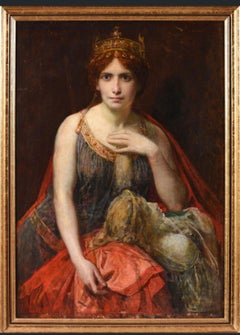
Fine 19th Century French Symbolist Oil Painting Portrait of Mythological Queen

Fine 19th Century French Symbolist Oil Painting Portrait of Mythological Queen

Located in Cirencester, Gloucestershire

The Queen by Diogène Ulysse Napoléon Maillart (French, 1840 – 1926) *see notes below oil painting on canvas, framed canvas: 42 x 30 inches framed: 45 x 33 inches condition: overall v...

Category

Late 19th Century Symbolist Art

Materials

Canvas, Oil

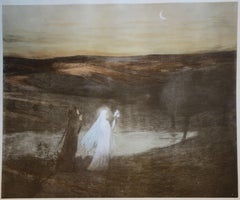
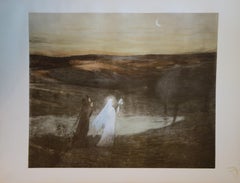
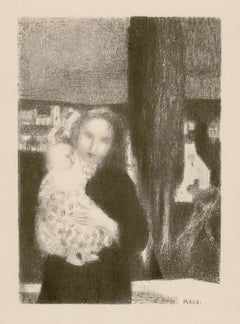
Untitled (Mother and Child)

Untitled (Mother and Child)

By Maurice Denis

Located in Myrtle Beach, SC

Maurice Denis, Untitled (Mother and Child), lithograph, 1897, edition not stated. Signed in the stone, lower right. Annotated in linotype 'MAURICE DENIS, ORIGINAL LITHOGRAPHIE PAN III' in the lower left sheet corner. A fine, atmospheric impression, in warm, dark gray ink, on buff wove paper, with full margins (2 1/2 to 1 3/4 inches); a small discoloration in the bottom left sheet corner, otherwise in good condition. Image size 8 5/8 x 6 7/8 inches; sheet size 13 7/8 x 10 5/8 inches. As published in 'Pan', the leading German magazine of the period devoted to art and literature. Matted to museum standards, unframed. Collection: Los Angeles County Museum of Art. Reproduced: German Expressionist Prints...

Category

1890s Symbolist Art

Materials

Lithograph

Olive Harvest in Southern Italy on Cold Coastal Morning Italian Riviera

Olive Harvest in Southern Italy on Cold Coastal Morning Italian Riviera

Located in Soquel, CA

Olive Harvest in Southern Italy on Cold Coastal Morning Italian Riviera Olive Harvesters are bundled up against the cold and dust on a harvest morning, somewhere on the southern It...

Category

1980s Symbolist Art

Materials

Linen, Oil, Stretcher Bars

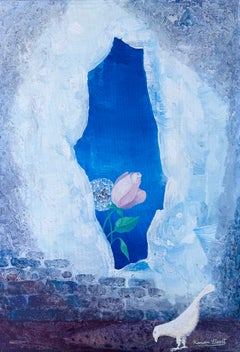
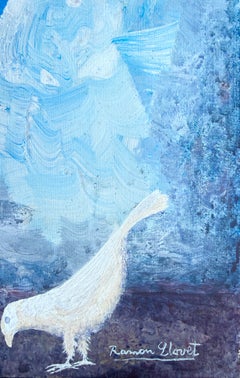
Surrealist Blue Wall with Pink Flower and White Bird, Symbolist Oil Painting

Surrealist Blue Wall with Pink Flower and White Bird, Symbolist Oil Painting

By Ramon Llovet Miserol

Located in Sitges, Barcelona

Surrealist Blue Wall with Pink Flower and White Bird, Symbolist Oil Painting Artist: Ramon Llovet i Miserol (Barcelona, 1917–1987) Original title: Esboranc en el mur (Breach in the Wall) Year: 1976 Origin: Spain, Catalonia Medium: Oil on canvas Dimensions: 64 × 44 cm (25.20 × 17.32 inches) Signature: Hand-signed lower right Verso: Signed, titled and dated 1976 by the artist Condition: Vintage condition, with surface details visible in the photographs Framing: Unframed Style: Surrealism, Symbolism, Poetic Surrealism, Modern Art Period: 1970s DESCRIPTION An enchanting and highly poetic surrealist oil painting by Ramon Llovet i Miserol (1917–1987), a distinctive figure in 20th-century Catalan modern art, celebrated for his deeply personal exploration of symbolism, spirituality and the human condition. Painted in 1976 and titled "Esboranc en el mur" (Breach in the Wall), this remarkable composition belongs to the artist's mature period, when his earlier expressionist language had evolved into a luminous, dreamlike world of symbolic imagery and metaphysical contemplation. The painting depicts a mysterious opening in a heavily textured wall, revealing an intense ultramarine blue space. Within this enigmatic passage, a delicate pink flower emerges alongside an intricate white floral form, while a solitary white bird stands in the foreground. The contrast between the rough, almost sculptural surface of the wall and the extraordinary depth of the blue background creates a compelling sense of mystery, silence and transcendence. The flower suggests renewal and the fragile beauty of life, while the white bird evokes peace, innocence and freedom. The opening in the wall can be interpreted as a symbolic passage between the material world and an inner, spiritual dimension. The composition is particularly striking for its refined chromatic harmony: vibrant cobalt and ultramarine blues, icy whites, subtle lavender and pink tones, and a restrained touch of green. Llovet's sophisticated use of texture and carefully controlled brushwork gives the painting a remarkable tactile quality, reinforcing the contrast between physical matter and poetic imagination. Created during the height of the artist's spiritual and philosophical maturity, this work reflects his fascination with pacifism, Eastern thought and the search for universal harmony. An evocative example of Spanish and Catalan poetic surrealism, combining the visual fascination of modernist painting with an intimate, contemplative atmosphere. The painting is signed on the front and additionally signed, titled and dated 1976 on the reverse, providing valuable documentary information about the original work. ARTIST BIOGRAPHY Ramon Llovet i Miserol (Barcelona, 1917–1987) was a Spanish-Catalan painter, engraver and sculptor whose artistic career followed a remarkable evolution from social realism and expressive figuration toward a highly individual language of poetic symbolism and spiritual surrealism. Born in the working-class Poble-sec district of Barcelona, Llovet developed an early passion for drawing and painting. Largely self-taught, he attended classes at the prestigious Escola de la Llotja and the Ateneu Obrer, while the work of Antoni Clavé became an important early reference. His experiences during the Spanish Civil War profoundly influenced his worldview, encouraging a lifelong commitment to humanism and pacifism. He held his first exhibition in Barcelona in 1939 and subsequently participated in the influential Salons d'Octubre, important gatherings of modern Catalan artists during the postwar period. During the 1950s, his painting developed an expressive and socially conscious character, inspired in part by the Spanish painter José Gutiérrez Solana. His scenes of humble neighborhoods, solitary figures and urban landscapes attracted critical attention. Llovet became associated with Barcelona's prestigious Sala Gaspar, one of the most important galleries promoting modern and contemporary art in Spain, where his work was exhibited over several decades. From the 1960s onward, his artistic direction underwent a profound transformation. Influenced by the philosopher Jiddu Krishnamurti, the pacifist thinker Lanza del Vasto, theosophy and Eastern spirituality, he progressively abandoned the darker atmosphere of his earlier paintings. His mature work embraced luminous colors, symbolic flowers, birds, mysterious spaces and metaphysical compositions, developing an unmistakably personal visual language centered on peace, transcendence and spiritual freedom. His artistic importance has received renewed institutional recognition. In 2026, the Biblioteca de Catalunya in Barcelona presented the retrospective exhibition "Ramon Llovet, entre la realitat i el lirisme" (Ramon Llovet, Between Reality and Lyricism), examining the evolution of his career and the distinctive symbolic language of his mature period. His work is represented in the collection of the Museu Nacional d'Art de Catalunya (MNAC), Barcelona, and the Museu d'Art de Girona, while the Biblioteca de Catalunya preserves an important collection of his graphic work. Today, Ramon Llovet is appreciated as an individual voice within 20th-century Spanish modernism, whose paintings combine expressive sensitivity, philosophical depth and poetic imagination. ARTISTIC INSPIRATION The dreamlike imagery, symbolic composition and metaphysical atmosphere of this painting establish fascinating artistic connections with several internationally renowned masters of modern art. Joan Miró: The poetic use of simplified forms, delicate organic motifs and symbolic elements suspended within mysterious pictorial spaces. René Magritte: The enigmatic relationship between ordinary objects and impossible or ambiguous spaces, transforming familiar subjects into visual metaphors. Marc Chagall: The lyrical treatment of flowers, birds and dreamlike imagery, evoking emotional and spiritual dimensions beyond conventional reality. Salvador Dalí: The surrealist fascination with hidden meanings, psychological landscapes and the boundaries between the visible and invisible worlds. Odilon Redon: The symbolic representation of flowers and imaginary environments, where nature becomes an expression of inner spirituality and contemplation. Paul Klee: The delicate visual poetry, symbolic abstraction and intimate relationship between color, form and philosophical imagination. These artistic affinities position Llovet's work within a broader European tradition of Symbolism, Surrealism and poetic modernism, while preserving the unmistakable individuality of his Catalan artistic identity. Ramon Llovet, Ramon Llovet Miserol, Spanish surrealist painting, Catalan surrealism, 1970s surrealist art, vintage surrealist oil painting, symbolic flower painting, pink flower painting, white bird painting...

Category

1970s Symbolist Art
Materials

Canvas, Oil

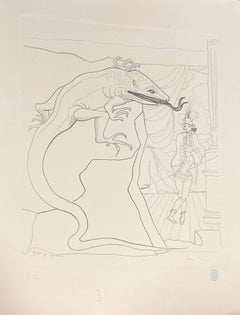
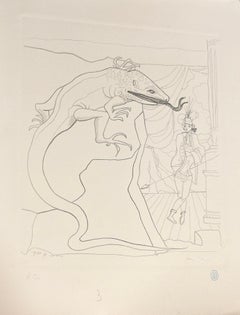
French Modern Art by Jean Cocteau - Le Lézard et Le Page

French Modern Art by Jean Cocteau - Le Lézard et Le Page

By Jean Cocteau

Located in Paris, IDF

Etching or eau-forte on archival paper with H.C. in pencil at lower left, indicating a Hors Commerce (Artist's/Publisher's Proof) including pencil signature that appears to read Jean...

Category

1930s Symbolist Art
Materials

Archival Paper, Etching

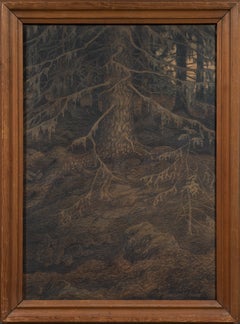
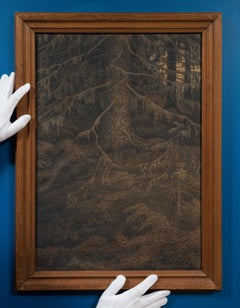
David Cronholm Forest Interior Charcoal Drawing 1910 Swedish Symbolism

David Cronholm Forest Interior Charcoal Drawing 1910 Swedish Symbolism

Located in Stockholm, SE

This charcoal drawing from 1910 is an unusually powerful example of David Cronholm’s ability to transform a forest motif into something at once precise, immersive and deeply atmosphe...

Category

1910s Symbolist Art
Materials

Charcoal, Laid Paper

Prometheus - Héliogravure by Franz von Bayros - Early 20th Century

Prometheus - Héliogravure by Franz von Bayros - Early 20th Century

"Prometheus" is an original Black and white héliogravure on cream-colored cardboard realized by Choisy Le Conin, pseudonym of Franz Von Bayros (Agram, 1866 – Vienna, 1924). From Map...

Category

20th Century Symbolist Art
Materials

Engraving

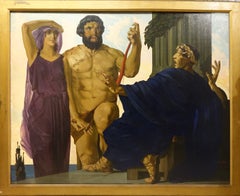
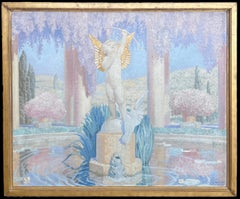
Huge French 1930's Signed Oil Classical Roman Fountain Statue Floral Scene 1933

Huge French 1930's Signed Oil Classical Roman Fountain Statue Floral Scene 1933

Located in Cirencester, Gloucestershire

The Roman Statue by Gabriel Jules-Charles Girodon (French, 1884–1941) *see notes below signed and dated oil painting on canvas, framed framed: 38 x 47 inches canvas: 36 x 44 inches...

Category

Early 20th Century Symbolist Art
Materials

Oil

Original Spanish Surrealist Female Figure, Monumental Expressionist Oil

Original Spanish Surrealist Female Figure, Monumental Expressionist Oil

By Alvar Sunol Munoz-Ramos

Located in Sitges, Barcelona

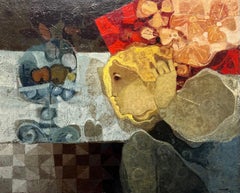
Original Spanish Surrealist Female Figure, Monumental Expressionist Composition Artist: Alvar Suñol Munoz-Ramos Title: Figurative Composition Date: circa 2000 Medium: Oil on canvas Dimensions: 81 × 100 cm / 31.9 × 39.4 in Framed: Yes Signed: Lower right Condition: Excellent Origin: Spain DESCRIPTION A monumental and highly distinctive figurative composition by internationally recognized Spanish artist Alvar Suñol, combining psychological intensity, sculptural presence and a sophisticated balance between figuration and abstraction. The composition is dominated by one of Suñol’s characteristic introspective female figures, rendered with a monumental sense of volume and surrounded by overlapping geometric planes, textured surfaces and richly modulated color. Earthy greys, ochres and muted blues contrast dramatically with areas of deep red and luminous yellow, creating a complex visual architecture that rewards prolonged viewing. Measuring 81 × 100 cm / 31.9 × 39.4 inches, this is an imposing large-format work with considerable decorative and intellectual presence. Its scale, compositional complexity and mature handling make it particularly suitable for an important contemporary interior, private collection or architect-designed space. This painting belongs to the mature period of Suñol’s career, when his visual language had developed into a highly personal synthesis of Mediterranean figuration, modernist structure and poetic symbolism. The female figure, simultaneously monumental and introspective, becomes less a portrait than a universal psychological presence. The work is presented framed and in excellent condition, ready to display. BIOGRAPHY Alvar Suñol Munoz-Ramos, widely known as Alvar Suñol, was born in Montgat, near Barcelona, in 1935. He studied at the Escola Superior de Belles Arts de Sant Jordi in Barcelona and quickly emerged as one of the most internationally recognized Spanish figurative artists of his generation. His career developed between Spain, Paris and the United States, where his work found a particularly strong following among collectors. Suñol became known for a highly personal figurative language characterized by monumental human figures, architectural structures, symbolic imagery and richly worked surfaces. Throughout his long career, his paintings, sculptures, lithographs and monumental projects have been exhibited internationally and are represented in numerous private and institutional collections. His mature work occupies a distinctive position between Mediterranean lyricism, European modernism and a deeply personal form of poetic figuration. Rather than abandoning the human figure, Suñol transformed it into a vehicle for memory, contemplation and psychological depth. ARTISTIC INSPIRATION Suñol’s work belongs to the wider European figurative tradition shaped by artists such as Pablo Picasso, Georges Braque, Marc Chagall and Amedeo Modigliani, while maintaining a strongly individual Mediterranean sensibility. The monumental treatment of the figure recalls certain aspects of Picasso’s later figurative work, while the fragmented planes and structural organization reveal the lasting influence of Cubism and European modernism. At the same time, Suñol’s poetic atmosphere and symbolic use of the human figure place his work in dialogue with Chagall and other artists who maintained narrative and emotional content within modern art. This combination of Mediterranean identity, modernist construction and psychological figuration gives Suñol’s work a particularly distinctive presence within post-war Spanish and European painting. Alvar Suñol, Alvar Sunol, original Spanish painting...

Category

Early 2000s Symbolist Art

Materials

Canvas, Oil

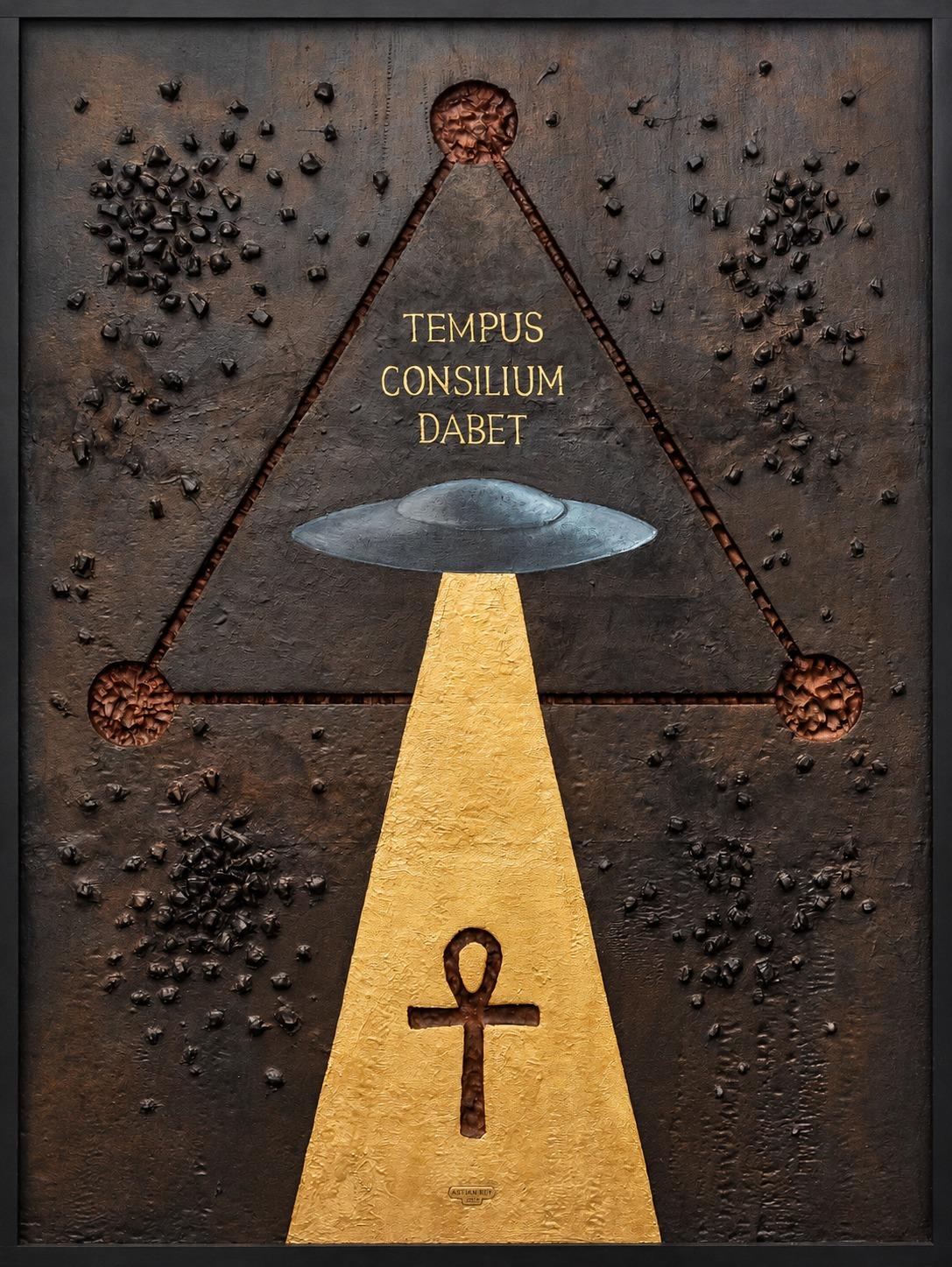
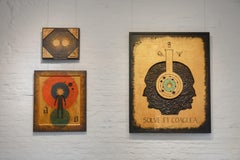
Solve Et Coagula, Symbolist Portrait Mixed Media, Acrylic, 2019

Solve Et Coagula, Symbolist Portrait Mixed Media, Acrylic, 2019

By Astian Rey

Located in Edinburgh, GB

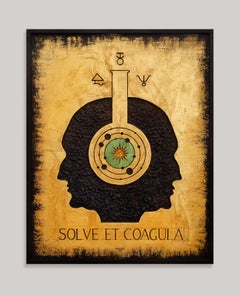
«SOLVE ET COAGULA» Astian Rey 2019 166х124сm Polystyrene foam, acrylic, enamel, author's technique. SOLVE ET COAGULA — The Alchemy of Inner Transformation To attain a new essence, o...

Category

2010s Symbolist Art

Materials

Mixed Media, Acrylic

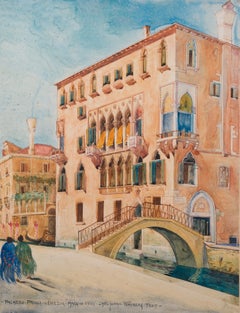
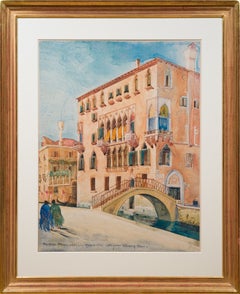
PALAZZO PRIULI AND THE PONTE DEL DIAVOLO, VENICE, 1927

PALAZZO PRIULI AND THE PONTE DEL DIAVOLO, VENICE, 1927

Located in Stockholm, SE

CARL JOHAN FORSBERG (1868–1938) SWEDEN PALAZZO PRIULI AND THE PONTE DEL DIAVOLO, VENICE, 1927 inscribed, signed and dated along the lower edge “PALAZZO PRIULI. VENEZIA. MAGGIO XXV...

Category

1920s Symbolist Art
Materials

Paper, Watercolor

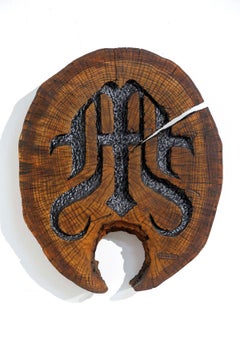
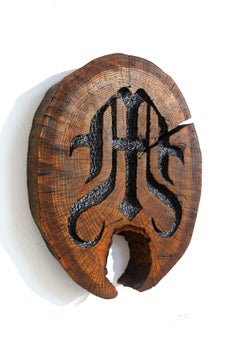
Magisterium, Symbolist Abstract Sculpture, Wood, 2021

Magisterium, Symbolist Abstract Sculpture, Wood, 2021

By Astian Rey

Located in Edinburgh, GB

«Magisterium» Astian Rey 2021 54х45х8,5сm Wood, enamel This piece was inspired by medieval sacred art—alchemy and mysticism. The work is carved from a cross-section of an oak log...

Category

2010s Symbolist Art
Materials

Wood

Seaside from Intermezzi - Etching by Max Klinger - 1881

Seaside from Intermezzi - Etching by Max Klinger - 1881

By Max Klinger

Located in Roma, IT

Seaside from Intermezzi belongs to a series of prints called Intermezzi realized by Max Klinger, published by Nurnberg: Stroefer, 1881. Etching on paper. Signed on the plate Good ...

Category

1880s Symbolist Art
Materials

Etching

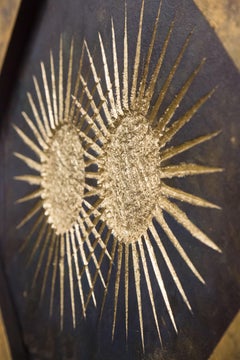
Solar Duality, Symbolist Abstract Sculpture, Wood, 2020

Solar Duality, Symbolist Abstract Sculpture, Wood, 2020

By Astian Rey

Located in Edinburgh, GB

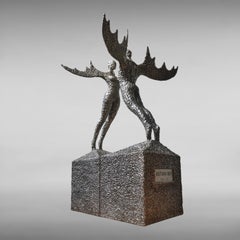
Crafted as a bold bas-relief, this artwork explores the captivating interplay of light, form, and shadow. Wood, chipboard, acrylics, and radiant gold enamel converge to create a tact...

Category

2010s Symbolist Art
Materials

Wood

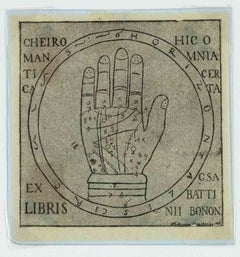
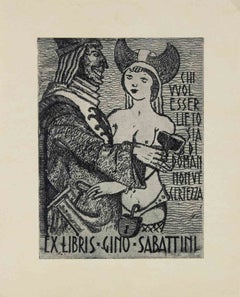
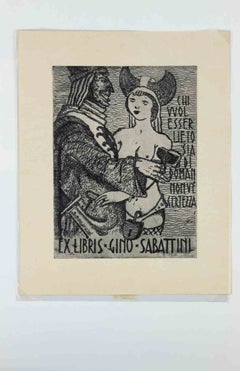
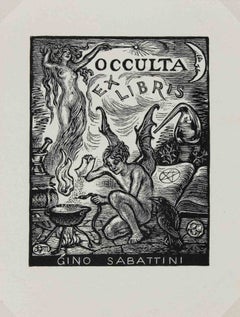
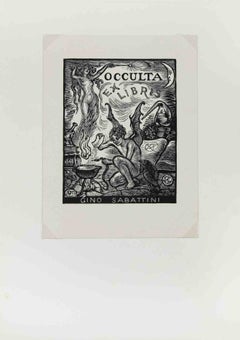
Occulta Ex Libris Gino Sabattini, Woodcut, Early 20th Century, Unframed

Occulta Ex Libris Gino Sabattini, Woodcut, Early 20th Century, Unframed

Located in Roma, IT

Woodcut print on wove paper. Not signed nor numbered. A remarkable Symbolist Ex Libris created for Gino Sabattini, distinguished by its enigmatic medieval-inspired iconography and philosophical inscription. The composition depicts a richly attired knight embracing a nude female figure crowned with a crescent-shaped headdress while presenting a chalice, a traditional symbol of knowledge, initiation, or spiritual revelation. Beside the figures appears the Italian motto "Chi vuol esser lieta sia, doman non v'è certezza"("Let those who wish to be joyful do so, for tomorrow is uncertain"), the celebrated refrain from Lorenzo de' Medici's Canzona di Bacco, a Renaissance meditation on the transience of life and the necessity of embracing the present. Executed in a deliberately archaizing style, the print recalls the expressive language of late Gothic and early Renaissance woodcuts through its dense network of engraved lines, flattened perspective, and monumental treatment of the figures. The juxtaposition of medieval costume, allegorical nudity, symbolic attributes, and humanistic quotation creates a sophisticated visual programme exploring the themes of carpe diem, earthly pleasure, and the fleeting nature of existence. The decorative inscription and the boldly cut lettering "Ex Libris Gino Sabattini" integrate seamlessly into the composition, reinforcing the intimate relationship between image and text that characterizes the finest examples of twentieth-century bibliophilic graphics. This Ex Libris exemplifies the revival of historical models that marked Italian bookplate...

Category

Early 20th Century Symbolist Art
Materials

Woodcut

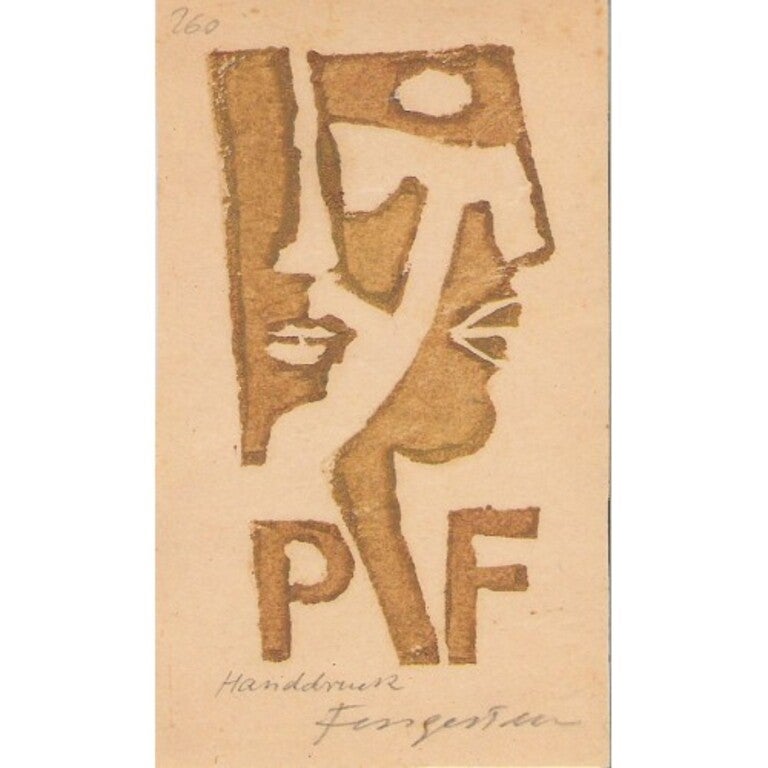
Ex Libris PF - Woodcut by Michel Fingesten - 1936

Ex Libris PF - Woodcut by Michel Fingesten - 1936

By Michel Fingesten

Located in Roma, IT

Ex Libris PF is a woodcut print by Michel Fingesten, realized in 1936. Hand signed, included a white cardboard passpartout (30x24 cm). In excellent conditions: As good as new. Michel Fingesten (1884 - 1943) was a Czech painter and engraver of Jewish origin. He is considered one of the greatest Ex Libris artists in history. From an Austrian weaver father and a Jewish mother...

Category

Early 20th Century Symbolist Art

Materials

Woodcut

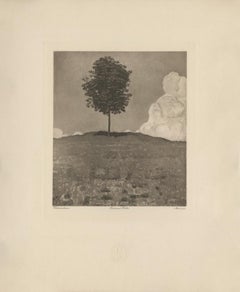
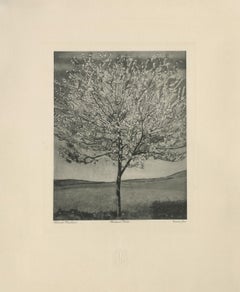
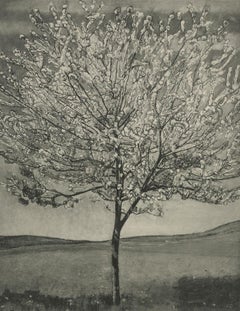
"Cherry Tree in Bloom" Copper Plate Heliogravure

"Cherry Tree in Bloom" Copper Plate Heliogravure

By Ferdinand Hodler & R. Piper & Co.

Located in Palm Beach, FL

2018 marks the centenary anniversary of Ferdinand Hodler’s death. In that 100 years time, the art world’s esteem of this important artist has proved fickle. It has shifted from extolling his artistic merits during his lifetime to showing something of a feigned disdain- more reflective of the world political order than a true change of heart for Hodler’s work. After years of Hodler being all but a footnote in the annals of art history and generally ignored, finally, the pendulum has righted itself once again. Recent retrospective exhibitions in Europe and the United States have indicated not only a joyful rediscovery of Hodler’s art but a firm conviction that his work and world view hold particular relevance today. DAS WERK FERDINAND HODLERS is not only a collection of printed work reflecting the best of all of his painted work created up to 1914 just before the outbreak of World War I, the portfolio itself is an encapsulation of Hodler’s ethos, Parallelisme. Hodler developed his philosophy of Parallelisme as a unifying approach to art which strips away detail in search of harmony. By means of abstraction, symmetry and repetition, Hodler sought ways to depict Nature’s essence and her fundamental, universal order. He believed these universal laws governing the natural, observable world extend to the spiritual realm. Symbolist in nature with Romantic undertones, his works are equally portraits of these universal concepts and feelings governing all life as they are a visual portrait in the formal sense. Whether his subject is a solitary tree, a moment in battle, mortal fear, despair, the awe inspired by a vast mountain range, a tender moment or even the collective conviction in a belief, Hodler unveils this guiding principle of Parallelisme. Several aspects of Hodler’s portfolio reinforce his tenets of Parallelisme. The Table of Contents clearly preferences a harmonious design over detail. The two columns, consisting of twenty lines each, list the images by order of appearance using their German titles. The abbreviated titles are somewhat cryptic in that they obscure the identities of the sitters. Like the image Hodler presents, they are distillations of the sitter without any extraneous details. This shortening was also done in an effort to maintain a harmonious symmetry of the Table of Contents, themselves, and keep titles to a one-line limit. The twenty-fourth title: “Bildnis des Schweizerischen Gesandten C.” was so long, even with abbreviation, that it required two lines; so, for the sake of maintaining symmetry, the fortieth title: “Bauernmadchen” was omitted from the list. This explains why the images are not numbered. Hodler’s reasoning is not purely esoteric. Symmetry and pattern reach beyond mere formal design principles. Finding sameness and imposing it over disorder goes to the root of Hodler’s identity and his art. A Swiss native, Hodler was bi-lingual and spoke German and French. Each printed image, even number forty, have titles in both of Hodler’s languages. Certainly, there was a market for Hodler’s work among francophones and this inclusion may have been a polite gesture to that end; however, this is the only place in the portfolio which includes French. With German titles at the lower left of each image, Hodler’s name at bottom center and corresponding French titles at the lower right of each image, there is a harmony and symmetry woven into all aspects of the portfolio. This holds true for the page design, as it applies to each printed image and as it describes the Swiss artist himself. Seen in this light, Hodler’s portfolio of printed work is the epitome of Hodler’s Parallelisme. DAS WERK FERDINAND HODLERS is also one of the most significant documents to best tell the story of how Hodler, from Switzerland, became caught between political cross-hairs and how the changing tides of nations directly impacted the artist during his lifetime as well as the accessibility of his art for generations to come. The Munich-based publisher of the portfolio, R. Piper & Co., Verlag, plays a crucial role in this story. Publishing on a wide range of subjects from philosophy and world religion to music, literature and the visual arts; the publisher’s breadth of inquiry within any one genre was equal in scope. Their marketing strategy to publish multiple works on Hodler offers great insight as to what a hot commodity Hodler was at that time. R.Piper & Co.’s Almanach, which they published in 1914 in commemoration of their first ten years in business, clearly illustrates the rapid succession- strategically calculated for achieving the deepest and broadest impact - in which they released three works on Hodler to hit the market by the close of 1914. DAS WERK FERDINAND HODLERS was their premier publication. It preceded C.A. Loosli’s Die Zeichnungen Ferdinand Hodlers, a print portfolio after 50 drawings by Hodler which was released in Autumn of 1914 at the mid-level price-point of 75-150 Marks; and a third less expensive collection of prints after original works by Hodler, which had not been included in either of the first two portfolios, was released at the end of that year entitled Ferdinand Hodler by Dr. Ewald Bender. The title and timing of DAS WERK FERDINAND HODLERS' debut leaves little doubt as to the connection it has with another avant-garde portfolio of art prints, Das Werk Gustav Klimts, released in 5 installments from 1908 -1914 by Galerie Miethke in Vienna. Hodler, himself, was involved in Klimt’s ground-breaking project. As the owner of Klimt’s 1901 painting, “Judith with the Head of Holifernes” which appears as the ninth collotype print in the second installment of Das Werk Gustav Klimts, Hodler was obliged to grant access of the painting to the art printers in Vienna for them to create the collotype sometime before 1908. Hodler had been previously invited in 1904 to take part in what would be the last exhibition of the Vienna Secession before Klimt and others associated with Galerie Miethke broke away. In an interview that same year, Hodler indicated that he respected and was impressed by Klimt. Hodler’s esteem for Klimt went beyond the art itself; he emulated Klimt’s method aimed at increasing his market reach and appeal to a wider audience by creating a print portfolio of his painted work. By 1914, Hodler and his publisher had the benefit of hindsight to learn from Klimt’s Das Werk publication. Responding to the sluggish sales of Klimt’s expensive endeavor, Hodler’s publisher devised the same diversified 1-2-3 strategy for selling Hodler’s Das Werk portfolio as they did with regards to all three works on Hodler they published that year. For their premium tier of DAS WERKS FERDINAND HODLERS, R. Piper & Co. issued an exclusive Museum quality edition of 15 examples on which Hodler signed each page. At a cost of 600 Marks, this was generally on par with Klimt’s asking price of 600 Kronen for his Das Werk portfolio. A middle-tiered Preferred edition of 30, costing somewhat less and with Hodler’s signature only on the Title Page, was also available. The General edition, targeting the largest audience with its much more affordable price of 150 Marks, is distinguishable by its smaller size. Rather than use the subscription format Miethke had chosen for Klimt’s portfolios which proved to have had its challenges, R. Piper & Co. employed a different strategy. In addition to instantly gratifying the buyer with all 40 of the prints comprising DAS WERK FERDINAND HODLERS and the choice among three price points, they advertised in German journals a fourth possibility of ordering single prints from them directly. These printed images are easily discernible from the three complete folio editions. The paper size of the single purchased images is of the larger format like the Museum and Preferred editions, measuring 65 h x 50 w cm; however, the paper itself is the same copper print paper used in the General edition and then mounted on poster board. The publishing house positioned itself to be a direct retailer of Hodler’s art. They astutely recognized the potential for profitability and the importance, therefore, of having proprietary control over his graphic works. R. Piper & Co. owned the exclusive printing rights to Hodler’s best work found in their three publications dating from 1914. That same year, a competing publication out of Weimar entitled Ferdinand Hodler: Ein Deutungsversuch von Hans...

Category

1910s Symbolist Art
Materials

Paper

Symbolist Portrait of a Woman in an Interior, 'Before the Mirror'

Symbolist Portrait of a Woman in an Interior, 'Before the Mirror'

Located in Cotignac, FR

Art Nouveau coloured drawing of a young lady beauty before a mirror by Edmon Aman-Jean. The work is signed in pencil bottom left and presented in a plain wood frame with mount, under glass. A very charming early 20th century drawing capturing a young beauty admiring herself in front of a dressing mirror. n the background a fine interior with a louis XVI commode...

Category

Late 19th Century Symbolist Art

Materials

Crayon, Pencil, Color Pencil

Château du Cheval Mystérieux

Château du Cheval Mystérieux

By Boleslaw Biegas

Located in Palm Beach, FL

Oil and pencil on board. Signed "Boleslaw Biegas" Note: We do not ship uninsured. We require shipping through 1stDibs, for its cost effectiveness, full insurance coverage, and relia...
Category

1920s Symbolist Art
Materials

Watercolor, Pencil, Board

Mother’s Melody
Mother’s Melody

Mother’s Melody

By Puzant Godjamanian

Located in La Canada Flintridge, CA

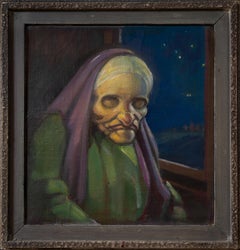
This is a painting by Puzant Godjamanian (1909-1993), a deeply meaningful composition depicting a mother singing her baby to sleep. The piece convey...

Category

1980s Symbolist Art
Materials

Oil

Garden guardian
Garden guardian

Dasha PogodinaGarden guardian, 2023

$1,167Sale Price|20% Off

Garden guardian

By Dasha Pogodina

Located in Zofingen, AG

This painting will come to you stretched on a wooden stretcher and completely ready to be placed in the interior. ABOUT THE ARTWORK "The 'Garden Guardian' serves as the keeper of our...

Category

2010s Symbolist Art
Materials

Canvas, Acrylic

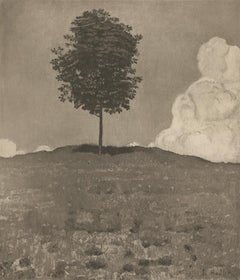
"Chestnut Tree" Copper Plate Heliogravure

"Chestnut Tree" Copper Plate Heliogravure

By Ferdinand Hodler & R. Piper & Co.

Located in Palm Beach, FL

2018 marks the centenary anniversary of Ferdinand Hodler’s death. In that 100 years time, the art world’s esteem of this important artist has proved fickle. It has shifted from extolling his artistic merits during his lifetime to showing something of a feigned disdain- more reflective of the world political order than a true change of heart for Hodler’s work. After years of Hodler being all but a footnote in the annals of art history and generally ignored, finally, the pendulum has righted itself once again. Recent retrospective exhibitions in Europe and the United States have indicated not only a joyful rediscovery of Hodler’s art but a firm conviction that his work and world view hold particular relevance today. DAS WERK FERDINAND HODLERS is not only a collection of printed work reflecting the best of all of his painted work created up to 1914 just before the outbreak of World War I, the portfolio itself is an encapsulation of Hodler’s ethos, Parallelisme. Hodler developed his philosophy of Parallelisme as a unifying approach to art which strips away detail in search of harmony. By means of abstraction, symmetry and repetition, Hodler sought ways to depict Nature’s essence and her fundamental, universal order. He believed these universal laws governing the natural, observable world extend to the spiritual realm. Symbolist in nature with Romantic undertones, his works are equally portraits of these universal concepts and feelings governing all life as they are a visual portrait in the formal sense. Whether his subject is a solitary tree, a moment in battle, mortal fear, despair, the awe inspired by a vast mountain range, a tender moment or even the collective conviction in a belief, Hodler unveils this guiding principle of Parallelisme. Several aspects of Hodler’s portfolio reinforce his tenets of Parallelisme. The Table of Contents clearly preferences a harmonious design over detail. The two columns, consisting of twenty lines each, list the images by order of appearance using their German titles. The abbreviated titles are somewhat cryptic in that they obscure the identities of the sitters. Like the image Hodler presents, they are distillations of the sitter without any extraneous details. This shortening was also done in an effort to maintain a harmonious symmetry of the Table of Contents, themselves, and keep titles to a one-line limit. The twenty-fourth title: “Bildnis des Schweizerischen Gesandten C.” was so long, even with abbreviation, that it required two lines; so, for the sake of maintaining symmetry, the fortieth title: “Bauernmadchen” was omitted from the list. This explains why the images are not numbered. Hodler’s reasoning is not purely esoteric. Symmetry and pattern reach beyond mere formal design principles. Finding sameness and imposing it over disorder goes to the root of Hodler’s identity and his art. A Swiss native, Hodler was bi-lingual and spoke German and French. Each printed image, even number forty, have titles in both of Hodler’s languages. Certainly, there was a market for Hodler’s work among francophones and this inclusion may have been a polite gesture to that end; however, this is the only place in the portfolio which includes French. With German titles at the lower left of each image, Hodler’s name at bottom center and corresponding French titles at the lower right of each image, there is a harmony and symmetry woven into all aspects of the portfolio. This holds true for the page design, as it applies to each printed image and as it describes the Swiss artist himself. Seen in this light, Hodler’s portfolio of printed work is the epitome of Hodler’s Parallelisme. DAS WERK FERDINAND HODLERS is also one of the most significant documents to best tell the story of how Hodler, from Switzerland, became caught between political cross-hairs and how the changing tides of nations directly impacted the artist during his lifetime as well as the accessibility of his art for generations to come. The Munich-based publisher of the portfolio, R. Piper & Co., Verlag, plays a crucial role in this story. Publishing on a wide range of subjects from philosophy and world religion to music, literature and the visual arts; the publisher’s breadth of inquiry within any one genre was equal in scope. Their marketing strategy to publish multiple works on Hodler offers great insight as to what a hot commodity Hodler was at that time. R.Piper & Co.’s Almanach, which they published in 1914 in commemoration of their first ten years in business, clearly illustrates the rapid succession- strategically calculated for achieving the deepest and broadest impact - in which they released three works on Hodler to hit the market by the close of 1914. DAS WERK FERDINAND HODLERS was their premier publication. It preceded C.A. Loosli’s Die Zeichnungen Ferdinand Hodlers, a print portfolio after 50 drawings by Hodler which was released in Autumn of 1914 at the mid-level price-point of 75-150 Marks; and a third less expensive collection of prints after original works by Hodler, which had not been included in either of the first two portfolios, was released at the end of that year entitled Ferdinand Hodler by Dr. Ewald Bender. The title and timing of DAS WERK FERDINAND HODLERS' debut leaves little doubt as to the connection it has with another avant-garde portfolio of art prints, Das Werk Gustav Klimts, released in 5 installments from 1908 -1914 by Galerie Miethke in Vienna. Hodler, himself, was involved in Klimt’s ground-breaking project. As the owner of Klimt’s 1901 painting, “Judith with the Head of Holifernes” which appears as the ninth collotype print in the second installment of Das Werk Gustav Klimts, Hodler was obliged to grant access of the painting to the art printers in Vienna for them to create the collotype sometime before 1908. Hodler had been previously invited in 1904 to take part in what would be the last exhibition of the Vienna Secession before Klimt and others associated with Galerie Miethke broke away. In an interview that same year, Hodler indicated that he respected and was impressed by Klimt. Hodler’s esteem for Klimt went beyond the art itself; he emulated Klimt’s method aimed at increasing his market reach and appeal to a wider audience by creating a print portfolio of his painted work. By 1914, Hodler and his publisher had the benefit of hindsight to learn from Klimt’s Das Werk publication. Responding to the sluggish sales of Klimt’s expensive endeavor, Hodler’s publisher devised the same diversified 1-2-3 strategy for selling Hodler’s Das Werk portfolio as they did with regards to all three works on Hodler they published that year. For their premium tier of DAS WERKS FERDINAND HODLERS, R. Piper & Co. issued an exclusive Museum quality edition of 15 examples on which Hodler signed each page. At a cost of 600 Marks, this was generally on par with Klimt’s asking price of 600 Kronen for his Das Werk portfolio. A middle-tiered Preferred edition of 30, costing somewhat less and with Hodler’s signature only on the Title Page, was also available. The General edition, targeting the largest audience with its much more affordable price of 150 Marks, is distinguishable by its smaller size. Rather than use the subscription format Miethke had chosen for Klimt’s portfolios which proved to have had its challenges, R. Piper & Co. employed a different strategy. In addition to instantly gratifying the buyer with all 40 of the prints comprising DAS WERK FERDINAND HODLERS and the choice among three price points, they advertised in German journals a fourth possibility of ordering single prints from them directly. These printed images are easily discernible from the three complete folio editions. The paper size of the single purchased images is of the larger format like the Museum and Preferred editions, measuring 65 h x 50 w cm; however, the paper itself is the same copper print paper used in the General edition and then mounted on poster board. The publishing house positioned itself to be a direct retailer of Hodler’s art. They astutely recognized the potential for profitability and the importance, therefore, of having proprietary control over his graphic works. R. Piper & Co. owned the exclusive printing rights to Hodler’s best work found in their three publications dating from 1914. That same year, a competing publication out of Weimar entitled Ferdinand Hodler: Ein Deutungsversuch von Hans...

Category

1910s Symbolist Art

Materials

Paper

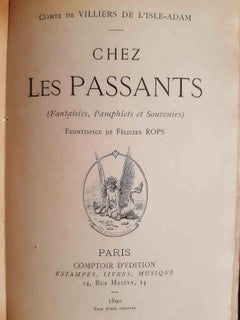
Chez les Passants - Rare Book Illustrated by Félicien Rops - 1890

Chez les Passants - Rare Book Illustrated by Félicien Rops - 1890

By Félicien Rops

Located in Roma, IT

Chez les Passants is an original Rare Book written by Philippe-Auguste, comte de Villiers de l'Isle-Adam (7 November 1838 – 19 August 1889) and illustrated by Félicien Rops (Namur, 7 luglio 1833 – Essonnes, 23 agosto 1898) in 1890. Original First Edition. Published by Comptoir d’édition, Paris. Format: in 12°. The dimensions and the weight are indicative. The book includes 320 pages with full page frontispiece etching. Good conditions. Félicien Victor Joseph Rops (7 July 1833 – 23 August 1898) was a Belgian artist associated with Symbolism and the Parisian Fin-de Siecle. He was a painter, illustrator, caricaturist and a prolific and innovative print maker, particularly in intaglio (etching and aquatint). Although not well known to the general public, Rops was greatly respected by his peers and actively pursued and celebrated as an illustrator by the publishers, authors, and poets of his time and provided frontispieces and illustrations for Jules Barbey d'Aurevilly, Charles Baudelaire, Charles De Coster...

Category

1890s Symbolist Art

Materials

Paper, Etching

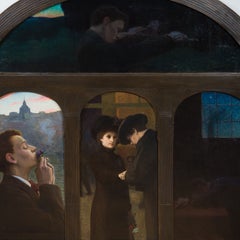
Moonlight Beyond the Kerosene Lamps in the Railway Compartment, 1907

Moonlight Beyond the Kerosene Lamps in the Railway Compartment, 1907

Located in Stockholm, SE

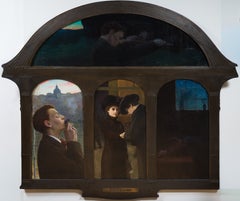
Per Fischer (1877–1974) Sweden Moonlight Beyond the Kerosene Lamps in the Railway Compartment, 1907 oil on canvas laid on panel painted 1907 unframed: 29.5 × 28 cm (11.6 × 11 in) f...

Category

Early 1900s Symbolist Art

Materials

Canvas, Oil, Board

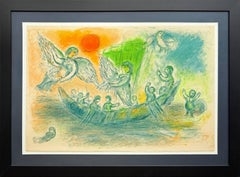
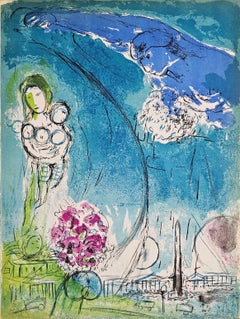
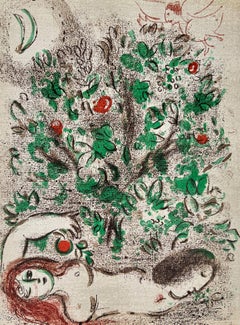
Paradise I, Original Lithograph, Modern, 1960, Excellent

Paradise I, Original Lithograph, Modern, 1960, Excellent

By Marc Chagall

Located in OPOLE, PL

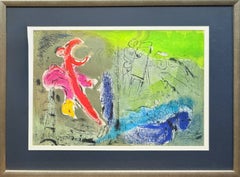
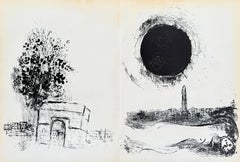
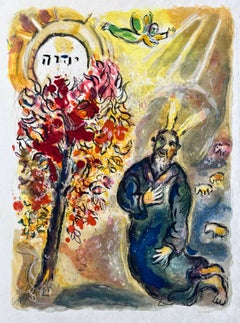
Marc Chagall (1887-1985) - Paradise I Original Lithograph from 1960. Dimensions of work: 35 x 26 cm. Publisher: Tériade, Paris. Reference: Mourlot 232. On the reverse: another or...

Category

1960s Symbolist Art

Materials

Lithograph

Symbolist art for sale on 1stDibs.
Find a wide variety of authentic Symbolist art available for sale on 1stDibs. Works in this style were very popular during the 21st Century and Contemporary, but contemporary artists have continued to produce works inspired by this movement. If you’re looking to add art created in this style to introduce contrast in an otherwise neutral space in your home, the works available on 1stDibs include elements of orange, blue, green, red and other colors. Many Pop art paintings were created by popular artists on 1stDibs, including Michel Fingesten, Abel Pann, Franz von Bayros (Choisi Le Conin), and Ferdinand Hodler & R. Piper & Co.. Frequently made by artists working with Paint, and Oil Paint and other materials, all of these pieces for sale are unique and have attracted attention over the years. Not every interior allows for large Symbolist art, so small editions measuring 1.58 inches across are also available. Prices for art made by famous or emerging artists can differ depending on medium, time period and other attributes. On 1stDibs, the price for these items starts at $55 and tops out at $378,675, while the average work sells for $863.