Symbolist Art

to
120
584
100
154
46
76
Overall Width
to
Overall Height
to
2
107
637
217
26
104
112
91
13
11
24
18
49
15
115,153
63,537
57,586
26,904
14,736
9,369
6,507
5,659
4,175
3,055
2,501
2,385
2,244
649
603
265
65
576
360
234
186
184
109
100
60
50
49
45
38
32
31
26
25
21
20
20
20
258
231
161
155
139
95
42
38
37
34
131
435
548
246
Style: Symbolist
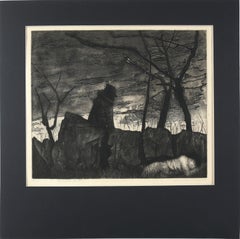
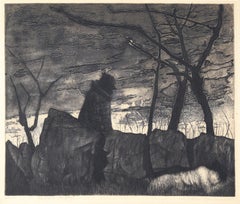
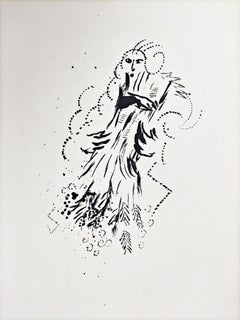
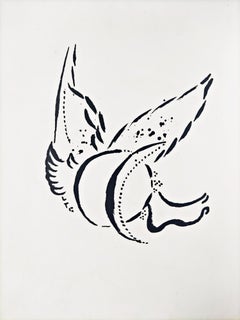
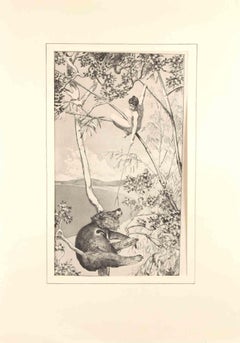
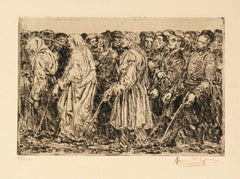
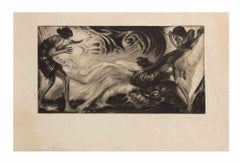
The Water Carrier - Etching by A. Suares - 1926

The Water Carrier - Etching by A. Suares - 1926

Located in Roma, IT

The Water Carrier, Illustration for Cressidra, is a print on paper realized by tAndré Suares in  1926. Etching and drypoint Edition of 200 print. Good conditions.

Category

1920s Symbolist Art

Materials

Drypoint, Etching

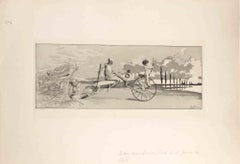
Romance - Etching by André Suares - 1926

Romance - Etching by André Suares - 1926

Located in Roma, IT

Romance is from Illustrations for Cressidra, a print on paper realized by André Suares in 1926.  Etching and drypoint Edition of 200 print Good conditions.

Category

1920s Symbolist Art

Materials

Drypoint, Etching

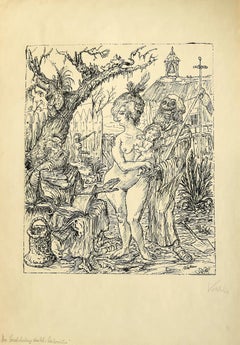
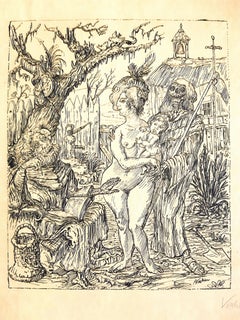
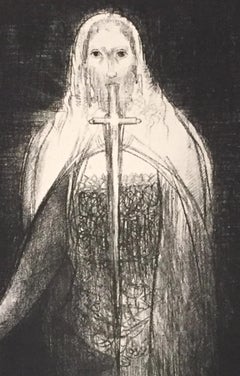
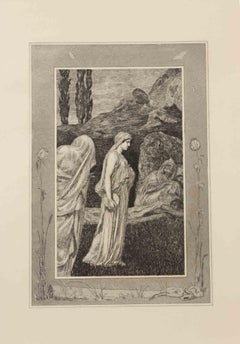
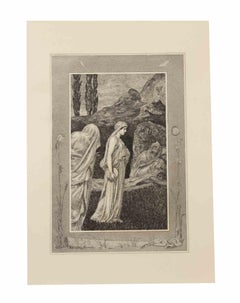
The Death - Etching by André Suares - 1926

The Death - Etching by André Suares - 1926

Located in Roma, IT

The Death is from Illustrations for Cressidra, a print on paper realized by André Suares in 1926.  Etching and drypoint Edition of 200 print Good conditions.

Category

1920s Symbolist Art

Materials

Drypoint, Etching

Lady - Etching by A. Suares - 1926

Lady - Etching by A. Suares - 1926

Located in Roma, IT

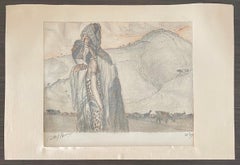
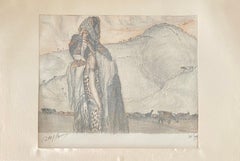
Lady is from Illustrations for Cressidra, a print on paper realized by André Suares in 1926.  Etching and drypoint Edition of 200 print, Included a Passepartout. Good conditions.

Category

1920s Symbolist Art

Materials

Drypoint, Etching

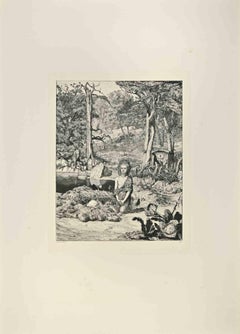
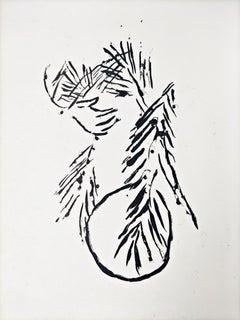
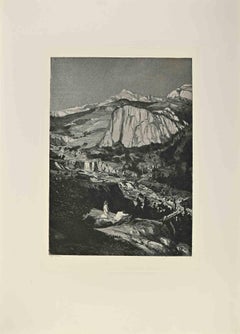
Shepherd - Etching by A. Suares - 1926

Shepherd - Etching by A. Suares - 1926

Located in Roma, IT

Shepherd is from Illustrations for Cressidra, a print on paper realized by André Suares in 1926.  Etching and drypoint Edition of 200 print, Including a Passepartout Good conditions.

Category

1920s Symbolist Art

Materials

Etching, Drypoint

Altar of the Fatherland - Etching by Antonio Carbonati - 1947

Altar of the Fatherland - Etching by Antonio Carbonati - 1947

Located in Roma, IT

Altar of the Fatherland  is a modern artwork realized by Antonio Carbonati in 1947. Black and white etching Includes passepartout Hand signed and dated on the lower margin Original title: Altare della Patria Campidoglio - Palatino dai balconi di casa Carcano sul Colle Aventino Good conditions except for yellowing of paper. Antonio Carbonati (1893 - 1956).  He published a series of engravings of...

Category

1940s Symbolist Art

Materials

Etching

Lovers - Etching by A. Suares - 1926

Lovers - Etching by A. Suares - 1926

Located in Roma, IT

Lovers is from Illustrations for Cressidra, a print on paper realized by André Suares in 1926.  Etching and drypoint Edition of 200 print. Good conditions.

Category

1920s Symbolist Art

Materials

Drypoint, Etching

Lovers Conversation - Etching by A. Suares - 1926

Lovers Conversation - Etching by A. Suares - 1926

Located in Roma, IT

Lovers is from Illustrations for Cressidra, a print on paper realized by André Suares in 1926.  Etching and drypoint Edition of 200 print. Good conditions.

Category

1920s Symbolist Art

Materials

Drypoint, Etching

Dance - Etching by André Suares - 1926

Dance - Etching by André Suares - 1926

Located in Roma, IT

Dance is from Illustrations for Cressidra, a print on paper realized by André Suares in 1926.  Etching and drypoint Edition of 200 print, Including a Passepartout Good conditions.

Category

1920s Symbolist Art

Materials

Etching

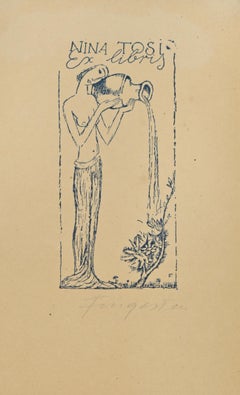
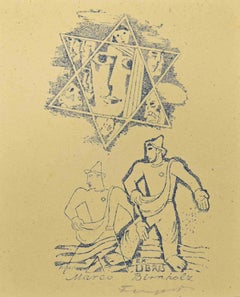
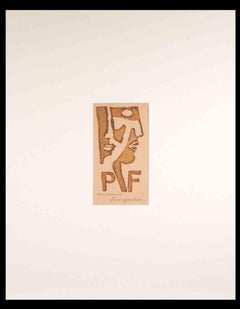
Ex Libris - Burgers - Woodcut - Mid 20th Century

Ex Libris - Burgers - Woodcut - Mid 20th Century

Located in Roma, IT

Ex Libris - Burgers is a Modern Artwork realized in Mid-20th Century. Ex Libris. B/W woodcut on tissue paper. The work is glued on cardboard. Total dimensions: 20x 15 cm. Goo...

Category

Mid-20th Century Symbolist Art

Materials

Woodcut

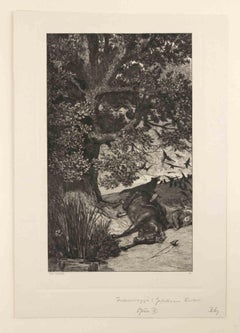
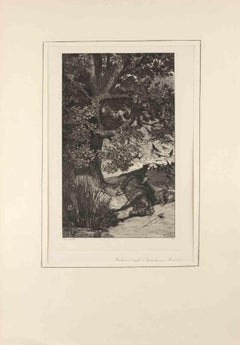
"Retreat from Marignano" set of 3 Copper Plate Prints

"Retreat from Marignano" set of 3 Copper Plate Prints

By Ferdinand Hodler & R. Piper & Co.

Located in Palm Beach, FL

The three prints included in this set are: "Retreat from Marignano", "Retreat from Marignano (left panel)", "Retreat from Marignano (right panel)". 2018 marks the centenary anniversary of Ferdinand Hodler’s death. In that 100 years time, the art world’s esteem of this important artist has proved fickle. It has shifted from extolling his artistic merits during his lifetime to showing something of a feigned disdain- more reflective of the world political order than a true change of heart for Hodler’s work. After years of Hodler being all but a footnote in the annals of art history and generally ignored, finally, the pendulum has righted itself once again. Recent retrospective exhibitions in Europe and the United States have indicated not only a joyful rediscovery of Hodler’s art but a firm conviction that his work and world view hold particular relevance today. DAS WERK FERDINAND HODLERS is not only a collection of printed work reflecting the best of all of his painted work created up to 1914 just before the outbreak of World War I, the portfolio itself is an encapsulation of Hodler’s ethos, Parallelisme. Hodler developed his philosophy of Parallelisme as a unifying approach to art which strips away detail in search of harmony. By means of abstraction, symmetry and repetition, Hodler sought ways to depict Nature’s essence and her fundamental, universal order. He believed these universal laws governing the natural, observable world extend to the spiritual realm. Symbolist in nature with Romantic undertones, his works are equally portraits of these universal concepts and feelings governing all life as they are a visual portrait in the formal sense. Whether his subject is a solitary tree, a moment in battle, mortal fear, despair, the awe inspired by a vast mountain range, a tender moment or even the collective conviction in a belief, Hodler unveils this guiding principle of Parallelisme. Several aspects of Hodler’s portfolio reinforce his tenets of Parallelisme. The Table of Contents clearly preferences a harmonious design over detail. The two columns, consisting of twenty lines each, list the images by order of appearance using their German titles. The abbreviated titles are somewhat cryptic in that they obscure the identities of the sitters. Like the image Hodler presents, they are distillations of the sitter without any extraneous details. This shortening was also done in an effort to maintain a harmonious symmetry of the Table of Contents, themselves, and keep titles to a one-line limit. The twenty-fourth title: “Bildnis des Schweizerischen Gesandten C.” was so long, even with abbreviation, that it required two lines; so, for the sake of maintaining symmetry, the fortieth title: “Bauernmadchen” was omitted from the list. This explains why the images are not numbered. Hodler’s reasoning is not purely esoteric. Symmetry and pattern reach beyond mere formal design principles. Finding sameness and imposing it over disorder goes to the root of Hodler’s identity and his art. A Swiss native, Hodler was bi-lingual and spoke German and French. Each printed image, even number forty, have titles in both of Hodler’s languages. Certainly, there was a market for Hodler’s work among francophones and this inclusion may have been a polite gesture to that end; however, this is the only place in the portfolio which includes French. With German titles at the lower left of each image, Hodler’s name at bottom center and corresponding French titles at the lower right of each image, there is a harmony and symmetry woven into all aspects of the portfolio. This holds true for the page design, as it applies to each printed image and as it describes the Swiss artist himself. Seen in this light, Hodler’s portfolio of printed work is the epitome of Hodler’s Parallelisme. DAS WERK FERDINAND HODLERS is also one of the most significant documents to best tell the story of how Hodler, from Switzerland, became caught between political cross-hairs and how the changing tides of nations directly impacted the artist during his lifetime as well as the accessibility of his art for generations to come. The Munich-based publisher of the portfolio, R. Piper & Co., Verlag, plays a crucial role in this story. Publishing on a wide range of subjects from philosophy and world religion to music, literature and the visual arts; the publisher’s breadth of inquiry within any one genre was equal in scope. Their marketing strategy to publish multiple works on Hodler offers great insight as to what a hot commodity Hodler was at that time. R.Piper & Co.’s Almanach, which they published in 1914 in commemoration of their first ten years in business, clearly illustrates the rapid succession- strategically calculated for achieving the deepest and broadest impact - in which they released three works on Hodler to hit the market by the close of 1914. DAS WERK FERDINAND HODLERS was their premier publication. It preceded C.A. Loosli’s Die Zeichnungen Ferdinand Hodlers, a print portfolio after 50 drawings by Hodler which was released in Autumn of 1914 at the mid-level price-point of 75-150 Marks; and a third less expensive collection of prints after original works by Hodler, which had not been included in either of the first two portfolios, was released at the end of that year entitled Ferdinand Hodler by Dr. Ewald Bender. The title and timing of DAS WERK FERDINAND HODLERS' debut leaves little doubt as to the connection it has with another avant-garde portfolio of art prints, Das Werk Gustav Klimts, released in 5 installments from 1908 -1914 by Galerie Miethke in Vienna. Hodler, himself, was involved in Klimt’s ground-breaking project. As the owner of Klimt’s 1901 painting, “Judith with the Head of Holifernes” which appears as the ninth collotype print in the second installment of Das Werk Gustav Klimts, Hodler was obliged to grant access of the painting to the art printers in Vienna for them to create the collotype sometime before 1908. Hodler had been previously invited in 1904 to take part in what would be the last exhibition of the Vienna Secession before Klimt and others associated with Galerie Miethke broke away. In an interview that same year, Hodler indicated that he respected and was impressed by Klimt. Hodler’s esteem for Klimt went beyond the art itself; he emulated Klimt’s method aimed at increasing his market reach and appeal to a wider audience by creating a print portfolio of his painted work. By 1914, Hodler and his publisher had the benefit of hindsight to learn from Klimt’s Das Werk publication. Responding to the sluggish sales of Klimt’s expensive endeavor, Hodler’s publisher devised the same diversified 1-2-3 strategy for selling Hodler’s Das Werk portfolio as they did with regards to all three works on Hodler they published that year. For their premium tier of DAS WERKS FERDINAND HODLERS, R. Piper & Co. issued an exclusive Museum quality edition of 15 examples on which Hodler signed each page. At a cost of 600 Marks, this was generally on par with Klimt’s asking price of 600 Kronen for his Das Werk portfolio. A middle-tiered Preferred edition of 30, costing somewhat less and with Hodler’s signature only on the Title Page, was also available. The General edition, targeting the largest audience with its much more affordable price of 150 Marks, is distinguishable by its smaller size. Rather than use the subscription format Miethke had chosen for Klimt’s portfolios which proved to have had its challenges, R. Piper & Co. employed a different strategy. In addition to instantly gratifying the buyer with all 40 of the prints comprising DAS WERK FERDINAND HODLERS and the choice among three price points, they advertised in German journals a fourth possibility of ordering single prints from them directly. These printed images are easily discernible from the three complete folio editions. The paper size of the single purchased images is of the larger format like the Museum and Preferred editions, measuring 65 h x 50 w cm; however, the paper itself is the same copper print paper used in the General edition and then mounted on poster board. The publishing house positioned itself to be a direct retailer of Hodler’s art. They astutely recognized the potential for profitability and the importance, therefore, of having proprietary control over his graphic works. R. Piper & Co. owned the exclusive printing rights to Hodler’s best work found in their three publications dating from 1914. That same year, a competing publication out of Weimar entitled Ferdinand Hodler: Ein Deutungsversuch von Hans Muhlestein appeared. Its author, a young scholar, expressed his frustration with the limited availability of printable work by Hodler. In his Author’s Note on page 19, dated Easter, 1914, Muhlestein confirms that the publisher of Hodler’s three works from that same year owned the exclusive reproductive rights to Hodler’s printed original work. He goes further to explain that even after offering to pay to use certain of those images in his book, the publisher refused. Clearly, a lot of jockeying for position in what was perceived as a hot market was occurring in 1914. Instead, their timing couldn’t have been more ill-fated, and what began with such high hopes suddenly found a much different market amid a hostile climate. The onset of WWI directly impacted sales. Many, including Ferdinand Hodler, publicly protested the September invasion by Germany of France in which the Reims Cathedral, re-built in the 13th century, was shelled, destroying priceless stained glass and statuary and burning off the iron roof and badly damaging its wooden interior. Thomas Gaehtgens, Director of the Getty Research Institute describes how the bombing of Reims Cathedral triggered blindingly powerful and deeply-felt ultra-nationalistic responses: “The event profoundly shocked French intellectuals, who for the most part had an intense admiration for German literature, music and art. By relying on press accounts and abstracting from the visual propagandistic content, they were unable to interpret the siege of Reims without turning away from German culture in disgust. Similarly, the German intelligentsia and bourgeoisie were also shocked to find themselves described as vandals and barbarians. Ninety-three writers, scientists, university professors, and artists signed a protest, directed against the French insults, that defended the actions of the German army.” In similar fashion, a flurry of open letters published in German newspapers and journals as well as telegrams and postcards sent directly to Hodler following his outcry in support of Reims reflected the collectively critical reaction to Hodler’s position. Loosli documents that among the list of telegrams Hodler received was one from none other than his publisher in Germany, R.Piper & Co. Allegiances were questioned. The market for Hodler in Germany immediately softened. Matters worsened for the publisher beyond the German backlash to Hodler and his loss of appeal in the home market; with the war in full swing until 1918, there was little chance a German publisher would have much interest coming from outside of Germany and Austria. Following the war and Hodler’s death in 1918, the economy in Germany continued to spiral out and just 5 years later, hyper-inflation had rendered its currency worthless vis-a-vis its value in the pre-war years. Like the economy, Hodler’s reputation was slow to find currency in these difficult times. Even many French art fans had turned sour on Hodler as they considered his long-standing relationship in German and Austrian art circles. Thus, the portfolio’s rarity in Hodler’s lifetime and, consequently, the availability of these printed images from DAS WERK FERDINAND HODLERS since his death has been scarce. In many ways, Hodler and his portfolios were casualties of war. Thwarted from their intended purpose of reaching a wide audience and show-casing Parallelisme, Hodler’s unique approach to art, this important, undated work has been both elusive and shrouded in mystery. Perhaps DAS WERK FERDINAND HODLERS was left undated as a means of affirming the timelessness of Hodler’s art. Digging back into the past, Hodler’s contemporaries, like R. Piper, C.A. Loosli and Hans Muhlestein, indeed provide the keys to unequivocally clarify what has largely been mired in obscurity. Just after Hodler’s death, the May, 1918 issue of the Burlington Review ran a small column which opined hope for better access to R.Piper & Co.’s DAS WERK FERDINAND HODLERS; 100 years later, it is finally possible. Hodler’s voice rings out through these printed works. Once more, his modern approach to depicting portraits, landscapes and grand scale scenes of Swiss history speak to us of what is universal. Engaging with any one of these images is the chance to connect to Hodler’s vision and his world view- weltanschauung in German, vision du monde in French- however one expresses these concepts through language, its message embedded in his work is the same: “We differ from one another, but we are like each other even more. What unifies us is greater and more powerful than what divides us.” Today, Hodler’s art couldn’t be more timely. FERDINAND HODLER (SWISS, 1853-1918) explored Parallelisme through figurative poses evocative of music, dance and ritual. His images of sex, night, desertion and death as well as his many landscapes exploring the universal longing for harmony with Nature are unique and important works embodying a Symbolist paradigm. Truly a Modern Master, Hodler’s influence can be felt in the work of Gustav Klimt and Kolomon Moser and subsequent Expressionist artists such as Egon Schiele. He was born into an impoverished family in Bern, Switzerland in 1853. His entire family succumbed to tuberculosis, and he was orphaned by the age of 13, the only surviving child among his 13 siblings. In the absence of family, the influence and guidance which his art instructors provided Hodler was foundational and profound. Hodler began formal studies in 1872 at the Geneva School of Design. Under Barthelemy Menn, Hodler was drawn to the ordered beauty of Euclidian geometry and Durer’s fundamentals of human proportion that proved to be guiding principles informing his art throughout his life. By the 1880s, Hodler began to enjoy some recognition for his work which put him on a new path towards stability. Remaining in Geneva, he became assistant to the well-known muralist, Edouard Castres. Following his first solo show in 1885, Hodler’s work took on a Symbolist quality. He frequently associated with a group of Swiss Symbolist...
Category

1910s Symbolist Art

Materials

Paper

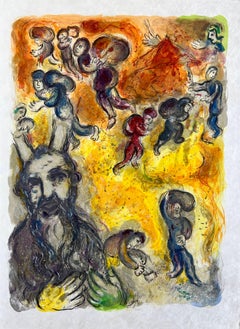
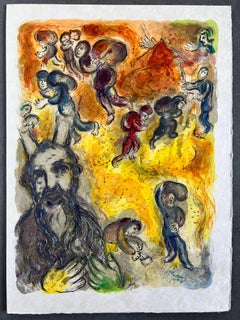
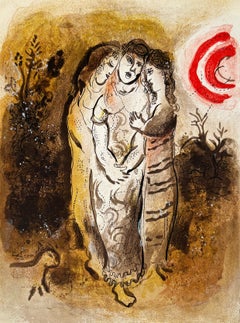
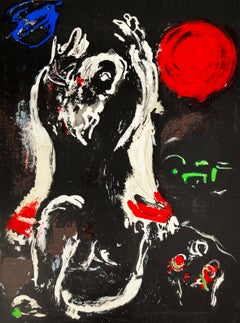
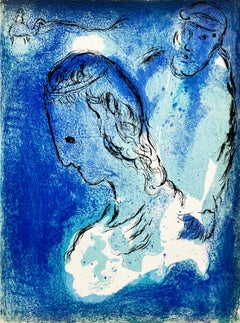
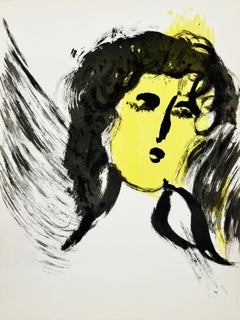
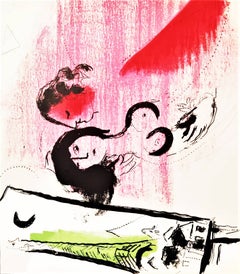
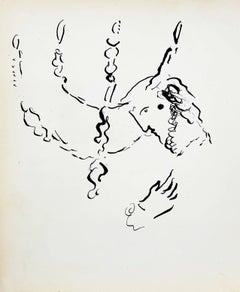
Cirque
Cirque

Marc ChagallCirque, 1967

$1,239Sale Price|34% Off

Cirque

By Marc Chagall

Located in OPOLE, PL

Marc Chagall (1887-1985) - Cirque Lithograph from 1967. The edition of 250 on Arches paper. Dimensions of work: 42 x 32.5 cm. Publisher: Tériade, Paris. Reference: Mourlot 487, ...

Category

1930s Symbolist Art

Materials

Lithograph

19th Century Ten Mandala 24 Carat Gold painted Thangka on canvas

19th Century Ten Mandala 24 Carat Gold painted Thangka on canvas

Located in TRUMBULL, CT

Ten Mandala 24 carat real gold painted on canvas is a one of a kind Thangka Painting. The thangka is ritual Buddhist Painting use to pray or Meditation purpose. Several steps are inv...

Category

19th Century Symbolist Art

Materials

Mixed Media

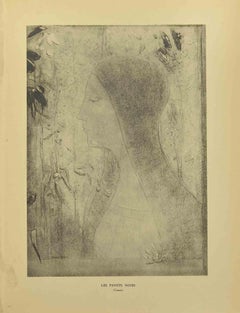
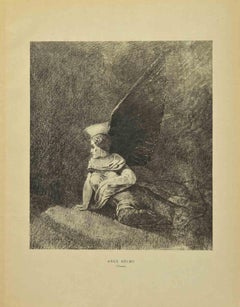
Pegase Captif - after Odilon Redon - 1923

Pegase Captif - after Odilon Redon - 1923

By Odilon Redon

Located in Roma, IT

Pegase Captif is a prototype reproduction realized after Odilon Redon. They belong to the suite "Odilon Redon Peintre, Dessinateur et Graveur", published by Henri Felury in 1923. ...
Category

1920s Symbolist Art

Materials

Photogravure

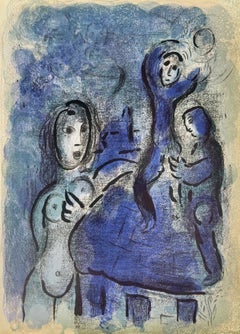
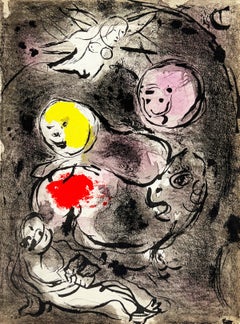
Le Sept Péchés Capitaux

Le Sept Péchés Capitaux

By Marc Chagall

Located in OPOLE, PL

Marc Chagall (1887-1985) - Le Sept Péchés Capitaux Etching from 1925. Edition of 300 proofs. Dimensions of work: 25 x 19.5 cm. Publisher: Tériade, Paris. Reference: Kornfeld 47....

Category

1920s Symbolist Art

Materials

Etching

Der Golem. Prager Phantasien - Rare Book Illustrated by Hugo Steiner-Prag - 1916

Der Golem. Prager Phantasien - Rare Book Illustrated by Hugo Steiner-Prag - 1916

Located in Roma, IT

Der Golem. Prager Phantasien is an original modern rare book written by Gustav Meyrink, pseudonym of Gustav Meyer (Wien, January 19, 1868 - Starnberg, December 4, 1932) and illustrated by Hugo Steiner-Prag (Prague, 1880 - New York, 1945) in 1916. Original Edition. 300 numbered and signed copies. Published by Kurt Wolff verlag, Leipzig. Format: In Folio. The book includes an original Portfolio with 25 Lithographs. Mint conditions. Hugo Steiner-Prag (Prague, 1880 - New York, 1945); he was an artist and illustrator. In his adolescence, he took private art lessons and was a member of Jung Prag, a group of young artists fascinated by mysticism. His formal artistic career began at age seventeen when he enrolled at the Prague Academy of the Arts, Prager Kunstakadmie, in 1897. He continued his education in Munich, Germany at the Royal Academy of Fine Arts, Königliche Akademie der Bildenden Künste. It was here Steiner added “Prag'' to his last name in recognition of his home city and to help distinguish his name from other artists. The Leo Baeck Institute has a vast collection of Steiner-Prag’s illustrations and personal mementos from throughout his entire career. Viewers can appreciate his beautifully drawn city scenes and mythical creatures, photographs, set designs, artistic instruments, and certificates of achievement. In 1916, Steiner-Prag illustrated Der Golem by Gustav Meyrink. The golem...

Category

Early 20th Century Symbolist Art

Materials

Paper, Photogravure

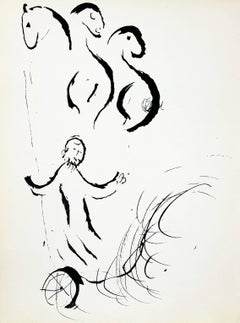
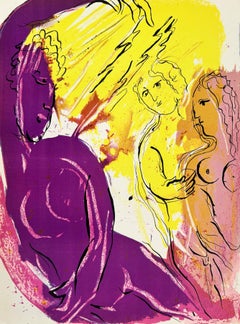
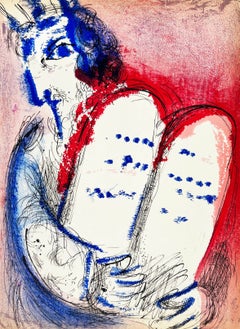
La Fortune et le Jeune Enfant

La Fortune et le Jeune Enfant

By Marc Chagall

Located in OPOLE, PL

Marc Chagall (1887-1985) - La Fortune et le Jeune Enfant Etching from 1954. Edition of 85. Enhanced with watercolour by the artist. Dimensions of work: 39 x 30 cm. Reference: Cr...

Category

1950s Symbolist Art

Materials

Lithograph

“Merry-Go-Round”, Carousel Astrolabe Univers&Humanity Symbolist Oil Painting

“Merry-Go-Round”, Carousel Astrolabe Univers&Humanity Symbolist Oil Painting

By Andrée Bars

Located in Clermont-Ferrand, Auvergne-Rhône-Alpes

Titled "Merry-Go-Round," this symbolist oil painting offers a surreal blend of time, space, and childhood nostalgia. The focal point of the composition is a complex armillary sphere, traditionally used to represent the celestial globe, now transformed into a whimsical carousel. Around the armillary sphere, wooden carousel horses are depicted in mid-gallop, their colorful saddles and bridles adding a vibrant contrast to the metallic gold of the armillary rings...

Category

2010s Symbolist Art

Materials

Oil

Aman Jean, Sous les Fleurs (Lugt 2790), L'Estampe Moderne (after)

Aman Jean, Sous les Fleurs (Lugt 2790), L'Estampe Moderne (after)

Located in Southampton, NY

Lithograph on wove paper. Inscription: Unsigned and unnumbered. Good Condition. Notes: From L'Estampe Moderne, published by F. Champenois, Paris, 1897. EDMOND FRANÇOIS AMAN-JEAN (18...

Category

1890s Symbolist Art

Materials

Lithograph

Rene Lynch, Day is Done, 2016, Oil on canvas, 18 x 18 x 1 in, Symbolist

Rene Lynch, Day is Done, 2016, Oil on canvas, 18 x 18 x 1 in, Symbolist

By Rene Lynch

Located in Darien, CT

Born: Decatur, IL. Lives & Works in Brooklyn, NY. Her work has been widely exhibited nationally and internationally, including several solo exhibitions in Germany in Munich, Cologne and Berlin with Galerie Kaysser, in NYC and San Francisco with Jenkins Johnson Gallery and Tokyo and Osaka, Japan and NYC with HPGRP Gallery. Additional NYC solos include Bond Gallery, 490 Gallery, BOE, and MBM Gallery, and a large scale public art piece at One Main Window in Dumbo, Brooklyn. She has also presented major works at Kenise Barnes Fine Art, DFN Gallery, Lesley Heller Workspace, many years at “Take Home a Nude” for The New York Academy at Sotheby’s and numerous art fairs, and university galleries. Recent museum exhibitions include a solo at Kunstlade Museum, Zittau, Germany, The Hunterdon Museum in Clifton, NJ twice. as a featured artist in Munich at the Haus der Kunst Contemporary Art Institute. PS1 Museum of Modern Art, NYC, The Kotonah Museum of Art, NY, The Virginia Museum of Fine Art, and Shore Institute of Contemporary Art, Long Branch, NJ. She currently has a painting in the exhibition Beyond Suffrage at The Museum of the City of New York. Lynch’s work has been featured and written about in numerous publications including The New York Times, The Boston Globe, Art and Antiques magazine, American Art Collector magazine, German Bunte magazine, Oxford American magazine, and NY Arts magazine among many other publications. Rene Lynch has had several catalogues published about her work. Her art is featured on the cover of Boulevard Magazine Spring 2018. Her paintings were recently featured in scenes with Richard Gere in the film Norman. Her work can be found in numerous private and public collections throughout the United States, Germany, France, Switzerland, Italy, Austria, Turkey, Russia and Japan. Rene Lynch studied painting and art history at Virginia Commonwealth University, The Business of Art, Curatorial Studies Program, New York University, and Printmaking, Manhattan Graphics Center. Lynch has been awarded several fellowships, including; two fellowships from P.S.1 Museum of Modern Art, NYC, four fellowships from The Virginia Center for the Creative Arts, and two fellowships from Oberpfalzer Kunstlerhaus, Germany, and AIR Ruhpolding, Germany, also The Manhattan Graphic Center for printmaking, and the Millay Colony, NY and twice from Soaring Gardens, PA, and Palenville InterArts, NY among others. She has been invited to give Artists Talks at the Brooklyn Museum, NY, the Aldrich Museum, CT, the Hunterdon Museum, NJ, the Kunstlade Museum, Germany, Sotheby's Auction House, NY, Chelsea Art Museum, NY, Abrons Art Center, NY, New York Foundation for the Arts, New York Academy of Art, NY, Lumine, Tokyo, Japan, Umeda Gallery, Osaka, Japan, Jenkins Johnson Gallery, NYC, Kenise Barnes Gallery, NY, Pratt Institute, NY, Red Dot Art Fair, NY, Metaphor Contemporary Art , NY, Tribeca Arts Center, Manhattan Community College, Marymount Manhattan College, Kutztown University, PA, Simmons College, MA, LIU, Brooklyn, NY Lynch is co-founder/director/curator of Metaphor Contemporary Art with Julian Jackson. Since 2001, they have presented over 90 solo and group exhibitions of new works by hundreds of artists at their Brooklyn, NY gallery, and at several international art fairs, placed numerous works in private and public collections including US Embassies, banks, hotels and hospitals, published several exhibition catalogs, and presented numerous artists’ and critics’ talks and panel discussions. In 2017 Lynch & Jackson co-curated with HPGRP the NY Art Lab with 35 artists in Osaka, Japan and curated and produced recent art auction benefits, involving hundreds of artist: ArtHillary art auction at Kathryn Markel Fine Arts, NYC, 2016, White Hawk...

Category

2010s Symbolist Art

Materials

Canvas, Oil

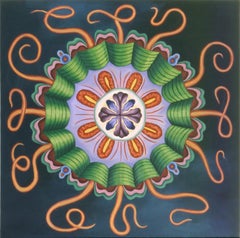
Patricia Fabricant, Blue Jellyfish 4, 2003, Oil On Canvas, 24 x 24, Naturalism

Patricia Fabricant, Blue Jellyfish 4, 2003, Oil On Canvas, 24 x 24, Naturalism

By Patricia Fabricant

Located in Darien, CT

Patricia Fabricant is a painter curator, and award-winning book designer, born in New York City. She received her BA from Wesleyan University and studied painting in Florence Italy. Her abstract and figurative paintings have been exhibited widely at such galleries as ODETTA, M David & Co, Front Room, SFA Projects, Equity Gallery, Morgan Lehman, the Painting Center, and 490 Atlantic. Her curatorial practice includes three editions of the benefit group show, Among Friends, Studio Mates at Front Room Gallery, and With the Grain, at Equity Gallery. She lives and works in Brooklyn, NY. Patricia Fabricant has a deep and abiding interest in process-driven work, from mandalas and yantras to Aboriginal song-line paintings, Islamic tiles...

Category

2010s Symbolist Art

Materials

Canvas, Oil

Symbolist art for sale on 1stDibs.

Find a wide variety of authentic Symbolist art available for sale on 1stDibs. Works in this style were very popular during the 21st Century and Contemporary, but contemporary artists have continued to produce works inspired by this movement. If you’re looking to add art created in this style to introduce contrast in an otherwise neutral space in your home, the works available on 1stDibs include elements of orange, blue, green, red and other colors. Many Pop art paintings were created by popular artists on 1stDibs, including Michel Fingesten, Abel Pann, Franz von Bayros (Choisi Le Conin), and Ferdinand Hodler & R. Piper & Co.. Frequently made by artists working with Paint, and Oil Paint and other materials, all of these pieces for sale are unique and have attracted attention over the years. Not every interior allows for large Symbolist art, so small editions measuring 1.58 inches across are also available. Prices for art made by famous or emerging artists can differ depending on medium, time period and other attributes. On 1stDibs, the price for these items starts at $55 and tops out at $378,675, while the average work sells for $863.