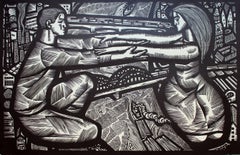
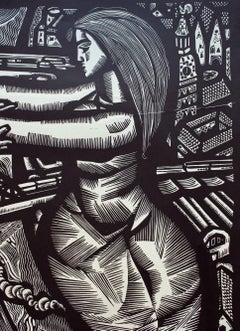
Bridges. From the series “My Riga”. 1967. Paper, linocut, 69x103 cm.
Located in Riga, LV
Bridges. From the series “My Riga”. 1967. Paper, linocut, 69x103 cm.
Category
1960s Symbolist Art
Materials
Paper, Linocut
Bridges. From the series “My Riga”. 1967. Paper, linocut, 69x103 cm.
Located in Riga, LV
Bridges. From the series “My Riga”. 1967. Paper, linocut, 69x103 cm.
Paper, Linocut
$383Sale Price|20% Off
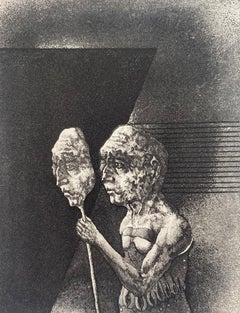
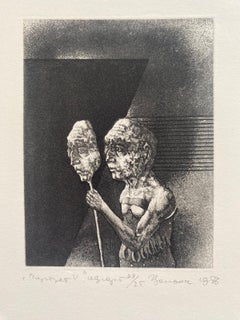
Portrait V paper/etching, 9.8x7.2 cm, 1986
Located in Riga, LV
Portrait V paper/etching, 9.8x7.2 cm, 1986
Paper, Etching
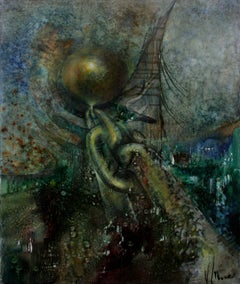
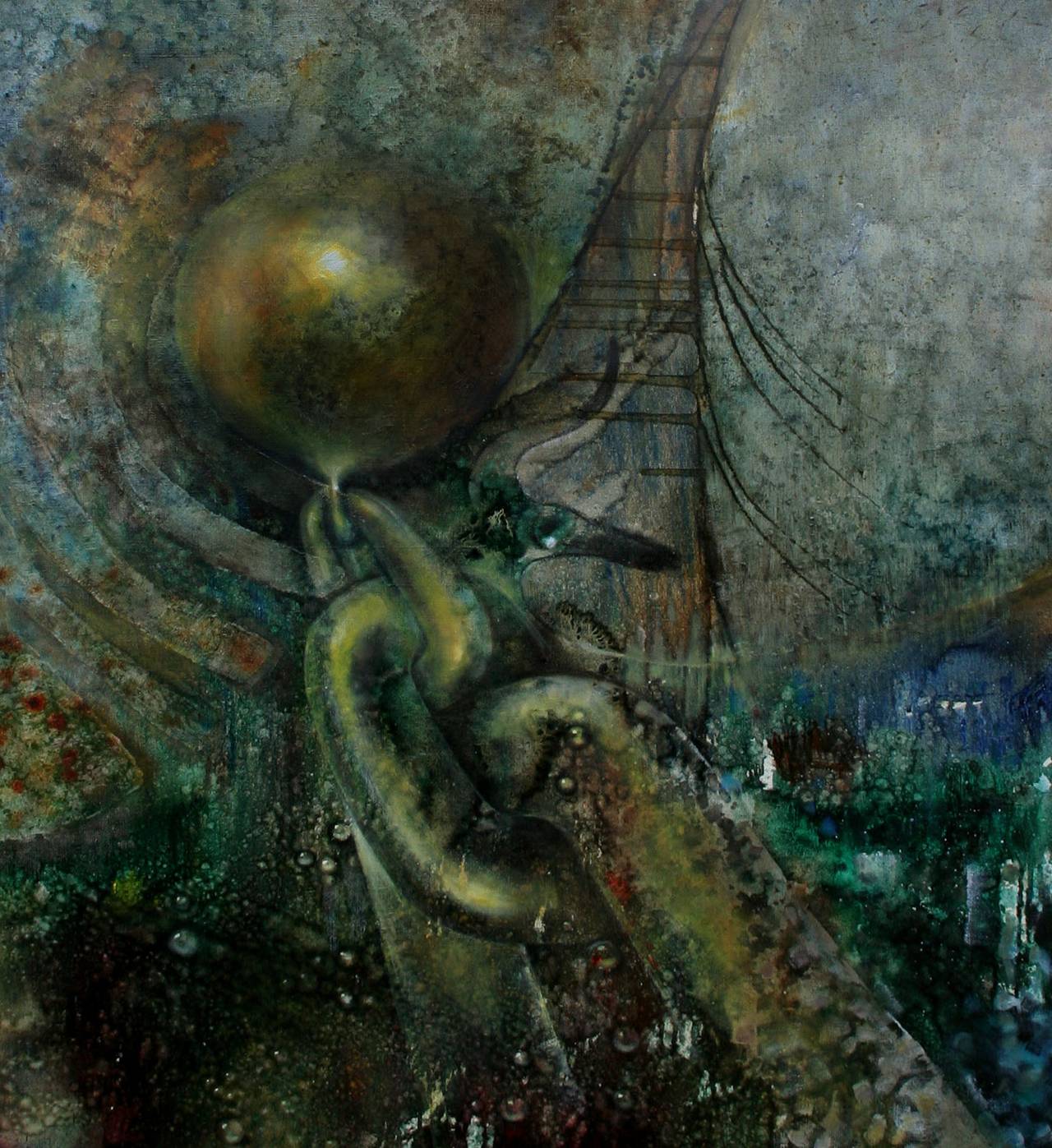
"Future" Symbolist Ship Anchor Abstract
By Nune Asatryan
Located in Soquel, CA
Substantial and symbolic oil painting titled "Future" by Nune Asatryan (b.1967). Strong symbolic image of a ship at sea and bold anchor and chain...
Canvas, Oil
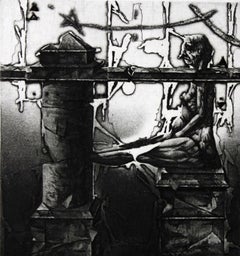
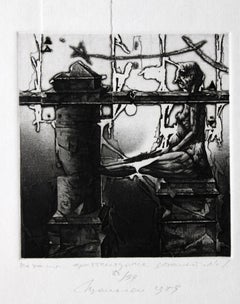
Architectural Details Catalogue 2, paper/etching, 86/99, 10x9 cm, 1989
Located in Riga, LV
Architectural Details Catalogue 1, paper/etching, 80/99, 10x9 cm,1989
Paper, Etching
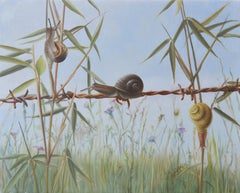
"Each Has Its Destiny", Snails in Nature Symboliste Oil Painting
By Andrée Bars
Located in Clermont-Ferrand, Auvergne-Rhône-Alpes
Titled "Each Has Its Destiny," this charming symbolist oil painting on canvas by Andrée Bars offers a serene and contemplative view of nature's delicate balance. The composition features three snails navigating their way across a barbed wire fence, set against a backdrop of a lush meadow under a clear blue sky. The snails, each with distinctively colored shells – one brown, one dark, and one golden – symbolize individuality and the unique paths each creature takes in life. The barbed wire, often associated with barriers and challenges, contrasts with the gentle and slow movement of the snails, suggesting a journey filled with obstacles yet approached with patience and determination. The bamboo stalks and various wildflowers in the background add a touch of whimsy and natural beauty, emphasizing the coexistence of fragility and resilience in the natural world. The delicate rendering of the leaves and flowers, along with the meticulous depiction of the snails, showcases the artist's attention to detail and mastery of texture. The painting's soft lighting and subtle color palette evoke a sense of calm and introspection, inviting the viewer to reflect on the theme of destiny and the slow but steady progress each individual makes despite life's challenges. "Each Has Its Destiny" is a poignant reminder of perseverance and the unique journey every being undertakes, rendered with elegance and sensitivity. Andrée Bars is a French painter. Having been strictly trained for 4 years by the American hyper-realist painter Mr. Ted Seth Jacobs, who himself inherited 19th century masters’ skills from his own professor, Andrée Bars learned the profession of painting in its purest tradition. She still applies these ancient masters...
Oil
$2,119
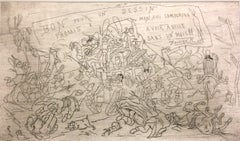
La diligence d’Uccle - Etching by Félicien Rops - Late 19th Century
Located in Roma, IT
Signed in the plate. Includes passepartout: 49x34 cm. Good conditions.
Etching
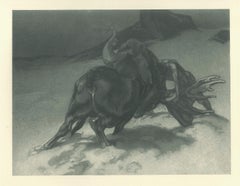
Kampf - Vintage Héliogravure by Franz von Bayros - 1921 ca.
By Franz von Bayros (Choisi Le Conin)
Located in Roma, IT
Kampf is a very beautiful black and white héliogravure on cream-colored cardboard realized by Choisy Le Conin, as is remembered Franz Von Bayros (Agram, 1866 – Vienna, 1924). From M...
Engraving
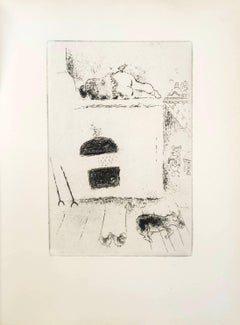
Le Sept Péchés Capitaux
By Marc Chagall
Located in OPOLE, PL
Marc Chagall (1887-1985) - Le Sept Péchés Capitaux Etching from 1925. Edition of 300 proofs. Dimensions of work: 25 x 19.5 cm. Publisher: Tériade, Paris. Reference: Kornfeld 47....
Etching
$1,799Sale Price|40% Off
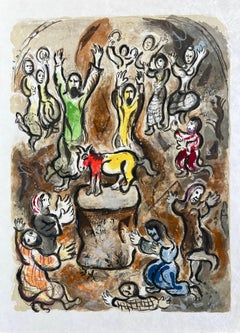
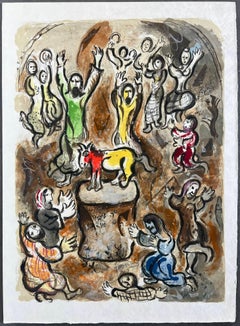
Then all the people pluckt..., Original Lithograph, Edition 20, 1966, Excellent
By Marc Chagall
Located in OPOLE, PL
Marc Chagall (1887-1985) - Then all the people pluckt from themselves the golden eare-rings, and they brought them unto Aaron who received them... Lithograph from 1966. The edition...
Lithograph
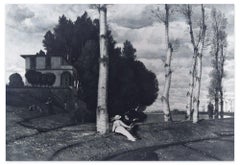
Fruhling - Original Woodcut After Arnold Bocklin - 1890s
Located in Roma, IT
Frühling is a wonderful black and white photogravure of the original painting by Arnold Böcklin (Basel 1827 - Fiesole 1901), probably edited by Bruckman...
Lithograph
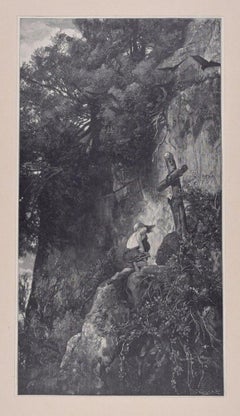
Der Büsser - Original Woodcut by J.J. Weber - 1898
Located in Roma, IT
Image dimensions: 34 x 19 cm. Der Büsser is an original print, realized in 1898. Black and white xylograph on applied Japon paper. Good conditions except for yellowing of paper (especially along the margins), and little stains on lower margin. The print was realized by Johann Jacob Weber and it's part of the series Meisterwerke der Holzschneidekunst (original title: SECHZEHN HOLZSCHNITTE NACH GEMÄLDEN ARNOLD BÖCKLIN...
Woodcut
$2,399
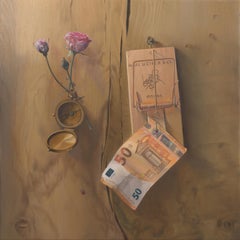
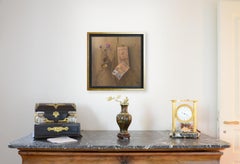
"We Lost the North", Wood Crack, Compass, Money, Flower, Symbolism Oil Painting
By Andrée Bars
Located in Clermont-Ferrand, Auvergne-Rhône-Alpes
Named « We lost the North », this symbolist oil painting on canvas represents a great fracture symbolized by a crack in the wood in its middle. Fracture between the world of the finance and the nature. The trap is to always quantify with money and not to take into account the insects and the plants, our planet. Hence the compass on the side of nature, because according to the French expression, "we have lost the North", which means that we do not know where we are going. Andrée Bars is a French painter. Having been strictly trained for 4 years by the American hyper-realist painter Mr. Ted Seth Jacobs, who himself inherited 19th century masters’ skills from his own professor, Andrée Bars learned the profession of painting in its purest tradition. She still applies these ancient masters...
Oil
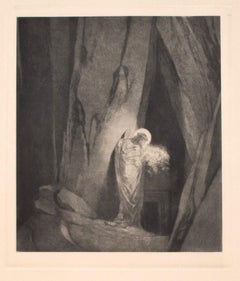
Introduktion - Vintage Héliogravure by Franz von Bayros - Early 20th Century
By Franz von Bayros (Choisi Le Conin)
Located in Roma, IT
"Introduktion - Incipit Redemptio" is an original Black and white héliogravure on cream-colored cardboard realized by Choisy Le Conin, pseudonym of Franz Von Bayros (Agram, 1866 – V...
Engraving
$1,228Sale Price|34% Off
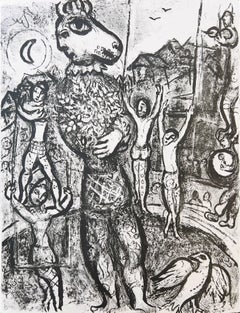
Cirque
By Marc Chagall
Located in OPOLE, PL
Marc Chagall (1887-1985) - Cirque Lithograph from 1967. From the book edition of 250 (there was also a signed and numbered edition of 24). Unsigned and unnumbered, as issued. Di...
Lithograph
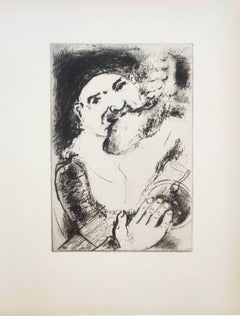
Le Sept Péchés Capitaux
By Marc Chagall
Located in OPOLE, PL
Marc Chagall (1887-1985) - Le Sept Péchés Capitaux Etching from 1925. Edition of 300 proofs. Dimensions of work: 25 x 19.5 cm. Publisher: Tériade, Paris. Reference: Kornfeld 47....
Etching
Der Golem. Prager Phantasien - Rare Book Illustrated by Hugo Steiner-Prag - 1916
Located in Roma, IT
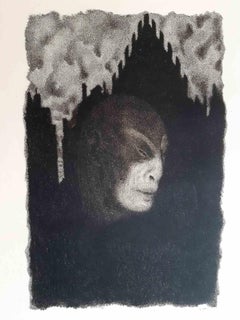
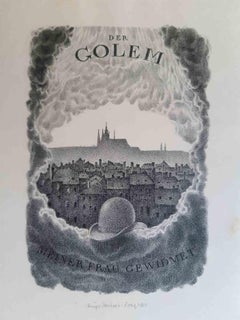
Der Golem. Prager Phantasien is an original modern rare book written by Gustav Meyrink, pseudonym of Gustav Meyer (Wien, January 19, 1868 - Starnberg, December 4, 1932) and illustrated by Hugo Steiner-Prag (Prague, 1880 - New York, 1945) in 1916. Original Edition. 300 numbered and signed copies. Published by Kurt Wolff verlag, Leipzig. Format: In Folio. The book includes an original Portfolio with 25 Lithographs. Mint conditions. Hugo Steiner-Prag (Prague, 1880 - New York, 1945); he was an artist and illustrator. In his adolescence, he took private art lessons and was a member of Jung Prag, a group of young artists fascinated by mysticism. His formal artistic career began at age seventeen when he enrolled at the Prague Academy of the Arts, Prager Kunstakadmie, in 1897. He continued his education in Munich, Germany at the Royal Academy of Fine Arts, Königliche Akademie der Bildenden Künste. It was here Steiner added “Prag'' to his last name in recognition of his home city and to help distinguish his name from other artists. The Leo Baeck Institute has a vast collection of Steiner-Prag’s illustrations and personal mementos from throughout his entire career. Viewers can appreciate his beautifully drawn city scenes and mythical creatures, photographs, set designs, artistic instruments, and certificates of achievement. In 1916, Steiner-Prag illustrated Der Golem by Gustav Meyrink. The golem...
Paper, Photogravure
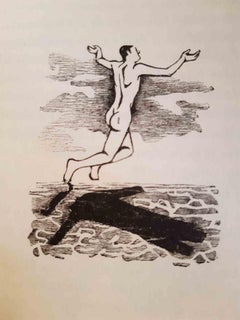
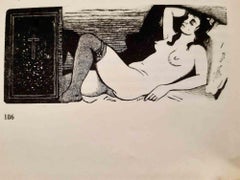
Die Salzige Taufe - Original Rare book Illustrated by Karl Rössing - 1933
Located in Roma, IT
Die Salzige Taufe is an original two volumes book written by A. Nowikow and A. Priboj and illustrated by Karl Rössing (1897) in 1933. Original First German Edition. Published by B...
Paper, Woodcut
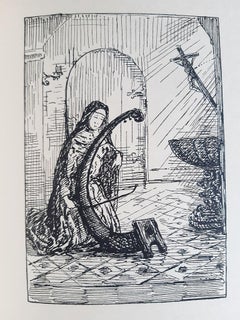
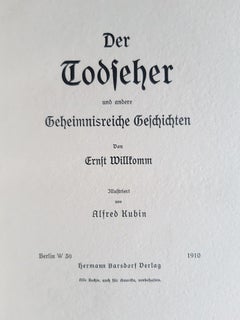
Der Todseher - Rare Book Illustrated by Alfred Kubin - 1910
Located in Roma, IT
Der Todseher is an original modern rare book written by Ernst Adolf Willkomm (Herwigsdorf, 1810 - Zittau, 1886) and illustrated by Alfred Leopold Isidor Kubin (Leitmeritz, 1877 – Zwickledt, 1959) in 1910. Original Edition. Published by Barsdorf, Berlin. 30 numbered copies of deluxe issue. Format: in 8°. The book includes 284 pages with six full page drawings. Mint conditions. Alfred Leopold Isidor Kubin (Leitmeritz, 1877 – Zwickledt, 1959) in 1910. He was an Austrian printmaker, illustrator, and occasional writer. Kubin is considered an important representative of Symbolism and Expressionism. Kubin is considered an important representative of Symbolism and Expressionism and is noted for dark, spectral, symbolic fantasies, often assembled into thematic series of drawings. Like Oskar Kokoschka and Albert Paris Gütersloh, Kubin had both artistic and literary talent. He illustrated the works of Edgar Allan Poe, E. T. A. Hoffmann, and Fyodor Dostoevsky, among others. Kubin also illustrated the German fantasy magazine Der Orchideengarten. Ernst Adolf Willkomm (Herwigsdorf, 1810 - Zittau, 1886). Willkomm was a German writer. Willkomm has published time-critical novels, travel sketches and short stories. With the title of his novel Die Europamüden in 1838 he took up a key word that had been coined by Heine in 1828 and with which an important aspect of thinking in the Vormärz was recorded. In the years 1845/46 Willkomm undertook a trip to Italy, whose experiences he processed in 1847 in the travel sketches Italian...
Paper, Photogravure
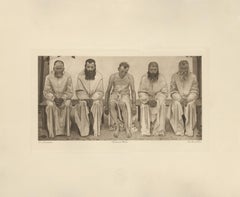
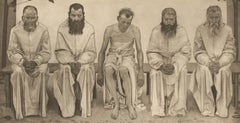
"The World Weary" Copper Plate Heliogravure
By Ferdinand Hodler & R. Piper & Co.
Located in Palm Beach, FL
2018 marks the centenary anniversary of Ferdinand Hodler’s death. In that 100 years time, the art world’s esteem of this important artist has proved fickle. It has shifted from extolling his artistic merits during his lifetime to showing something of a feigned disdain- more reflective of the world political order than a true change of heart for Hodler’s work. After years of Hodler being all but a footnote in the annals of art history and generally ignored, finally, the pendulum has righted itself once again. Recent retrospective exhibitions in Europe and the United States have indicated not only a joyful rediscovery of Hodler’s art but a firm conviction that his work and world view hold particular relevance today. DAS WERK FERDINAND HODLERS is not only a collection of printed work reflecting the best of all of his painted work created up to 1914 just before the outbreak of World War I, the portfolio itself is an encapsulation of Hodler’s ethos, Parallelisme. Hodler developed his philosophy of Parallelisme as a unifying approach to art which strips away detail in search of harmony. By means of abstraction, symmetry and repetition, Hodler sought ways to depict Nature’s essence and her fundamental, universal order. He believed these universal laws governing the natural, observable world extend to the spiritual realm. Symbolist in nature with Romantic undertones, his works are equally portraits of these universal concepts and feelings governing all life as they are a visual portrait in the formal sense. Whether his subject is a solitary tree, a moment in battle, mortal fear, despair, the awe inspired by a vast mountain range, a tender moment or even the collective conviction in a belief, Hodler unveils this guiding principle of Parallelisme. Several aspects of Hodler’s portfolio reinforce his tenets of Parallelisme. The Table of Contents clearly preferences a harmonious design over detail. The two columns, consisting of twenty lines each, list the images by order of appearance using their German titles. The abbreviated titles are somewhat cryptic in that they obscure the identities of the sitters. Like the image Hodler presents, they are distillations of the sitter without any extraneous details. This shortening was also done in an effort to maintain a harmonious symmetry of the Table of Contents, themselves, and keep titles to a one-line limit. The twenty-fourth title: “Bildnis des Schweizerischen Gesandten C.” was so long, even with abbreviation, that it required two lines; so, for the sake of maintaining symmetry, the fortieth title: “Bauernmadchen” was omitted from the list. This explains why the images are not numbered. Hodler’s reasoning is not purely esoteric. Symmetry and pattern reach beyond mere formal design principles. Finding sameness and imposing it over disorder goes to the root of Hodler’s identity and his art. A Swiss native, Hodler was bi-lingual and spoke German and French. Each printed image, even number forty, have titles in both of Hodler’s languages. Certainly, there was a market for Hodler’s work among francophones and this inclusion may have been a polite gesture to that end; however, this is the only place in the portfolio which includes French. With German titles at the lower left of each image, Hodler’s name at bottom center and corresponding French titles at the lower right of each image, there is a harmony and symmetry woven into all aspects of the portfolio. This holds true for the page design, as it applies to each printed image and as it describes the Swiss artist himself. Seen in this light, Hodler’s portfolio of printed work is the epitome of Hodler’s Parallelisme. DAS WERK FERDINAND HODLERS is also one of the most significant documents to best tell the story of how Hodler, from Switzerland, became caught between political cross-hairs and how the changing tides of nations directly impacted the artist during his lifetime as well as the accessibility of his art for generations to come. The Munich-based publisher of the portfolio, R. Piper & Co., Verlag, plays a crucial role in this story. Publishing on a wide range of subjects from philosophy and world religion to music, literature and the visual arts; the publisher’s breadth of inquiry within any one genre was equal in scope. Their marketing strategy to publish multiple works on Hodler offers great insight as to what a hot commodity Hodler was at that time. R.Piper & Co.’s Almanach, which they published in 1914 in commemoration of their first ten years in business, clearly illustrates the rapid succession- strategically calculated for achieving the deepest and broadest impact - in which they released three works on Hodler to hit the market by the close of 1914. DAS WERK FERDINAND HODLERS was their premier publication. It preceded C.A. Loosli’s Die Zeichnungen Ferdinand Hodlers, a print portfolio after 50 drawings by Hodler which was released in Autumn of 1914 at the mid-level price-point of 75-150 Marks; and a third less expensive collection of prints after original works by Hodler, which had not been included in either of the first two portfolios, was released at the end of that year entitled Ferdinand Hodler by Dr. Ewald Bender. The title and timing of DAS WERK FERDINAND HODLERS' debut leaves little doubt as to the connection it has with another avant-garde portfolio of art prints, Das Werk Gustav Klimts, released in 5 installments from 1908 -1914 by Galerie Miethke in Vienna. Hodler, himself, was involved in Klimt’s ground-breaking project. As the owner of Klimt’s 1901 painting, “Judith with the Head of Holifernes” which appears as the ninth collotype print in the second installment of Das Werk Gustav Klimts, Hodler was obliged to grant access of the painting to the art printers in Vienna for them to create the collotype sometime before 1908. Hodler had been previously invited in 1904 to take part in what would be the last exhibition of the Vienna Secession before Klimt and others associated with Galerie Miethke broke away. In an interview that same year, Hodler indicated that he respected and was impressed by Klimt. Hodler’s esteem for Klimt went beyond the art itself; he emulated Klimt’s method aimed at increasing his market reach and appeal to a wider audience by creating a print portfolio of his painted work. By 1914, Hodler and his publisher had the benefit of hindsight to learn from Klimt’s Das Werk publication. Responding to the sluggish sales of Klimt’s expensive endeavor, Hodler’s publisher devised the same diversified 1-2-3 strategy for selling Hodler’s Das Werk portfolio as they did with regards to all three works on Hodler they published that year. For their premium tier of DAS WERKS FERDINAND HODLERS, R. Piper & Co. issued an exclusive Museum quality edition of 15 examples on which Hodler signed each page. At a cost of 600 Marks, this was generally on par with Klimt’s asking price of 600 Kronen for his Das Werk portfolio. A middle-tiered Preferred edition of 30, costing somewhat less and with Hodler’s signature only on the Title Page, was also available. The General edition, targeting the largest audience with its much more affordable price of 150 Marks, is distinguishable by its smaller size. Rather than use the subscription format Miethke had chosen for Klimt’s portfolios which proved to have had its challenges, R. Piper & Co. employed a different strategy. In addition to instantly gratifying the buyer with all 40 of the prints comprising DAS WERK FERDINAND HODLERS and the choice among three price points, they advertised in German journals a fourth possibility of ordering single prints from them directly. These printed images are easily discernible from the three complete folio editions. The paper size of the single purchased images is of the larger format like the Museum and Preferred editions, measuring 65 h x 50 w cm; however, the paper itself is the same copper print paper used in the General edition and then mounted on poster board. The publishing house positioned itself to be a direct retailer of Hodler’s art. They astutely recognized the potential for profitability and the importance, therefore, of having proprietary control over his graphic works. R. Piper & Co. owned the exclusive printing rights to Hodler’s best work found in their three publications dating from 1914. That same year, a competing publication out of Weimar entitled Ferdinand Hodler: Ein Deutungsversuch von Hans...
Paper
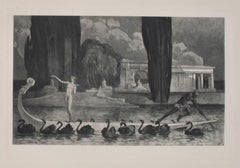
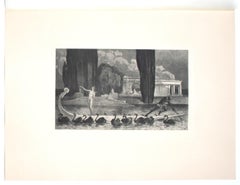
Harmonie - Héliogravure by Franz von Bayros - 1920s
By Franz von Bayros (Choisi Le Conin)
Located in Roma, IT
"Harmonie" is an original Black and white héliogravure on cream-colored cardboard realized by Choisy Le Conin, pseudonym of Franz Von Bayros (Agram, 1866 – Vienna, 1924). From Mappe...
Engraving
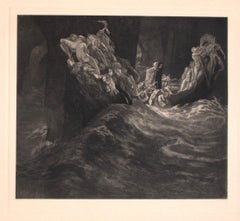
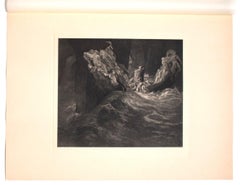
Divina Commedia - Héliogravure by Franz von Bayros - Early 20th Century
By Franz von Bayros (Choisi Le Conin)
Located in Roma, IT
"Divina Commedia" is an original Black and white héliogravure on cream-colored cardboard realized by Choisy Le Conin, pseudonym of Franz Von Bayros (A...
Engraving
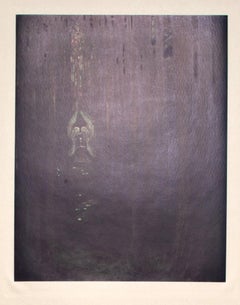
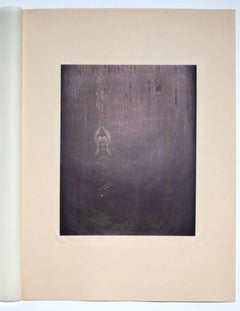
Karfreitagszauber - VintageHéliogravure by Franz von Bayros - Early 20th Century
By Franz von Bayros (Choisi Le Conin)
Located in Roma, IT
"Karfreitagszauber" is an original Black and white héliogravure on cream-colored cardboard realized by Choisy Le Conin, pseudonym of Franz Von Bayros (Agram, 1866 – Vienna, 1924). F...
Engraving
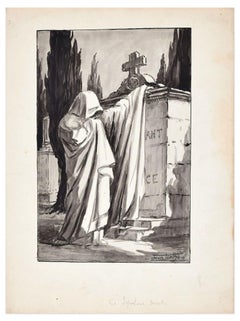
Les Sepulcres Secrets - Ink and Watercolor Drawing by Jean Torthe - Mid 1900
Located in Roma, IT
Image dimensions: 23.5 x 16 cm. Les Sepulcres Secrets is an original artwork realized by Jean Torthe in the XX Century. Original ink and watercolor on paper. Hand-signed on the ...
Ink, Watercolor
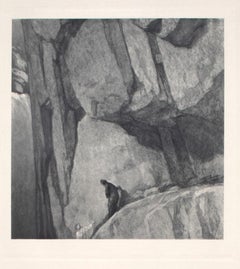
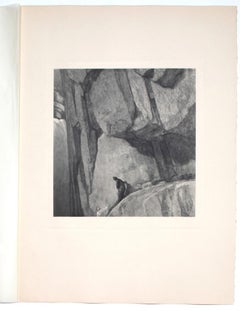
Dante - Vintage Héliogravure by Franz von Bayros - Early 20th Century
By Franz von Bayros (Choisi Le Conin)
Located in Roma, IT
"Dante" is an original Black and white héliogravure on cream-colored cardboard realized by Choisy Le Conin, pseudonym of Franz Von Bayros (Agram, 1866 – Vienna, 1924). From Mappe, a...
Engraving
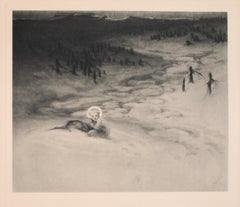
Weihnacht - Vintage Héliogravure by Franz von Bayros - 20th Century
By Franz von Bayros (Choisi Le Conin)
Located in Roma, IT
"Weihnacht" is an original Black and white héliogravure on cream-colored cardboard realized by Choisy Le Conin, pseudonym of Franz Von Bayros (Agram, 1866 – Vienna, 1924). From Map...
Engraving
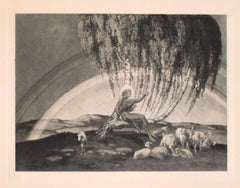
Der Gute Hirte - Vintage Héliogravure by Franz von Bayros - 20th Century
By Franz von Bayros (Choisi Le Conin)
Located in Roma, IT
"Der Gute Hirte" is an original Black and white héliogravure on cream-colored cardboard realized by Choisy Le Conin, pseudonym of Franz Von Bayros (Agram, 1866 – Vienna, 1924). Fro...
Engraving
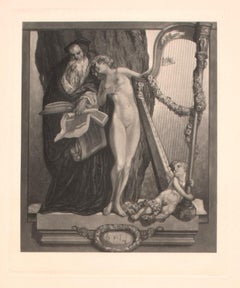
Lockung - Vintage Héliogravure by Franz von Bayros - Early 20th Century
By Franz von Bayros (Choisi Le Conin)
Located in Roma, IT
"Lockung" is an original Black and white héliogravure on cream-colored cardboard realized by Choisy Le Conin, pseudonym of Franz Von Bayros (Agram, 1866 – Vienna, 1924). From Mappe, ...
Engraving
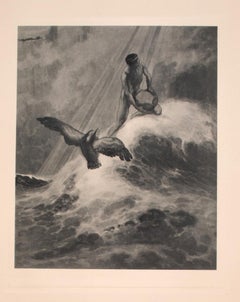
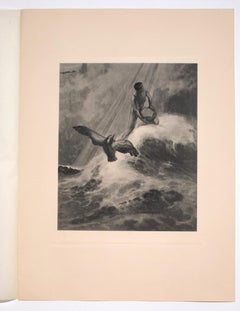
Lovcen - Vintage Héliogravure by Franz von Bayros - 20th Century
By Franz von Bayros (Choisi Le Conin)
Located in Roma, IT
"Lovcen" is an original Black and white héliogravure on cream-colored cardboard realized by Choisy Le Conin, pseudonym of Franz Von Bayros (Agram, 1866 – Vienna, 1924). From Mappe,...
Engraving
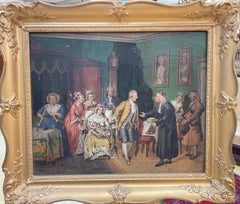
"Family Gathering – The Christening Ceremony”
Located in Edinburgh, GB
Unidentified Artist (19th Century) "Family Gathering – The Christening Ceremony" This oil painting on canvas captures an intimate and lively family gathering, most likely a christen...
Canvas, Oil
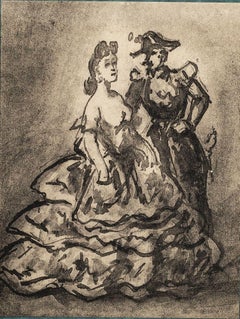
Le Militaire et l'élègante - Heliogravure After C. Guys - Early 20th Century
Located in Roma, IT
Le Militaire et l'élègante is a beautiful original print on paper, realized by the French artist, Constantin Guys (1802 -1892). In very good condition, including a petrol-green colo...
Engraving
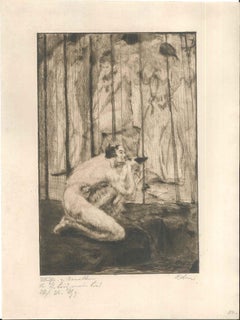
Mein Weg mit dem Weib #13 - Original Etching by W.R. Rehn
Located in Roma, IT
Drypoint and aquatint (brown ink) on cream paper. Signed "Rehn" in pencil on the lower right margin. Titled and numbered in pencil on the lower left margin. Edition of 25 prints. Fr...
Drypoint, Aquatint
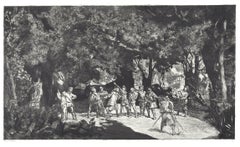
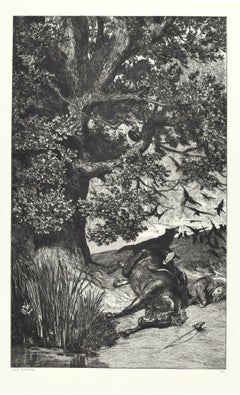
Simplicius Among Soldiers - Original Etching by M. Klinger - 1881
By Max Klinger
Located in Roma, IT
Image dimensions: 26.5 x 42.5 cm. Simplicius Among Soldiers from "Intermezzi" is an original print realized by Max Klinger in 1881. Signature and number of the print on plate. Bla...
Etching, Aquatint
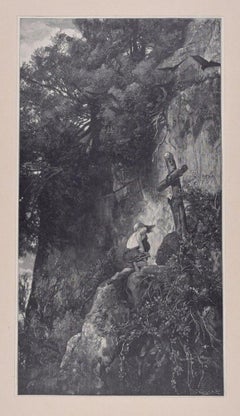
Centaur In The Smithy - Original Woodcut by J.J. Weber - 1898
Located in Roma, IT
Image dimensions: 24.5 x 31.5 cm. Centaur In The Smithy is an original print, realized in 1898. Black and white xylograph on applied Japon paper. Good conditions except for yellowing of paper (especially along the margins), and very light foxings on lower part of paper. The print was realized by Johann Jacob Weber and it's part of the series Meisterwerke der Holzschneidekunst (original title: SECHZEHN HOLZSCHNITTE NACH GEMÄLDEN ARNOLD BÖCKLIN...
Woodcut
$764Sale Price|25% Off
Fallen Knight - Etching by M. Klinger - 1881
By Max Klinger
Located in Roma, IT
Image dimensions: 36.5 x 23 cm. Fallen Knight from "Intermezzi" is an original print realized by Max Klinger in 1881. Signature and number of the print on plate. Black and white e...
Etching, Aquatint
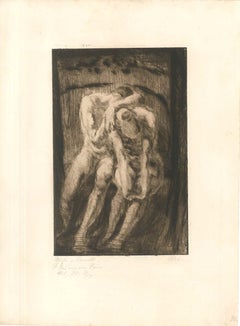
Mein Weg mit dem Weib #17 - Original Etching by W.R. Rehn
Located in Roma, IT
Drypoint and aquatint (brown ink) on cream paper. Signed "Rehn" in pencil on the lower right margin. Titled and numbered in pencil on the lower left margin. Edition of 25 prints. Fr...
Drypoint, Aquatint
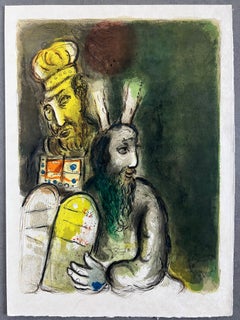
$1,781Sale Price|44% Off
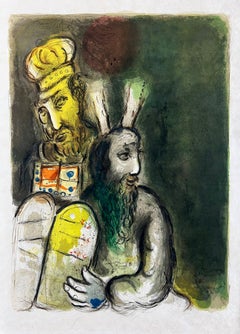
Moreover they made garments..., Original Lithograph, Edition 20, 1966, Excellent
By Marc Chagall
Located in OPOLE, PL
Marc Chagall (1887-1985) - Moreover they made garments of ministration to minister in the Sanctuarie; they made also the holy garments for Aaron, as the Lorde had commanded Moses Li...
Lithograph
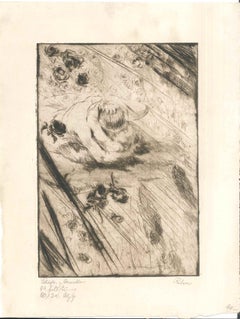
Mein Weg mit dem Weib #15 - Original Etching by W.R. Rehn
Located in Roma, IT
Drypoint and aquatint (brown ink) on cream paper. Signed "Rehn" in pencil on the lower right margin. Titled and numbered in pencil on the lower left margin. Edition of 25 prints. Fr...
Drypoint, Aquatint
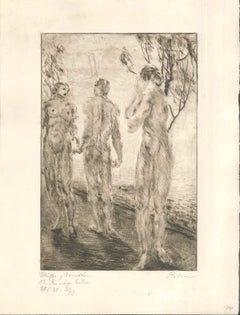
Mein Weg mit dem Weib #9 - Original Etching by W.R. Rehn
Located in Roma, IT
Drypoint and aquatint (brown ink) on cream paper. Signed "Rehn" in pencil on the lower right margin and signed on plate "Rehnky" on the lower right margin. Titled and numbered in pe...
Drypoint, Aquatint
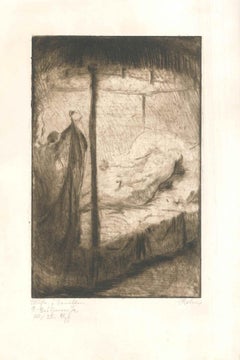
Mein Weg mit dem Weib - Original Etching by W.R. Rehn
Located in Roma, IT
Etching and aquatint on cream paper. Signed in pencil on the lower right margin. Titled and numbered in pencil on the lower left margin. Edition of 25 prints. Plate in excellent co...
Drypoint, Aquatint
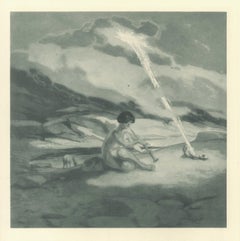
David - Vintage Héliogravure by Franz von Bayros - 1921 ca.
By Franz von Bayros (Choisi Le Conin)
Located in Roma, IT
David is a black and white héliogravure on cream-colored cardboard realized by Choisy Le Conin, pseudonym of Franz Von Bayros (Agram, 1866 – Vienna, 1924). From Mappe, a portfolio o...
Engraving
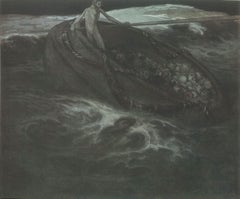
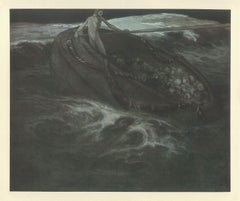
Tribut der Salome - Vintage Héliogravure by Franz von Bayros - 1921 ca.
By Franz von Bayros (Choisi Le Conin)
Located in Roma, IT
Tribut der Salome is a colored cliché from watercolor on cream-colored cardboard realized by Choisy Le Conin, as is remembered Franz Von Bayros (Agram, 1866 – Vienna, 1924). From Ma...
Engraving
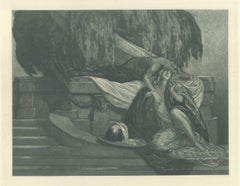
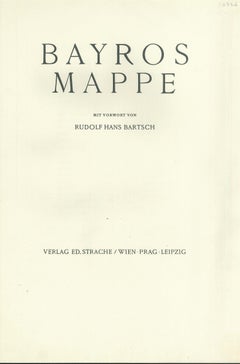
Die Zisterne - Vintage Héliogravure by Franz von Bayros - 1921 ca.
By Franz von Bayros (Choisi Le Conin)
Located in Roma, IT
Die Zisterne is a black and white héliogravure on cream-colored cardboard realized by Choisy Le Conin, pseudonym of Franz Von Bayros (Agram, 1866 – Vienna, 1924). From Mappe, a port...
Engraving
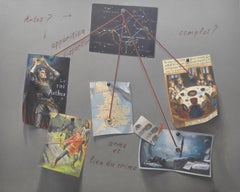
"Cold Case: The Disappearance of Arthur in the Stars", Symbolist Oil Painting
By Andrée Bars
Located in Clermont-Ferrand, Auvergne-Rhône-Alpes
Titled "Cold Case: The Disappearance of Arthur in the Stars," this intriguing oil painting presents a visual narrative reminiscent of a detective's investigation board. The compositi...
Oil
$959Sale Price|20% Off
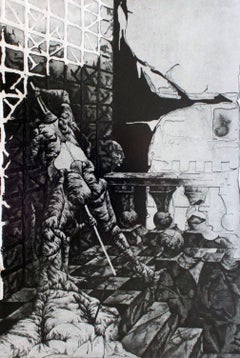
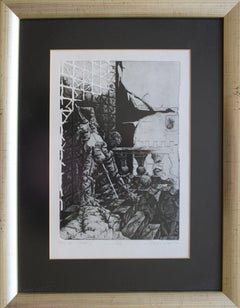
Sade's garden paper/etching, 56/61, 24x16 cm
Located in Riga, LV
Sade's garden paper/etching, 56/61, 24x16 cm
Paper, Etching
$383Sale Price|20% Off
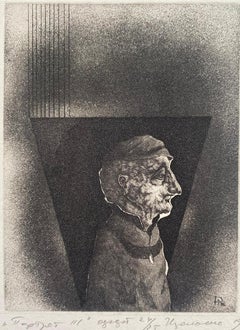
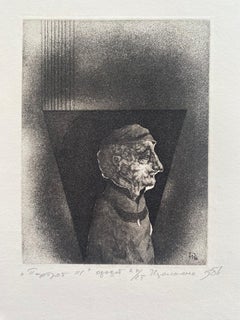
Portrait III, paper/etching, 9.8x7 cm, 1984
Located in Riga, LV
Portrait I, paper/etching, 9.8x7 cm, 1984
Paper, Etching
$575Sale Price|20% Off
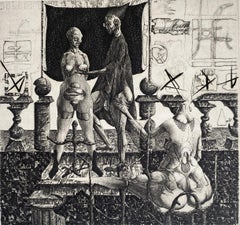
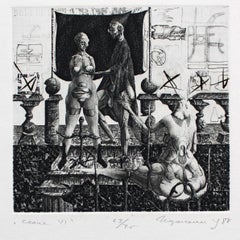
Session VI, paper/etching, 63/75, 11x12 cm, 1988
Located in Riga, LV
Session VI, paper/etching, 63/75, 11x12 cm, 1988
Paper, Etching
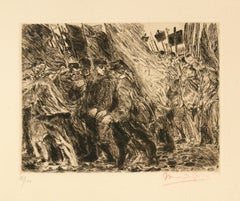
Les Drapeaux ( The Flags )
Located in Paonia, CO
Henri DeGroux (1866-1930) was a Belgian Symbolist painter, sculptor and lithographer. He was known for his allegorical, religious and historical subject matter. He became an inspired...
Lithograph
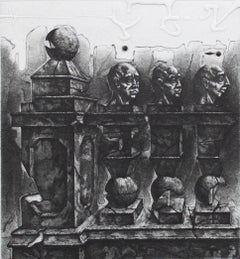
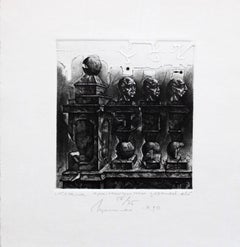
Architectural Details Catalogue 6, paper/etching, 57/75, 10x9 cm, 1990
Located in Riga, LV
Architectural Details Catalogue 6, paper/etching, 57/75,10x9 cm,1990
Paper, Etching
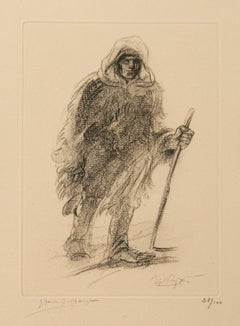
Physionomie Du Front (Front View)
Located in Paonia, CO
Henri DeGroux (1866-1930) was a Belgian Symbolist painter, sculptor and lithographer. He was known for his allegorical, religious and historical subject matter. He became an inspired...
Lithograph
$422Sale Price|41% Off
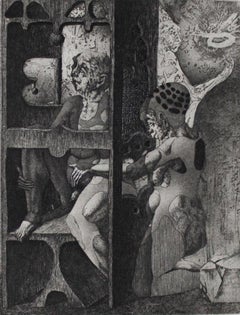
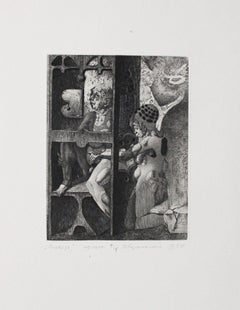
Confess, paper/etching, 9.8x7.5 cm
Located in Riga, LV
Confess, paper/etching, 9.8x7.5 cm
Paper, Etching
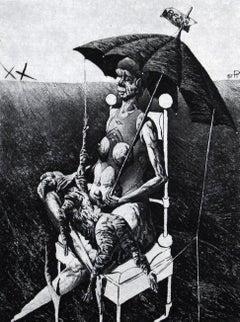
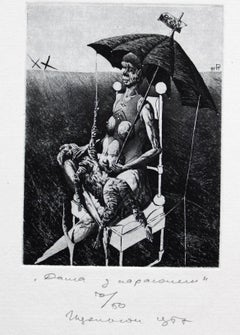
Lady with an Umbrella, paper/etching, 50/50, 10x7.5 cm
Located in Riga, LV
Lady with an Umbrella, paper/etching,50/50, 10x7.5 cm
Paper, Etching
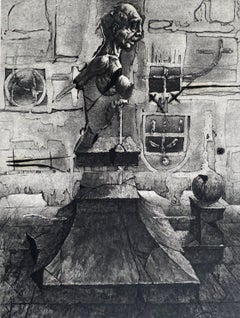
Monument X, paper/etching, 86/99, 13.5x10 cm, 1989
Located in Riga, LV
Monument X, paper/etching,86/99, 13.5x10 cm, 1989
Paper, Etching
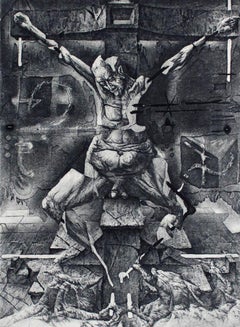
Monument VII, paper/etching, 14x9.5 cm
Located in Riga, LV
Monument VII, paper/etching, 14x9.5 cm
Paper, Etching
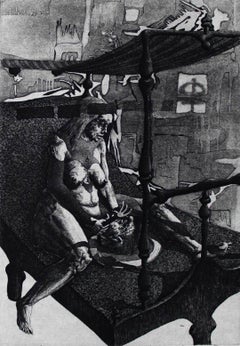
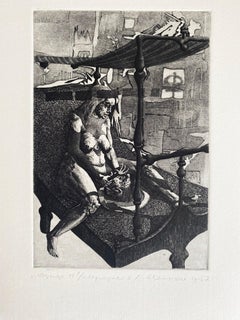
Judith III, paper/etching, 13.5x9.5 cm, 1987
Located in Riga, LV
Judith III, paper/etching, 13.5x9.5 cm, 1987
Paper, Etching
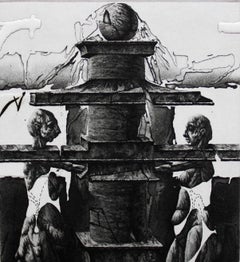
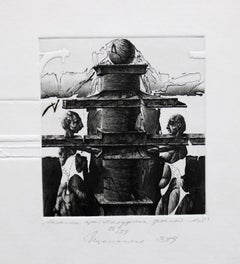
Architectural Details Catalogue 2, paper/etching, 86/99, 10x9 cm, 1989
Located in Riga, LV
Architectural Details Catalogue 2, paper/etching, 86/99, 10x9 cm, 1989
Paper, Etching
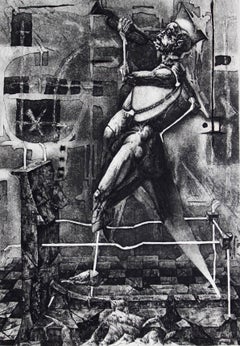
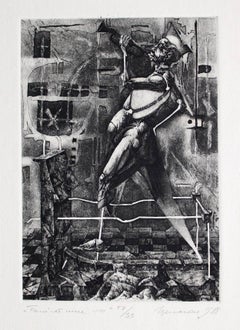
Monument VIII paper/etching, 90/99
Located in Riga, LV
Monument VIII paper/etching, 90/99, 14x10 cm, 1988
Paper, Etching
$776Sale Price|20% Off
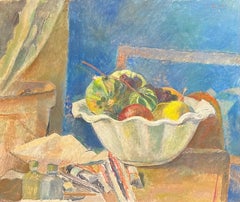
Bowl of Fruits by Fernand Blondin - Oil on Canvas - 55x46 cm
Located in Geneva, CH
Fernand Blondin (1887-1967) was a Swiss painter and teacher, celebrated for his depictions of idyllic rural life, interiors, female nudes, portraits, still-lifes, religious subjects ...
Canvas, Oil
$1,800
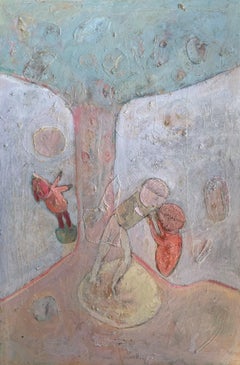
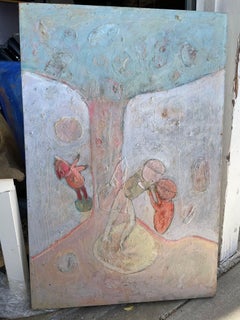
Helping Conundrum
By Airom
Located in Santa Monica, CA
Enigmatic oil painting by self-taught artist Airom Includes some elements of canvas pasted to the canvas for 3D texture. Orange under-painting underneath neutral outer layers
India Ink, Oil

$352Sale Price|21% Off
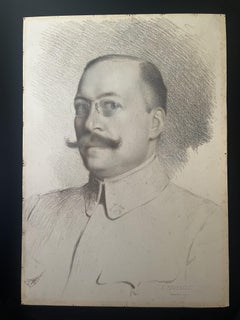
Rousselet, Portrait of an officer, 1915, wax crayon on paper
Located in Paris, FR
Rousselet, French School early 20th century Portrait of an officier, 1915 Wax crayon on paper signed "E Rousselet" and dated 1915 lower right 51.5 x 31.5 cm In quite good condition, ...
Wax Crayon
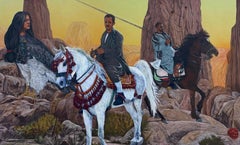
"The Hunt" Figurative Painting 13" x 20.5" inch by Ahmed Saber
By Ahmed Saber
Located in Culver City, CA
"The Hunt" Figurative Painting 13" x 20.5" inch by Ahmed Saber Medium: acrylic, ink & colored pencil on paper AHMED SABER - BIO Ahmed Saber is an Egyptian artist based in Luxor...
Paper, Ink, Acrylic, Color Pencil