Henry de Groux Art

1867-1930

Henry de Groux was a Belgian Symbolist painter, sculptor and lithographer. As a Symbolist, he used the traditions of religious painting in his way, interpreting the plots and relating them to modernity. Groux's 1889 painting Christ aux Outrages, widely described as his masterwork, depicted Jesus being attacked by a mob. Later in life, he produced many works depicting the horrors of the First World War.

to
6
1
1
Overall Width
to
Overall Height
to
2
6
1
5
8
6
4
4
3
3
2
1
1
5
3

Use search to find more

8
12,067
2,900
2,541
1,654

Use search to find more

Artist: Henry de Groux
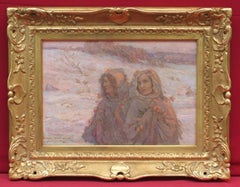
Pastel on paper by Henry de Groux (1866-1930), Christ with Crown of Thorns

Pastel on paper by Henry de Groux (1866-1930), Christ with Crown of Thorns

By Henry de Groux

Located in DEVENTER, NL

Christ with Crown of Thorns. Pastel on paper by the famous Belgian artist Henry de Groux (1866-1930) Henry de Groux identified himself with the mocked Christ. In 1889 he presented ...

Category

Late 19th Century Henry de Groux Art

Materials

Pastel

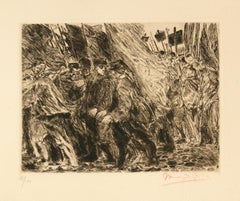
Les Drapeaux ( The Flags )

Les Drapeaux ( The Flags )

By Henry de Groux

Located in Paonia, CO

Henri DeGroux (1866-1930) was a Belgian Symbolist painter, sculptor and lithographer. He was known for his allegorical, religious and historical subject matter. He became an inspired...

Category

1910s Symbolist Henry de Groux Art

Materials

Lithograph

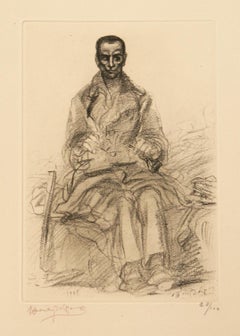
Prisonnier Au Repos (Prisoner At Rest) by Henri DeGroux

Prisonnier Au Repos (Prisoner At Rest) by Henri DeGroux

By Henry de Groux

Located in Paonia, CO

Henri DeGroux (1866-1930) was a Belgian Symbolist painter, sculptor and lithographer. He was known for his allegorical, religious and historical subject matter. He became an inspired...

Category

1910s Symbolist Henry de Groux Art

Materials

Lithograph

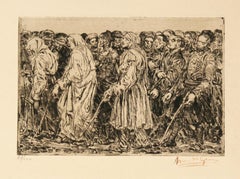
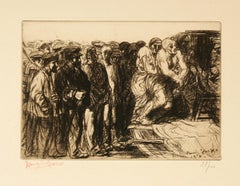
Les Aveugles ( The Blind )

Les Aveugles ( The Blind )

By Henry de Groux

Located in Paonia, CO

Henri DeGroux (1866-1930) was a Belgian Symbolist painter, sculptor and lithographer. He was known for his allegorical, religious and historical subject matter. He became an inspired...

Category

1910s Symbolist Henry de Groux Art

Materials

Lithograph

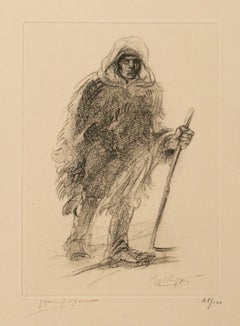
Physionomie Du Front (Front View)

Physionomie Du Front (Front View)

By Henry de Groux

Located in Paonia, CO

Henri DeGroux (1866-1930) was a Belgian Symbolist painter, sculptor and lithographer. He was known for his allegorical, religious and historical subject matter. He became an inspired...

Category

1910s Symbolist Henry de Groux Art

Materials

Lithograph

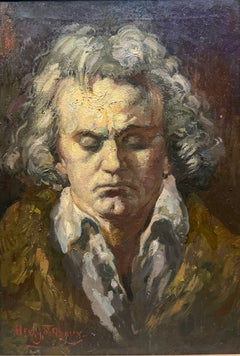
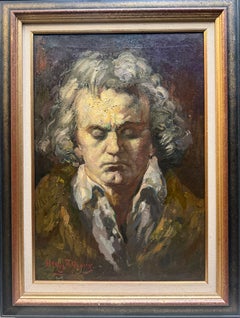
Portrait of Ludwig van Beethoven

Portrait of Ludwig van Beethoven

By Henry de Groux

Located in PARIS, FR

Henry de Groux (1866–1930) Portrait of Ludwig van Beethoven Oil on canvas 25.59 × 17.72 in. (65 × 45 cm) Framed: 32.28 × 24.41 in. (82 × 62 cm) Signed lower left A powerful and exp...

Category

Early 1900s Symbolist Henry de Groux Art

Materials

Canvas, Oil

Ambulkance

Ambulkance

By Henry de Groux

Located in Paonia, CO

Henri DeGroux (1866-1930) was a Belgian Symbolist painter, sculptor and lithographer. He was known for his allegorical, religious and historical subject matter. He became an inspired...

Category

1910s Symbolist Henry de Groux Art

Materials

Lithograph

Related Items
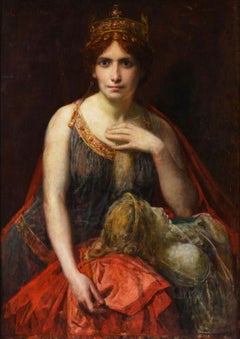
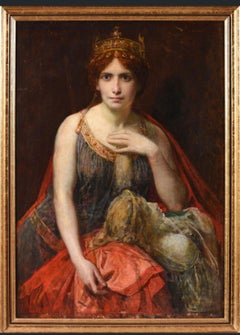
Fine 19th Century French Symbolist Oil Painting Portrait of Mythological Queen

Fine 19th Century French Symbolist Oil Painting Portrait of Mythological Queen

Located in Cirencester, Gloucestershire

The Queen by Diogène Ulysse Napoléon Maillart (French, 1840 – 1926) *see notes below oil painting on canvas, framed canvas: 42 x 30 inches framed: 45 x 33 inches condition: overall v...

Category

Late 19th Century Symbolist Henry de Groux Art

Materials

Canvas, Oil

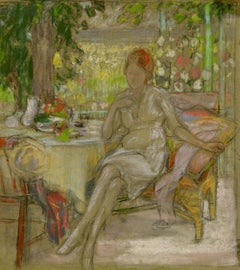
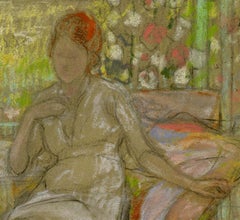
Woman on a Patio, Pastel on Paper, Abstract Impressionist, Circa 1915

Woman on a Patio, Pastel on Paper, Abstract Impressionist, Circa 1915

By Karl Albert Buehr

Located in Fairlawn, OH

Woman on a Patio Pastel on paper, c. 1915 Unsigned Provenance: Gift of the artist to his wife, Mary Hess Buehr By decent to the artist's niece, daughter of Will Hess David Saltzman Robert Henry Adams Fine Art Thomas French Fine Art Ronald C. Sloter, Columbus, Ohio Columbus College of Art and Design (de-accessed) Exhibited at Robert Henry Adams Fine Art, 1994, the first exhibition at the North Franklin Street Gallery. One of the early Chicago artists to adopt Impressionism, Karl Buehr became a figure and landscape painter. As a figure painter, his specialty became "gorgeously colored images of young women on porches overlooking brilliant summertime gardens." (Kennedy 98) His later work often showed a female figure with serious expression engaging the viewer with a direct stare. In his landscapes, he was noted for his strong coloration. In a December 1896 student exhibition at the Art Institute, a reviewer for the "Chicago Times Herald" described Buehr's landscapes as "blithe and joyous" with "country roads brilliant in sunlight . . . fields rich in summer verdure, under soft skies painted in a high, musical key." (Gerdts 68) Buehr was born as one of seven sons to a prosperous German family who immigrated to America and settled in Chicago in 1869. He was first exposed to his signature style of Impressionism in 1888 when he enrolled in night classes at the Art Institute while working in the shipping department of a lithographic firm near the Institute. He remained a student there until 1897 and was recognized in a "Chicago Times Herald" editorial of June 13, 1897 as one of the Institute's most outstanding pupils. The next year, his art career was temporarily put on hold when he briefly enlisted with the U.S. Army in the Spanish American War. In 1899, he resumed his art studies, this time with Frank Duveneck. He exhibited a painting at the Paris Salon of 1900. In 1905, thanks to a wealthy Chicago patron, Buehr and his family moved to France. They spent the following year in Taormina, Sicily, and spent time in Venice as well. In Paris, Buehr studied at the Academy Julian with Raphael Collin for two years. Then he went to England, enrolling in the London Art School but had returned to Paris by 1908. During this time, he began painting at Giverny, the home of Impressionist leader Claude Monet (1840-1926, and by 1912, Buehr was listing that village as his home address. One of his good friends and associates at Giverny was Frederick Frieseke. One of Buehr's paintings from that time, "News from Home", was exhibited in 1913 at the French Salon in Paris and at the annual exhibit of the Chicago Art Institute. It shows a woman in floral dress sitting on a porch with a background with potted flowers and lush greenery background. Of his painting done at Giverny, Buehr wrote in 1912 to William Macbeth of Macbeth Galleries in New York: "My figures painted in and around Giverny are costumed and in appropriate out door settings." (Gerdts 68) In 1914, he returned to the United States and took a teaching position in Chicago at the Art Institute, which he held for the remainder of his life. He was married to Mary Hess, a painter of miniatures and decorative works. In 1928-29, he was a guest artist at Stanford University. Courtesy, AskArt “Karl Albert Buehr (1866–1952) was a painter born in Germany. Buehr was born in Feuerbach - near Stuttgart. He was the son of Frederick Buehr and Henrietta Doh (Dohna?). He moved to Chicago with his parents and siblings in the 1880s. In Chicago, young Karl worked at various jobs until he was employed by a lithograph company near the Art Institute of Chicago. Introduced to art at work, Karl paid regular visits to the Art Institute, where he found part-time employment, enabling him to enroll in night classes. Later, working at the Institute as a night watchman, he had a unique opportunity to study the masters and actually posted sketchings that blended in favorably with student's work. Having studied under John H. Vanderpoel, Buehr graduated with honors, while his work aroused such admiration that he was offered a teaching post there, which he maintained for many years thereafter. He graduated from the Art Inst. of Chicago and served in the IL Cav in the Spanish–American War. Mary Hess became Karl's wife—she was a student of his and an accomplished artist in her own right. In 1922, he was elected into the National Academy of Design as an Associate member. Art Studies in Europe In 1904, Buehr received a bronze medal at the St. Louis Universal Exposition, then, in 1905, Buehr and his family moved to France, thanks to a wealthy Chicago patron, and they spent the following year in Taormina, Sicily, where the artist painted local subjects, executing both genre subjects and landscapes as well as time in Venice. Buehr spent at least some time in Paris, where he worked with Raphaël Collin at the Académie Julian. Giverny and American Impressionism Prior to this time, Buehr had developed a quasi-impressionistic style, but after 1909, when he began spending summers near Monet in Giverny, his work became decidedly characteristic of that plein-air style but he began focusing on female subjects posed out-of-doors. He remained for some time in Giverny, and here he became well-acquainted with other well known expatriate America impressionists such as Richard Miller, Theodore Earl Butler, Frederick Frieseke, and Lawton Parker. It seems likely that Buehr met Monet, since his own daughter Kathleen and Monet’s granddaughter, Lili Butler, were playmates, according to George Buehr, the painter’s son. His other daughter Lydia died before adulthood due to diabetes. He returned to Chicago at the onset of World War I and taught at The Art Inst for many years. One of his noted pupils at the Art Institute was Archibald Motley...

Category

1910s Abstract Impressionist Henry de Groux Art

Materials

Pastel

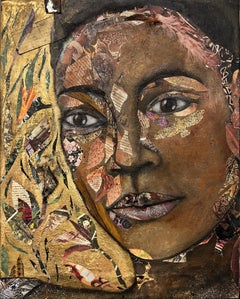
Denise Jones Adler, Endangered, 2022, Mixed media, Mystical

Denise Jones Adler, Endangered, 2022, Mixed media, Mystical

By Denise Jones Adler

Located in Darien, CT

Denise Jones Adler's work is both personal and archetypical and seeks to memorialize a moment in time, the fragile nature of life, and the emotional impact of the past on the present. Her portraits and dreamscapes pinpoint an unsettled view of the world, layered with a subtle sense of amusement and innate feminism. Adler is influenced by the Feminist Art Movement as well as Expressionism and the Dada movement. The collages of Hannah Hoch...

Category

2010s Symbolist Henry de Groux Art

Materials

Linen, Mixed Media, Acrylic

Painting 20th Century Symbolism Esotericism

Painting 20th Century Symbolism Esotericism

By Numa François Gillet

Located in Saint-Ouen, FR

GILLET Numa François (1868- 1940) Oil on wood panel signed low left Dedicated and dated 1933 Old Antique frame gilded with gold leaves Dim panel : 37 X 55 cm Dim frame : 61 X 78 cm GILLET Numa François (1868- 1940) French 19th-20th century Painter, ceramist, architect designer Symbolist movement Numa François Gillet...

Category

Early 20th Century Symbolist Henry de Groux Art

Materials

Oil

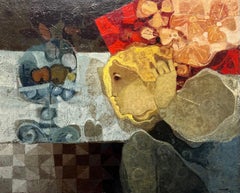
Original Spanish Surrealist Female Figure, Monumental Expressionist Oil

Original Spanish Surrealist Female Figure, Monumental Expressionist Oil

By Alvar Sunol Munoz-Ramos

Located in Sitges, Barcelona

Original Spanish Surrealist Female Figure, Monumental Expressionist Composition Artist: Alvar Suñol Munoz-Ramos Title: Figurative Composition Date: circa 2000 Medium: Oil on canvas Dimensions: 81 × 100 cm / 31.9 × 39.4 in Framed: Yes Signed: Lower right Condition: Excellent Origin: Spain DESCRIPTION A monumental and highly distinctive figurative composition by internationally recognized Spanish artist Alvar Suñol, combining psychological intensity, sculptural presence and a sophisticated balance between figuration and abstraction. The composition is dominated by one of Suñol’s characteristic introspective female figures, rendered with a monumental sense of volume and surrounded by overlapping geometric planes, textured surfaces and richly modulated color. Earthy greys, ochres and muted blues contrast dramatically with areas of deep red and luminous yellow, creating a complex visual architecture that rewards prolonged viewing. Measuring 81 × 100 cm / 31.9 × 39.4 inches, this is an imposing large-format work with considerable decorative and intellectual presence. Its scale, compositional complexity and mature handling make it particularly suitable for an important contemporary interior, private collection or architect-designed space. This painting belongs to the mature period of Suñol’s career, when his visual language had developed into a highly personal synthesis of Mediterranean figuration, modernist structure and poetic symbolism. The female figure, simultaneously monumental and introspective, becomes less a portrait than a universal psychological presence. The work is presented framed and in excellent condition, ready to display. BIOGRAPHY Alvar Suñol Munoz-Ramos, widely known as Alvar Suñol, was born in Montgat, near Barcelona, in 1935. He studied at the Escola Superior de Belles Arts de Sant Jordi in Barcelona and quickly emerged as one of the most internationally recognized Spanish figurative artists of his generation. His career developed between Spain, Paris and the United States, where his work found a particularly strong following among collectors. Suñol became known for a highly personal figurative language characterized by monumental human figures, architectural structures, symbolic imagery and richly worked surfaces. Throughout his long career, his paintings, sculptures, lithographs and monumental projects have been exhibited internationally and are represented in numerous private and institutional collections. His mature work occupies a distinctive position between Mediterranean lyricism, European modernism and a deeply personal form of poetic figuration. Rather than abandoning the human figure, Suñol transformed it into a vehicle for memory, contemplation and psychological depth. ARTISTIC INSPIRATION Suñol’s work belongs to the wider European figurative tradition shaped by artists such as Pablo Picasso, Georges Braque, Marc Chagall and Amedeo Modigliani, while maintaining a strongly individual Mediterranean sensibility. The monumental treatment of the figure recalls certain aspects of Picasso’s later figurative work, while the fragmented planes and structural organization reveal the lasting influence of Cubism and European modernism. At the same time, Suñol’s poetic atmosphere and symbolic use of the human figure place his work in dialogue with Chagall and other artists who maintained narrative and emotional content within modern art. This combination of Mediterranean identity, modernist construction and psychological figuration gives Suñol’s work a particularly distinctive presence within post-war Spanish and European painting. Alvar Suñol, Alvar Sunol, original Spanish painting...

Category

Early 2000s Symbolist Henry de Groux Art

Materials

Canvas, Oil

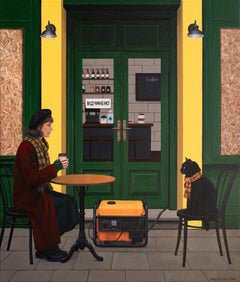
Running on Coffee, Symbolist Figurative Painting, Signed 100 x 85 cm

Running on Coffee, Symbolist Figurative Painting, Signed 100 x 85 cm

By Nataliya Bagatskaya

Located in Zofingen, AG

This contemporary figurative painting presents an understated scene of urban life transformed by circumstances. A woman sits outside a cafe with a takeaway coffee, accompanied by a b...

Category

2010s Symbolist Henry de Groux Art

Materials

Lacquer, Cotton Canvas, Acrylic

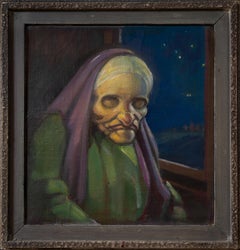
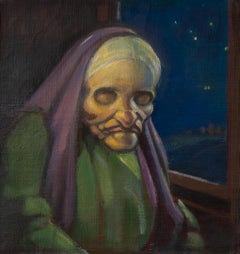
Moonlight Beyond the Kerosene Lamps in the Railway Compartment, 1907

Moonlight Beyond the Kerosene Lamps in the Railway Compartment, 1907

Located in Stockholm, SE

Per Fischer (1877–1974) Sweden Moonlight Beyond the Kerosene Lamps in the Railway Compartment, 1907 oil on canvas laid on panel painted 1907 unframed: 29.5 × 28 cm (11.6 × 11 in) f...

Category

Early 1900s Symbolist Henry de Groux Art

Materials

Canvas, Oil, Board

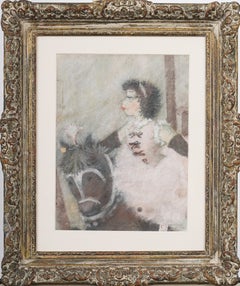
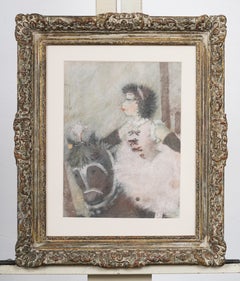
"Ballerina on a Show Horse" Vintage Impressionist Original Signed Pastel

"Ballerina on a Show Horse" Vintage Impressionist Original Signed Pastel

By Suzanne Eisendieck

Located in Buffalo, NY

"Ballerina on a Show Horse" Vintage Impressionist Original Signed Pastel. Pastel and watercolor on paper. Signed. Measuring: 18 by 15 inches overall, and 11 by 8 artwork alone.

Category

20th Century Post-Impressionist Henry de Groux Art

Materials

Pastel, Paper, Watercolor

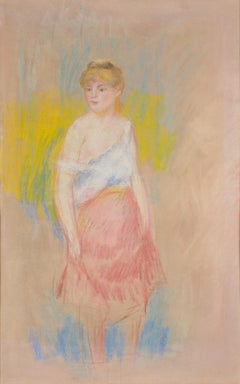
Femme au corsage blanc, Jeanne Samary by Pierre-Auguste Renoir

Femme au corsage blanc, Jeanne Samary by Pierre-Auguste Renoir

By Pierre-Auguste Renoir

Located in New Orleans, LA

Pierre-Auguste Renoir 1841-1919 French Femme au corsage blanc, Jeanne Samary (Woman in a white blouse, Jeanne Samary Initialed "AR" (lower right) Pastel on paper Among Renoir's most famous works are those that capture the ladies of his inner circle in his signature style. This vibrant pastel from 1879 depicts the young Jeanne Samary, Renoir’s favorite subject and most important muse at the height of his career. Compared to his 4,000 paintings, the artist made exceptionally few pastels—only about 150 total—making this luminous work an extraordinary Renoir rarity. Samary was one of the most captivating figures of late 19th-century Paris. An iconic actress at the Comédie-Française, her fame rivaled that of the great Sarah Bernhardt. Beginning in 1876, Renoir created dozens of portraits of Samary, and she also appeared in all three of the artist’s most important paintings from this pivotal period—Bal du moulin de la Galette (1876), La balançoire (1876) and The Luncheon of the Boating Party (1880–81). Renoir’s close friend and biographer, Georges Rivière, noted that “no portrait ever gave Renoir greater satisfaction than the ones he made of Samary.” This magnificent pastel perfectly embodies this bond between Renoir and Samary. Vivid and spontaneous, the work captures an intimate moment, with Samary’s blouse delicately falling over her shoulder. Renoir typically reserved pastel for his portraits of friends and family, as it allowed him to capture their true essence with speed and ease. The year this pastel was created, 1879, was also one of the most important years of Renoir’s career. He entered the prestigious Salon of 1879, where four of his portraits were accepted, including a full-length masterpiece of Jeanne Samary. This pastel stands as a testament to this pivotal chapter for Renoir, portraying the muse who shaped his groundbreaking vision. Renoir’s portraits of Jeanne Samary are exceptionally scarce, with most already held in prestigious museum collections, including the State Hermitage Museum in St. Petersburg and the National Gallery of Art in Washington, D.C. Similar pastels of Samary have commanded millions at auction—among some of the highest prices for Renoir’s works on paper. Importantly, the artist’s pastels are getting recent museum attention, with the major 2025-2026 exhibition organized by the Musée d’Orsay and the Morgan Library, Renoir Drawings...

Category

19th Century Impressionist Henry de Groux Art

Materials

Paper, Pastel

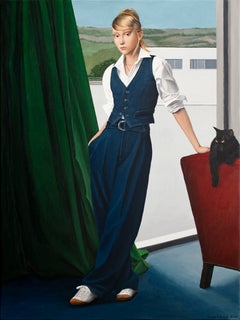
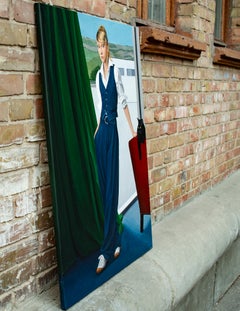
One of Those Days
One of Those Days

Nataliya BagatskayaOne of Those Days, 2026

$2,795

H 39.38 in W 29.53 in D 0.71 in

One of Those Days

By Nataliya Bagatskaya

Located in Zofingen, AG

An enigmatic woman and a black cat with luminous golden eyes inhabit an elegant interior where tailored sophistication meets quiet theatricality. In this original figurative painting...

Category

2010s Symbolist Henry de Groux Art

Materials

Lacquer, Cotton Canvas, Acrylic

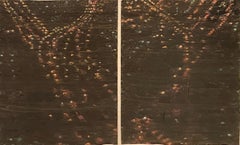
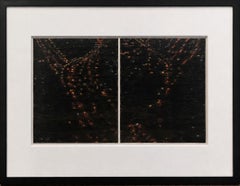
"Queens Lights at Night" Yvonne Jacquette, NYC Urban Cityscape Nocturnal Aerial

"Queens Lights at Night" Yvonne Jacquette, NYC Urban Cityscape Nocturnal Aerial

By Yvonne Jacquette

Located in New York, NY

Yvonne Jacquette Queens Lights at Night, 1980 Pastel on paper 28 x 17 inches Yvonne Jacquette was born on December 15, 1934 in Pittsburgh, Pennsylvania and grew up in Stamford, Con...

Category

1980s American Modern Henry de Groux Art

Materials

Paper, Pastel

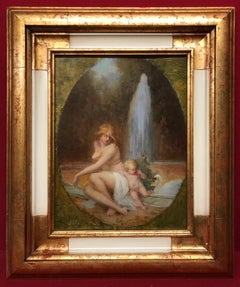
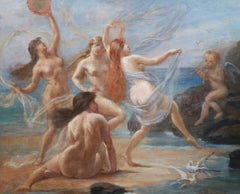
Fine Antique French Oil Painting Sirens and Cupid Dancing along the Seashore

Fine Antique French Oil Painting Sirens and Cupid Dancing along the Seashore

By Adolphe Lalyre

Located in Cirencester, Gloucestershire

Artist/ School: Adolphe Lalyre (French, 1848-1933) signed Title: Sirens and Cupid dancing along the seashore Medium: signed oil on canvas, unframed. canvas: 22.75 x 28 inches Pr...

Category

19th Century Symbolist Henry de Groux Art

Materials

Oil

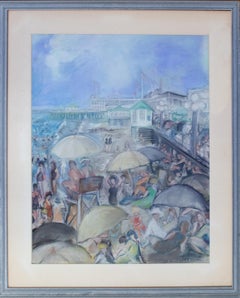
"Beach at Atlantic City, New Jersey" Amy Londoner, Ashcan School, Figurative

"Beach at Atlantic City, New Jersey" Amy Londoner, Ashcan School, Figurative

By Amy Londoner

Located in New York, NY

Amy Londoner Beach at Atlantic City, circa 1922 Signed lower right Pastel on paper Sight 23 x 18 inches Amy Londoner (April 12, 1875 – 1951) was an American painter who exhibited at the 1913 Armory Show. One of the first students of the Henri School of Art in 1909. Prior to the Armory Show of 1913, Amy Londoner and her classmates studied with "Ashcan" painter Robert Henri at the Henri School of Art in New York, N.Y. One notable oil painting, 'The Vase', was painted by both Henri and Londoner. Londoner was born in Lexington, Missouri on April 12, 1875. Her parents were Moses and Rebecca Londoner, who moved to Leadville, Colorado, by 1880. In 1899, Amy took responsibility for her father who had come to Los Angeles from Leadville and had mental issues. By 1900, Amy was living with her parents and sister, Blanche, in the vicinity of Leadville, Denver, Colorado. While little was written about her early life, Denver City directories indicated that nineteenth-century members of the family were merchants, with family ties to New York, N.Y. The family had a male servant. Londoner traveled with her mother to England in 1907 then shortly later, both returned to New York in 1909. Londoner was 34 years old at the time, and, according to standards of the day, should have married and raised a family long before. Instead, she enrolled as one of the first students at the Henri School of Art in 1909. At the Henri School, Londoner established friendships with Carl Sprinchorn (1887-1971), a young Swedish immigrant, and Edith Reynolds (1883-1964), daughter of wealthy industrialist family from Wilkes-Barre, PA. Londoner's correspondence, which often included references to Blanche, listed the sisters' primary address as the Hotel Endicott at 81st Street and Columbus Avenue, NYC. Other correspondence also reached Londoner in the city via Mrs. Theodore Bernstein at 252 West 74th Street; 102 West 73rd Street; and the Independent School of Art at 1947 Broadway. In 1911, Londoner vacationed at the Hotel Trexler in Atlantic City, NJ. As indicated by an undated photograph, Londoner also spent time with Edith Reynolds and Robert Henri at 'The Pines', the Reynolds family estate in Bear Creek, PA. Through her connections with the Henri School, Londoner entered progressive social and professional circles. Henri's admonition, phrased in the vocabulary of his historical time period, that one must become a "man" first and an artist second, attracted both male and female students to classes where development of unique personal styles, tailored to convey individual insights and experiences, was prized above the mastery of standardized, technical skill. Far from being dilettantes, women students at the Henri School were daring individuals willing to challenge tradition. As noted by former student Helen Appleton Read, "it was a mark of defiance,to join the radical Henri group." As Henri offered educational alternatives for women artists, he initiated exhibition opportunities for them as well. Troubled by the exclusion of work by younger artists from annual exhibitions at the National Academy of Design, Henri was instrumental in organizing the no-jury, no-prize Exhibition of Independent Artists in 1910. About half of the 103 artists included in the exhibition were or had been Henri students, while twenty of the twenty-six women exhibiting had studied with Henri. Among the exhibition's 631 pieces, nine were by Amy Londoner, including the notorious 'Lady with a Headache'. Similarly, fourteen of Henri's women students exhibited in the groundbreaking Armory Show of 1913, forming about eight percent of the American exhibitors and one-third of American women exhibitors. Of the nine documented works submitted by Londoner, five were rejected, while four pastels of Atlantic City beach scenes, including 'The Beach Umbrellas' now in the Remington Collection, were displayed. Following Henri's example, Londoner served as an art instructor for younger students at the Modern School, whose only requirement was to genuinely draw what they pleased. The work of dancer Isadora Duncan, another artist devoted to the ideals of a liberal education, was also lauded by the Modern School. Henri, who long admired Duncan and invited members of her troupe to model for his classes, wrote an appreciation of her for the Modern School journal in 1915. She was also the subject of Londoner's pastel Isadora Duncan and the Children: Praise Ye the Lord with Dance. In 1914, Londoner traveled to France to spend summer abroad, living at 99 rue Notre Dames des Champs, Paris, France. As the tenets of European modernism spread throughout the United States, Londoner showed regularly at venues which a new generation of artists considered increasingly passe, including the annual Society of Independent Artists' exhibitions between 1918 and 1934, and the Salons of America exhibition in 1922. Londoner also exhibited at the Morton Gallery, Opportunity Gallery, Leonard Clayton Gallery and Brownell-Lambertson Galleries in NYC. Her painting of a 'Blond Girl' was one of two works included in the College Art Associations Traveling Exhibition of 1929, which toured colleges across the country to broad acclaim. Londoner later in life suffered from illnesses then suffered a stroke which resulted in medical bills significantly mounting over the years that her old friends from the Henri School, including Carl Sprinchorn, Florence Dreyfous, Florence Barley, and Josephine Nivison Hopper, scrambled to raise funds and find suitable long-term care facilities for Londoner. Londoner later joined Reynolds in Bear Creek, PA. Always known for her keen wit, Londoner retained her humor and concern for her works even during her illness, noting that "if anything happens to the Endicott, I guess they will just throw them out." Sprinchorn and Reynolds, however, did not allow this to happen. In 1960, Londoner's paintings 'Amsterdam Avenue at 74th Street' and 'The Builders' were loaned by Reynolds to a show commemorating the Fiftieth Anniversary of the Exhibition of Independent Artists in 1910, presented at the Delaware Art Center, Wilmington, DE. In the late 80's, Francis William Remington, 'Bill Remington', of Bear Creek Village PA, along with his neighbor and artist Frances Anstett Brennan, both had profound admiration for Amy Londoner's art work and accomplishments as a woman who played a significant role in the Ashcan movement. Remington acquired a significant number of Londoner's artwork along with Frances Anstett Brenan that later was part of an exhibition of Londoner's artwork in April 15 of 2007, at the Hope Horn...

Category

1920s Ashcan School Henry de Groux Art

Materials

Paper, Pastel

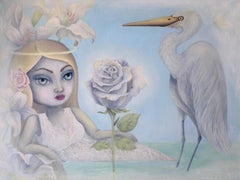
Candeur (Oil Painting, Symbolist, Portrait, Rose, Crane, Orchid)

Candeur (Oil Painting, Symbolist, Portrait, Rose, Crane, Orchid)

By Stella Jae

Located in Kansas City, MO

Stella Jae Candeur 2024 Oil on canvas Size: 23.62 x 31.49 inches (60 x 80 cm) Signed by hand COA provided Stella J Richey is an international visual artist and designer.Her works in...

Category

2010s Symbolist Henry de Groux Art

Materials

Canvas, Oil

Previously Available Items
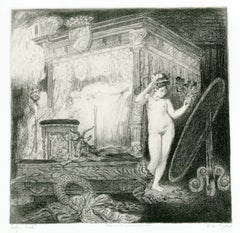
Enfins Seuls! (Finally Alone!) (All alone!)

Enfins Seuls! (Finally Alone!) (All alone!)

By Henry de Groux

Located in Fairlawn, OH

Enfins Seuls! (Finally Alone!) (All alone!) Lithograph, c. 1895 Signed, titled and editoned in pencil Published by Edmund Sagot, Paris, with the publishers initials in penicl l.r. Printed chine colle on wove paper Edition 50 (18/50) Condition: Very good, almost no spotting to the sheet Image size: 9 11/16 x 9 3/4 inches Sheet size: 17 5/8 x 24 7/8 inches Reference: La Plume, No. 239-240, No. 17 Provenance: Estate of the Publisher, Edmund Sagot, Paris Sagot Heirs, By descent Henry de Groux...

Category

1890s French School Henry de Groux Art
Materials

Lithograph

Henry De Groux art for sale on 1stDibs.

Find a wide variety of authentic Henry de Groux art available for sale on 1stDibs. You can also browse by medium to find art by Henry de Groux in lithograph and more. Not every interior allows for large Henry de Groux art, so small editions measuring 11 inches across are available. Customers who are interested in this artist might also find the work of Edvard Munch, Alfred Kubin, and Eugène Carrière. Henry de Groux art prices can differ depending upon medium, time period and other attributes. On 1stDibs, the price for these items starts at $400 and tops out at $643, while the average work can sell for $400.

Artists Similar to Henry de Groux

Questions About Henry de Groux Art
  • 1stDibs ExpertApril 5, 2022
    Henri de Toulouse-Lautrec was a painter, drawer and print-maker. One of his most recognizable works is the ‘Moulin Rouge: La Goulue’, which is a four-color lithograph depicting the famous can-can dancer La Goulue. Shop a selection of Henri de Toulouse-Lautrec’s pieces from some of the world’s top art dealers on 1stDibs.