Vienna Secession Art

152 Results
to
4
68
121
2
4
Overall Width
to
Overall Height
to
26
166
3
76
29
33
27
119,969
64,212
57,068
29,193
14,569
9,711
6,983
6,267
4,242
3,199
2,544
2,372
2,124
582
106
89
142
78
61
61
56
29
27
27
15
13
12
12
12
12
9
9
8
7
5
5
149
46
8
5
4
46
29
24
17
11
21
191
4
Style: Vienna Secession
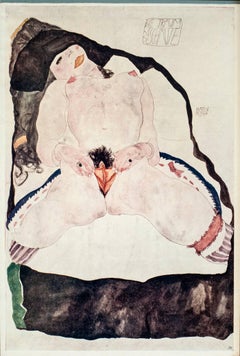
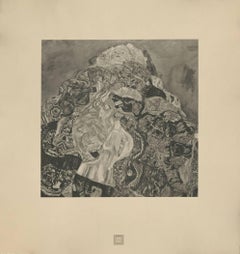
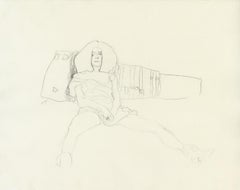
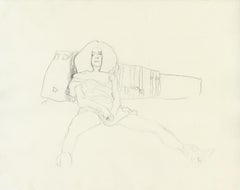
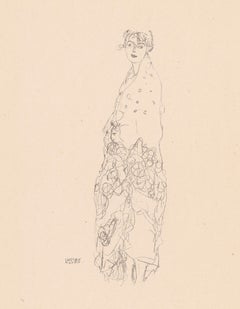
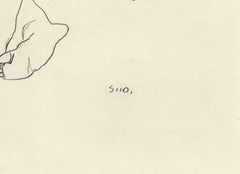
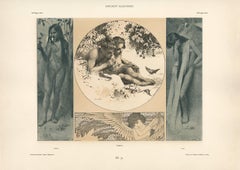
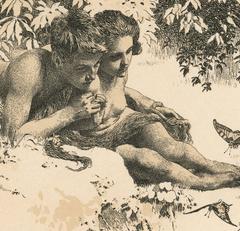
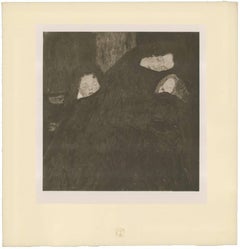
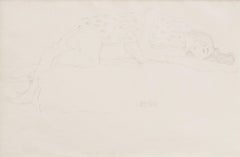
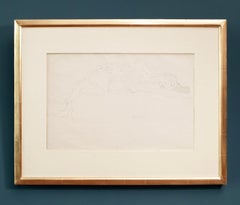
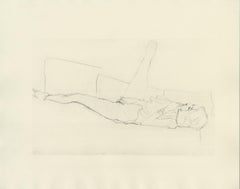
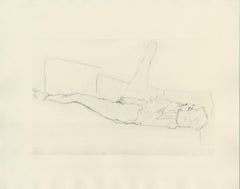
Lovers Reclining
Lovers Reclining

Lovers Reclining

By Gustav Klimt

Located in Palm Beach, FL

Signed "Klimt". Framed dimensions 20.5h x 27.75w x 1.75d inches Note: Due to the size, weight, and/or value of this piece, we require shipping through 1stDibs, for its cost effectiveness, full insurance coverage, and reliable handling. While standard parcel services are an option, the default quote does not include packing and insurance and we do not ship uninsured. 1stDibs shipping provides a level of value, protection, and care that aligns with our commitment to safeguarding historic artworks and providing excellent client service. Thank you in advance for your cooperation. Both intensely dynamic and deeply introspective, Klimt’s works devoted to the “act of love” rank among his most intoxicating and sought-after creations. Inspired by Japanese erotic woodblock...

Category

1910s Vienna Secession Art

Materials

Paper, Pencil

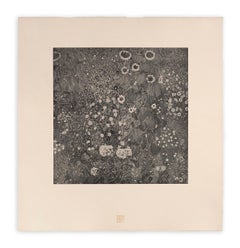
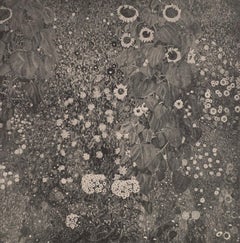
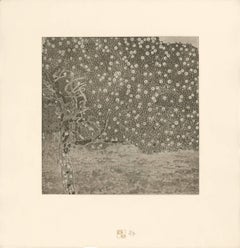
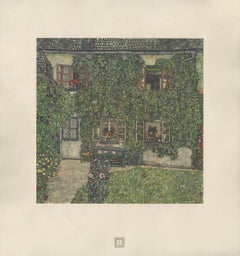
Farm Garden Sunflowers by Gustav Klimt, Das Werk lifetime collotype, 1908-1912

Farm Garden Sunflowers by Gustav Klimt, Das Werk lifetime collotype, 1908-1912

By Gustav Klimt

Located in Chicago, IL

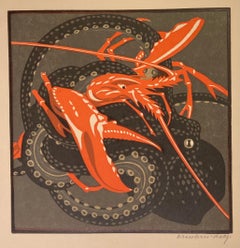
Original collotype created from Gustav Klimt’s Farm Garden With Sunflowers, painted in 1913. Published and edited by Verlag H.O. Miethke and printed by k.k. Hof- und Staatsdruckerei, Vienna, in an edition of 300. Between 1908 and 1914, H.O. Miethke published Das Werk Gustav Klimts...

Category

Early 1900s Vienna Secession Art
Materials

Paper

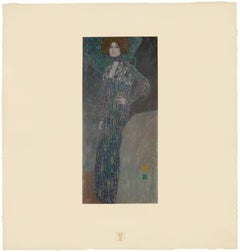
H.O. Miethke Das Werk folio "Portrait of Emilie Flöge" collotype print

H.O. Miethke Das Werk folio "Portrait of Emilie Flöge" collotype print

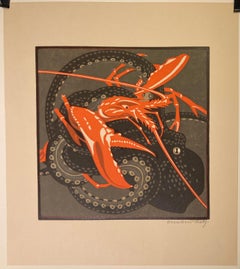
Portrait of Emilie Flöge, no. 10 from the first installment of Das Werk Gustav Klimts His confidante and life companion of more than 30 years, Klimt capt...

Category

Early 1900s Vienna Secession Art
Materials

Paper

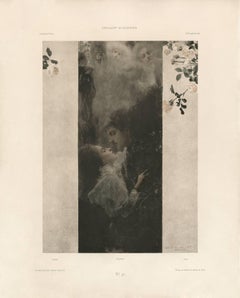
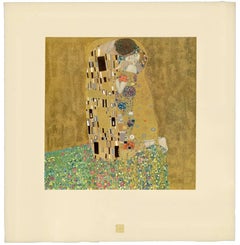
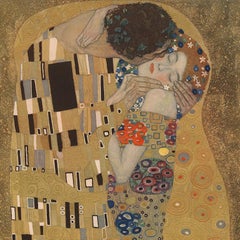
H.O. Miethke Das Werk folio "The Kiss" collotype print

H.O. Miethke Das Werk folio "The Kiss" collotype print

The Kiss, no. 1 from the fifth installment of Das Werk Gustav Klimts Undoubtedly Klimt’s best known and most reproduced images, this printed version of The Kiss is the only one with which Klimt was directly involved. Unveiled at Vienna’s Kunstschau 1908, and saved for the fifth and final delivery of Das Werk, The Kiss marks a triumph in Klimt’s career and represents a culmination of many themes in his oeuvre up to that point. After all of the controversy surrounding the State’s prior rejection of the University murals commissioned from Klimt, the Ministry of Education reversed their policy toward the artist with a show of wholehearted support by purchasing for the Osterreichische Galerie BelvedereThe Kiss while it still hung in the Kunstschau exhibit. Considered in relation to the eight multicolored collotypes which preceded its print debut in the Das Werk portfolio, The Kiss literally embraces all which came before it. The golden seaweed dangling in tresses from the lovers’ feet harkens back to Water Snakes I and II. The bed of flowers evokes the settings Klimt created in both The Golden Knight and The Sunflower. In fact, this image sprung out of a particularly happy summer spent in the company of Klimt’s lover, Emilie Floge...

Category

Early 1900s Vienna Secession Art
Materials

Handmade Paper

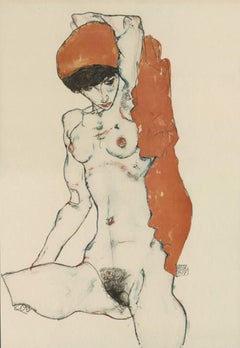
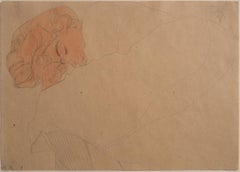
Portrait of Melanie Schiele: Study for Danaë (cat. no. D196a)

Portrait of Melanie Schiele: Study for Danaë (cat. no. D196a)

By Egon Schiele

Located in Palm Beach, FL

Signed "Schiele Egon 08" This work was reviewed by will be Jane Kallir, Kallir Research Institute, New York on August 19, 2021 and has confirmed its authorship. The work will be inc...

Category

Early 1900s Vienna Secession Art
Materials

Paper, Gouache, Pencil

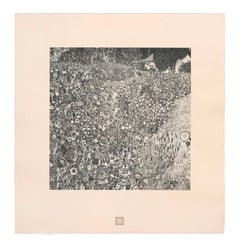
Italian Garden Landscape, Gustav Klimt An Aftermath collotype, 1931

Italian Garden Landscape, Gustav Klimt An Aftermath collotype, 1931

By (after) Gustav Klimt

Located in Chicago, IL

Original 1931 collotype created from Gustav Kilmt’s Italian Garden Landscape, oil on canvas, 1913. Published by Max Eisler and printed by Österreichischer Staatsdruckerei (Austrian State Printing Office), Vienna, in an edition of 500. In 1931, Max Eisler published the most notable posthumous collection of Gustav Klimt works to date. Using a complex gravure process, Klimt’s original...

Category

1930s Vienna Secession Art

Materials

Paper

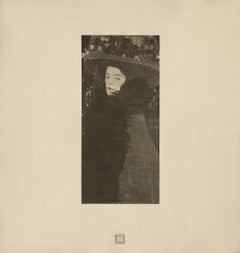
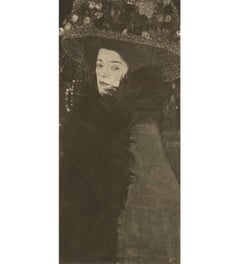
Portrait of Lady in Red and Black by Gustav Klimt, Das Werk collotype, 1908-1912

Portrait of Lady in Red and Black by Gustav Klimt, Das Werk collotype, 1908-1912

By Gustav Klimt

Located in Chicago, IL

Original collotype created from Gustav Klimt’s Portrait of Lady in Red and Black. Published and edited by Verlag H.O. Miethke and printed by k.k. Hof- und Staatsdruckerei, Vienna, in an edition of 300. Collotype on chine colle paper laid down on heavy deckled-edge cream-wove paper. Between 1908 and 1914, H.O. Miethke published Das Werk Gustav Klimts...

Category

Early 1900s Vienna Secession Art
Materials

Paper

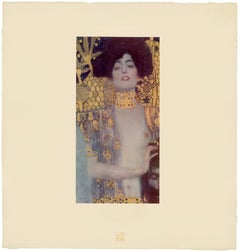
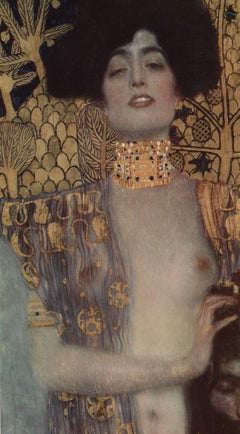
H.O. Miethke Das Werk folio "Judith I" collotype print

H.O. Miethke Das Werk folio "Judith I" collotype print

Judith I, no. 9 from the second installment of Das Werk Gustav Klimts Much like his treatment of the Classical personage, Danae, from Greek mythology, Klimt’s depiction of Judith takes an Old Testament character, a heroine who avenges the death of her husband by killing an Assyrian king, and firmly positions her in his present-day Vienna. His multicolored collotype rips the canvas from its gilded frame which directly references the subject with its title: “Judith und Holofernes”. Now in print form, Judith, holding the severed head of a male in murky shadow, is the ultimate Viennese femme fatale. Her likeness is unmistakably similar to a former lover of Klimt’s and famous Viennese soprano, Anna von Mildenburg. Though his allusion to ancient Assyria is apt, Klimt literally lifted the gold patterned background’s design motif from a relief detail from Sennacherib’s Palace displayed in a London museum. His context then is contemporary. In a sensual and sexually powerful tour de force, Klimt’s Judith...

Category

Early 1900s Vienna Secession Art
Materials

Paper, Ink

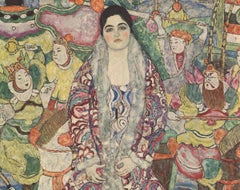
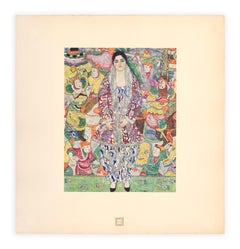
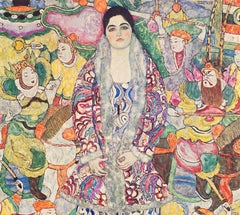
Portrait of Friederike Maria Beer, Gustav Klimt An Aftermath collotype, 1931

Portrait of Friederike Maria Beer, Gustav Klimt An Aftermath collotype, 1931

By (after) Gustav Klimt

Located in Chicago, IL

Original 1931 collotype created from Gustav Kilmt’s Portrait of Friederike Maria Beer, oil on canvas, 1916. Published by Max Eisler and printed by Österreichischer Staatsdruckerei (Austrian State Printing Office), Vienna, in an edition of 500. In 1931, Max Eisler published the most notable posthumous collection of Gustav Klimt works to date. Using a complex gravure process, Klimt’s original oil paintings were painstakingly reproduced as collotypes on a handmade, deckled-edge cream wove paper. This world-class example of collotype captures the superb resolution and color-richness and ornamentation of the original 1916 oil painting. "Friederike-Maria suggested that Klimt should paint her in a Viennese Workshop dress; she wore these exclusively. She was also very proud of a fur coat she owned, particularly during the hardship of the First World War, and Klimt decided that she should wear the coat too, but inside out, so that the decorative lining, also by the Viennese Workshop, was visible. Klimt decided to make use of an imaginary oriental screen...

Category

1930s Vienna Secession Art

Materials

Paper

"Woman Leaning Forward" by Gustav Klimt - Original Print from Courtesans Folio

"Woman Leaning Forward" by Gustav Klimt - Original Print from Courtesans Folio

By Gustav Klimt

Located in Palm Beach, FL

Plate #3 from Gustav Klimt's 1907 "Dialogues of the Courtesans" portfolio, consisting of 15 collotypes on cream japon paper. The drawings in this folio are said to be studies for Klimt's well-known Water Serpents paintings...

Category

Early 1900s Vienna Secession Art
Materials

Paper

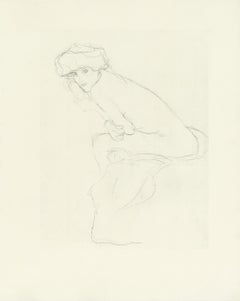
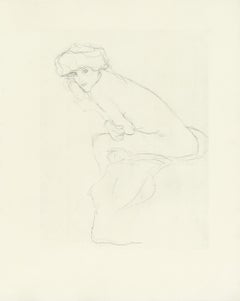
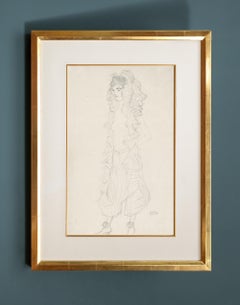
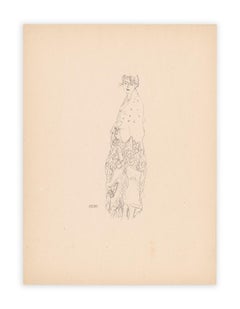
"Seated Woman Semi-nude" by Gustav Klimt - Original Print from Courtesans Folio

"Seated Woman Semi-nude" by Gustav Klimt - Original Print from Courtesans Folio

By Gustav Klimt

Located in Palm Beach, FL

Plate #2 from Gustav Klimt's 1907 "Dialogues of the Courtesans" portfolio, consisting of 15 collotypes on cream japon paper. The drawings in this folio are said to be studies for Klimt's well-known Water Serpents paintings...

Category

Early 1900s Vienna Secession Art
Materials

Paper

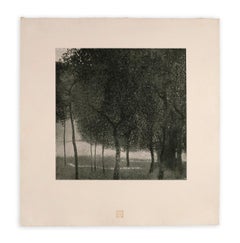
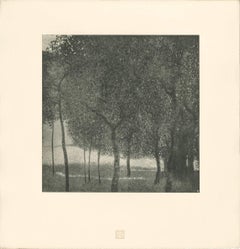
Fruit Trees by Gustav Klimt, Das Werk lifetime landscape collotype, 1908-1912

Fruit Trees by Gustav Klimt, Das Werk lifetime landscape collotype, 1908-1912

By Gustav Klimt

Located in Chicago, IL

Original collotype created from Gustav Klimt’s Impressionist Fruit Trees landscape, painted in 1901. Published and edited by Verlag H.O. Miethke and printed by k.k. Hof- und Staatsdruckerei, Vienna, in an edition of 300. Between 1908 and 1914, H.O. Miethke published Das Werk Gustav Klimts...

Category

Early 1900s Vienna Secession Art
Materials

Paper

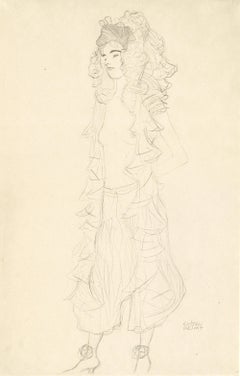
"Woman w/Lace Garment" by Gustav Klimt - Original Print from Courtesans Folio

"Woman w/Lace Garment" by Gustav Klimt - Original Print from Courtesans Folio

By Gustav Klimt

Located in Palm Beach, FL

Plate #6 from Gustav Klimt's 1907 "Dialogues of the Courtesans" portfolio, consisting of 15 collotypes on cream japon paper. The drawings in this folio are said to be studies for Klimt's well-known Water Serpents paintings...

Category

Early 1900s Vienna Secession Art
Materials

Paper

H.O. Miethke Das Werk folio "Life is a Struggle" collotype print

H.O. Miethke Das Werk folio "Life is a Struggle" collotype print

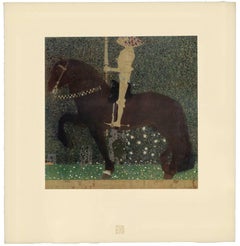
Life is a Struggle (The Golden Knight), no. 10 from the second installment of Das Werk Gustav Klimts With his golden armor meticulously and faithfully rendered after examples found ...

Category

Early 1900s Vienna Secession Art
Materials

Archival Paper

Thunderstorm (The Large Poplar II) by Gustav Klimt, Das Werk lifetime collotype

Thunderstorm (The Large Poplar II) by Gustav Klimt, Das Werk lifetime collotype

By Gustav Klimt

Located in Chicago, IL

Original collotype created from Gustav Klimt’s Approaching Thunderstorm (The Large Poplar II), painted in 1903. Published and edited by Verlag H.O. Miethke and printed by k.k. Hof- und Staatsdruckerei, Vienna, in an edition of 300. Between 1908 and 1914, H.O. Miethke published Das Werk Gustav Klimts, a folio of collotypes representing Gustav Klimt’s most notable works leading up to 1913. Klimt’s original oil paintings were painstakingly reproduced as collotypes on a handmade, deckled-edge cream wove paper using a complex gravure process overseen by master technicians as well as the artist himself. Each image presented in the folio was assigned its own unique signet, which was designed by Klimt and struck below the image using a technique similar to letterpress. The signet corresponded to a matching signet in the justification page which detailed the piece’s size, location, and owner. Published under the artist’s direct supervision, this series allowed Klimt, who had completely divorced himself from public commissions following the outcry from his University of Vienna paintings, to more effectively present his artworks to institutions and patrons across the world. A testament to the masterful design and printmaking demonstrated by Das Werk Gustav Klimts, Emperor Franz Joseph himself purchased the first copy of the folio. Klimt’s The Swamp...

Category

Early 1900s Vienna Secession Art
Materials

Paper

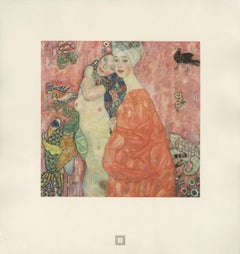
Max Eisler Eine Nachlese folio "Girlfriends II" collotype print

Max Eisler Eine Nachlese folio "Girlfriends II" collotype print

By (after) Gustav Klimt

Located in Palm Beach, FL

After Gustav Klimt, Max Eisler #1, Die Freundinnen II; multi-color collotype after 1916/17 painting in oil on canvas which was destroyed by fire in May 1945 at Immendorf Castle Lower Austria. Eisler’s choice to begin his 1931 portfolio of works by Klimt with Girlfriends II was both bold and prescient. Just 14 years later, the painting was tragically destroyed in a fire. With such a loss, this rare and exquisite image is all the more valuable by virtue of having been made in color. In works from his late period, Klimt continued his fascination with exploring female dynamics and their various forms of love. Girlfriends II is a fine example of how space, color and ornament play a noticeable role in the evolution of his symbolic language. Wide swaths of space in the background as well as the two female forms create the structure. Klimt’s strong brushstrokes show a painterly quality and a new move toward abstraction which feels very far away from his earlier work. Nor should Klimt’s economy of line be overlooked. His draughtsmanship is what infuses the female bodies with movement, emotion and a profundity of life. Both women confront the viewer’s gaze unselfconsciously, as if they are modern-day Viennese women stepping out of a Klimtesque ukiyo-e print. Characteristic of this late period, Klimt uses ornament...

Category

1930s Vienna Secession Art

Materials

Paper

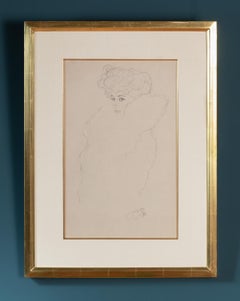
Seated woman with shawl, Gustav Klimt Handzeichnungen (Sketch), 1922

Seated woman with shawl, Gustav Klimt Handzeichnungen (Sketch), 1922

By (after) Gustav Klimt

Located in Chicago, IL

Original collotype lithograph of Gustav Kilmt’s Seated woman with shawl, published in the 1922 Handzeichnungen portfolio by Thyrsos Verlag, Leipzig and Vienna, in an edition of 375. This artwork is presented in archival rag mat and arrives accompanied by a certificate of authenticity. Klimt’s mastery of depth is most evident in the gentleness of his linework. Without the aid of shadow or the subtlety of values, the gestures of line allow the viewer a sense of a three-dimensional person or object. The meticulous lithographic process used to create Klimt’s Handzeichnungen portfolio ensures exceptionally crisp markings bearing a strong resemblance to the original sketches. This series showcases the quintessence behind Klimt’s signature visual style. This artwork arrives accompanied by a certificate of authenticity. Century Guild has curated collections of Gustav Klimt’s printed...

Category

1920s Vienna Secession Art

Materials

Paper, Lithograph

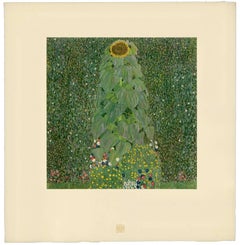
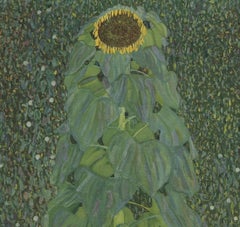
H.O. Miethke Das Werk folio "Sunflower" collotype print

H.O. Miethke Das Werk folio "Sunflower" collotype print

Sunflower, no. 10 from the third installment of Das Werk Gustav Klimts Created during his residency in Litzlberg on Attersee, where Klimt and the Floge family summered from 1900-1907, Klimt explores nature’s transcendental qualities. His single sunflower is human-like, it’s golden halo is like a ring of sun-kissed hair surrounding a bald pate. It’s known that at the same time Klimt was creating this image, he was also at work on a photo essay about the Floge sisters’ clothing from their fashion salon. Their fashion house was best known for its “reform dresses” which featured loose-fitting long robes which billowed at the arms and torso. Viewed with this in mind, it is not a hard leap to imagine the lone sunflower as a self-portrait from reverse. Klimt’s balding head crowned in a golden corona forms the apex of a pyramidal flowing gown of foliage and flowers. By orienting the anthropomorphic flower at the garden’s central foreground and adorning it with repetitive motifs of round flowers of varying sizes, Klimt’s sunflower...

Category

Early 1900s Vienna Secession Art

Materials

Paper

Max Eisler Eine Nachlese folio “Portrait of Baroness Bachofen-Echt” collotype

Max Eisler Eine Nachlese folio “Portrait of Baroness Bachofen-Echt” collotype

By (after) Gustav Klimt

Located in Palm Beach, FL

After Gustav Klimt, Max Eisler #22, Bildnis Baronin Bachofen-Echt; multi-color collotype after 1914-1916 painting in oil on canvas. GUSTAV KLIMT EINE NACHLESE (GUSTAV KLIMT AN AFTERMATH), a portfolio of 30 collotypes prints, 15 are multi-color and 15 are monochrome, on chine colle paper laid down on heavy cream-wove paper with deckled edges; Max Eisler, Editor-Publisher; Osterreichischer Staatsdruckerei (Austrian State Printing Office), Printer; in a limited edition of 500 numbered examples of which: 200 were printed in German, 150 were printed in French and 150 were printed in English; Vienna, 1931. 2018 marks the 100th anniversary of Gustav Klimt’s death. It is a fitting time to reflect upon the enduring legacy and deep impact of his art. Recognizing this need for posterity with uncanny foresight, the publication of Gustav Klimt: An Aftermath (Eine Nachlese) provides a rare collection of work after Klimt which has proven to be an indispensable tool for Klimt scholarship as well as a source for pure visual delight. Approximately 25 percent of the original works featured in the Aftermath portfolio have since been lost. Of those 30, six were destroyed by fire on 8 May 1945. On that fateful final day of WWII, the retreating Feldherrnhalle, a tank division of the German Army, set fire to the Schloss Immendorf which was a 16th century castle in Lower Austria used between 1942-1945 to store objects of art. All three of Klimt’s Faculty Paintings: Philosophy, Medicine and Jurisprudence (1900-1907), originally created for the University of Vienna, were on premises at that time. Also among the inventory of Klimt paintings in storage there was art which had been confiscated by the Nazis. One of the most significant confiscated collections was the Lederer collection which featured many works by Gustav Klimt such as Girlfriends II and Garden Path with Chickens...

Category

1930s Vienna Secession Art

Materials

Archival Paper

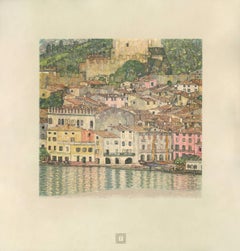
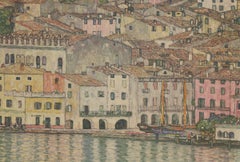
Malcesine on Lake Garda by Gustav Klimt, Das Werk landscape collotype, 1908-1912

Malcesine on Lake Garda by Gustav Klimt, Das Werk landscape collotype, 1908-1912

By Gustav Klimt

Located in Chicago, IL

Original collotype created from Gustav Klimt’s Malcesine on Lake Garda, painted in 1913. Published and edited by Verlag H.O. Miethke and printed by k.k. Hof- und Staatsdruckerei, Vienna, in an edition of 300. Between 1908 and 1914, H.O. Miethke published Das Werk Gustav Klimts...

Category

Early 1900s Vienna Secession Art
Materials

Paper

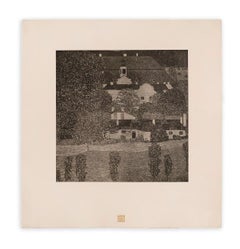
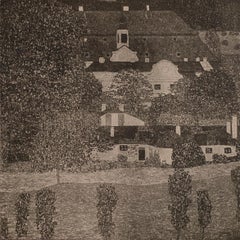
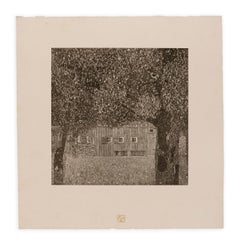
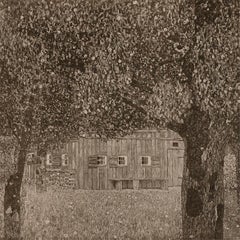
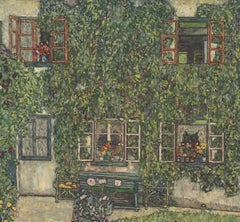
Farmhouse in Buchberg by Gustav Klimt, Das Werk lifetime collotype, 1908-1912

Farmhouse in Buchberg by Gustav Klimt, Das Werk lifetime collotype, 1908-1912

By Gustav Klimt

Located in Chicago, IL

Original collotype created from Gustav Klimt’s Farmhouse in Buchberg (Upper Austrian Farmhouse), painted in 1911. Published and edited by Verlag H.O. Miethke and printed by k.k. Hof- und Staatsdruckerei, Vienna, in an edition of 300. Between 1908 and 1914, H.O. Miethke published Das Werk Gustav Klimts...

Category

Early 1900s Vienna Secession Art
Materials

Paper

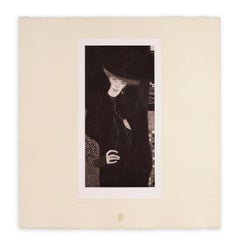
H.O. Miethke Das Werk folio "The Great Poplar II (Thunderstorm)" collotype print

H.O. Miethke Das Werk folio "The Great Poplar II (Thunderstorm)" collotype print

DAS WERK GUSTAV KLIMTS, a portfolio of 50 prints, ten of which are multicolor collotypes on chine colle paper laid down on hand-made heavy cream wove paper with deckled edges; under ...

Category

Early 1900s Vienna Secession Art
Materials

Paper

Blue Boy Portrait in Vienna Secession Style, Oil & Acrylic on Canvas

Blue Boy Portrait in Vienna Secession Style, Oil & Acrylic on Canvas

By Anastasia Aureum

Located in London, London

original hand painted one of a kind hand signed will be shipped FRAMED 'Like Henri Matisse and Italian Renaissance painters like Giotto, I experiment with the vibrant pow...

Category

21st Century and Contemporary Vienna Secession Art

Materials

Canvas, Cotton Canvas, Oil, Acrylic, Tempera

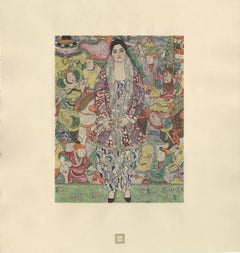
H.O. Miethke Das Werk folio "Golden Apple Tree" collotype print

H.O. Miethke Das Werk folio "Golden Apple Tree" collotype print

DAS WERK GUSTAV KLIMTS, a portfolio of 50 prints, ten of which are multicolor collotypes on chine colle paper laid down on hand-made heavy cream wove paper with deckled edges; under ...

Category

Early 1900s Vienna Secession Art
Materials

Paper

Vienna Secession art for sale on 1stDibs.
Find a wide variety of authentic Vienna Secession art available for sale on 1stDibs. Works in this style were very popular during the 21st Century and Contemporary, but contemporary artists have continued to produce works inspired by this movement. If you’re looking to add art created in this style to introduce contrast in an otherwise neutral space in your home, the works available on 1stDibs include elements of orange, pink and other colors. Many Pop art paintings were created by popular artists on 1stDibs, including Gustav Klimt & K.K. Hof-und Staatsdruckerei, (after) Gustav Klimt, Anastasia Kurakina, and (after) Egon Schiele. Frequently made by artists working with Paper, and Lithograph and other materials, all of these pieces for sale are unique and have attracted attention over the years. Not every interior allows for large Vienna Secession art, so small editions measuring 3 inches across are also available. Prices for art made by famous or emerging artists can differ depending on medium, time period and other attributes. On 1stDibs, the price for these items starts at $250 and tops out at $125,000, while the average work sells for $3,500.