By Laurent Campus
Located in Sant Cugat del Vallès, Barcelona
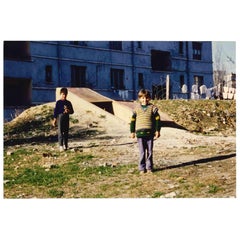
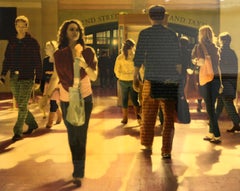
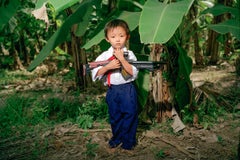
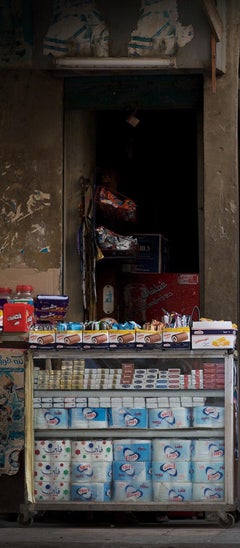
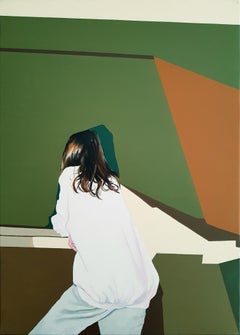
Copts 02 - Signed limited edition archival pigment print, 2012 - Edition of 5
Little girl at the entrance of a store, in the Coptic Cairo, Egypt, which is a part of Old Cairo which encompasses the Babylon Fortress, the Coptic Museum, the Hanging Church, the Greek Church of St. George and many other Coptic churches and historical sites.
Coptic Cairo was a stronghold for Christianity in Egypt both before and during the Islamic era, as most of its churches were built after the Muslim conquest of Egypt in the 7th century ( Wikipedia)
In assignment for ARTE & LE LOUVRE 2012
Exhibition in Le Louvre, Paris France
This print that is being offered is a high-quality Archival Pigment print which has been printed on fiber based paper, Hahnemühle Photo Rag® Baryta 315 gsm which is a premium quality paper that is acid-free and lignin-free.
Overall, this Archival Pigment print is a stunning piece of art that is sure to impress. The combination of high-quality paper and inks ensures that the print will remain in pristine condition for many years, making it a great investment for any art collector or enthusiast.
Signed + numbered by artist with certificate of authenticity.
Archival pigment print available sizes ( Image size , the white margin is not counted):
50 x 33 cm / 19.68 x 12.99 in - edition of 10
75 x 50 cm / 29.752 x 19.68 in- Edition of 5
Laurent Campus is an Italian freelance producer and photographer.
In addition to an academic training in international trade, he has forged a solid musical, pictorial and cinematographic culture which led him gradually and naturally to the photography he has been practicing for more than twenty years full-time professionally.
Its customers are brands that have supported the film industry for many years ( L'Oréal, Renault, DIOR, GENERAL MOTORS, FranckProvost, FranceTV, Canal +, EPSON, CANON, FESTIVAL DE CANNES, HFPA, VUELING, CARL F. BUCHERER , IWC, ParisMatch,…) as artists (filmmakers, actors, musicians) or producers and distributors.
He has gravitated for more than 20 years at the heart of French and international cinema.
Cinema photographer and reporter, making of :
“Cannes Film Festival official” photographer
"Official Golden Globes ceremony” photographer
SONY Spain Photo...
Category
2010s Contemporary Color Photography
MaterialsArchival Paper, Photographic Paper, Black and White, Giclée, Pigment, Ar...