Toy Art

to
36
222
94
65
57
73
Overall Width
to
Overall Height
to
1
3
64
444
1
1
2
5
12
10
3
7
1
193
106
36
21
17
6
5
2
1
1
1
134
85
52
513
152,603
79,841
50,388
42,029
36,384
34,811
29,837
26,549
25,446
24,474
20,532
17,873
15,667
14,461
13,619
12,992
11,185
10,510
10,082
156
86
71
70
59
30
23
12
9
8
62
53
309
161
Art Subject: Toy
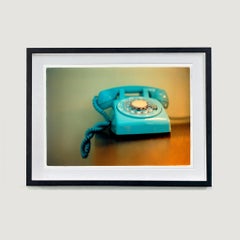
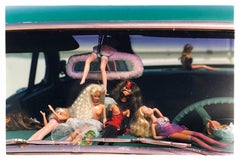
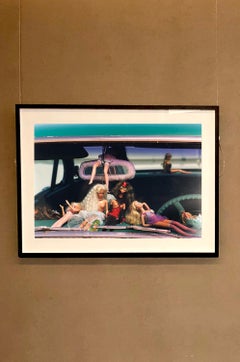
Telephone VII, Palm Springs, California - Vintage Interior Color Photography

Telephone VII, Palm Springs, California - Vintage Interior Color Photography

By Richard Heeps

Located in Cambridge, GB

Telephone VII, vintage interior photograph from Richard Heeps' series, Dream in Colour. Captured in the cool Ballantines Movie Colony, Palm Springs this artwork combines gorgeous col...

Category

Early 2000s Contemporary Color Photography

Materials

Photographic Paper, C Print, Color, Silver Gelatin

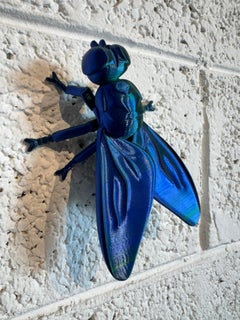
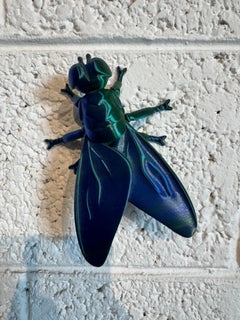
Synthetic Fly (blue green) - pop art sculpture, wall sculpture

Synthetic Fly (blue green) - pop art sculpture, wall sculpture

Located in New York, NY

This piece presents a fly reimagined through digital fabrication. Designed and 3D-printed with precise attention to form, surface, and color, the object blurs the boundary between na...

Category

2010s Pop Art Figurative Sculptures

Materials

Mixed Media, Digital Pigment

Balloon Dog (Blue) Sculpture, Limoges Porcelain, Signed Edition of 799

Balloon Dog (Blue) Sculpture, Limoges Porcelain, Signed Edition of 799

By Jeff Koons

Located in New York, NY

'Balloon Dog' (Blue), 2021 Jeff Koons Limoges porcelain with chromatic coating 5.7 x 18.9 x 6.5 in. / 40 x 48 x 16 cm. Edition of 799, Signed and numbered on the inside of front leg ...

Category

2010s Pop Art Figurative Sculptures

Materials

Porcelain

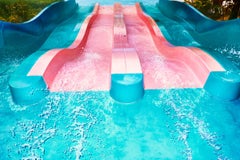
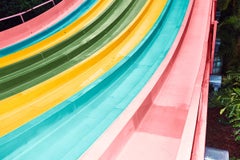
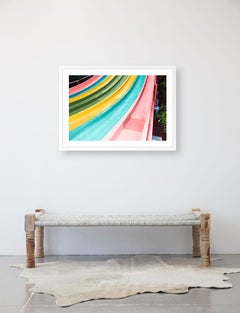
Water Slide II
Water Slide II

Water Slide II

By Dewey Nicks

Located in New York, NY

ABOUT THIS ARTIST: Photographer Dewey Nicks was born in St. Louis, Missouri. Nicks studied photography at the Art Center College of Design in Pasadena. He has been a professional fas...

Category

2010s Color Photography

Materials

Photographic Paper

XoX Hipster Kiddo Pink - sculpture, resin and paint

XoX Hipster Kiddo Pink - sculpture, resin and paint

By Viktor Mitic

Located in Bloomfield, ON

"This indoor figurative pop art table top sculpture is made from resin. Playful, colourful and imaginative, Viktor Mitic’s latest series of unique sculptures appear to merge pop art...

Category

21st Century and Contemporary Contemporary Sculptures

Materials

Mixed Media

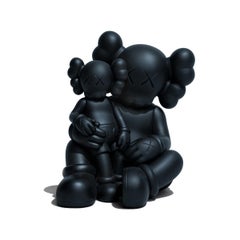
KAWS CHUM companion (KAWS orange Chum)

KAWS CHUM companion (KAWS orange Chum)

By KAWS

Located in NEW YORK, NY

KAWS CHUM Companion 2022 (orange): Published by KAWS to commemorate the 20th anniversary of his famed KAWS’ Chum character; "I can remember clearly packing and shipping the first CHU...

Category

21st Century and Contemporary Pop Art Sculptures
Materials

Resin, Vinyl

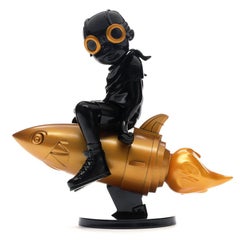
Hebru Brantley Flyboy black & gold (Hebru Brantley black flyboy)

Hebru Brantley Flyboy black & gold (Hebru Brantley black flyboy)

By Hebru Brantley

Located in NEW YORK, NY

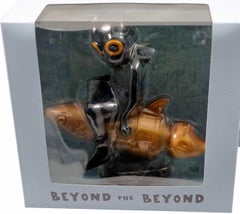
Hebru Brantley Flyboy, 2017. New, never displayed; accompanied by original packaging. Medium: Painted cast vinyl. Dimensions: 9 x 8 x 4 inches (22.9 x 20.3 x 10.2 cm). New and sealed in its original packaging. From a sold out edition of unknown; published by Hebru Brantley, Billionaire Boys Club...

Category

21st Century and Contemporary Pop Art Figurative Sculptures

Materials

Resin, Vinyl

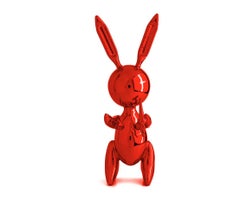
Balloon Rabbit XL - Red

Balloon Rabbit XL - Red

By After Jeff Koons

Located in Pampilhosa da Serra, PT

An edition of the famous ‘Balloon Rabbit’ After Material: zinc alloy. Comes with its original box and certificate of authenticity. From a Limited Edition of 500, unique number eng...

Category

21st Century and Contemporary Pop Art Figurative Sculptures

Materials

Metal

Basquiat Warhol Haring Bearbrick 400%: set of 6 works (Basquiat BE@RBRICK)

Basquiat Warhol Haring Bearbrick 400%: set of 6 works (Basquiat BE@RBRICK)

By (after) Keith Haring

Located in NEW YORK, NY

Jean Michel Basquiat Andy Warhol Keith Haring Bearbrick 400%: set of 6 individual works: A set of 6 unique, timeless pop art collectibles trademarked & licensed by the estates of Jea...

Category

21st Century and Contemporary Pop Art Figurative Sculptures

Materials

Resin, Vinyl

XoX Vitruvian Kiddo - sculpture, resin and paint

XoX Vitruvian Kiddo - sculpture, resin and paint

By Viktor Mitic

Located in Bloomfield, ON

"This indoor figurative pop art table top sculpture is made from resin. Playful, colourful and imaginative, Viktor Mitic’s latest series of unique sculptures appear to merge pop art...

Category

21st Century and Contemporary Contemporary Sculptures

Materials

Mixed Media

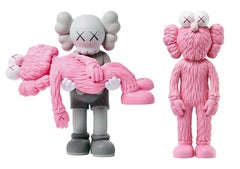
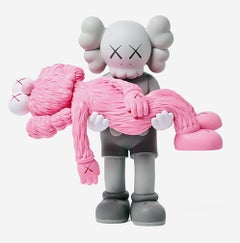
KAWS GONE & KAWS BFF Companions (set of 2 works)

KAWS GONE & KAWS BFF Companions (set of 2 works)

By KAWS

Located in NEW YORK, NY

KAWS GONE Grey & KAWS Pink BFF Companions (set of 2 works 2017-2019): Medium: Vinyl paint & Cast Resin (applies to each work). Published 2017 & 2019, respectively. GONE: 14.25 x 7 i...

Category

21st Century and Contemporary Pop Art Figurative Sculptures

Materials

Resin, Vinyl

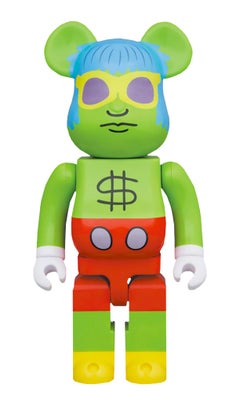
Keith Haring Andy Warhol Bearbrick 400%  (Haring Warhol BE@RBRICK)

Keith Haring Andy Warhol Bearbrick 400% (Haring Warhol BE@RBRICK)

By (after) Keith Haring

Located in NEW YORK, NY

Keith Haring Andy Mouse Bearbrick: 400%: A unique, timeless collectible trademarked & licensed by the Estate of Keith Haring. The partnered collectible reveals Keith Haring's 'Andy M...

Category

21st Century and Contemporary Pop Art Prints and Multiples

Materials

Resin, Vinyl

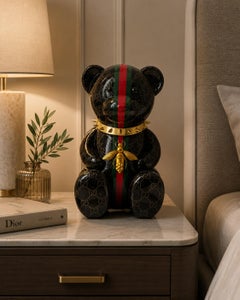
NAOR - 45cm TEDDY Collage Porsche Tribute

NAOR - 45cm TEDDY Collage Porsche Tribute

Located in PARIS, FR

Naor is a French artist from Lyon born in 1988. Completely rooted in his time, he has always traveled a lot around the world. If travel trains youth, Naor was inspired by it. From th...

Category

2010s Pop Art Figurative Sculptures

Materials

Resin

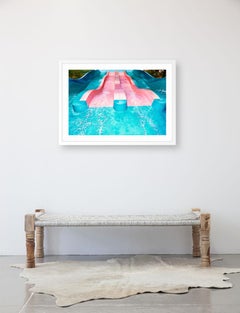
Water Slide I
Water Slide I

Water Slide I

By Dewey Nicks

Located in New York, NY

ABOUT THIS ARTIST: Photographer Dewey Nicks was born in St. Louis, Missouri. Nicks studied photography at the Art Center College of Design in Pasadena. He has been a professional fas...

Category

2010s Color Photography

Materials

Photographic Paper

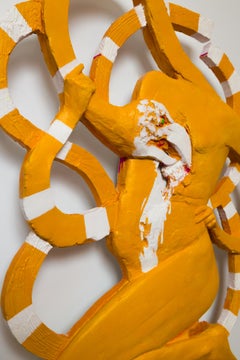
"One Footed Trauma Vessel" Human Figure with Vulture Wall-Hanging Sculpture

"One Footed Trauma Vessel" Human Figure with Vulture Wall-Hanging Sculpture

By Jedediah Morfit

Located in Philadelphia, PA

"One Footed Trauma Vessel" is an original piece by Jedediah Morfit made from fiberglass reinforced plaster, paint.This piece measures 29.5"h x 14.75"w x 2.5"d and comes with a gall...

Category

21st Century and Contemporary Contemporary Figurative Sculptures

Materials

Fiberglass, Plaster, Paint

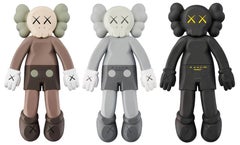
KAWS SMALL LIE complete set of 3 works (KAWS small lie companion)

KAWS SMALL LIE complete set of 3 works (KAWS small lie companion)

By KAWS

Located in NEW YORK, NY

KAWS SMALL LIE: Complete Set of Three. Each new and sealed in their original packaging. These KAWS figurative pieces are a rendition of Small Lie produced in collaboration with Qatar...

Category

21st Century and Contemporary Contemporary Sculptures

Materials

Resin, Vinyl

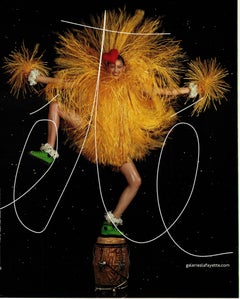
Soundsuit #6 (Performance Art, Artistic Expression, Contemporary Art)

Soundsuit #6 (Performance Art, Artistic Expression, Contemporary Art)

By Nick Cave

Located in Kansas City, MO

Nick Cave Soundsuit #6 Year: 2010 Archival Pigment Print on Premium Rag Size: 17 x 12 in. Edition: 200 Signed by hand on label COA provided Ref.: 924802-2069 Tags: #NickCave #Missou...

Category

2010s Contemporary Figurative Photography

Materials

Archival Paper, Archival Pigment

NAOR - 35cm Teddy Lamborghini Tribute, Green

NAOR - 35cm Teddy Lamborghini Tribute, Green

Located in PARIS, FR

About the artist : Naor is a French artist from Lyon born in 1988. Completely anchored in his time, he has always traveled a lot around the world. If travels form youth, Naor was ins...

Category

2010s Pop Art Figurative Sculptures

Materials

Resin

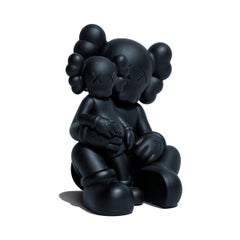
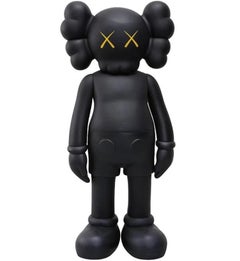
KAWS "Share (Black)" Toy Sculpture

KAWS "Share (Black)" Toy Sculpture

By KAWS

Located in Boston, MA

Artist: KAWS, Title: Share (Black) Series: Toys Date: 2020 Medium: Sculpture Unframed Dimensions: 12.5" x 6" Signature: Stamped Edition: Open Edition KAWS (American, b.1974...

Category

2010s Contemporary Sculptures

Materials

PVC

3 Foot LA Hands (Blue) (Ed. /10)

3 Foot LA Hands (Blue) (Ed. /10)

Located in Dallas, TX

Artist: OG Slick Description: OG Slick 'LA Hands' 3 Foot Tall limited edition blue vinyl hand-cast resin figurine, made in Los Angeles. Edition Size: 10 Di...

Category

21st Century and Contemporary Street Art Figurative Sculptures

Materials

Plastic, Rubber, PVC, Vinyl

Early 20th Century Ceramic Sculpture of a Polo Player and Horse

Early 20th Century Ceramic Sculpture of a Polo Player and Horse

By Waylande Gregory

Located in Beachwood, OH

Waylande Gregory (American, 1905-1971) Polo Player, c. 1930s Ceramic Inscribed signature on bottom 11 x 8.5 inches Waylande Gregory was considered a major American sculptor during the 1930's, although he worked in ceramics, rather than in the more traditional bronze or marble. Exhibiting his ceramic works at such significant American venues for sculpture as the Whitney Museum of American Art in New York City and at the venerable Pennsylvania Academy of the Fine Arts in Philadelphia, he also showed his ceramic sculptures at leading New York City galleries. Gregory was the first modern ceramist to create large scale ceramic sculptures, some measuring more than 70 inches in height. Similar to the technique developed by the ancient Etruscans, he fired his monumental ceramic sculptures only once. Gregory was born in 1905 in Baxter Springs, Kansas and was something of a prodigy. Growing up on a ranch near a Cherokee reservation, Gregory first became interested in ceramics as a child during a native American burial that he had witnessed. He was also musically inclined. In fact, his mother had been a concert pianist and had given her son lessons. At eleven, he was enrolled as a student at the Kansas State Teacher's College, where he studied carpentry and crafts, including ceramics. Gregory's early development as a sculptor was shaped by the encouragement and instruction of Lorado Taft, who was considered both a major American sculptor as well as a leading American sculpture instructor. In fact, Taft's earlier students included such significant sculptors as Bessie Potter Vonnoh and Janet Scudder. But, Taft and his students had primarily worked in bronze or stone, not in clay; and, Gregory's earliest sculptural works were also not in ceramics. In 1924, Gregory moved to Chicago where he caught the attention of Taft. Gregory was invited by Taft to study with him privately for 18 months and to live and work with him at his famed "Midway Studios." The elegant studio was a complex of 13 rooms that overlooked a courtyard. Taft may have been responsible for getting the young man interested in creating large scale sculpture. However, by the 1920's, Taft's brand of academic sculpture was no longer considered progressive. Instead, Gregory was attracted to the latest trends appearing in the United States and Europe. In 1928 he visited Europe with Taft and other students. "Kid Gregory," as he was called, was soon hired by Guy Cowan, the founder of the Cowan Pottery in Cleveland, Ohio, to become the company's only full time employee. From 1928 to 1932, Gregory served as the chief designer and sculptor at the Cowan Pottery. Just as Gregory learned about the process of creating sculpture from Taft, he literally learned about ceramics from Cowan. Cowan was one of the first graduates of Alfred, the New York School of Clayworking and Ceramics. Alfred had one of the first programs in production pottery. Cowan may have known about pottery production, but he had limited sculptural skills, as he was lacking training in sculpture. The focus of the Cowan Pottery would be on limited edition, table top or mantle sculptures. Two of the most successful of these were Gregory's "Nautch Dancer," (fig. 1) and his "Burlesque Dancer," (fig. 2). He based both sculptures on the dancing of Gilda Gray, a Ziegfield Follies girl. Gilda Gray was of Polish origin and came to the United States as a child. By 1922, she would become one of the most popular stars in the Follies. After losing her assets in the stock market crash of 1929, she accepted other bookings outside of New York, including Cleveland, which was where Gregory first saw her onstage. She allowed Gregory to make sketches of her performances from the wings of the theatre. She explained to Gregory, "I'm too restless to pose." Gray became noted for her nautch dance, an East Indian folk dance. A nautch is a tight, fitted dress that would curl at the bottom and act like a hoop. This sculpture does not focus on Gray's face at all, but is more of a portrait of her nautch dance. It is very curvilinear, really made of a series of arches that connect in a most feminine way. Gregory created his "Burlesque Dancer" at about the same time as "Nautch Dancer." As with the "Nautch Dancer," he focused on the movements of the body rather than on a facial portrait of Gray. Although Gregory never revealed the identity of his model for "Burlesque Dancer," a clue to her identity is revealed in the sculpture's earlier title, "Shimmy Dance." The dancer who was credited for creating the shimmy dance was also Gilda Gray. According to dance legend, Gray introduced the shimmy when she sang the "Star Spangled Banner" and forgot some of the lyrics, so, in her embarrassment, started shaking her shoulders and hips but she did not move her legs. Such movement seems to relate to the "Burlesque Dancer" sculpture, where repeated triangular forms extend from the upper torso and hips. This rapid movement suggests the influence of Italian Futurism, as well as the planar motion of Alexander Archipenko, a sculptor whom Gregory much admired. The Cowan Pottery was a victim of the great depression, and in 1932, Gregory changed careers as a sculptor in the ceramics industry to that of an instructor at the Cranbrook Academy in Bloomfield Hills, Michigan. Cranbrook was perhaps the most prestigious place to study modern design in America. Its faculty included the architect Eliel Saarinen and sculptor Carl Milles. Although Gregory was only at Cranbrook for one and one half years, he created some of his finest works there, including his "Kansas Madonna" (fig. 3). But, after arriving at Cranbrook, the Gregory's had to face emerging financial pressures. Although Gregory and his wife were provided with complimentary lodgings, all other income had to stem from the sale of artworks and tuition from students that he, himself, had to solicit. Gregory had many people assisting him with production methods at the Cowan Pottery, but now worked largely by himself. And although he still used molds, especially in creating porcelain works, many of his major new sculptures would be unique and sculpted by hand, as is true of "Kansas Madonna." The scale of Gregory's works were getting notably larger at Cranbrook than at Cowan. Gregory left the surface of "Kansas Madonna" totally unglazed. Although some might object to using a religious title to depict a horse nursing its colt, it was considered one of Gregory's most successful works. In fact, it had a whole color page illustration in an article about ceramic sculpture titled, "The Art with the Inferiority Complex," Fortune Magazine, December, 1937. The article notes the sculpture was romantic and expressive and the sculpture was priced at $1,500.00; the most expensive sculpture in the article. Gregory was from Kansas, and "Kansas Madonna" should be considered a major sculptural document of Regionalism. Gregory and his wife Yolande moved to New Jersey in the summer of 1933. And the artist began construction on his new home in the Watchung Mountains of Bound Brook (Warren today) in 1938. His enormous, custom kiln was probably constructed at the start of 1938. Gregory's new sculptures were the largest ceramic sculptures in western art, in modern times. To create these works of ceramic virtuosity, the artist developed a "honeycomb" technique, in which an infrastructure of compartments was covered by a ceramic "skin." Science and atomic energy were a theme in Gregory's most significant work, the "Fountain of the Atom" (fig. 4), at the 1939 New York's World Fair. This major work included twelve monumental ceramic figures at the fairground entrance from the newly constructed railway entrance, giving the work great visibility and prominence. The framework of the fountain itself was of steel and glass bricks. It consisted of a bluish green pool which was sixty five feet in diameter. Above it were two concentric circular tiers, or terraces, as Gregory called them; the first wider than the second. On the first terrace were eight "Electrons," comprised of four male and four female terra cotta figures, each approximately 48 inches high. These relate to the valance shell of the atom. Above them on a narrower terrace, were the much larger and heavier terra cotta figures depicting the four elements, each averaging about 78 inches in height and weighing about a ton and a half. Of the four, "Water" and "Air" were male, while "Earth" and "Fire" were female. This terrace represents the nucleus of the atom. In the center of the fountain, above the "Elements," was a central shaft comprised of sixteen glass tubes from which water tumbled down from tier to tier. At the top, a colorful flame burned constantly. The glass block tiers were lit from within, the whole creating a glowing and gurgling effect. Since the fair was temporary, the figures could be removed after its closing. But the credit for the design of the structure of the fountain belongs to collaborator Nembhard Culin, who was responsible for several other structures on the fair grounds as well. Although Gregory created a figure of "Fire" for the "Fountain of the Atom," he also executed a second, slightly smaller but more defined version which he exhibited at various locations (including Cranbrook, Baltimore Museum, etc.) in 1940-1941, during the second year of the fair (fig.5). Measuring 61 inches in height, "Fire" may be a metaphor for sexual energy, as well as atomic energy. Gregory stated, "Fire is represented by an aquiline female figure being consumed in endless arabesques of flame." Portraiture was also a significant focus of Gregory's sculpture. Gregory produced many commissioned portraits of local people as well as celebrities. He created Albert Einstein's portrait from life (fig. 6, ca. 1940) after Einstein had seen Gregory's "Fountain of the Atom." He also sculpted some of the leading figures in entertainment, including 2 sculptures of Henry Fonda, who became a personal friend. Gregory also sculpted a series of idealized female heads, both in terra cotta and in porcelain. These include "Girl with Olive" (ca. 1932) and "Cretan Girl;"(ca. 1937) both are very reductive and almost abstract works that call to mind Constantine Brancusi's "Mademoiselle Pogany" (1912, Philadelphia Museum of Art). But perhaps one of his most original female heads is "Head of a Child" (fig. 7, ca. 1933), a sensitive white glazed terra cotta portrayal with elaborately crafted braded hair, was originally created as one of a pair. Gregory also produced sculptural works for the Works Progress Administration. The WPA was a work relief project that greatly helped artists during the great depression. Founded by the Federal Government in 1935, an estimated 2500 murals were produced. Among these public works were the iconic post office murals. But, among the painted murals were also sculptural relief murals including Gregory's "R.F.D.," 1938, for the Columbus, Kansas Post Office. But, Gregory's largest WPA relief...

Category

1930s Figurative Sculptures

Materials

Ceramic

KAWS "Time Off (Pink)" Toy Sculpture

KAWS "Time Off (Pink)" Toy Sculpture

By KAWS

Located in Boston, MA

Artist: KAWS, Title: Time Off (Pink) Series: Toys Date: 2023 Medium: Sculpture Unframed Dimensions: 7" x 11" x 6" Signature: Stamped Edition: Open Edition KAWS (American, b...

Category

2010s Contemporary Sculptures

Materials

PVC

Untitled (from ROBOTNICS Series)

Untitled (from ROBOTNICS Series)

By Christian Rothmann

Located in Kansas City, MO

Christian Rothmann ROBOTNICS Series C-Print 2019 Edition S (Edition of 10) 12 x 8.3 inches (30.5 x 21 cm) Signed, dated and numbered verso Other Edition Sizes available: - Edition M (Edition of 6) 35.4 x 23.6 inches (90 x 60 cm) - Edition L (Edition of 6) 47.2 x 31.5 inches (120 x 80 cm) - Edition XL (Edition of 3) 88.8 x 58.8 inches (225 x 150 cm) PUR - Price Upon Request -------------- Since 1979 Christian Rothmann had more than 40 solo and 80 group exhibitions worldwide. Christian Rothmann had guest lectures, residencies, art fairs and biennials in Europe, Japan, USA, Australia and Korea. Christian Rothmann (born 1954 in Kędzierzyn, Poland ) is a painter, photographer, and graphic artist.⁠ ⁠ In 1976 he first studied at the “Hochschule für Gestaltung” in Offenbach, Germany and moved to Berlin in 1977, where he graduated in 1983 at the “Hochschule der Künste”. From 1983 to 1995 he taught at the university as a lecturer and as an artist with a focus on screenprinting and American art history. To date, a versatile body of work has been created, which includes not only paintings but also long-standing photo projects, videos, and public art.⁠ ⁠ Guest lectures, teaching assignments, scholarships and exhibitions regularly lead Rothmann to travel home and abroad.⁠ ------------------------------------------------------ Rothmann's Robots These creatures date back to another era, and they connect the past and the future. They were found by Christian Rothmann, a Berlin artist, collector and traveller through time and the world: In shops in Germany and Japan, Israel and America, his keen eye picks out objects cast aside by previous generations , but which lend themselves to his own work. In a similar way he came across a stash of historic toy robots of varied provenance collected by a Berlin gallery owner many years ago. Most of them were screwed and riveted together in the 1960s and 70s by Metal House, a Japanese company that still exists today. In systematically photographing these humanoids made of tin - and later plastic - Rothmann is paraphrasing the idea of appropriation art. Unknown names designed and made the toys, which some five decades on, Rothmann depicts and emblematizes in his extensive photo sequence. In their photographs of Selim Varol's vast toy collection, his German colleagues Daniel and Geo Fuchs captured both the stereotypcal and individual in plastic figures that imitate superheroes which were and still are generally manufactured somewhere in Asia. Christian Rothmann looks his robots deep in their artificially stylised, painted or corrugated eyes - or more aptly, their eye slits - and although each has a certain degree of individuality, the little figures remain unknown to us; they project nothing, and are not alter egos. Rothmann trains his lens on their faces and expressions, and thus, his portraits are born. Up extremely close, dust, dents and rust become visible. In other words, what we see is time-traces of time that has passed since the figures were made, or during their period in a Berlin attic, and - considering that he robots date back to Rothmann's childhood - time lived by the photographer and recipients of his pictures. But unlike dolls, these mechanical robots bear no reference to the ideal of beauty at the time of their manufacture, and their features are in no way modelled on a concrete child's face. In this art project the robots appear as figures without a context, photographed face-on, cropped in front of a neutral background and reduced to their qualities of form. But beyond the reproduction and documentation a game with surfaces is going on; our view lingers on the outer skin of the object, or on the layer over it. The inside - which can be found beneath - is to an extent metaphysical, occurring inside the observer's mind. Only rarely is there anything to see behind the robot's helmet. When an occasional human face does peer out, it turns the figure into a robot-like protective casing for an astronaut of the future. If we really stop and think about modern toys, let's say those produced from the mid 20th century, when Disney and Marvel films were already stimulating a massive appetite for merchandising, the question must be: do such fantasy and hybrid creatures belong, does something like artificial intelligence already belong to the broader community of humans and animals? It is already a decade or two since the wave of Tamagotchis washed in from Japan, moved children to feed and entertain their newly born electronic chicks in the way they would a real pet, or to run the risk of seeing them die. It was a new form of artificial life, but the relationship between people and machines becomes problematic when the machines or humanoid robots have excellent fine motor skills and artificial intelligence and sensitivity on a par with, or even greater than that of humans. Luckily we have not reached that point yet, even if Hollywood adaptations would have us believe we are not far away. Rothmann's robots are initially sweet toys; and each toy is known to have a different effect on children and adults. They are conceived by (adult) designers as a means of translating or retelling history or reality through miniature animals, knights and soldiers. In the case of monsters, mythical creatures and robots, it is more about creating visions of the future and parallel worlds. Certainly since the success of fantasy books and films such as Lord of the Rings or The Hobbit, we see the potential for vast enthusiasm for such parallel worlds. Successful computer and online games such as World of Warcraft, or the creation of avatars are also interesting worldwide phenomena of virtual realities that are not only relevant for children and teens. So when a middle-aged Berlin photographic artist (like Christian Rothmann) chooses to study 120 toy robots with great difference in form, it represents a journey back to his own childhood - even if at the time, he played with a steam engine rather than a robot. Once batteries had been inserted, some of the largely male or gender neutral robots, could flash, shoot, turn around and even do more complicated things. Some can even still do it today - albeit clumsily. This of course can only be seen on film, but the artist intends to document that as well; to feature the robots in filmic works of art. The positioning of the figures in the studio is the same as the tableau of pictures in the exhibition room. In this way, one could say Rothmann deploys one robot after the other. This systematic approach enables a comparative view; the extreme enlargement of what are actually small and manageable figures is like the macro vision of insects whose fascinating, sometimes monster-like appearance only becomes visible when they are blown up a hundredfold. The same thing goes for the robots; in miniature form they seem harmless and cute, but if they were larger than humans and made noises to match, they would seem more threatening. Some of the tin figures...

Category

2010s Contemporary Photography

Materials

C Print

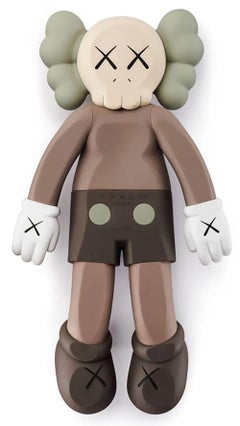
KAWS "Companion Flayed (Brown)" Toy Sculpture

KAWS "Companion Flayed (Brown)" Toy Sculpture

By KAWS

Located in Boston, MA

Artist: KAWS, Title: Flayed Companion (Brown) Series: Toys Date: 2016 Medium: Sculpture Unframed Dimensions: 11" x 5" x 3" Signature: Stamped Edition: Open Edition KAWS (Am...

Category

2010s Contemporary Sculptures

Materials

PVC

Oldsmobile & Sinful Barbie's, Las Vegas - Contemporary Color Photography

Oldsmobile & Sinful Barbie's, Las Vegas - Contemporary Color Photography

By Richard Heeps

Located in Cambridge, GB

Part of Richard Heeps 'Man's Ruin' Series, and the sequence of artworks 'Wendy Flamin' Eyeball', 'Wendy Resting' & 'Oldsmobile and Sinful Barbie's' shot at the Rockabilly Weekender, ...

Category

Early 2000s Contemporary Color Photography

Materials

Photographic Paper, C Print, Color, Silver Gelatin

Positioning (rare resin sculpture)

Positioning (rare resin sculpture)

Located in Aventura, FL

Limited edition resin sculpture. Stamped edition 54/100 on the underside. Sculpture size: 12.5 x 5.9 x 8.1 inches. Includes original wooden box and Certificate of Authenticity. C...

Category

2010s Contemporary Figurative Sculptures

Materials

Resin

One of a Kind (souvenirs)

One of a Kind (souvenirs)

By Tim Berg & Rebekah Myers

Located in Bozeman, MT

Timothy Berg and Rebekah Myers are a studio art collaborative based in Claremont, California. Berg and Myers have participated in multiple solo exhibitions including On the bright side... at the Falconer Gallery at Grinnell College (2016); Site Unseen at the American Museum of Ceramic Art in Pomona, CA (2014); Honest to Goodness at Santa Barbara City College (2014); An embarrassment of riches at Dean Project Gallery in New York, NY (2013); and As Luck Would Have It at Nääs Konsthantverk Galleri in Göteborg, Sweden (2009). Berg and Myers have also participated in numerous group exhibitions in the US, Mexico, South Korea, Qatar and Kuwait. Their work is included in many private and public collections including The Betty Woodman Collection at the University of Colorado...

Category

2010s Contemporary Sculptures

Materials

Metal

B Side Vinyl Collection - A Hot Jazz Classic (Coral) - Pop Art Color Photography

B Side Vinyl Collection - A Hot Jazz Classic (Coral) - Pop Art Color Photography

By Heidler & Heeps

Located in Cambridge, GB

Acclaimed contemporary photographers, Richard Heeps and Natasha Heidler have collaborated to make this beautifully mesmerising collection. A celebration of the vinyl record and analo...

Category

2010s Pop Art Color Photography

Materials

Photographic Paper, C Print, Color, Silver Gelatin

Untitled (from ROBOTNICS Series)

Untitled (from ROBOTNICS Series)

By Christian Rothmann

Located in Kansas City, MO

Christian Rothmann ROBOTNICS Series C-Print 2019 Edition S (Edition of 10) 12 x 8.3 inches (30.5 x 21 cm) Signed, dated and numbered verso Other Edition Sizes available: - Edition M (Edition of 6) 35.4 x 23.6 inches (90 x 60 cm) - Edition L (Edition of 6) 47.2 x 31.5 inches (120 x 80 cm) - Edition XL (Edition of 3) 88.8 x 58.8 inches (225 x 150 cm) PUR - Price Upon Request -------------- Since 1979 Christian Rothmann had more than 40 solo and 80 group exhibitions worldwide. Christian Rothmann had guest lectures, residencies, art fairs and biennials in Europe, Japan, USA, Australia and Korea. Christian Rothmann (born 1954 in Kędzierzyn, Poland ) is a painter, photographer, and graphic artist.⁠ ⁠ In 1976 he first studied at the “Hochschule für Gestaltung” in Offenbach, Germany and moved to Berlin in 1977, where he graduated in 1983 at the “Hochschule der Künste”. From 1983 to 1995 he taught at the university as a lecturer and as an artist with a focus on screenprinting and American art history. To date, a versatile body of work has been created, which includes not only paintings but also long-standing photo projects, videos, and public art.⁠ ⁠ Guest lectures, teaching assignments, scholarships and exhibitions regularly lead Rothmann to travel home and abroad.⁠ ------------------------ Rothmann's Robots These creatures date back to another era, and they connect the past and the future. They were found by Christian Rothmann, a Berlin artist, collector and traveler through time and the world: In shops in Germany and Japan, Israel and America, his keen eye picks out objects cast aside by previous generations, but which lend themselves to his own work. In a similar way, he came across a stash of historic toy robots of varied provenance collected by a Berlin gallery owner many years ago. Most of them were screwed and riveted together in the 1960s and 70s by Metal House, a Japanese company that still exists today. In systematically photographing these humanoids made of tin - and later plastic - Rothmann is paraphrasing the idea of appropriation art. Unknown names designed and made the toys, which some five decades on, Rothmann depicts and emblematizes in his extensive photo sequence. In their photographs of Selim Varol's vast toy collection, his German colleagues Daniel and Geo Fuchs captured both the stereotypical and individual in plastic figures that imitate superheroes which were and still are generally manufactured somewhere in Asia. Christian Rothmann looks his robots deep in their artificially stylized, painted or corrugated eyes - or more aptly, their eye slits - and although each has a certain degree of individuality, the little figures remain unknown to us; they project nothing and are not alter egos. Rothmann trains his lens on their faces and expressions, and thus, his portraits are born. Up extremely close, dust, dents, and rust become visible. In other words, what we see is time-traces of time that has passed since the figures were made, or during their period in a Berlin attic, and - considering that he robots date back to Rothmann's childhood - time lived by the photographer and recipients of his pictures. But unlike dolls, these mechanical robots bear no reference to the ideal of beauty at the time of their manufacture, and their features are in no way modeled on a concrete child's face. In this art project the robots appear as figures without a context, photographed face-on, cropped in front of a neutral background and reduced to their qualities of form. But beyond the reproduction and documentation a game with surfaces is going on; our view lingers on the outer skin of the object, or on the layer over it. The inside - which can be found beneath - is to an extent metaphysical, occurring inside the observer's mind. Only rarely is there anything to see behind the robot's helmet. When an occasional human face does peer out, it turns the figure into a robot-like protective casing for an astronaut of the future. If we really stop and think about modern toys, let's say those produced from the mid 20th century, when Disney and Marvel films were already stimulating a massive appetite for merchandising, the question must be: do such fantasy and hybrid creatures belong, does something like artificial intelligence already belong to the broader community of humans and animals? It is already a decade or two since the wave of Tamagotchis washed in from Japan, moved children to feed and entertain their newly born electronic chicks in the way they would a real pet, or to run the risk of seeing them die. It was a new form of artificial life, but the relationship between people and machines becomes problematic when the machines or humanoid robots have excellent fine motor skills and artificial intelligence and sensitivity on a par with, or even greater than that of humans. Luckily we have not reached that point yet, even if Hollywood adaptations would have us believe we are not far away. Rothmann's robots are initially sweet toys, and each toy is known to have a different effect on children and adults. They are conceived by (adult) designers as a means of translating or retelling history or reality through miniature animals, knights, and soldiers. In the case of monsters, mythical creatures, and robots, it is more about creating visions of the future and parallel worlds. Certainly, since the success of fantasy books and films such as Lord of the Rings or The Hobbit, we see the potential for vast enthusiasm for such parallel worlds. Successful computer and online games such as World of Warcraft...

Category

2010s Modern Photography

Materials

C Print

Untitled (from ROBOTNICS Series)

Untitled (from ROBOTNICS Series)

By Christian Rothmann

Located in Kansas City, MO

Christian Rothmann ROBOTNICS Series C-Print 2019 Edition S (Edition of 10) 12 x 8.3 inches (30.5 x 21 cm) Signed, dated and numbered verso Other Edition Sizes available: - Edition M (Edition of 6) 35.4 x 23.6 inches (90 x 60 cm) - Edition L (Edition of 6) 47.2 x 31.5 inches (120 x 80 cm) - Edition XL (Edition of 3) 88.8 x 58.8 inches (225 x 150 cm) PUR - Price Upon Request -------------- Since 1979 Christian Rothmann had more than 40 solo and 80 group exhibitions worldwide. Christian Rothmann had guest lectures, residencies, art fairs and biennials in Europe, Japan, USA, Australia and Korea. Christian Rothmann (born 1954 in Kędzierzyn, Poland ) is a painter, photographer, and graphic artist.⁠ ⁠ In 1976 he first studied at the “Hochschule für Gestaltung” in Offenbach, Germany and moved to Berlin in 1977, where he graduated in 1983 at the “Hochschule der Künste”. From 1983 to 1995 he taught at the university as a lecturer and as an artist with a focus on screenprinting and American art history. To date, a versatile body of work has been created, which includes not only paintings but also long-standing photo projects, videos, and public art.⁠ ⁠ Guest lectures, teaching assignments, scholarships and exhibitions regularly lead Rothmann to travel home and abroad.⁠ ------------------------ Rothmann's Robots These creatures date back to another era, and they connect the past and the future. They were found by Christian Rothmann, a Berlin artist, collector and traveler through time and the world: In shops in Germany and Japan, Israel and America, his keen eye picks out objects cast aside by previous generations, but which lend themselves to his own work. In a similar way, he came across a stash of historic toy robots of varied provenance collected by a Berlin gallery owner many years ago. Most of them were screwed and riveted together in the 1960s and 70s by Metal House, a Japanese company that still exists today. In systematically photographing these humanoids made of tin - and later plastic - Rothmann is paraphrasing the idea of appropriation art. Unknown names designed and made the toys, which some five decades on, Rothmann depicts and emblematizes in his extensive photo sequence. In their photographs of Selim Varol's vast toy collection, his German colleagues Daniel and Geo Fuchs captured both the stereotypical and individual in plastic figures that imitate superheroes which were and still are generally manufactured somewhere in Asia. Christian Rothmann looks his robots deep in their artificially stylized, painted or corrugated eyes - or more aptly, their eye slits - and although each has a certain degree of individuality, the little figures remain unknown to us; they project nothing and are not alter egos. Rothmann trains his lens on their faces and expressions, and thus, his portraits are born. Up extremely close, dust, dents, and rust become visible. In other words, what we see is time-traces of time that has passed since the figures were made, or during their period in a Berlin attic, and - considering that he robots date back to Rothmann's childhood - time lived by the photographer and recipients of his pictures. But unlike dolls, these mechanical robots bear no reference to the ideal of beauty at the time of their manufacture, and their features are in no way modeled on a concrete child's face. In this art project the robots appear as figures without a context, photographed face-on, cropped in front of a neutral background and reduced to their qualities of form. But beyond the reproduction and documentation a game with surfaces is going on; our view lingers on the outer skin of the object, or on the layer over it. The inside - which can be found beneath - is to an extent metaphysical, occurring inside the observer's mind. Only rarely is there anything to see behind the robot's helmet. When an occasional human face does peer out, it turns the figure into a robot-like protective casing for an astronaut of the future. If we really stop and think about modern toys, let's say those produced from the mid 20th century, when Disney and Marvel films were already stimulating a massive appetite for merchandising, the question must be: do such fantasy and hybrid creatures belong, does something like artificial intelligence already belong to the broader community of humans and animals? It is already a decade or two since the wave of Tamagotchis washed in from Japan, moved children to feed and entertain their newly born electronic chicks in the way they would a real pet, or to run the risk of seeing them die. It was a new form of artificial life, but the relationship between people and machines becomes problematic when the machines or humanoid robots have excellent fine motor skills and artificial intelligence and sensitivity on a par with, or even greater than that of humans. Luckily we have not reached that point yet, even if Hollywood adaptations would have us believe we are not far away. Rothmann's robots are initially sweet toys, and each toy is known to have a different effect on children and adults. They are conceived by (adult) designers as a means of translating or retelling history or reality through miniature animals, knights, and soldiers. In the case of monsters, mythical creatures, and robots, it is more about creating visions of the future and parallel worlds. Certainly, since the success of fantasy books and films such as Lord of the Rings or The Hobbit, we see the potential for vast enthusiasm for such parallel worlds. Successful computer and online games such as World of Warcraft...

Category

2010s Pop Art Photography

Materials

C Print

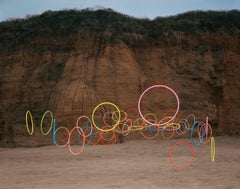
Hula Hoops no. 2, Montara, California

Hula Hoops no. 2, Montara, California

By Thomas Jackson

Located in Sante Fe, NM

“The hovering installations featured in this ongoing series of photographs are inspired by self-organizing, "emergent" systems in nature such as termite mounds, swarming locusts, sch...

Category

21st Century and Contemporary Contemporary Color Photography

Materials

Archival Pigment

Untitled (from ROBOTNICS Series)

Untitled (from ROBOTNICS Series)

By Christian Rothmann

Located in Kansas City, MO

Christian Rothmann ROBOTNICS Series C-Print 2019 Edition S (Edition of 10) 12 x 8.3 inches (30.5 x 21 cm) Signed, dated and numbered verso Other Edition Sizes available: - Edition ...

Category

2010s Contemporary Photography

Materials

C Print

"With Love", Playful Contemporary Figurative Sculpture, Stoneware

"With Love", Playful Contemporary Figurative Sculpture, Stoneware

By Janina Myronova

Located in Philadelphia, PA

This sculpture, titled "With Love," is an original artwork by Janina Myronova made of porcelain and underglaze. The piece measures 4.75"h x 4"w x 6.5"d. Janina Myronova received her...

Category

21st Century and Contemporary Contemporary Figurative Sculptures

Materials

Porcelain, Underglaze

Bunny Love III Sculpture, Mixed Media and Glass, Pop Art, Signed 2025

Bunny Love III Sculpture, Mixed Media and Glass, Pop Art, Signed 2025

By CHROMA aka Rick Wolfryd

Located in Cuauhtemoc, Ciudad de México

Signed and dated 2025. OPEN FOR COMMISSIONS!!! This BUNNY LOVE sculpture was created as a homage to a powerful artist friend, as a a recollection and dedication to a creative person...

Category

2010s Pop Art Figurative Sculptures

Materials

Glass, Mixed Media

Kostume, Plakate, und Dekorationen, "Flower of Evil"

Kostume, Plakate, und Dekorationen, "Flower of Evil"

By Walter Schnackenberg

Located in Palm Beach, FL

Walter Schnackenberg’s style changed several times during his long and successful career. Having studied in Munich, the artist traveled often to Paris where he fell under the spell of the Henri de Toulouse-Lautrec’s colorful and sensuous posters depicting theatrical and decadent subjects. Schnackenberg became a regular contributor of similar compositions to the German magazines Jugend and Simplicissimus before devoting himself to the design of stage scenery and costumes. In the artist’s theatrical work, his mastery of form, ornamentation, and Orientalism became increasingly evident. He excelled at combining fluid Art Nouveau outlines, with spiky Expressionist passages, and the postures and patterns of the mysterious East. In his later years, Schnackenberg explored the unconscious, using surreal subject matter and paler colors that plainly portrayed dreams and visions, some imbued with political connotations. His drawings, illustrations, folio prints, and posters are highly sought today for their exceedingly imaginative qualities, enchanting subject matter, and arresting use of color. SCHNACKENBERG: KOSTUME, PLAKATE UND DEKORATIONEN, a cardboard bound art book consisting of 43 prints of work by Walter Schnackenberg, 30 of which are color lithographs that are signed and some are titled and dated in the plate, as well as black and white prints and photographs with accompanying text by Oskar Bie; lithographs printed at Kunstanstalt Oskar Consee in Munich, other images printed by Gesellschaft Pick & Co. in Munich, the text and cover with color images by Schnackenberg front and verso printed by R. Oldenbourg in Munich; published by Musarion Verlag, Munich, 1920. The majority of Walter Schnackenberg’s artistic output was destroyed by bomb attacks in Munich in 1944. The highly publicized 2013 auction in New York of the recovered pre-war poster collection once belonging to German poster aficionado, Hans Sachs...

Category

1910s Expressionist Figurative Prints

Materials

Lithograph

Untitled (from ROBOTNICS Series)

Untitled (from ROBOTNICS Series)

By Christian Rothmann

Located in Kansas City, MO

Christian Rothmann ROBOTNICS Series C-Print 2019 Edition S (Edition of 10) 12 x 8.3 inches (30.5 x 21 cm) Signed, dated and numbered verso Other Edition Sizes available: - Edition ...

Category

2010s Pop Art Photography

Materials

C Print

Untitled (from ROBOTNICS Series)

Untitled (from ROBOTNICS Series)

By Christian Rothmann

Located in Kansas City, MO

Christian Rothmann ROBOTNICS Series C-Print 2019 Edition S (Edition of 10) 12 x 8.3 inches (30.5 x 21 cm) Signed, dated and numbered verso Other Edition Sizes available: - Edition ...

Category

2010s Outsider Art Photography

Materials

C Print

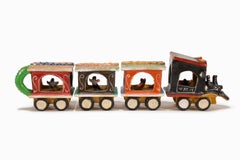
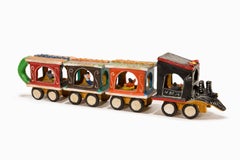
"El Tren" Ceramic, Glaze, Colors, Mexican Folk Art, Four Sections

"El Tren" Ceramic, Glaze, Colors, Mexican Folk Art, Four Sections

Located in Detroit, MI

SALE ONE WEEK ONLY "El Tren" is a whimsical and playful rendition of a train. It is beautifully glazed in various colors. This particular ceramic was from the collection of Jane and Richard Knight’s Estate. Jane Knight was a famous fiber and textile artist. Richard was a photographer who worked for Eliel Saarinen and Alexander Girard. The Knights and Girard became close friends and it was Girard who gifted “Santa Cruz De Las Huertas Jalisco” to the Knights. Alexander Girard left his personal collection to the Museum of International Folk Art, Santa Fe, NM. The Girards eventually amassed a collection of more than 106,000 objects from across the globe. Their 1978 gift of this collection to the Museum of International Folk art quintupled the size of their collection and prompted the construction of a new wing, which opened in 1982 and houses a mere 10% of the Girard Collection in the permanent exhibition Multiple Visions: A Common Bond, which was designed by Alexander Girard himself. This collection includes numerous multiples and is notable for its great breadth, including traditional arts, popular arts, and paper ephemera. “I believe we should preserve this evidence of the past, not as a pattern for sentimental imitation,” Girard once said, “but as nourishment for the creative spirit of the present.” Indeed, folk art was an important inspiration for Girard’s design work. The renowned Candelario Medrano...

Category

1950s Folk Art Still-life Sculptures

Materials

Ceramic, Glaze

KAWS CHUM pink (KAWS Chum pink)

KAWS CHUM pink (KAWS Chum pink)

By KAWS

Located in NEW YORK, NY

KAWS CHUM Companion 2022 (pink): Published by KAWS to commemorate the 20th anniversary of his famed KAWS’ Chum character; "I can remember clearly packing and shipping the first CHUM ...

Category

21st Century and Contemporary Pop Art Sculptures
Materials

Resin, Vinyl

Bronze - Space, 2022 Limited Edition of 250 Sculpture by KAWS

Bronze - Space, 2022 Limited Edition of 250 Sculpture by KAWS

By KAWS

Located in Hong Kong, HK

Bronze - Space, 2022

Bronze sculpture with original case 

Incised signature, date and number on the bottom, 

Signed on the certificate  

14 × 6.3 × 5.7 c...

Category

2010s Figurative Sculptures
Materials
Bronze