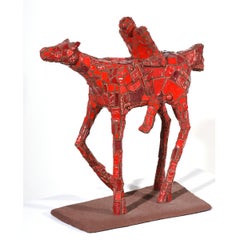
Toy Art

to
36
220
97
63
56
74
Overall Width
to
Overall Height
to
1
3
57
450
1
2
4
9
10
3
8
1
199
104
35
20
16
6
4
2
1
1
1
140
81
52
512
152,297
79,676
50,318
42,210
35,467
34,031
29,060
26,686
25,855
24,513
19,836
17,877
15,682
14,514
13,315
12,923
10,827
10,220
10,020
154
87
71
70
59
30
22
12
9
8
58
50
306
161
Art Subject: Toy
To Be Looked At...
To Be Looked At...

To Be Looked At...

By Ai Weiwei

Located in Calabasas, CA

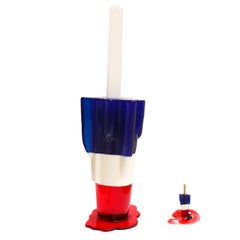
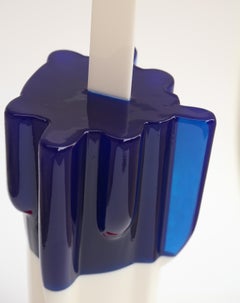
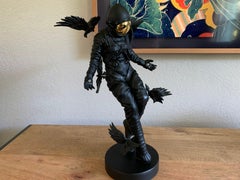
Artist: Ai Weiwei Title: To Be Looked At... Year: 2024 Medium: CNC cut aluminum sculpture; signature and edition number engraved on reverse Dimensions: 6 × 14 × 7 in (15.2 × 35.6 × 1...

Category

2010s Contemporary Still-life Sculptures

Materials

Metal

Candeur (Oil Painting, Symbolist, Portrait, Rose, Crane, Orchid)

Candeur (Oil Painting, Symbolist, Portrait, Rose, Crane, Orchid)

Located in Kansas City, MO

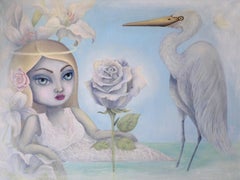
Stella Jae Candeur 2024 Oil on canvas Size: 23.62 x 31.49 inches (60 x 80 cm) Signed by hand COA provided Stella J Richey is an international visual artist and designer.Her works in...

Category

2010s Symbolist Portrait Paintings

Materials

Canvas, Oil

XOX Attitude Red Black 1/10 - graphic, pop-art, figurative, resin sculpture

XOX Attitude Red Black 1/10 - graphic, pop-art, figurative, resin sculpture

By Viktor Mitic

Located in Bloomfield, ON

Playful, colourful and imaginative, Viktor Mitic’s latest series of table-top sculptures appear to merge pop art with science fiction. The colour palette is fun and bright—yellow, red, black and turquoise. These 3-D figures began as digital creations, sculpted out of resin and painted. Their form was initially inspired by the towering abstract sculptures Mitic produced from images of paint splashes on his studio floor. Edition one of ten. “This character has emerged from a shadow of one of my sculptures (as in the video) I have always been a fan of science as well as science fiction writing and movies and for me, X-O-X is a being that came out of a technological world , possibly from another galaxy.” Viktor Mitic “As an icon, or hybrid worthy Viktor Mitic- X-O-X has a synthetic, playful identity. It’s culturally a fusion of influences brought together in one formal public sculpture.” John K. Grande, author, poet, essayist He earned a BFA from the University of Toronto in 1995 with studies in art history at Sheridan College. He has exhibited his post-Pop inspired...

Category

2010s Pop Art Sculptures

Materials

Paint, Resin

Safari From Iconic Series, Large Size

Safari From Iconic Series, Large Size

By Mikael Kenta

Located in Miami Beach, FL

The “Iconic” series was presented as part of the exhibition “Walk of Inspiration” showed in Stockholm in 2016. These vibrant unique color images are an homage to the “kitsch pop surr...

Category

2010s Contemporary Color Photography

Materials

Archival Pigment, Color

Tropicarios  #3. Digital Collage. Limited Edition Color Photograph

Tropicarios #3. Digital Collage. Limited Edition Color Photograph

By Paloma Castello

Located in Miami Beach, FL

Paloma Castello's Tropicarios is an invitation to experience a space in which the fiction and her memories of the tropics blend together to create a personal approximation between ou...

Category

2010s Contemporary Color Photography

Materials

Photographic Paper, Color, Digital, Digital Pigment

Yutong Zhao Still Life Original Mixed Media "The Rubik's Cube Is Broken"

Yutong Zhao Still Life Original Mixed Media "The Rubik's Cube Is Broken"

Located in New York, NY

Title: The Rubik's Cube Is Broken Medium: Oil on canvas Size: 18 x 24 inches Frame: Framing options available! Condition: The painting appears to be in excellent condition. Y...

Category

21st Century and Contemporary Still-life Paintings

Materials

Canvas, Mixed Media

Stay On Target! by BATIK

Stay On Target! by BATIK

By BATIK

Located in London, GB

Stay On Target! by BATIK BATIK is an increasingly collectable pop artist currently living and working in London. The artist is purposely elusive with their true identity, sex and ...

Category

2010s Modern Figurative Prints

Materials

Archival Pigment

William Eggleston 'Untitled' 2004- Photography Vintage

William Eggleston 'Untitled' 2004- Photography Vintage

By William Eggleston

Located in Brooklyn, NY

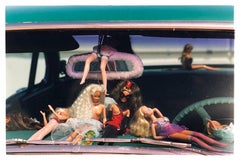
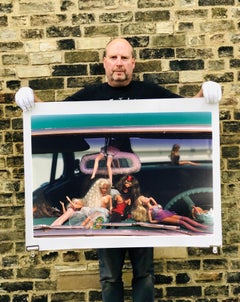
William Eggleston’s Dolls on a Hood presents a haunting yet mesmerizing scene: a cluster of discarded dolls sprawled across the gleaming hood of a Cadillac. The car’s reflective surf...

Category

Early 2000s Contemporary Prints and Multiples

Materials

Offset

Kinashi
Kinashi

Kinashi

By Roby Dwi Antono

Located in Manchester, GB

Roby Dwi Antono, Kinashi, 2022 24-layer screenprint with curable UV inks, printed on 410gsm Somerset Tub Sized Radiant White paper 44 x 50 cm (17.32 x 19.69 in) Hand-signed and nu...

Category

2010s Contemporary Prints and Multiples

Materials

Paper, Screen

Study Related To Bird III

Study Related To Bird III

By Lynn Chadwick

Located in London, GB

Lynn Chadwick Study Related To Bird III, 1958 Signed and dated ‘Chadwick 58’ (lower right on front sheet) Ink and wash on paper 33 x 48.9 cm 13 x 19.3 inches Lynn Chadwick’s angular...

Category

1950s Abstract Figurative Paintings

Materials

Ink

Hula Hoops no. 2, Montara, California

Hula Hoops no. 2, Montara, California

By Thomas Jackson

Located in Sante Fe, NM

“The hovering installations featured in this ongoing series of photographs are inspired by self-organizing, "emergent" systems in nature such as termite mounds, swarming locusts, sch...

Category

21st Century and Contemporary Contemporary Color Photography

Materials

Archival Pigment

"Hot Mess" -  fluorescent acrylic  hand formed

"Hot Mess" - fluorescent acrylic hand formed

By Maeve Eichelberger

Located in West Hollywood, CA

Maeve Eichelberger is a Colorado native, capturing both urban and rural lifestyles in her artwork. Passionate about collage, Maeve specializes in a new form of 3 dimensional collage....

Category

2010s Contemporary Figurative Sculptures

Materials

Acrylic Polymer

KAWS "Share (Brown)" Toy Sculpture

KAWS "Share (Brown)" Toy Sculpture

By KAWS

Located in Boston, MA

Artist: KAWS, Title: Share (Brown) Series: Toys Date: 2020 Medium: Sculpture Unframed Dimensions: 12.4" x 6.3" x 3.94" Signature: Stamped Edition: Open Edition KAWS (Americ...

Category

2010s Contemporary Sculptures

Materials

PVC

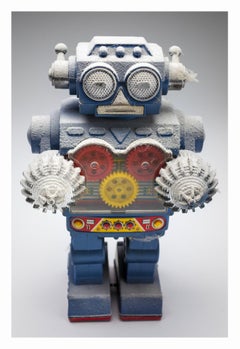
Untitled (from ROBOTNICS Series)

Untitled (from ROBOTNICS Series)

By Christian Rothmann

Located in Kansas City, MO

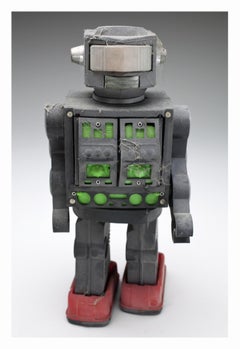
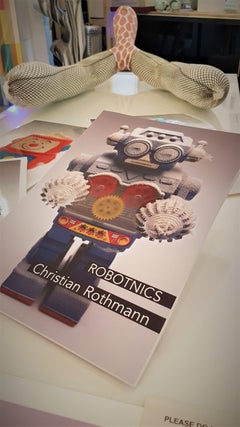
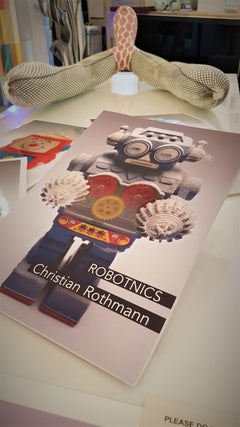
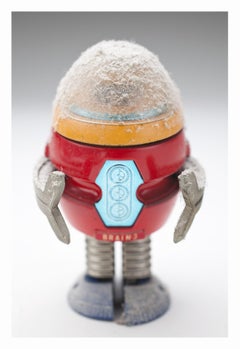
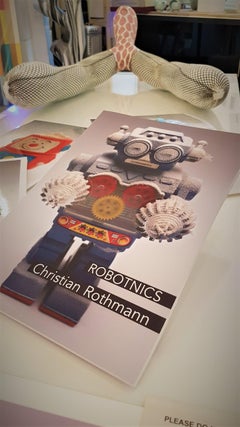
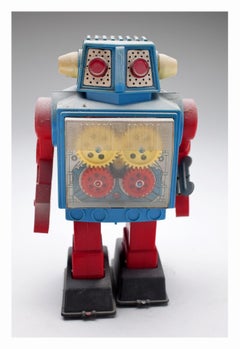
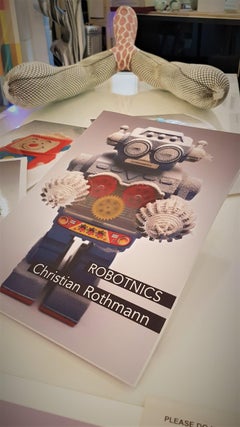
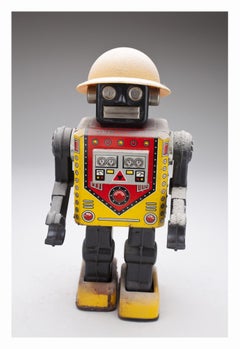
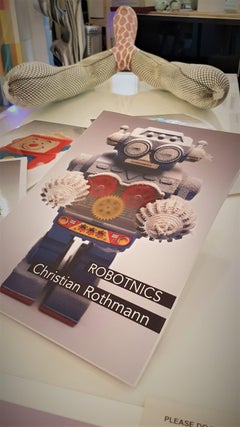
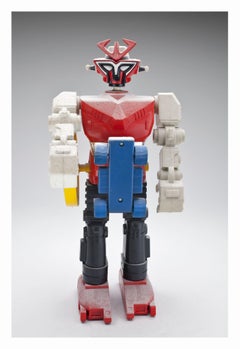
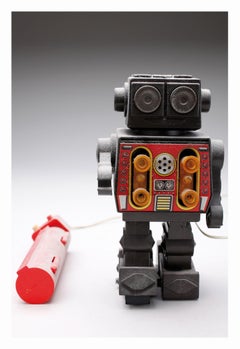
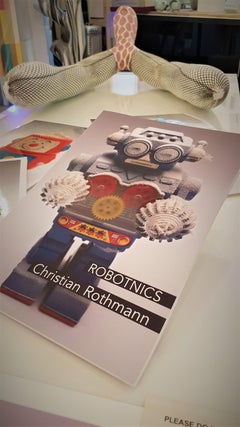
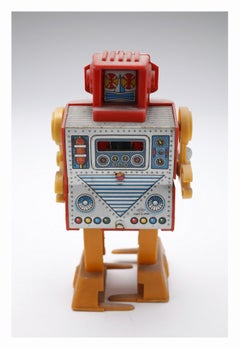
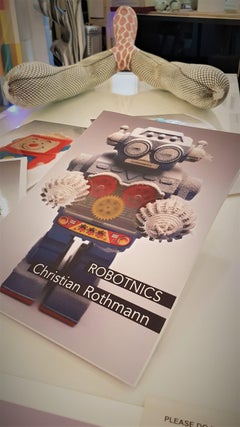
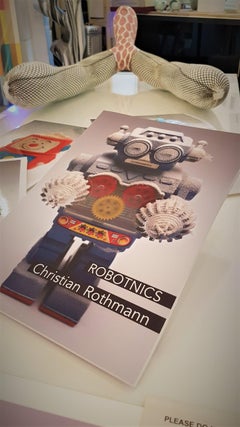
Christian Rothmann ROBOTNICS Series C-Print 2019 Edition S (Edition of 10) 12 x 8.3 inches (30.5 x 21 cm) Signed, dated and numbered verso Other Edition Sizes available: - Edition M (Edition of 6) 35.4 x 23.6 inches (90 x 60 cm) - Edition L (Edition of 6) 47.2 x 31.5 inches (120 x 80 cm) - Edition XL (Edition of 3) 88.8 x 58.8 inches (225 x 150 cm) PUR - Price Upon Request -------------- Since 1979 Christian Rothmann had more than 40 solo and 80 group exhibitions worldwide. Christian Rothmann had guest lectures, residencies, art fairs and biennials in Europe, Japan, USA, Australia and Korea. Christian Rothmann (born 1954 in Kędzierzyn, Poland ) is a painter, photographer, and graphic artist.⁠ ⁠ In 1976 he first studied at the “Hochschule für Gestaltung” in Offenbach, Germany and moved to Berlin in 1977, where he graduated in 1983 at the “Hochschule der Künste”. From 1983 to 1995 he taught at the university as a lecturer and as an artist with a focus on screenprinting and American art history. To date, a versatile body of work has been created, which includes not only paintings but also long-standing photo projects, videos, and public art.⁠ ⁠ Guest lectures, teaching assignments, scholarships and exhibitions regularly lead Rothmann to travel home and abroad.⁠ ------------------------ Rothmann's Robots These creatures date back to another era, and they connect the past and the future. They were found by Christian Rothmann, a Berlin artist, collector and traveler through time and the world: In shops in Germany and Japan, Israel and America, his keen eye picks out objects cast aside by previous generations, but which lend themselves to his own work. In a similar way, he came across a stash of historic toy robots of varied provenance collected by a Berlin gallery owner many years ago. Most of them were screwed and riveted together in the 1960s and 70s by Metal House, a Japanese company that still exists today. In systematically photographing these humanoids made of tin - and later plastic - Rothmann is paraphrasing the idea of appropriation art. Unknown names designed and made the toys, which some five decades on, Rothmann depicts and emblematizes in his extensive photo sequence. In their photographs of Selim Varol's vast toy collection, his German colleagues Daniel and Geo Fuchs captured both the stereotypical and individual in plastic figures that imitate superheroes which were and still are generally manufactured somewhere in Asia. Christian Rothmann looks his robots deep in their artificially stylized, painted or corrugated eyes - or more aptly, their eye slits - and although each has a certain degree of individuality, the little figures remain unknown to us; they project nothing and are not alter egos. Rothmann trains his lens on their faces and expressions, and thus, his portraits are born. Up extremely close, dust, dents, and rust become visible. In other words, what we see is time-traces of time that has passed since the figures were made, or during their period in a Berlin attic, and - considering that he robots date back to Rothmann's childhood - time lived by the photographer and recipients of his pictures. But unlike dolls, these mechanical robots bear no reference to the ideal of beauty at the time of their manufacture, and their features are in no way modeled on a concrete child's face. In this art project the robots appear as figures without a context, photographed face-on, cropped in front of a neutral background and reduced to their qualities of form. But beyond the reproduction and documentation a game with surfaces is going on; our view lingers on the outer skin of the object, or on the layer over it. The inside - which can be found beneath - is to an extent metaphysical, occurring inside the observer's mind. Only rarely is there anything to see behind the robot's helmet. When an occasional human face does peer out, it turns the figure into a robot-like protective casing for an astronaut of the future. If we really stop and think about modern toys, let's say those produced from the mid 20th century, when Disney and Marvel films were already stimulating a massive appetite for merchandising, the question must be: do such fantasy and hybrid creatures belong, does something like artificial intelligence already belong to the broader community of humans and animals? It is already a decade or two since the wave of Tamagotchis washed in from Japan, moved children to feed and entertain their newly born electronic chicks in the way they would a real pet, or to run the risk of seeing them die. It was a new form of artificial life, but the relationship between people and machines becomes problematic when the machines or humanoid robots have excellent fine motor skills and artificial intelligence and sensitivity on a par with, or even greater than that of humans. Luckily we have not reached that point yet, even if Hollywood adaptations would have us believe we are not far away. Rothmann's robots are initially sweet toys, and each toy is known to have a different effect on children and adults. They are conceived by (adult) designers as a means of translating or retelling history or reality through miniature animals, knights, and soldiers. In the case of monsters, mythical creatures, and robots, it is more about creating visions of the future and parallel worlds. Certainly, since the success of fantasy books and films such as Lord of the Rings or The Hobbit, we see the potential for vast enthusiasm for such parallel worlds. Successful computer and online games such as World of Warcraft, or the creation of avatars are also interesting worldwide phenomena of virtual realities that are not only relevant for children and teens. So when a middle-aged Berlin photographic artist (like Christian Rothmann) chooses to study 120 toy robots with great difference in form, it represents a journey back to his own childhood - even if at the time, he played with a steam engine rather than a robot. Once batteries had been inserted, some of the largely male or gender-neutral robots, could flash, shoot, turn around and even do more complicated things. Some can even still do it today - albeit clumsily. This, of course, can only be seen on film, but the artist intends to document that as well; to feature the robots in filmic works of art. The positioning of the figures in the studio is the same as the tableau of pictures in the exhibition room. In this way, one could say Rothmann deploys one robot after the other. This systematic approach enables a comparative view; the extreme enlargement of what are actually small and manageable figures is like the macro vision of insects whose fascinating, sometimes monster-like appearance only becomes visible when they are blown up a hundredfold. The same thing goes for the robots; in miniature form, they seem harmless and cute, but if they were larger than humans and made noises to match, they would seem more threatening. Some of the tin figures...

Category

2010s Pop Art Photography

Materials

C Print

Untitled (from ROBOTNICS Series)

Untitled (from ROBOTNICS Series)

By Christian Rothmann

Located in Kansas City, MO

Christian Rothmann ROBOTNICS Series C-Print 2019 Edition S (Edition of 10) 12 x 8.3 inches (30.5 x 21 cm) Signed, dated and numbered verso Other Edition Sizes available: - Edition M (Edition of 6) 35.4 x 23.6 inches (90 x 60 cm) - Edition L (Edition of 6) 47.2 x 31.5 inches (120 x 80 cm) - Edition XL (Edition of 3) 88.8 x 58.8 inches (225 x 150 cm) PUR - Price Upon Request -------------- Since 1979 Christian Rothmann had more than 40 solo and 80 group exhibitions worldwide. Christian Rothmann had guest lectures, residencies, art fairs and biennials in Europe, Japan, USA, Australia and Korea. Christian Rothmann (born 1954 in Kędzierzyn, Poland ) is a painter, photographer, and graphic artist.⁠ ⁠ In 1976 he first studied at the “Hochschule für Gestaltung” in Offenbach, Germany and moved to Berlin in 1977, where he graduated in 1983 at the “Hochschule der Künste”. From 1983 to 1995 he taught at the university as a lecturer and as an artist with a focus on screenprinting and American art history. To date, a versatile body of work has been created, which includes not only paintings but also long-standing photo projects, videos, and public art.⁠ ⁠ Guest lectures, teaching assignments, scholarships and exhibitions regularly lead Rothmann to travel home and abroad.⁠ ------------------------ Rothmann's Robots These creatures date back to another era, and they connect the past and the future. They were found by Christian Rothmann, a Berlin artist, collector and traveler through time and the world: In shops in Germany and Japan, Israel and America, his keen eye picks out objects cast aside by previous generations, but which lend themselves to his own work. In a similar way, he came across a stash of historic toy robots of varied provenance collected by a Berlin gallery owner many years ago. Most of them were screwed and riveted together in the 1960s and 70s by Metal House, a Japanese company that still exists today. In systematically photographing these humanoids made of tin - and later plastic - Rothmann is paraphrasing the idea of appropriation art. Unknown names designed and made the toys, which some five decades on, Rothmann depicts and emblematizes in his extensive photo sequence. In their photographs of Selim Varol's vast toy collection, his German colleagues Daniel and Geo Fuchs captured both the stereotypical and individual in plastic figures that imitate superheroes which were and still are generally manufactured somewhere in Asia. Christian Rothmann looks his robots deep in their artificially stylized, painted or corrugated eyes - or more aptly, their eye slits - and although each has a certain degree of individuality, the little figures remain unknown to us; they project nothing and are not alter egos. Rothmann trains his lens on their faces and expressions, and thus, his portraits are born. Up extremely close, dust, dents, and rust become visible. In other words, what we see is time-traces of time that has passed since the figures were made, or during their period in a Berlin attic, and - considering that he robots date back to Rothmann's childhood - time lived by the photographer and recipients of his pictures. But unlike dolls, these mechanical robots bear no reference to the ideal of beauty at the time of their manufacture, and their features are in no way modeled on a concrete child's face. In this art project the robots appear as figures without a context, photographed face-on, cropped in front of a neutral background and reduced to their qualities of form. But beyond the reproduction and documentation a game with surfaces is going on; our view lingers on the outer skin of the object, or on the layer over it. The inside - which can be found beneath - is to an extent metaphysical, occurring inside the observer's mind. Only rarely is there anything to see behind the robot's helmet. When an occasional human face does peer out, it turns the figure into a robot-like protective casing for an astronaut of the future. If we really stop and think about modern toys, let's say those produced from the mid 20th century, when Disney and Marvel films were already stimulating a massive appetite for merchandising, the question must be: do such fantasy and hybrid creatures belong, does something like artificial intelligence already belong to the broader community of humans and animals? It is already a decade or two since the wave of Tamagotchis washed in from Japan, moved children to feed and entertain their newly born electronic chicks in the way they would a real pet, or to run the risk of seeing them die. It was a new form of artificial life, but the relationship between people and machines becomes problematic when the machines or humanoid robots have excellent fine motor skills and artificial intelligence and sensitivity on a par with, or even greater than that of humans. Luckily we have not reached that point yet, even if Hollywood adaptations would have us believe we are not far away. Rothmann's robots are initially sweet toys, and each toy is known to have a different effect on children and adults. They are conceived by (adult) designers as a means of translating or retelling history or reality through miniature animals, knights, and soldiers. In the case of monsters, mythical creatures, and robots, it is more about creating visions of the future and parallel worlds. Certainly, since the success of fantasy books and films such as Lord of the Rings or The Hobbit, we see the potential for vast enthusiasm for such parallel worlds. Successful computer and online games such as World of Warcraft...

Category

2010s Street Art Photography

Materials

C Print

Superflat Museum Set of 10

Superflat Museum Set of 10

By Takashi Murakami

Located in Washington , DC, DC

This Superflat Museum LA Edition Set of 10 were released in 2004 and features Takashi Murakami's most well known characters. A similar set has sold at auctio...

Category

21st Century and Contemporary Contemporary Sculptures

Materials

Plastic

Untitled (from ROBOTNICS Series)

Untitled (from ROBOTNICS Series)

By Christian Rothmann

Located in Kansas City, MO

Christian Rothmann ROBOTNICS Series C-Print 2019 Edition S (Edition of 10) 12 x 8.3 inches (30.5 x 21 cm) Signed, dated and numbered verso Other Edition Sizes available: - Edition ...

Category

2010s Outsider Art Photography

Materials

C Print

Untitled (from ROBOTNICS Series)

Untitled (from ROBOTNICS Series)

By Christian Rothmann

Located in Kansas City, MO

Christian Rothmann ROBOTNICS Series C-Print 2019 Edition S (Edition of 10) 12 x 8.3 inches (30.5 x 21 cm) Signed, dated and numbered verso Other Edition Sizes available: - Edition ...

Category

2010s Contemporary Photography

Materials

C Print

Untitled (from ROBOTNICS Series)

Untitled (from ROBOTNICS Series)

By Christian Rothmann

Located in Kansas City, MO

Christian Rothmann ROBOTNICS Series C-Print 2019 Edition S (Edition of 10) 12 x 8.3 inches (30.5 x 21 cm) Signed, dated and numbered verso Other Edition Sizes available: - Edition M (Edition of 6) 35.4 x 23.6 inches (90 x 60 cm) - Edition L (Edition of 6) 47.2 x 31.5 inches (120 x 80 cm) - Edition XL (Edition of 3) 88.8 x 58.8 inches (225 x 150 cm) PUR - Price Upon Request -------------- Since 1979 Christian Rothmann had more than 40 solo and 80 group exhibitions worldwide. Christian Rothmann had guest lectures, residencies, art fairs and biennials in Europe, Japan, USA, Australia and Korea. Christian Rothmann (born 1954 in Kędzierzyn, Poland ) is a painter, photographer, and graphic artist.⁠ ⁠ In 1976 he first studied at the “Hochschule für Gestaltung” in Offenbach, Germany and moved to Berlin in 1977, where he graduated in 1983 at the “Hochschule der Künste”. From 1983 to 1995 he taught at the university as a lecturer and as an artist with a focus on screenprinting and American art history. To date, a versatile body of work has been created, which includes not only paintings but also long-standing photo projects, videos, and public art.⁠ ⁠ Guest lectures, teaching assignments, scholarships and exhibitions regularly lead Rothmann to travel home and abroad.⁠ ------------------------ Rothmann's Robots These creatures date back to another era, and they connect the past and the future. They were found by Christian Rothmann, a Berlin artist, collector and traveler through time and the world: In shops in Germany and Japan, Israel and America, his keen eye picks out objects cast aside by previous generations, but which lend themselves to his own work. In a similar way, he came across a stash of historic toy robots of varied provenance collected by a Berlin gallery owner many years ago. Most of them were screwed and riveted together in the 1960s and 70s by Metal House, a Japanese company that still exists today. In systematically photographing these humanoids made of tin - and later plastic - Rothmann is paraphrasing the idea of appropriation art. Unknown names designed and made the toys, which some five decades on, Rothmann depicts and emblematizes in his extensive photo sequence. In their photographs of Selim Varol's vast toy collection, his German colleagues Daniel and Geo Fuchs captured both the stereotypical and individual in plastic figures that imitate superheroes which were and still are generally manufactured somewhere in Asia. Christian Rothmann looks his robots deep in their artificially stylized, painted or corrugated eyes - or more aptly, their eye slits - and although each has a certain degree of individuality, the little figures remain unknown to us; they project nothing and are not alter egos. Rothmann trains his lens on their faces and expressions, and thus, his portraits are born. Up extremely close, dust, dents, and rust become visible. In other words, what we see is time-traces of time that has passed since the figures were made, or during their period in a Berlin attic, and - considering that he robots date back to Rothmann's childhood - time lived by the photographer and recipients of his pictures. But unlike dolls, these mechanical robots bear no reference to the ideal of beauty at the time of their manufacture, and their features are in no way modeled on a concrete child's face. In this art project the robots appear as figures without a context, photographed face-on, cropped in front of a neutral background and reduced to their qualities of form. But beyond the reproduction and documentation a game with surfaces is going on; our view lingers on the outer skin of the object, or on the layer over it. The inside - which can be found beneath - is to an extent metaphysical, occurring inside the observer's mind. Only rarely is there anything to see behind the robot's helmet. When an occasional human face does peer out, it turns the figure into a robot-like protective casing for an astronaut of the future. If we really stop and think about modern toys, let's say those produced from the mid 20th century, when Disney and Marvel films were already stimulating a massive appetite for merchandising, the question must be: do such fantasy and hybrid creatures belong, does something like artificial intelligence already belong to the broader community of humans and animals? It is already a decade or two since the wave of Tamagotchis washed in from Japan, moved children to feed and entertain their newly born electronic chicks in the way they would a real pet, or to run the risk of seeing them die. It was a new form of artificial life, but the relationship between people and machines becomes problematic when the machines or humanoid robots have excellent fine motor skills and artificial intelligence and sensitivity on a par with, or even greater than that of humans. Luckily we have not reached that point yet, even if Hollywood adaptations would have us believe we are not far away. Rothmann's robots are initially sweet toys, and each toy is known to have a different effect on children and adults. They are conceived by (adult) designers as a means of translating or retelling history or reality through miniature animals, knights, and soldiers. In the case of monsters, mythical creatures, and robots, it is more about creating visions of the future and parallel worlds. Certainly, since the success of fantasy books and films such as Lord of the Rings or The Hobbit, we see the potential for vast enthusiasm for such parallel worlds. Successful computer and online games such as World of Warcraft, or the creation of avatars are also interesting worldwide phenomena of virtual realities that are not only relevant for children and teens. So when a middle-aged Berlin photographic artist (like Christian Rothmann) chooses to study 120 toy robots with great difference in form, it represents a journey back to his own childhood - even if at the time, he played with a steam engine rather than a robot. Once batteries had been inserted, some of the largely male or gender-neutral robots, could flash, shoot, turn around and even do more complicated things. Some can even still do it today - albeit clumsily. This, of course, can only be seen on film, but the artist intends to document that as well; to feature the robots in filmic works of art. The positioning of the figures in the studio is the same as the tableau of pictures in the exhibition room. In this way, one could say Rothmann deploys one robot after the other. This systematic approach enables a comparative view; the extreme enlargement of what are actually small and manageable figures is like the macro vision of insects whose fascinating, sometimes monster-like appearance only becomes visible when they are blown up a hundredfold. The same thing goes for the robots; in miniature form, they seem harmless and cute, but if they were larger than humans and made noises to match, they would seem more threatening. Some of the tin figures...

Category

2010s Street Art Photography

Materials

C Print

Untitled (from ROBOTNICS Series)

Untitled (from ROBOTNICS Series)

By Christian Rothmann

Located in Kansas City, MO

Christian Rothmann ROBOTNICS Series C-Print 2019 Edition S (Edition of 10) 12 x 8.3 inches (30.5 x 21 cm) Signed, dated and numbered verso Other Edition Sizes available: - Edition ...

Category

2010s Modern Photography

Materials

C Print

Untitled (from ROBOTNICS Series)

Untitled (from ROBOTNICS Series)

By Christian Rothmann

Located in Kansas City, MO

Christian Rothmann ROBOTNICS Series C-Print 2019 Edition S (Edition of 10) 12 x 8.3 inches (30.5 x 21 cm) Signed, dated and numbered verso Other Edition Sizes available: - Edition ...

Category

2010s Pop Art Photography

Materials

C Print

Untitled (from ROBOTNICS Series)

Untitled (from ROBOTNICS Series)

By Christian Rothmann

Located in Kansas City, MO

Christian Rothmann ROBOTNICS Series C-Print 2019 Edition S (Edition of 10) 12 x 8.3 inches (30.5 x 21 cm) Signed, dated and numbered verso Other Edition Sizes available: - Edition M (Edition of 6) 35.4 x 23.6 inches (90 x 60 cm) - Edition L (Edition of 6) 47.2 x 31.5 inches (120 x 80 cm) - Edition XL (Edition of 3) 88.8 x 58.8 inches (225 x 150 cm) PUR - Price Upon Request -------------- Since 1979 Christian Rothmann had more than 40 solo and 80 group exhibitions worldwide. Christian Rothmann had guest lectures, residencies, art fairs and biennials in Europe, Japan, USA, Australia and Korea. Christian Rothmann (born 1954 in Kędzierzyn, Poland ) is a painter, photographer, and graphic artist.⁠ ⁠ In 1976 he first studied at the “Hochschule für Gestaltung” in Offenbach, Germany and moved to Berlin in 1977, where he graduated in 1983 at the “Hochschule der Künste”. From 1983 to 1995 he taught at the university as a lecturer and as an artist with a focus on screenprinting and American art history. To date, a versatile body of work has been created, which includes not only paintings but also long-standing photo projects, videos, and public art.⁠ ⁠ Guest lectures, teaching assignments, scholarships and exhibitions regularly lead Rothmann to travel home and abroad.⁠ ------------------------ Rothmann's Robots These creatures date back to another era, and they connect the past and the future. They were found by Christian Rothmann, a Berlin artist, collector and traveler through time and the world: In shops in Germany and Japan, Israel and America, his keen eye picks out objects cast aside by previous generations, but which lend themselves to his own work. In a similar way, he came across a stash of historic toy robots of varied provenance collected by a Berlin gallery owner many years ago. Most of them were screwed and riveted together in the 1960s and 70s by Metal House, a Japanese company that still exists today. In systematically photographing these humanoids made of tin - and later plastic - Rothmann is paraphrasing the idea of appropriation art. Unknown names designed and made the toys, which some five decades on, Rothmann depicts and emblematizes in his extensive photo sequence. In their photographs of Selim Varol's vast toy collection, his German colleagues Daniel and Geo Fuchs captured both the stereotypical and individual in plastic figures that imitate superheroes which were and still are generally manufactured somewhere in Asia. Christian Rothmann looks his robots deep in their artificially stylized, painted or corrugated eyes - or more aptly, their eye slits - and although each has a certain degree of individuality, the little figures remain unknown to us; they project nothing and are not alter egos. Rothmann trains his lens on their faces and expressions, and thus, his portraits are born. Up extremely close, dust, dents, and rust become visible. In other words, what we see is time-traces of time that has passed since the figures were made, or during their period in a Berlin attic, and - considering that he robots date back to Rothmann's childhood - time lived by the photographer and recipients of his pictures. But unlike dolls, these mechanical robots bear no reference to the ideal of beauty at the time of their manufacture, and their features are in no way modeled on a concrete child's face. In this art project the robots appear as figures without a context, photographed face-on, cropped in front of a neutral background and reduced to their qualities of form. But beyond the reproduction and documentation a game with surfaces is going on; our view lingers on the outer skin of the object, or on the layer over it. The inside - which can be found beneath - is to an extent metaphysical, occurring inside the observer's mind. Only rarely is there anything to see behind the robot's helmet. When an occasional human face does peer out, it turns the figure into a robot-like protective casing for an astronaut of the future. If we really stop and think about modern toys, let's say those produced from the mid 20th century, when Disney and Marvel films were already stimulating a massive appetite for merchandising, the question must be: do such fantasy and hybrid creatures belong, does something like artificial intelligence already belong to the broader community of humans and animals? It is already a decade or two since the wave of Tamagotchis washed in from Japan, moved children to feed and entertain their newly born electronic chicks in the way they would a real pet, or to run the risk of seeing them die. It was a new form of artificial life, but the relationship between people and machines becomes problematic when the machines or humanoid robots have excellent fine motor skills and artificial intelligence and sensitivity on a par with, or even greater than that of humans. Luckily we have not reached that point yet, even if Hollywood adaptations would have us believe we are not far away. Rothmann's robots are initially sweet toys, and each toy is known to have a different effect on children and adults. They are conceived by (adult) designers as a means of translating or retelling history or reality through miniature animals, knights, and soldiers. In the case of monsters, mythical creatures, and robots, it is more about creating visions of the future and parallel worlds. Certainly, since the success of fantasy books and films such as Lord of the Rings or The Hobbit, we see the potential for vast enthusiasm for such parallel worlds. Successful computer and online games such as World of Warcraft...

Category

2010s Modern Photography

Materials

C Print

1960 Original travel poster Air France to spain realized by Vernier

1960 Original travel poster Air France to spain realized by Vernier

Located in PARIS, FR

Very beautiful poster Air France realized by Vernier in 1960 to promote its trips towards Spain. Posters are essential to the communication of Air France. It is important to note th...

Category

1960s Prints and Multiples

Materials

Paper

"Mockingbird" Sculpture 40.5" x 19" x 18.5" inch Edition 3/8 by Huang Yulong

"Mockingbird" Sculpture 40.5" x 19" x 18.5" inch Edition 3/8 by Huang Yulong

By Huang Yulong

Located in Culver City, CA

"Mockingbird" Sculpture 42.5" x 19" x 18.5" inch Edition 3/8 by Huang Yulong Bronze sculpture ABOUT THE ARTIST Huang Yulong was born in 1983 in Anhui Province, China. In 2007 he graduated with a Bachelor of Fine Arts in Sculpture from the Jingdezhen Ceramic Institute in Jiangxi Province. As one of the new generation of Chinese artists and part of the ‘post-80s generation’ and ‘only child’ generation, Huang is strongly influenced by the phenomenon of foreign culture in China, which he combines with his fascination with pottery and the material world. Huang is best known for his sculptures of Buddhas in hoodies, displaying an exchange of Eastern tradition and Western contemporary style. He was selected by “Complex” as “25 Contemporary Chinese Artists You Need to Know” in 2013. His sculptures have been exhibited at Niubi Newbie Kids II, at Schoeni Gallery, Hong Kong; “Zeitgeist” Huang Yulong’s Solo Exhibition at Himalayas Art Museum, Shanghai, China; Chinese Artist / Marseille Artist at Marseilles, France; The 4th International Contemporary Art Exhibition at Gwangju Biennale Korea, Art Beijing Art...

Category

21st Century and Contemporary Contemporary Figurative Sculptures

Materials

Bronze

Silu Niu Landscape Original Oil Painting "Little Car"

Silu Niu Landscape Original Oil Painting "Little Car"

Located in New York, NY

Title: Little Car Medium: Oil on canvas Size: 19.5 x 19.5 inches Frame: Framing options available! Condition: The painting appears to be in excellent condition. Note: This pai...

Category

21st Century and Contemporary Contemporary Still-life Paintings

Materials

Canvas, Oil

Untitled (from ROBOTNICS Series)

Untitled (from ROBOTNICS Series)

By Christian Rothmann

Located in Kansas City, MO

Christian Rothmann ROBOTNICS Series C-Print 2019 Edition S (Edition of 10) 12 x 8.3 inches (30.5 x 21 cm) Signed, dated and numbered verso Other Edition Sizes available: - Edition ...

Category

2010s Modern Photography

Materials

C Print

Untitled (from ROBOTNICS Series)

Untitled (from ROBOTNICS Series)

By Christian Rothmann

Located in Kansas City, MO

Christian Rothmann ROBOTNICS Series C-Print 2019 Edition S (Edition of 10) 12 x 8.3 inches (30.5 x 21 cm) Signed, dated and numbered verso Other Edition Sizes available: - Edition ...

Category

2010s Outsider Art Photography

Materials

C Print

Untitled (from ROBOTNICS Series)

Untitled (from ROBOTNICS Series)

By Christian Rothmann

Located in Kansas City, MO

Christian Rothmann ROBOTNICS Series C-Print 2019 Edition S (Edition of 10) 12 x 8.3 inches (30.5 x 21 cm) Signed, dated and numbered verso Other Edition Sizes available: - Edition M (Edition of 6) 35.4 x 23.6 inches (90 x 60 cm) - Edition L (Edition of 6) 47.2 x 31.5 inches (120 x 80 cm) - Edition XL (Edition of 3) 88.8 x 58.8 inches (225 x 150 cm) PUR - Price Upon Request -------------- Since 1979 Christian Rothmann had more than 40 solo and 80 group exhibitions worldwide. Christian Rothmann had guest lectures, residencies, art fairs and biennials in Europe, Japan, USA, Australia and Korea. Christian Rothmann (born 1954 in Kędzierzyn, Poland ) is a painter, photographer, and graphic artist.⁠ ⁠ In 1976 he first studied at the “Hochschule für Gestaltung” in Offenbach, Germany and moved to Berlin in 1977, where he graduated in 1983 at the “Hochschule der Künste”. From 1983 to 1995 he taught at the university as a lecturer and as an artist with a focus on screenprinting and American art history. To date, a versatile body of work has been created, which includes not only paintings but also long-standing photo projects, videos, and public art.⁠ ⁠ Guest lectures, teaching assignments, scholarships and exhibitions regularly lead Rothmann to travel home and abroad.⁠ ------------------------ Rothmann's Robots These creatures date back to another era, and they connect the past and the future. They were found by Christian Rothmann, a Berlin artist, collector and traveler through time and the world: In shops in Germany and Japan, Israel and America, his keen eye picks out objects cast aside by previous generations, but which lend themselves to his own work. In a similar way, he came across a stash of historic toy robots of varied provenance collected by a Berlin gallery owner many years ago. Most of them were screwed and riveted together in the 1960s and 70s by Metal House, a Japanese company that still exists today. In systematically photographing these humanoids made of tin - and later plastic - Rothmann is paraphrasing the idea of appropriation art. Unknown names designed and made the toys, which some five decades on, Rothmann depicts and emblematizes in his extensive photo sequence. In their photographs of Selim Varol's vast toy collection, his German colleagues Daniel and Geo Fuchs captured both the stereotypical and individual in plastic figures that imitate superheroes which were and still are generally manufactured somewhere in Asia. Christian Rothmann looks his robots deep in their artificially stylized, painted or corrugated eyes - or more aptly, their eye slits - and although each has a certain degree of individuality, the little figures remain unknown to us; they project nothing and are not alter egos. Rothmann trains his lens on their faces and expressions, and thus, his portraits are born. Up extremely close, dust, dents, and rust become visible. In other words, what we see is time-traces of time that has passed since the figures were made, or during their period in a Berlin attic, and - considering that he robots date back to Rothmann's childhood - time lived by the photographer and recipients of his pictures. But unlike dolls, these mechanical robots bear no reference to the ideal of beauty at the time of their manufacture, and their features are in no way modeled on a concrete child's face. In this art project the robots appear as figures without a context, photographed face-on, cropped in front of a neutral background and reduced to their qualities of form. But beyond the reproduction and documentation a game with surfaces is going on; our view lingers on the outer skin of the object, or on the layer over it. The inside - which can be found beneath - is to an extent metaphysical, occurring inside the observer's mind. Only rarely is there anything to see behind the robot's helmet. When an occasional human face does peer out, it turns the figure into a robot-like protective casing for an astronaut of the future. If we really stop and think about modern toys, let's say those produced from the mid 20th century, when Disney and Marvel films were already stimulating a massive appetite for merchandising, the question must be: do such fantasy and hybrid creatures belong, does something like artificial intelligence already belong to the broader community of humans and animals? It is already a decade or two since the wave of Tamagotchis washed in from Japan, moved children to feed and entertain their newly born electronic chicks in the way they would a real pet, or to run the risk of seeing them die. It was a new form of artificial life, but the relationship between people and machines becomes problematic when the machines or humanoid robots have excellent fine motor skills and artificial intelligence and sensitivity on a par with, or even greater than that of humans. Luckily we have not reached that point yet, even if Hollywood adaptations would have us believe we are not far away. Rothmann's robots are initially sweet toys, and each toy is known to have a different effect on children and adults. They are conceived by (adult) designers as a means of translating or retelling history or reality through miniature animals, knights, and soldiers. In the case of monsters, mythical creatures, and robots, it is more about creating visions of the future and parallel worlds. Certainly, since the success of fantasy books and films such as Lord of the Rings or The Hobbit, we see the potential for vast enthusiasm for such parallel worlds. Successful computer and online games such as World of Warcraft, or the creation of avatars are also interesting worldwide phenomena of virtual realities that are not only relevant for children and teens. So when a middle-aged Berlin photographic artist (like Christian Rothmann) chooses to study 120 toy robots with great difference in form, it represents a journey back to his own childhood - even if at the time, he played with a steam engine rather than a robot. Once batteries had been inserted, some of the largely male or gender-neutral robots, could flash, shoot, turn around and even do more complicated things. Some can even still do it today - albeit clumsily. This, of course, can only be seen on film, but the artist intends to document that as well; to feature the robots in filmic works of art. The positioning of the figures in the studio is the same as the tableau of pictures in the exhibition room. In this way, one could say Rothmann deploys one robot after the other. This systematic approach enables a comparative view; the extreme enlargement of what are actually small and manageable figures is like the macro vision of insects whose fascinating, sometimes monster-like appearance only becomes visible when they are blown up a hundredfold. The same thing goes for the robots; in miniature form, they seem harmless and cute, but if they were larger than humans and made noises to match, they would seem more threatening. Some of the tin figures...

Category

2010s Contemporary Photography
Materials

C Print

Untitled (from ROBOTNICS Series)

Untitled (from ROBOTNICS Series)

By Christian Rothmann

Located in Kansas City, MO

Christian Rothmann ROBOTNICS Series C-Print 2019 Edition S (Edition of 10) 12 x 8.3 inches (30.5 x 21 cm) Signed, dated and numbered verso Other Edition Sizes available: - Edition ...

Category

2010s Contemporary Photography
Materials

C Print

Mayuka Yamamoto - Sitting Bear, 2022

Mayuka Yamamoto - Sitting Bear, 2022

Located in Central, HK

Mayuka Yamamoto Sitting Bear, 2022 Lithograph in colors 27 3/5 × 21 3/10 in 70 × 54 cm Edition of 75 Signed and numbered Contact us for the edition nu...

Category
2010s Figurative Prints

Materials

Paper

Arlequin et Pierrette au Carnaval

Arlequin et Pierrette au Carnaval

By Nino Guiffrida
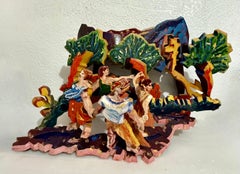
Located in San Francisco, CA

Artist: Nino Guiffrida (Italian, born 1924) Title: Arlequin et Pierrette au Carnaval Year: 1985 Medium: Oil on canvas Canvas size: 24 x 19.75 inches Signature: signed upper right...

Category

Late 20th Century Romantic Figurative Paintings

Materials

Oil

Okta
Okta

Okta

By Roby Dwi Antono

Located in Manchester, GB

Roby Dwi Antono, Okta, 2022 24-layer screen-print with curable UV inks, printed on 410gsm Somerset Tub Sized Radiant White paper with black box frame 44 x 50 cm (17.32 x 19.69 in) ...

Category

2010s Contemporary Prints and Multiples

Materials

Screen

Clara
Clara

Clara

By Roby Dwi Antono

Located in Manchester, GB

Roby Dwi Antono, Clara, 2022 24-layer screen-print with curable UV inks, printed on 410gsm Somerset Tub Sized Radiant White paper with black box frame 44 x 50 cm (17.32 x 19.69 in)...

Category

2010s Contemporary Prints and Multiples

Materials

Paper, Screen

"Scram", Pop Art Drawing of Pikachu and Oscar, Framed Pastel, 2010+

"Scram", Pop Art Drawing of Pikachu and Oscar, Framed Pastel, 2010+

Located in San Diego, CA

This is a one of a kind original pop art drawing by San Diego artist, Daniel Jaimes. It comes in a black frame. Its dimensions are 16"x20"x1". A certificate of authenticity will follow delivery. This drawing depicts popular Pokemon character Pikachu and Sesame Street character Oscar The Grouch...

Category

2010s Pop Art Drawings and Watercolor Paintings

Materials

Pastel

"Sapphire"

"Sapphire"

By John Schieffer

Located in Scottsdale, AZ

John Schieffer graduated in 1995 from Paier College of Art in Hamden, Connecticut with a Bachelor of Fine Arts degree. The salutatorian entered the world of illustration at Mercer Ma...

Category

2010s Contemporary Still-life Paintings

Materials

Oil, Wood Panel

Stay On Target!  by BATIK Oversize Limited Print

Stay On Target! by BATIK Oversize Limited Print

By BATIK

Located in London, GB

Stay On Target! by BATIK BATIK is an increasingly collectable pop artist currently living and working in London. The artist is purposely elusive with their true identity, sex and a...

Category

2010s Modern Figurative Prints

Materials

Archival Pigment

Jean-Paul Goude 'Galeries Lafayette - Summer' 2001 Vintage

Jean-Paul Goude 'Galeries Lafayette - Summer' 2001 Vintage

By Jean-Paul Goude

Located in Brooklyn, NY

This striking billboard titled Été (Summer) was created by legendary French image-maker Jean-Paul Goude as part of his high-impact advertising campaign for Galeries Lafayette. At the...

Category

Early 2000s Contemporary Prints and Multiples

Materials

Offset

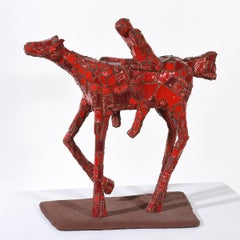
Leslie Hawk Sculptural Human Figure & Horse "Person on a Horse"

Leslie Hawk Sculptural Human Figure & Horse "Person on a Horse"

Located in Detroit, MI

"Person on a Horse" is a concrete, glass and steel structure with horse in mid-stride looking up and forward. The person astride leans forward as in encouragement to the stead or in weariness of the journey, perhaps both. Leslie Hawk...

Category

Late 20th Century American Modern Figurative Sculptures

Materials

Concrete, Steel

Collection of Antique Hand-Carved Japanese Noh Masks

Collection of Antique Hand-Carved Japanese Noh Masks

Located in New Orleans, LA

A collection of five hand-made Japanese Noh drama masks, four of them hand-carved wood, and one (the largest, the one that's black and red on one half and w...

Category

20th Century Figurative Sculptures

Materials

Wood, Papier Mâché

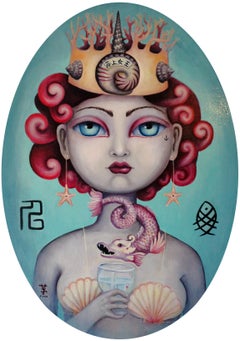
Pop Surreal Red Portrait Painting in Acrylic, Braided Hair, Floral Motifs, 55cm

Pop Surreal Red Portrait Painting in Acrylic, Braided Hair, Floral Motifs, 55cm

By Natasha Lelenco

Located in FISTERRA, ES

Pop surreal red portrait painting with braided hair and symbolic floral pattern exploring stylized identity and hyper-saturated visual language. This acrylic portrait on canvas form...

Category

2010s Pop Art Portrait Paintings

Materials

Canvas, Spray Paint, Acrylic

Mr. DOB Complexcon set of 2

Mr. DOB Complexcon set of 2

By Takashi Murakami

Located in Washington , DC, DC

Set of Takashi Murakami Mr. DOB Complexcon set of 2. The Gold one is from an edition of only 250 and the Red is from an edition of 750

Category

21st Century and Contemporary Contemporary Sculptures

Materials

PVC, Paint

Doll, Dog, and Bear, yellow tones, toys oil painting

Doll, Dog, and Bear, yellow tones, toys oil painting

By Doug Newton

Located in Brooklyn, NY

Doll, Dog and Bear, 20” x 24” x 1.5”, o/c, $2500 Description: This original oil painting, "Doll, Dog and Bear," is a still life inspired by a child's beloved companions. The artist...

Category

2010s American Realist Still-life Paintings

Materials

Canvas, Oil

BFF (Pink)
BFF (Pink)

BFF (Pink)

By KAWS

Located in Boston, MA

Artist: KAWS, Title: BFF (Pink) Series: Toys Date: 2018 Medium: Sculpture Unframed Dimensions: 13.5" x 5" x 3.5" Signature: Stamped Edition: Open Edition

Category

2010s Contemporary Sculptures

Materials

PVC

KAWS Companion 2016 (set of 2 works)

KAWS Companion 2016 (set of 2 works)

By KAWS

Located in NEW YORK, NY

KAWS Companion 2016:Set of 2 works. Each new and sealed in its original packaging. Published by Medicom Japan in conjunction with the exhibition, KAWS: Where The End Starts at the Mo...

Category

21st Century and Contemporary Pop Art Sculptures

Materials

Resin, Vinyl