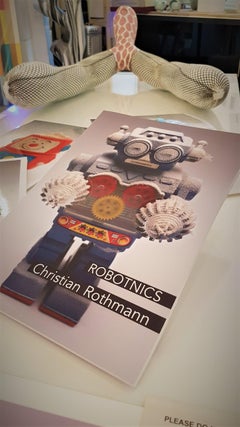
Toy Art

to
55
230
92
66
54
75
Overall Width
to
Overall Height
to
1
3
63
451
1
1
2
5
12
10
3
7
1
203
103
36
21
17
7
5
2
1
1
1
132
84
50
519
153,625
80,484
50,628
42,262
36,717
35,277
30,124
26,764
25,662
24,716
20,691
18,030
15,775
14,581
13,752
13,172
11,268
10,628
10,169
158
87
77
75
61
30
23
12
9
8
63
60
306
169
Art Subject: Toy
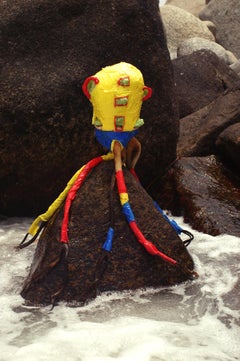
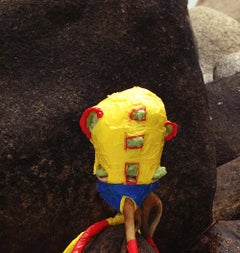
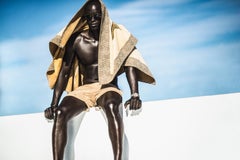
Untitled Sea wrack II, From the series Ser Cosa, Color Photograph

Untitled Sea wrack II, From the series Ser Cosa, Color Photograph

By RODRIGO ETEM

Located in Miami Beach, FL

This series of portraits that at first glance appear to us as extraterrestrial beings, once we understand the images they become more familiar than they appear, “humans too human” pe...

Category

2010s Contemporary Still-life Photography

Materials

Photographic Paper, Archival Pigment

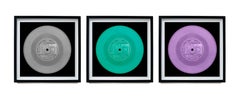
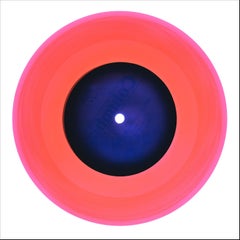
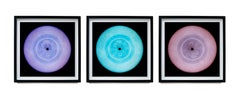
Vinyl Collection 'All Rights Reserved (Seafoam)' - Pop art color photograph

Vinyl Collection 'All Rights Reserved (Seafoam)' - Pop art color photograph

By Heidler & Heeps

Located in Cambridge, GB

All Rights Reserved (Seafoam), from the Heidler & Heeps Vinyl Collection. Acclaimed contemporary photographers, Richard Heeps and Natasha Heidler have coll...

Category

21st Century and Contemporary Pop Art Color Photography

Materials

Photographic Paper, C Print, Color, Silver Gelatin

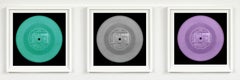
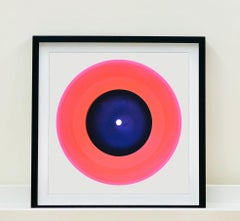
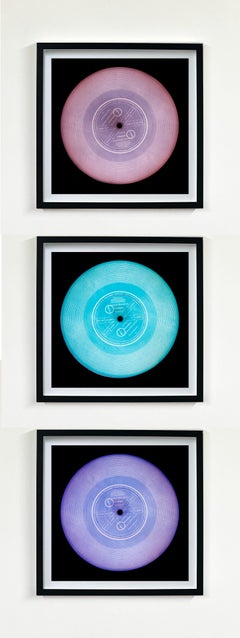
Vinyl Collection 'Press Conference' - Purple pop art color photograph

Vinyl Collection 'Press Conference' - Purple pop art color photograph

By Heidler & Heeps

Located in Cambridge, GB

Press Conference, from the Heidler & Heeps Vinyl Collection. Acclaimed contemporary photographers, Richard Heeps and Natasha Heidler have collaborated to m...

Category

21st Century and Contemporary Pop Art Color Photography

Materials

Photographic Paper, C Print, Color, Silver Gelatin

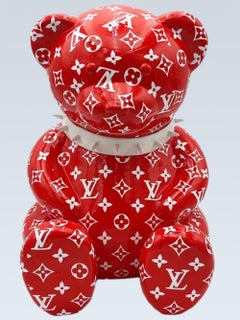
35cm CH Tribute, bi color white and gold Teddy

35cm CH Tribute, bi color white and gold Teddy

By Naor

Located in PARIS, FR

Naor is a French artist from Lyon born in 1988. Completely anchored in his time, he has always traveled a lot around the world. If travels form youth, Naor was inspired by it. From t...

Category

21st Century and Contemporary Pop Art Sculptures

Materials

Resin

A New Perspective. Abstract architectural limited edition color  photograph

A New Perspective. Abstract architectural limited edition color photograph

By Juan Pablo Castro

Located in Miami Beach, FL

The artist's photographs capture the transformation of everyday life into another reality. Images that explore what the future will be like. Industrial, eccentric and progressive, Ca...

Category

2010s Contemporary Color Photography

Materials

Photographic Paper, C Print, Color

Chinese Contemporary Art by Liu Guoyi - SHENSHEN

Chinese Contemporary Art by Liu Guoyi - SHENSHEN

By Liu Guoyi

Located in Paris, IDF

Reenforced hand colored resin, The monkey is a symbol of wisdom and courage in auspicious tradition. Within the Spirit Empire, SHENSHEN is lively, playful, and quick-witted, but als...

Category

2010s Contemporary Figurative Sculptures

Materials

Resin

Chinese Contemporary Art by Liu Guoyi - SGR

Chinese Contemporary Art by Liu Guoyi - SGR

By Liu Guoyi

Located in Paris, IDF

Reenforced hand colored resin, In traditional culture, there is a beautiful legend of the Jade Rabbit in the Moon pounding the elixir of immortality. Within the Spirit Empire, Sāngō...

Category

2010s Contemporary Figurative Sculptures

Materials

Resin

Chinese Contemporary Art by Liu Guoyi - HHop

Chinese Contemporary Art by Liu Guoyi - HHop

By Liu Guoyi

Located in Paris, IDF

Reenforced hand colored resin, The pig symbolizes wealth and abundance. Within the Spirit Empire, HHop is endlessly curious about everything in the world and possesses a strong desi...

Category

2010s Contemporary Figurative Sculptures

Materials

Resin

Chinese Contemporary Art by Liu Guoyi - MIMI

Chinese Contemporary Art by Liu Guoyi - MIMI

By Liu Guoyi

Located in Paris, IDF

Reenforced hand colored resin, The sheep symbolizes kindness, fairness, harmony, and goodwill. Within the Spirit Empire, MIMI is the embodiment of gentleness and beauty. Small in st...

Category

2010s Contemporary Figurative Sculptures

Materials

Resin

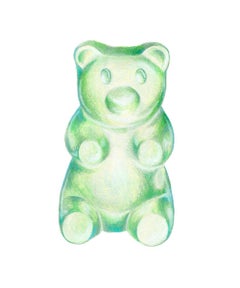
Gummy Bear Green-Teal

Gummy Bear Green-Teal

By Kendyll Hillegas

Located in New York, NY

THIS PIECE IS AVAILABLE FRAMED. Please reach out to the gallery for additional information. ABOUT THIS PIECE: As a child, I was the flower girl in the wedding of a family friend. ...

Category

2010s Animal Prints

Materials

Plexiglass

January First, Original oil Painting, Handmade Large Size Art, One of a Kind

January First, Original oil Painting, Handmade Large Size Art, One of a Kind

By Anatoly Varvarov Viktorovich

Located in Granada Hills, CA

Artist: Varvarov Anatoly Viktorovich Title: January First Sise: 53x61 inches, (135x155 cm) Medium: Oil on Canvas Hand painted, original, one of a kind. "January First" is an oil pai...

Category

2010s Impressionist Landscape Paintings

Materials

Canvas, Oil

Vinyl Collection, Heartbreak - Conceptual, Pop Art, Color Photography

Vinyl Collection, Heartbreak - Conceptual, Pop Art, Color Photography

By Heidler & Heeps

Located in Cambridge, GB

Acclaimed contemporary photographers, Richard Heeps and Natasha Heidler have collaborated to make this beautifully mesmerising collection. A celebration of the vinyl record and analo...

Category

2010s Pop Art Color Photography

Materials

Photographic Paper, C Print, Color, Silver Gelatin

Vinyl Collection, Yellow Recording - Conceptual, Pop Art, Colour Photography

Vinyl Collection, Yellow Recording - Conceptual, Pop Art, Colour Photography

By Heidler & Heeps

Located in Cambridge, GB

Acclaimed contemporary photographers, Richard Heeps and Natasha Heidler have collaborated to make this beautifully mesmerising collection. A celebration of the vinyl record and analo...

Category

2010s Pop Art Color Photography

Materials

Photographic Paper, C Print, Color, Silver Gelatin

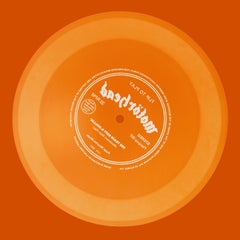
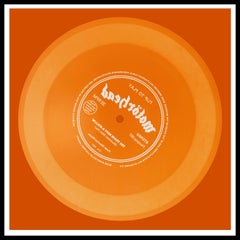
Vinyl Collection, Flip to Play (Orange) - Conceptual, Pop Art, Color Photography

Vinyl Collection, Flip to Play (Orange) - Conceptual, Pop Art, Color Photography

By Heidler & Heeps

Located in Cambridge, GB

Acclaimed contemporary photographers, Richard Heeps and Natasha Heidler have collaborated to make this beautifully mesmerising collection. A celebration of the vinyl record and analogue technology, which reflects the artists practice within photography. This record features an orange Motorhead Record. The unique artist's process creates a negative so the writing in the centre is in reverse. This is a particularly unique piece in the collection with an orange background. This artwork is a limited edition of 25, gloss photographic print, dry-mounted to aluminium, presented in a 25mm museum board white window mount and a box frame made professionally in the UK. Client may choose the frame colour of Black or White. Acclaimed contemporary photographers, Richard Heeps and Natasha Heidler have collaborated to make this beautifully mesmerising collection. A celebration of the vinyl record and analogue technology, which reflects the artists practice within photography. This record features a textured lime green vintage...

Category

2010s Pop Art Color Photography

Materials

Photographic Paper, C Print, Color, Silver Gelatin

Chinese Contemporary Art by Liu Guoyi - XTiger

Chinese Contemporary Art by Liu Guoyi - XTiger

By Liu Guoyi

Located in Paris, IDF

The tiger, king of all beasts, symbolizes good fortune, protection from evil, and peace. In the Elf Empire, it is known for strong loyalty and a chivalrous spirit. Open-minded and ge...

Category

2010s Contemporary Figurative Sculptures

Materials

Resin

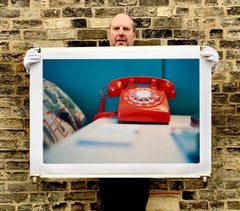
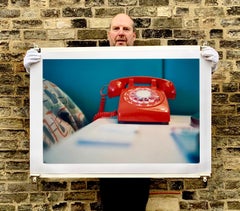
Telephone VI, Ballantines Movie Colony, Palm Springs, California

Telephone VI, Ballantines Movie Colony, Palm Springs, California

By Richard Heeps

Located in Cambridge, GB

Part of Richard Heeps 'Dream in Colour' Series, this cool Palm Springs interiors picture combines gorgeous colours and dreamy nostalgic vintage mid-century style. This artwork is a...

Category

2010s Pop Art Color Photography

Materials

Photographic Paper, C Print, Color, Silver Gelatin

Safari From Iconic Series, Large Size

Safari From Iconic Series, Large Size

By Mikael Kenta

Located in Miami Beach, FL

The “Iconic” series was presented as part of the exhibition “Walk of Inspiration” showed in Stockholm in 2016. These vibrant unique color images are an homage to the “kitsch pop surr...

Category

2010s Contemporary Color Photography

Materials

Archival Pigment, Color

Tropicarios  #3. Digital Collage. Limited Edition Color Photograph

Tropicarios #3. Digital Collage. Limited Edition Color Photograph

By Paloma Castello

Located in Miami Beach, FL

Paloma Castello's Tropicarios is an invitation to experience a space in which the fiction and her memories of the tropics blend together to create a personal approximation between ou...

Category

2010s Contemporary Color Photography

Materials

Photographic Paper, Color, Digital, Digital Pigment

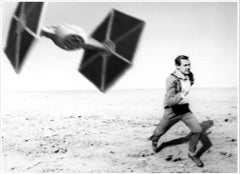
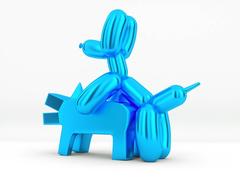
Stay On Target! - Signed Limited Edition

Stay On Target! - Signed Limited Edition

By BATIK

Located in London, GB

Stay On Target! by BATIK Archival pigment pop art print of a Star Wars TIE fighter chasing actor Cary Grant from the infamous scene in Hitchcock’s N...

Category

2010s Figurative Prints
Materials

Archival Pigment

Arcane Aura (Oil Painting, Symbolist, Ancient Cultures, Pop, Surreal, ~47% OFF)

Arcane Aura (Oil Painting, Symbolist, Ancient Cultures, Pop, Surreal, ~47% OFF)

By Stella Jae

Located in Kansas City, MO

Stella Jae Arcane Aura 2024 Oil on canvas Size: 23.62 x 31.49 inches (60 x 80 cm) Signed by hand COA provided Stella J Richey is an international visual artist and designer. Her wor...

Category

2010s Surrealist Portrait Paintings

Materials

Canvas, Oil

Agathe's treasures Wabé Contemporary art mural sculpture papier mâché colour fun

Agathe's treasures Wabé Contemporary art mural sculpture papier mâché colour fun

By Wabé

Located in Paris, FR

Unique colourful mural papier mâché and glass sculpture, hand-painted Hand-signed by the artist « Free and strong! This is what I am, free with my shapes, strong with my colors, ...

Category

2010s Contemporary Figurative Sculptures

Materials

Glass, Acrylic, Papier Mâché

Truvian Droid
Truvian Droid

Truvian Droid

By Marco Araldi

Located in London, GB

Marco’s background is in engineering and architecture, making him familiar with mathematical design and the awareness of geometry. When he decided to create art, he was naturally dra...

Category

2010s Modern Portrait Paintings

Materials

Mixed Media

Amerindian (EYES FROM AMAZONAS)

Amerindian (EYES FROM AMAZONAS)

Located in Miami, FL

The projects he produces are created to establish a point of balance between information overload, technology and human sensibility for the creation of collective conciousness. Alber...

Category

2010s Paintings

Materials

Canvas, Oil

Weehawken, New Jersey - Pop Art Urban Landscape Painting

Weehawken, New Jersey - Pop Art Urban Landscape Painting

By Sue Graef

Located in Boston, MA

Weehawken, New Jersey 36.0 x 36.0 x 1.5, 20.0 lbs Acrylic paint Hand signed by the artist Artist's Commentary: "This Pop Art style colorful urban landscape painting captures the fascinating space and view of the ramp leading to the Lincoln Tunnel from Weehawken, New Jersey travelling to New York City. Driving through the traffic here for many years since childhood, the buildings almost right up against the curved ramp was fascinating to me. The painting is unframed with the image painted all the way around the edges." About the Artist: Sue Graef...

Category

21st Century and Contemporary Pop Art Landscape Paintings

Materials

Acrylic

Belle

Belle

By Siri Kaur

Located in Sante Fe, NM

In SHE TELLS ALL, Kaur engages questions of identity performance by exploring an ever-present and wildly diverse American identity: the modern American witch. Witches are contemporar...

Category

2010s Contemporary Portrait Photography

Materials

Archival Pigment

Catrina en Día de Muertos - Ceramic Sculpture - Mexican Folk Art - Cactus Fine A

Catrina en Día de Muertos - Ceramic Sculpture - Mexican Folk Art - Cactus Fine A

By Alvaro de la Cruz Lopez

Located in Jesus del Monte, MX

MASTERPIECE Made with natural ceramic. Hand-modeled technique and cooked in a wood-fired oven. LISTING =================================== 1 Ceramic Catrina =======================...

Category

2010s Realist Figurative Sculptures

Materials

Clay

Elvis, Pop Art Lithograph by Erró

Elvis, Pop Art Lithograph by Erró

By Erró

Located in Long Island City, NY

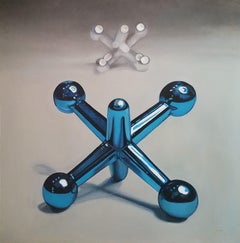
Artist: Gudmundur Erro, Icelandic (1932 - ) Title: Elvis Year: 2005 Medium: Lithograph, signed and numbered in pencil Edition: 180 Image Size: 17.25 x 24 inches Size: 23 x 31.5 in. (...

Category

Early 2000s Pop Art Figurative Prints
Materials

Lithograph

"Hot Mess" -  fluorescent acrylic  hand formed

"Hot Mess" - fluorescent acrylic hand formed

By Maeve Eichelberger

Located in West Hollywood, CA

Maeve Eichelberger is a Colorado native, capturing both urban and rural lifestyles in her artwork. Passionate about collage, Maeve specializes in a new form of 3 dimensional collage....

Category

2010s Contemporary Figurative Sculptures

Materials

Acrylic Polymer

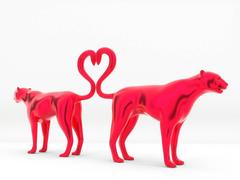
Love Jaguar
Love Jaguar

Love Jaguar

By Michael Benisty

Located in New York, NY

The electro-love collection was inspired by the artist's time spent in South America and South Africa and seeing these supernatural creatures. Technique: Clay mold...

Category

2010s Contemporary Figurative Sculptures

Materials

Stainless Steel

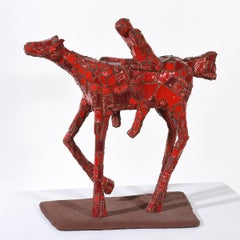
See What I Saw (Green), framed hand signed screen print

See What I Saw (Green), framed hand signed screen print

By Eelus

Located in Aventura, FL

7 color Screen Print on Somerset Satin White 300gsm paper with 1 deckled edge. Hand signed lower right margin by Eelus. Hand numbered 22/150 lower left margin. Artwork size: 21.6 ...

Category

2010s Street Art Figurative Prints
Materials

Paper, Screen

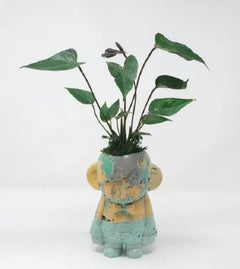
8 inch Colored Concrete Figure Planter

8 inch Colored Concrete Figure Planter

By Dez Einswell

Located in Draper, UT

Concrete Sculptural Planter inspired by En Iwamura Vessels 8 inch Tall / Hand casted and pigmented. 1 of 1 (Last picture is not actual vessel, it is a different variant but is pict...

Category

2010s Sculptures

Materials

Concrete

Luis Miguel Valdes, ¨Encuentros 1¨, 1996, Work on paper, 19.7x25.6 in

Luis Miguel Valdes, ¨Encuentros 1¨, 1996, Work on paper, 19.7x25.6 in

By Luis Miguel Valdes

Located in Miami, FL

Luis Miguel Valdes (Cuba, 1949) 'Encuentros 1', 1996 aquatint on paper 19.7 x 25.6 in. (50 x 65 cm.) ID: 1D199604 Hand-signed by author ______________________________________________...

Category

1990s Contemporary Drawings and Watercolor Paintings

Materials

Paper, Ink, Aquatint

Prime Cuts
Prime Cuts

Prime Cuts

Located in Nottingham, GB

Original Painting, Oil on Board In 2013 the Horse Meat Scandal came to light. This scandal happened in parts of Europe in which foods advertised as containing beef and Pork were found to contain undeclared or improperly declared horse meat. Xue Wang...

Category

2010s Surrealist Paintings

Materials

Oil

Untitled (from ROBOTNICS Series)

Untitled (from ROBOTNICS Series)

By Christian Rothmann

Located in Kansas City, MO

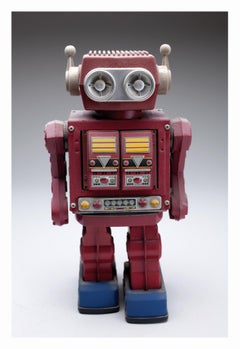
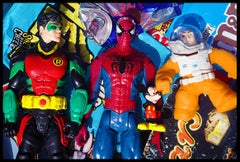
Christian Rothmann ROBOTNICS Series C-Print 2019 Edition S (Edition of 10) 12 x 8.3 inches (30.5 x 21 cm) Signed, dated and numbered verso Other Edition Sizes available: - Edition M (Edition of 6) 35.4 x 23.6 inches (90 x 60 cm) - Edition L (Edition of 6) 47.2 x 31.5 inches (120 x 80 cm) - Edition XL (Edition of 3) 88.8 x 58.8 inches (225 x 150 cm) PUR - Price Upon Request -------------- Since 1979 Christian Rothmann had more than 40 solo and 80 group exhibitions worldwide. Christian Rothmann had guest lectures, residencies, art fairs and biennials in Europe, Japan, USA, Australia and Korea. Christian Rothmann (born 1954 in Kędzierzyn, Poland ) is a painter, photographer, and graphic artist.⁠ ⁠ In 1976 he first studied at the “Hochschule für Gestaltung” in Offenbach, Germany and moved to Berlin in 1977, where he graduated in 1983 at the “Hochschule der Künste”. From 1983 to 1995 he taught at the university as a lecturer and as an artist with a focus on screenprinting and American art history. To date, a versatile body of work has been created, which includes not only paintings but also long-standing photo projects, videos, and public art.⁠ ⁠ Guest lectures, teaching assignments, scholarships and exhibitions regularly lead Rothmann to travel home and abroad.⁠ ------------------------ Rothmann's Robots These creatures date back to another era, and they connect the past and the future. They were found by Christian Rothmann, a Berlin artist, collector and traveler through time and the world: In shops in Germany and Japan, Israel and America, his keen eye picks out objects cast aside by previous generations, but which lend themselves to his own work. In a similar way, he came across a stash of historic toy robots of varied provenance collected by a Berlin gallery owner many years ago. Most of them were screwed and riveted together in the 1960s and 70s by Metal House, a Japanese company that still exists today. In systematically photographing these humanoids made of tin - and later plastic - Rothmann is paraphrasing the idea of appropriation art. Unknown names designed and made the toys, which some five decades on, Rothmann depicts and emblematizes in his extensive photo sequence. In their photographs of Selim Varol's vast toy collection, his German colleagues Daniel and Geo Fuchs captured both the stereotypical and individual in plastic figures that imitate superheroes which were and still are generally manufactured somewhere in Asia. Christian Rothmann looks his robots deep in their artificially stylized, painted or corrugated eyes - or more aptly, their eye slits - and although each has a certain degree of individuality, the little figures remain unknown to us; they project nothing and are not alter egos. Rothmann trains his lens on their faces and expressions, and thus, his portraits are born. Up extremely close, dust, dents, and rust become visible. In other words, what we see is time-traces of time that has passed since the figures were made, or during their period in a Berlin attic, and - considering that he robots date back to Rothmann's childhood - time lived by the photographer and recipients of his pictures. But unlike dolls, these mechanical robots bear no reference to the ideal of beauty at the time of their manufacture, and their features are in no way modeled on a concrete child's face. In this art project the robots appear as figures without a context, photographed face-on, cropped in front of a neutral background and reduced to their qualities of form. But beyond the reproduction and documentation a game with surfaces is going on; our view lingers on the outer skin of the object, or on the layer over it. The inside - which can be found beneath - is to an extent metaphysical, occurring inside the observer's mind. Only rarely is there anything to see behind the robot's helmet. When an occasional human face does peer out, it turns the figure into a robot-like protective casing for an astronaut of the future. If we really stop and think about modern toys, let's say those produced from the mid 20th century, when Disney and Marvel films were already stimulating a massive appetite for merchandising, the question must be: do such fantasy and hybrid creatures belong, does something like artificial intelligence already belong to the broader community of humans and animals? It is already a decade or two since the wave of Tamagotchis washed in from Japan, moved children to feed and entertain their newly born electronic chicks in the way they would a real pet, or to run the risk of seeing them die. It was a new form of artificial life, but the relationship between people and machines becomes problematic when the machines or humanoid robots have excellent fine motor skills and artificial intelligence and sensitivity on a par with, or even greater than that of humans. Luckily we have not reached that point yet, even if Hollywood adaptations would have us believe we are not far away. Rothmann's robots are initially sweet toys, and each toy is known to have a different effect on children and adults. They are conceived by (adult) designers as a means of translating or retelling history or reality through miniature animals, knights, and soldiers. In the case of monsters, mythical creatures, and robots, it is more about creating visions of the future and parallel worlds. Certainly, since the success of fantasy books and films such as Lord of the Rings or The Hobbit, we see the potential for vast enthusiasm for such parallel worlds. Successful computer and online games such as World of Warcraft, or the creation of avatars are also interesting worldwide phenomena of virtual realities that are not only relevant for children and teens. So when a middle-aged Berlin photographic artist (like Christian Rothmann) chooses to study 120 toy robots with great difference in form, it represents a journey back to his own childhood - even if at the time, he played with a steam engine rather than a robot. Once batteries had been inserted, some of the largely male or gender-neutral robots, could flash, shoot, turn around and even do more complicated things. Some can even still do it today - albeit clumsily. This, of course, can only be seen on film, but the artist intends to document that as well; to feature the robots in filmic works of art. The positioning of the figures in the studio is the same as the tableau of pictures in the exhibition room. In this way, one could say Rothmann deploys one robot after the other. This systematic approach enables a comparative view; the extreme enlargement of what are actually small and manageable figures is like the macro vision of insects whose fascinating, sometimes monster-like appearance only becomes visible when they are blown up a hundredfold. The same thing goes for the robots; in miniature form, they seem harmless and cute, but if they were larger than humans and made noises to match, they would seem more threatening. Some of the tin figures...
Category

2010s Contemporary Photography

Materials

C Print

Untitled (from ROBOTNICS Series)

Untitled (from ROBOTNICS Series)

By Christian Rothmann

Located in Kansas City, MO

Christian Rothmann ROBOTNICS Series C-Print 2019 Edition S (Edition of 10) 12 x 8.3 inches (30.5 x 21 cm) Signed, dated and numbered verso Other Edition Sizes available: - Edition ...

Category

2010s Outsider Art Photography

Materials

C Print

Untitled (from ROBOTNICS Series)

Untitled (from ROBOTNICS Series)

By Christian Rothmann

Located in Kansas City, MO

Christian Rothmann ROBOTNICS Series C-Print 2019 Edition S (Edition of 10) 12 x 8.3 inches (30.5 x 21 cm) Signed, dated and numbered verso Other Edition Sizes available: - Edition M (Edition of 6) 35.4 x 23.6 inches (90 x 60 cm) - Edition L (Edition of 6) 47.2 x 31.5 inches (120 x 80 cm) - Edition XL (Edition of 3) 88.8 x 58.8 inches (225 x 150 cm) PUR - Price Upon Request -------------- Since 1979 Christian Rothmann had more than 40 solo and 80 group exhibitions worldwide. Christian Rothmann had guest lectures, residencies, art fairs and biennials in Europe, Japan, USA, Australia and Korea. Christian Rothmann (born 1954 in Kędzierzyn, Poland ) is a painter, photographer, and graphic artist.⁠ ⁠ In 1976 he first studied at the “Hochschule für Gestaltung” in Offenbach, Germany and moved to Berlin in 1977, where he graduated in 1983 at the “Hochschule der Künste”. From 1983 to 1995 he taught at the university as a lecturer and as an artist with a focus on screenprinting and American art history. To date, a versatile body of work has been created, which includes not only paintings but also long-standing photo projects, videos, and public art.⁠ ⁠ Guest lectures, teaching assignments, scholarships and exhibitions regularly lead Rothmann to travel home and abroad.⁠ ------------------------ Rothmann's Robots These creatures date back to another era, and they connect the past and the future. They were found by Christian Rothmann, a Berlin artist, collector and traveler through time and the world: In shops in Germany and Japan, Israel and America, his keen eye picks out objects cast aside by previous generations, but which lend themselves to his own work. In a similar way, he came across a stash of historic toy robots of varied provenance collected by a Berlin gallery owner many years ago. Most of them were screwed and riveted together in the 1960s and 70s by Metal House, a Japanese company that still exists today. In systematically photographing these humanoids made of tin - and later plastic - Rothmann is paraphrasing the idea of appropriation art. Unknown names designed and made the toys, which some five decades on, Rothmann depicts and emblematizes in his extensive photo sequence. In their photographs of Selim Varol's vast toy collection, his German colleagues Daniel and Geo Fuchs captured both the stereotypical and individual in plastic figures that imitate superheroes which were and still are generally manufactured somewhere in Asia. Christian Rothmann looks his robots deep in their artificially stylized, painted or corrugated eyes - or more aptly, their eye slits - and although each has a certain degree of individuality, the little figures remain unknown to us; they project nothing and are not alter egos. Rothmann trains his lens on their faces and expressions, and thus, his portraits are born. Up extremely close, dust, dents, and rust become visible. In other words, what we see is time-traces of time that has passed since the figures were made, or during their period in a Berlin attic, and - considering that he robots date back to Rothmann's childhood - time lived by the photographer and recipients of his pictures. But unlike dolls, these mechanical robots bear no reference to the ideal of beauty at the time of their manufacture, and their features are in no way modeled on a concrete child's face. In this art project the robots appear as figures without a context, photographed face-on, cropped in front of a neutral background and reduced to their qualities of form. But beyond the reproduction and documentation a game with surfaces is going on; our view lingers on the outer skin of the object, or on the layer over it. The inside - which can be found beneath - is to an extent metaphysical, occurring inside the observer's mind. Only rarely is there anything to see behind the robot's helmet. When an occasional human face does peer out, it turns the figure into a robot-like protective casing for an astronaut of the future. If we really stop and think about modern toys, let's say those produced from the mid 20th century, when Disney and Marvel films were already stimulating a massive appetite for merchandising, the question must be: do such fantasy and hybrid creatures belong, does something like artificial intelligence already belong to the broader community of humans and animals? It is already a decade or two since the wave of Tamagotchis washed in from Japan, moved children to feed and entertain their newly born electronic chicks in the way they would a real pet, or to run the risk of seeing them die. It was a new form of artificial life, but the relationship between people and machines becomes problematic when the machines or humanoid robots have excellent fine motor skills and artificial intelligence and sensitivity on a par with, or even greater than that of humans. Luckily we have not reached that point yet, even if Hollywood adaptations would have us believe we are not far away. Rothmann's robots are initially sweet toys, and each toy is known to have a different effect on children and adults. They are conceived by (adult) designers as a means of translating or retelling history or reality through miniature animals, knights, and soldiers. In the case of monsters, mythical creatures, and robots, it is more about creating visions of the future and parallel worlds. Certainly, since the success of fantasy books and films such as Lord of the Rings or The Hobbit, we see the potential for vast enthusiasm for such parallel worlds. Successful computer and online games such as World of Warcraft...

Category

2010s Modern Photography

Materials

C Print

Untitled (from ROBOTNICS Series)

Untitled (from ROBOTNICS Series)

By Christian Rothmann

Located in Kansas City, MO

Christian Rothmann ROBOTNICS Series C-Print 2019 Edition S (Edition of 10) 12 x 8.3 inches (30.5 x 21 cm) Signed, dated and numbered verso Other Edition Sizes available: - Edition ...

Category

2010s Contemporary Photography

Materials

C Print

Untitled (from ROBOTNICS Series)

Untitled (from ROBOTNICS Series)

By Christian Rothmann

Located in Kansas City, MO

Christian Rothmann ROBOTNICS Series C-Print 2019 Edition S (Edition of 10) 12 x 8.3 inches (30.5 x 21 cm) Signed, dated and numbered verso Other Edition Sizes available: - Edition ...

Category

2010s Outsider Art Photography

Materials

C Print

Untitled (from ROBOTNICS Series)

Untitled (from ROBOTNICS Series)

By Christian Rothmann

Located in Kansas City, MO

Christian Rothmann ROBOTNICS Series C-Print 2019 Edition S (Edition of 10) 12 x 8.3 inches (30.5 x 21 cm) Signed, dated and numbered verso Other Edition Sizes available: - Edition M (Edition of 6) 35.4 x 23.6 inches (90 x 60 cm) - Edition L (Edition of 6) 47.2 x 31.5 inches (120 x 80 cm) - Edition XL (Edition of 3) 88.8 x 58.8 inches (225 x 150 cm) PUR - Price Upon Request -------------- Since 1979 Christian Rothmann had more than 40 solo and 80 group exhibitions worldwide. Christian Rothmann had guest lectures, residencies, art fairs and biennials in Europe, Japan, USA, Australia and Korea. Christian Rothmann (born 1954 in Kędzierzyn, Poland ) is a painter, photographer, and graphic artist.⁠ ⁠ In 1976 he first studied at the “Hochschule für Gestaltung” in Offenbach, Germany and moved to Berlin in 1977, where he graduated in 1983 at the “Hochschule der Künste”. From 1983 to 1995 he taught at the university as a lecturer and as an artist with a focus on screenprinting and American art history. To date, a versatile body of work has been created, which includes not only paintings but also long-standing photo projects, videos, and public art.⁠ ⁠ Guest lectures, teaching assignments, scholarships and exhibitions regularly lead Rothmann to travel home and abroad.⁠ ------------------------ Rothmann's Robots These creatures date back to another era, and they connect the past and the future. They were found by Christian Rothmann, a Berlin artist, collector and traveler through time and the world: In shops in Germany and Japan, Israel and America, his keen eye picks out objects cast aside by previous generations, but which lend themselves to his own work. In a similar way, he came across a stash of historic toy robots of varied provenance collected by a Berlin gallery owner many years ago. Most of them were screwed and riveted together in the 1960s and 70s by Metal House, a Japanese company that still exists today. In systematically photographing these humanoids made of tin - and later plastic - Rothmann is paraphrasing the idea of appropriation art. Unknown names designed and made the toys, which some five decades on, Rothmann depicts and emblematizes in his extensive photo sequence. In their photographs of Selim Varol's vast toy collection, his German colleagues Daniel and Geo Fuchs captured both the stereotypical and individual in plastic figures that imitate superheroes which were and still are generally manufactured somewhere in Asia. Christian Rothmann looks his robots deep in their artificially stylized, painted or corrugated eyes - or more aptly, their eye slits - and although each has a certain degree of individuality, the little figures remain unknown to us; they project nothing and are not alter egos. Rothmann trains his lens on their faces and expressions, and thus, his portraits are born. Up extremely close, dust, dents, and rust become visible. In other words, what we see is time-traces of time that has passed since the figures were made, or during their period in a Berlin attic, and - considering that he robots date back to Rothmann's childhood - time lived by the photographer and recipients of his pictures. But unlike dolls, these mechanical robots bear no reference to the ideal of beauty at the time of their manufacture, and their features are in no way modeled on a concrete child's face. In this art project the robots appear as figures without a context, photographed face-on, cropped in front of a neutral background and reduced to their qualities of form. But beyond the reproduction and documentation a game with surfaces is going on; our view lingers on the outer skin of the object, or on the layer over it. The inside - which can be found beneath - is to an extent metaphysical, occurring inside the observer's mind. Only rarely is there anything to see behind the robot's helmet. When an occasional human face does peer out, it turns the figure into a robot-like protective casing for an astronaut of the future. If we really stop and think about modern toys, let's say those produced from the mid 20th century, when Disney and Marvel films were already stimulating a massive appetite for merchandising, the question must be: do such fantasy and hybrid creatures belong, does something like artificial intelligence already belong to the broader community of humans and animals? It is already a decade or two since the wave of Tamagotchis washed in from Japan, moved children to feed and entertain their newly born electronic chicks in the way they would a real pet, or to run the risk of seeing them die. It was a new form of artificial life, but the relationship between people and machines becomes problematic when the machines or humanoid robots have excellent fine motor skills and artificial intelligence and sensitivity on a par with, or even greater than that of humans. Luckily we have not reached that point yet, even if Hollywood adaptations would have us believe we are not far away. Rothmann's robots are initially sweet toys, and each toy is known to have a different effect on children and adults. They are conceived by (adult) designers as a means of translating or retelling history or reality through miniature animals, knights, and soldiers. In the case of monsters, mythical creatures, and robots, it is more about creating visions of the future and parallel worlds. Certainly, since the success of fantasy books and films such as Lord of the Rings or The Hobbit, we see the potential for vast enthusiasm for such parallel worlds. Successful computer and online games such as World of Warcraft, or the creation of avatars are also interesting worldwide phenomena of virtual realities that are not only relevant for children and teens. So when a middle-aged Berlin photographic artist (like Christian Rothmann) chooses to study 120 toy robots with great difference in form, it represents a journey back to his own childhood - even if at the time, he played with a steam engine rather than a robot. Once batteries had been inserted, some of the largely male or gender-neutral robots, could flash, shoot, turn around and even do more complicated things. Some can even still do it today - albeit clumsily. This, of course, can only be seen on film, but the artist intends to document that as well; to feature the robots in filmic works of art. The positioning of the figures in the studio is the same as the tableau of pictures in the exhibition room. In this way, one could say Rothmann deploys one robot after the other. This systematic approach enables a comparative view; the extreme enlargement of what are actually small and manageable figures is like the macro vision of insects whose fascinating, sometimes monster-like appearance only becomes visible when they are blown up a hundredfold. The same thing goes for the robots; in miniature form, they seem harmless and cute, but if they were larger than humans and made noises to match, they would seem more threatening. Some of the tin figures...

Category

2010s Contemporary Photography

Materials

C Print

Untitled (from ROBOTNICS Series)

Untitled (from ROBOTNICS Series)

By Christian Rothmann

Located in Kansas City, MO

Christian Rothmann ROBOTNICS Series C-Print 2019 Edition S (Edition of 10) 12 x 8.3 inches (30.5 x 21 cm) Signed, dated and numbered verso Other Edition Sizes available: - Edition M (Edition of 6) 35.4 x 23.6 inches (90 x 60 cm) - Edition L (Edition of 6) 47.2 x 31.5 inches (120 x 80 cm) - Edition XL (Edition of 3) 88.8 x 58.8 inches (225 x 150 cm) PUR - Price Upon Request -------------- Since 1979 Christian Rothmann had more than 40 solo and 80 group exhibitions worldwide. Christian Rothmann had guest lectures, residencies, art fairs and biennials in Europe, Japan, USA, Australia and Korea. Christian Rothmann (born 1954 in Kędzierzyn, Poland ) is a painter, photographer, and graphic artist.⁠ ⁠ In 1976 he first studied at the “Hochschule für Gestaltung” in Offenbach, Germany and moved to Berlin in 1977, where he graduated in 1983 at the “Hochschule der Künste”. From 1983 to 1995 he taught at the university as a lecturer and as an artist with a focus on screenprinting and American art history. To date, a versatile body of work has been created, which includes not only paintings but also long-standing photo projects, videos, and public art.⁠ ⁠ Guest lectures, teaching assignments, scholarships and exhibitions regularly lead Rothmann to travel home and abroad.⁠ ------------------------ Rothmann's Robots These creatures date back to another era, and they connect the past and the future. They were found by Christian Rothmann, a Berlin artist, collector and traveler through time and the world: In shops in Germany and Japan, Israel and America, his keen eye picks out objects cast aside by previous generations, but which lend themselves to his own work. In a similar way, he came across a stash of historic toy robots of varied provenance collected by a Berlin gallery owner many years ago. Most of them were screwed and riveted together in the 1960s and 70s by Metal House, a Japanese company that still exists today. In systematically photographing these humanoids made of tin - and later plastic - Rothmann is paraphrasing the idea of appropriation art. Unknown names designed and made the toys, which some five decades on, Rothmann depicts and emblematizes in his extensive photo sequence. In their photographs of Selim Varol's vast toy collection, his German colleagues Daniel and Geo Fuchs captured both the stereotypical and individual in plastic figures that imitate superheroes which were and still are generally manufactured somewhere in Asia. Christian Rothmann looks his robots deep in their artificially stylized, painted or corrugated eyes - or more aptly, their eye slits - and although each has a certain degree of individuality, the little figures remain unknown to us; they project nothing and are not alter egos. Rothmann trains his lens on their faces and expressions, and thus, his portraits are born. Up extremely close, dust, dents, and rust become visible. In other words, what we see is time-traces of time that has passed since the figures were made, or during their period in a Berlin attic, and - considering that he robots date back to Rothmann's childhood - time lived by the photographer and recipients of his pictures. But unlike dolls, these mechanical robots bear no reference to the ideal of beauty at the time of their manufacture, and their features are in no way modeled on a concrete child's face. In this art project the robots appear as figures without a context, photographed face-on, cropped in front of a neutral background and reduced to their qualities of form. But beyond the reproduction and documentation a game with surfaces is going on; our view lingers on the outer skin of the object, or on the layer over it. The inside - which can be found beneath - is to an extent metaphysical, occurring inside the observer's mind. Only rarely is there anything to see behind the robot's helmet. When an occasional human face does peer out, it turns the figure into a robot-like protective casing for an astronaut of the future. If we really stop and think about modern toys, let's say those produced from the mid 20th century, when Disney and Marvel films were already stimulating a massive appetite for merchandising, the question must be: do such fantasy and hybrid creatures belong, does something like artificial intelligence already belong to the broader community of humans and animals? It is already a decade or two since the wave of Tamagotchis washed in from Japan, moved children to feed and entertain their newly born electronic chicks in the way they would a real pet, or to run the risk of seeing them die. It was a new form of artificial life, but the relationship between people and machines becomes problematic when the machines or humanoid robots have excellent fine motor skills and artificial intelligence and sensitivity on a par with, or even greater than that of humans. Luckily we have not reached that point yet, even if Hollywood adaptations would have us believe we are not far away. Rothmann's robots are initially sweet toys, and each toy is known to have a different effect on children and adults. They are conceived by (adult) designers as a means of translating or retelling history or reality through miniature animals, knights, and soldiers. In the case of monsters, mythical creatures, and robots, it is more about creating visions of the future and parallel worlds. Certainly, since the success of fantasy books and films such as Lord of the Rings or The Hobbit, we see the potential for vast enthusiasm for such parallel worlds. Successful computer and online games such as World of Warcraft, or the creation of avatars are also interesting worldwide phenomena of virtual realities that are not only relevant for children and teens. So when a middle-aged Berlin photographic artist (like Christian Rothmann) chooses to study 120 toy robots with great difference in form, it represents a journey back to his own childhood - even if at the time, he played with a steam engine rather than a robot. Once batteries had been inserted, some of the largely male or gender-neutral robots, could flash, shoot, turn around and even do more complicated things. Some can even still do it today - albeit clumsily. This, of course, can only be seen on film, but the artist intends to document that as well; to feature the robots in filmic works of art. The positioning of the figures in the studio is the same as the tableau of pictures in the exhibition room. In this way, one could say Rothmann deploys one robot after the other. This systematic approach enables a comparative view; the extreme enlargement of what are actually small and manageable figures is like the macro vision of insects whose fascinating, sometimes monster-like appearance only becomes visible when they are blown up a hundredfold. The same thing goes for the robots; in miniature form, they seem harmless and cute, but if they were larger than humans and made noises to match, they would seem more threatening. Some of the tin figures...

Category

2010s Street Art Photography

Materials

C Print

Untitled (from ROBOTNICS Series)

Untitled (from ROBOTNICS Series)

By Christian Rothmann

Located in Kansas City, MO

Christian Rothmann ROBOTNICS Series C-Print 2019 Edition S (Edition of 10) 12 x 8.3 inches (30.5 x 21 cm) Signed, dated and numbered verso Other Edition Sizes available: - Edition M (Edition of 6) 35.4 x 23.6 inches (90 x 60 cm) - Edition L (Edition of 6) 47.2 x 31.5 inches (120 x 80 cm) - Edition XL (Edition of 3) 88.8 x 58.8 inches (225 x 150 cm) PUR - Price Upon Request -------------- Since 1979 Christian Rothmann had more than 40 solo and 80 group exhibitions worldwide. Christian Rothmann had guest lectures, residencies, art fairs and biennials in Europe, Japan, USA, Australia and Korea. Christian Rothmann (born 1954 in Kędzierzyn, Poland ) is a painter, photographer, and graphic artist.⁠ ⁠ In 1976 he first studied at the “Hochschule für Gestaltung” in Offenbach, Germany and moved to Berlin in 1977, where he graduated in 1983 at the “Hochschule der Künste”. From 1983 to 1995 he taught at the university as a lecturer and as an artist with a focus on screenprinting and American art history. To date, a versatile body of work has been created, which includes not only paintings but also long-standing photo projects, videos, and public art.⁠ ⁠ Guest lectures, teaching assignments, scholarships and exhibitions regularly lead Rothmann to travel home and abroad.⁠ ------------------------ Rothmann's Robots These creatures date back to another era, and they connect the past and the future. They were found by Christian Rothmann, a Berlin artist, collector and traveler through time and the world: In shops in Germany and Japan, Israel and America, his keen eye picks out objects cast aside by previous generations, but which lend themselves to his own work. In a similar way, he came across a stash of historic toy robots of varied provenance collected by a Berlin gallery owner many years ago. Most of them were screwed and riveted together in the 1960s and 70s by Metal House, a Japanese company that still exists today. In systematically photographing these humanoids made of tin - and later plastic - Rothmann is paraphrasing the idea of appropriation art. Unknown names designed and made the toys, which some five decades on, Rothmann depicts and emblematizes in his extensive photo sequence. In their photographs of Selim Varol's vast toy collection, his German colleagues Daniel and Geo Fuchs captured both the stereotypical and individual in plastic figures that imitate superheroes which were and still are generally manufactured somewhere in Asia. Christian Rothmann looks his robots deep in their artificially stylized, painted or corrugated eyes - or more aptly, their eye slits - and although each has a certain degree of individuality, the little figures remain unknown to us; they project nothing and are not alter egos. Rothmann trains his lens on their faces and expressions, and thus, his portraits are born. Up extremely close, dust, dents, and rust become visible. In other words, what we see is time-traces of time that has passed since the figures were made, or during their period in a Berlin attic, and - considering that he robots date back to Rothmann's childhood - time lived by the photographer and recipients of his pictures. But unlike dolls, these mechanical robots bear no reference to the ideal of beauty at the time of their manufacture, and their features are in no way modeled on a concrete child's face. In this art project the robots appear as figures without a context, photographed face-on, cropped in front of a neutral background and reduced to their qualities of form. But beyond the reproduction and documentation a game with surfaces is going on; our view lingers on the outer skin of the object, or on the layer over it. The inside - which can be found beneath - is to an extent metaphysical, occurring inside the observer's mind. Only rarely is there anything to see behind the robot's helmet. When an occasional human face does peer out, it turns the figure into a robot-like protective casing for an astronaut of the future. If we really stop and think about modern toys, let's say those produced from the mid 20th century, when Disney and Marvel films were already stimulating a massive appetite for merchandising, the question must be: do such fantasy and hybrid creatures belong, does something like artificial intelligence already belong to the broader community of humans and animals? It is already a decade or two since the wave of Tamagotchis washed in from Japan, moved children to feed and entertain their newly born electronic chicks in the way they would a real pet, or to run the risk of seeing them die. It was a new form of artificial life, but the relationship between people and machines becomes problematic when the machines or humanoid robots have excellent fine motor skills and artificial intelligence and sensitivity on a par with, or even greater than that of humans. Luckily we have not reached that point yet, even if Hollywood adaptations would have us believe we are not far away. Rothmann's robots are initially sweet toys, and each toy is known to have a different effect on children and adults. They are conceived by (adult) designers as a means of translating or retelling history or reality through miniature animals, knights, and soldiers. In the case of monsters, mythical creatures, and robots, it is more about creating visions of the future and parallel worlds. Certainly, since the success of fantasy books and films such as Lord of the Rings or The Hobbit, we see the potential for vast enthusiasm for such parallel worlds. Successful computer and online games such as World of Warcraft...

Category

2010s Contemporary Photography

Materials

C Print

Untitled (from ROBOTNICS Series)

Untitled (from ROBOTNICS Series)

By Christian Rothmann

Located in Kansas City, MO

Christian Rothmann ROBOTNICS Series C-Print 2019 Edition S (Edition of 10) 12 x 8.3 inches (30.5 x 21 cm) Signed, dated and numbered verso Other Edition Sizes available: - Edition ...

Category

2010s Modern Photography

Materials

C Print

Untitled (from ROBOTNICS Series)

Untitled (from ROBOTNICS Series)

By Christian Rothmann

Located in Kansas City, MO

Christian Rothmann ROBOTNICS Series C-Print 2019 Edition S (Edition of 10) 12 x 8.3 inches (30.5 x 21 cm) Signed, dated and numbered verso Other Edition Sizes available: - Edition ...

Category

2010s Contemporary Photography

Materials

C Print

Untitled (from ROBOTNICS Series)

Untitled (from ROBOTNICS Series)

By Christian Rothmann

Located in Kansas City, MO

Christian Rothmann ROBOTNICS Series C-Print 2019 Edition S (Edition of 10) 12 x 8.3 inches (30.5 x 21 cm) Signed, dated and numbered verso Other Edition Sizes available: - Edition ...

Category

2010s Conceptual Photography

Materials

C Print

Untitled (from ROBOTNICS Series)

Untitled (from ROBOTNICS Series)

By Christian Rothmann

Located in Kansas City, MO

Christian Rothmann ROBOTNICS Series C-Print 2019 Edition S (Edition of 10) 12 x 8.3 inches (30.5 x 21 cm) Signed, dated and numbered verso Other Edition Sizes available: - Edition ...

Category

2010s Futurist Photography

Materials

C Print

Untitled (from ROBOTNICS Series)

Untitled (from ROBOTNICS Series)

By Christian Rothmann

Located in Kansas City, MO

Christian Rothmann ROBOTNICS Series C-Print 2019 Edition S (Edition of 10) 12 x 8.3 inches (30.5 x 21 cm) Signed, dated and numbered verso Other Edition Sizes available: - Edition ...

Category

2010s Modern Photography

Materials

C Print