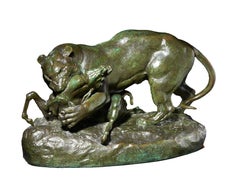
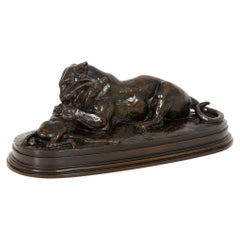
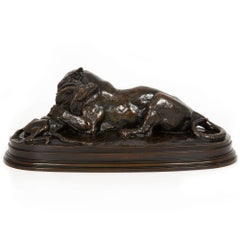
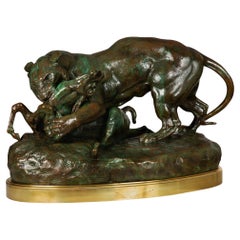
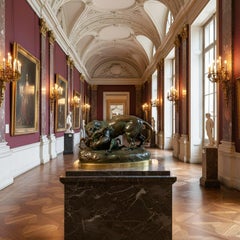
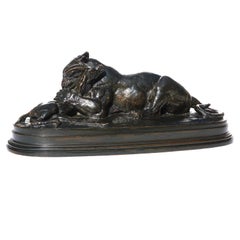
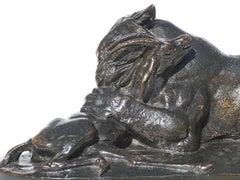
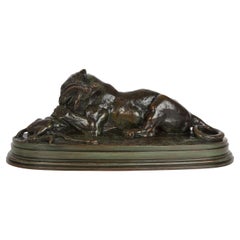
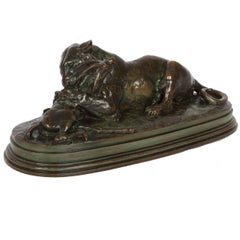
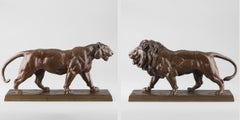
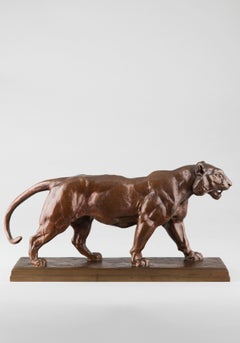
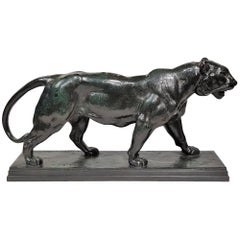
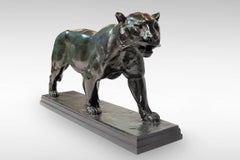
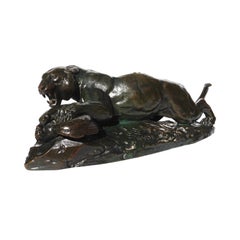
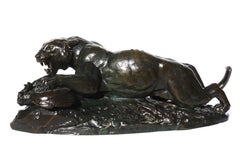
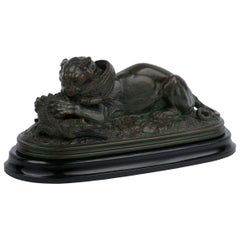
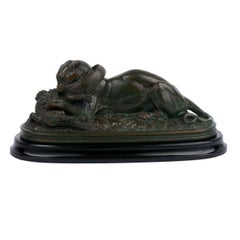
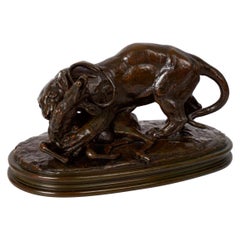
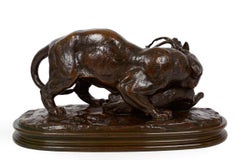
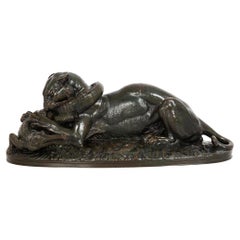
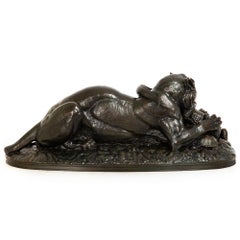
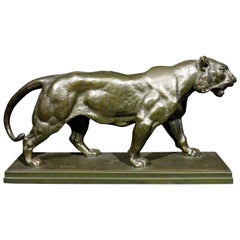
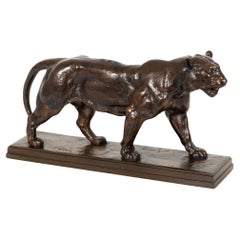
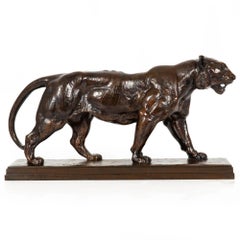
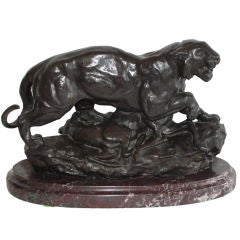
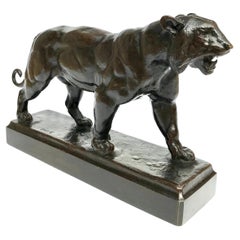
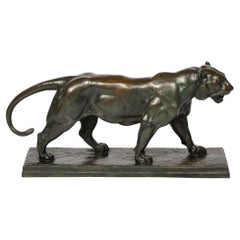
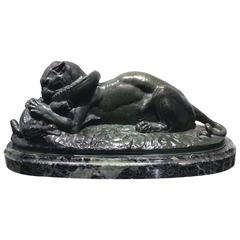
At 1stDibs, there are many versions of the ideal piece of barye tiger bronze for your home. Frequently made of
bronze,
metal and
marble, every item from our selection of barye tiger bronze was constructed with great care. Whether you’re looking for newer or older items, there are earlier versions available from the 19th Century and newer variations made as recently as the 20th Century. When you’re browsing for the right choice in our collection of barye tiger bronze, those designed in styles are of considerable interest. Many designers have produced at least one well-made object in our assortment of barye tiger bronze over the years, but those crafted by
Antoine-Louis Barye and
F. Barbedienne Foundry are often thought to be among the most beautiful.
A piece of barye tiger bronze can differ in price owing to various characteristics — the average selling price 1stDibs is $7,867, while the lowest priced sells for $2,400 and the highest can go for as much as $17,500.
The son of a goldsmith, Parisian born Antoine-Louis Barye was a sculptor of animal subjects and acclaimed, not only for his apparent skill but as the founder of what became known as the French Animaliers School. Among his patrons were representatives of the state government and royalty, including the Duke of Orleans and the Dukes of Luynes, Montpensier and Nemours.
Well compensated financially, Barye was able to buy the best of materials and hire the country's most skilled foundry craftsmen. The foundry he hired was owned by Ferdinand Barbedienne and casts from this period were stamped with the letters, FB. However, he did not make a lot of money from his work because he was such a perfectionist that often he would not sell his work because he thought it was not "quite right." In 1848, he declared bankruptcy and his molds and plaster casts were sold along with the copyrights.
Barye's specialty was aroused, angry-seeming wild game such as lions and tigers and elephants, but he also did equestrian groups and mythology figures. In order to do realistic depictions of animal anatomy, he spent much time at the Jardin des Plantes in Paris. His early training was as an apprentice to a metal engraver, but being drafted in the army in 1812 ended that education. In 1832, he had established his studio, and unique at that time was his method of cold stamping his bronze casts so that each one had a special number. He had his first entry, The Milo of Croton, in the Paris Salon in 1819, winning a second prize. In 1831, a work regarded as a masterpiece, Tiger Devouring a Gavial, was in the Salon and purchased for the Luxembourg Gardens, which is now in the Louvre. However, many of his subsequent Salon submissions were rejected and so angered him that between 1836 and 1851, he refused to submit entries. In 1851, he again exhibited at the Salon with Jaguar Devouring A Hare, and this work, like the 1831 entry, was placed in the Luxembourg Gardens and eventually in the Louvre.
In spite of problems with the Salon, Barye received many accolades for his work, and the period of 1837–48 was considered the most productive time of his career. However, in 1848, when he lost control of his work and it was reproduced by others including Martin and Barbedienne, the sculptures, according to some art professionals, are not as skillfully executed. In 1848, after his bankruptcy, Barye became director of Casts and Models in the Louvre, until 1850, when he was replaced by Emmanuel Fremiet. It was a very difficult time for him. However, within a few years, he began receiving accolades for the quality and uniqueness of his work, and people began appreciating the powerful images of his sculpture, especially the wildlife in their natural surroundings. In 1854, he was appointed Master of Zoological Drawing in the Musée National d'Histoire Naturelle and held this position until his death in 1875.