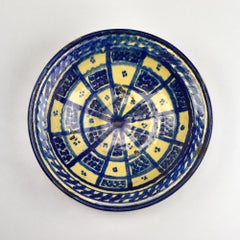
Blue Fez Pottery

19th Century Moroccan Cobalt Blue Glazed Footed Ceramic Bowl from Fez

19th Century Moroccan Cobalt Blue Glazed Footed Ceramic Bowl from Fez

Located in Bad Säckingen, DE

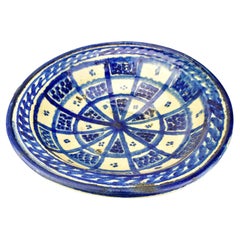
An antique 19th-century Moroccan ceramic bowl originates from Fez, a historic center of pottery craftsmanship.

Category

Antique 19th Century Moroccan Tribal Decorative Bowls

Materials

Ceramic, Pottery, Terracotta

Get Updated with New Arrivals
Save "Blue Fez Pottery", and we’ll notify you when there are new listings in this category.

Finding the Right Decorative-bowls for You

Vintage, new and antique decorative bowls have been an important part of the home for centuries, although their uses have changed over the years. While functional examples of bowls date back thousands of years, ornamental design on bowls as well as baskets likewise has a rich heritage, from the carved bowls of the Maya to the plaited river-cane baskets of Indigenous people in the Southeast United States.

Decorative objects continue to bring character and art into a space. An outdoor gathering can become a sophisticated garden party with the addition of a few natural-fiber baskets to hold blankets or fruit on a table, as demonstrated in the interior design work by firms such as Alexander Design.

Elsewhere, Richard Haining’s reclaimed wood vases and bowls can express eco-consciousness. Sculptural handmade cast concrete bowls like those made by the Oakland, California–based UMÉ Studio introduce compelling textures to your dining room table.

Minimalist ceramic decorative bowls of varying colors can evoke a feeling of human connectedness through their association with handmade craftsmanship, such as in the rooms envisioned by South African interior designer Kelly Hoppen. And you can elevate any space with ceramic bowls that match the color scheme.

Browse the 1stDibs collection of decorative bowls and explore the endless options available.
Questions About Blue Fez Pottery

  • 1stDibs ExpertApril 5, 2022
    Blue pottery can be called a number of things depending on its origins. Pieces produced in the Netherlands are known as Deftware, while blue earthenware from Wedgwood is Jasperware. Pottery from Jaipur, India, is also referred to as blue pottery. On 1stDibs, shop a large selection of pottery.
  • 1stDibs ExpertNovember 2, 2021
    Blue and white china is also referred to as blue and white pottery or blue and white porcelain. Chinese export porcelain has long been a part of trade between East Asia and the West, and it is rooted in the days of the Silk Road. Blue patterns are painted over the white pottery, and the porcelain is decorated under a glaze with cobalt oxide, which gives it a blue color. Find a collection of antique and vintage blue and white pottery on 1stDibs today.
  • 1stDibs ExpertApril 5, 2022
    How old blue and white pottery is depends on its type. Asian blue and white pottery may date back all the way to the 14th century or be much newer. Delftware pottery came into production during the 16th century. Shop a large selection of blue and white pottery on 1stDibs.
  • 1stDibs ExpertSeptember 23, 2024
    Japanese blue pottery is called sometsuke. When translated literally from Japanese, the word means "with dye." It refers to the fact that sometsuke pottery gets its beautiful color from applying a cobalt dye underglaze on white bisque ceramic. Find a wide variety of Japanese pottery from some of the world's top sellers on 1stDibs.
  • 1stDibs ExpertApril 5, 2022
    Blue and white Chinese pottery is called Qinghua, and is amongst China’s most famous china. It is characterized by its underglaze ceramic finish, decorated with ornate cobalt blue pigment. On 1stDibs, find a collection of authentic Qinghua porcelain from some of the world’s top sellers.