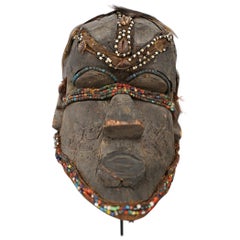
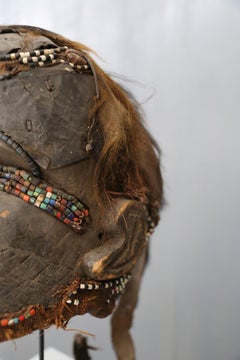
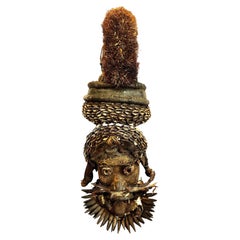
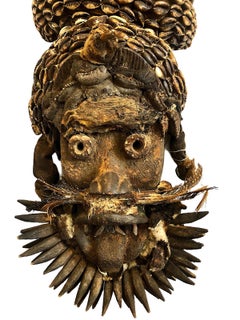
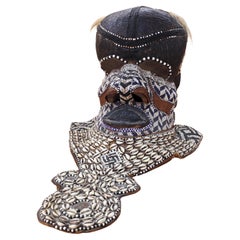
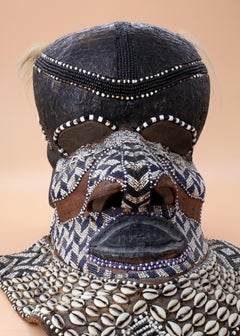
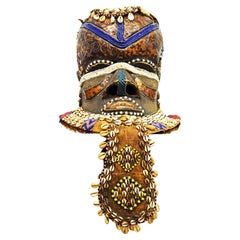
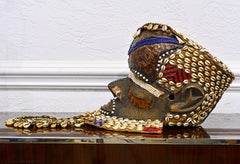
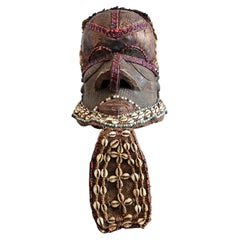
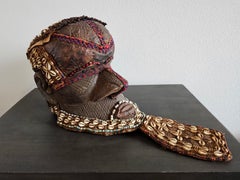
Today, art enthusiasts and venturesome interior designers find a lot to love and appreciate about antique and vintage masks, particularly as they have earned a distinct place amid a collection of folk art and other collectibles and curiosities in contemporary homes.
Folk art refers to art that people, not classically trained, created for either utilitarian or decorative purposes. With respect to visual art in folk art, it is typically reflective of a community’s culture and usually handmade by craftspeople working within a popular tradition. Masks, as part of this history, have been used in carnivals, theater, medicine, therapy, religion and more. The use of masks in rituals and sacred ceremonies goes back thousands of years, and masks in general are believed to be much older. And all kinds of other uses have been found for masks and face coverings over time. We have enlisted these accessories for protection, to signal modesty, facilitate flirtation, enable licentiousness or simply to look cool.
Archaeologists found a mask in Palestine that is believed to be 9,000 years old, a Neolithic-era stone mask that may have been part of rituals associated with the worship of ancestors. Some tribal masks are worn as an offering to the gods. Masks are among the most important African art forms, for example, and traditional African masks can be used to lend a concrete form to an invisible spirit. Dancers donning wooden tribal masks celebrate important events to honor their deceased ancestors. These masks are also very important devices for storytelling and sharing the oral history of a community.
For Asian artists, specific colors are used in masks to convey different values and ideas. In Japan, a red Oni mask worn by performers during a festival might signify anger, while in China’s Peking Opera, a mask that has been hand-painted gold would be worn by an immortal.
Mexican craftspeople make masks for traditional celebrations and ceremonial dances. Mexican masks are part of the country’s folk-art traditions that go back thousands of years and play a role in festivals and theater. A common symbol of the Mexican holiday Day of the Dead is a skull, which is widely represented in masks (although the innumerable activities associated with the holiday are by no means universal).
We’re inviting you to explore and pay respect to the long folk-art traditions that underpin mask-making by introducing antique and vintage masks to your space. Find an exciting collection on 1stDibs today.