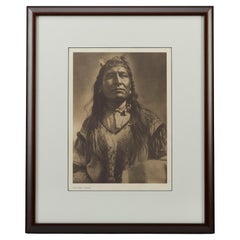
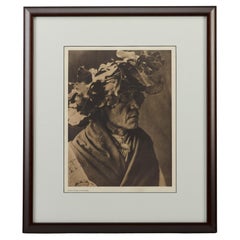
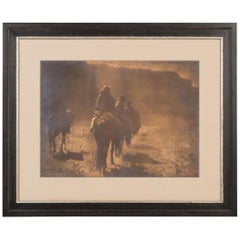
Edward S. Curtis Photography

American, 1868-1952

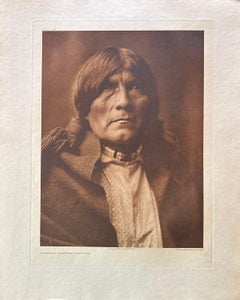
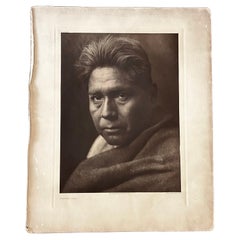
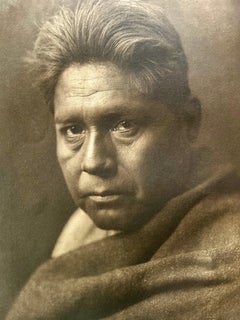
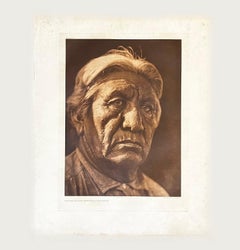
Edward S. Curtis is arguably the most influential photographer of the American West. His work unquestionably ranks among that of the most important photographers of the 20th century.

Curtis was first and foremost; an extremely gifted and sophisticated artist whose work had the duality of being an incredible artistic creation at the same time as being a document of a people. He was uniquely able to create, out of whole cloth, a lasting vision of the American Indian that never existed before it was first seen through his photographic lens.

Edward Curtis produced images of the American Indian that convey a dignity, a universal humanity and a certain remaining majesty that transcend literally all other work ever done on the subject. In his photographs we see images that are uniquely able to stand alone in the world of photography.

Beginning in 1898 and continuing through 1928, Curtis dedicated his life to documenting the traditional lifeways and cultures of 128 American Indian tribes living west of the Mississippi River, from Alaska to the Mexican border.

Curtis was a genius of an artist possessed by a singular obsession to preserve the traditional lifeways of the American Indian.

Astonishingly, focusing all his immense talents over a staggering 30-year period, Curtis accomplished what he set out to do; he did save the traditional lifeways of these Native Peoples but at tremendous personal cost. It cost him his marriage, it cost him his health, and it cost him any possible financial stability he might ever have had.

In spite of all this, he persevered and left a body of work never to be equaled in the field of photography.

Find authentic Edward S. Curtis photography on 1stDibs.

(Biography provided by Bruce Kapson Gallery)

to
1
18
18
Height
to
Width
to
9
1
17
12
2
9
1
2
1
18
6
3
3
1
18
18
18
18
18
33
99
53
30
30
Creator: Edward S. Curtis
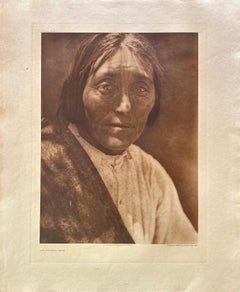
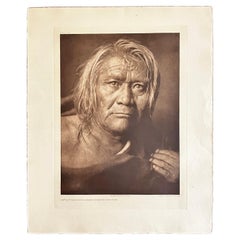
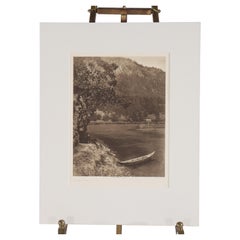
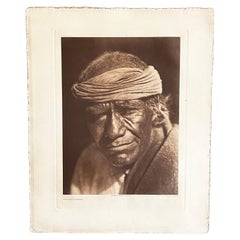
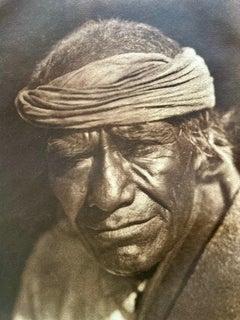
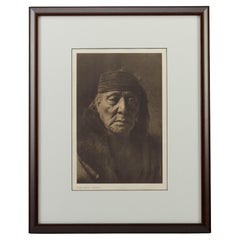
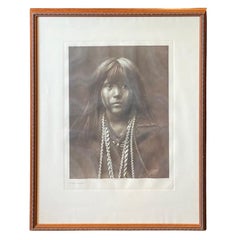
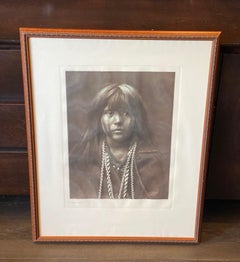
Edward S. Curtis Original Photogravure Mosa Mohave The North American Indian

Edward S. Curtis Original Photogravure Mosa Mohave The North American Indian

By Edward S. Curtis, 1868-1952

Located in Studio City, CA

A wonderful and very coveted original large-format photogravure by iconic American photographer Edward Curtis (1868-1952) titled "Mosa Mohave" Of this image Curtis noted “It would b...

Category

Early 1900s American Native American Antique Edward S. Curtis Photography

Materials

Wood, Paper

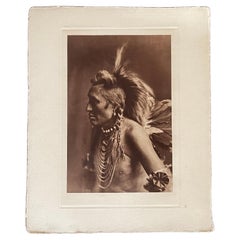
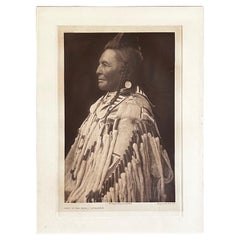
Edward S Curtis (1868-1952) Gambler Piegan, 1900

Edward S Curtis (1868-1952) Gambler Piegan, 1900

By Edward S. Curtis, 1868-1952

Located in CA, CA

Edward S Curtis (1868-1952) Title: Gambler Piegan Plate: 194 Portfolio: Volume 6 Printer: Proof print printed by John Andrew & Son Medium: Photograv...

Category

Early 1900s American American Classical Antique Edward S. Curtis Photography

Materials

Paper

Edward S Curtis (1868-1952)  Kutenai Girls, 1910

Edward S Curtis (1868-1952) Kutenai Girls, 1910

By Edward S. Curtis, 1868-1952

Located in CA, CA

Edward S Curtis (1868-1952) Title: Kutenai Girls Plate: 253 Portfolio: Volume 16 Printer: John Andrew & Son Medium: Photogravure Date: 1910 Dimension...

Category

1910s American American Classical Vintage Edward S. Curtis Photography

Materials

Paper

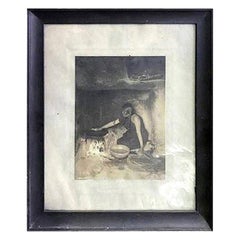
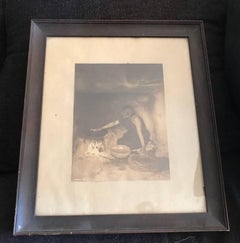
Edward S. Curtis Original Signed and Stamped Silver Toned Platinum Photograph

Edward S. Curtis Original Signed and Stamped Silver Toned Platinum Photograph

By Edward S. Curtis, 1868-1952

Located in Studio City, CA

An original platinum photograph on textured paper by iconic American photographer Edward Curtis titled "The Piki Maker" The photograph is hand-signed in ink, blind-stamped with Cur...

Category

Early 1900s American Native American Antique Edward S. Curtis Photography

Materials

Paper

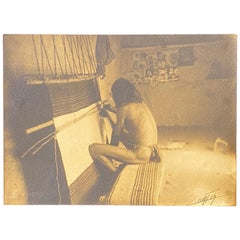
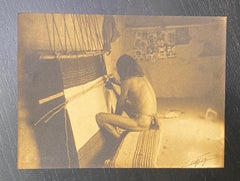
Edward S. Curtis Original Signed Stamped Platinum Photograph Hopi Weaver, 1899

Edward S. Curtis Original Signed Stamped Platinum Photograph Hopi Weaver, 1899

By Edward S. Curtis, 1868-1952

Located in Studio City, CA

An original platinum print on textured paper by iconic American photographer Edward Curtis titled "Hopi Weaver"(sometimes known as "The Weaver"). Curtis was famed for his work with the Native American peoples of the American West at the turn of the century. This image features a male Hopi elder weaving a blanket - an exclusively masculine occupation at the time. This platinum print is hand-signed in ink, blind-stamped with Curtis' embossed studio copyright stamp, and dated 1899. The negative number ("X 743") can possibly also be imperceptibly/faintly seen written by Curtis on the lower-left edge. The photo is mounted on a single, handmade lightweight paper typical of other mounted Curtis photos...

Category

1890s American Native American Antique Edward S. Curtis Photography

Materials

Wood, Paper

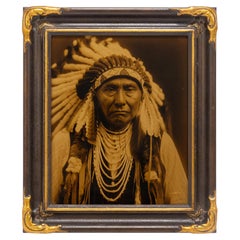
Chief Joseph by E.S. Curtis Gold Tone

Chief Joseph by E.S. Curtis Gold Tone

By Edward S. Curtis, 1868-1952

Located in Coeur d'Alene, ID

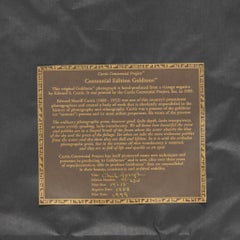
hief Joseph by E.S. Curtis. Centennial edition goldtone 22/200. Negative date 1908, printed date 1999. Pie crust frame. 11" x 14", frame 16" x 19" Chief Joseph of the Nez Perce is s...

Category

Late 20th Century American Edward S. Curtis Photography

Materials

Glass, Paper

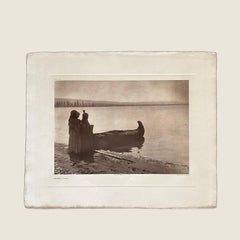
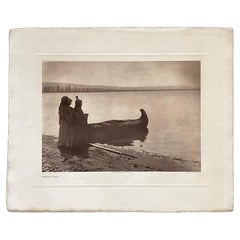
Edward S. Curtis (1868-1952) Scarce Sepia Photogravure Titled "Cree Boatwomen"

Edward S. Curtis (1868-1952) Scarce Sepia Photogravure Titled "Cree Boatwomen"

By Edward S. Curtis, 1868-1952

Located in Bridgeport, CT

Sepia photogravure titled "Cree Boatwomen" depicting Native American women in boat on a lake. The photogravure is titled lower left "Cree Boatwomen". Printed under the photogravure "...

Category

20th Century American Native American Edward S. Curtis Photography

Materials

Acrylic, Wood, Paper

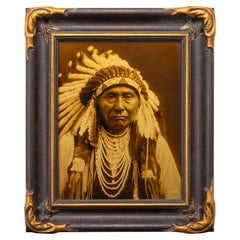
"Chief Joseph" E.S. Curtis Gold Tone

"Chief Joseph" E.S. Curtis Gold Tone

By Edward S. Curtis, 1868-1952

Located in Coeur d'Alene, ID

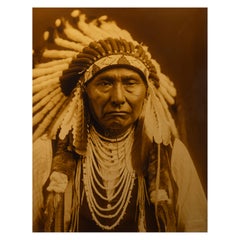
"Chief Joseph" E.S. Curtis. Centennial edition goldtone 22/200. Hand produced in 1999 from a vintage 1908 negative, limited edition 45/250. 13 1/4" x 16 1/4", frame 18 ½” x 22”H Chi...

Category

1990s American Edward S. Curtis Photography

Materials

Wood, Paper

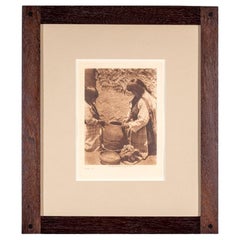
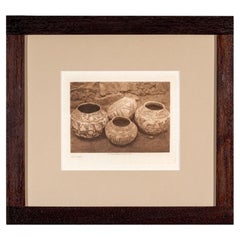
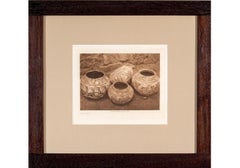
Edward S. Curtis (1868-1952) Scarce Sepia Photogravure Titled "Zuni Pottery"

Edward S. Curtis (1868-1952) Scarce Sepia Photogravure Titled "Zuni Pottery"

By Edward S. Curtis, 1868-1952

Located in Bridgeport, CT

Sepia photogravure titled "Zuni Pottery" depicting a collection of Zuni pottery on the ground set against a stone wall. The photogravure is titled lower l...

Category

20th Century American Native American Edward S. Curtis Photography

Materials

Acrylic, Wood, Paper

Edward S Curtis (1868-1952) Shot in The Hand - Apsaroke, 1908

Edward S Curtis (1868-1952) Shot in The Hand - Apsaroke, 1908

By Edward S. Curtis, 1868-1952

Located in CA, CA

Edward S Curtis (1868-1952) Title: Shot in The Hand - Apsaroke Plate: 133 Portfolio: Volume IV Printer: John Andrew & Son Medium: Photogravure Date: 1908 Dimensions: Sheet: W 15 5/...

Category

Early 1900s American American Classical Antique Edward S. Curtis Photography

Materials

Paper

Edward S Curtis, Autumn - Apsoroke, 1908

Edward S Curtis, Autumn - Apsoroke, 1908

By Edward S. Curtis, 1868-1952

Located in CA, CA

Edward S Curtis (1868-1952) Title: Autumn - Apsaroke Plate: 130 Portfolio: Volume IV Printer: John Andrew & Son Medium: Photogravure Date: 1908 Edwar...

Category

Early 1900s American American Classical Antique Edward S. Curtis Photography

Materials

Paper

Edward S Curtis (1868-1952) Ambrosio Martinez – San Juan, 1905

Edward S Curtis (1868-1952) Ambrosio Martinez – San Juan, 1905

By Edward S. Curtis, 1868-1952

Located in CA, CA

Edward S Curtis (1868-1952) Title: Ambrosio Martinez – San Juan Plate: 596 Portfolio: The North American Indians Volume 17, The Tewa, The Zuni Printer: : Suffolk Eng. Co. Cambridge ...

Category

Early 1900s American American Classical Antique Edward S. Curtis Photography

Materials

Paper

Edward S Curtis (1868-1952) Shijako – Pima, 1907

Edward S Curtis (1868-1952) Shijako – Pima, 1907

By Edward S. Curtis, 1868-1952

Located in CA, CA

Edward S Curtis (1868-1952) Title: Shijako – Pima Plate: 47 Portfolio: Volume 2 Printer: John Andrew & Son Medium: Photogravure Date: 1907 Dimension...

Category

Early 1900s American American Classical Antique Edward S. Curtis Photography

Materials

Paper

Edward S Curtis (1868-1952) An Isleta Man,  1925

Edward S Curtis (1868-1952) An Isleta Man, 1925

By Edward S. Curtis, 1868-1952

Located in CA, CA

Edward S Curtis (1868-1952) Title: An Isleta Man Plate: 549 Portfolio: Volume 16 Printer: Suffolk Eng. Co. Cambridge Mass Medium: Photogravure Date: 1925 Dimensions: Sheet: W 17 ¾...

Category

1920s American American Classical Vintage Edward S. Curtis Photography

Materials

Paper

Edward S Curtis (1868-1952) Oyi – Tsa “Duck White” Summer Cacique of Santa Clara

Edward S Curtis (1868-1952) Oyi – Tsa “Duck White” Summer Cacique of Santa Clara

By Edward S. Curtis, 1868-1952

Located in CA, CA

Edward S Curtis (1868-1952) Title: Oyi – Tsa (“Duck White”), Summer Cacique of Santa Clara Plate: 601 Portfolio: The North American Indians Volume 17, The Tewa, The Zuni Printer: ...

Category

Early 1900s American American Classical Antique Edward S. Curtis Photography

Materials

Paper

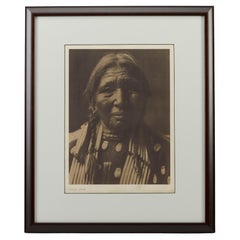
"Ogalala Woman" Photogravure Portrait by Edward S. Curtis, 1908

"Ogalala Woman" Photogravure Portrait by Edward S. Curtis, 1908

By Edward S. Curtis, 1868-1952

Located in Colorado Springs, CO

Presented is a fine photogravure portrait of an Ogalala woman by Edward Curtis. The image is Plate 94 from Supplementary Portfolio 3 of Edward Curtis' epic project The North American Indian. The caption provided by Curtis for this image is “A face so strong that it is almost masculine, showing strikingly how slight may be the difference between the male and female physiognomy in some Primitive people.” The photograph was taken in 1907 and the photogravure was published in 1908 by John Andrew & Son, in Boston. Edward S. Curtis created one of the most enduring and iconic visual records in the history of the photographic medium. He was an award-winning artist, a consummate craftsman, a visionary, an intrepid entrepreneur, and was highly regarded as a respected ethnographer and publisher. Curtis began photographing Native Americans in the mid-1890s and selling these images in his successful Downtown Seattle studio. One of his earliest models was Princess Angeline, the aged daughter of chief Sealth, the Suquamish Indian after whom Seattle is named. At the National Photographic Convention of 1899 Curtis was awarded the grand prize for three of his soft-focused, sepia-toned images of Puget Sound Native Americans: Evening on the Sound, The Clam Digger, and The Mussel Gatherer. Curtis spent the summer of 1900 with George Bird Grinnell observing the Sun Dance at an encampment of Blood, Blackfeet, and Algonquin in Montana. This was a pivotal experience for Curtis, confirming his desire to study and photograph the Native tribes of North America. A trip to visit the Hopi reservation in Arizona a few months later further fueled his enthusiasm. Curtis envisioned a plan to create a massive scholarly and artistic work that would document the tribes west of the Mississippi, their ceremonies, beliefs, daily life, and landscapes. In 1906, Curtis approached railroad tycoon J.P. Morgan to request financial assistance for his project. Morgan agreed to pay him a total of $75,000, or $15,000 a year for five years. Morgan and Curtis decided that Curtis' masterwork, The North American Indian, would be a set of 20 volumes of ethnographic text illustrated with high quality photoengravings taken from his glass plate negatives. Each of these volumes would be accompanied by a portfolio of large Size images, all sumptuously bound in Moroccan leather. The papers used for printing would also be of the best quality: a Dutch etching stock by Van Gelder, a Japanese vellum, and for the most discerning subscribers, a translucent Japanese tissue paper. To fund publication, Curtis would sell subscriptions at approximately $3,000 per set, with a total of 500 sets to be published. An ambitious and extensive project, Curtis spent much of his life documenting as many Native tribes as possible. The importance and the urgency of the task was clear to him, as he wrote in the introduction to his first volume of The North American Indians in 1907, "The information that is to be gathered . respecting the mode of life of one of the great races of mankind, must be collected at once or the opportunity will be lost." In 1930, some 24 years after his initial request for funding, the last two volumes, Vol. 19 and Vol. 20, were published and The North American Indian project was finally completed. Curtis took over 40,000 photographs and made over 10,000 wax cylinder...

Category

Early 1900s American Antique Edward S. Curtis Photography

Materials

Paper

Edward S Curtis (1868-1952), Reuben Taylor (Istofhuts) – Cheyenne, 1927

Edward S Curtis (1868-1952), Reuben Taylor (Istofhuts) – Cheyenne, 1927

By Edward S. Curtis, 1868-1952

Located in CA, CA

Edward S Curtis (1868-1952) Title: Reuben Taylor (Istofhuts) – Cheyenne Plate: 670 Portfolio: Volume 19 Printer: Suffolk Eng. Co. Cambridge Mass Medium: Photogravure Date: 1927 Dime...

Category

1920s American American Classical Vintage Edward S. Curtis Photography

Materials

Paper

Edward S. Curtis (1868-1952) Scarce Sepia Photogravure Titled Tsipiai - Sia

Edward S. Curtis (1868-1952) Scarce Sepia Photogravure Titled Tsipiai - Sia

By Edward S. Curtis, 1868-1952

Located in Bridgeport, CT

Sepia photogravure titled "Tsipiai - Sia" depicting native women engaged in pottery making. The photogravure is titled lower left "Tsipiai - Sia". Printed under the photogravure "Fro...

Category

20th Century American Native American Edward S. Curtis Photography

Materials

Acrylic, Wood, Paper

Related Items
1922 Signed Photograph by Odile Bouligny, Indigenous Women Pottery Makers

1922 Signed Photograph by Odile Bouligny, Indigenous Women Pottery Makers

Located in Miami, FL

A rare and evocative 1922 photograph by French photographer Odile Bouligny, captured in Laguna, New Mexico, depicting two Indigenous women seated together with an array of pottery ve...

Category

Early 20th Century American Art Deco Edward S. Curtis Photography

Materials

Paper

Lake George Vintage Photograph, circa 1910

Lake George Vintage Photograph, circa 1910

$475

H 11.5 in W 22.75 in D 0.5 in

Lake George Vintage Photograph, circa 1910

Located in St.Petersburg, FL

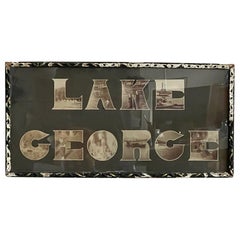
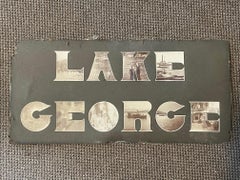
An unusual photograph, circa 1910-1920 where the letters Lake George are made of cutout photographs. Original frame-really a unique object with character and timeless character. Lak...

Category

1910s North American Modern Vintage Edward S. Curtis Photography

Materials

Paper

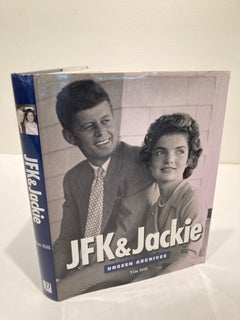
JFK & Jackie: Unseen Archives by Tim Hill, Hardcover, 2003

JFK & Jackie: Unseen Archives by Tim Hill, Hardcover, 2003

Located in Moreno Valley, CA

JFK & Jackie. Unseen Archives by Tim Hill. London: Parragon, Incorporated, 2003. First edition; first printing. Hardcover. JFK and Jackie: unseen archives c...

Category

Early 2000s American American Classical Edward S. Curtis Photography

Materials

Paper

Vinatge Original Photograph Male Nude Toned Photograph by George Machado S/N Ed.

Vinatge Original Photograph Male Nude Toned Photograph by George Machado S/N Ed.

By George Machado

Located in Palm Springs, CA

This is one of the series of original George Machado photographs being offered for sale in 30 years from his "Masculine" series. Masculine was his 1st coffee table book published by ...

Category

1990s American Modern Edward S. Curtis Photography

Materials

Paper

Bruce of L.A. Original Vintage 50s Male Nude Signed Black & White Photograph

Bruce of L.A. Original Vintage 50s Male Nude Signed Black & White Photograph

By Bruce Bellas

Located in Palm Springs, CA

Another original 8 x 10 black-and-white photograph by world, renowned photographer, Bruce Bellas AKA Bruce of L.A. we have sold many on 1st Dibs from our personal collection of 40+ y...

Category

1950s American Mid-Century Modern Vintage Edward S. Curtis Photography

Materials

Paper

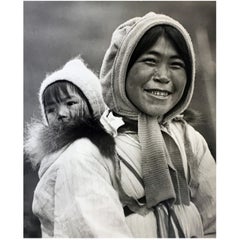
Vintage Native American Photograph

Vintage Native American Photograph

$175Sale Price|30% Off

H 20 in W 16 in D 0.025 in

Vintage Native American Photograph

Located in Brooklyn, NY

Vintage Native American photograph, circa 1960 Silver Gelatin Print 16 x 20 inches. Unsigned from unknown photographer Very good cond...

Category

1940s American Native American Vintage Edward S. Curtis Photography

Materials

Paper

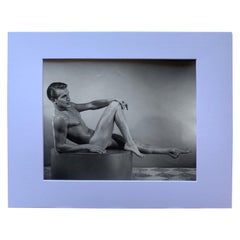
Early B & W Original Bruce of LA Male Nude Photograph Rare Studio Stamp

Early B & W Original Bruce of LA Male Nude Photograph Rare Studio Stamp

By Bruce of Los Angeles, Bruce Bellas

Located in Palm Springs, CA

A rare early B & W orig photograph from Bruce Bellas. This tasteful nude is a horizontal image of a handsome blond male model. The verso has the early stamp with PO Box in Los Angele...

Category

1950s American Mid-Century Modern Vintage Edward S. Curtis Photography

Materials

Paper

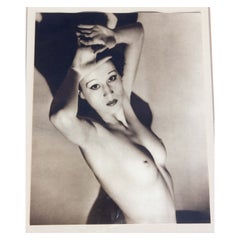
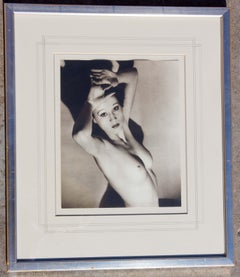
Modernist Nude Woman Photogravure Early 20th Century

Modernist Nude Woman Photogravure Early 20th Century

Located in Rochester, NY

Modernist nude photogravure. Circa 1910. Nicely framed and matted. Silver leaf frame.

Category

Early 20th Century Edward S. Curtis Photography

Materials

Paper

Vintage Elizabeth Taylor Signed Photograph

Vintage Elizabeth Taylor Signed Photograph

$450Sale Price|40% Off

H 8 in W 10 in D 0.1 in

Vintage Elizabeth Taylor Signed Photograph

Located in San Diego, CA

A very rare vintage Elizabeth Taylor signed photograph with Actor Peter Lawford, circa 1952. The photo was taken when Lawford came to visit Taylor on the set of her movie "Ivanhoe" i...

Category

Mid-20th Century American Mid-Century Modern Edward S. Curtis Photography

Materials

Paper

Historic Early Race Car Photo

Historic Early Race Car Photo

$1,400Sale Price|22% Off

H 26 in W 30.25 in D 1.5 in

Historic Early Race Car Photo

By Howe and Arthur

Located in Ferndale, MI

Louis Chevrolet, Howe and Arthur photographer.

Category

Early 20th Century American American Classical Edward S. Curtis Photography

Materials

Photographic Paper

Sepia Toned Photograph of a Nude Woman in the Mountains

Sepia Toned Photograph of a Nude Woman in the Mountains

Located in Palm Springs, CA

A great sepia toned silver gelatin photograph of a nude woman. Great composition in a new matte and frame.

Category

1970s American Vintage Edward S. Curtis Photography

Materials

Silver Gelatin

Previously Available Items
Edward S Curtis (1868-1952) As It Was In The Old Days, 1927

Edward S Curtis (1868-1952) As It Was In The Old Days, 1927

By Edward S. Curtis, 1868-1952

Located in CA, CA

Edward S Curtis (1868-1952) Title: As It Was In The Old Days Plate: 652 Portfolio: Volume 19 Printer: Suffolk Eng. Co. Cambridge Mass Medium: Photogravure Date: 1927 Dimensions: S...

Category

1920s American American Colonial Vintage Edward S. Curtis Photography

Materials

Paper

Edward S Curtis (1868-1952)  Tuvahe – Jemez, 1925

Edward S Curtis (1868-1952) Tuvahe – Jemez, 1925

Sold

H 21.85 in W 17.75 in D 0.1 in

Edward S Curtis (1868-1952) Tuvahe – Jemez, 1925

By Edward S. Curtis, 1868-1952

Located in CA, CA

Edward S Curtis (1868-1952) Title: Tuvahe – Jemez Plate: 553 Portfolio:Volume 16 Printer: : Suffolk Eng. Co. Cambridge Mass Medium: Photogravure Dat...

Category

1920s American American Classical Vintage Edward S. Curtis Photography

Materials

Paper

Edward S. Curtis (1868-1952) Scarce Sepia Photogravure Titled "Kalispel Camp"

Edward S. Curtis (1868-1952) Scarce Sepia Photogravure Titled "Kalispel Camp"

By Edward S. Curtis, 1868-1952

Located in Bridgeport, CT

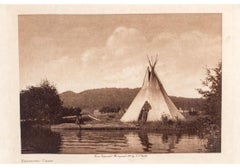
Sepia photogravure titled "Kalispel Camp" depicting native figures in the foreground with kayak and teepee and rolling hills in the distance. The photogravure is titled lower left "K...

Category

20th Century American Native American Edward S. Curtis Photography

Materials

Acrylic, Wood, Paper

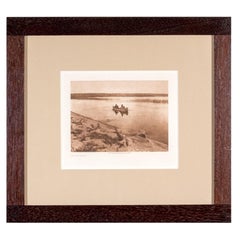
Edward S. Curtis (1868-1952) Sepia Photogravure On The Pend D'Oreille - Kalispel

Edward S. Curtis (1868-1952) Sepia Photogravure On The Pend D'Oreille - Kalispel

By Edward S. Curtis, 1868-1952

Located in Bridgeport, CT

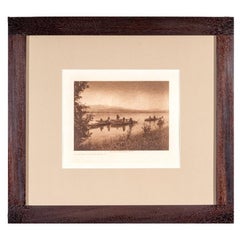
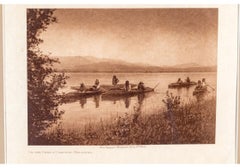
Sepia photogravure titled "On the Pend d'Oreille - Kalispel" depicting native figures in canoes on the water, more than likely the Pend D'Oreille River in areas that encompassed land...

Category

20th Century American Native American Edward S. Curtis Photography

Materials

Acrylic, Wood, Paper

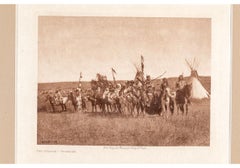
Edward S. Curtis (1868-1952) Sepia Photogravure Titled "The Parade - Apsaroke"

Edward S. Curtis (1868-1952) Sepia Photogravure Titled "The Parade - Apsaroke"

By Edward S. Curtis, 1868-1952

Located in Bridgeport, CT

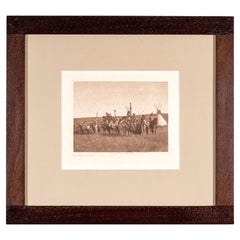
Sepia photogravure titled "The Parade - Apsaroke" depicting Native Americans on their horses with teepees in the background. The photogravure is titled in plate lower left "The Para...

Category

20th Century American Native American Edward S. Curtis Photography

Materials

Papercord, Acrylic, Wood

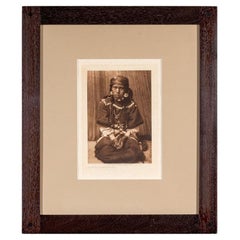
Edward S. Curtis (1868-1952) Sepia Photogravure "Touch Her Dress - Kalispel"

Edward S. Curtis (1868-1952) Sepia Photogravure "Touch Her Dress - Kalispel"

By Edward S. Curtis, 1868-1952

Located in Bridgeport, CT

Sepia photogravure titled "Touch Her Dress - Kalispel" depicting the portrait of a young native girl. The Kalispel Tribe from areas that encompassed lands that stretched from Montana...

Category

20th Century American Native American Edward S. Curtis Photography

Materials

Acrylic, Wood, Paper

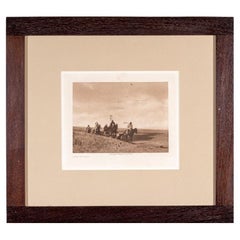
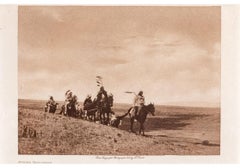
Edward S. Curtis (1868-1952) Rare Sepia Photogravure Titled Atsina War-Party

Edward S. Curtis (1868-1952) Rare Sepia Photogravure Titled Atsina War-Party

By Edward S. Curtis, 1868-1952

Located in Bridgeport, CT

Sepia photogravure titled "Atsina War-Party" depicting Native Americans on their horses over-looking the grasslands in the distance. The photogravure is titled in plate lower left "A...

Category

20th Century American Rustic Edward S. Curtis Photography

Materials

Acrylic, Wood, Paper

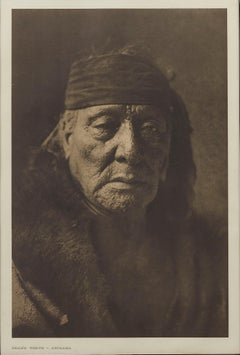
"Bear's Teeth - Arikara" by Edward S. Curtis, 1908

"Bear's Teeth - Arikara" by Edward S. Curtis, 1908

By Edward S. Curtis, 1868-1952

Located in Colorado Springs, CO

Presented is a fine photogravure portrait of Bear’s Teeth of the Arikara tribe by Edward Curtis. The image is Plate 154 from Supplementary Portfolio 5 of Edward Curtis' epic project The North American Indian. The caption, written by Curtis, for this image is as follows: “A member of the Night order of the medicine fraternity.” This photogravure was published in 1908 and was printed by John Andrew & Son, in Boston. Edward S. Curtis created one of the most enduring and iconic visual records in the history of the photographic medium. He was an award-winning artist, a consummate craftsman, a visionary, an intrepid entrepreneur, and was highly regarded as a respected ethnographer and publisher. Curtis began photographing Native Americans in the mid-1890s and selling these images in his successful downtown Seattle studio. One of his earliest models was Princess Angeline, the aged daughter of chief Sealth, the Suquamish Indian after whom Seattle is named. At the National Photographic Convention of 1899 Curtis was awarded the grand prize for three of his soft-focused, sepia-toned images of Puget Sound Native Americans: Evening on the Sound, The Clam Digger, and The Mussel Gatherer. Curtis spent the summer of 1900 with George Bird Grinnell observing the Sun Dance at an encampment of Blood, Blackfeet, and Algonquin in Montana. This was a pivotal experience for Curtis, confirming his desire to study and photograph the Native tribes of North America. A trip to visit the Hopi reservation in Arizona a few months later further fueled his enthusiasm. Curtis envisioned a plan to create a massive scholarly and artistic work that would document the tribes west of the Mississippi, their ceremonies, beliefs, daily life, and landscapes. In 1906, Curtis approached railroad tycoon J.P. Morgan to request financial assistance for his project. Morgan agreed to pay him a total of $75,000, or $15,000 a year for five years. Morgan and Curtis decided that Curtis' masterwork, The North American Indian, would be a set of 20 volumes of ethnographic text illustrated with high quality photoengravings taken from his glass plate negatives. Each of these volumes would be accompanied by a portfolio of large size images, all sumptuously bound in Moroccan leather. The papers used for printing would also be of the best quality: a Dutch etching stock by Van Gelder, a Japanese vellum, and for the most discerning subscribers, a translucent Japanese tissue paper. To fund publication, Curtis would sell subscriptions at approximately $3,000 per set, with a total of 500 sets to be published. An ambitious and extensive project, Curtis spent much of his life documenting as many Native tribes as possible. The importance and the urgency of the task was clear to him, as he wrote in the introduction to his first volume of The North American Indians in 1907, "The information that is to be gathered ... respecting the mode of life of one of the great races of mankind, must be collected at once or the opportunity will be lost." In 1930, some 24 years after his initial request for funding, the last two volumes, Vol. 19 and Vol. 20, were published and The North American Indian project was finally completed. Curtis took over 40,000 photographs and made over 10,000 wax...

Category

Early 1900s American Antique Edward S. Curtis Photography
Materials

Paper

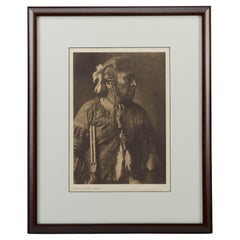
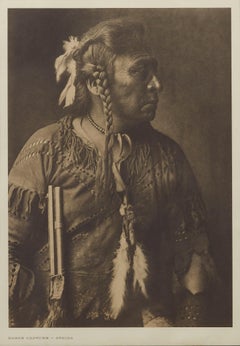
"Horse Capture - Atsina" by Edward S. Curtis, 1908

"Horse Capture - Atsina" by Edward S. Curtis, 1908

By Edward S. Curtis, 1868-1952

Located in Colorado Springs, CO

Presented is a fine photogravure portrait of an Atsina man named Horse Capture by Edward Curtis. The image is Plate 170 from Supplementary Portfolio 5 of Edward Curtis' epic project The North American Indian. The photogravure was published in 1908 and was printed by John Andrew & Son, in Boston. Edward S. Curtis created one of the most enduring and iconic visual records in the history of the photographic medium. He was an award-winning artist, a consummate craftsman, a visionary, an intrepid entrepreneur, and was highly regarded as a respected ethnographer and publisher. Curtis began photographing Native Americans in the mid-1890s and selling these images in his successful Downtown Seattle studio. One of his earliest models was Princess Angeline, the aged daughter of chief Sealth, the Suquamish Indian after whom Seattle is named. At the National Photographic Convention of 1899 Curtis was awarded the grand prize for three of his soft-focused, sepia-toned images of Puget Sound Native Americans: Evening on the Sound, The Clam Digger, and The Mussel Gatherer. Curtis spent the summer of 1900 with George Bird Grinnell observing the Sun Dance at an encampment of Blood, Blackfeet, and Algonquin in Montana. This was a pivotal experience for Curtis, confirming his desire to study and photograph the Native tribes of North America. A trip to visit the Hopi reservation in Arizona a few months later further fueled his enthusiasm. Curtis envisioned a plan to create a massive scholarly and artistic work that would document the tribes west of the Mississippi, their ceremonies, beliefs, daily life, and landscapes. In 1906, Curtis approached railroad tycoon J.P. Morgan to request financial assistance for his project. Morgan agreed to pay him a total of $75,000, or $15,000 a year for five years. Morgan and Curtis decided that Curtis' masterwork, The North American Indian, would be a set of 20 volumes of ethnographic text illustrated with high quality photoengravings taken from his glass plate negatives. Each of these volumes would be accompanied by a portfolio of large Size images, all sumptuously bound in Moroccan leather. The papers used for printing would also be of the best quality: a Dutch etching stock by Van Gelder, a Japanese vellum, and for the most discerning subscribers, a translucent Japanese tissue paper. To fund publication, Curtis would sell subscriptions at approximately $3,000 per set, with a total of 500 sets to be published. An ambitious and extensive project, Curtis spent much of his life documenting as many Native tribes as possible. The importance and the urgency of the task was clear to him, as he wrote in the introduction to his first volume of The North American Indians in 1907, "The information that is to be gathered . respecting the mode of life of one of the great races of mankind, must be collected at once or the opportunity will be lost." In 1930, some 24 years after his initial request for funding, the last two volumes, Vol. 19 and Vol. 20, were published and The North American Indian project was finally completed. Curtis took over 40,000 photographs and made over 10,000 wax cylinder...

Category

Early 1900s American Antique Edward S. Curtis Photography
Materials

Paper

"New Chest, Piegan" by Edward S. Curtis, 1910

"New Chest, Piegan" by Edward S. Curtis, 1910

Sold

H 26.5 in W 22 in D 0.57 in

"New Chest, Piegan" by Edward S. Curtis, 1910

By Edward S. Curtis, 1868-1952

Located in Colorado Springs, CO

Presented is a fine photogravure portrait of a Piegan man named New Chest by Edward Curtis. The image is Plate 200 from Supplementary Portfolio 6 of Edward Curtis' epic project The North American Indian. The sixth portfolio volume featured the Piegan, Cheyenne, and Arapaho tribes. The photogravure was published in 1910 and was printed by John Andrew & Son, in Boston. Edward S. Curtis created one of the most enduring and iconic visual records in the history of the photographic medium. He was an award-winning artist, a consummate craftsman, a visionary, an intrepid entrepreneur, and was highly regarded as a respected ethnographer and publisher. Curtis began photographing Native Americans in the mid-1890s and selling these images in his successful downtown Seattle studio. One of his earliest models was Princess Angeline, the aged daughter of chief Sealth, the Suquamish Indian after whom Seattle is named. At the National Photographic Convention of 1899 Curtis was awarded the grand prize for three of his soft-focused, sepia-toned images of Puget Sound Native Americans: Evening on the Sound, The Clam Digger, and The Mussel Gatherer. Curtis spent the summer of 1900 with George Bird Grinnell observing the Sun Dance at an encampment of Blood, Blackfeet, and Algonquin in Montana. This was a pivotal experience for Curtis, confirming his desire to study and photograph the Native tribes of North America. A trip to visit the Hopi reservation in Arizona a few months later further fueled his enthusiasm. Curtis envisioned a plan to create a massive scholarly and artistic work that would document the tribes west of the Mississippi, their ceremonies, beliefs, daily life, and landscapes. In 1906, Curtis approached railroad tycoon J.P. Morgan to request financial assistance for his project. Morgan agreed to pay him a total of $75,000, or $15,000 a year for five years. Morgan and Curtis decided that Curtis' masterwork, The North American Indian, would be a set of 20 volumes of ethnographic text illustrated with high quality photoengravings taken from his glass plate negatives. Each of these volumes would be accompanied by a portfolio of large size images, all sumptuously bound in Moroccan leather. The papers used for printing would also be of the best quality: a Dutch etching stock by Van Gelder, a Japanese vellum, and for the most discerning subscribers, a translucent Japanese tissue paper. To fund publication, Curtis would sell subscriptions at approximately $3,000 per set, with a total of 500 sets to be published. An ambitious and extensive project, Curtis spent much of his life documenting as many Native tribes as possible. The importance and the urgency of the task was clear to him, as he wrote in the introduction to his first volume of The North American Indians in 1907, "The information that is to be gathered ... respecting the mode of life of one of the great races of mankind, must be collected at once or the opportunity will be lost." In 1930, some 24 years after his initial request for funding, the last two volumes, Vol. 19 and Vol. 20, were published and The North American Indian project was finally completed. Curtis took over 40,000 photographs and made over 10,000 wax cylinder...

Category

1910s Vintage Edward S. Curtis Photography

Materials

Paper

"Porcupine - Cheyenne" by Edward S. Curtis, 1911

"Porcupine - Cheyenne" by Edward S. Curtis, 1911

By Edward S. Curtis, 1868-1952

Located in Colorado Springs, CO

Presented is a fine photogravure portrait of a Cheyenne man with cottonwood leave headdress by Edward Curtis. The image is Plate 216 from Supplementary Portfolio 6 of Edward Curtis' epic project The North American Indian. The sixth portfolio volume featured the Piegan, Cheyenne, and Arapaho tribes. The caption provided by Curtis for this image is “At the summer gatherings for such occasions as the Sun Dance, the men sometimes protect their heads from the merciless sun by a thatch of cottonwood leaves.” The photogravure was published in 1910 and was printed by John Andrew & Son, in Boston. Curtis began photographing Native Americans in the Mid-1890s and selling these images in his successful downtown Seattle studio. One of his earliest models was Princess Angeline, the aged daughter of chief Sealth, the Suquamish Indian after whom Seattle is named. At the National Photographic Convention of 1899 Curtis was awarded the grand prize for three of his soft-focused, sepia-toned images of Puget Sound Native Americans: Evening on the Sound, The Clam Digger, and The Mussel Gatherer. Curtis spent the summer of 1900 with George Bird Grinnell observing the Sun Dance at an encampment of Blood, Blackfeet, and Algonquin in Montana. This was a pivotal experience for Curtis, confirming his desire to study and photograph the Native tribes of North America. A trip to visit the Hopi reservation in Arizona a few months later further fueled his enthusiasm. Curtis envisioned a plan to create a massive scholarly and artistic work that would document the tribes west of the Mississippi, their ceremonies, beliefs, daily life, and landscapes. In 1906, Curtis approached railroad tycoon J.P. Morgan to request financial assistance for his project. Morgan agreed to pay him a total of $75,000, or $15,000 a year for five years. Morgan and Curtis decided that Curtis' masterwork, The North American Indian, would be a set of 20 volumes of ethnographic text illustrated with high quality photoengravings taken from his glass plate negatives. Each of these volumes would be accompanied by a portfolio of large size images, all sumptuously bound in Moroccan leather. The papers used for printing would also be of the best quality: a Dutch etching stock by Van Gelder, a Japanese vellum, and for the most discerning subscribers, a translucent Japanese tissue paper. To fund publication, Curtis would sell subscriptions at approximately $3,000 per set, with a total of 500 sets to be published. An ambitious and extensive project, Curtis spent much of his life documenting as many Native tribes as possible. The importance and the urgency of the task was clear to him, as he wrote in the introduction to his first volume of The North American Indians in 1907, "The information that is to be gathered ... respecting the mode of life of one of the great races of mankind, must be collected at once or the opportunity will be lost." In 1930, some 24 years after his initial request for funding, the last two volumes, Vol. 19 and Vol. 20, were published and The North American Indian project was finally completed. Curtis took over 40,000 photographs and made over 10,000 wax...

Category

1910s American Vintage Edward S. Curtis Photography

Materials

Paper

The Vanishing Race, Signed by Edward S. Curtis, Gelatin Silver Photograph, 1904

The Vanishing Race, Signed by Edward S. Curtis, Gelatin Silver Photograph, 1904

By Edward S. Curtis, 1868-1952

Located in Colorado Springs, CO

Presented is an extremely scarce gelatin silver print of The Vanishing Race by Edward S. Curtis. Chosen by Curtis as the first photograph in his epi...

Category

Early 1900s American Antique Edward S. Curtis Photography
Materials

Paper

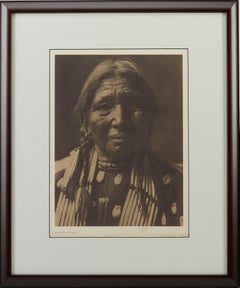
Edward S. Curtis photography for sale on 1stDibs.
Edward S. Curtis photography are available for sale on 1stDibs. These distinctive items are frequently made of paper and are designed with extraordinary care. There are many options to choose from in our collection of Edward S. Curtis photography, although brown editions of this piece are particularly popular. If you’re looking for additional options, many customers also consider photography by and Carl Moon. Prices for Edward S. Curtis photography can differ depending upon size, time period and other attributes — on 1stDibs, these items begin at $3,000 and can go as high as $50,000, while a piece like these, on average, fetch $6,500.