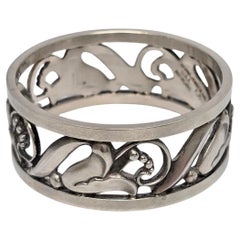
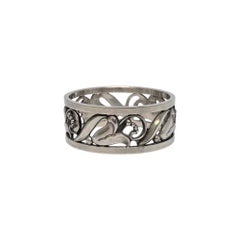
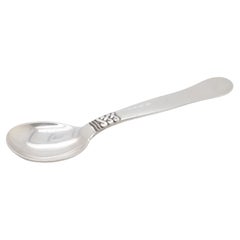
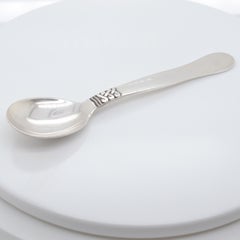
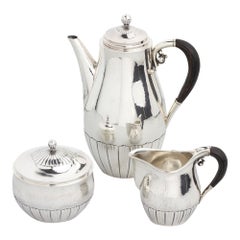
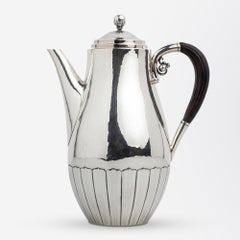
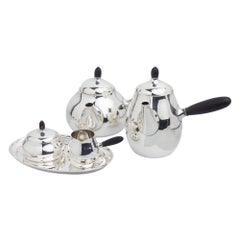
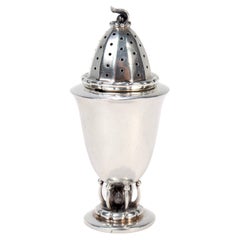
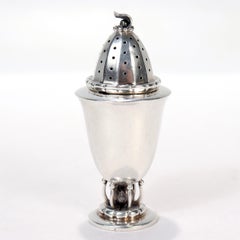
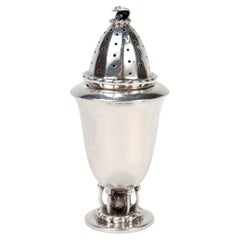
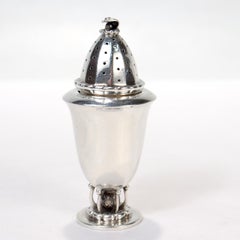
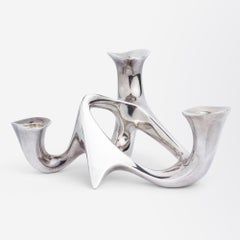
Over the course of its long history, the legendary Danish silverware firm Georg Jensen has partnered with a range of designers, widening its jewelry offerings from delicate filigree to chunky modern pieces.
Although Georg Jensen today is known the world over for its silver, the brand’s namesake founder began his creative career in a different medium, training as a ceramicist and sculptor at the Royal Danish Academy of Fine Arts before opening his own porcelain studio. It is that artistic background, however, that laid the foundation for Jensen’s eventual silversmithing — and a thread that continues today with the company’s distinctively sculptural, ornately detailed jewelry.
In 1901, Jensen left his ceramics practice to apprentice for Mogens Ballin, the master silversmith who also had a background as a painter. By 1904, he would establish Georg Jensen, now a global brand with more than 1,000 stores worldwide and a Royal Warrant of Appointment to the Queen of Denmark.
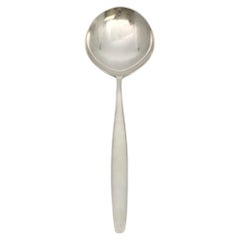
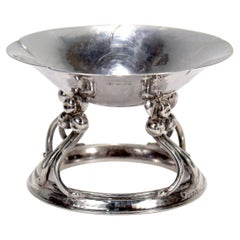
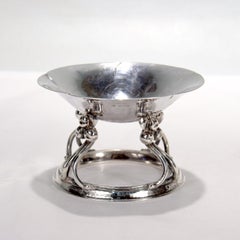
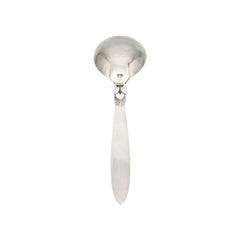
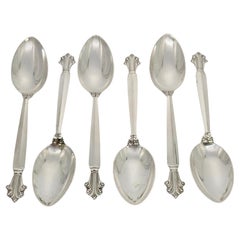
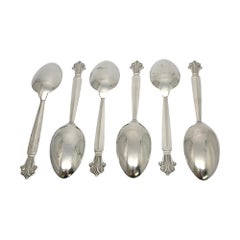
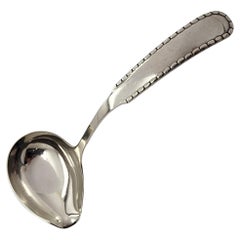
Like much of the work of the Art Nouveau movement of which he was a part, Jensen’s early creations erased the barrier between art and craft, bridging form and function for pieces that demonstrated masterful artistry in both. His silverware was immediately a commercial success and he was a pioneer in using steel in cutlery.
Jensen’s jewelry pieces — his pendants, rings and more, crafted most often in silver during the early 1900s — display a celebration of nature, rendering flora and fauna in silver, gold and gemstones. Fish and full-bloom daisies are charming motifs in his vintage sterling-silver brooches and necklaces, while semiprecious stones such as malachite and coral were integrated as embellishments.
Creatives with Georg Jensen jewelry in their portfolios include architect Edvard Kindt Larsen; designers Arne Jacobsen, Jean Nouvel and Ilse Crawford; artist Henning Koppel and silversmiths Vivianna Torun and Ibe Dahlquist. Such a transcendence of medium — a continuation of Art Nouveau sensibility — has resulted in over a century of stunningly creative, varied designs.
In a country with no shortage of design talent, Georg Jensen has long been somewhat of a national treasure — and sometimes even a political statement. In 1940, five years after Jensen died, Arno Malinowski’s “King’s Emblem” pin became widely recognized as a symbol of resistance to the Nazi regime. Its influence is global, too: In 2014, Murray Moss penned Georg Jensen: Reflections, a Rizzoli-published retrospective marking more than a century of business for the brand.
Find all manner of authentic Georg Jensen jewelry on 1stDibs, including vintage sterling-silver bracelets, decorative rings and more.