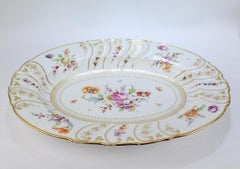
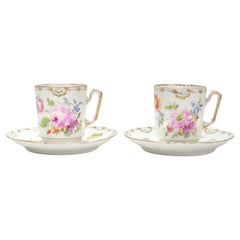
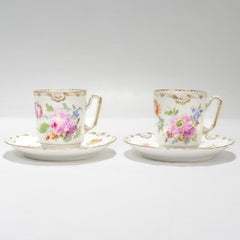
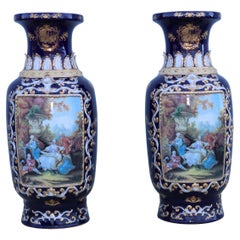
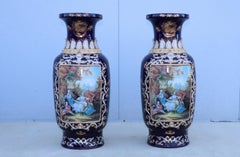
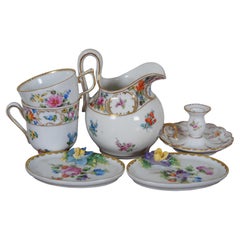
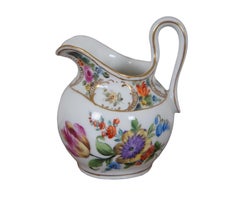
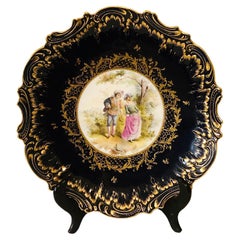
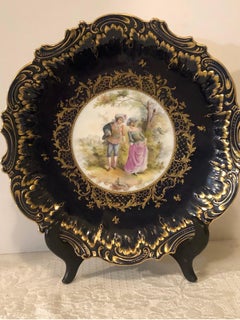
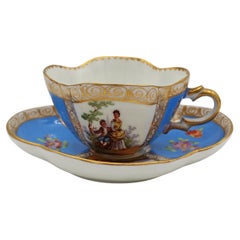
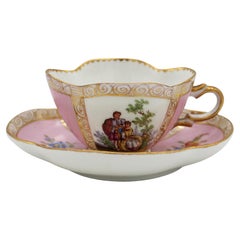
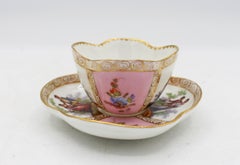
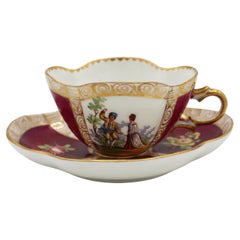
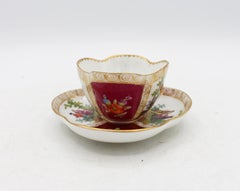
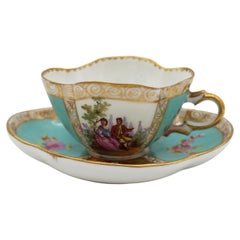
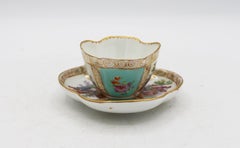
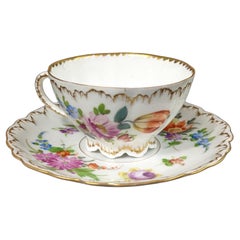
At 1stDibs, there are many versions of the ideal klemm dresden for your home. Each klemm dresden for sale was constructed with extraordinary care, often using
ceramic,
porcelain and
paint. Your living room may not be complete without a klemm dresden — find older editions for sale from the 19th Century and newer versions made as recently as the 20th Century. When you’re browsing for the right klemm dresden, those designed in
Rococo and
Empire styles are of considerable interest. Many designers have produced at least one well-made klemm dresden over the years, but those crafted by
Dresden Porcelain and
Meissen Porcelain are often thought to be among the most beautiful.
A klemm dresden can differ in price owing to various characteristics — the average selling price 1stDibs is $595, while the lowest priced sells for $192 and the highest can go for as much as $1,250.
Dresden porcelain, as a term, is the subject of some confusion. In some contexts, it refers to the hard-paste ceramic wares produced by the workshops that sprang up in and around the Saxon capital in the 19th century. In others, it denotes only the output of one of these, Sächsische Porzellanmanufaktur Dresden, known in English as simply Dresden Porcelain, which was established in 1872 in the city of Freital, Saxony.
Complicating matters further, early publications about porcelain often used “Dresden” and “Meissen” interchangeably. It is true that the cities of Dresden and Meissen are connected through their long, shared history of decorative arts production and, in fact, most Meissen porcelain was sold in Dresden, the artistic and cultural center of Saxony.
However, Meissen is the site of the factory that produced the first European porcelain, at the turn of the 18th century, while Dresden did not come into prominence until the mid-19th century, during the high point of the Rococo revival. (Porcelain originated in China, which is why many collectors still seek out what they call "Dresden china.")
And while Meissen is known for manufacturing porcelain, from clay models through finished product, Dresden is celebrated for its decorating studios, of which there were several dozen in and around the city during the 19th century. Their skilled painters often used “blanks” from Meissen as their canvases. So a piece of Dresden porcelain may have been formed and fired at Meissen, painted in Dresden, and ultimately sold in one of that city’s shops.
The figurines, plates and vases produced during the 19th century via this complex process remain appealing to this day, their bright hues and pastoral imagery typical of the Rococo revival, which brought scrollwork, shells, foliage, flowers and fruit back into vogue after decades of restrained neoclassicism and austere Gothic Revival design. Dresden figurines, which like their Meissen counterparts were inspired by the characters of the Commedia dell'Arte, have a witty, cheerful quality that has been likened to that of scenes painted by Watteau and Fragonard.
Before its near-total destruction during World War II, Dresden was home to more than 200 painting studios.
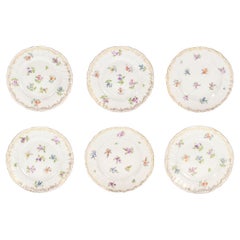
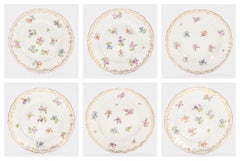
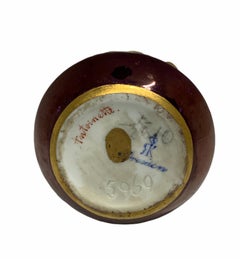
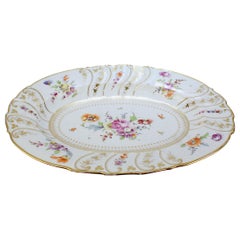
The Dresden style, however, is associated with wares bearing the blue crown mark (Meissen’s mark is a pair of cobalt blue crossed swords), which was first registered in 1883 by Richard Klemm, Donath & Co, Oswald Lorenz, and Adolph Hamann. Prominent painters from this period include Helena Wolfsohn, Franziska Hirsch, Ambrosius Lamm — whose skill in the application of metallic or lustre paints is on lavish display in this dinner service from the 1920s — and Carl Thieme, a master in floral painting, as demonstrated by his decoration on this circa 1901 ram’s head urn.
Dresden painters also used a decorative technique known as “Dresden lace.” This involved dipping real lace into liquid porcelain and applying it to a figure, which was then fired in a kiln. The fabric would burn away, leaving a fragile, crinoline-like shell — the type of delicate and whimsical detail that characterizes Dresden porcelain, one of Europe’s great ceramic traditions.
Find authentic antique Dresden porcelain on 1stDibs.
Your dining room table is a place where stories are shared and personalities shine — why not treat yourself and your guests to the finest antique and vintage glass, silver, ceramics and serveware for your meals?
Just like the people who sit around your table, your serveware has its own stories and will help you create new memories with your friends and loved ones. From ceramic pottery to glass vases, set your table with serving pieces that add even more personality, color and texture to your dining experience.
Invite serveware from around the world to join your table settings. For special occasions, dress up your plates with a striking Imari charger from 19th-century Japan or incorporate Richard Ginori’s Italian porcelain plates into your dining experience. Celebrate the English ritual of afternoon tea with a Japanese tea set and an antique Victorian kettle. No matter how big or small your dining area is, there is room for the stories of many cultures and varied histories, and there are plenty of ways to add pizzazz to your meals.
Add different textures and colors to your table with dinner plates and pitchers of ceramic and silver or a porcelain lidded tureen, a serving dish with side handles that is often used for soups. Although porcelain and ceramic are both made in a kiln, porcelain is made with more refined clay and is more durable than ceramic because it is denser. The latter is ideal for statement pieces — your tall mid-century modern ceramic vase is a guaranteed conversation starter. And while your earthenware or stoneware is maybe better suited to everyday lunches as opposed to the fine bone china you’ve reserved for a holiday meal, handcrafted studio pottery coffee mugs can still be a rich expression of your personal style.
“My motto is ‘Have fun with it,’” says author and celebrated hostess Stephanie Booth Shafran. “It’s yin and yang, high and low, Crate & Barrel with Christofle silver. I like to mix it up — sometimes in the dining room, sometimes on the kitchen banquette, sometimes in the loggia. It transports your guests and makes them feel more comfortable and relaxed.”
Introduce elegance at supper with silver, such as a platter from celebrated Massachusetts silversmith manufacturer Reed and Barton or a regal copper-finish flatware set designed by International Silver Company, another New England company that was incorporated in Meriden, Connecticut, in 1898. By then, Meriden had already earned the nickname “Silver City” for its position as a major hub of silver manufacturing.
At the bar, try a vintage wine cooler to keep bottles cool before serving or an Art Deco decanter and whiskey set for after-dinner drinks — there are many possibilities and no wrong answers for tableware, barware and serveware. Explore an expansive collection of antique and vintage glass, ceramics, silver and serveware today on 1stDibs.