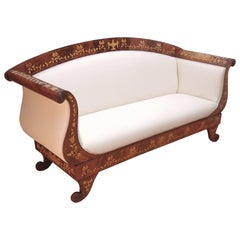
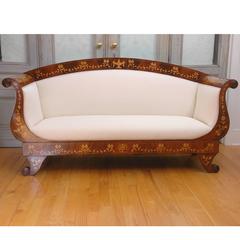
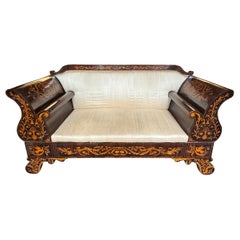
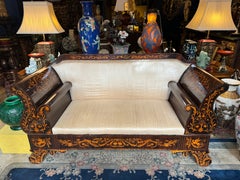
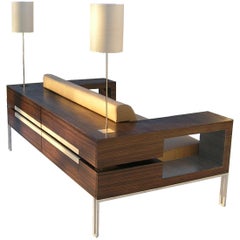
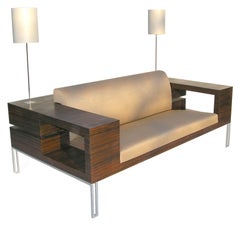
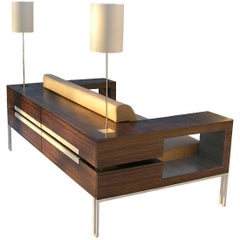
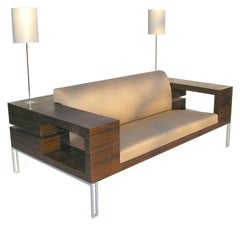
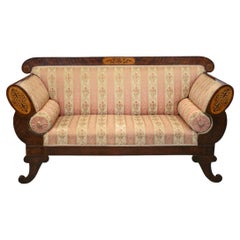
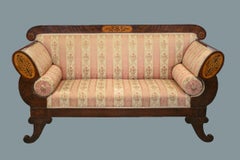
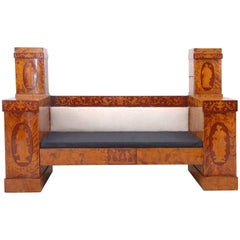
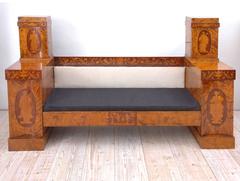
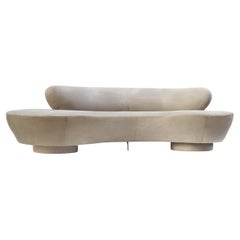
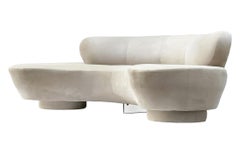
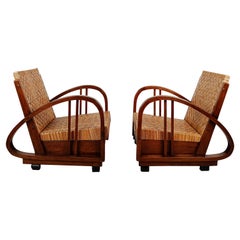
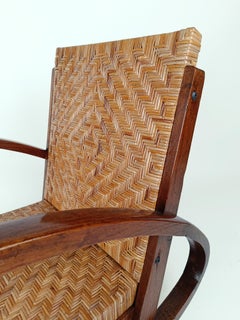
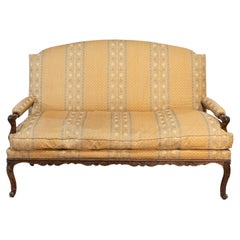
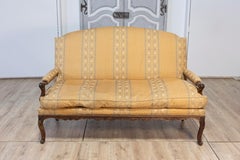
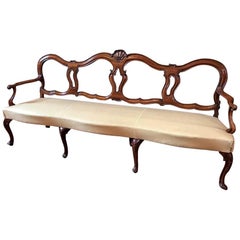
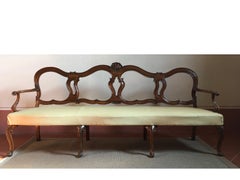
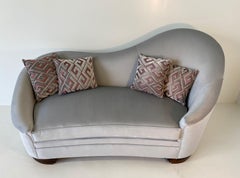
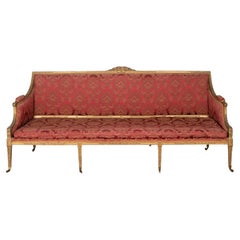
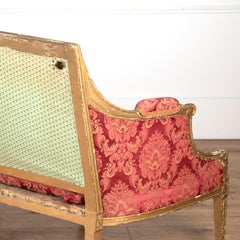
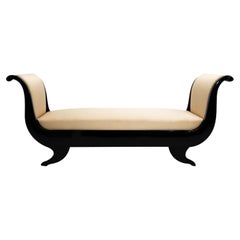
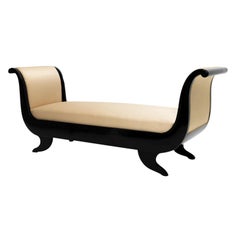
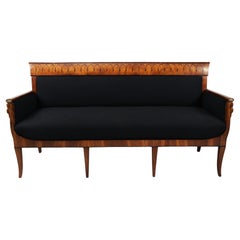
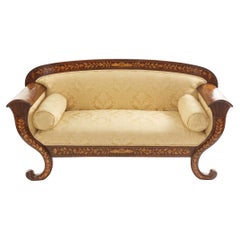
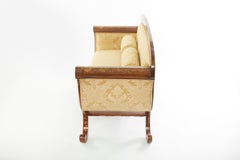
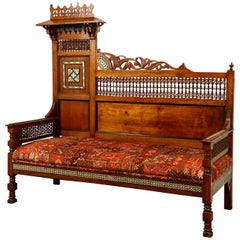
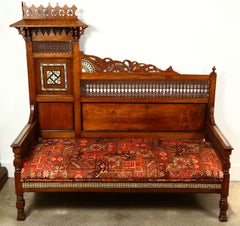
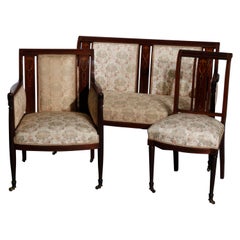
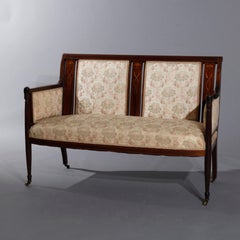
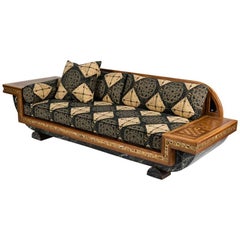
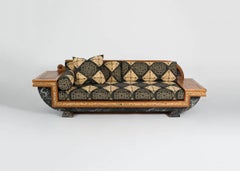
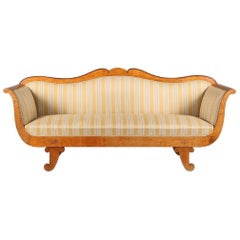
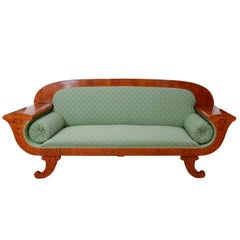
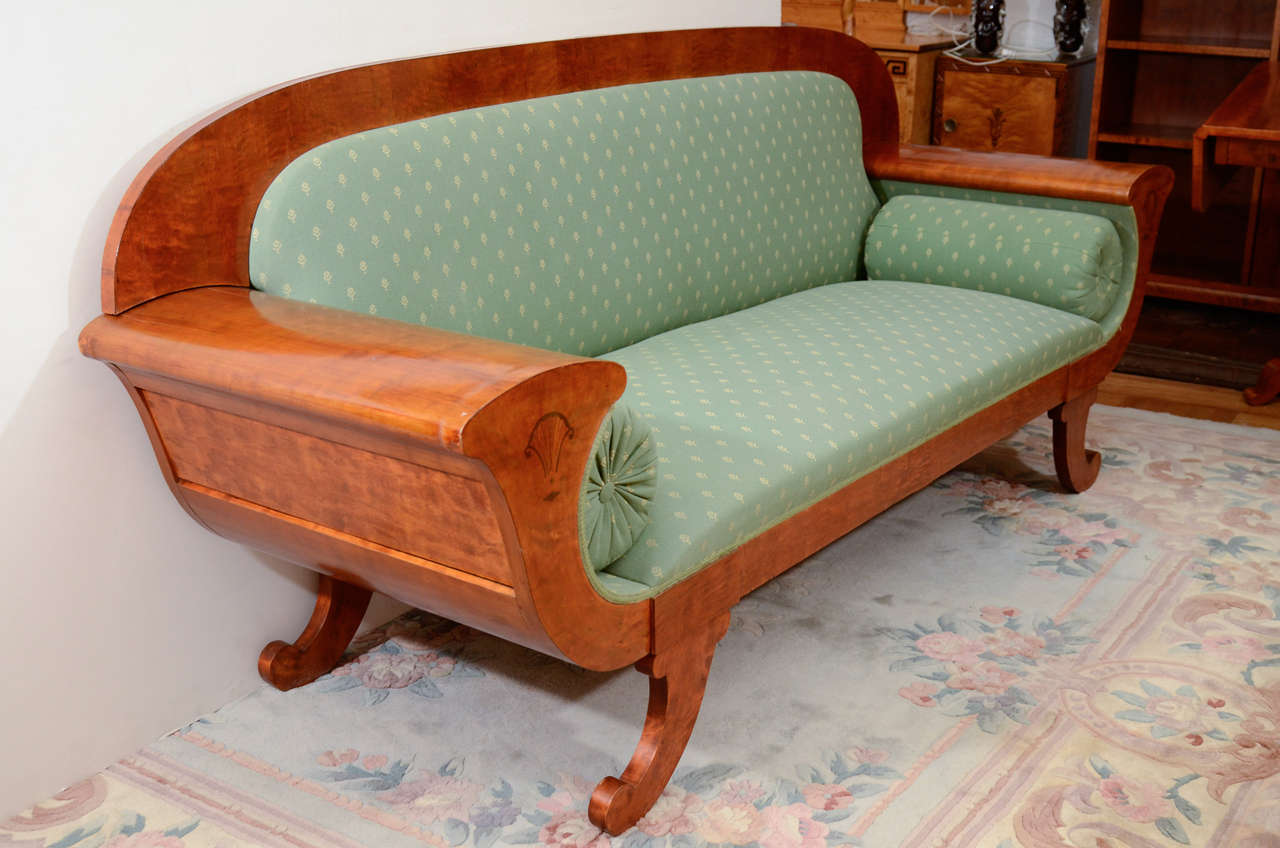
In the opulent realm of 18th-century Dutch furniture, the rosewood sofa with intricate marquetry in fruitwood stands as an epitome of elegance and craftsmanship. Crafted during the height of the Dutch Golden Age, this sofa embodies the luxurious tastes of the era while also reflecting the mastery of Dutch artisans in woodworking and decorative arts.
Rosewood, prized for its rich reddish-brown hue and fine grain, was a favored choice among affluent patrons of the 18th century. Its lustrous surface served as a canvas for the art of marquetry, a technique where delicate pieces of contrasting fruitwood are skillfully inlaid to create intricate designs. The marquetry adorning this sofa might depict scenes from nature, floral motifs, or even mythological narratives, showcasing the virtuosity of the craftsmen who brought these visions to life.
During the 18th century, Dutch furniture experienced a period of remarkable innovation and refinement. Influenced by a blend of styles from across Europe, Dutch furniture of this time often featured a harmonious fusion of Baroque grandeur, Rococo whimsy, and Neoclassical symmetry. This eclectic mix resulted in pieces that were not only visually stunning but also functionally versatile, catering to the diverse needs and tastes of their owners.
Investing in an 18th-century Dutch rosewood sofa with marquetry in fruitwood offers more than just a piece of furniture; it provides a tangible connection to a bygone era of prosperity and cultural flourishing. Beyond its aesthetic appeal, such a sofa represents a testament to the craftsmanship and ingenuity of Dutch artisans, whose skills continue to captivate admirers centuries later.
Moreover, acquiring an antique Dutch sofa...
Category
Mid-18th Century European Antique Marquetry Sofas
MaterialsSilk, Fruitwood, Rosewood