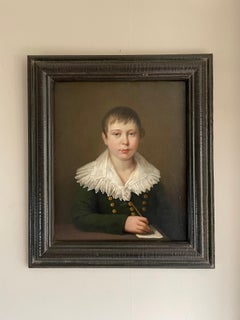
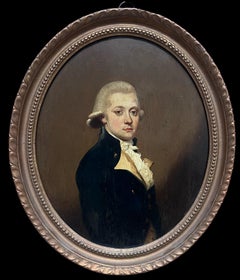
Oil Painting 1800

to
70
232
87
283
204
117
32
32
25
17
16
5
5
4
4
4
3
3
2
2
2
1
1
1
1
1
1
1
1
4
2
2
2
2
Sort By
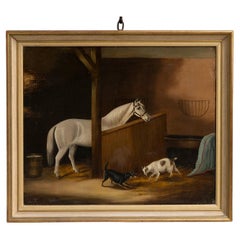
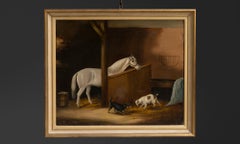
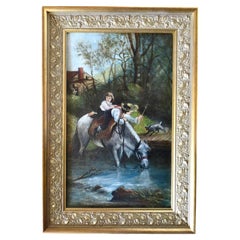
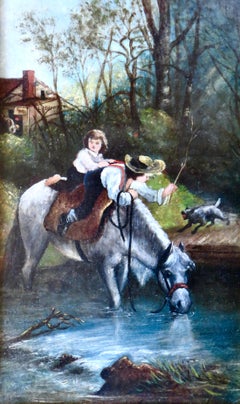
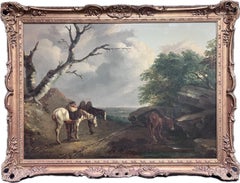
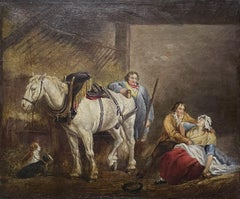
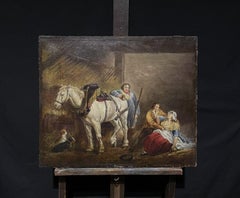
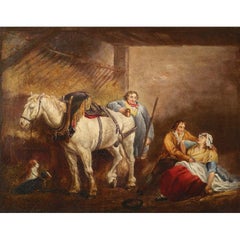
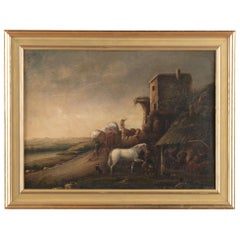
Farm Animals Oil Painting, England circa 1800

Farm Animals Oil Painting, England circa 1800

Located in Culver City, CA

England, 1800 Oil on canvas of a grey horse with dogs and goat. 27.5”w x 2.5”d x 23.25”h Ref. A1617

Category

Antique Early 1800s English Paintings

Materials

Canvas, Paint

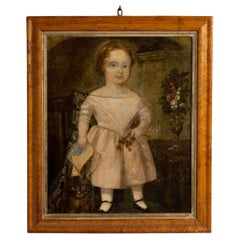
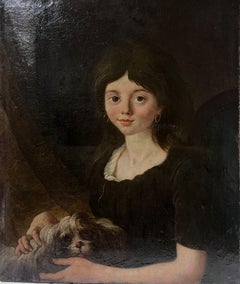
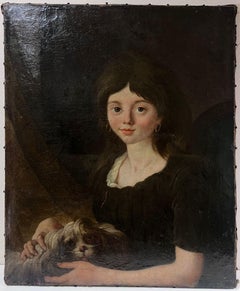
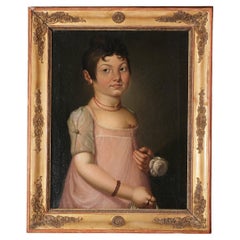
Oil Portrait Painting of a Young Girl, England 1800

Oil Portrait Painting of a Young Girl, England 1800

Located in Culver City, CA

Portrait of a Young Girl England, 1800 English school Georgian oil on canvas. Original burl frame

Category

Antique Early 1800s English Georgian Paintings

Materials

Paint

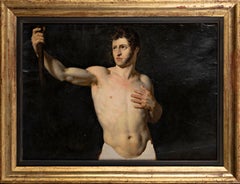
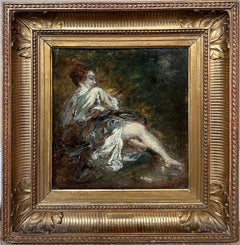
Study of a Male nude, circa 1800 France Empire Oil on canvas

Study of a Male nude, circa 1800 France Empire Oil on canvas

Located in Eltville am Rhein, DE

French artist, circa 1800 Study of a male nude Oil on canvas Size 24 x 49 cm Frame 34 x 59 cm

Category

Early 1800s French School Nude Paintings

Materials

Oil

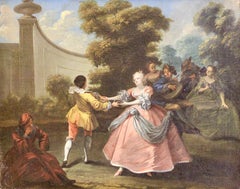
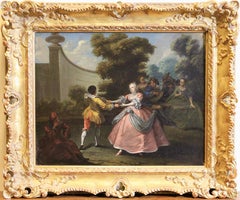
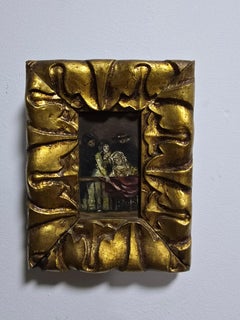
Small Oil Painting on Copper, Circa 1800 FRANCISCO DE GOYA

Small Oil Painting on Copper, Circa 1800 FRANCISCO DE GOYA

Located in Madrid, ES

A charming Spanish scene depicting figures dressed in period attire. This oil painting on copper

Category

Antique 1790s Paintings

Materials

Copper

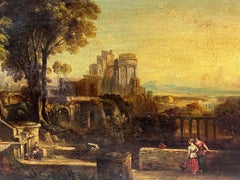
Original Oil on Board Painting of Italian Village, Italy circa 1800-20

Original Oil on Board Painting of Italian Village, Italy circa 1800-20

Located in Round Top, TX

Original oil on board painting; Italian village portrayal with horse, blacksmith/ferrier, dog

Category

Antique Early 19th Century Italian Paintings

Materials

Wood, Paint

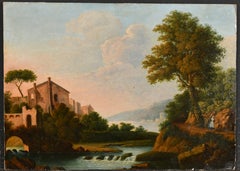
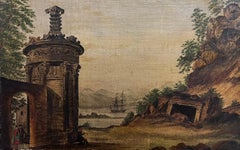
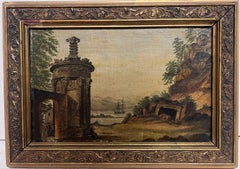
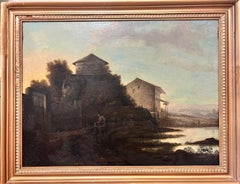
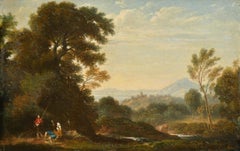
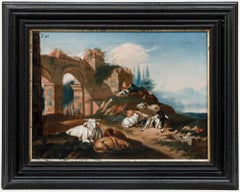
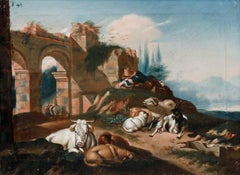
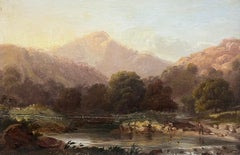
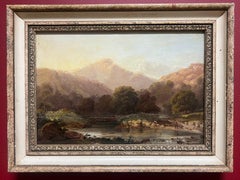
Italian School c.1800 Oil - The Sleeping Shepherd

Italian School c.1800 Oil - The Sleeping Shepherd

Located in Corsham, GB

A charming scene depicting a shepherd resting with his herd of animals by Italian ruins. The scene looks out on a serene rural landscape with a lake and mountains in the distance. Un...

Category

Early 19th Century Landscape Paintings

Materials

Oil

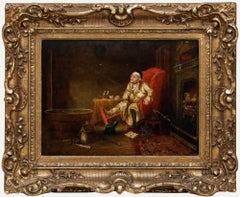
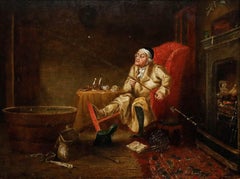
After Theodore Lane (1800-1828) - 19th Century Oil, Enthusiast

After Theodore Lane (1800-1828) - 19th Century Oil, Enthusiast

Located in Corsham, GB

A charming genre scene in the manner of Theodore Lane, depicting an elderly gentleman confined to his quarters, amusing himself by fishing in a makeshift pond fashioned from a water-...

Category

19th Century Figurative Paintings

Materials

Oil

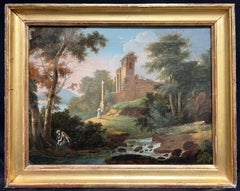
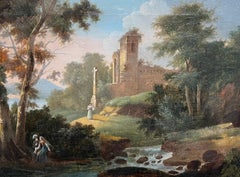
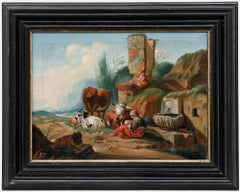
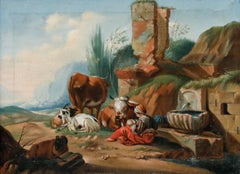
Italian School c.1800 Oil - Shepherdess at The Well

Italian School c.1800 Oil - Shepherdess at The Well

Located in Corsham, GB

A charming pastoral study depicting a shepherdess bringing her animals to a rural well to drink. The scene looks over a rustic Italian landscape. Unsigned. Presented in a black casse...

Category

Early 19th Century Figurative Paintings

Materials

Oil

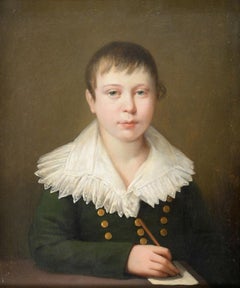
Young French Girl Portrait c. 1800 Oil On Canvas

Young French Girl Portrait c. 1800 Oil On Canvas

Located in 263-0031, JP

Neoclassicism saturates this droll portrait of a French girl c. 1800: the high-waisted dress, the

Category

Antique Early 18th Century French Neoclassical Paintings

Materials

Canvas

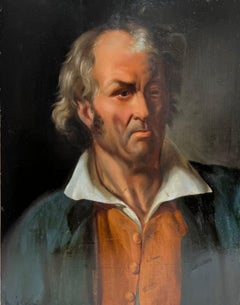
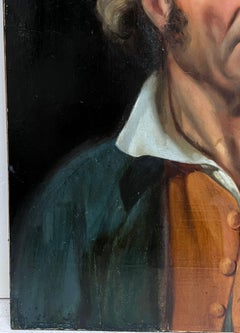
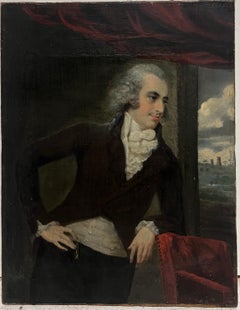
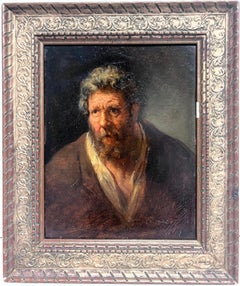
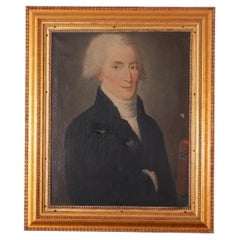
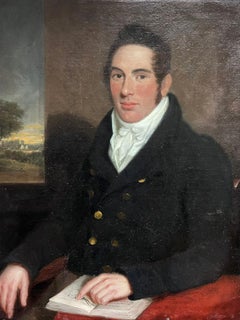
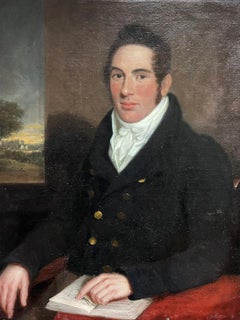
French Oil On Canvas Portrait of a Man c. 1800

French Oil On Canvas Portrait of a Man c. 1800

Located in 263-0031, JP

French oil on canvas portrait of a man c. 1800. The bourgeois gent depicted here displays the

Category

Antique Early 19th Century French Paintings

Materials

Canvas

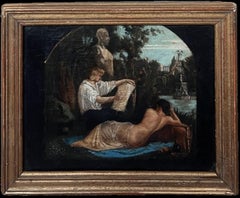
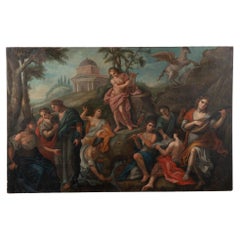
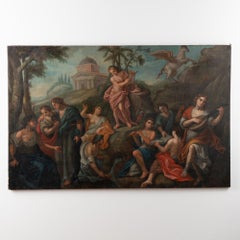
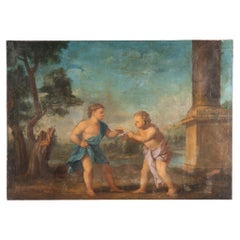
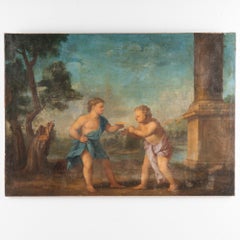
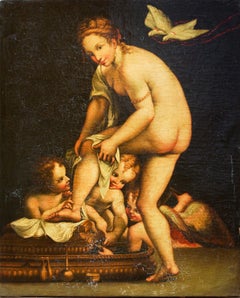
Original Oil On Canvas Allegorical Scene, Italian School circa 1800

Original Oil On Canvas Allegorical Scene, Italian School circa 1800

Located in Round Top, TX

The colors remain vivid in this original oil on canvas painting of allegorical scene, Italian

Category

Antique 19th Century Italian Paintings

Materials

Canvas, Wood, Paint

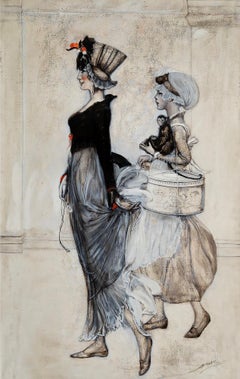
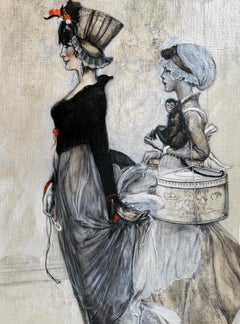
Female Illustrator, Flapper of 1800, Monochromatic

Female Illustrator, Flapper of 1800, Monochromatic

By Anna Whelan Betts

Located in Miami, FL

A "Flapper of 1800" is depicted in profile with her maid holding a hat box and cradling a little

Category

1990s American Impressionist Figurative Paintings

Materials

Canvas, Oil, Board

  • 1
Get Updated with New Arrivals
Save "Oil Painting 1800", and we’ll notify you when there are new listings in this category.

Oil Painting 1800 For Sale on 1stDibs

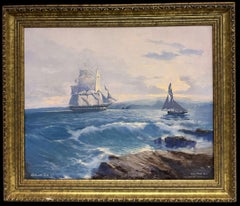
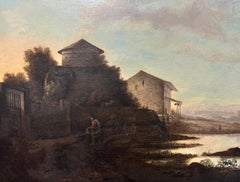
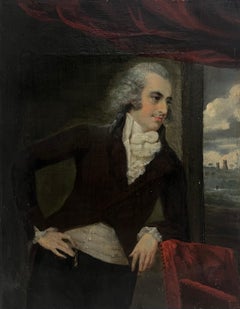
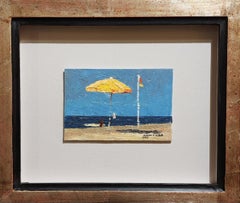
Surely you’ll find the exact oil painting 1800 you’re seeking on 1stDibs — we’ve got a vast assortment for sale. Find Impressionist versions now, or shop for Impressionist creations for a more modern example of these cherished works. If you’re looking for an oil painting 1800 from a specific time period, our collection is diverse and broad-ranging, and you’ll find at least one that dates back to the 18th Century while another version may have been produced as recently as the 21st Century. When looking for the right oil painting 1800 for your space, you can search on 1stDibs by color — popular works were created in bold and neutral palettes with elements of brown, black, beige and blue. Finding an appealing oil painting 1800 — no matter the origin — is easy, but Daniel Clowes, Thomas Buttersworth, Vincenzo Camuccini, Hermann Corrodi and Philippe Budelot each produced popular versions that are worth a look. Artworks like these of any era or style can make for thoughtful decor in any space, but a selection from our variety of those made in paint, oil paint and canvas can add an especially memorable touch.
How Much is a Oil Painting 1800?

The average selling price for an oil painting 1800 we offer is $3,609, while they’re typically $1 on the low end and $350,000 for the highest priced.
Questions About Oil Painting 1800
  • 1stDibs ExpertApril 5, 2022
    The value of an oil painting depends on the quality and artist. Work with an appraiser to determine the value. While some online resources can be helpful when you’re looking for information about the value of an item, the suggested value you find may not be the actual value of your item, since that will depend on a number of factors, including the shape it’s in. Browse a selection of expertly vetted authentic vintage oil paintings on 1stDibs.
  • Lilac Gallery Ltd.March 18, 2021
    The cost of an original oil painting has a very wide range. For emerging new artist could be in the lower end, ranging from the $500 to $10,000 depending on the size and subject matter, for the mid-career artists who are already established, their prices range in the thousands and hundreds of thousands of dollars and lastly the original oil painting art of very established and popular artists that could have auction records in the millions of dollars. In this category are some of the well known examples of the old master paintings and other contemporary artworks.
  • Lilac Gallery Ltd.March 17, 2021
    An abstract oil painting and an artwork that is made with oil paint on a medium like canvas, wood board, or other panels like canvas board. And the 'abstract' term refers to the Movement & Style of the piece. As abstraction indicates a departure from reality in the depiction of imagery in art, the artist creates a painting where the subject, shape, form, color, and line, is created with no particular references of the world but as a composition that may exist with a degree of independence from its vision.
  • 1stDibs ExpertMarch 22, 2024
    To maintain oil paintings that you purchased for your home, experts suggest that you keep them out of direct sunlight. Prolonged exposure to the sunlight coming in from a window can fade the colors in your painting. Do not hang your oil painting near a heat source or where it can get wet (bathrooms and kitchens are not safe for your oil painting).

    You may wish to dust your oil painting so that layers of dust don’t begin to gather on its surface. This should only be considered to remove loose dust. Never spray any chemical substance on your oil painting. Do not use a damp cloth to dust your oil painting. (Again, your painting should not be exposed to moisture.)

    To remove loose dust, use a soft brush that measures approximately one to two inches wide with natural-hair bristles. Do not use a dust cloth or a feather duster, as those items may catch or leave threads or feathers behind. Do not apply pressure or dust your painting for an extended period of time.

    If you think that your oil painting is considerably dirty or believe that other issues may be at work, experts strongly suggest that you consult with a professional conservator.

    Read about how to arrange your wall art and find oil paintings for sale on 1stDibs.
  • 1stDibs ExpertFebruary 13, 2024
    To identify an oil painting, look closely at its surface. Compared to other paintings, pieces produced in oils usually show off a variety of textures across the canvas, and the paint will appear layered on. If you're looking to determine the name, age or creator of a work, try snapping a photo with your smartphone’s camera and conducting a reverse image search online. Shop a diverse assortment of oil paintings on 1stDibs.
  • 1stDibs ExpertMay 3, 2024
    Jan van Eyck is widely considered by art historians to be the father of oil painting. While the usage of oil paints dates back to 7th-century China, the Flemish painter popularized the material, using oils to produce highly detailed works such as The Arnolfini Portrait. The Northern Renaissance master also influenced many other artists, such as Hugo van der Goes and Gerard David. Shop an assortment of fine art on 1stDibs.
  • 1stDibs ExpertFebruary 27, 2024
    Oil paint was invented during the 7th century A.D. The earliest examples of oil paintings have been traced to Afghanistan and depict scenes related to the Buddhist religion. Records dating back to the 12th century indicate that early Christian monks in Europe used oil paints to decorate furniture, and a century later, some artists began finishing tempera paintings with touches of oil paint. It wasn't until the 15th century that oil paints became a common medium for European painters, when Flemish artists like Jan van Eyck began favoring them over tempera. Explore a variety of oil paintings on 1stDibs.
  • 1stDibs ExpertMay 3, 2024
    A few things make an oil painting valuable. Age has a major impact on price, with pieces made over a century ago tending to fetch the highest prices. Who created the painting also matters. The more famous the artist, the higher the selling price for a painting is likely to be. Finally, the condition of the work and whether it is in its original frame will also impact how much it is worth. Find a diverse assortment of oil paintings on 1stDibs.
  • 1stDibs ExpertAugust 20, 2024
    The difference between a lithograph and an oil painting comes down to uniqueness and technique. To produce an oil painting, an artist applies oil-based paints to a canvas or another surface using a brush. The process results in a single work of art. Lithography is a form of printmaking that begins by drawing on or painting on a stone surface with an oil-based substance, such as a greasy crayon or tusche, an oily wash. The stone is then covered with water, which is repelled by the oily areas. Oil-based ink is then applied to the wet stone, adhering only to the oily image. Through lithography, an artist can produce dozens, or even thousands, of copies of a single image. On 1stDibs, shop a large selection of lithographs and oil paintings.
  • 1stDibs ExpertMarch 22, 2024
    Yes, sunlight affects oil paintings. Keep your oil paintings away from direct sunlight.

    To maintain oil paintings that you purchased for your home, experts suggest that you keep them out of sunlight. Prolonged exposure to the sunlight coming in from a window can fade the colors in your painting. Do not hang your oil painting near a heat source or where it can get wet (bathrooms and kitchens are not safe for your oil painting).

    You may wish to dust your oil painting so that layers of dust don’t begin to gather on its surface. This should only be considered to remove loose dust. Never spray any chemical substance on your oil painting. Do not use a damp cloth to dust your oil painting. (Again, your painting should not be exposed to moisture.)

    To remove loose dust, use a soft brush that measures approximately one to two inches wide with natural-hair bristles. Do not use a dust cloth or a feather duster, as those items may catch or leave threads or feathers behind. Do not apply pressure or dust your painting for an extended period of time.

    If you think that your oil painting is considerably dirty or believe that other issues may be at work, experts strongly suggest that you consult with a professional conservator.

    Read about how to arrange your wall art and find oil paintings for sale on 1stDibs.
  • 1stDibs ExpertApril 5, 2022
    To tell if your oil painting is authentic, first check the signature of the artist to start your research. Use a magnifying glass to check the texture of the painting, and finally check the back for the painting’s original stretchers. Shop a selection of expertly vetted artwork from some of the world’s top art dealers on 1stDibs.
  • 1stDibs ExpertFebruary 13, 2023
    Because the value of an oil painting can vary greatly based on the artist, the subject and the condition of the piece, it's generally best to work with a certified appraiser. A knowledgeable professional can evaluate the piece and estimate its value. Shop a variety of authentic oil paintings from some of the world’s top galleries on 1stDibs.
  • La ChrysomeleFebruary 24, 2021
    Any artwork is worth and only worth the price someone is willing to pay for it (unfortunately, whether one can afford it or not is another story). Different people may have different reasons to attribute value to an artwork, from the purest (falling in love with it) to what is often considered as the most vile (speculation), going through remembrance, pride of ownership, or brag, among other reasons. For most living artists, the price of the artworks is usually set by the artist and/or the gallery which represent him or her, by type and size of artwork, and corresponds to an equilibrium price between the rate at which artworks are sold and the rate at which new artworks are produced by the artist. For artworks from dead artists sold by professional dealers, the price is often based on auctions results for similar pieces of the same artists. Oil paintings are usually pricier than other techniques because it is considered more difficult to master, but also because oil paintings are known for their ability to last centuries.
  • 1stDibs ExpertSeptember 25, 2019

    On 1stdibs, oil paintings cost between $60 and $6,200,000.

  • 1stDibs ExpertApril 5, 2022
    The best place to find oil paintings and discover new artists is at local art galleries. There are also many online art dealers who provide information about artists and sell their works. On 1stDibs, you’ll discover a variety of art styles from master oil painters.
  • 1stDibs ExpertApril 5, 2022
    To find the artist of an oil painting, look on the back of the canvas. Sometimes, you will find the artist’s name and the year of production on the back. If the canvas is in a frame, gently peel away the paper covering the back to access the canvas. In the event you cannot find any identifying information, seek the help of a licensed art appraiser. Shop a selection of oil paintings on 1stDibs.
  • 1stDibs ExpertMarch 22, 2024
    Yes, oil paintings darken over time. As oil paint is made of pigment particles, the range of substances that are used as pigment in oil paint can render certain colors susceptible to aging. Slowing the aging process for an oil painting involves storing your painting properly and keeping the work out of exposed sunlight. Temperature control and humidity are also important in preserving the life of an oil painting and slowing the aging process.

    To maintain oil paintings that you purchased for your home, experts suggest that you keep them out of direct sunlight. Prolonged exposure to the sunlight coming in from a window can fade the colors in your painting. Do not hang your oil painting near a heat source or where it can get wet (bathrooms and kitchens are not safe for your oil painting).

    You may wish to dust your oil painting so that layers of dust don’t begin to gather on its surface. This should only be considered to remove loose dust. Never spray any chemical substance on your oil painting. Do not use a damp cloth to dust your oil painting. (Again, your painting should not be exposed to moisture.)

    To remove loose dust, use a soft brush that measures approximately one to two inches wide with natural-hair bristles. Do not use a dust cloth or a feather duster, as those items may catch or leave threads or feathers behind. Do not apply pressure or dust your painting for an extended period of time.

    If you think that your oil painting is considerably dirty or believe that other issues may be at work, experts strongly suggest that you consult with a professional conservator.

    Read about how to arrange your wall art and find oil paintings for sale on 1stDibs.
  • 1stDibs ExpertFebruary 22, 2021
    You can use oil paint on wood as long as you prep the wood first. The first thing you should do is seal the wood with a primer. Ideally, paint two coats of sealer onto the wood so that the paint doesn't cause the wood to rot over time.
  • 1stDibs ExpertAugust 15, 2024
    To tell how old an oil painting is, research the artist who produced it. You can use the mobile app Smartify to snap a photo of the signature on your painting and identify the artist. Read biographical information about the artist online and look at images of their work to estimate the age of your piece. Alternatively, you can get the opinion of a knowledgeable art dealer or certified appraiser. Explore a wide variety of oil paintings on 1stDibs.
  • 1stDibs ExpertApril 5, 2022
    Yes, Dali did indeed use oil paint. Although he used oil paints in the traditional method, he would at times add natural resin or linseed oil to play with fluidity and texture. You can shop a selection of Salvador Dali’s pieces from some of the world’s top art dealers on 1stDibs.
  • 1stDibs ExpertApril 5, 2022
    The largest oil painting in the world is in the main hall of the Doge's Palace located in Venice, Italy. Its name is Il Paradiso. Tintoretto painted it around 1592, and it measures 22 meters by 7 meters. Shop a large collection of oil paintings on 1stDibs.
  • 1stDibs ExpertSeptember 25, 2019

    Varnishing an oil is not necessary, but it is recommended because it protects the painting and corrects surface irregularities.