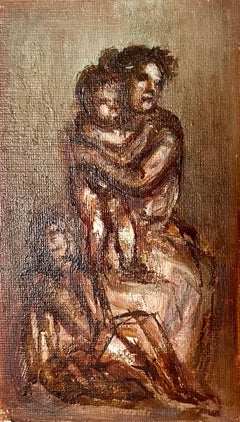
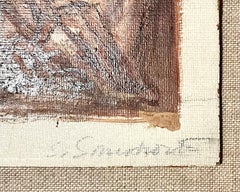
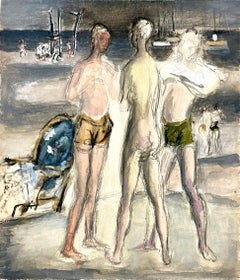
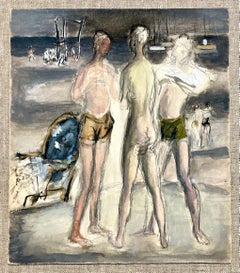
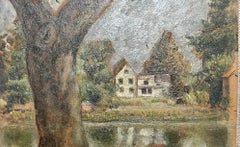
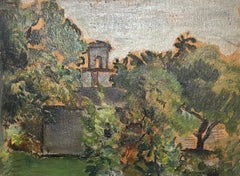
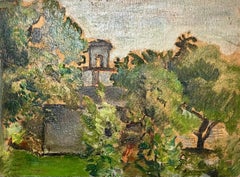
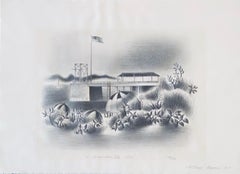
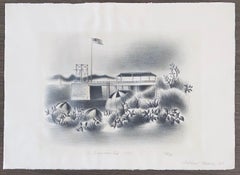
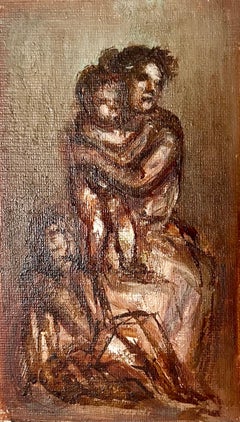
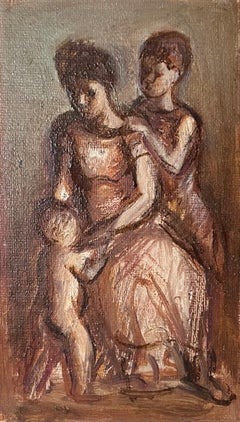
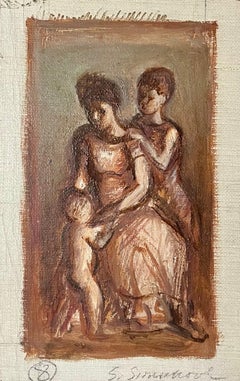
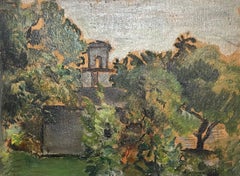
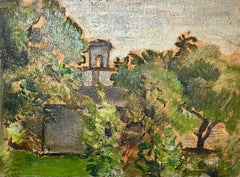
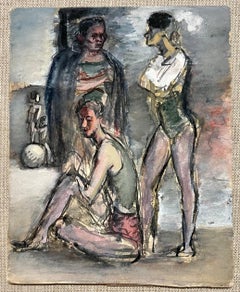
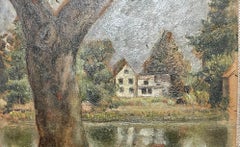
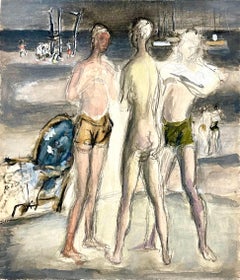
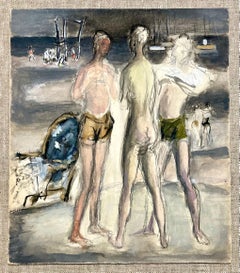
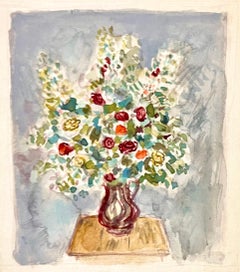
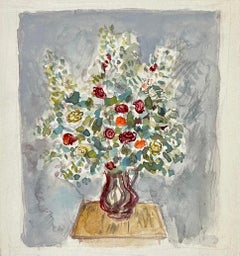
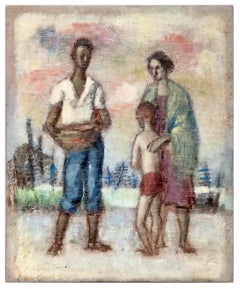
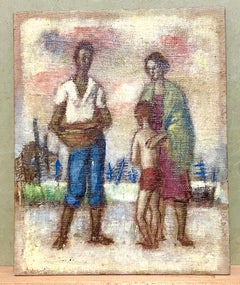
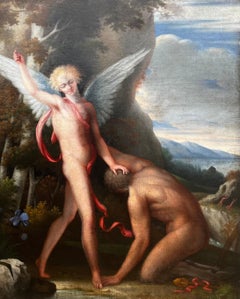
Simka Simkhovitch was born near the city of Kiev, Russia. When he was 7, he spent a year in bed with a severe case of measles. To amuse himself he used to sketch an old mill outside his window, and thus decided to become an artist. He studied at an art school in Odessa and was recommended to attend the Imperial Academy of St. Petersburg (a singular honor in Russia at the time) before the war and revolution. Swept up into the army before he could attend, his work was hung in the Museum of Revolution in Leningrad. He resumed his studies in 1914 and graduated four years later. He was sent to the United States in 1924 to do illustrations for Soviet textbooks. He quickly applied for and gained U.S. citizenship.
Simkhovitch integrated with the art world immediately and galleries such as Midtown Galleries and Marie Sterner took him on as part of their stable of artists. He also was employed by the WPA and executed major mural commissions throughout the country. One of his largest commissions was the Mississippi Court House. Life magazine profiled him twice with full-length features on his life here in this country as an artist. When he died at an early age, the Whitney Museum of Art in New York offered to do a retrospective and the widow denied the possibility and simply put his works away in storage.
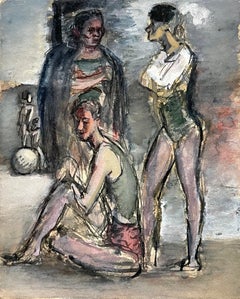
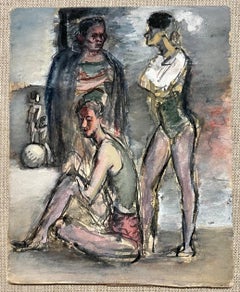
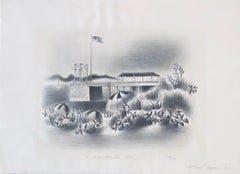
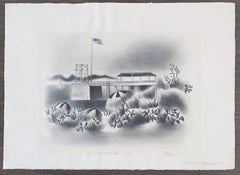
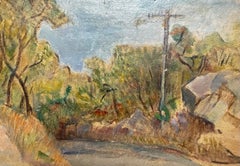
Considered a master draftsman and an adherent of certain classicism, Simkhovitch’s compositions are often built up in a complicated but well-managed counterpoint. But at heart, he is a romanticist preferring the dreamy colors of a Russian fairy tale.
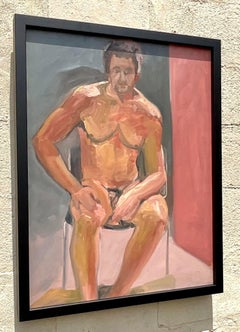
Figurative art, as opposed to abstract art, retains features from the observable world in its representational depictions of subject matter. Most commonly, figurative paintings reference and explore the human body, but they can also include landscapes, architecture, plants and animals — all portrayed with realism.
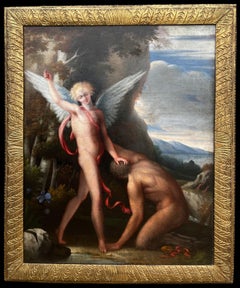
While the oldest figurative art dates back tens of thousands of years to cave wall paintings, figurative works made from observation became especially prominent in the early Renaissance. Artists like Michelangelo, Leonardo da Vinci and other Renaissance masters created naturalistic representations of their subjects.
Pablo Picasso is lauded for laying the foundation for modern figurative art in the 1920s. Although abstracted, this work held a strong connection to representing people and other subjects. Other famous figurative artists include Francis Bacon and Lucian Freud. Figurative art in the 20th century would span such diverse genres as Expressionism, Pop art and Surrealism.
Today, a number of figural artists — such as Sedrick Huckaby, Daisy Patton and Eileen Cooper — are making art that uses the human body as its subject.
Because figurative art represents subjects from the real world, natural colors are common in these paintings. A piece of figurative art can be an exciting starting point for setting a tone and creating a color palette in a room.
Browse an extensive collection of figurative paintings on 1stDibs.