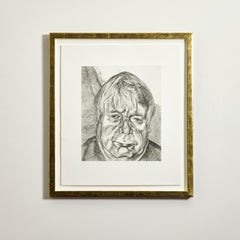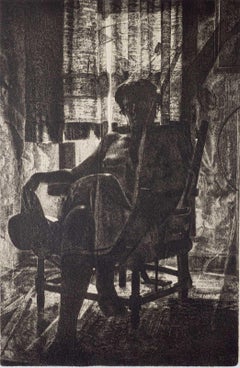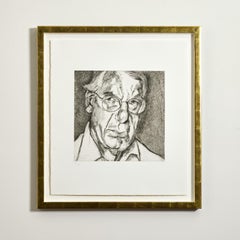
The New Yorker
By Lucian Freud
Located in Toronto, Ontario
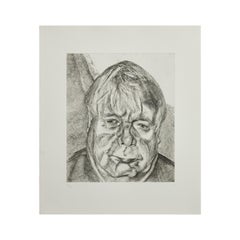
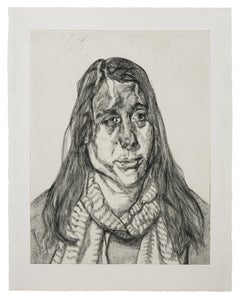
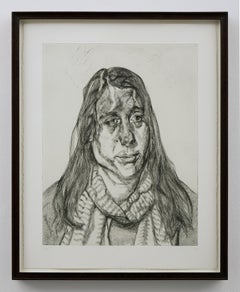
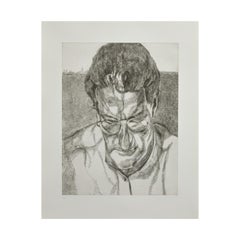
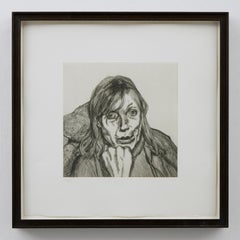
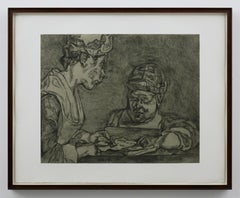
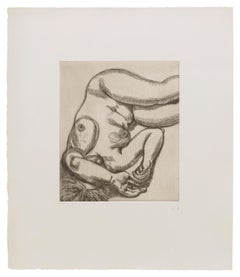
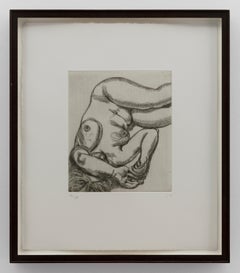
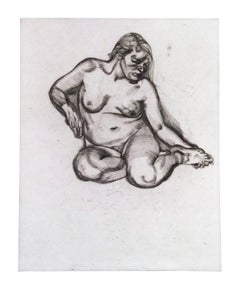
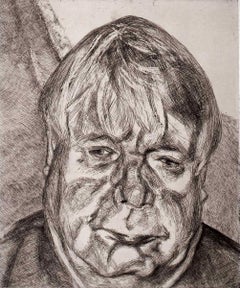
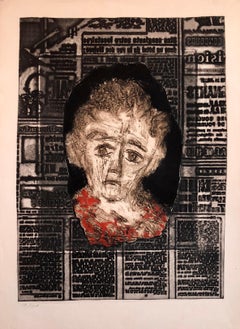
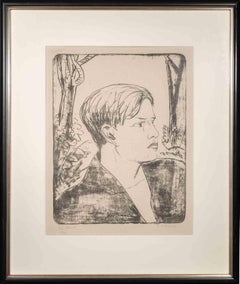
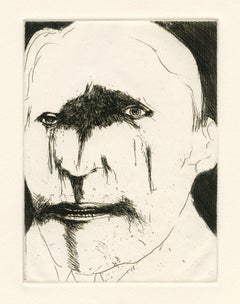
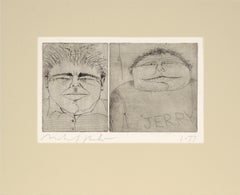
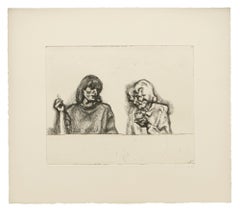
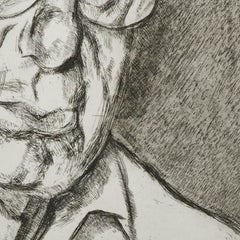
Lucian Freud (1922-2011) was a seminal figure in 20th-century British art, celebrated for his raw and psychologically charged exploration of the human form. With his distinctive figurative intensity, Freud captured friends, family, and lovers in a signature brand of realism that he refined over a seven-decade long career. The artist revitalized traditional portraiture in England by imbuing his images with visceral complexity and exposing his subjects in harsh, often unsettling poses that reveal their vulnerability. Freud's style is renowned for its striking emphasis on texture and physicality. His portraits are remarkably unsentimental and veer on harsh. Perhaps the most defining characteristic of his oeuvre is the artist's bold mastery of light and shadow. Freud accentuates every detail of his subjects with frenetic strokes and dramatic contrasts, carving out contours and imperfections with deliberate unflinching precision. Although Freud produced several prints early in his career, he took a 30-year hiatus before reconnecting with the medium in 1982. As with the rest of his practice, each etching demanded months of work and many sittings, deepening the intrigue and complexity of his printmaking. Completed in the last chapter of his career, "The New Yorker" offers a pared-back example of the artist's signature aesthetic. Freud captures his subject in a quiet moment of contemplation, his lips pursed...
Early 2000s Expressionist Lucian Freud Art
Etching