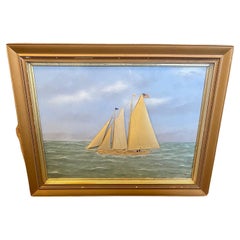
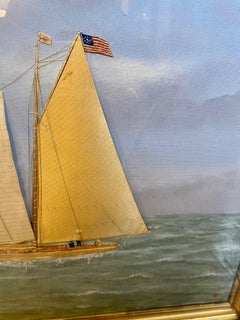
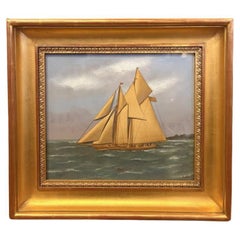
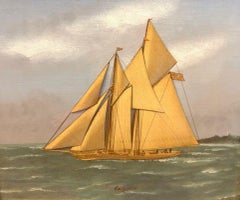
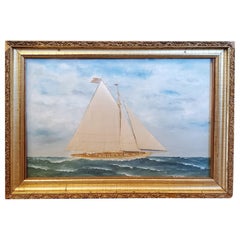
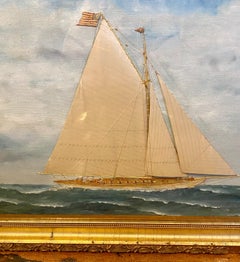
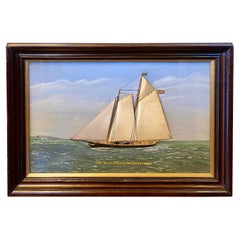
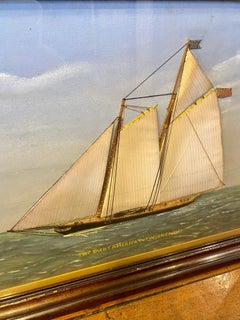
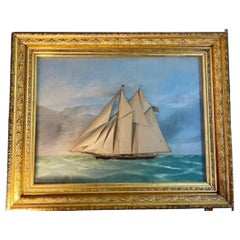
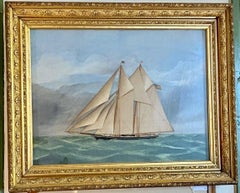
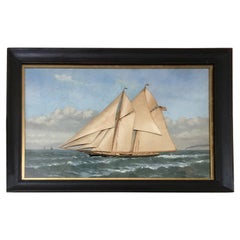
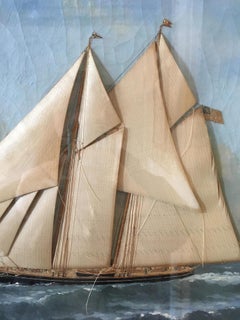
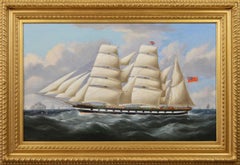
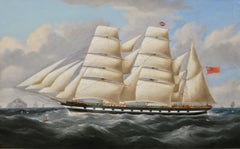
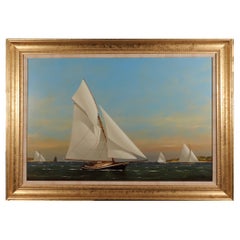
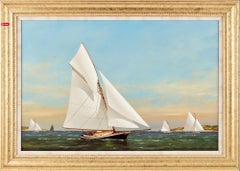
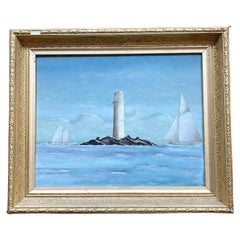
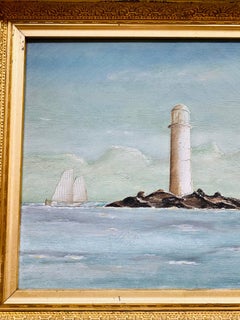
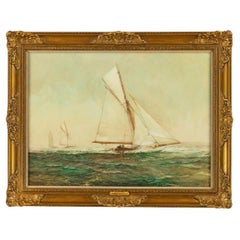
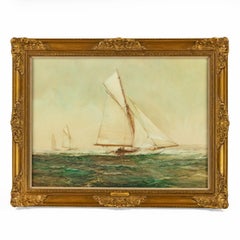
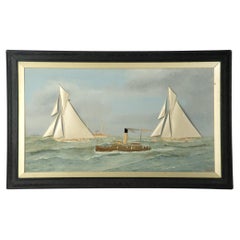
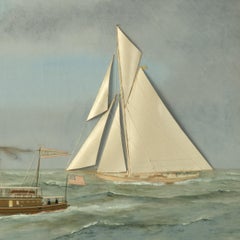
Thomas Willis listed as having been born in Connecticut, there is ample evidence that he was born in Denmark and emigrated to CT as a young man. There are pervasive rumors that he lived and worked in New York City as a silk importer or a manufacturer of embroidery thread, which lead to his unique art form; however, his style and technique was fully developed while still living in Europe. Rumors aside, it is well documented that he worked prolifically creating portraits of yachts and steamers on commission for members of the American, New York and Corinthian Yacht Clubs, as well as others. His earliest work tended to be on plain colored silk backgrounds; soon his work featured oil painting on canvas backgrounds, thought to originally have been done for him by friends such as the renowned marine artist Antonio Jacobsen (who shared many of the same clients). It is believed that these artists taught Willis how to paint for himself, eventually becoming quite adept. As such, the painted backgrounds on Willis' work can vary from the still somewhat amateurish to the frankly sublime. He was, however, the only artist working in this unique medium and style, and his art is unmistakable and irrefutable.
Folk art refers to a genre of art that shares the creator’s traditions, offering not just an artistic display but an opportunity to learn about a culture. Vintage, new and antique folk art typically reflects a heritage or location. It can include utilitarian objects and handmade art as diverse as weather vanes, portraiture and paintings, carnival art, quilts and duck decoys.
American folk art is frequently valued because of the traditional skills involved, like weaving, hand-carving wood and even stonework. Many folk artists are self-taught, while some train as apprentices within their community. By using available materials and taking a personal approach to their creations, artists ensure each piece is unique and conveys a story. Native American folk art includes functional objects reflecting their heritage, such as baskets, textiles and wooden pieces.
During the Great Depression, artistic materials in America were hard to come by, so artisans used discarded wood from cigar boxes and shipping crates to make highly stylized, notched pieces — most often picture frames and boxes — that are today sought after by collectors. This folk art style is called tramp art and was popular from roughly 1870 until the 1940s.
Folk art brings vibrant culture and traditions into your home. Browse an extensive collection of folk art on 1stDibs.