Abraham Rattner Art

American, 1895-1978

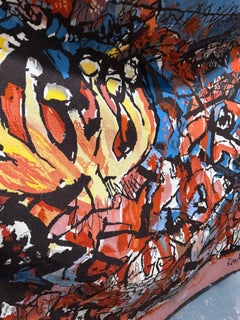
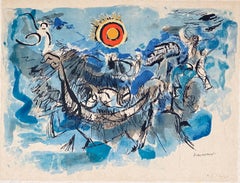
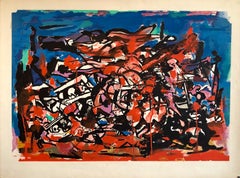
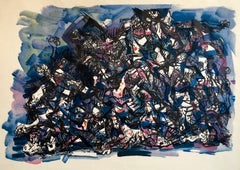
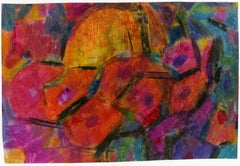
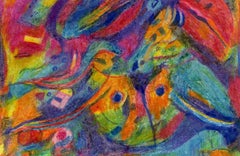
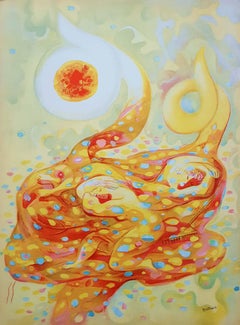
Abraham Rattner lived in Paris from 1920–40, knew and studied the works of Claude Monet. He is known for his surrealist pieces that more closely follow the works of Picasso and George Rouault. His artwork is in the Albright-Knox Art Gallery, Buffalo, New York; Art Institute of Chicago; Baltimore Museum of Art; Detroit Institute of Arts; Montgomery Museum of Fine Arts, Montgomery, Alabama; Pennsylvania Academy of the Fine Arts, Philadelphia Museum of Art; Phillips Collection, Washington, D.C.; Wadsworth Atheneum, Hartford, Connecticut; Whitney Museum of American Art, New York City; Samuel P. Harn Museum of Art, Gainesville, Florida and the Leepa-Rattner Museum of Art on the campus of St. Petersburg College in Tarpon Springs, Florida.

to
3
3
1
3
1
Overall Width
to
Overall Height
to
8
2
2
2
3
2
2
1
7
1
3
2
1
1
1
1
1
1
6
1
1
1
1
8
10,680
2,826
2,495
1,414
1
2
8
Artist: Abraham Rattner
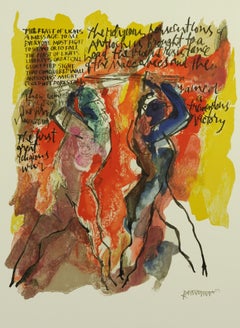
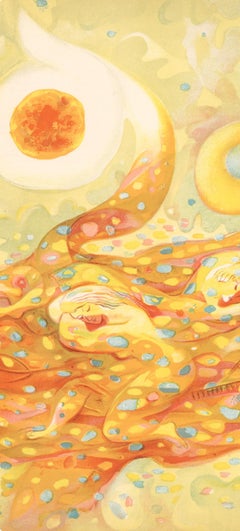
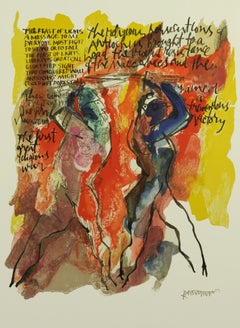
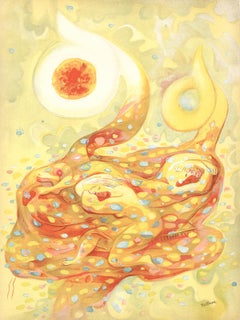
Feast of Lights: Hanukkah

Feast of Lights: Hanukkah

By Abraham Rattner

Located in Fairlawn, OH

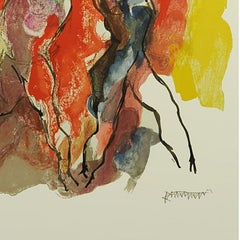
Feast of Lights (Poster) Signed in the stone 17 color lithograph Published by Kennedy Galleries Edition: Unknown edition, signed in the stone There was also a pencil signed edition o...

Category

1970s American Modern Abraham Rattner Art

Materials

Lithograph

Abraham Rattner, Autumn, from Verve, Revue Artistique et Litteraire, 1938

Abraham Rattner, Autumn, from Verve, Revue Artistique et Litteraire, 1938

By Abraham Rattner

Located in Southampton, NY

This exquisite lithograph by Abraham Rattner (1895–1978), titled L'automne (Autumn), from Verve, Revue Artistique et Litteraire, Vol. I, No. 3, originates from the 1938 issue publish...

Category

1930s Surrealist Abraham Rattner Art

Materials

Lithograph

Abraham Rattner Large Expressionist Hand Woven Israeli Aubusson Wool Tapestry

Abraham Rattner Large Expressionist Hand Woven Israeli Aubusson Wool Tapestry

By Abraham Rattner

Located in Surfside, FL

Abraham Rattner (American, 1895-1978) Hand signed Rattner on the label and signed in the weave Edition 1 OF 8 (I do not know how many of the 8 were actually produced) Created at Itche Mambush Atelier Workshop Ein Hod Artist Village Israel. Titled: In Memory of the Six Million A stunning large example in a brightly colored Abstract expressionist design. A hand made made textile artwork Dimensions: 55 X 79 inches This is an Aubusson style flat weave hand woven wool tapestry wall Hanging. Hand signed. Executed at Itche Mambush studios Ein Hod Artists Village. Itche Mambouche worked with Marcel Janco, Mordecai Ardon, Robert Helman, Sami Briss, Abraham Rattner and others inspired by Jean Lurcat and Jean Picard le Doux. This is similar to an Aubusson style flat weave tapisserie hand woven wool tapestry. Along with the George Goldstein...

Category

Mid-20th Century Modern Abraham Rattner Art

Materials

Wool

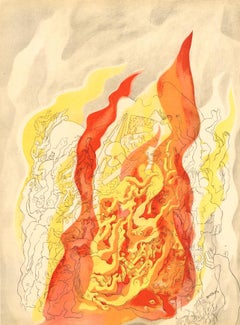
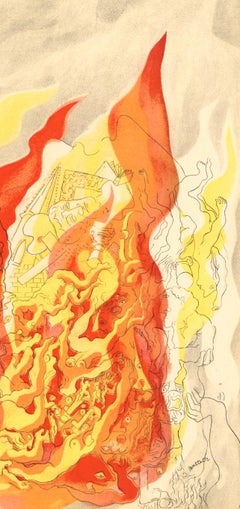
Abraham Rattner, The Fire, from Verve, Revue Artistique, 1937

Abraham Rattner, The Fire, from Verve, Revue Artistique, 1937

By Abraham Rattner

Located in Southampton, NY

This exquisite lithograph by Abraham Rattner (1895–1978), titled Le Feu (The Fire), from Verve, Revue Artistique et Litteraire, Vol. I, No. 1, originates from the 1937 issue publishe...

Category

1930s Surrealist Abraham Rattner Art

Materials

Lithograph

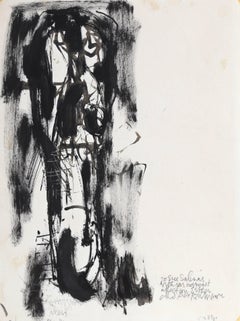
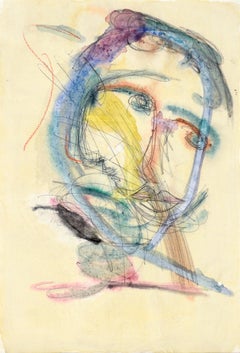
Long Face, Abstract Expressionist Ink and Wash Painting by Abraham Rattner

Long Face, Abstract Expressionist Ink and Wash Painting by Abraham Rattner

By Abraham Rattner

Located in Long Island City, NY

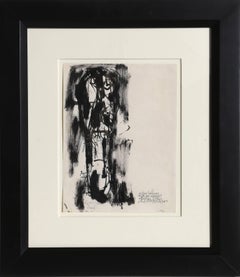
Artist: Abraham Rattner, American (1895 - 1978) Title: Man with Long Face Year: 1961 Medium: Ink and Wash on Paper, signed, dated and dedicated to Sue Salinas Size: 10 x 8.5 inches ...

Category

1960s Abstract Expressionist Abraham Rattner Art

Materials

Ink, Watercolor

Red Abstract, Colorful Abstract Expressionist Lithograph by Abraham Rattner

Red Abstract, Colorful Abstract Expressionist Lithograph by Abraham Rattner

By Abraham Rattner

Located in Long Island City, NY

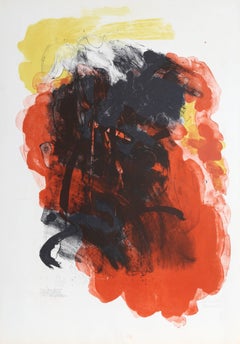
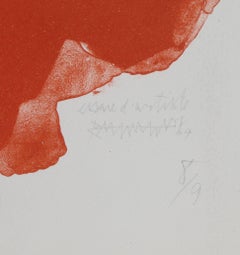
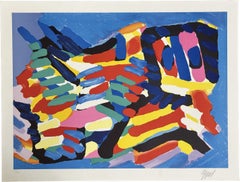
Artist: Abraham Rattner, American (1895 - 1978) Title: Red Abstract Year: 1964 Medium: Lithograph, signed, numbered and dedicated in pencil Edition: 8/9 Artist's Proof Size: 30 x 21...

Category

1960s Abstract Expressionist Abraham Rattner Art

Materials

Lithograph

Related Items
Untitled (Rabbi Scholar)

Untitled (Rabbi Scholar)

By Seymour Rosenthal

Located in New York, NY

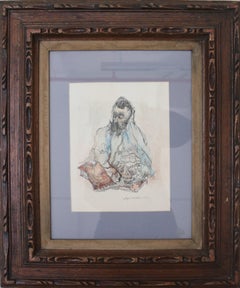
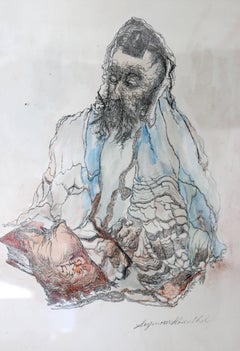
Seymour Rosenthal (American 1921-2007) "Untitled: Rabbi Scholar", Figurative Pen/Watercolor on Paper signed in bottom right hand corner, 10.50 x 8 (24 x 20.50 In Frame), Late 20th Ce...

Category

Late 20th Century Abstract Abraham Rattner Art

Materials

Watercolor, Pen

ASU Portrait II /// Fritz Scholder Native American Indian Expressionist Surreal

ASU Portrait II /// Fritz Scholder Native American Indian Expressionist Surreal

By Fritz Scholder

Located in Saint Augustine, FL

Artist: Fritz Scholder (Native American, 1937-2005) Title: "ASU Portrait II" Portfolio: Arizona State University Centennial Portfolio *Signed by Scholder in pencil lower right Year: 1984 Medium: Original Lithograph on Arches Cover buff paper Limited edition: 49/100 Printer: Joseph M. Segura of the Print Research Facility, School of Art, Arizona State University, Tempe, AZ Publisher: the Print Research Facility, School of Art, Arizona State University, Tempe, AZ Sheet size: 20.25" x 15" Reference: "Collaborative Works: Recent Work and Catalogue Raisonné of the Visual Arts Research Institute" - ASU/VARI No. 121, page 98 Condition: Never framed, has been professionally stored away within its original portfolio case for decades. In mint condition Not a single example of this work has ever appeared at auction in over 40 years. Extremely rare Notes: Provenance: one owner ever - private collection - Scottsville, AZ; acquired directly from the publisher the Print Research Facility, School of Art, Arizona State University, Tempe, AZ upon its release in 1984. Numbered by Scholder in pencil lower left. Comes from the 1984 "Arizona State University Centennial Portfolio" of eighteen prints in various mediums by Daniel R Britton, R. E. (Ron) Gasowski, Arthur W. Hahn, James Hajicek, Jules Heller...

Category

1980s Expressionist Abraham Rattner Art

Materials

Lithograph

Mary Lightfoot, Street Scene in Taos

Mary Lightfoot, Street Scene in Taos

Located in New York, NY

Mary Lightfoot was born in Ravenna, Texas. She studied at the College of Industrial Arts in Denton and the North Texas State Teachers College prior to receiving a master of arts degree from Columbia University. Her entire teaching career was with the Dallas Public School system; she summered in Europe...

Category

Mid-20th Century American Modern Abraham Rattner Art

Materials

Lithograph

Argentinian Tango, Mixed Media Abstract Expressionist

Argentinian Tango, Mixed Media Abstract Expressionist

Located in Soquel, CA

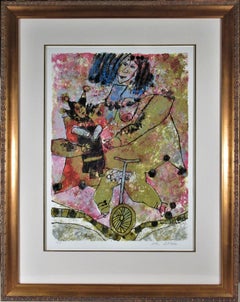
Argentinian Tango, Mixed Media Abstract Expressionist An abstract portrait in cool pastels accented in vibrant yellow and pink and lined in ink, by California-based artist, Ricardo de Silva (American). Paper size: 17.75"H x 12"W From a collection of Ricardo de Silva's work and memorabilia. DeSilva was born in Brazil and grew up in Los Angeles. He was a gallery owner, first in Santa Barbara in the 1960's and 70's, then in San Jose in the 1980's. He was dedicated to promoting the work of talented upcoming artists, including Kogyo and Hasui Kiyochika, Robert Frame, Jim Stuckenberg, Alice Robertson Carr, Deborah Eve Alastra...

Category

21st Century and Contemporary Abstract Expressionist Abraham Rattner Art

Materials

Paper, Gouache, Ink, Watercolor

American Yachting Scene Salvador Dali Currier & Ives series  lithograph 1971

American Yachting Scene Salvador Dali Currier & Ives series lithograph 1971

By Salvador Dalí­

Located in Paonia, CO

American Yachting Scene is a vibrant explosion of ocean blue , whitecaps and strong yellow slashes to describe the ships sailing to their destination. There is an insert of a Currier and Ives print of sailing ships that Dali used as his inspiration. This original lithograph is from the series “The World Of Currier...

Category

1970s Surrealist Abraham Rattner Art

Materials

Lithograph

Kathe Kollwitz, Mother with Child, from Ten Lithographs, 1941 (after)

Kathe Kollwitz, Mother with Child, from Ten Lithographs, 1941 (after)

By Käthe Kollwitz

Located in Southampton, NY

This exquisite lithograph after Kathe Kollwitz (1867–1945), titled Mutter mit Kind (Mother with Child), from the folio Kathe Kollwitz, Ten Lithographs, originates from the 1941 edition published by Henry C. Kleemann, New York, and Curt Valentin, New York; printed by Duenewald Printing Corporation, New York. The composition reflects Kollwitz’s profound engagement with themes of maternal protection, tenderness, and human vulnerability, rendered with stark emotional intensity and a powerful graphic economy that underscores her enduring social message. Executed as a lithograph on velin paper, this work measures 19 x 16 inches (48.26 x 40.64 cm), overall; 13 x 10.5 inches (33.02 x 26.67 cm), image. Unsigned and unnumbered as issued. Artwork Details: Artist: After Kathe Kollwitz (1867–1945) Title: Mutter mit Kind (Mother with Child), from Kathe Kollwitz, Ten Lithographs Medium: Lithograph on velin paper Dimensions: 19 x 16 inches (48.26 x 40.64 cm), overall; 13 x 10.5 inches (33.02 x 26.67 cm), image Inscription: Unsigned and unnumbered as issued Date: 1941 Publisher: Henry C. Kleemann, New York, and Curt Valentin, New York Printer: Duenewald Printing Corporation, New York Condition: Well preserved, consistent with age and medium Provenance: From the folio Kathe Kollwitz, Ten Lithographs, 1941 About the Publication: Kathe Kollwitz, Ten Lithographs, published in New York in 1941 by Henry C. Kleemann in collaboration with Curt Valentin, represents an important early American presentation of Kollwitz’s graphic work at a time when her reputation was expanding internationally. Issued during the turbulence of the Second World War and following the suppression of her work in Germany under the Nazi regime, the folio played a crucial role in introducing her imagery to a broader audience outside Europe. The publication gathers a selection of her most powerful lithographic compositions, emphasizing her mastery of tonal contrast, expressive line, and psychological depth. Produced with careful attention to print quality by Duenewald Printing Corporation, the edition reflects the continued transmission of European modernist printmaking traditions into the American context, serving both as a document of artistic excellence and as a vehicle for the preservation and dissemination of Kollwitz’s humanistic vision. About the Artist: Kathe Kollwitz (1867–1945) was a German draughtsman, printmaker, and sculptor whose profoundly moving imagery, exceptional technical mastery, and unwavering social conscience established her as one of the most important and influential artists of the twentieth century, widely recognized as a master of modern printmaking and one of the most powerful visual chroniclers of human suffering, war, and social injustice. Born in Konigsberg, East Prussia, into a progressive and intellectually engaged family, Kollwitz was encouraged from an early age to pursue art and developed a deep awareness of social inequality that would shape her entire career, studying in Berlin and Munich at a time when women were largely excluded from formal academies while mastering drawing and graphic techniques with extraordinary discipline. Her breakthrough came with the monumental graphic cycle A Weavers’ Revolt (1893–1897), followed by The Peasants’ War (1901–1908), works that combined complex narrative structure with extraordinary technical command in etching, aquatint, and lithography, establishing her reputation as one of Europe’s leading graphic artists. Throughout her career, Kollwitz remained committed to portraying the lives of workers, mothers, and victims of poverty and conflict with unflinching honesty, creating compositions defined by bold, sculptural line, dense shadow, and unparalleled psychological depth that conveyed grief, resilience, and dignity. Working during a period transformed by the radical innovations of Pablo Picasso, Alexander Calder, Alberto Giacometti, Salvador Dali, Joan Miro, Wassily Kandinsky, Marcel Duchamp, and Man Ray, Kollwitz maintained a resolutely figurative and human-centered approach, aligning more closely with German Expressionism and artists such as Ernst Barlach, Max Liebermann, and Edvard Munch, whose emotional intensity and symbolic treatment of the human figure profoundly shaped her artistic language. Her later work, particularly the woodcut cycle War (1922–1923), stands among the most powerful anti-war statements in the history of art, reflecting both personal tragedy, including the death of her son in World War I, and a universal condemnation of violence and loss. In addition to her prints, Kollwitz created deeply moving sculptures that extended her exploration of grief and maternal protection into three dimensions, reinforcing her status as a multidisciplinary artist of exceptional range. She achieved significant recognition during her lifetime, becoming the first woman elected to the Prussian Academy of Arts, though her work was later condemned by the Nazi regime as degenerate, leading to her forced resignation and the removal of her works from public collections, yet her reputation expanded internationally after World War II and she is now regarded as a central figure in modern art. Her influence has been profound and far-reaching, shaping later artists including Francis Bacon, Anselm Kiefer, Leon Golub, Kiki Smith, and numerous contemporary figurative and socially engaged artists who continue to explore themes of trauma, memory, and human vulnerability. Today her works are held in major museum collections worldwide, including the Kathe Kollwitz Museum in Berlin, the Museum of Modern Art in New York, the British Museum in London, and the Art Institute of Chicago, and remain highly sought after by collectors for their emotional intensity and historical significance. The highest auction record for a work by Kathe Kollwitz is held by her sculpture Mutter mit totem Sohn (Mother with Dead Son), which achieved approximately 1.2 million EUR at auction, confirming her enduring importance. Kathe Kollwitz Mutter mit Kind 1941 lithograph German Expressionism social realism print.

Category

1940s Expressionist Abraham Rattner Art

Materials

Lithograph

"Les Vagues" Alexander Calder, Modernist, Red and Blue, Swirling Waves

"Les Vagues" Alexander Calder, Modernist, Red and Blue, Swirling Waves

By Alexander Calder

Located in New York, NY

Alexander Calder Les Vagues, 1975 Signed and Numbered 29 (on a label affixed to the reverse) Handwoven Aubusson wool tapestry 40 1/2 x 59 inches Edition 29/200 Provenance Truist Ban...

Category

1970s American Modern Abraham Rattner Art

Materials

Tapestry, Wool

Kathe Kollwitz, Self-Portrait, from Ten Lithographs, 1941 (after)

Kathe Kollwitz, Self-Portrait, from Ten Lithographs, 1941 (after)

By Käthe Kollwitz

Located in Southampton, NY

This exquisite lithograph after Kathe Kollwitz (1867–1945), titled Selbstbildnis (Self-Portrait), from the folio Kathe Kollwitz, Ten Lithographs, originates from the 1941 edition published by Henry C. Kleemann, New York, and Curt Valentin, New York; printed by Duenewald Printing Corporation, New York. The composition reflects Kollwitz’s profound engagement with themes of identity, introspection, and human vulnerability, rendered with stark emotional intensity and a powerful graphic economy that underscores her enduring social message. Executed as a lithograph on velin paper, this work measures 19 x 16 inches (48.26 x 40.64 cm), overall; 10.5 x 9 inches (26.67 x 22.86 cm), image. Unsigned and unnumbered as issued. Artwork Details: Artist: After Kathe Kollwitz (1867–1945) Title: Selbstbildnis (Self-Portrait), from Kathe Kollwitz, Ten Lithographs Medium: Lithograph on velin paper Dimensions: 19 x 16 inches (48.26 x 40.64 cm), overall; 10.5 x 9 inches (26.67 x 22.86 cm), image Inscription: Unsigned and unnumbered as issued Date: 1941 Publisher: Henry C. Kleemann, New York, and Curt Valentin, New York Printer: Duenewald Printing Corporation, New York Condition: Well preserved, consistent with age and medium Provenance: From the folio Kathe Kollwitz, Ten Lithographs, 1941 About the Publication: Kathe Kollwitz, Ten Lithographs, published in New York in 1941 by Henry C. Kleemann in collaboration with Curt Valentin, represents an important early American presentation of Kollwitz’s graphic work at a time when her reputation was expanding internationally. Issued during the turbulence of the Second World War and following the suppression of her work in Germany under the Nazi regime, the folio played a crucial role in introducing her imagery to a broader audience outside Europe. The publication gathers a selection of her most powerful lithographic compositions, emphasizing her mastery of tonal contrast, expressive line, and psychological depth. Produced with careful attention to print quality by Duenewald Printing Corporation, the edition reflects the continued transmission of European modernist printmaking traditions into the American context, serving both as a document of artistic excellence and as a vehicle for the preservation and dissemination of Kollwitz’s humanistic vision. About the Artist: Kathe Kollwitz (1867–1945) was a German draughtsman, printmaker, and sculptor whose profoundly moving imagery, exceptional technical mastery, and unwavering social conscience established her as one of the most important and influential artists of the twentieth century, widely recognized as a master of modern printmaking and one of the most powerful visual chroniclers of human suffering, war, and social injustice. Born in Konigsberg, East Prussia, into a progressive and intellectually engaged family, Kollwitz was encouraged from an early age to pursue art and developed a deep awareness of social inequality that would shape her entire career, studying in Berlin and Munich at a time when women were largely excluded from formal academies while mastering drawing and graphic techniques with extraordinary discipline. Her breakthrough came with the monumental graphic cycle A Weavers’ Revolt (1893–1897), followed by The Peasants’ War (1901–1908), works that combined complex narrative structure with extraordinary technical command in etching, aquatint, and lithography, establishing her reputation as one of Europe’s leading graphic artists. Throughout her career, Kollwitz remained committed to portraying the lives of workers, mothers, and victims of poverty and conflict with unflinching honesty, creating compositions defined by bold, sculptural line, dense shadow, and unparalleled psychological depth that conveyed grief, resilience, and dignity. Working during a period transformed by the radical innovations of Pablo Picasso, Alexander Calder, Alberto Giacometti, Salvador Dali, Joan Miro, Wassily Kandinsky, Marcel Duchamp, and Man Ray, Kollwitz maintained a resolutely figurative and human-centered approach, aligning more closely with German Expressionism and artists such as Ernst Barlach, Max Liebermann, and Edvard Munch, whose emotional intensity and symbolic treatment of the human figure profoundly shaped her artistic language. Her later work, particularly the woodcut cycle War (1922–1923), stands among the most powerful anti-war statements in the history of art, reflecting both personal tragedy, including the death of her son in World War I, and a universal condemnation of violence and loss. In addition to her prints, Kollwitz created deeply moving sculptures that extended her exploration of grief and maternal protection into three dimensions, reinforcing her status as a multidisciplinary artist of exceptional range. She achieved significant recognition during her lifetime, becoming the first woman elected to the Prussian Academy of Arts, though her work was later condemned by the Nazi regime as degenerate, leading to her forced resignation and the removal of her works from public collections, yet her reputation expanded internationally after World War II and she is now regarded as a central figure in modern art. Her influence has been profound and far-reaching, shaping later artists including Francis Bacon, Anselm Kiefer, Leon Golub, Kiki Smith, and numerous contemporary figurative and socially engaged artists who continue to explore themes of trauma, memory, and human vulnerability. Today her works are held in major museum collections worldwide, including the Kathe Kollwitz Museum in Berlin, the Museum of Modern Art in New York, the British Museum in London, and the Art Institute of Chicago, and remain highly sought after by collectors for their emotional intensity and historical significance. The highest auction record for a work by Kathe Kollwitz is held by her sculpture Mutter mit totem Sohn (Mother with Dead Son), which achieved approximately 1.2 million EUR at auction, confirming her enduring importance. Kathe Kollwitz Selbstbildnis 1941 lithograph German Expressionism social realism print.

Category

1940s Expressionist Abraham Rattner Art

Materials

Lithograph

Marc Chagall, Tribe of Asher, from The Jerusalem Windows, 1962 (after)

Marc Chagall, Tribe of Asher, from The Jerusalem Windows, 1962 (after)

By Marc Chagall

Located in Southampton, NY

This exquisite lithograph after Marc Chagall (1887–1985), titled Tribe of Asher, from the album Marc Chagall, The Jerusalem Windows, originates from the 1962 edition published by And...

Category

1960s Expressionist Abraham Rattner Art

Materials

Lithograph

"Labor in a Diesel Plant" Machine Age American Scene Industrial Mid 20th Century

"Labor in a Diesel Plant" Machine Age American Scene Industrial Mid 20th Century

By Letterio Calapai

Located in New York, NY

"Labor in a Diesel Plant" Machine Age American Scene Industrial Mid 20th Century Letterio Calapai (American 1902-1993) ''Labor in A Diesel Plant'' Wood engraving, 1940 17 x 10 1/2...

Category

1940s American Modern Abraham Rattner Art

Materials

Lithograph

Lithograph Belgian American Surrealism WPA Modernist Karl Fortess Surrealist Art

Lithograph Belgian American Surrealism WPA Modernist Karl Fortess Surrealist Art

Located in Surfside, FL

Karl Eugene Fortess (1907-1993) Original color lithographs on BFK Rives paper, 1966, Hand signed and numbered 29/36 in pencil, Sheet size 20.5 x 15 inches. Karl E. Fortess (1907-...

Category

Mid-20th Century Surrealist Abraham Rattner Art

Materials

Lithograph

Original California Ferrari Louis Vuitton Parc de Bagatelle hand signed poster

Original California Ferrari Louis Vuitton Parc de Bagatelle hand signed poster

By Razzia (Gérard Courbouleix–Dénériaz)

Located in Spokane, WA

Original 1989 Louis Vuitton Automobile Classiques Poster –Hand Signed, Archival Linen-Backed. This poster was created for the Concours d’Elegance ...

Category

1980s American Modern Abraham Rattner Art

Materials

Lithograph

Previously Available Items
"Autumn" original lithograph

"Autumn" original lithograph

By Abraham Rattner

Located in Henderson, NV

Medium: original lithograph. Printed in 1938 and published in Paris by Teriade for the art revue Verve (Volume 1, Number 3). Four artists were commissioned to contribute compositions...

Category

1930s Surrealist Abraham Rattner Art

Materials

Lithograph

Abstraction
Abstraction

Abraham RattnerAbstraction, n.d

Sold

H 6.94 in W 10.25 in

Abstraction

By Abraham Rattner

Located in Fairlawn, OH

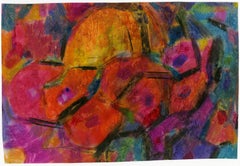
Untitled Abstraction pastel, watercolor and crayon on paper, n.d. Signed in pencil, reverse Condition: Excellent Image size: Irregular shaped, 6 5/16 x 10 1/4 inches Abraham Rattner (July 8, 1895 – February 14, 1978) was an American artist, best known for his richly colored paintings, often with religious subject matter. During World War I, he served in France with the U.S. Army as a camouflage artist. Early life Rattner was born in Poughkeepsie, New York to a Russian-Jewish father and a Romanian-Jewish mother.[2] He initially intended to be an architect, in pursuit of which he studied at George Washington University. Deciding instead to concentrate on painting, he then went on to study art at the Corcoran School of Art and the Pennsylvania Academy of the Fine Arts. Camouflage service With the entry of the U.S. in World War I, Rattner was recruited to join the U.S. Army's American Camouflage Corps by that unit's commanding officer, Homer Saint-Gaudens, son of sculptor Augustus Saint-Gaudens (Behrens 2009). He was sent to France, where he was "promoted to sergeant, put in charge of camouflage research, and served at the front in the Second Battle of the Marne, Château-Thierry, Belleau Wood...

Category

1960s Abstract Abraham Rattner Art

Materials

Crayon, Pastel

Large American Abstract Expressionist Bold Colorful Lithograph

Large American Abstract Expressionist Bold Colorful Lithograph

By Abraham Rattner

Located in Surfside, FL

Abraham Rattner (July 8, 1895 – February 14, 1978) was an American artist, best known for his richly colored paintings, often with Jewish religious subject matter. During World War I, he served in France with the U.S. Army as a camouflage artist. Rattner was born in Poughkeepsie, New York to a Russian-Jewish father and a Romanian-Jewish mother. He initially intended to be an architect, in pursuit of which he studied at George Washington University. Deciding instead to concentrate on painting, he then went on to study art at the Corcoran School of Art and the Pennsylvania Academy of the Fine Arts. With the entry of the U.S. in World War I, Rattner was recruited to join the U.S. Army's camouflage section by that unit's commanding officer, Homer Saint-Gaudens, son of sculptor Augustus Saint-Gaudens (Behrens 2009). He was sent to France, where he was "promoted to sergeant, put in charge of camouflage research, and served at the front in the Second Battle of the Marne, Château-Thierry, Belleau Wood, and on the Hindenburg Line. He received a severe back wound which troubled him for the rest of his life" Rattner lived in Paris from 1920 until 1940, when he returned to New York City. He became known for his rich use of color and surrealist aspects of his work, which often pertained to religion. Although while living in Paris, he had met and studied the paintings of Claude Monet, his work is generally closer to that of Georges Rouault and Pablo Picasso. During World War II, he again volunteered for camouflage service, but was able to do very little (Culkin 1980). Later, he taught at several schools, including The New School, New York (1947–55), and Yale University, New Haven, Connecticut (1952–53). In 1924, Rattner married an American art student and fashion illustrator named Bettina Bedwell, who later became the Paris fashion correspondent for the New York News-Chicago Tribune Syndicate. In 1947, she died suddenly from kidney infection. In 1949, he married Esther Gentle, a New York City sculptor, painter, printmaker, and business person, who ran an art reproductions business and a New York City art gallery...

Category

1960s Abstract Expressionist Abraham Rattner Art

Materials

Lithograph

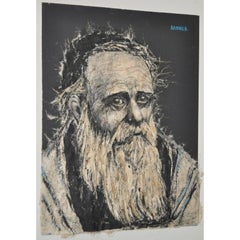
Abraham Rattner (1893-1978) Mixed Media "Rabbi" Portrait c.1960

Abraham Rattner (1893-1978) Mixed Media "Rabbi" Portrait c.1960

By Abraham Rattner

Located in San Francisco, CA

Abraham Rattner (1893-1978) Mixed Media "Rabbi" Portrait c.1960 Absolutely beautiful mixed media painting by noted American artist Abraham Rattner. Created with a combination of fi...

Category

Mid-20th Century Abstract Impressionist Abraham Rattner Art

Materials

Paint, Handmade Paper

Storm Composition #3

Storm Composition #3

By Abraham Rattner

Located in Miami, FL

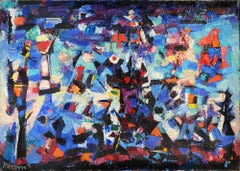
An early example of Abstract Expressionism executed in 1955 during the movement's heyday and it's period of peak inventiveness. However, this work is still rooted in representation. The dark area the runs along the base of the picture is the ground and to the left, right and center there are black structures that represent trees. The work is very tactile and is composed of globs of paint that grow out from the surface and form a thick impasto. Rich vibrant saturated blues, reds and oranges create optical drama. The work look better in person. frame: 29 x 39 1/2 inches , Provenance: Kennedy Galleries The Currier Gallery of Art...

Category

1950s Abstract Expressionist Abraham Rattner Art

Materials

Oil

Large American Abstract Expressionist Bold Colorful Lithograph Proof Print

Large American Abstract Expressionist Bold Colorful Lithograph Proof Print

By Abraham Rattner

Located in Surfside, FL

It is signed and dated on front in black. It does not bear a number from an edition. It is either a unique or proof print, or an original watercolor painting. Abraham Rattner (July 8, 1895 – February 14, 1978) was an American artist, best known for his richly colored paintings, often with Jewish religious subject matter. During World War I, he served in France with the U.S. Army as a camouflage artist. Rattner was born in Poughkeepsie, New York to a Russian-Jewish father and a Romanian-Jewish mother. He initially intended to be an architect, in pursuit of which he studied at George Washington University. Deciding instead to concentrate on painting, he then went on to study art at the Corcoran School of Art and the Pennsylvania Academy of the Fine Arts. With the entry of the U.S. in World War I, Rattner was recruited to join the U.S. Army's camouflage section by that unit's commanding officer, Homer Saint-Gaudens, son of sculptor Augustus Saint-Gaudens (Behrens 2009). He was sent to France, where he was "promoted to sergeant, put in charge of camouflage research, and served at the front in the Second Battle of the Marne, Château-Thierry, Belleau Wood...

Category

1960s Abstract Expressionist Abraham Rattner Art

Materials

Lithograph

Large American Abstract Expressionist Bold Colorful Lithograph Proof Print

Large American Abstract Expressionist Bold Colorful Lithograph Proof Print

By Abraham Rattner

Located in Surfside, FL

It is not pencil signed or numbered on front. I assume this is an original work or a proof print. it is marked in pencil verso with the artist name and what i believe is the title. Abraham Rattner (July 8, 1895 – February 14, 1978) was an American artist, best known for his richly colored paintings, often with Jewish religious subject matter. During World War I, he served in France with the U.S. Army as a camouflage artist. Rattner was born in Poughkeepsie, New York to a Russian-Jewish father and a Romanian-Jewish mother. He initially intended to be an architect, in pursuit of which he studied at George Washington University. Deciding instead to concentrate on painting, he then went on to study art at the Corcoran School of Art and the Pennsylvania Academy of the Fine Arts. With the entry of the U.S. in World War I, Rattner was recruited to join the U.S. Army's camouflage section by that unit's commanding officer, Homer Saint-Gaudens, son of sculptor Augustus Saint-Gaudens (Behrens 2009). He was sent to France, where he was "promoted to sergeant, put in charge of camouflage research, and served at the front in the Second Battle of the Marne, Château-Thierry, Belleau Wood...

Category

1960s Abstract Expressionist Abraham Rattner Art

Materials

Lithograph

Abstraction
Abstraction

Abraham RattnerAbstraction, n.d

Sold

H 6.94 in W 10.25 in

Abstraction

By Abraham Rattner

Located in Fairlawn, OH

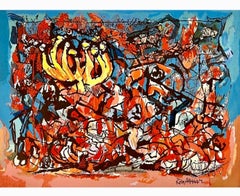
Untitled Abstraction pastel, watercolor and crayon on paper, n.d. Signed in pencil, reverse Condition: Excellent Image size: Irregular shaped, 6 5/16 x 10 1/4 inches Abraham Rattner (July 8, 1895 – February 14, 1978) was an American artist, best known for his richly colored paintings, often with religious subject matter. During World War I, he served in France with the U.S. Army as a camouflage artist. Early life Rattner was born in Poughkeepsie, New York to a Russian-Jewish father and a Romanian-Jewish mother.[2] He initially intended to be an architect, in pursuit of which he studied at George Washington University. Deciding instead to concentrate on painting, he then went on to study art at the Corcoran School of Art and the Pennsylvania Academy of the Fine Arts. Camouflage service With the entry of the U.S. in World War I, Rattner was recruited to join the U.S. Army's American Camouflage Corps by that unit's commanding officer, Homer Saint-Gaudens, son of sculptor Augustus Saint-Gaudens (Behrens 2009). He was sent to France, where he was "promoted to sergeant, put in charge of camouflage research, and served at the front in the Second Battle of the Marne, Château-Thierry, Belleau Wood, and on the Hindenberg Line. He received a severe back wound which troubled him for the rest of his life" (Culkin 1980). Artist career Rattner lived in Paris from 1920 until 1940, when he returned to New York City. He became known for his rich use of color and surrealist aspects of his work, which often pertained to religion. Although while living in Paris, he had met and studied the paintings of Claude Monet, his work is generally closer to that of Georges Rouault and Pablo Picasso. During World War II, he again volunteered for camouflage service, but was able to do very little (Culkin 1980). Later, he taught at several schools, including The New School, New York (1947–55), and Yale University, New Haven, Connecticut (1952–53). Personal life In 1924, Rattner married an American art student and fashion illustrator named Bettina Bedwell, who later became the Paris fashion correspondent for the New York News-Chicago Tribune Syndicate. In 1947, she died suddenly from kidney infection. In 1949, he married Esther Gentle a New York City sculptor, painter, printmaker, and business person, who ran an art reproductions business and a New York City art gallery...

Category

1960s Abstract Abraham Rattner Art
Materials

Crayon, Pastel

untitled

Abraham Rattneruntitled

Sold

H 7.25 in W 11 in

untitled

By Abraham Rattner

Located in Fairlawn, OH

Pastel, watercolor and crayon on paper Date Of Execution: n.d. Signed "Abraham Rattner" on verso

Category

20th Century Abstract Abraham Rattner Art
Materials

Crayon, Oil Pastel, Watercolor

Autumn
Autumn

Abraham RattnerAutumn, 1938

Sold

H 14 in W 10.5 in

Autumn

By Abraham Rattner

Located in Saint Augustine, FL

An original lithograph on wove paper after American artist Abraham Rattner (1895-1978) titled "Autumn", 1938. Limited edition: approx. 2000. Rattner authorized and was commissioned ...

Category

1930s Expressionist Abraham Rattner Art
Materials

Lithograph

Feast of Lights
Feast of Lights

Feast of Lights

By Abraham Rattner

Located in Fairlawn, OH

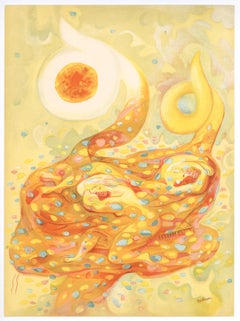
Feast of Lights (Poster) Signed in the stone 17 color lithograph Published by Kennedy Galleries Edition: Unknown edition, signed in the stone There was also a...

Category

1970s American Modern Abraham Rattner Art

Materials

Lithograph

Abraham Rattner art for sale on 1stDibs.
Find a wide variety of authentic Abraham Rattner art available for sale on 1stDibs. If you’re browsing the collection of art to introduce a pop of color in a neutral corner of your living room or bedroom, you can find work that includes elements of orange, purple and other colors. You can also browse by medium to find art by Abraham Rattner in lithograph, paint, ink and more. Much of the original work by this artist or collective was created during the 20th century and is mostly associated with the Surrealist style. Not every interior allows for large Abraham Rattner art, so small editions measuring 10 inches across are available. Customers who are interested in this artist might also find the work of Wyona Diskin, Katherine Porter, and Gabor F. Peterdi. Abraham Rattner art prices can differ depending upon medium, time period and other attributes. On 1stDibs, the price for these items starts at $50 and tops out at $40,000, while the average work can sell for $400.