Adolphe Beaufrère Art

to
2
2
1
2
2
1
1
1
2
10,536
2,817
2,500
1,410
2
Artist: Adolphe Beaufrère
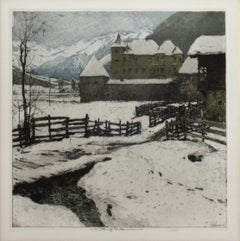
A Douelan

A Douelan

By Adolphe Beaufrère

Located in New York, NY

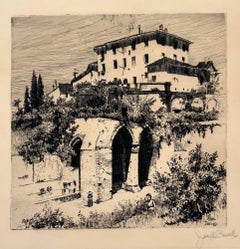
Adolphe-Marie Beaufrère (1876-1960) A Douelan, etching, 1923, signed in pencil and numbered (21/50) [also initials and date in the plate]. Reference: Morane 23-07, BN Laran 175. Seco...

Category

1920s Realist Adolphe Beaufrère Art

Materials

Etching

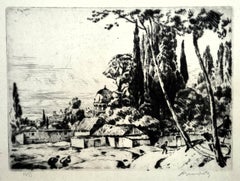
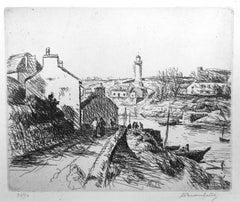
Aux Approches de Madrid (also Aux Abords de la Ville)

Aux Approches de Madrid (also Aux Abords de la Ville)

By Adolphe Beaufrère

Located in New York, NY

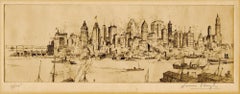
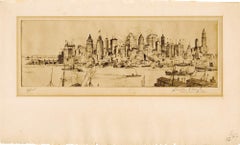
Adolphe-Marie Beaufrere (1876-1960), Aux Approches de Madrid (also Aux Abords de la Ville), drypoint, 1927, signed and numbered (14/55), from the edition of 55, with the blindstamp of Sagot, publisher (Lugt 2254). Reference: Morane 27-19. In good condition, on very thin cream Japan paper, 6 1/2 x 9, the sheet 8 3/8 x 11 1/4 inches, archival matting. A fine impression, with the drypoint burr extremely rich and effective (due in part to the use of a Japan paper, which tends to diffuse the ink surrounding the drypoint lines). Beaufrere was born at Quimperle, in Brittany, and though he traveled widely he re-connected with this area throughout his life. As a teenager he decided that he wanted to become an artist and he traveled to Paris where, shortly after his arrival, he encountered the eminent Gustave Moreau, who took him on as a student. Moreau encouraged him to study old master prints, especially the prints of Rembrandt and Durer, which were available in the Cabinet des Estampes in Paris – this was to be critical in his development. Beaufrere began printmaking in about 1904, with some woodcuts, but soon got into etching and engraving. Curiously, one of his colleague/teachers at the time was the Canadian etcher Donald Shaw MacLaughlan. He began showing his prints, with some success, but after his marriage in 1905, and with the urging of his new wife, moved out of Paris and back to Brittany. This move had a mixed effect on his career – contacts with other artists became fewer, but he did maintain gallery relationships, and the French countryside and it’s inhabitants would provide a continuing source of inspiration. During the Great War Beaufrere served in the infantry, and had few opportunities to make art. But he did study a volume of Rembrandt’s prints...

Category

1920s Modern Adolphe Beaufrère Art
Materials

Drypoint

Related Items
Tugs on the Hudson
Tugs on the Hudson

Tugs on the Hudson

By Charles Frederick William Mielatz

Located in Middletown, NY

Drypoint etching with engraving printed in black ink on Japanese mulberry paper, 4 1/2 x 3 3/8 inches (113 x 84 mm), full margins. In superb condition. A beautiful New York City river...

Category

Early 20th Century American Modern Adolphe Beaufrère Art
Materials

Handmade Paper, Drypoint, Etching

Cincinnati Union Terminal, Perspective From East

Cincinnati Union Terminal, Perspective From East

By Louis Conrad Rosenberg

Located in Fairlawn, OH

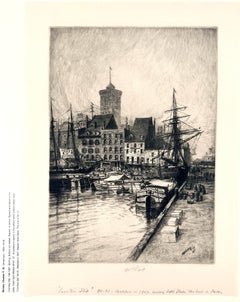
Cincinnati Union Terminal, Perspective From East Drypoint, 1930-1931 Signed in pencil lower right (see photo) Initialed and dated the the plate above the pencil signature From: Cincinnati Series (8 Plates), this No. 2 Edition: 155, completed May 4, 1931 Delivered to Fellheimer & Wagner, 1931 Louis Conrad Rosenberg 1890-1983 An American architectural etcher and engraver of the 1920's and 1930's era, Louis Conrad Rosenberg first studied at the Massachusetts Institute of Technology...

Category

1930s American Modern Adolphe Beaufrère Art
Materials

Drypoint

Manhattan Mountains
Manhattan Mountains

Lawrence WilburManhattan Mountains, 1938

$1,250

H 14.75 in W 12.38 in D 0.5 in

Manhattan Mountains

By Lawrence Wilbur

Located in Plano, TX

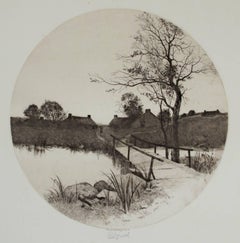
Manhattan Mountains. 1938. Etching and drypoint. 14 3/4 x 12 3/8 (sheet 17 1/4 x 14 3/4). Artist proof, previous to the edition of 40. An atmospheric impression printed on buff-colored laid paper. Signed and dated in the plate. Signed, titled, and annotated 'Final state' and 'Jones Proof'in pencil. Housed in an archival sleeve. Painter and printmaker Lawrence Nelson...

Category

20th Century American Modern Adolphe Beaufrère Art
Materials

Drypoint, Etching

Blustery Clouds, Stormy Sky Landscape, Blue Tones, Extra Large Cyanotype, Paper

Blustery Clouds, Stormy Sky Landscape, Blue Tones, Extra Large Cyanotype, Paper

By Kind of Cyan

Located in Barcelona, ES

This is an exclusive handprinted limited edition cyanotype. "Blustery Clouds" is an cyanotype of the semi-abstract patterns of clouds in the sky after a storm. Details: + Title: Blu...

Category

2010s Realist Adolphe Beaufrère Art

Materials

Watercolor, Paper, Emulsion, Etching, Lithograph

The Three Graces — Figurative Etching with Aquatint of Women Underwater

The Three Graces — Figurative Etching with Aquatint of Women Underwater

By Art Werger

Located in Palm Springs, CA

A print from his series titled "Submerged". The Three Graces is a richly colored etching with aquatint by Art Werger, depicting three female figures moving beneath the surface of wat...

Category

1990s Realist Adolphe Beaufrère Art

Materials

Aquatint, Etching

Fifth Avenue Bridge.

Martin LewisFifth Avenue Bridge., 1928

$20,000Sale Price|20% Off

H 22 in W 24 in D 1 in

Fifth Avenue Bridge.

By Martin Lewis

Located in Plano, TX

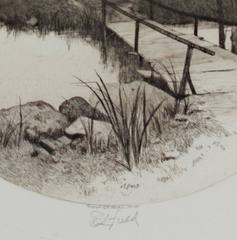
Fifth Avenue Bridge. 1928. Drypoint. McCarron 72. 9 7/8 x 12 (sheet 12 3/4 x 15). Edition of 108 recorded impressions. A rich impression printed on cream laid paper, with full margin...

Category

1920s American Modern Adolphe Beaufrère Art
Materials

Etching, Drypoint

The Fair
The Fair

James Abbott McNeill WhistlerThe Fair, 1893

$2,450Sale Price|30% Off

H 9.25 in W 6.5 in D 1.24 in

The Fair

By James Abbott McNeill Whistler

Located in Plano, TX

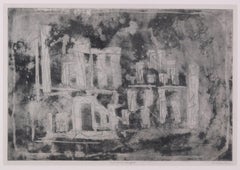
The Fair. 1895-96. Lithograph. Way 92, Levy 144, Tedeschi, Stratis and Spink 135 state ii. Image 9 1/4 x 6 1/2 (sheet 13 x 9 5/8). A fine impression printed on antique cream-laid paper. Way lists 15-lifetime impressions (Goulding printed...

Category

Late 19th Century American Modern Adolphe Beaufrère Art
Materials

Drypoint, Etching

Evening - The depth of the visible -

Evening - The depth of the visible -

Located in Berlin, DE

Max Clarenbach (1880 Neuss - Cologne 1952), Evening. Etching, 18 x 41 cm (platemark), 33.5 x 57 cm (frame), inscribed "Abend" in pencil at lower left, signed and dated "M. Clarenbach. 28.III.[19]09". Framed and mounted under glass. - Somewhat browned and slightly foxed. About the artwork The horizontally elongated etching depicts the panoramic view of a small town as seen from the other side of the river. There are gabled houses on the left and a mighty church spire on the right. The bourgeois houses and the large religious building indicate the urban character. These buildings are rendered in dark tones to emphasise the lighter row of houses in the centre of the picture, closer to the water. The chiaroscuro contrast creates two parallel planes that open up a space for the imagination of what the city could be. The imagination is stimulated by the almost entirely dark, barely recognisable buildings, while the arm of the river leading into the city further stimulates the imagination. However, as the silhouette of the city as a whole is reflected in the water, the parallel planes are perceived as a band of houses that stretches across the entire horizontality of the etching and seems to continue beyond the borders of the picture. The reflection has almost the same intensity as the houses themselves, so that the band of buildings merges with their reflection to form the dominant formal unit of the picture. Only the parallel horizontal hatching creates the convincing impression of seeing water, demonstrating Max Clarenbach's mastery of the etching needle. The water is completely motionless, the reflection unclouded by the slightest movement of the waves, creating a symmetry within the formal unity of the cityscape and its reflection that goes beyond the motif of a mere cityscape. A pictorial order is established that integrates everything in the picture and has a metaphysical character as a structure of order that transcends the individual things. This pictorial order is not only relevant in the pictorial world, but the picture itself reveals the order of the reality it depicts. Revealing the metaphysical order of reality in the structures of its visibility is what drives Clarenbach as an artist and motivates him to return to the same circle of motifs. The symmetry described is at the same time inherent an asymmetry that is a reflection on art: While the real cityscape is cut off at the top of the picture, two chimneys and above all the church tower are not visible, the reflection illustrates reality in its entirety. The reflection occupies a much larger space in the picture than reality itself. Since antiquity, art has been understood primarily as a reflection of reality, but here Clarenbach makes it clear that art is not a mere appearance, which can at best be a reflection of reality, but that art has the potential to reveal reality itself. The revealed structure of order is by no means purely formalistic; it appears at the same time as the mood of the landscape. The picture is filled with an almost sacred silence. Nothing in the picture evokes a sound, and there is complete stillness. There are no people in Clarenbach's landscape paintings to bring action into the picture. Not even we ourselves are assigned a viewing position in the picture, so that we do not become thematic subjects of action. Clarenbach also refrains from depicting technical achievements. The absence of man and technology creates an atmosphere of timelessness. Even if the specific date proves that Clarenbach is depicting something that happened before his eyes, without the date we would not be able to say which decade, or even which century, we are in. The motionless stillness, then, does not result in time being frozen in the picture, but rather in a timeless eternity that is nevertheless, as the title "Abend" (evening), added by Clarenbach himself, makes clear, a phenomenon of transition. The landscape of the stalls is about to be completely plunged into darkness, the buildings behind it only faintly discernible. The slightly darkened state of the sheet is in keeping with this transitional quality, which also lends the scene a sepia quality that underlines its timelessness. And yet the depiction is tied to a very specific time. Clarenbach dates the picture to the evening of 28 March 1909, which does not refer to the making of the etching, but to the capture of the landscape's essence in the landscape itself. If the real landscape is thus in a state of transition, and therefore something ephemeral, art reveals its true nature in that reality, subject to the flow of phenomena, is transferred to an eternal moment, subject to a supra-temporal structure of order - revealed by art. Despite this supratemporality, the picture also shows the harbingers of night as the coming darkening of the world, which gives the picture a deeply melancholy quality, enhanced by the browning of the leaf. It is the philosophical content and the lyrical-melancholic effect of the graphic that give it its enchanting power. Once we are immersed in the image, it literally takes a jerk to disengage from it. This etching, so characteristic of Max Clarenbach's art, is - not least because of its dimensions - a major work in his graphic oeuvre. About the artist Born into poverty and orphaned at an early age, the artistically gifted young Max Clarenbach was discovered by Andreas Achenbach and admitted to the Düsseldorf Art Academy at the age of 13. "Completely penniless, I worked for an uncle in a cardboard factory in the evenings to pay for my studies.” - Max Clarenbach At the academy he studied under Arthur Kampf, among others, and in 1897 was accepted into Eugen Dücker...

Category

Early 1900s Realist Adolphe Beaufrère Art

Materials

Etching

Richard Haas - Puck Corner, SOHO, New York signed/N architectural art, Framed

Richard Haas - Puck Corner, SOHO, New York signed/N architectural art, Framed

By Richard Haas

Located in New York, NY

Richard Haas Puck Corner, SOHO, New York, 1971 Etching and Aquatint (affixed to white matting) Hand signed and numbered 10/100 by the artist on the lower front Elegantly matted and f...

Category

1970s Realist Adolphe Beaufrère Art

Materials

Pencil, Etching, Aquatint

Peonies, Realist Aquatint Etching by Jane Freilicher

Peonies, Realist Aquatint Etching by Jane Freilicher

By Jane Freilicher

Located in Long Island City, NY

Artist: Jane Freilicher, American (1924 - 2014) Title: Peonies Year: 1989 Medium: Etching with Aquatint, signed and numbered in pencil Edition: 25 Size: 29.5 x 22 in. (74.93 x 55.88 cm)

Category

1980s Realist Adolphe Beaufrère Art

Materials

Etching, Aquatint

Vegetation I
Vegetation I

Peter MiltonVegetation I, 1962

$1,200

H 21.25 in W 24.25 in D 0.75 in

Vegetation I

By Peter Milton

Located in San Francisco, CA

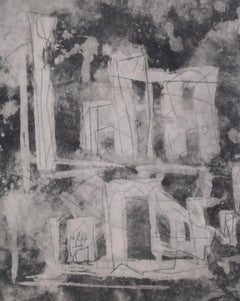
This artwork titled "Vegetation I" 1962, is an original drypoint etching by noted American artist Peter Winslow Milton, b.1930. It is hand signed, dated and numbered 8/40 in pencil b...

Category

Mid-20th Century American Modern Adolphe Beaufrère Art
Materials

Drypoint, Etching

Previously Available Items
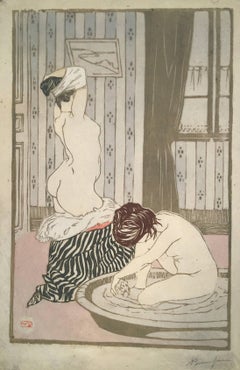
Femmes au Tub (Women Bathing)

Femmes au Tub (Women Bathing)

By Adolphe Beaufrère

Located in New York, NY

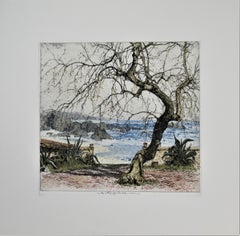
Adolphe Beaufrere (1876-1960), Femmes au Tub (Women Bathing), c. 1902, colored woodcut, signed in pencil lower right, also with the artist’s red mono...

Category

Early 1900s Impressionist Adolphe Beaufrère Art
Materials

Wood Panel

Adolphe Beaufrère art for sale on 1stDibs.

Find a wide variety of authentic Adolphe Beaufrère art available for sale on 1stDibs. You can also browse by medium to find art by Adolphe Beaufrère in drypoint, engraving, etching and more. Much of the original work by this artist or collective was created during the 1920s and is mostly associated with the modern style. Customers who are interested in this artist might also find the work of Francois Nicolas Martinet, Eileen Soper, and Albert Decaris. Adolphe Beaufrère art prices can differ depending upon medium, time period and other attributes. On 1stDibs, the price for these items starts at $275 and tops out at $375, while the average work can sell for $325.

Artists Similar to Adolphe Beaufrère