Alois Lecoque Paintings

to
1
Overall Width
to
Overall Height
to
1
1
1
1
1
1
1
2
754
752
746
672
1
1
Artist: Alois Lecoque
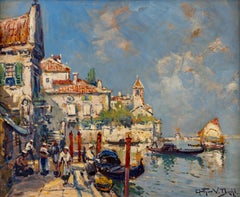
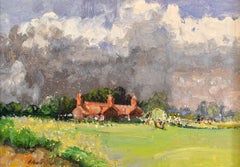
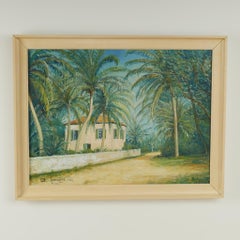
Tropical Painting of a Miami Estate by Alois Lecoque

Tropical Painting of a Miami Estate by Alois Lecoque

By Alois Lecoque

Located in Palm Beach, FL

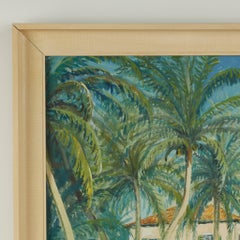
Transporting oil painting on board of a house in a tropical setting as seen by the artist on a sunny day, executed in an impressionist style. Signed Lecoque Miami 1954 in the lower l...

Category

20th Century Impressionist Alois Lecoque Paintings

Materials

Wood, Paint, Board, Oil

Related Items
“Bermuda Coast” Henrietta Dunn Mears American Impressionist Oil on Board Signed

“Bermuda Coast” Henrietta Dunn Mears American Impressionist Oil on Board Signed

By Henrietta Dunn Mears

Located in Yardley, PA

A vibrant Bermuda seascape depicting the rocky shoreline with turquoise waters breaking against sunlit boulders beneath a sweeping tree. Mears uses bold, textured brushstrokes and a ...

Category

20th Century American Impressionist Alois Lecoque Paintings

Materials

Oil, Board

Bright and colorful Impressionist coastal scene painting by George F. Schultz

Bright and colorful Impressionist coastal scene painting by George F. Schultz

By George Schultz

Located in Colfax, CA

'A warm summer day at a beachside home' best describes this colorful oil painting by George F. Schultz. George F. Schultz, (1869–1934), was a Chicago based artist, who trained at the...

Category

1920s American Impressionist Alois Lecoque Paintings

Materials

Canvas, Oil, Board

Italian Impressionist Oil on Board Marine Landscape Painting Naples Bay View

Italian Impressionist Oil on Board Marine Landscape Painting Naples Bay View

By Francesco Coppola Castaldo

Located in Firenze, IT

Everyday fishermen life is captured in this wonderful Italian impressionist late 19th century oil painting on thin board titled fishermen ashore. We love the neutral and natural colo...

Category

Late 19th Century Impressionist Alois Lecoque Paintings

Materials

Oil, Board

Home Safe
Home Safe

James Gale TylerHome Safe

$3,500

H 12 in W 10 in

Home Safe

By James Gale Tyler

Located in Greenville, DE

Very well executed seascape. Alternate title "In Point" inscribed on the rear. 17 x 15in in frame, including linen liner. ...

Category

Late 19th Century Impressionist Alois Lecoque Paintings

Materials

Oil, Board

Plein Air Creekside, 8x9" oil on board

Plein Air Creekside, 8x9" oil on board

By Lu Haskew

Located in Loveland, CO

Plein Air Creekside by Lu Haskew Oil 8x9" image size Landscape Painting This painting is unframed, canvas on gator board, the price reflects that it is unframed. ​ ABOUT THE ARTIST: Lu Haskew 1921-2009 "Life is good to me. Being able to go to my studio five days weekly and paint for several hours, living in a supportive community, having family and friends who encourage me--all have contributed to helping me become an artist. Being fortunate to study with some of the artists I admire has kept me painting from the garden, people and my favorite things. With the support of galleries, teaching and doing demos, how could I do anything else? My goal is to try to be the best I can be by always being a student, looking for new ideas and stretching my horizons." Upon retirement from a 33-year teaching career, Lu rented a studio in Loveland and began concentrating on her oil and watercolor painting. Learning from artists she had followed and admired throughout the years her painting became a full time career that lasted 17-years. Beginning in 1992, she studied with renowned painters Richard Schmid, Clyde Aspevig, Joyce Pike...

Category

Early 2000s American Impressionist Alois Lecoque Paintings

Materials

Canvas, Oil, Board

Fernand Lantoine (1876 - 1956). Coastal landscape. Oil on board, signed.

Fernand Lantoine (1876 - 1956). Coastal landscape. Oil on board, signed.

By Fernand Lantoine

Located in Paris, FR

Fernand LANTOINE (Maretz 1876 - Paris 1956) Coastal landscape Oil on board Signed lower right 10,7 x 11 cm Fernand Lantoine was a painter and illustrator from northern France. Afte...

Category

Early 20th Century Impressionist Alois Lecoque Paintings

Materials

Oil, Board

“Untitled (Low Country Home)” American Impressionist Spanish Moss South Carolina

“Untitled (Low Country Home)” American Impressionist Spanish Moss South Carolina

Located in Yardley, PA

An exceptional work by George Waller Parker (1888-1957) of a home in the South Carolina Lowcountry. Perhaps the best example of Parker’s work to be offered in recent decades, this w...

Category

Early 20th Century American Impressionist Alois Lecoque Paintings

Materials

Oil, Board

Summer, Quaker Hill oil painting by Nell Blaine

Summer, Quaker Hill oil painting by Nell Blaine

By Nell Blaine

Located in Hudson, NY

This work by Nell Blaine was exhibited at the Poindexter Gallery, as well as the Tibor de Nagy Gallery, both in New York City. It is signed lower left, and signed, titled, and dated ...

Category

1960s American Impressionist Alois Lecoque Paintings

Materials

Oil, Board

Spanish school Mediterranean Impressionist Autumn Landscape with Path Oil signed

Spanish school Mediterranean Impressionist Autumn Landscape with Path Oil signed

Located in Sitges, Barcelona

Spanish Impressionist Autumn Landscape with Path Oil on Panel Artist: Spanish School (signed D. Armengol) Title: Autumn landscape with path Date: c.1975 Medium: Oil on panel Dimensi...

Category

1970s Impressionist Alois Lecoque Paintings

Materials

Oil, Board

"Countryside, Spain" Oil Painting of Lush Rural Village Landscape w White House

"Countryside, Spain" Oil Painting of Lush Rural Village Landscape w White House

By Jose Vives-Atsara

Located in Austin, TX

Oil on Board 9 x 12 in. board 14 x 17 in. frame Signed, bottom left. In this intimate composition depicting a village scene in Catalonia, Jose Vives-Atsara captures the humble, sun-...

Category

Mid-20th Century Impressionist Alois Lecoque Paintings

Materials

Oil, Board

Golden Tree Landscape

Golden Tree Landscape

$680Sale Price|20% Off

H 22 in W 32 in D 1.5 in

Golden Tree Landscape

Located in Soquel, CA

Enchanting oil painting of a glowing textured tree layered with gold leaf and deep purples by an unknown artist (American, 20th Century). Unsigned. Painted on heavy 1/4" artists boa...

Category

Late 20th Century American Impressionist Alois Lecoque Paintings

Materials

Gold Leaf

Previously Available Items
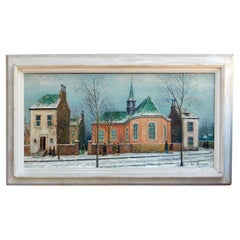
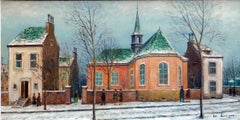
Alois Lecoque Oil on Canvas, circa 1950s, Village in Snow

Alois Lecoque Oil on Canvas, circa 1950s, Village in Snow

By Alois Lecoque

Located in Phoenix, AZ

Beautiful European snow scene, oil on canvas by Czech/American artist Alois Lecoque (1891-1981) The work is in excellent condition and measures 20"h x 40"w. Frame measures: 27 ½ x 4...

Category

1950s Alois Lecoque Paintings

Materials

Paint

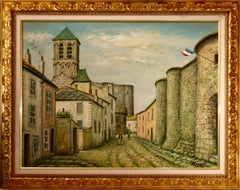
Medieval City
Medieval City

Alois LecoqueMedieval City, c.1960

Sold

H 30.35 in W 38.25 in D 2 in

Medieval City

By Alois Lecoque

Located in San Francisco, CA

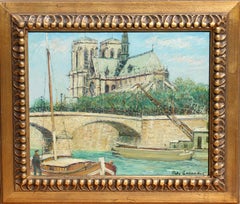
This artwork titled "Medieval City" c.1960 is an oil painting on canvas by Czech/American artist Alois Lecoque 1891-1981 It is signed at the lower right corner by the artist. The canvas size is 24 x 32 inches, framed is 30.35 x 38.25 inches. Framed in a wooden gold frame, with gold color bevel and fabric liner. It is in excellent condition. This artwork is a perfect example of the work of Alois Lecoque whom continued through the end of the 20 Century, the style of the famous French impressionists like Manet, Renoir, Cezanne and Monet. About the artist. Alois Lecoque was born in Prague in 1891 as Alois Kahout. His father, an engineer specializing in the regulation of rivers and hydraulic stations, wanted him to follow in his footsteps but Alois wanted to be an artist and his father wisely assented. After six years of formal study at Prague's Real Schule, he went to Zagreb to study at the Art Institute under Professor Crncic. There he mastered the technique of capturing scenic objects in effervescent color. Alois Kahout was such an outstanding student who applied himself assiduously that he left the institute with high honors. So pleased was his father that he agreed to allow his son the dream for opportunity to go to Paris where the art world was in such an excited ferment. In Paris he attended the Academie Julian studying under professors Baschet, Emile Bernard and others who were highly respected by the Post Impressionist school of painting. Kahout now became Lecoque - the French name for Rooster, which had the same meaning in the Czech language. Renoir, the great master took a liking to the young artist and taught him many of his secrets; predicting that his drive and originality would one day make him famous. Establishing his own studio in "La Ruche des Artistes" located in the famed Vauguirard quarter, he met and became friends with many artists whose works have since achieved world acclaim, including the sculptor Zadkine, Miossi Kogan, Modigliani, Soutine and many others. In 1913, his works were exhibited at the Anglo German Exhibition at the Crystal Palace in London. In 1914, Lecoque returned to Prague where he was highly honored by winning the first prize of Frs.3,000 in gold by Architect Turek. The press raved with acclaim and Lecoque basked in the glory of local celebrity. His paintings were in great demand and as befits a successful painter he moved into an entire floor of the Coloredo Mansfeld Palace. Here he played well the role of social lion and entertained lavishly like a Seigneur. Important personages found it fashionable to be linked with his name. But World War I exploded and so did Lecoque's high style of living. He spent the war years in Prague because of a medical exemption, and the Austrian government realized that it was better to keep such a famous painter home than to send him to the front. Meanwhile Lecoque endured an unhappy marriage and left Prague in 1920 to journey to Algiers at the invitation of his friend Dinet in Bou - Sada, deep in the heart of the Sahara desert. He remained for two years in different places of North Africa and then his restless soul compeled him to return to Paris, which he loved and missed intensely. There - at the Rue Jacob - Lecoque concentrated on scenes of the Siene River, the Cathedral of Notre Dame and the interesting bridges. He worked feverishly, and in two years he had enough paintings for an exhibit at the Andree Galarie where his works were avidly snapped up by collectors. Restless again, he went to the coast of Brittany, Brignogan, where he painted with such fury that he was able to go back to Paris with enough works for a second showing that brought such favorable reviews from the critics and such financial rewards that his friends urged him to remain in Paris and reap his due there. However, Emile Bernard longed for his company and beckoned him to Venice. On the Canal Rio del Piombo he occupied a studio in one of the palaces and here he settled down to serious work. Evenings were spent in the company of Emile Bernard, the Russian painter Resrodni and the Italian poet, Luigi Gentina. They debated politics, art, women, and not necessarily in that order. One of his crowning achievements was capturing vividly a few gondolas lazily moving over the surface of the Canale Grande, while white snow fell over the Bysantine-like rooftops. This and other paintings were accepted for the exhibit in the Biennale of Venice in 1926 and again in 1928. But as much as he enjoyed Venice, Lecoque had to depart hastily, due to his innocent involvement in a plot to assassinate Benito Mussolini. Back to Prague he went in 1925 where he settled down to enjoy 13 of the most exciting years of his life. Here in his beloved home city, Lecoque's popularity rose immensely. Overnight his paintings increased in value and many of his works were purchased by the government. Meanwhile he exhibited in Prague, Ostrava and Bratislava and often traveled to Paris to meet his friends, George Kars, Kupka, Utrillo and others. He also took time to remarry and find happiness for a while with his second wife. The clouds of War descended again on Europe and because of his bold and controversial political philosophies Lecoque again was forced to flee. Hunted like an animal by the Nazis, he escaped to free Yugoslavia, where he boarded his yacht, "Angela," sailing from one picturesque harbor to another down the Dalmatian coast and the Greek islands. Then both Yugoslavia and Greece were occupied by the Nazis and fascist armies, Lecoque saved his life in Dubrovnik, in the Italian zone. However after the capitulation of the Italian army in Dalmatia, Lecoque was captured by the Germans and sent to Sarajevo where he spent many months in prison. After a trial the military confined him to Dubrovnik. But, before the end of the war he was again arrested by the Gestapo and together with 43 partisans, imprisoned. One morning, when the Gestapo came to execute Lecoque and his friend Spitzer the director of Police, a Croate who liked Lecoque's paintings very much, surrendered only Spitzer to the Germans. That same morning, one of the Partisan women came to bring Lecoque food. Under her shawl she was hiding a machine gun and a large rusted can with some cooked vegetables for him. When Lecoque went to the cell with all the forty three Partisans he noticed that inside the can were three hand grenades. As he did not know how to handle the grenades he learned that his companions had also received various weapons and in this way he was able to exchange the grenades for a Mauser pistol. Then Lecoque called for help and the guard came. When he opened the door Lecoque forced him inside, pressing his gun to the guard's chest, he ordered him to call the other guard. Lecoque promised him he would live providing he followed Lecoque's orders explicitly. They immediately handed over their guns as well as the entire prison arsenal, which Lecoque distributed amongst his fellow partisans. Then, well armed, they all escaped to a medieval tower where they waited until all the Germans had left the city. Dubrovnik, was already occupied by partisans, and they were more than happy to see Lecoque and his fellows alive. They had feared for their lives. Thus with Guile, audacity, genius and multi-language as his arsenal, Lecoque managed to keep his neck intact while his poetic elegance expressed itself in the innumerable canvasses he managed to paint. Finally in the Fall of 1944, the Partisan's whom he had aided in their battled against the Germans, spirited him aboard a Naval vessel in the harbor of Split. It took him to the harbor of Bari in Southern Italy, now in the hands of the Allies. From there an American truck convoy took him to Rome where he was joyously received by the Czechoslovakian Legation. From 1945 to 1951 Lecoque's colorful career as an artist gained new luster and his personal life was enriched by new challenges and opportunities. Rome, Milan, Florence, and Capri now became sources of inspiration for his prolific paint brush and his unique canvases of scenes in those famous cities won him acclaim in numerous exhibits. His keen and perceptive eye, said one critic, "had revealed the splendor of the Italian cities to the Italians." Two of his books were published there but another art form beckoned his versatile talents. His commanding presence and flair for dramatic expression caught the eye of the famed movie director, Carmen Galloni, and he won a role in the motion picture Avanti a lui tremava tuta Roma. His role was that of General Melzer, in charge of the Nazi occupation of Rome. Ironic indeed for the man who strenuously fought the Nazis. The great Italian actress, Anna Magnani, who starred in the film, profusely commended his performance and they became good friends. The picture was highly successful at the box office and brought Lecoque new friends and funds that enabled him to live in a spacious villa on the enchanting Isles of Capri. He settled down there for a while to paint and host elaborate parties. With a studio in Rome, a villa in Capri, once again Lecoque played well his favorite role - that of the Grand Seigneur. Now he could move to the intellectual circles to which he was quite at ease with. Among his friends were Enrico Prampolini, Giorgio de Chirico, Mario Mafai, Josef Jarema, Guttuso Renato and Monachesi Sante. In 1945 he exhibited at the Galleria San Marco in Rome and in 1946 at the Galleria Salvetti in Milano. In 1948 new honors cascaded upon him for his stunning exhibit at the Al Blu de Prussia in Naples and at the Studio de Guillio Parisio. His last exhibit in Italy was held at the elegant Galleria Nazionale de Arte Moderna in Rome, which drew capacity crowds. The sunny skies of Italy, the warmth and animation of the Italians in all walks of life and the sumptuous living made Lecoque's existence there quite endurable - for a while. But the Gods of Adversity had other plans for Lecoque. A hard core of Fascist carry-overs attained some influence in the shaky Italian Government, and Lecoque's alleged part in the attempted assassination plot against Mussolini was not forgotten. A move was made to deport him, and he was sent to the Campo de Capua, a displaced persons camp. He could not go back to Prague which was clamped under the despotic rule of the hated Communists, who were anathema to everything he believed in and fought for. All of the property that he had in Prague was lost. Because of his age, which made immigration impossible to every country he attempted to enter, even his beloved France, he became a man without a country. After many heartbreaking and humiliating experiences in Switzerland, Sweden, and France, he was finally granted permission to enter the United States. But more heartbreak awaited him in America. When he arrived in Chicago during a cruel harsh winter, at age 60, with five dollars in his pocket, he found that the job his sponsor had promised him was just a promise. The promise of full freedom was now ironically fraught with the promise of starvation and despair. But Lecoque's indomitable spirit again prevailed. Soon, with the help of the Czech community and especially Roderick A. Gorman, who became his friend and biographer, Lecoque began painting and exhibiting again. Subsequently, he went to California, and after several successful years in Laguna Beach, he settled in Los Angeles where he maintained an art gallery and frequently sponsored exhibits for other artists striving for recognition. In 1960 he gained one of the greatest treasures of his life - his American citizenship and thus his freedom to roam the world and exhibit his work in the countries of his choice. Paris - which once refused him - welcomed him with open arms when he returned to exhibit in 1961 at the Gallerie Benezit and in 1962 at the Galerie Mercel Bernheim. Again in 1963 he exhibited at the Palais Royal Galerie in Paris and sold one of his paintings to Sir James Farmer Norton, who invited him to visit England. During his visit with Sir James he finished a large painting of Venice...

Category

Mid-20th Century Post-Impressionist Alois Lecoque Paintings
Materials

Oil

STILL LIFE WITH FLOWERS, FRUIT & FAN

STILL LIFE WITH FLOWERS, FRUIT & FAN

By Alois Lecoque

Located in Los Angeles, CA

Alois Lecoque "Still Life" Oil on Canvas, Signed France, c1970 15 x 21.5 Inches Alois Lecoque 1891-1981 Alois Lecoque was born in Prague in 1891 as Alois Kahout. His father, an engineer specializing in the regulation of rivers and hydraulic stations, wanted him to follow in his footsteps but Alois wanted to be an artist and his father wisely assented. After six years of formal study at Prague's Real Schule, he went to Zagreb to study at the Art Institute under Professor Crncic. There he mastered the technique of capturing scenic objects in effervescent color. Alois Kahout was such an outstanding student who applied himself assiduously that he left the institute with high honors. So pleased was his father that he agreed to allow his son the dream for opportunity to go to Paris where the art world was in such an excited ferment. In Paris he attended the Academie Julian studying under professors Baschet, Emile Bernard and others who were highly respected by the Post Impressionist school of painting. Kahout now became Lecoque - the French name for Rooster, which had the same meaning in the Czech language. Renoir, the great master took a liking to the young artist and taught him many of his secrets; predicting that his drive and originality would one day make him famous. Establishing his own studio in "La Ruche des Artistes" located in the famed Vauguirard quarter, he met and became friends with many artists whose works have since achieved world acclaim, including the sculptor Zadkine, Miossi Kogan, Modigliani, Soutine and many others. In 1913, his works were exhibited at the Anglo German Exhibition at the Crystal Palace in London. In 1914, Lecoque returned to Prague where he was highly honored by winning the first prize of Frs.3,000 in gold by Architect Turek. The press raved with acclaim and Lecoque basked in the glory of local celebrity. His paintings were in great demand and as befits a successful painter he moved into an entire floor of the Coloredo Mansfeld Palace. Here he played well the role of social lion and entertained lavishly like a Seigneur. Important personages found it fashionable to be linked with his name. But World War I exploded and so did Lecoque's high style of living. He spent the war years in Prague because of a medical exemption, and the Austrian government realized that it was better to keep such a famous painter home than to send him to the front. Meanwhile Lecoque endured an unhappy marriage and left Prague in 1920 to journey to Algiers at the invitation of his friend Dinet in Bou - Sada, deep in the heart of the Sahara desert. He remained for two years in different places of North Africa and then his restless soul compeled him to return to Paris, which he loved and missed intensely. There - at the Rue Jacob - Lecoque concentrated on scenes of the Siene River, the Cathedral of Notre Dame and the interesting bridges. He worked feverishly, and in two years he had enough paintings for an exhibit at the Andree Galarie where his works were avidly snapped up by collectors. Restless again, he went to the coast of Brittany, Brignogan, where he painted with such fury that he was able to go back to Paris with enough works for a second showing that brought such favorable reviews from the critics and such financial rewards that his friends urged him to remain in Paris and reap his due there. However, Emile Bernard longed for his company and beckoned him to Venice. On the Canal Rio del Piombo he occupied a studio in one of the palaces and here he settled down to serious work. Evenings were spent in the company of Emile Bernard, the Russian painter Resrodni and the Italian poet, Luigi Gentina. They debated politics, art, women, and not necessarily in that order. One of his crowning achievements was capturing vividly a few gondolas lazily moving over the surface of the Canale Grande, while white snow fell over the Bysantine-like rooftops. This and other paintings were accepted for the exhibit in the Biennale of Venice in 1926 and again in 1928. But as much as he enjoyed Venice, Lecoque had to depart hastily, due to his innocent involvement in a plot to assassinate Benito Mussolini. Back to Prague he went in 1925 where he settled down to enjoy 13 of the most exciting years of his life. Here in his beloved home city, Lecoque's popularity rose immensely. Overnight his paintings increased in value and many of his works were purchased by the government. Meanwhile he exhibited in Prague, Ostrava and Bratislava and often traveled to Paris to meet his friends, George Kars, Kupka, Utrillo and others. He also took time to remarry and find happiness for a while with his second wife. The clouds of War descended again on Europe and because of his bold and controversial political philosophies Lecoque again was forced to flee. Hunted like an animal by the Nazis, he escaped to free Yugoslavia, where he boarded his yacht, "Angela," sailing from one picturesque harbor to another down the Dalmatian coast and the Greek islands. Then both Yugoslavia and Greece were occupied by the Nazis and fascist armies, Lecoque saved his life in Dubrovnik, in the Italian zone. However after the capitulation of the Italian army in Dalmatia, Lecoque was captured by the Germans and sent to Sarajevo where he spent many months in prison. After a trial the military confined him to Dubrovnik. But, before the end of the war he was again arrested by the Gestapo and together with 43 partisans, imprisoned. One morning, when the Gestapo came to execute Lecoque and his friend Spitzer the director of Police, a Croate who liked Lecoque's paintings very much, surrendered only Spitzer to the Germans. That same morning, one of the Partisan women came to bring Lecoque food. Under her shawl she was hiding a machine gun and a large rusted can with some cooked vegetables for him. When Lecoque went to the cell with all the forty three Partisans he noticed that inside the can were three hand grenades. As he did not know how to handle the grenades he learned that his companions had also received various weapons and in this way he was able to exchange the grenades for a Mauser pistol. Then Lecoque called for help and the guard came. When he opened the door Lecoque forced him inside, pressing his gun to the guard's chest, he ordered him to call the other guard. Lecoque promised him he would live providing he followed Lecoque's orders explicitly. They immediately handed over their guns as well as the entire prison arsenal, which Lecoque distributed amongst his fellow partisans. Then, well armed, they all escaped to a medieval tower where they waited until all the Germans had left the city. Dubrovnik, was already occupied by partisans, and they were more than happy to see Lecoque and his fellows alive. They had feared for their lives. Thus with Guile, audacity, genius and multi-language as his arsenal, Lecoque managed to keep his neck intact while his poetic elegance expressed itself in the innumerable canvasses he managed to paint. Finally in the Fall of 1944, the Partisan's whom he had aided in their battled against the Germans, spirited him aboard a Naval vessel in the harbor of Split. It took him to the harbor of Bari in Southern Italy, now in the hands of the Allies. From there an American truck convoy took him to Rome where he was joyously received by the Czechoslovakian Legation. From 1945 to 1951 Lecoque's colorful career as an artist gained new luster and his personal life was enriched by new challenges and opportunities. Rome, Milan, Florence, and Capri now became sources of inspiration for his prolific paint brush and his unique canvases of scenes in those famous cities won him acclaim in numerous exhibits. His keen and perceptive eye, said one critic, "had revealed the splendor of the Italian cities to the Italians." Two of his books were published there but another art form beckoned his versatile talents. His commanding presence and flair for dramatic expression caught the eye of the famed movie director, Carmen Galloni, and he won a role in the motion picture Avanti a lui tremava tuta Roma. His role was that of General Melzer, in charge of the Nazi occupation of Rome. Ironic indeed for the man who strenuously fought the Nazis. The great Italian actress, Anna Magnani, who starred in the film, profusely commended his performance and they became good friends. The picture was highly successful at the box office and brought Lecoque new friends and funds that enabled him to live in a spacious villa on the enchanting Isles of Capri. He settled down there for a while to paint and host elaborate parties. With a studio in Rome, a villa in Capri, once again Lecoque played well his favorite role - that of the Grand Seigneur. Now he could move to the intellectual circles to which he was quite at ease with. Among his friends were Enrico Prampolini, Giorgio de Chirico, Mario Mafai, Josef Jarema, Guttuso Renato and Monachesi Sante. In 1945 he exhibited at the Galleria San Marco in Rome and in 1946 at the Galleria Salvetti in Milano. In 1948 new honors cascaded upon him for his stunning exhibit at the Al Blu de Prussia in Naples and at the Studio de Guillio Parisio. His last exhibit in Italy was held at the elegant Galleria Nazionale de Arte Moderna in Rome, which drew capacity crowds. The sunny skies of Italy, the warmth and animation of the Italians in all walks of life and the sumptuous living made Lecoque's existence there quite endurable - for a while. But the Gods of Adversity had other plans for Lecoque. A hard core of Fascist carry-overs attained some influence in the shaky Italian Government, and Lecoque's alleged part in the attempted assassination plot against Mussolini was not forgotten. A move was made to deport him, and he was sent to the Campo de Capua, a displaced persons camp. He could not go back to Prague which was clamped under the despotic rule of the hated Communists, who were anathema to everything he believed in and fought for. All of the property that he had in Prague was lost. Because of his age, which made immigration impossible to every country he attempted to enter, even his beloved France, he became a man without a country. After many heartbreaking and humiliating experiences in Switzerland, Sweden, and France, he was finally granted permission to enter the United States. But more heartbreak awaited him in America. When he arrived in Chicago during a cruel harsh winter, at age 60, with five dollars in his pocket, he found that the job his sponsor had promised him was just a promise. The promise of full freedom was now ironically fraught with the promise of starvation and despair. But Lecoque's indomitable spirit again prevailed. Soon, with the help of the Czech community and especially Roderick A. Gorman, who became his friend and biographer, Lecoque began painting and exhibiting again. Subsequently, he went to California, and after several successful years in Laguna Beach, he settled in Los Angeles where he maintained an art gallery and frequently sponsored exhibits for other artists striving for recognition. In 1960 he gained one of the greatest treasures of his life - his American citizenship and thus his freedom to roam the world and exhibit his work in the countries of his choice. Paris - which once refused him - welcomed him with open arms when he returned to exhibit in 1961 at the Gallerie Benezit and in 1962 at the Galerie Mercel Bernheim. Again in 1963 he exhibited at the Palais Royal Galerie in Paris and sold one of his paintings to Sir James Farmer...

Category

1970s Post-Impressionist Alois Lecoque Paintings
Materials

Canvas, Oil

Alois Lecoque paintings for sale on 1stDibs.

Find a wide variety of authentic Alois Lecoque paintings available for sale on 1stDibs. You can also browse by medium to find art by Alois Lecoque in oil paint, paint, canvas and more. Much of the original work by this artist or collective was created during the 20th century and is mostly associated with the Post-Impressionist style. Not every interior allows for large Alois Lecoque paintings, so small editions measuring 26 inches across are available. Customers who are interested in this artist might also find the work of Charles Levier, Merio Ameglio, and Gaston Sebire. Alois Lecoque paintings prices can differ depending upon medium, time period and other attributes. On 1stDibs, the price for these items starts at $3,400 and tops out at $7,500, while the average work can sell for $5,450.