Arturo Martini Figurative Sculptures

Italian, 1889-1947

Arturo Martini was an Italian sculptor and engraver. He studied ceramics in Faenza and sculpture in Treviso. His copious artistic production is characterized by immediate plasticity, halcyon inventiveness and thorough mastery of all technical processes like stone, bronze, terracotta, ceramics, etc. Whilst the artist preferred a primitive style in his earliest works, he then sought a simplification of volumes. With an admirable sense of style, he managed to be inspired by the most diverse Historic, Archaic, Etruscan, Romanesque and Baroque forms without losing originality of inventiveness, nor vitality of form. In his latest works, he abandoned sculpture in order to dedicate himself to painting. He was also an excellent illustrator and ceramist and created works of narrative spirit and decorative value.

to
2
Overall Width
to
Overall Height
to
2
2
1
2
2
1
1
1
1
1
1
1
1
1
17
138
111
90
71
2
Artist: Arturo Martini
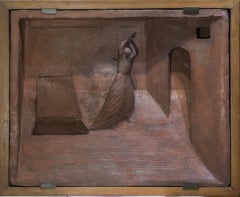
The Trapdoor
The Trapdoor

The Trapdoor

By Arturo Martini

Located in Roma, RM

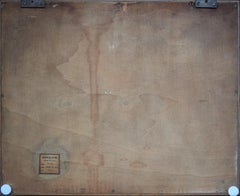
Arturo Martini (Treviso 1889 - Milan 1947), La Botola (1930 / 1933) Terracotta sculpture 34 x 42 x 9 cm signed lower left; label of Galleria del Milione, Milan, on back. Provenance...

Category

1930s Italian School Arturo Martini Figurative Sculptures

Materials

Terracotta

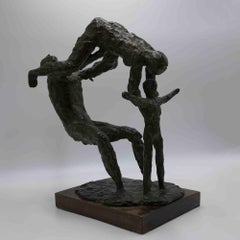
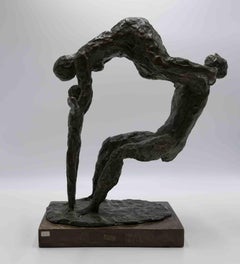
Acrobat Family  - Bronze Sculpture by Arturo Martini - 1936

Acrobat Family - Bronze Sculpture by Arturo Martini - 1936

By Arturo Martini

Located in Roma, IT

Acrobat Family is an original artwork realized by Arturo Martini in 1936. Bronze sculpture with wooden base. Provenance: Pecci Blunt Collection. Published in the general catalogue...

Category

1930s Modern Arturo Martini Figurative Sculptures

Materials

Bronze

Related Items
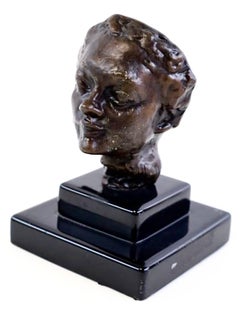
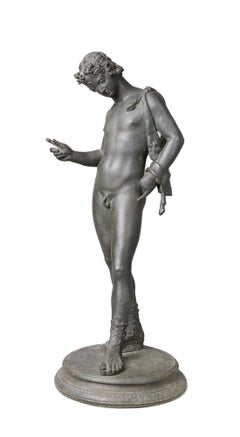
Grand Tour Bronze Sculpture of Dionysus, 19th Century Italian School

Grand Tour Bronze Sculpture of Dionysus, 19th Century Italian School

Located in Beachwood, OH

19th Century Italian School Grand Tour Bronze Sculpture of Dionysus, 19th Century Bronze with black-green patination 24 x 10 x 10 inches Dionysus, in Greco-Roman religion, a nature ...

Category

19th Century Italian School Arturo Martini Figurative Sculptures

Materials

Bronze

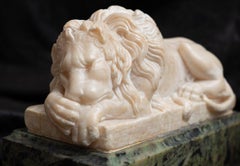
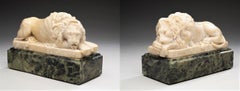
Pair of Italian "Alabaster Stone Lions" after Antonio Canova; Mid 19th Century

Pair of Italian "Alabaster Stone Lions" after Antonio Canova; Mid 19th Century

Located in SANTA FE, NM

"Pair Recumbent Stone Lions" after Antonio Canova (1757-1822) Italian (possibly Florence) Mid 19th Century Alabaster, marble 6 x 9 x 4 inches This is an exquisite pair of Italian alabaster lions on marble bases based on the monumental lions carved by Antonio Canova (1757-1822), the greatest Italian neoclassical sculptor. Canova sculpted the marble lions for the monumental tomb of Pope Clement XIII in St. Peter’s, Rome in 1792 Canova Lions refers to the pair of copies of lion sculptures by Antonio Canova. When Canova created the sculptures in 1792, he installed them on the tomb of Pope Clement XIII. The marble sculptures are some of the most prominent features in St. Peter's Basilica in Rome. Given the intricacies of creating the original Canova lions, some artists created molds and replicated them. A good example is the pair of lion sculptures...

Category

1850s Italian School Arturo Martini Figurative Sculptures

Materials

Alabaster, Marble

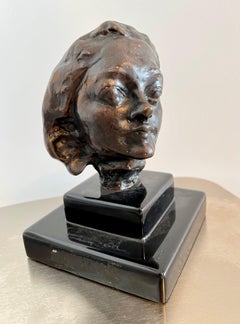
Small Bronze Sculpture Cast Head After Rodin "Petite tete au nez retrousse"

Small Bronze Sculpture Cast Head After Rodin "Petite tete au nez retrousse"

By Auguste Rodin

Located in Surfside, FL

(after) Auguste Rodin Posthumous cast "Petite tete au nez retroussé" Featuring a bust of a woman. Limited edition bronze is mounted on a marble base and is signed on the lower right. Great detail. Dimensions: approx. 7-1/4" tall x 5" across x 5" deep with base Foundry mark on the reverse, #13 of 299 produced. François Auguste René Rodin (1840 – 1917) was a French sculptor generally considered the founder of modern sculpture. Rodin possessed a unique ability to model a complex, turbulent, and deeply pocketed surface in clay. He is known for such sculptures as The Thinker, Monument to Balzac, The Kiss, The Burghers of Calais, and The Gates of Hell. He modeled the human body with naturalism, and his sculptures celebrate individual character and physicality. Although Rodin was sensitive to the controversy surrounding his work, he refused to change his style, and his continued output brought increasing favor from the government and the artistic community. Rodin became the preeminent French sculptor of his time. By 1900, he was a world-renowned artist. Wealthy private clients sought Rodin's work after his World's Fair exhibit, and he kept company with a variety of high-profile intellectuals and artists. His student, Camille Claudel, became his associate, lover, and creative rival. Rodin's other students included Antoine Bourdelle, Constantin Brancusi, and Charles Despiau. Rodin entered the studio of Albert-Ernest Carrier-Belleuse, a successful mass producer of objets d'art. Rodin worked as Carrier-Belleuse' chief assistant until 1870, designing roof decorations and staircase and doorway embellishments. With the arrival of the Franco-Prussian War, Rodin was called to serve in the French National Guard, but his service was brief due to his near-sightedness. Rodin took classes with animal sculptor Antoine-Louis Barye. The teacher's attention to detail and his finely rendered musculature of animals in motion significantly influenced Rodin. Rodin won the 1880 commission to create a portal for a planned museum of decorative arts. Rodin dedicated much of the next four decades to his elaborate Gates of Hell, an unfinished portal for a museum that was never built. Many of the portal's figures became sculptures in themselves, including Rodin's most famous, The Thinker and The Kiss. With the museum commission came a free studio, granting Rodin a new level of artistic freedom. By 1900, Rodin's artistic reputation was established. Gaining exposure from a pavilion of his artwork set up near the 1900 World's Fair (Exposition Universelle) in Paris, he received requests to make busts of prominent people internationally, As Rodin's fame grew, he attracted many followers, including the German poet Rainer Maria Rilke, and authors Octave Mirbeau, Joris-Karl Huysmans, and Oscar Wilde. Rodin and Beuret's modest country estate in Meudon, purchased in 1897, was a host to such guests as King Edward, dancer Isadora Duncan, and harpsichordist Wanda Landowska. He left Beuret in Meudon and began an affair with the American-born Duchesse de Choiseul. From 1910, he mentored the Russian sculptor, Moissey Kogan...

Category

20th Century Modern Arturo Martini Figurative Sculptures
Materials

Bronze

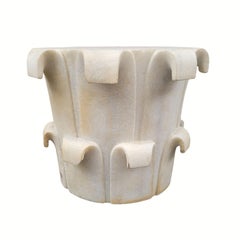
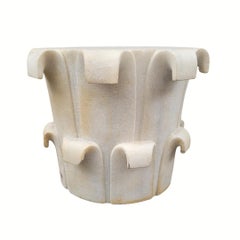
Ancient granite capital, Corinthian style, Andalusia, Spain

Ancient granite capital, Corinthian style, Andalusia, Spain

Located in Valladolid, ES

An exceptional Corinthian capital with smooth leaves in granite, foregoing the intricate carving of the classical acanthus in favor of a much more geometric, clean, and stylized fini...

Category

Early 1900s Italian School Arturo Martini Figurative Sculptures

Materials

Granite

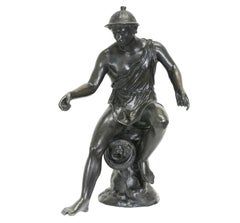
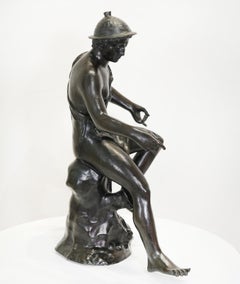
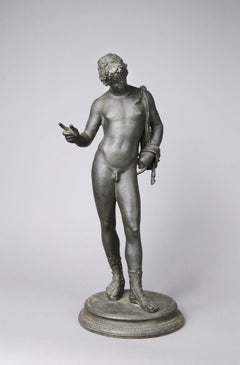
Neapolitan Fisherman Fonderia Giorgio Sommer Grand Tour Large Bronze Sculpture

Neapolitan Fisherman Fonderia Giorgio Sommer Grand Tour Large Bronze Sculpture

Located in Palm Beach, FL

19th-Century Grand Tour Bronze — Neapolitan Fisherman After the Antique Fonderia Giorgio Sommer, Naples, Italy This exceptional 19th-century Grand Tour bronze of the Neapolitan Fish...

Category

Late 19th Century Italian School Arturo Martini Figurative Sculptures

Materials

Bronze

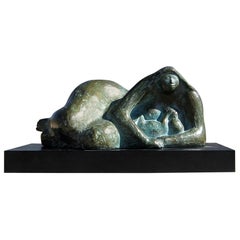
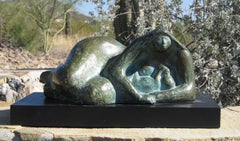
Francisco Zuniga Bronze Sculpture, 1964, Reclining Mother with Shawl

Francisco Zuniga Bronze Sculpture, 1964, Reclining Mother with Shawl

By Francisco Zúñiga

Located in Phoenix, AZ

Zuniga bronze, edition: 3. #472 catalog raisonne: "Madre Reclinada con Rebozo". Measures: 5 3/4" H x 12" L x 8" W not including the wood plinth. Signed Zuniga and dated 1964. "Letter of Authenticity", issued by the Zuniga foundation (and son Ariel Zuniga...

Category

Mid-20th Century Modern Arturo Martini Figurative Sculptures
Materials

Bronze

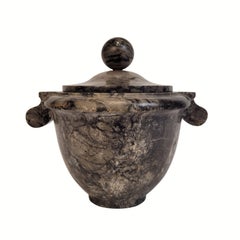
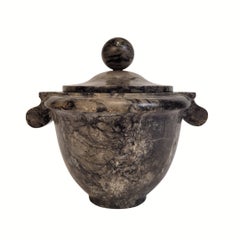
Grand Tour Urn, Neoclassical style, hand-carved Italian Breccia marble

Grand Tour Urn, Neoclassical style, hand-carved Italian Breccia marble

Located in Valladolid, ES

Elegant Grand Tour Urn, Neoclassical style, hand-carved from intense Italian Breccia marble with ochre and gray veining, 19th century. With a Neoclassical profile, the urn is presen...

Category

Early 1900s Italian School Arturo Martini Figurative Sculptures
Materials

Marble

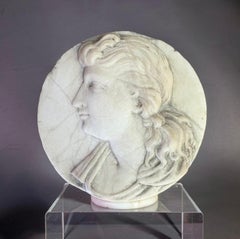
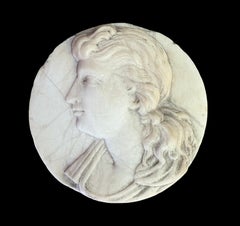
Neoclassical Marble Medallion Depicting a Profile from the Grand Tour of Rome, 18th Century

Neoclassical Marble Medallion Depicting a Profile from the Grand Tour of Rome, 18th Century

Located in Pistoia, IT

A neoclassical medallion in white marble, in relief, depicting a male profile with long, wavy hair, late 18th century. These small collectible medallions were often brought back f...

Category

Late 18th Century Italian School Arturo Martini Figurative Sculptures
Materials

Marble

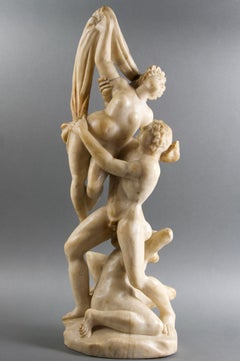
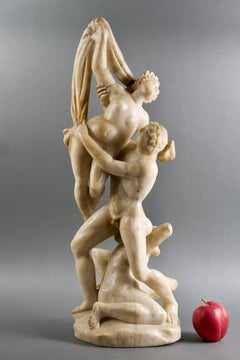
Italian Neoclassical Sculptural Group in Alabaster "The Rape of the Sabine Women" 18th

Italian Neoclassical Sculptural Group in Alabaster "The Rape of the Sabine Women" 18th

Located in Pistoia, IT

"The Rape of the Sabine Women," veined alabaster, large sculptural group with classical subject, Volterra manufacture, 18th century. The so-called Rape of the Sabine Women is a scu...

Category

1790s Italian School Arturo Martini Figurative Sculptures
Materials

Alabaster

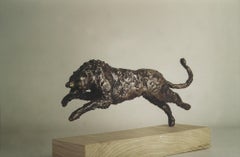
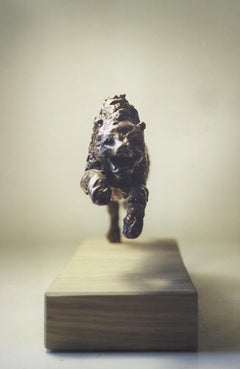
Polish Modernist Man Leaping Leopard Bronze Expressionist Art Sculpture

Polish Modernist Man Leaping Leopard Bronze Expressionist Art Sculpture

By Dominik Albinski

Located in Surfside, FL

Signed bronze from small edition of 8. plus 4 artists proofs Dominic Albinski, was born in South Africa, in 1975. He started sculpting, at a young age, at the Art Classes of Mercia ...

Category

Early 2000s Modern Arturo Martini Figurative Sculptures
Materials

Bronze

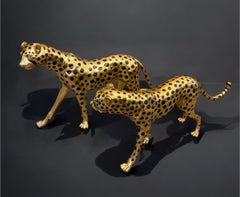
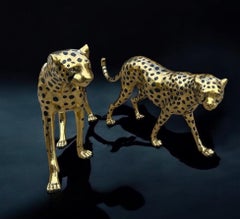
Large Gilt Bronze Sculptures of Cheetahs

Large Gilt Bronze Sculptures of Cheetahs, 2010

$13,943

H 31.5 in W 63 in D 9.85 in

Large Gilt Bronze Sculptures of Cheetahs

Located in Rome, IT

Fantastic pair of gilt bronze Cheetahs sculptures . The item will be well-suited to either an indoor or outdoor setting.

Category

Early 2000s Modern Arturo Martini Figurative Sculptures
Materials

Bronze

Arturo Martini figurative sculptures for sale on 1stDibs.

Find a wide variety of authentic Arturo Martini figurative sculptures available for sale on 1stDibs. You can also browse by medium to find art by Arturo Martini in bronze, ceramic, metal and more. Much of the original work by this artist or collective was created during the 1930s and is mostly associated with the modern style. Not every interior allows for large Arturo Martini figurative sculptures, so small editions measuring 14 inches across are available. Customers who are interested in this artist might also find the work of Walter Bastianetto, Lynn Chadwick, and John W. Mills. Arturo Martini figurative sculptures prices can differ depending upon medium, time period and other attributes. On 1stDibs, the price for these items starts at $55,477 and tops out at $178,249, while the average work can sell for $116,863.