Avraham Binder Art

to
1
Overall Width
to
Overall Height
to
1
1
1
1
1
1
1
1
10,636
2,826
2,495
1,414
1
Artist: Avraham Binder
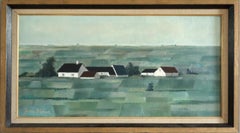
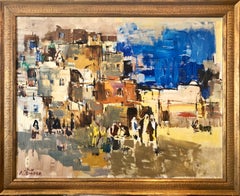
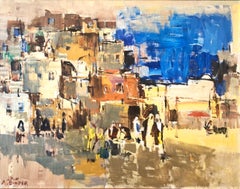
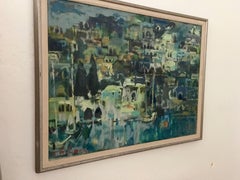
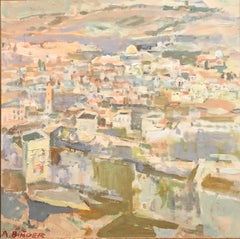
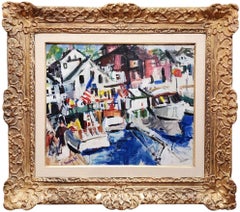
Large Abstract landscape of Jerusalem Israeli Oil Painting Judaica

Large Abstract landscape of Jerusalem Israeli Oil Painting Judaica

By Avraham Binder

Located in Surfside, FL

Avraham Binder was born in 1906 in Vilnius (or Vilna), now part of Lithuania. He began painting at an early age and completed the prescribed studies in painting at the academy of art...

Category

20th Century Modern Avraham Binder Art

Materials

Canvas, Oil

Related Items
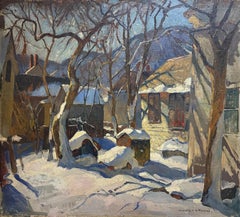
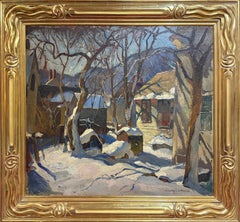
"Winter" American Modernism WPA Regionalism Landscape  Mid-Century Magic Realism

"Winter" American Modernism WPA Regionalism Landscape Mid-Century Magic Realism

By Dale Nichols

Located in New York, NY

"Winter" American Modernism WPA Regionalism Landscape Mid-Century Magic Realism. 30 x 40 inches. Oil on canvas, c. 1960s, Signed lower right. As we list the painting now, the work is currently being cleaned, restored and a hand carved frame is being built. Additional photos will be uploaded as soon as possible. Our gallery, Helicline Fine Art, just launched our new digital exhibition: American Art: The WPA and Beyond. Three dozen paintings, works on paper and sculptures which are available here on 1stDibs. In person viewings can be arranged by appointment at our midtown Manhattan gallery. Provenance: "Winter" was originally purchased by Stanley Byer. Mr. Byer owned homes in Key West, New York City, and Washington, D.C. He purchased the painting from Dunning Auction in 1984 in Elgin, Illinois. Mr. Byer was related to Abraham Weiss from Florida. Saul Babbin, now deceased was a cousin of Mr. Weiss. I purchased the painting from Joy Babbin, Mr. Babbin's wife, now living in from New Mexico. Dale Nichols (1905 – 1995) Artist, printmaker, illustrator, watercolorist, designer, writer and lecturer, Nichols did paintings that reflected his rural background of Nebraska where he was born in David City, a small town. Although he did much sketching outdoors, most of his paintings were completed in his studio and often included "numerology, magic squares...

Category

1960s American Modern Avraham Binder Art

Materials

Canvas, Oil

John Haymson "Brooklyn Bridge" Oil Painting of New York Skyline, circa 1955

John Haymson "Brooklyn Bridge" Oil Painting of New York Skyline, circa 1955

By John Haymson

Located in Miami, FL

JOHN HAYMSON – "BROOKLYN BRIDGE" ⚜ Oil on Canvas ⚜ Hand Signed ⚜ Conservation Frame NEW YORK ICON IN VIVID DETAIL This atmospheric oil painting by John Haymson captures the enduring...

Category

1950s Modern Avraham Binder Art

Materials

Canvas, Oil

"War Brides, Wash Sq NYC" American Scene WWII Modernism WPA Mid-Century Oil

"War Brides, Wash Sq NYC" American Scene WWII Modernism WPA Mid-Century Oil

By Georgina Klitgaard

Located in New York, NY

"War Brides, Wash Sq NYC" American Scene WWII Modernism WPA Mid-Century Oil. 30 x 40 inches. Oil on canvas, c. 1942. Signed lower right. Titled on the stretcher. Housed in a sensational Heydenryk frame. Our gallery, Helicline Fine Art...

Category

1940s American Modern Avraham Binder Art

Materials

Canvas, Oil

FLIGHT American Futurism Modernism Scene WPA Mid-Century Oil Painting Realism

FLIGHT American Futurism Modernism Scene WPA Mid-Century Oil Painting Realism

By Daniel Ralph Celentano

Located in New York, NY

FLIGHT American Futurism Modernism Scene WPA Mid-Century Oil Painting Realism Daniel Celentano (1902-1980) "Flight," 26 x 26 inches. Oil on canvas, c. 1940s. Signed lower right. Ori...

Category

1940s American Modern Avraham Binder Art

Materials

Canvas, Oil

"London" Cityscape Oil Painting on Canvas by Denis Paul Noyer, Framed

"London" Cityscape Oil Painting on Canvas by Denis Paul Noyer, Framed

By Denis Paul Noyer

Located in Encino, CA

"London," an original oil on canvas by Denis Paul Noyer, is a piece for the true collector. Noyer's capture of the architectural details of the surrounding buildings projects from th...

Category

1970s Modern Avraham Binder Art

Materials

Oil, Canvas

“Middleton Place II, 1974” Wolf Kahn, West Brattleboro, Vermont Barn Oil Canvas

“Middleton Place II, 1974” Wolf Kahn, West Brattleboro, Vermont Barn Oil Canvas

By Wolf Kahn

Located in Yardley, PA

A fantastic early painting from Kahn’s iconic barn series depicting Dr. Middleton’s property in West Brattleboro, VT. Here, Kahn turns a familiar rural motif into something hovering ...

Category

1970s American Modern Avraham Binder Art

Materials

Canvas, Oil

The Happy Farmer oil painting by Gregorio Prestopino

The Happy Farmer oil painting by Gregorio Prestopino

By Gregorio Prestopino

Located in Hudson, NY

Provenance: The Artist. Menikoff collection (friends of the artist) About this artist: Born in Little Italy in 1907, Gregorio Prestopino first set out to become a sign painter as the son of New York City immigrants. Instead, his talent provided a life-changing scholarship to the National Academy of Design, and for five years he studied drawing under C. W. Hawthorne. He spent the summer of 1934 at the MacDowell Colony in Peterborough, New Hampshire. His deep involvement with the colony led him to later serve as its director in 1954. Much of Prestopino’s work was in the vein of social realism. During the 1940s and 1950s he became deeply invested in portraying everyday Manhattan and Harlem scenes. He first became interested in the Ashcan school at the National Academy of Design, and remained committed to an interest in working with urban scenes. His lively treatment of people and events revealed his affinity for sixteenth-century artist Pieter Breughel. Later in his career, he focused on producing images of nudes and picturesque New Hampshire landscapes, and investigated the relationship between color and form. Prestopino exhibited at several biennials at the Corcoran Gallery, at the Art Institute of Chicago, the Museum of Modern Art. His work was frequently shown at the Pennsylvania Academy of Fine Arts, where he was awarded the Temple Gold Medal in 1946 and an additional prize in 1952. He was awarded a National Institute of Arts and Letter Grant in 1961, and in 1972 the National Academy of Design awarded him the Altman Figure Painting Award. Prestopino’s artistic cache skyrocketed when Life magazine published his images from New York’s maximum security institution Green Haven as part of its “Prison Series” in 1957. That same year his paintings and sketches of urban life were featured in the short film Harlem Wednesday. Directed by John and Faith Hubley...

Category

1930s Modern Avraham Binder Art

Materials

Canvas, Oil

Late Afternoon  - Modernist Mid-Century Midwest Oil Painting

Late Afternoon - Modernist Mid-Century Midwest Oil Painting

Located in Marco Island, FL

A quintessential American Scene landscape painted by the Chicago Modernist, William Schwartz. Workers in tilled fields surrounding a farmstead under dramatic skies. Painted in 1935...

Category

1930s American Modern Avraham Binder Art

Materials

Canvas, Oil

Fish Story oil painting by Williams Charles Palmer

Fish Story oil painting by Williams Charles Palmer

Located in Hudson, NY

This painting is illustrated in the Catalogue of the 1945 Encyclopedia Britannica Collection of Contemporary American Painting, p.84. Written and edited by Grace Pagano. "Painting ...

Category

Mid-20th Century American Modern Avraham Binder Art

Materials

Canvas, Oil

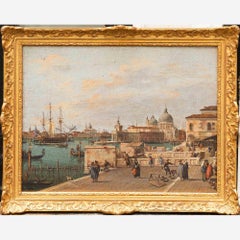
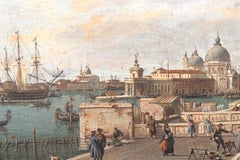
19th Century Maestro View of Venice with the Island of San Giorgio Maggiore

19th Century Maestro View of Venice with the Island of San Giorgio Maggiore

Located in Milano, Lombardia

Maestro active in Venice in the 19th Century Title: View of Venice with the Island of San Giorgio Maggiore and the Basilica Medium: Oil on canvas Dimensions: without frame 29 × 41 c...

Category

Late 19th Century Modern Avraham Binder Art

Materials

Oil, Canvas

"May Day" Social Realism WPA American Modern NYC Scene Mid 20th Century

"May Day" Social Realism WPA American Modern NYC Scene Mid 20th Century

By Mortimer Borne

Located in New York, NY

"May Day" Social Realism WPA American Modern NYC Scene Mid 20th Century Mortimer Borne (Polish/American 1902-1987) "May Day" 32 x 25 inches Oil on canvas, 1934 Signed lower right Fr...

Category

1930s American Modern Avraham Binder Art

Materials

Canvas, Oil

Previously Available Items
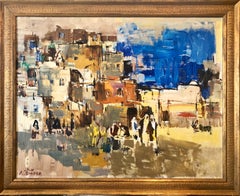
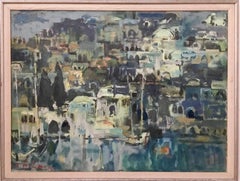
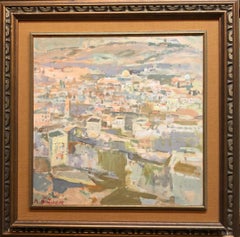
Large Abstract landscape of Jerusalem Israeli Oil Painting Judaica

Large Abstract landscape of Jerusalem Israeli Oil Painting Judaica

By Avraham Binder

Located in Surfside, FL

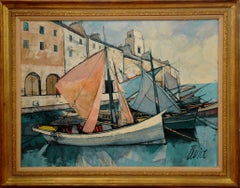
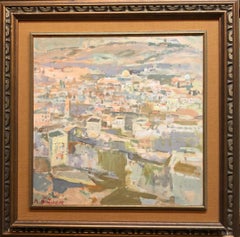
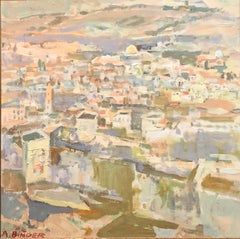
Large gilt framed abstract modernist landscape of Jerusalem. Framed it measures 33.25 X 41.25 inches. Canvas measures 28 x 36 inches. Bold Blue sky. Avraham Binder was born in 1906 in Vilnius (or Vilna), now part of Lithuania. He began painting at an early age and completed the prescribed studies in painting at the academy of arts in his native city. Upon graduation, at the commencement exhibition of works submitted by the graduates, he was awarded a prize in recognition of his talents. Artistic talent had deep roots in the Binder family. Avraham's father and grandfather were both artistically inclined, as was his sister Zila Binder and daughter Yael. In fact, he came from a long line of master artistic bookbinders, hence the family surname. The Binder family emigrated to Palestine in 1920. There, his father established a bookbinding workshop in Tel-Aviv while Avraham pursued painting. Binder has not identified with any particular modern school nor narrow artistic doctrine. He struggles to verbally explain his personal conception. Instead, he derives inspiration from emotions, resulting in a great variety of artistic treatments. Particularly memorable are his urban landscapes with their predominance of blues and aquamarines, composed of a profusion of squares and rectangles, crowding one another and covering nearly the entire canvas. The angular shapes are interspersed with radiant dots of red, gold and yellow, like the lights of the big city. Those squares and rectangles reflect, perhaps, impressions of a childhood spent among books which were scattered about the home and workshop of his father, the bookbinder. These shapes, no doubt, had their influence upon the artist whose first youthful impressions were – books. Traces of these shapes are discernible in Binder’s work to this day, in the angularity of splashes of color which, no longer crowded together, are now well separated to create an airy spaciousness. Not only the splashes of color – the inventing space, too – creates figurative effects in the artist’s treatment. Avraham Binder is not a “cerebral” painter. Neither identified with any particular modern school, nor preaching any narrow artistic doctrine, he is an emotional artist: his inspiration, derived from the heart, leads him on to the most varied range of treatments in his artistic work. In vain might one try to persuade him to define his personal conception of painting. He is not one to indulge in verbal explanation. But his sheer artistic skill, his virtuosity with the paint brush, did impel him to experiment widely with the artistic techniques of the modern age. And his exceptional talent stood him in good stead in all this experimentation. Binders large-scale urban landscapes are not mere constructs to represent our present-day architecture with its pervasive angularity. Made up as they are of color, Binder’s unique color composition qualifies these canvases to be ranked among the foremost artistic works in Israeli painting. They are uniquely Binder, very different from what we see in the work of his contemporaries. Here and there, Binder also introduces the human element into these paintings. He lives and breathes the atmosphere of his surroundings, deeply experiencing the sea and the shore of Tel-Aviv that confront him day after day, and which he has transferred to his canvases, as metaphors in paint, throughout the life. More recently, he has created a new series of shore-and-seascapes, in tones ranging from brown to blue. ochre, violet and pale yellow – marvelous views of the sea and of figures enlivening its shore. In yet another series, featuring nearly the same range of hues, he lets us view, through his eyes, the Carmel Market in Tel-Aviv, or the city’s coffee houses with their crowds of people, heads bunched together as if in search of human closeness, with the windows looking in upon them. He has also done large paintings of Jerusalem – not the Jerusalem of gloom and holiness, but a Jerusalem in contrast to the flat topography of Tel-Aviv; it is this different topography which here provides the challenge for him as a painter. And the colors – the colors are bright, full of light, an inner illumination which seems to emanate from the artist himself, rather than from the sun beating down from above. So many great artists have built their life’s work upon watercolors. Binder’s watercolors are in no way inferior in their artistic worth to many of those, what with their spontaneity, their translucent quality, their color combinations, and the artist’s ability to say so much with an economy of brush strokes. We have here a painter who, until the end of his life, was still in his full creative powers, and who continued to add to his impressive storehouse of artistic works. Hundreds of his paintings grace the homes of collectors in Israel and throughout the world, or hang in his private collection; they include Israel landscapes and, most importantly, cityscapes; an exquisite series of wild flowers; many portrait paintings; experimental wood sculptures; murals painted on wood panels; reliefs…, etc. All these are testimony to an artist who refuses to rest on his laurels, who forever reaches out to try his hand at new challenges, strikes out in novel directions, discovers innovative techniques, and experiments in all the dimensions of the plastic arts. On the Israel Museum website they have listed an exhibition of his Artists in Israel for the Defense, Tel Aviv Museum of Art, Helena Rubinstein Pavilion, Tel Aviv 1967 Artists: Avraham Binder, Motke Blum, (Mordechai) Samuel Bak, Yosl Bergner, Nahum Gilboa, Jean David, Marcel Janco, Lea Nikel, Jacob Pins, Esther Peretz Arad, Dani Karavan, Reuven Rubin, Zvi Raphaely, Yossi Stern...

Category

20th Century Modern Avraham Binder Art
Materials

Canvas, Oil

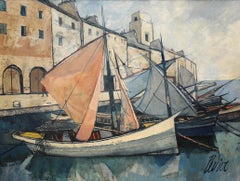
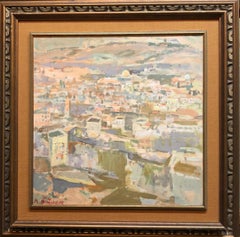
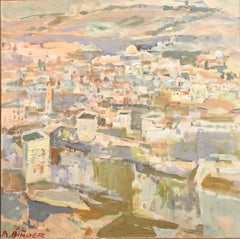
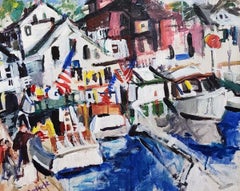
Port of Old Jaffa (Tel Aviv)

Port of Old Jaffa (Tel Aviv)

By Avraham Binder

Located in Surfside, FL

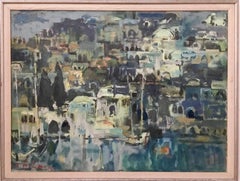
Avraham Binder was born in 1906 in Vilnius (or Vilna), now part of Lithuania. He began painting at an early age and completed the prescribed studies in painting at the academy of arts in his native city. Upon graduation, at the commencement exhibition of works submitted by the graduates, he was awarded a prize in recognition of his talents. Artistic talent had deep roots in the Binder family. Avraham's father and grandfather were both artistically inclined, as was his sister Zila Binder and daughter Yael. In fact, he came from a long line of master artistic bookbinders, hence the family surname. The Binder family emigrated to Palestine in 1920. There, his father established a bookbinding workshop in Tel-Aviv while Avraham pursued painting. Binder has not identified with any particular modern school nor narrow artistic doctrine. He struggles to verbally explain his personal conception. Instead, he derives inspiration from emotions, resulting in a great variety of artistic treatments. Particularly memorable are his urban landscapes with their predominance of blues and aquamarines, composed of a profusion of squares and rectangles, crowding one another and covering nearly the entire canvas. The angular shapes are interspersed with radiant dots of red, gold and yellow, like the lights of the big city. Those squares and rectangles reflect, perhaps, impressions of a childhood spent among books which were scattered about the home and workshop of his father, the bookbinder. These shapes, no doubt, had their influence upon the artist whose first youthful impressions were – books. Traces of these shapes are discernible in Binder’s work to this day, in the angularity of splashes of color which, no longer crowded together, are now well separated to create an airy spaciousness. Not only the splashes of color – the inventing space, too – creates figurative effects in the artist’s treatment. Avraham Binder is not a “cerebral” painter. Neither identified with any particular modern school, nor preaching any narrow artistic doctrine, he is an emotional artist: his inspiration, derived from the heart, leads him on to the most varied range of treatments in his artistic work. In vain might one try to persuade him to define his personal conception of painting. He is not one to indulge in verbal explanation. But his sheer artistic skill, his virtuosity with the paint brush, did impel him to experiment widely with the artistic techniques of the modern age. And his exceptional talent stood him in good stead in all this experimentation. Binders large-scale urban landscapes are not mere constructs to represent our present-day architecture with its pervasive angularity. Made up as they are of color, Binder’s unique color composition qualifies these canvases to be ranked among the foremost artistic works in Israeli painting. They are uniquely Binder, very different from what we see in the work of his contemporaries. Here and there, Binder also introduces the human element into these paintings. He lives and breathes the atmosphere of his surroundings, deeply experiencing the sea and the shore of Tel-Aviv that confront him day after day, and which he has transferred to his canvases, as metaphors in paint, throughout the life. More recently, he has created a new series of shore-and-seascapes, in tones ranging from brown to blue. ochre, violet and pale yellow – marvelous views of the sea and of figures enlivening its shore. In yet another series, featuring nearly the same range of hues, he lets us view, through his eyes, the Carmel Market in Tel-Aviv, or the city’s coffee houses with their crowds of people, heads bunched together as if in search of human closeness, with the windows looking in upon them. He has also done large paintings of Jerusalem...

Category

20th Century Modern Avraham Binder Art
Materials

Oil

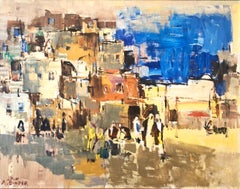
Large Abstract landscape of Jerusalem Israeli Oil Painting Judaica

Large Abstract landscape of Jerusalem Israeli Oil Painting Judaica

By Avraham Binder

Located in Surfside, FL

Large gilt framed abstract modernist landscape of Jerusalem. Framed it measures 33.25 X 41.25 inches. Canvas measures 28 x 36 inches. Bold Blue sky. Avraham Binder was born in 1906 in Vilnius (or Vilna), now part of Lithuania. He began painting at an early age and completed the prescribed studies in painting at the academy of arts in his native city. Upon graduation, at the commencement exhibition of works submitted by the graduates, he was awarded a prize in recognition of his talents. Artistic talent had deep roots in the Binder family. Avraham's father and grandfather were both artistically inclined, as was his sister Zila Binder and daughter Yael. In fact, he came from a long line of master artistic bookbinders, hence the family surname. The Binder family emigrated to Palestine in 1920. There, his father established a bookbinding workshop in Tel-Aviv while Avraham pursued painting. Binder has not identified with any particular modern school nor narrow artistic doctrine. He struggles to verbally explain his personal conception. Instead, he derives inspiration from emotions, resulting in a great variety of artistic treatments. Particularly memorable are his urban landscapes with their predominance of blues and aquamarines, composed of a profusion of squares and rectangles, crowding one another and covering nearly the entire canvas. The angular shapes are interspersed with radiant dots of red, gold and yellow, like the lights of the big city. Those squares and rectangles reflect, perhaps, impressions of a childhood spent among books which were scattered about the home and workshop of his father, the bookbinder. These shapes, no doubt, had their influence upon the artist whose first youthful impressions were – books. Traces of these shapes are discernible in Binder’s work to this day, in the angularity of splashes of color which, no longer crowded together, are now well separated to create an airy spaciousness. Not only the splashes of color – the inventing space, too – creates figurative effects in the artist’s treatment. Avraham Binder is not a “cerebral” painter. Neither identified with any particular modern school, nor preaching any narrow artistic doctrine, he is an emotional artist: his inspiration, derived from the heart, leads him on to the most varied range of treatments in his artistic work. In vain might one try to persuade him to define his personal conception of painting. He is not one to indulge in verbal explanation. But his sheer artistic skill, his virtuosity with the paint brush, did impel him to experiment widely with the artistic techniques of the modern age. And his exceptional talent stood him in good stead in all this experimentation. Binders large-scale urban landscapes are not mere constructs to represent our present-day architecture with its pervasive angularity. Made up as they are of color, Binder’s unique color composition qualifies these canvases to be ranked among the foremost artistic works in Israeli painting. They are uniquely Binder, very different from what we see in the work of his contemporaries. Here and there, Binder also introduces the human element into these paintings. He lives and breathes the atmosphere of his surroundings, deeply experiencing the sea and the shore of Tel-Aviv that confront him day after day, and which he has transferred to his canvases, as metaphors in paint, throughout the life. More recently, he has created a new series of shore-and-seascapes, in tones ranging from brown to blue. ochre, violet and pale yellow – marvelous views of the sea and of figures enlivening its shore. In yet another series, featuring nearly the same range of hues, he lets us view, through his eyes, the Carmel Market in Tel-Aviv, or the city’s coffee houses with their crowds of people, heads bunched together as if in search of human closeness, with the windows looking in upon them. He has also done large paintings of Jerusalem...

Category

20th Century Modern Avraham Binder Art
Materials

Canvas, Oil

Large Abstract landscape of Jerusalem Israeli Oil Painting Judaica

Large Abstract landscape of Jerusalem Israeli Oil Painting Judaica

By Avraham Binder

Located in Surfside, FL

Avraham Binder was born in 1906 in Vilnius (or Vilna), now part of Lithuania. He began painting at an early age and completed the prescribed studies in painting at the academy of arts in his native city. Upon graduation, at the commencement exhibition of works submitted by the graduates, he was awarded a prize in recognition of his talents. Artistic talent had deep roots in the Binder family. Avraham's father and grandfather were both artistically inclined, as was his sister Zila Binder and daughter Yael. In fact, he came from a long line of master artistic bookbinders, hence the family surname. The Binder family emigrated to Palestine in 1920. There, his father established a bookbinding workshop in Tel-Aviv while Avraham pursued painting. Binder has not identified with any particular modern school nor narrow artistic doctrine. He struggles to verbally explain his personal conception. Instead, he derives inspiration from emotions, resulting in a great variety of artistic treatments. Particularly memorable are his urban landscapes with their predominance of blues and aquamarines, composed of a profusion of squares and rectangles, crowding one another and covering nearly the entire canvas. The angular shapes are interspersed with radiant dots of red, gold and yellow, like the lights of the big city. Those squares and rectangles reflect, perhaps, impressions of a childhood spent among books which were scattered about the home and workshop of his father, the bookbinder. These shapes, no doubt, had their influence upon the artist whose first youthful impressions were – books. Traces of these shapes are discernible in Binder’s work to this day, in the angularity of splashes of color which, no longer crowded together, are now well separated to create an airy spaciousness. Not only the splashes of color – the inventing space, too – creates figurative effects in the artist’s treatment. Avraham Binder is not a “cerebral” painter. Neither identified with any particular modern school, nor preaching any narrow artistic doctrine, he is an emotional artist: his inspiration, derived from the heart, leads him on to the most varied range of treatments in his artistic work. In vain might one try to persuade him to define his personal conception of painting. He is not one to indulge in verbal explanation. But his sheer artistic skill, his virtuosity with the paint brush, did impel him to experiment widely with the artistic techniques of the modern age. And his exceptional talent stood him in good stead in all this experimentation. Binders large-scale urban landscapes are not mere constructs to represent our present-day architecture with its pervasive angularity. Made up as they are of color, Binder’s unique color composition qualifies these canvases to be ranked among the foremost artistic works in Israeli painting. They are uniquely Binder, very different from what we see in the work of his contemporaries. Here and there, Binder also introduces the human element into these paintings. He lives and breathes the atmosphere of his surroundings, deeply experiencing the sea and the shore of Tel-Aviv that confront him day after day, and which he has transferred to his canvases, as metaphors in paint, throughout the life. More recently, he has created a new series of shore-and-seascapes, in tones ranging from brown to blue. ochre, violet and pale yellow – marvelous views of the sea and of figures enlivening its shore. In yet another series, featuring nearly the same range of hues, he lets us view, through his eyes, the Carmel Market in Tel-Aviv, or the city’s coffee houses with their crowds of people, heads bunched together as if in search of human closeness, with the windows looking in upon them. He has also done large paintings of Jerusalem...

Category

20th Century Modern Avraham Binder Art
Materials

Canvas, Oil

Port of Old Jaffa (Tel Aviv)

Port of Old Jaffa (Tel Aviv)

By Avraham Binder

Located in Surfside, FL

Avraham Binder was born in 1906 in Vilnius (or Vilna), now part of Lithuania. He began painting at an early age and completed the prescribed studies in painting at the academy of arts in his native city. Upon graduation, at the commencement exhibition of works submitted by the graduates, he was awarded a prize in recognition of his talents. Artistic talent had deep roots in the Binder family. Avraham's father and grandfather were both artistically inclined, as was his sister Zila Binder and daughter Yael. In fact, he came from a long line of master artistic bookbinders, hence the family surname. The Binder family emigrated to Palestine in 1920. There, his father established a bookbinding workshop in Tel-Aviv while Avraham pursued painting. Binder has not identified with any particular modern school nor narrow artistic doctrine. He struggles to verbally explain his personal conception. Instead, he derives inspiration from emotions, resulting in a great variety of artistic treatments. Particularly memorable are his urban landscapes with their predominance of blues and aquamarines, composed of a profusion of squares and rectangles, crowding one another and covering nearly the entire canvas. The angular shapes are interspersed with radiant dots of red, gold and yellow, like the lights of the big city. Those squares and rectangles reflect, perhaps, impressions of a childhood spent among books which were scattered about the home and workshop of his father, the bookbinder. These shapes, no doubt, had their influence upon the artist whose first youthful impressions were – books. Traces of these shapes are discernible in Binder’s work to this day, in the angularity of splashes of color which, no longer crowded together, are now well separated to create an airy spaciousness. Not only the splashes of color – the inventing space, too – creates figurative effects in the artist’s treatment. Avraham Binder is not a “cerebral” painter. Neither identified with any particular modern school, nor preaching any narrow artistic doctrine, he is an emotional artist: his inspiration, derived from the heart, leads him on to the most varied range of treatments in his artistic work. In vain might one try to persuade him to define his personal conception of painting. He is not one to indulge in verbal explanation. But his sheer artistic skill, his virtuosity with the paint brush, did impel him to experiment widely with the artistic techniques of the modern age. And his exceptional talent stood him in good stead in all this experimentation. Binders large-scale urban landscapes are not mere constructs to represent our present-day architecture with its pervasive angularity. Made up as they are of color, Binder’s unique color composition qualifies these canvases to be ranked among the foremost artistic works in Israeli painting. They are uniquely Binder, very different from what we see in the work of his contemporaries. Here and there, Binder also introduces the human element into these paintings. He lives and breathes the atmosphere of his surroundings, deeply experiencing the sea and the shore of Tel-Aviv that confront him day after day, and which he has transferred to his canvases, as metaphors in paint, throughout the life. More recently, he has created a new series of shore-and-seascapes, in tones ranging from brown to blue. ochre, violet and pale yellow – marvelous views of the sea and of figures enlivening its shore. In yet another series, featuring nearly the same range of hues, he lets us view, through his eyes, the Carmel Market in Tel-Aviv, or the city’s coffee houses with their crowds of people, heads bunched together as if in search of human closeness, with the windows looking in upon them. He has also done large paintings of Jerusalem...

Category

20th Century Modern Avraham Binder Art
Materials

Oil

Avraham Binder art for sale on 1stDibs.

Find a wide variety of authentic Avraham Binder art available for sale on 1stDibs. You can also browse by medium to find art by Avraham Binder in canvas, fabric, oil paint and more. Much of the original work by this artist or collective was created during the 20th century and is mostly associated with the modern style. Not every interior allows for large Avraham Binder art, so small editions measuring 36 inches across are available. Customers who are interested in this artist might also find the work of Jean David, David Azuz, and Nissan Engel. Avraham Binder art prices can differ depending upon medium, time period and other attributes. On 1stDibs, the price for these items starts at $4,500 and tops out at $4,500, while the average work can sell for $4,500.

Artists Similar to Avraham Binder