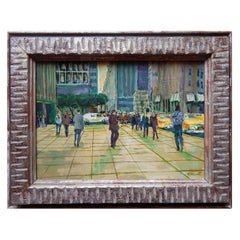
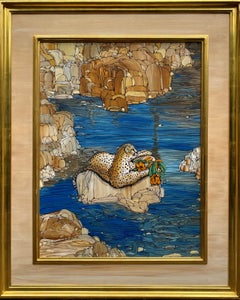
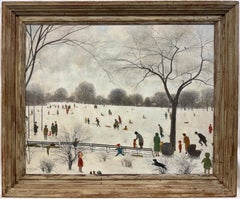
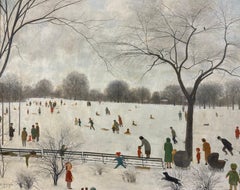
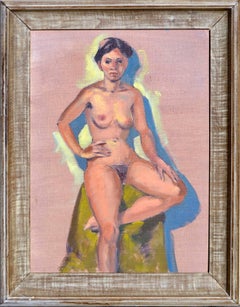
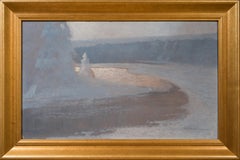
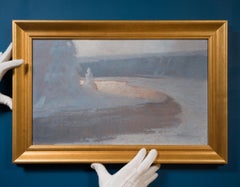
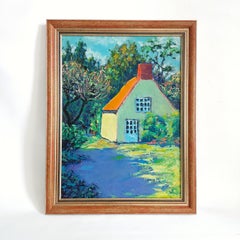
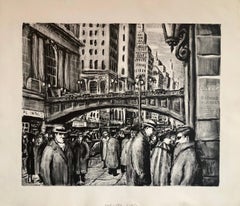
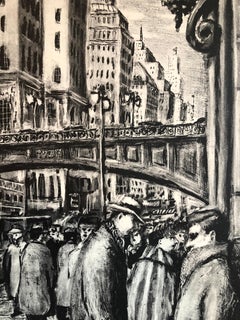
By Benjamin Eisenstat
Located in Surfside, FL
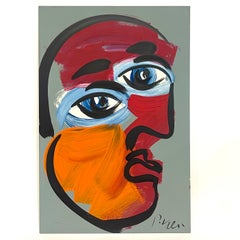
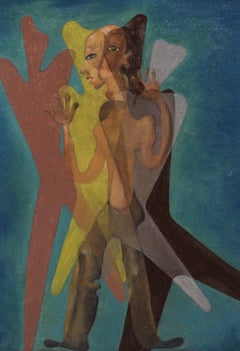
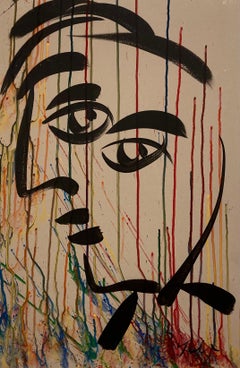
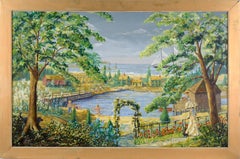
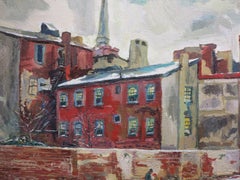
Ben Eisenstat, born in Philadelphia, Painter, illustrator, cartoonist.
Studied: Graphic Sketch Club; Fleisher Art Mem; PAFA; Albert Barnes Foundation.
Exhibited: PAFA, 1935-38; PAFA ann., 1968; Albany Inst. Hist. & Art; Artists for Victory, 1945 & Nat. Drawing Show, 1955, MMA, 1942; AIC, 1943; Heerlen, Holland, 1944 (solo); Norfolk Mus. Art Nat. Drawing Show, 1971; Watercolor USA, Springfield, MO, number of times including 1972; NAD Ann., New York; AWCS Ann., New York; Newman Gallery, Phila., 1970s. Awards: ann. medal achievement, Phila. WCC, 1962; Harrison Morris prize, fellowship, PAFA, three times; Watercolor USA prize, Springfield Mus., 1972.
Member: AWCS; Phila. WCC (board directors); Phila. Art Alliance (board directors, 1962-68); Artists Equity (board directors, 1967-71); PAFA (board directors, 1955-60).
Work: Phila. Graphic Sketch Club; PMA; Fleisher Art Mem., Phila.; Springfield (MO) Art Mus.; Woodmere Gallery, Phila.; Jefferson Hospital, Phila. Commissions: official painting of nuclear ship Savannah, U.S. Maritime & NY Ship Commission, Washington, DC, 1959; three panel historical mural, First Bank NJ, Phila., 1960; three panel historical mural, Provident Mutual Life Ins. Co., Phila., 1962; two panel historical mural, Burlington Co. Trust Co., Moorestown, NJ, 1963; two panel historical mural, Oreland Episcopal Church, PA, 1970.
Ben Eisenstat's returned to Philadelphia at the end of World War II, he sought advertising assignments to support his family while he established himself as a painter. To that end, he took his portfolio to NW Ayer and Son, where he was advised to enroll in an advertising class at the Philadelphia Museum School of Industrial Art before making the transition from fine art to commercial work. Eisenstat, who attended the Pennsylvania Academy of the Fine Arts before the war, decided to return to school. When he arrived with his application, the principal, who had recently seen an exhibition of Eisenstat's European war drawings, offered him a job. Eisenstat accepted, and for the next forty years taught at the school where had hoped to study. As time passed the institution grew and changed from a professional school, to a prominent art college, and finally in 1987 to its present status as the University of the Arts.
Mr. Eisenstat taught drawing, painting, and illustration and never saw the need to establish a distinction between applied and fine art. His own career reflected this philosophy. His illustration clients included, "The New York Times," the "Saturday Review of Literature," "The Philadelphia Inquirer," Squibb Pharmaceuticals, Ford Motor Company, and NW Ayer and Son, who hired him after all, even without the advertising classes. As a painter he had thirty-two solo shows and exhibited nationally at the Chicago Art Institute, the Philadelphia Museum of Art, and the Metropolitan Museum. Eisenstat's many honors echoed his diverse career. He won the Pennsylvania Academy of the Fine Arts' Harrison Morris Prize three times but felt equally proud to be included in the Society of Illustrator annual exhibitions.
Students in Eisenstat's fine art and illustration classes all learned the same principles. However, at the start of his career he felt that his illustration students, who had few opportunities to see original work, were put at a disadvantage. To remedy this, he and his wife, artist and teacher Jane Sperry Eisenstat, began to accumulate artwork from illustrators, auctions, and even yard sales. Eventually they acquired a priceless collection of more than 1500 examples of nineteenth and twentieth century illustrations. Over the years, many exceptional students enrolled in Ben Eisenstat's classes. Charles Santore, Jerry Pinkney...
Category
1950s American Realist Benjamin Eisenstat Art