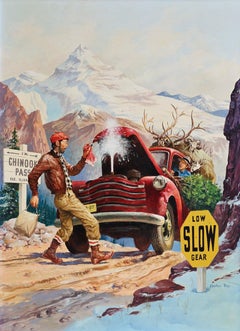
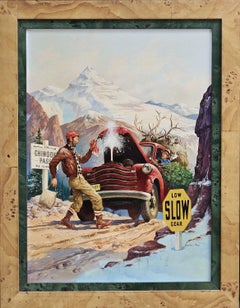
Chinook Pass, Outdoor Life Magazine Cover
By Charles Dye
Located in Fort Washington, PA
Outdoor Life Magazine Cover, December 1955 Signed Lower Right
Category
20th Century Charles Dye Art
Materials
Oil, Board
Chinook Pass, Outdoor Life Magazine Cover
By Charles Dye
Located in Fort Washington, PA
Outdoor Life Magazine Cover, December 1955 Signed Lower Right
Oil, Board
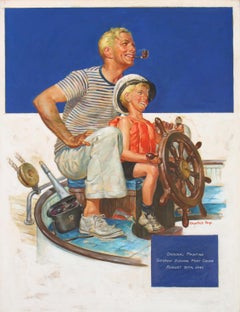
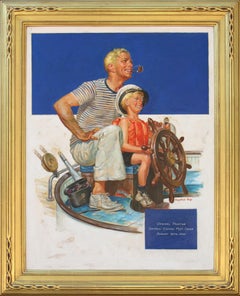
Father Teaching Son to Sail, Saturday Evening Post Cover
By Charles Dye
Located in Fort Washington, PA
Date: 1941 Medium: Oil on Board Dimensions: 32.00" x 26.00" Signature: Signed Lower Right Cover of The Saturday Evening Post Magazine, ...
Oil, Board
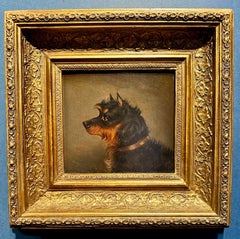
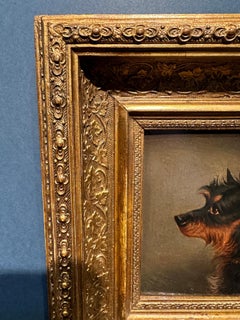
$2,750
H 10 in W 11 in
19th century English Antique Portrait of a terrier or toy dog
Located in Woodbury, CT
Edwin Loder – son of famous artist James Loder – originally enlisted in the 62nd Regiment of Foot in 1846 at the age of 19, serving mainly in India. After 20 years in the Forces, Ed...
Oil, Board
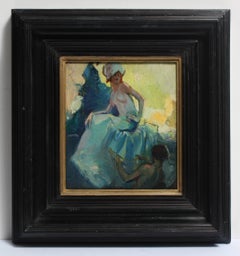
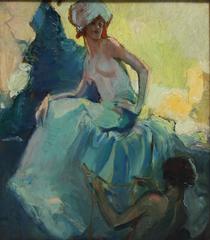
Study for Marjanah
By Alexander Oscar Levy
Located in Buffalo, NY
A beautiful art deco portrait by well listed American Ashcan School artist Alexander Oscar Levy. This piece was featured in the American Art Review article about the Levy retrospect...
Board, Oil
$1,350
H 25 in W 29 in D 2 in
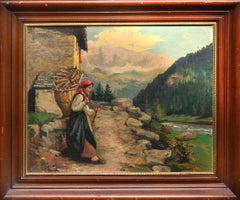
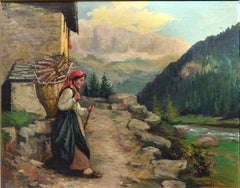
Woman Carrying Wood, Early 20th Century Figurative Landscape
By Enrique Brocco
Located in Soquel, CA
Beautiful early 20th century figurative landscape of a woman carrying a basket of wood kindling by a rushing river, high in the Italian hills by Enrique Brocco (Italian, 20th Century...
Board, Oil
$3,750
H 24.5 in W 28.5 in D 2.75 in
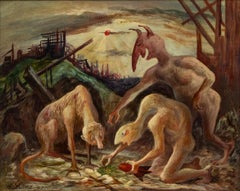
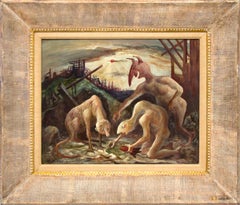
Frederick Shane Twilight of History 1947 Surrealist Oil Painting Rocket Scene
By Frederick Shane
Located in Denver, CO
“Twilight of History” is a dramatic and highly symbolic 1947 oil painting on board by American modernist Frederick Shane. Created in the immediate aftermath of World War II, the pain...
Board, Oil
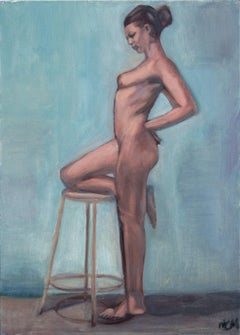
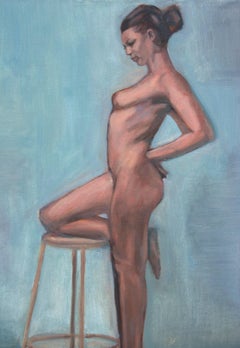
Nude Figure with Stool Against Blue Background
By M. Z. Murphy
Located in Soquel, CA
Nude Figure with Stool Against Blue Background Artist's study of a model in studio by Los Gatos, California artist Maryanne Z. Murphy (American, 20th century). Signed with initials ...
Canvas, Oil, Cardboard
$1,207Sale Price|20% Off
H 14.57 in W 18.51 in
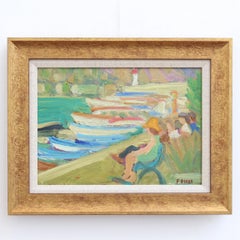
Family Seated on a Bench at the Port
By François Diana
Located in London, GB
'Family Seated on a Bench at the Port', oil on board, by François Diana (circa 1970s). A painting with a very wholesome, homespun theme harks back to a more innocent time. A family i...
Oil, Board
$711
H 13.78 in W 16.93 in
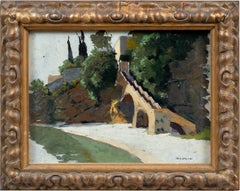
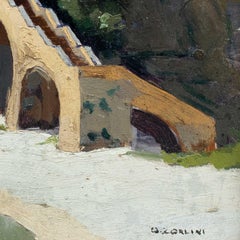
Ottone Zorlini (Venetian painter) - 20th century painting - Landscape staircase
Located in Varmo, IT
Ottone Zorlini (Treviso 1891 - San Paolo 1967) - Landscape with Staircase. 25.5 x 33.5 cm unframed, 35 x 43 cm with frame. Oil on cardboard, in a wooden frame. - Signed lower left...
Cardboard, Oil
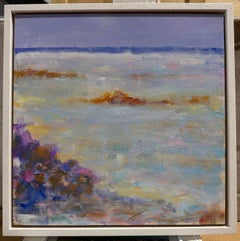
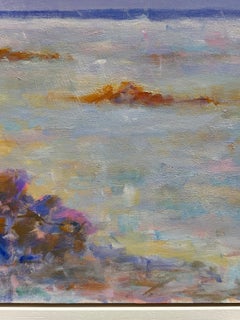
Impressionist scene of Palm Beach, Florida
By Charles Bertie Hall
Located in Woodbury, CT
Charles Bertie Hall (Anglo-American, 20th/21st Century) Coastal Shoreline with Rocks Oil on board, signed on reverse, from the artist’s studio This luminous coastal study by Charles ...
Oil, Board
$475
H 7 in W 6.75 in D 1 in
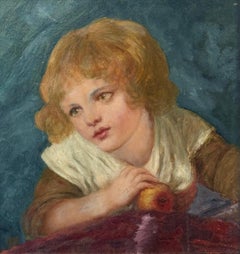
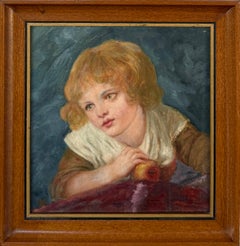
“Child with an Apple”
Located in Southampton, NY
Here for your consideration is an antique fine copy of an earlier original painting by the well known 18th century French artist, Jean Baptiste Greuze. This painting is an oil paint...
Oil, Board
$4,000
H 8 in W 10 in
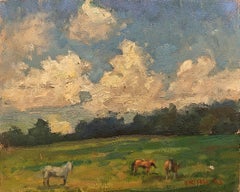
"Connecticut Hills" Susan Grisell, Impressionist Landscape, Horses in Field, Sun
By Susan Grisell
Located in New York, NY
Susan Grisell Connecticut Hills Signed lower right Oil on board 8 x 10 inches Following the guidance of her long-time teacher and mentor, the respected New England impressionist painter, Bernard Lennon, Susan Grisell developed a style marked adherence to nature. Her paintings are recognizable for their effortless rendering, with line and color that express the impressions of what she observes, and dense brushwork that conveys her response following the sensitive observation of atmosphere. In May 2023, one of Susan's paintings "Blue Crock...
Oil, Board
$4,000
H 8.875 in W 12 in
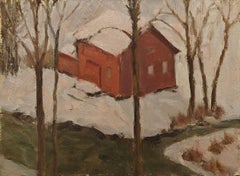
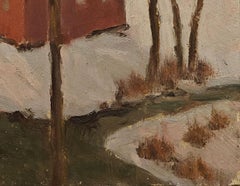
"The Neighbor's Barn" Richard Stalter, Red Barn, New England Snowy Landscape
By Richard Stalter
Located in New York, NY
Richard Stalter The Neighbor's Barn Oil on board 8 7/8 x 12 inches Richard Stalter was born in Dayton, Ohio, on April 27, 1934. He developed an interest in art at a very early age,...
Oil, Board
$10,290
H 20.08 in W 23.23 in D 0.79 in
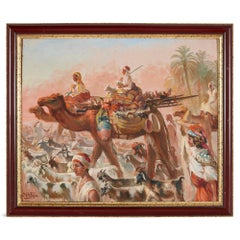
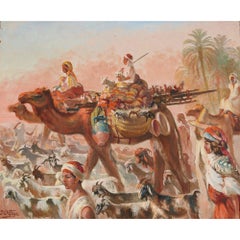
Antique Orientalist Oil on Board 'Desert Bedouin', by José Benito Ortega
By José Benito Ortega
Located in London, GB
Antique Orientalist Oil on Board 'Desert Bedouin', by Spanish Artist Ortega Spanish, early 20th Century Frame: Height 51cm, width 59cm, depth 2cm Board: Height 44cm, width 53cm, depth 0.5cm Fluidly painted, this vibrant oil on board depicts a dusty Orientalist scene. Four Bedouin ride camels alongside a flurry of goats, carrying lambs and hens in saddlebags. Other figures clothed in Middle Eastern garments walk with them, and the busy scene fades into a dusty, evening landscape. The colour palette is vibrant and hued with dusky pinks and oranges, giving the impression that these Bedouin are returning back to camp. The cropped composition also gives a dynamic feel to the picture: a glance into early 20th Century desert life. The present painting was created by Spanish artist José Benito Ortega...
Wood, Oil, Board
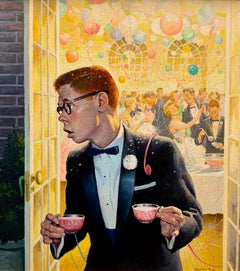
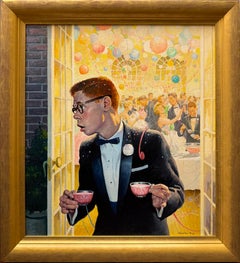
Where's my Date? American Weekly Magazine Cover
By Charles Dye
Located in Fort Washington, PA
Cover of The American Weekly, March 1, 1959
Canvas, Oil
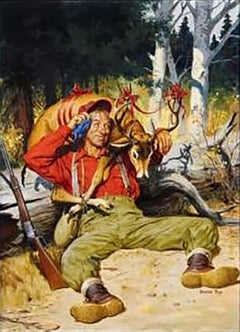
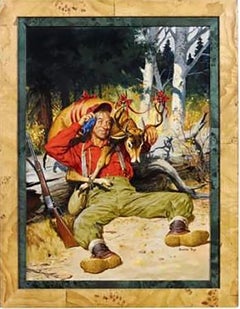
Happy Hunter, Outdoor Life Magazine Cover
By Charles Dye
Located in Fort Washington, PA
Outdoor Life Magazine Cover, December 1951 Signed Lower Right
Oil, Board
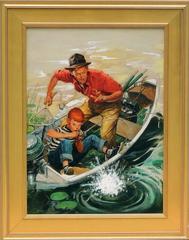
Big Catch, Outdoor Life Magazine Cover
By Charles Dye
Located in Fort Washington, PA
Big Catch, Outdoor Life Magazine Cover Cover of Outdoor Life Magazine, August 1953 A dad and son fishing together. Charles Dye was born October 30, 1906 in Canon City, which the artist referred to as a "Colorado cowtown" where he first rode for ranches as a boy. He worked as a cow hand until he was twenty-one, and travelled with herds to California and Oregon. "I cannot recall a time when I was not on horseback, or not portraying the ranching life in pen and pencil." In 1929 while recovering from an accident, Charlie saw a book about the western artists, Charlie Russell, which inspired him to become an artist. Apparently Charlie Dye had a difficult challenge in winning approval for his chosen profession from his father. According to the artist,"My old man could have forgiven me if I had decided to be a piano player in a whore house, but an artist rated one step below a pimp in his book!" In 1932 Dye moved to Chicago to work in the cattle yards, while he studied night classes at the Chicago Art Institute. In 1936 he moved to New York City and opened his own freelance art studio at 166 East 56th Street. In 1938 Dye studied with Harvey Dunn at the Grand Central School of Art. His first freelance assignments were interior story illustrations for the western pulp magazines published by Popular Publications. He later sold pulp covers to Popular's Adventure Magazine and Argosy. During WWII Charles Dye received assignments from slick magazines which were in need of professional freelance illustrators to replace the talent drain that was caused by the mobilization. Dye found work at The Saturday Evening Post. In the 1950s, Charles Dye received regular assignments to paint the covers and interior story illustrations for men's adventure magazines such as Saga, Outdoor Life, and Argosy. As changing tastes made it more difficult for clasic illustrators to find work, Charles Dye returned to his roots and painted Western art for the rest of his life. He moved to Sedona, Arizona in 1962, and helped to found the Cowboy Artists of America, along with Tom Lovell and Nick Eggenhofer...
Board, Oil
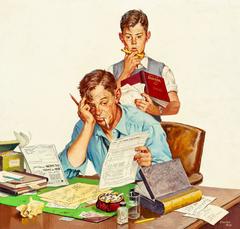
Tax Forms Blues
By Charles Dye
Located in Fort Washington, PA
Charles Dye was born October 30, 1906 in Canon City, which the artist referred to as a "Colorado cowtown" where he first rode for ranches as a boy. He worked as a cow hand until he was twenty-one, and travelled with herds to California and Oregon. "I cannot recall a time when I was not on horseback, or not portraying the ranching life in pen and pencil." In 1929 while recovering from an accident, Charlie saw a book about the western artists, Charlie Russell, which inspired him to become an artist. Apparently Charlie Dye had a difficult challenge in winning approval for his chosen profession from his father. According to the artist,"My old man could have forgiven me if I had decided to be a piano player in a whore house, but an artist rated one step below a pimp in his book!" In 1932 Dye moved to Chicago to work in the cattle yards, while he studied night classes at the Chicago Art Institute. In 1936 he moved to New York City and opened his own freelance art studio at 166 East 56th Street. In 1938 Dye studied with Harvey Dunn at the Grand Central School of Art. His first freelance assignments were interior story illustrations for the western pulp magazines published by Popular Publications. He later sold pulp covers to Popular's Adventure Magazine and Argosy. During WWII Charles Dye received assignments from slick magazines which were in need of professional freelance illustrators to replace the talent drain that was caused by the mobilization. Dye found work at The Saturday Evening Post. In the 1950s, Charles Dye received regular assignments to paint the covers and interior story illustrations for men's adventure magazines such as Saga, Outdoor Life, and Argosy. As changing tastes made it more difficult for clasic illustrators to find work, Charles Dye returned to his roots and painted Western art for the rest of his life. He moved to Sedona, Arizona in 1962, and helped to found the Cowboy Artists of America, along with Tom Lovell and Nick Eggenhofer...
Board, Oil