Chas (Charles) Laborde Prints and Multiples

to
3
Overall Width
to
Overall Height
to
1
1
1
3
1,322
1,024
922
889
3
3
3
3
2
1
1
1
1
1
1
1
1
1
1
3
1
2
1
Artist: Chas (Charles) Laborde
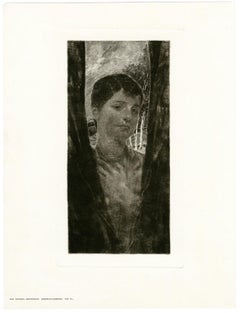
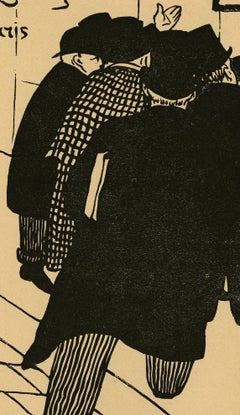
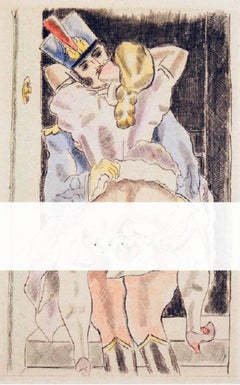
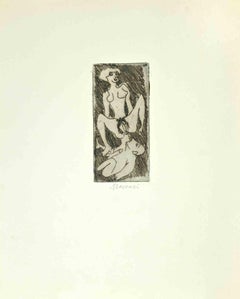
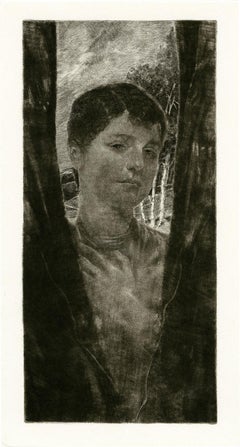
Illustration for "Les Chanson Erotiques" - Original Etching by Chas Laborde

Illustration for "Les Chanson Erotiques" - Original Etching by Chas Laborde

By Chas (Charles) Laborde

Located in Roma, IT

Illustration for "Les Chanson Erotiques" by Pierre-Jean de Beranger. Image Dimensions :15 x 13.5 cm This artwork is shipped from Italy. Under existing legislation, any artwork in It...

Category

1920s Post-Impressionist Chas (Charles) Laborde Prints and Multiples

Materials

Etching

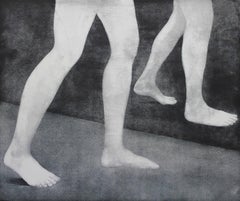
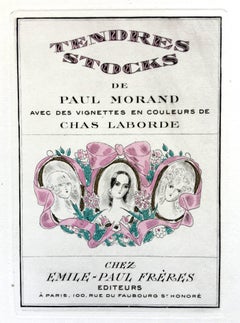
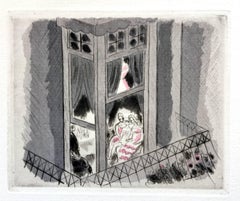
Tendres Stocks: The Complete Etchings

Tendres Stocks: The Complete Etchings

By Chas (Charles) Laborde

Located in New York, NY

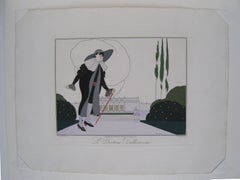
Chas Laborde (1886-1941), Tendres Stocks: The Complete Etchings, c. 1924, etching, engraving, colored etching proofs before publication of the book. A suite of 13 impressions in black and white, and 13 in color; 26 in all; impressions printed before the book edition of Tendres Stocks by Paul Morand...

Category

1920s Art Deco Chas (Charles) Laborde Prints and Multiples

Materials

Color, Engraving, Etching

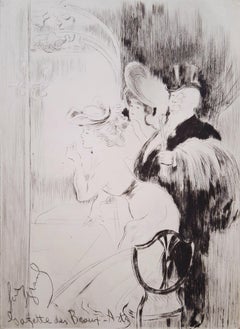
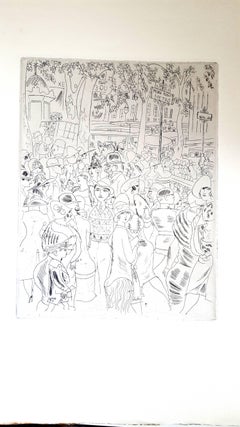
Chas Laborde - Paris - Capucine's Boulevard - Original Etching

Chas Laborde - Paris - Capucine's Boulevard - Original Etching

By Chas (Charles) Laborde

Located in Collonge Bellerive, Geneve, CH

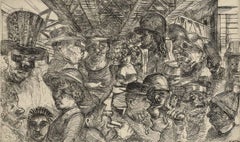
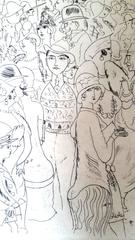
Chas Laborde - Paris - Capucine's Boulevard - Original Etching Dimensions : 13 x 10". Paper : Rives vellum. Edition : 225 copies. 1927 From Tableaux de Paris, Emile-Paul Freres, Paris Chas LABORDE Charles Laborde was born in Buenos Aires on August 8, 1886. He was the youngest of the five sons of Adolphe-Sylvestre Laborde-Pinou, a Basque-Bearne millionaire who had made a fortune selling spirits to the Indians and luxury goods imported from France to wealthy Argentines. The family returned to France when Charles was six months old. His mother died when he was two. He spent his childhood at their family château d’Escout outside Oloron-Sainte-Marie in the Pyrenees. His brothers went to a boarding-school, his father was often in Paris on business, and little Charles was left to his devices. Though it was a lonely childhood, he was a darling of his generous and magnanimous father. Charles got his early drawing skills from a village artist and found support in his brother Jean-Felix. Charles frequently accompanied his father visiting artisans and helped him choose de luxe objects to be sold in Argentine. He first attended the Rollin college in Paris, then a lyceum in Pau, where he lived with full board and lodging after his father’s death in 1901. From childhood Charles wanted to be an artist and tried several pseudonyms for himself: Ch. Laborde, Carlos Laborde,Carlos Edrobal and Carl Lab. He started wearing a velvet suit and a large hat. At 17, the timid shortsighted teenager wearing big glasses was expelled from college for smoking and drinking alcohol and went to Paris into the custody of his elder brother Jean-Felix, who carried on his father’s business. Charles enrolled in the prestigious l’Académie Julian, studying under Henri Royer and Marcel Baschet. Simultaneously he was a pupil of William Bouguereau and Luc-Olivier Merson at l’École des Beaux-Arts. The latter was famous for being the designer of the 50 and 100 franc banknotes, and he believed that he was teaching a “little Daumier”. In England, where he went every year from 1905 to 1914 with the family of his friend Cooper, a classmate at l’Académie Julian, he found not only his pseudonym Chas (short for Charley), but also the land of his dreams. Peculiarities of London and its inhabitants were reflected in drawings of William Hogarth and Thomas Rowlandson, whose album The Microcosm of London (1808) prompted Charles to make his London Streets Scenes (1928). Owing to those trips Charles took a liking to the atmosphere of England and its reserved and terse humor. In 1905 the château d’Escout and the Buenos Aires Commercial Fund were sold. After coming into inheritance, Laborde became financially independent and obtained an atelier in Montmartre at 11 bis Rue des Saules. His neighbors were de la Butte, Francis Carco and Pierre Mac Orlan, who sympathized with the easy-going young man with a positive attitude to life. His friend Pierre Falke...

Category

1920s Modern Chas (Charles) Laborde Prints and Multiples
Materials

Etching

Related Items
Don Juan
Don Juan

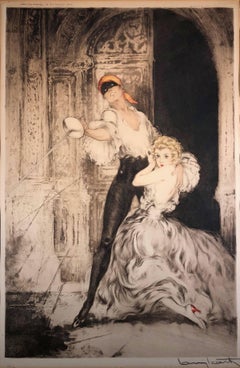
Louis IcartDon Juan, 1928

$2,800Sale Price|20% Off

H 28 in W 20.5 in

Don Juan

By Louis Icart

Located in Missouri, MO

Aquating Engraving Image Size: approx. 20 1/4 x 13 3/8 Framed Size: 28 x 20.5 inches Pencil Signed Lower Right Louis Justin Laurent Icart was born in Toulouse in 1890 and died in Paris in 1950. He lived in New York City in the 1920s, where he became known for his Art-Deco color etchings of glamourous women. He was first son of Jean and Elisabeth Icart and was officially named Louis Justin Laurent Icart. The use of his initials L.I. would be sufficient in this household. Therefore, from the moment of his birth he was dubbed 'Helli'. The Icart family lived modestly in a small brick home on rue Traversière-de-la-balance, in the culturally rich Southern French city of Toulouse, which was the home of many prominent writers and artists, the most famous being Henri de Toulouse-Lautrec. Icart entered the l'Ecole Superieure de Commerce de Toulouse in order to continue his studies for a career in business, particularly banking (his father's profession). However, he soon discovered the play writings of Victor Hugo (1802-1885), which were to change the course of his life. Icart borrowed whatever books he could find by Hugo at the Toulouse library, devouring the tales, rich in both romantic imagery and the dilemmas of the human condition. It was through Icart's love of the theater that he developed a taste for all the arts, though the urge to paint was not as yet as strong for him as the urge to act. It was not until his move to Paris in 1907 that Icart would concentrate on painting, drawing and the production of countless beautiful etchings, which have served (more than the other mediums) to indelibly preserve his name in twentieth century art history. Art Deco, a term coined at the 1925 Paris Exposition des Arts Decoratifs, had taken its grip on the Paris of the 1920s. By the late 1920s Icart, working for both publications and major fashion and design studios, had become very successful, both artistically and financially. His etchings reached their height of brilliance in this era of Art Deco, and Icart had become the symbol of the epoch. Yet, although Icart has created for us a picture of Paris and New York life in the 1920s and 1930s, he worked in his own style, derived principally from the study of eighteenth-century French masters such as Jean Antoine Watteau, François Boucher and Jean Honoré Fragonard. In Icart's drawings, one sees the Impressionists Degas...

Category

1920s Art Deco Chas (Charles) Laborde Prints and Multiples
Materials

Engraving, Aquatint

The glass mountain shattered David Hockney Fairy Tales from the Brothers Grimm

The glass mountain shattered David Hockney Fairy Tales from the Brothers Grimm

By David Hockney

Located in New York, NY

This etching from David Hockney’s celebrated Six Fairy Tales from the Brothers Grimm portfolio depicts the somewhat obscure story Old Rinkrank, which Hockney chose to illustrate beca...

Category

1960s Modern Chas (Charles) Laborde Prints and Multiples
Materials

Etching, Aquatint

Sainte Anne
Sainte Anne

Salvador Dalí­Sainte Anne, 1965

$3,200

H 19.5 in W 15.5 in

Sainte Anne

By Salvador Dalí­

Located in New York, NY

Drypoint, aquatint and heliogravure, 1965. Signed by the artist and dated in pencil, lower right margin. Numbered 42/150 in pencil, lower left margin. Printed by Robbe, Paris. Pub...

Category

1960s Surrealist Chas (Charles) Laborde Prints and Multiples
Materials

Drypoint, Aquatint

The Bathers ("De Zwemmertjes")

The Bathers ("De Zwemmertjes")

By Rembrandt van Rijn

Located in New York, NY

Etching and drypoint on laid paper, 1651. New Hollstein's third, and final, state. Full sheet size 5.38 x6.5 inches. Frame size 14.25 x 16.75 inches. Catalogue raisonné references...

Category

1650s Old Masters Chas (Charles) Laborde Prints and Multiples
Materials

Drypoint, Etching

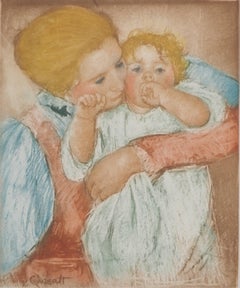
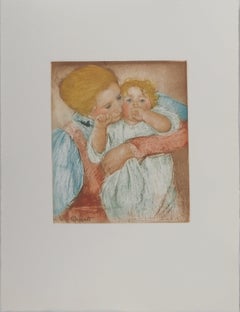
Maternity : Mother and Child - Etching

Maternity : Mother and Child - Etching

By Mary Cassatt

Located in Paris, IDF

Mary Cassatt (1844-1926) Maternal Love Engraving after a pastel Signed in the plate On vellum, 50 x 38 cm (c. 20 x 15 in) INFORMATION: Copperplate engraving published by the Galer...

Category

Early 20th Century Post-Impressionist Chas (Charles) Laborde Prints and Multiples
Materials

Etching, Aquatint

L'Éventail rose

Marie LaurencinL'Éventail rose, 1927

$3,000

H 11.75 in W 9.75 in

L'Éventail rose

By Marie Laurencin

Located in New York, NY

A very good impression of this scarce color etching and drypoint. Fourth state (of 4). Signed and numbered 54/100 in pencil, lower margin.

Category

1920s Cubist Chas (Charles) Laborde Prints and Multiples
Materials

Color, Drypoint, Etching

Henri Matisse, Three Heads. To Friendship, from Apollinaire, 1952

Henri Matisse, Three Heads. To Friendship, from Apollinaire, 1952

By Henri Matisse

Located in Southampton, NY

This exquisite aquatint by Henri Matisse (1869–1954), titled Trois têtes. A l'amitié (Three Heads. To Friendship), from the album Apollinaire, Henri Matisse (Apollinaire, Henri Matisse), originates from the 1952 edition published by Editions Raisons d'etre, Paris, and printed by Mourlot Freres, Paris, April 24, 1952. The work captures Matisses lyrical line and expressive minimalism, paying tribute to the French poet Guillaume Apollinaire through a synthesis of portraiture and calligraphic grace. Executed as an aquatint on velin a la forme des papeteries d'Arches paper, this work measures 12.99 x 9.84 inches (33 x 25 cm). Unsigned and unnumbered, as issued. The edition exemplifies the superior craftsmanship of Mourlot Freres, Paris. Artwork Details: Artist: Henri Matisse (1869–1954) Title: Trois têtes. A l'amitié (Three Heads. To Friendship), from the album Apollinaire, Henri Matisse (Apollinaire, Henri Matisse) Medium: Aquatint on velin a la forme des papeteries d'Arches paper Dimensions: 12.99 x 9.84 inches (33 x 25 cm) Inscription: Unsigned and unnumbered, as issued Date: 1952 Publisher: Editions Raisons d'etre, Paris Printer: Mourlot Freres, Paris Catalogue Raisonne Reference: Duthuit, Claude. Henri Matisse: Catalogue raisonne des ouvrages illustres. Editions Claude Duthuit, Paris, 1988, illustration 31. Condition: Well preserved, consistent with age and medium Provenance: From the album Apollinaire, Henri Matisse (Apollinaire, Henri Matisse), published by Editions Raisons d'etre, Paris; printed by Mourlot Freres, Paris, 1952 Notes: Excerpted from the album (translated from French), Printing of this album was finished on April, Twenty-Four, M.CM.LII for the Editions Raisons d'etre, 2 rue des Beaux-Arts in Paris, was produced by Fernand Mourlot, based on the models of Henri Matisse. The eight original lithographs were shot on the presses of Mourlot Freres who also printed the cover and case composed by the artist. The stones were erased after drawing. The text and letrins engraved by Henri Matisse were drawn by Coulouma S.A., printer in Paris. Justification of the draw— XXX examples on large velin d'Arches a la forme, signed by the author and the artist, accompanied by a series of original lithographs numbered from I to XXX; CCC examples on velin d'Arches a la forme numbered from XXXI to CCCXXX; XX examples of non-commerce collaborators numbered from I to XX and in addition a few nominative examples on Grand Velin. About the Publication: Apollinaire, Henri Matisse (Apollinaire, Henri Matisse), published by Editions Raisons d'etre, Paris, in 1952, stands among Matisses most intimate artist’s albums, conceived as a visual homage to the poet Guillaume Apollinaire, whose friendship and creative influence had profoundly shaped the avant-garde in the early 20th century. The album unites Matisses mastery of line with his reverence for literature, pairing portraits, decorative initials, and typographic designs engraved in his own hand. Printed by the esteemed atelier Mourlot Freres, the volume exemplifies the peak of French postwar printmaking, merging literary refinement with visual purity. Each print reveals Matisses poetic sensibility—his ability to render emotion through the economy of contour and rhythm. About the Artist: Henri Matisse (1869–1954) was a French painter, sculptor, draughtsman, and printmaker whose revolutionary vision redefined modern art through his daring use of color, line, and form. Celebrated as one of the greatest artists of the 20th century, Matisse led the Fauvist movement and devoted his life to the pursuit of balance, beauty, and emotional expression in visual art. His early works burst with vibrant hues and liberated brushwork, while his later “cut-out” compositions achieved a poetic simplicity that transformed the relationship between color and space. Deeply influenced by the work of Paul Cezanne, Vincent van Gogh, and Georges Seurat, as well as by the rhythmic patterns of Islamic art, Byzantine mosaics, and Japanese prints, Matisse forged a new visual language that celebrated joy, movement, and serenity. He was part of an extraordinary generation of artists who shaped the evolution of modernism, maintaining lifelong dialogue and friendly rivalry with contemporaries such as Pablo Picasso, Georges Braque, Marc Chagall, Andre Derain, Albert Marquet, and Raoul Dufy—peers who, like him, sought to expand the expressive potential of color and composition. Matisses influence extended across generations, inspiring modern and contemporary masters including Alexander Calder, Alberto Giacometti, Salvador Dali, Joan Miro, Wassily Kandinsky, Marcel Duchamp, and Man Ray, each of whom drew upon his fearless experimentation and refined visual harmony. His paintings, sculptures, and works on paper are held in the most prestigious museums in the world, including the Museum of Modern Art, the Centre Pompidou, the Tate, and the Hermitage Museum, where his art continues to symbolize the essence of creativity and human emotion. The highest price ever paid for a Henri Matisse artwork is approximately 80.8 million USD, achieved in 2018 at Christies New York for Odalisque couchee aux magnolias (1923). Henri Matisse Trois têtes. A l'amitié (Three Heads. To Friendship) Apollinaire, Henri Matisse (Apollinaire, Henri Matisse) 1952, Matisse Editions Raisons d'etre, Matisse Mourlot Freres, Matisse aquatint...

Category

1950s Fauvist Chas (Charles) Laborde Prints and Multiples
Materials

Aquatint

Ancient Roman Architecture: Original Framed 18th C. Etching by G. Piranesi

Ancient Roman Architecture: Original Framed 18th C. Etching by G. Piranesi

By Giovanni Battista Piranesi

Located in Alamo, CA

"Veduta del Sepolcro della Famiglia Plauzia per la Strada Che Conduce da Roma a Tivoli vicino a Ponte Lugano" from "Le Antichità Romane" (Roman Antiquities), one of the most famous works by Piranesi. "Antichita" illustrates the tombs along the Appian Way...

Category

Early 18th Century Old Masters Chas (Charles) Laborde Prints and Multiples
Materials

Etching, Engraving, Drypoint

Sportsmen
Sportsmen

Louis LegrandSportsmen, 1908

$800Sale Price|54% Off

H 11.25 in W 5.75 in D 0.5 in

Sportsmen

By Louis Legrand

Located in Plano, TX

Sportsmen. 1908. Etching and drypoint. Exsteens 271.i/ii. 11 1/4 x 5 3/4 (sheet 17 3/8 x 12 1/4). Series: Les Bars. From the first state edition of 30 proofs with the remarque sketch...

Category

Early 1900s Post-Impressionist Chas (Charles) Laborde Prints and Multiples
Materials

Drypoint, Etching

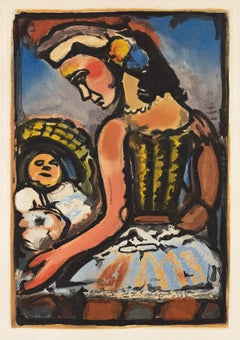
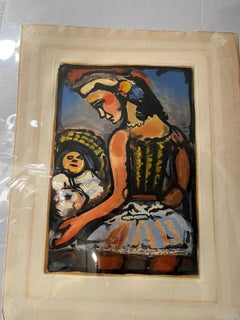
Dors mon amour
Dors mon amour

Georges RouaultDors mon amour, 1934

$3,500

H 12.25 in W 8.25 in

Dors mon amour

By Georges Rouault

Located in New York, NY

A superb impression of this color aquatint. From an unnumbered edition of 280. Printed by Lacouriere, Paris. Published by Vollard, Paris. From "Cirque de l'Étoile Filante." Catalogu...

Category

1930s Fauvist Chas (Charles) Laborde Prints and Multiples
Materials

Color, Aquatint

Pair of Hand-colored Romantic French Engravings after Francois Boucher

Pair of Hand-colored Romantic French Engravings after Francois Boucher

By (After) Francois Boucher

Located in Alamo, CA

A pair of French classical romantic prints original created in the 18th century by Jacques-Firmin Beauvarlet (1731-1797) after paintings by Francois Boucher (1703-1770), utilizing ...

Category

18th Century Romantic Chas (Charles) Laborde Prints and Multiples
Materials

Engraving, Etching

"When Day is Done, " an Original Etching signed by John Edward Costigan

"When Day is Done, " an Original Etching signed by John Edward Costigan

By John Edward Costigan

Located in Milwaukee, WI

"When Day is Done" is an original etching and aquatint signed lower right in pencil by the artist John Edward Costigan. It depicts a man and a woman with their young child at the end...

Category

1930s Post-Impressionist Chas (Charles) Laborde Prints and Multiples
Materials

Etching, Aquatint

Chas (charles) Laborde prints and multiples for sale on 1stDibs.

Find a wide variety of authentic Chas (Charles) Laborde prints and multiples available for sale on 1stDibs. You can also browse by medium to find art by Chas (Charles) Laborde in etching, engraving and more. Much of the original work by this artist or collective was created during the 1920s and is mostly associated with the Post-Impressionist style. Not every interior allows for large Chas (Charles) Laborde prints and multiples, so small editions measuring 7 inches across are available. Customers who are interested in this artist might also find the work of Angèle Delasalle, John Edward Costigan, and Guy Bardone. Chas (Charles) Laborde prints and multiples prices can differ depending upon medium, time period and other attributes. On 1stDibs, the price for these items starts at $750 and tops out at $1,297, while the average work can sell for $836.