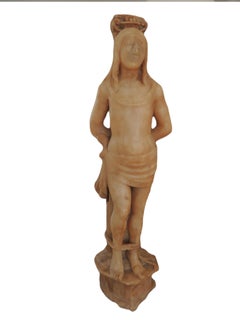
Provenance: Private Collection, Spain.
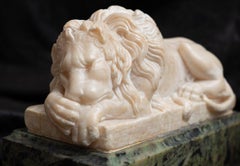
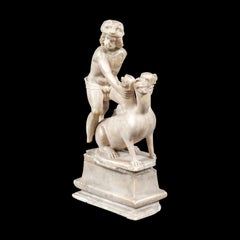
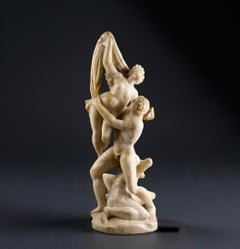
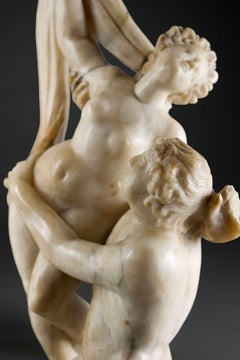
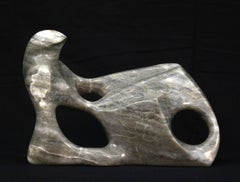
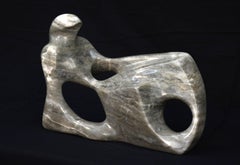
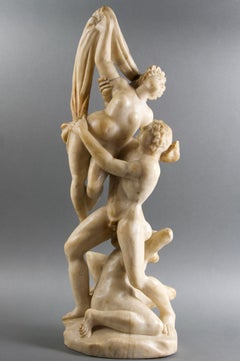
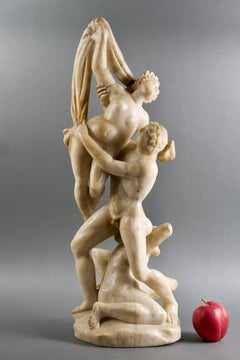
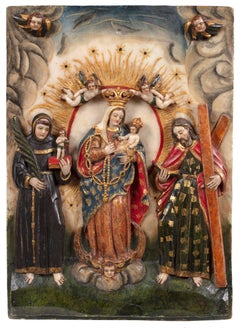
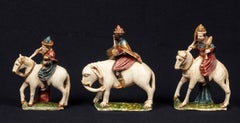
Known as Peruvian alabaster for its translucency and workability, Piedra de Huamanga is a highly prized material from the province of Ayacucho in Peru. In the 17th and 18th centuries, local craftsman in the town of Huamanga began to specialize in the production of small-scale, polychrome religious sculptures made from this distinctive stone. Huamanga sculptures are among the most accomplished examples of carving from the Spanish Americas, where polychrome wood sculpture was a far more common sculptural medium. These works, which were created as independent sculptures or as sculptural groups—such as our three Magi—were intended for ecclesiastical as well as domestics settings.
Our three figures likely formed part of a larger Nativity group—a New World variant of the tradition of the Neapolitan Crèche...
Category
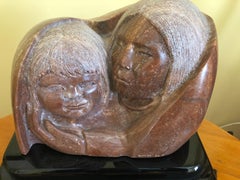
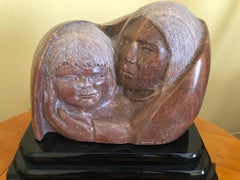
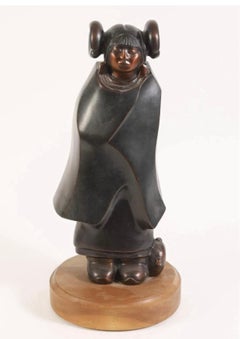
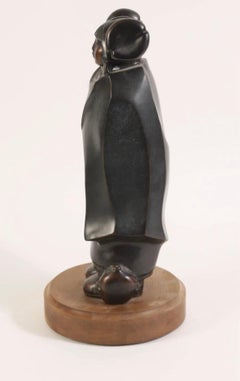
Late 18th Century Doug Hyde Figurative Sculptures